
How to Design Custom Event Tickets People Cannot Fake


A great event ticket sells the event and controls the door at the same time. Sequential numbering is the one feature that makes a duplicate visible at the gate.
Design custom event tickets to sell the event and control the door. Give every ticket sequential numbering, a perforated tear-off stub that repeats the number, and the core event details. Add security features like foil or a QR code to stop counterfeits, and keep vital text clear of the perforation and safe margin so nothing is lost at the tear.
Start here
A unique number on every ticket
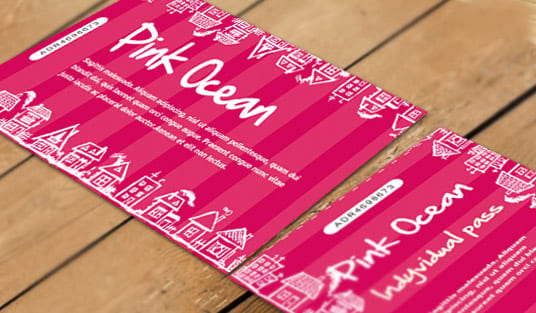
A ticket has to sell the event and control the door. Give every ticket a unique sequential number, a perforated tear-off stub that repeats that number, and the core details of event, date, time, venue, and seat. Add security features like foil or a QR code to stop fakes, and keep vital text clear of the perforation and safe margin. Do that and your tickets from 4OVER4.COM look great and count cleanly. The anatomy below shows how the pieces fit.
Why a good ticket design does two jobs at once
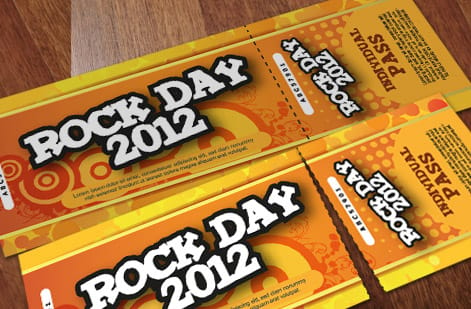
An event ticket looks like a simple piece of paper, but it is doing two jobs the moment it is printed. First, it sells: a well-designed ticket builds anticipation, carries your branding, and makes a guest feel the event is worth showing up for. Second, it controls the door: numbering, a tear-off stub, and security features let your team track sales, reconcile the gate, and keep out fakes.
Design only for looks and you get a beautiful ticket that is impossible to count or verify. Design only for function and you get a dull stub nobody is excited to hold. The craft is doing both at once, and it comes down to a handful of concrete elements: sequential numbering, perforation and stubs, security features, and a layout that respects the tear. This guide walks each one in the order you would actually build them.
What goes on a custom event ticket
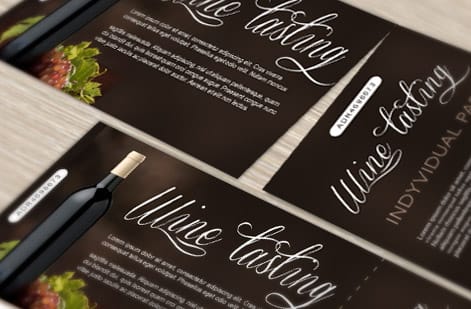
Every effective ticket carries the same core information, arranged so a guest and a gate can read it instantly: the event name, the date and time, the venue, and where relevant the section, row, and seat. Around that sit the functional pieces, a unique number, a stub, and any security marks, plus the branding that makes the ticket feel like part of the event.
Because a ticket is tied to a fixed date and a real door, the format has to support all of that. Classic event tickets use a landscape layout with a tear-off stub, while square event tickets offer a modern alternative with the same numbering and perforation. If you would rather not build the file from scratch, our online design tool lays it out for you, and our ready-made products give you a head start. See every option in the event ticket printing category and the wider custom printing range.
Sequential numbering: the backbone of ticket control
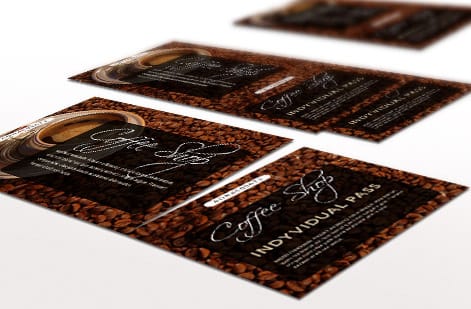
If a ticket has one non-negotiable feature, it is sequential numbering, a unique number printed on every single ticket in the run. That one detail unlocks all the control a real event needs. You can see exactly how many tickets sold, reconcile the count at the door against your sales records, and instantly spot a duplicate, because two tickets can never legitimately share a number.
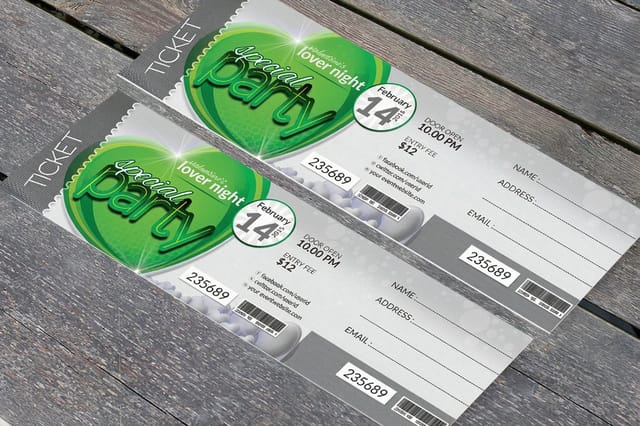
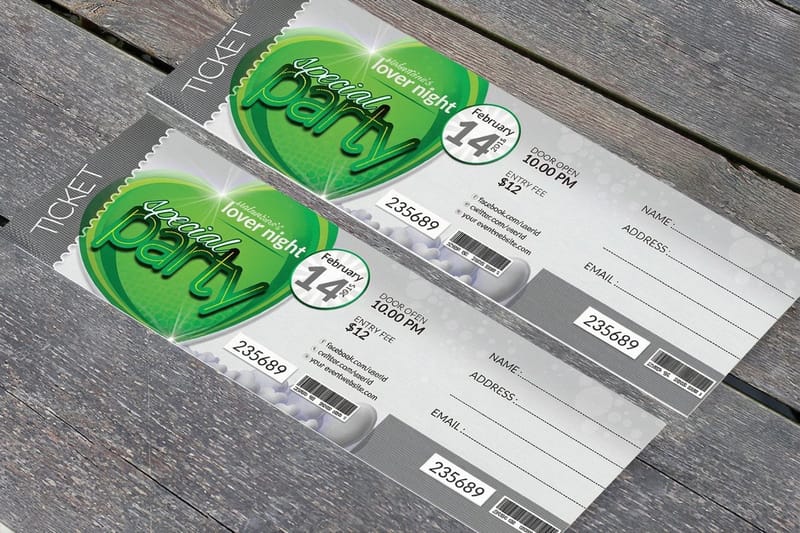
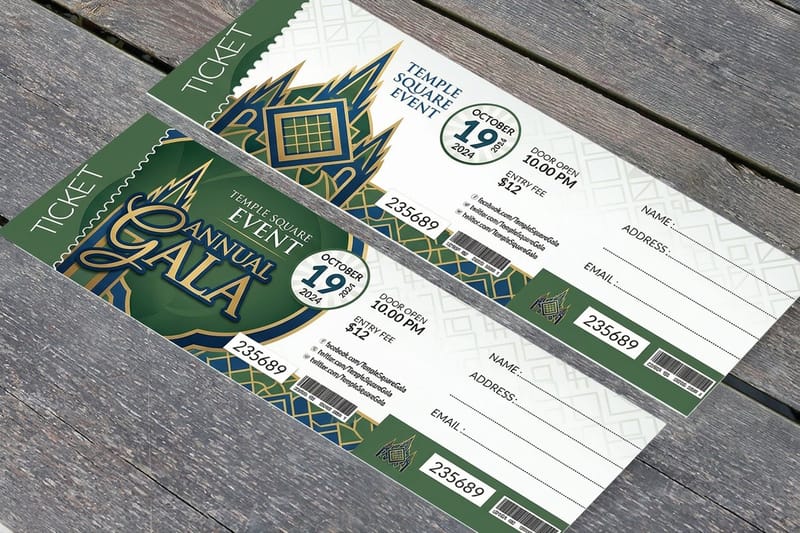
Numbering should appear in two places: on the main body and again on the stub, so the two halves stay tied together after the tear. When you order tickets, sequential numbering is specified as a print option and applied during production, so you do not have to build every number into your artwork by hand. It is the difference between a ticket you can account for and a piece of paper anyone could reprint. The same numbering logic underpins fundraising raffle tickets.
Perforation and stubs: keeping both halves useful
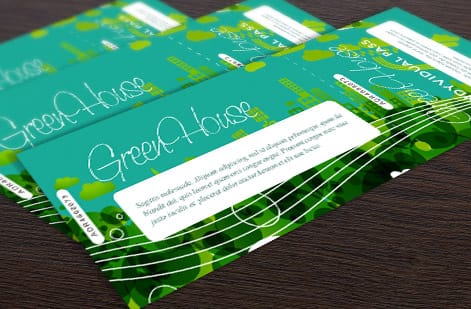
The tear-off stub is what turns a printed card into a working admission system. A perforated line, a row of tiny cuts, lets staff cleanly tear the ticket in two at the door: the venue keeps one half for the count, and the guest keeps the matching half as proof of entry. Without perforation, tearing is messy and the halves do not separate reliably.
Design the stub as if it were its own small ticket. Repeat the number, the event name, and the single most important detail on it, so the retained half still means something on its own. Keep vital information clear of the perforation itself, since anything printed across the tear line risks being split or lost. Placed well, the stub gives your team a physical, countable record and gives the guest a keepsake, all from one clean tear.
Security features that stop counterfeits

Any event with real demand attracts fake tickets, so a good design makes counterfeiting hard and verification fast. The strongest approach layers several defenses. Sequential numbering is the foundation, since duplicates surface the moment you reconcile the gate. A QR or barcode lets staff scan each ticket and check it against your sales list in seconds.
On top of those, physical touches raise the effort required to copy a ticket: a foil accent that a home printer cannot reproduce, fine-line or intricate artwork, and premium stock that feels distinct in the hand. You do not need every measure for every event, a school fundraiser needs less than a sold-out concert, but combining a unique number, a retained stub, a scannable code, and a premium finish makes a ticket both difficult to fake and quick to trust at the door.
What custom tickets cost and how to order

Ticket pricing is driven by quantity, size, stock, and the features you add, with quantity doing most of the work. Larger runs spread setup across more tickets and lower the cost per piece, while add-ons like sequential numbering, perforation, and finishes such as foil each add a little on top. Because tickets are tied to a fixed event, the smart move is to size the run to expected attendance with a small buffer, and to order early so numbered, perforated tickets are ready well before the door.
The configurator prices every option live, so you can see exactly what numbering, a perforated stub, or a security finish costs before you commit, and adjust the specs to fit both your event and your budget. Use the specs and pricing panel below to build your ticket, or order a proof first so the numbering and perforation are confirmed before the full run prints.
How to create and print tickets for your event
If you are planning a gate, the practical question is how to print tickets for an event without the door falling apart on the night. There are two routes. You can create the ticket yourself and run it through a home or office printer, or you can send the same file to a commercial press that applies numbering, perforation, and security features on the machine. Both are legitimate. The event decides which one you can live with.
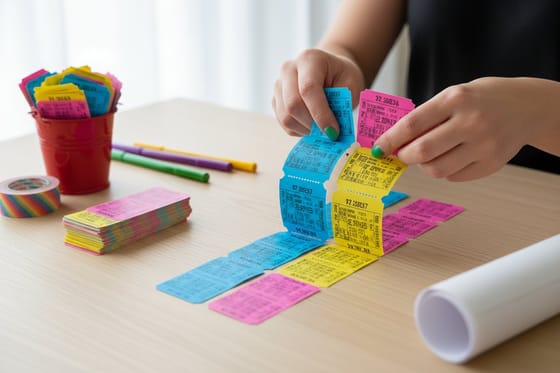
Printing at home or in the office. Build the ticket in a template, lay several up on one sheet, print on the heaviest stock your printer will feed, then trim the edges and score or hand perforate every stub. It is fast, it costs little beyond paper and ink, and it is fine for a small guest list, a free community night, or a first physical mock-up of a design you will print properly later. The trade-offs are honest ones: you number each ticket by hand or with a stamp, so the sales record and the door count are only as good as your handwriting; a hand-cut perforation tears crooked and sometimes takes half the ticket with it; desktop stock is thin enough to soften in a pocket by the second hour; color drifts between printers and between refills; and there is nothing on the ticket that a photocopier cannot repeat.
Printing with a commercial press. A production run gives you sequential numbering applied in order across the whole job, so sales reconcile against the stubs collected at the door; a machine perforation that tears clean every time and leaves staff a readable half; sturdy ticket stocks that survive handling and tearing; consistent color from the first ticket to the last; and security features sized to the risk, from a QR code up to foil. Sizes run from compact classic admission tickets to square and full-page passes, and finishes cover gloss and matte coatings plus uncoated stock if the gate needs to write or stamp on the ticket. The trade-offs here: you commit to a quantity up front, you work to a print and delivery deadline instead of running ten more copies at midnight, and a very small run carries more setup per ticket. The same choice applies to raffle tickets for fundraisers and prize draws.
The rule that holds up: print at home only when the count is small, no money changes hands at the door, and nobody has a reason to fake a ticket. The moment tickets are sold, counted, or checked by staff, have them printed. Set the size, stock, numbering, and perforation you need and watch the price update live when you print tickets for an event, and order a proof or a sample first so the numbering sequence and the tear line are confirmed before the full run goes on press.
Wally designs a ticket the door can trust
Sells the event, counts at the gate
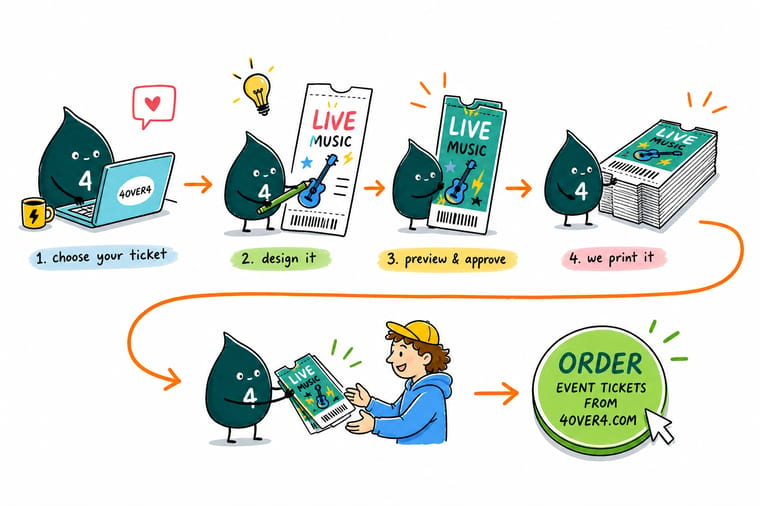
Wally builds a ticket to do two jobs. It looks the part with strong branding and the event essentials, and it works the door with a unique sequential number, a perforated stub that repeats that number, and security touches like foil or a QR code. He keeps vital text clear of the tear line, then 4OVER4 numbers and perforates the run so every ticket counts cleanly and nobody fakes their way in.
Order your event tickets →Quick reference
The custom ticket checklist, at a glance
Cover every element and your ticket both looks the part and works at the door. Match these before you send the file.
| Element | Get it to | Why it matters |
|---|---|---|
| Sequential numbering | Unique number per ticket | Tracks sales, reconciles the gate, and exposes duplicates. |
| Perforation | Tear line between body and stub | Lets staff keep a stub for the count while the guest keeps proof. |
| Matching stub | Number repeated on the stub | Ties both halves together so entries reconcile cleanly. |
| Event essentials | Name, date, time, venue, seat | The core details a guest and a gate need at a glance. |
| Security features | Foil, QR code, or unique art | Makes the ticket hard to counterfeit and quick to verify. |
| Safe margin | 0.125 in inside the trim | Keeps text and numbers clear of the blade and the perforation. |
Step by step
Design your custom event tickets in 7 steps
- Decide the ticket format and size Start with the shape and size, a classic landscape ticket with a tear-off stub, a square ticket, or a full-page pass. The format sets where the stub, numbering, and artwork live before you design anything.
- Lay out the event essentials Put the must-have details where they read instantly: event name, date, time, venue, and where relevant the section, row, and seat. These anchor the design and are the first things a guest and a gate look for.
- Add sequential numbering Specify unique sequential numbers so every ticket is one of a kind. Numbering lets you track how many sold, reconcile the door, and catch duplicates, and it should appear on both the main body and the stub.
- Place the perforation and design the stub Set the perforated tear line and treat the stub as its own small ticket: repeat the number, the event name, and the key detail so the retained half still means something after the tear.
- Build in security features Make the ticket hard to fake. Options include a foil accent, a QR code for scan-in, unique or fine-line artwork, and the numbering itself. The goal is a ticket that is difficult to copy and fast to verify at the door.
- Mind the margins and the tear Keep all vital text and numbers inside the safe margin and well clear of the perforation, so nothing important gets trimmed off or lost on the tear line. Add bleed to any art that runs to the edge.
- Proof and order Review a proof to confirm the numbering, perforation placement, and details are right, then place your run. Build the file yourself, use our online design tool, or start from a ready-made design.
Specs and pricing
Event ticket specs and live pricing
Once your design is set, size, stock, numbering and quantity are what is left. Event tickets run 50 for $25.27, which is $0.51 each.
| Quantity | Price Per Unit | Total |
|---|---|---|
| 50 | 50.5¢ | $25.27 |
| 100 | 42.8¢ | $42.84 |
| 200 | 25.8¢ | $51.62 |
| 300 | 20.1¢ | $60.42 |
| 400 | 17.3¢ | $69.20 |
| 500 | 15.6¢ | $77.99 |
| 600 | 15.4¢ | $92.26 |
| 700 | 15.2¢ | $106.55 |
Order it
Print your custom event tickets
See it in use
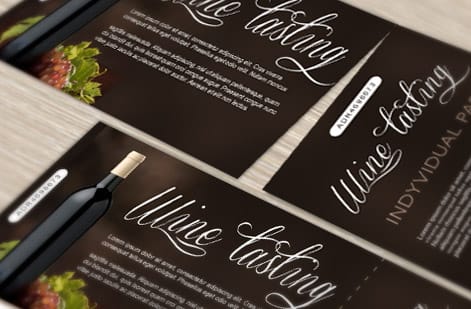
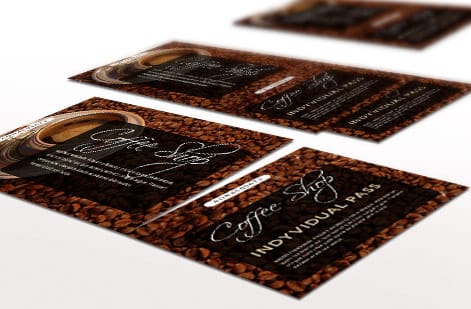
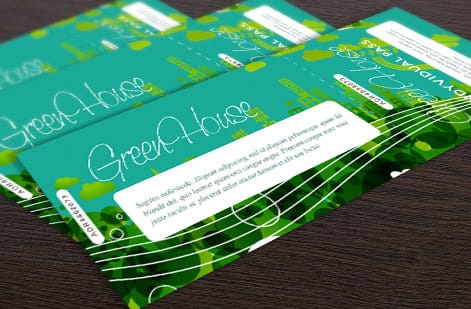
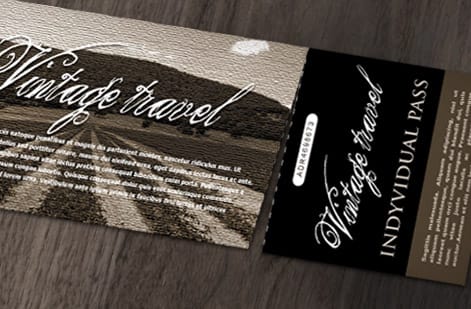
Event tickets we printed for real doors


Explore more
Where to go next
By the numbers
Ticket stock choices, and the catalog around them
Common Questions
Common questions about custom event tickets
What are custom event tickets?
Custom event tickets are printed admission tickets designed for a specific event, carrying its branding along with the functional elements a gate needs: sequential numbering, a perforated tear-off stub, the event details, and often security features. Unlike a generic ticket, a custom ticket is built for how your event actually runs, with seating information, drink or session tickets, VIP tiers, or sponsor logos as needed. The design has to do two things at once, look good enough to build excitement and sell the event, and function reliably at the door so staff can track entries, keep a stub for the count, and verify that each ticket is real.
How do I print tickets for an event?
Work backwards from the door. Pick the format first, a landscape ticket with a tear-off stub for a gated event, or a square or full-page pass for VIP and all-access use. Put the event name, date, time, venue, and admission type on the main ticket, and repeat the event name and the number on the stub so a collected half still means something at the count. Add sequential numbering so sales reconcile with the stubs at the end of the night, place the perforation where staff will tear it without cutting through printed detail, and add security features sized to the risk, from a QR code to foil. Then choose the stock and finish, gloss or matte if you want it to look sharp, uncoated if the gate needs to write or stamp on it, size the quantity to expected attendance with a small buffer, and order a proof or sample so the numbering sequence and the tear line are confirmed before the full run prints. Order early, because numbered and perforated tickets need to be in hand well before the door opens.
Can I print event tickets at home?
You can, and for a small free event it is a reasonable choice. Lay several tickets to a sheet in a template, print on the heaviest stock your printer will feed, then trim and hand perforate each stub. What you give up is real: numbering has to be written or stamped by hand, a hand-cut perforation tears crooked and can take the ticket with it, desktop stock is thin and softens with handling, color shifts between printers and between refills, and a home-printed ticket is easy to photocopy. Once tickets are sold, counted, or checked by staff, print them commercially so you get sequential numbering applied in order, a clean machine perforation, sturdy stock that survives the tear, consistent color across the run, and security features such as a QR code or foil.
Do I need numbering, a stub, or both?
Match the ticket to how your event operates. Decide the format first, a landscape ticket with a tear-off stub suits most gated events, while square or full-page passes fit premium or all-access uses. Then make sure the essentials are covered: sequential numbering to track sales and reconcile the door, a perforated stub so staff keep a half, the core event details, and security features sized to the risk, from a QR code to foil. For fundraisers and prize draws, the same principles apply to raffle tickets. Order a sample or proof so you can confirm the numbering and perforation work before printing the full run.
What do custom event tickets cost and how are prices set?
Ticket price is set by quantity, size, stock, and the features you add, such as sequential numbering, perforation, and finishes like foil. Quantity is the biggest lever: larger runs lower the cost per ticket as setup spreads across more pieces. Numbering and perforation are common add-ons, and premium security features or heavier stocks add a little more. In the configurator you set each option and the total updates live, so you can see exactly what adding numbering, a perforated stub, or a foil accent does to the price before you commit, and size the run to your expected attendance.
What sizes, stocks and finishes are available for custom tickets?
Custom tickets print in a range of sizes, from compact classic admission tickets to larger square and full-page formats, on sturdy stocks that hold up to handling and tearing at a perforation. Finishes include gloss and matte coatings, uncoated stock that takes a stamp or pen, and premium touches like foil for security and shine. Functional options cover sequential numbering and perforation for tear-off stubs. Not every size pairs with every option, so the live product page shows the exact combinations of size, stock, finish, numbering, and perforation available, along with the price for each.
How long do custom event tickets take to print and ship?
Turnaround depends on the product, the features, and the quantity. Standard tickets print and ship quickly, while add-ons like sequential numbering, perforation, and foil, or very large runs, can add a little production time. Because tickets are tied to a fixed event date, the safe move is to order with margin so numbering and perforation are done well ahead of the door. The live estimate on the product page shows the current print and ship window for your exact specs and quantity, so you can plan the run backward from your event date with confidence.
How do I stop event tickets from being counterfeited?
Layer several defenses rather than relying on one. Sequential numbering is the foundation, since every ticket is unique and duplicates stand out when you reconcile the gate. Add a perforated stub so staff physically retain a matching half, and consider a QR or barcode for fast scan-in and validation against your sales list. Harder-to-copy design elements help too: a foil accent, fine-line or intricate artwork, and specialty stock all raise the effort required to fake a ticket. The combination of a unique number, a retained stub, a scannable code, and premium finishes makes tickets both difficult to counterfeit and quick to verify at the door.
Get Started
Order 50 square event tickets at $0.51 each
Add sequential numbering, a perforated stub, and security finishes at 4OVER4.COM, set every option, and watch the price update live before you order your custom tickets.
Legal Disclaimer
Gold Standard guarantees apply to all standard orders placed through 4over4.com. Price match requires verifiable proof of a competitor's published price for an equivalent product with matching specifications and turnaround time. Satisfaction guarantee covers manufacturing defects and print quality issues. Contact support with order number and documentation. On-time delivery rate based on tracked orders 1999 to 2026. Individual results may vary based on shipping carrier performance.
