
How to Print Custom Hoodies for Teams, Clubs and Events


Tobias is our voice for cutting, binding and large format, built from the knowledge of our production team, with over 20 years in printing.
Fleece behaves differently from jersey, and a hoodie front is a smaller canvas than it looks. Choose the decoration method first, prepare the art for it, and a team order stops costing double.
To print custom hoodies, match the method to the quantity, then build the artwork to fit between the hood seam and the pocket seam. Screen printing is cheapest past roughly two dozen pieces, heat transfer vinyl wins below that and carries any names or numbers, direct to garment handles full color art on cotton fleece, and embroidery outlasts them all on a left chest logo. The usable front window on an adult pullover is about 11 inches wide and stops at the pocket, so a t-shirt layout has to be redrawn rather than scaled down. Our comparison of screen printing vs vinyl covers that crossover in detail.
Quick answer
Method follows quantity, artwork follows the seams
Pick the decoration process by how many pieces you are ordering, then draw the art to the space the garment actually gives you. Screens are a fixed cost that gets cheaper per hoodie as the run grows, while vinyl and direct to garment charge per garment and stay flat. The crossover sits near two dozen pieces for a simple design. On the artwork side, the hood seam and the kangaroo pocket close in the front print window to roughly 11 inches wide and a short height, and on a dark blended fleece the shop has to work around polyester dye that starts migrating well below the temperature plastisol needs to cure.
Printing on Hoodies, the Short Version
Printing on a hoodie comes down to three numbers and one heat problem. The front window on an adult pullover is about 11 inches wide and stops at the kangaroo pocket. The method crossover sits near two dozen pieces: heat transfer vinyl or direct to garment below it, screen printing above it. And the art goes in as vector, or as a raster at 300 ppi at the printed size.
The heat problem is the blend. Polyester dye starts moving near 280F while plastisol ink needs about 320F to cure, so a white print on a dark 50/50 hoodie can turn pink unless the shop uses low cure ink and a blocking underbase, or you choose 100 percent cotton fleece. Hoods print on a small platen, one layer at a time; the pocket is a double layer sewn on three sides, so most shops embroider there instead of printing.
Hoodie Printing Terms in Plain Words
These are the words a print shop will use on your hoodie quote, and what each one means for the job:
| Term | What it means on a hoodie |
|---|---|
| Plastisol | The standard screen printing ink. It cures at about 320F, hotter than blended fleece likes. |
| Underbase | A white layer printed first on a dark garment so the colors on top stay bright. It adds a screen and a flash cure. |
| Dye migration | Polyester dye gassing off near 280F and staining the ink above it, the reason a white print goes pink. |
| Low cure ink | Ink that cures below the point where the dye moves. The usual fix for dark 50/50 fleece. |
| Heat transfer vinyl | Color cut from a roll, weeded by hand and pressed garment by garment. Best for small runs and names. |
| Direct to garment | Water based pigment sprayed into cotton fibers for full color art. Polyester refuses the ink. |
| Halftone | The dot pattern that fakes shading. Fleece nap closes fine dots, so shops use a coarser screen. |
| Cutaway backing | The stabilizer under an embroidered panel. A water soluble film on top keeps stitches out of the nap. |
| Case quantity | The blank supplier's price break. Ordering 22 when the case is 24 costs more per hoodie. |
Four Ways to Decorate a Hoodie, and What Each One Costs You
Almost every hoodie job lands on one of four processes. Quantity decides most of it, the blend decides the rest, and the amount of detail in the artwork breaks the tie.
| Method | How the design goes on | Where it wins | Where it fails |
|---|---|---|---|
| Screen printing | One screen per color, ink pushed through the mesh and cured in a dryer. | Runs past roughly two dozen, one to four flat colors, lowest cost per piece at volume. | Small runs, because you pay for screens either way. Photographic art and fine gradients. |
| Heat transfer vinyl | Color is cut from a vinyl roll, weeded by hand, and pressed on garment by garment. | One offs, tiny runs, and personalized names and numbers on a roster. | Anything above a couple of dozen, where the pressing labor overtakes the screen charge. Fine detail weeds badly. |
| Direct to garment | Water based pigment ink sprayed straight into the fibers, like an inkjet for cloth. | Full color art, photographs, gradients, short runs on light cotton fleece. | Polyester content, which refuses the ink. Dark garments need a white underbase that stiffens the print. |
| Embroidery | Thread stitched through the fabric from a digitized file, backed underneath. | Left chest logos, staff wear, anything that has to survive years of washing. | Large designs, which get heavy and expensive by stitch count. Small text under a quarter inch fills in. |
The pattern in that last column is the useful part. Screen printing and embroidery both charge you up front, once, then get cheaper with every extra piece. Vinyl and direct to garment charge you per garment, which is why they own the small orders and lose the big ones. For a 40 piece club order in two colors, screens are the obvious answer. For 8 hoodies with 8 different names on the back, vinyl is the only sane one, and vinyl apparel printing is exactly that process on a shirt.
Fleece adds one more consideration that a t-shirt never raises. A brushed or napped surface scatters ink, so halftone dots and fine screens close up. A shop printing a photo on fleece will use a coarser halftone than it would on a smooth ring spun tee, and the result is softer whichever way you go. The smooth tee is why custom tee shirt printing is the easier route for a photo design. Our comparison of direct to garment against embroidery walks through that same choice with wash durability included.
Fitting Artwork Between the Hood Seam and the Pocket
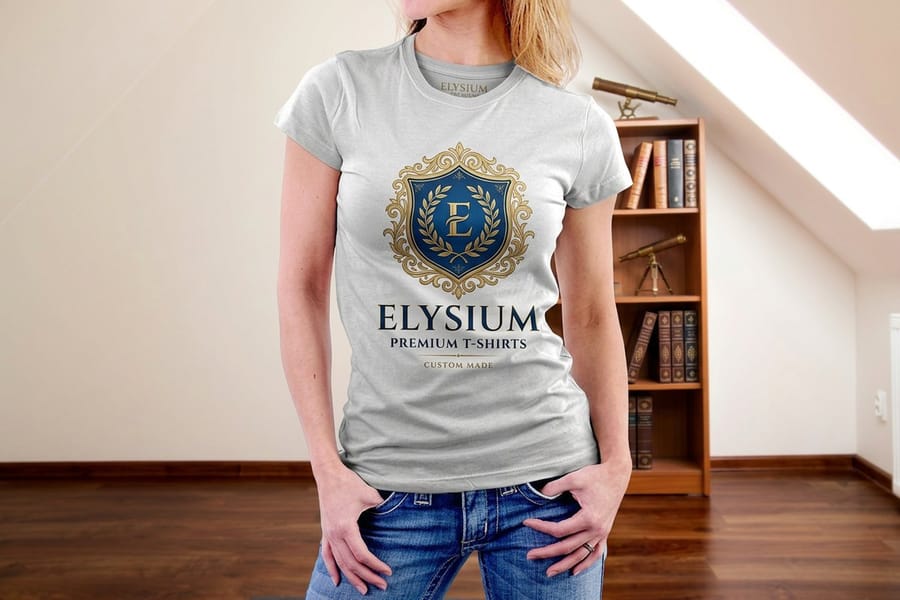
Send vector artwork with the fonts converted to outlines, or a raster file built at 300 ppi at the size it will actually print. That much is the same as any print job. The part that catches people is the geometry.
A pullover front is not a blank rectangle. The hood seam runs across the shoulders and the kangaroo pocket is sewn on below, so the usable window on an adult pullover is roughly 11 inches wide and considerably shorter than the 16 inches a shirt front gives you. A design built for a tee has to be rearranged into a wider, shorter shape. Shrinking it instead is how you end up with a tagline nobody can read from more than a foot away.
Three habits save most of the trouble. First, decide the print locations before drawing anything: front window, left chest, sleeve, or hood, each with its own aspect ratio. Second, count your colors honestly, because on screen print each color is a screen and each screen is money, and a gradient you added for depth may cost more than the rest of the design. Third, plan the size run. The same print size across small through 3XL is standard practice, but a full width graphic that looks right on a large swamps a small, so many teams set two artwork sizes and split the run at extra large.
On dark garments the shop lays a white underbase first so the colors on top stay bright, which adds a screen and a flash cure pass. Build the file assuming that is coming and avoid hairline gaps between colors, since any tiny registration shift between the underbase and the top color will show as a white halo. If file formats are the sticking point, our guide to choosing the right file type covers what to send and why, and standard apparel print dimensions gives you the numbers to design against.
What Actually Drives the Price on a Team Order
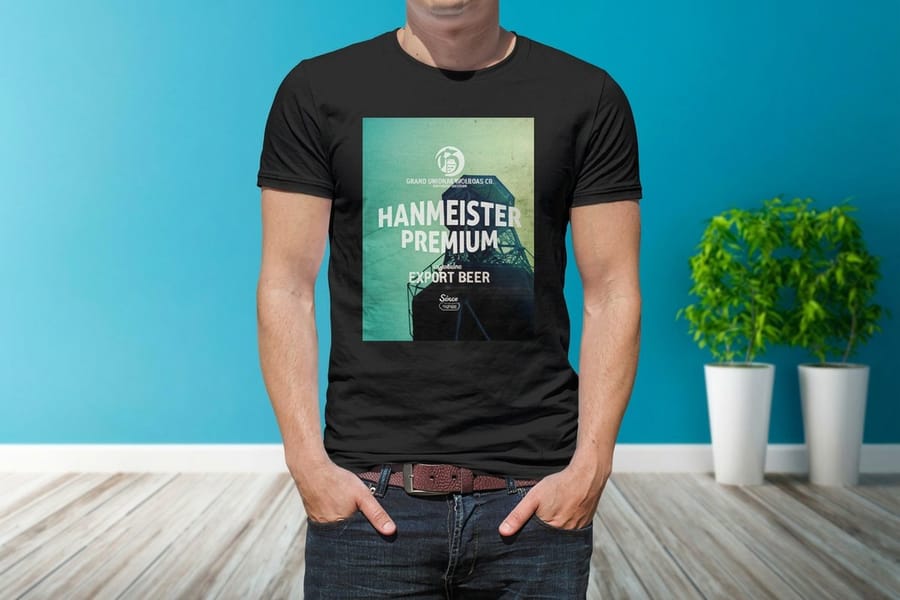
Four things move the number on a hoodie quote, and only one of them is the garment.
- Colors per location. Screen printing charges by the screen. A two color front is cheap. That same front in six colors, with a white underbase on a dark fleece, is seven screens before a single hoodie is printed.
- Print locations. Front, back, sleeve and hood are separate setups and separate passes through the press. A front and back job is close to double the printing labor of a front only job.
- Quantity, against two different thresholds. The method threshold sits around two dozen, where screens overtake vinyl. The garment threshold is the blank supplier's case quantity, which is where the piece price itself steps down.
- Personalization. Names and numbers cannot share a screen, so they go on in vinyl and are priced per garment. A roster of 20 named hoodies is 20 separate pressing operations no matter how big the rest of the order is.
The worst quote you can construct, and people build it by accident every week, is a small order with a lot of colors: twelve pieces, six color front, dark fleece. The setup is spread over almost nothing. Cutting that design to two colors, or moving it to vinyl, usually halves the invoice without changing what anyone actually sees at ten feet.
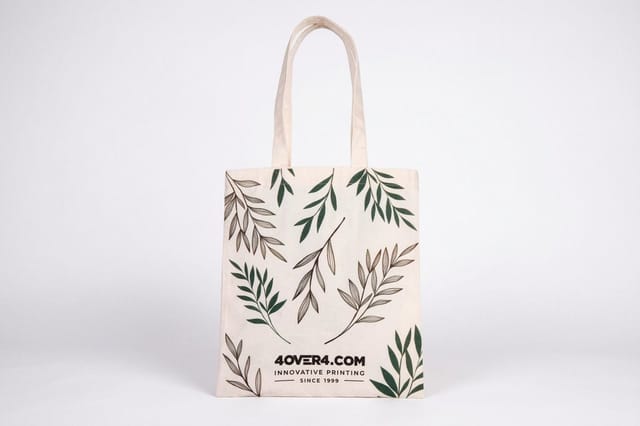
Budget the blanks realistically too. Fleece costs more than jersey by weight, heavyweight fleece more than midweight, and zip up hoodies more than pullovers because there is a zipper and two front panels instead of one. If the budget is fixed and the head count is high, a printed t-shirt carries the same artwork for a fraction of the garment cost, which is why most events print shirts for everyone and reserve hoodies for staff. T-shirt printing starts at $21.96 at 4OVER4.COM, and ready-made cotton totes start at $5.00 if you want a giveaway alongside the apparel.
Custom Printed Hoodies for a Team, a Club or an Event
A custom hoodie order is four choices made in order. Pick the blank first: a pullover or a zip up, midweight or heavyweight fleece, and 100 percent cotton if the print is white on a dark color. Then pick the method by count, screens past roughly two dozen, vinyl for fewer pieces or a roster of names, direct to garment for full color on light cotton, embroidery for a left chest logo. Then draw the art to the 11 inch window, and plan two artwork sizes if the run spans small through 3XL.
Finish with a label at the neck and a hang tag, and the order reads as a brand rather than a promo box. Our own apparel line runs on t-shirts today, from $21.96, and the same file and color count carry straight across to it.
Ordering Custom Apparel and Finishing the Drop Properly
Our apparel catalog runs on t-shirts: t-shirt printing from $21.96 for a single shirt, in white or black and sizes S to XXL, with full color on the front, the back or both inside an 8.5 by 11 inch print area and 5 business days of production, premium t-shirts on a heavier body, and vinyl t-shirts for the small runs and personalized pieces described above. Everything on this page about color counts, print windows and quantity breaks applies to those orders unchanged, so if the plan is shirts now and heavier garments later, build the file once and reuse it.
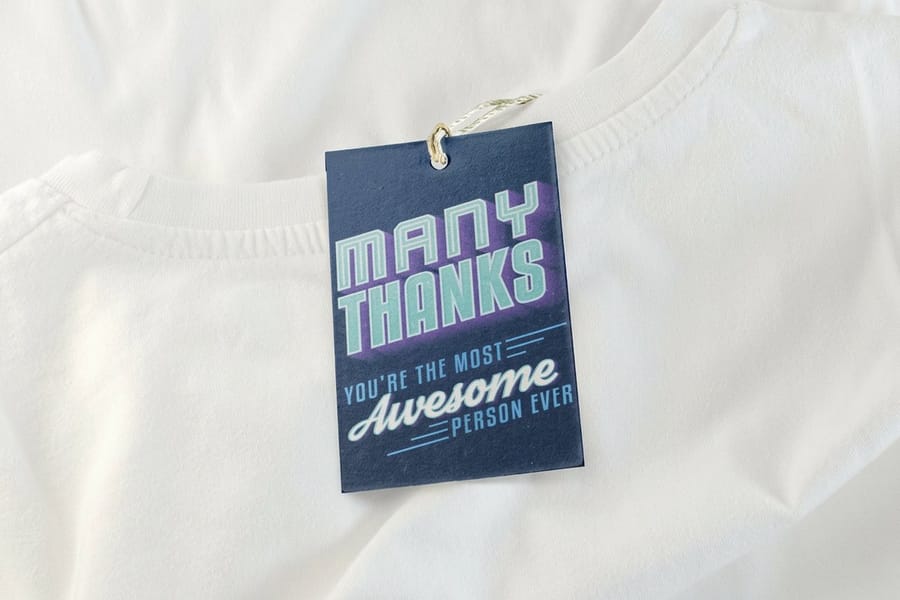
What separates merch that gets worn from merch that gets donated is usually the finishing, not the print. Two cheap items do most of the work. Fabric labels stitched or heat set at the neck replace the blank supplier's tag with your own name, which is the single change that makes a garment read as a brand rather than a promo item, and the fabric labels story shows them in place. Hang tags for clothing start at $25.27 and turn a stack of printed garments into something you can put on a rail and sell at an event.
Round the drop out with ready-made cotton totes so buyers carry the shirt home in something, and keep the whole set consistent by pulling everything from the same color build. The full range sits in branded merchandise, and if you are still deciding what to spend the budget on, the logo merchandise buying guide is blunt about what people keep. Our guide on how to order custom printed apparel and pick the right print method walks the whole order. For staff uniforms specifically, the custom work shirts guide covers blends and sizing runs in more detail than a hoodie order needs.
Wally explains hoodie printing
Measure the window, count the colors, then pick the process
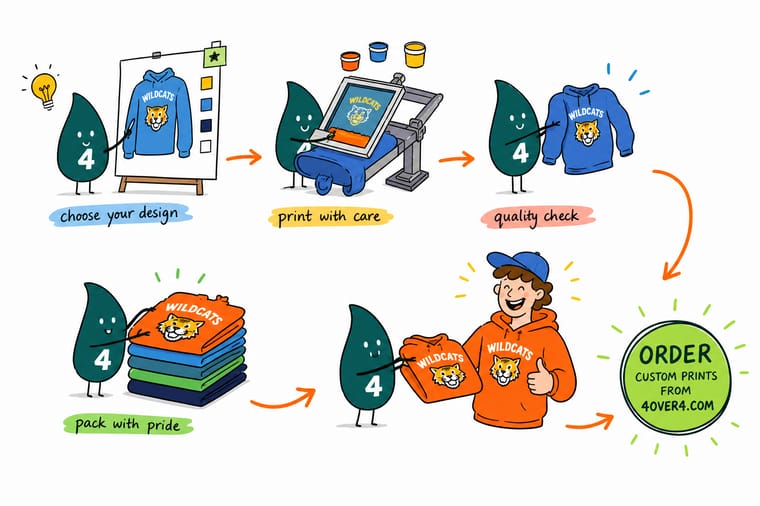
Wally lays the hoodie flat and finds the two seams that box in the artwork: the hood at the top, the pocket at the bottom. Whatever fits between them is the print, about 11 inches wide on an adult pullover. Then he counts colors, because on a screen press every color is a screen and every screen is money. Twelve pieces in six colors is the quote that hurts. Two colors, or vinyl for a short run, and the same design lands for half.
Order custom apparel →
Specs and pricing
Apparel options, sizes, and starting prices
Compare our apparel products side by side, with live configuration choices and starting prices straight from the 4OVER4.COM configurator. Standard, premium and vinyl t-shirts all start at $21.96, in white or black and sizes S to XXL, with an 8.5 by 11 inch print area on the front, the back or both.


Print it
Order the apparel your team will actually wear
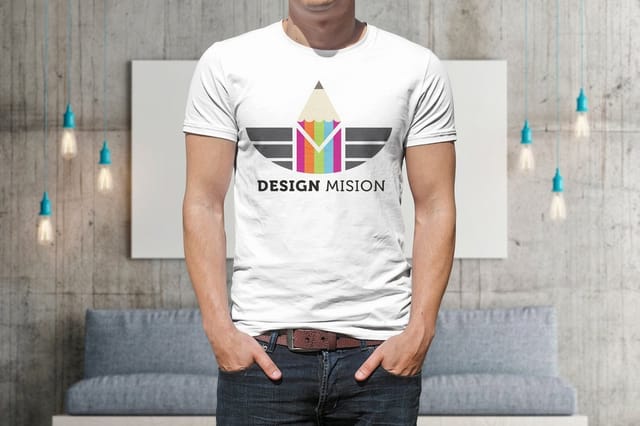
T-shirt printing from $21.96 for the whole team, premium t-shirts on a heavier body for staff, and ready-made cotton totes from $5.00 in 12 by 14 or 14 by 16 inches for the giveaway.

Explore more
Where to go next
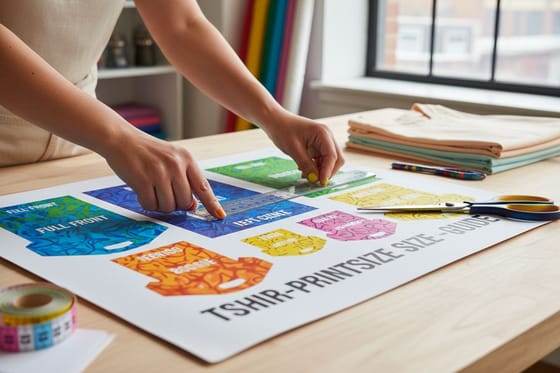
Two guides cover DTG against embroidery and apparel print sizes, then come custom work shirts, logo merchandise buying, every apparel guide and the branded merchandise range.
By the numbers
Twenty five years of print, hoodies included
Common Questions
Your custom hoodie questions, answered
What is the cheapest way to print custom hoodies in small numbers?
Heat transfer vinyl, in almost every case. Vinyl is cut from a roll and pressed one garment at a time, so there is no screen to burn and no setup to amortize. That is why a run of eight hoodies for a small team costs far less in vinyl than in screen print, where you would be paying for screens that only get used eight times. The trade off is that vinyl sits on the surface as a solid film, it handles one to three flat colors rather than shading, and a large solid block of it feels warm and stiff on the chest.
Can you print a photograph on a hoodie?
On a light 100 percent cotton fleece, yes, with direct to garment printing, which sprays water based pigment ink into the fibers and handles full color and gradients. On a dark hoodie it needs a white underbase laid down first, which makes the print heavier and duller than the same file on a white garment. On a 50/50 blend, expect softer edges, because the polyester fibers absorb less of the water based ink than the cotton around them. If the image has to be sharp and the garment is dark, reduce it to two or three flat colors and screen print it instead.
Why did the white print on my red hoodie turn pink?
That is dye migration, and it usually shows up days after delivery rather than in the shop. The polyester in a blended fleece is dyed with disperse dye that starts to gas off around 280F, while plastisol ink needs roughly 320F to cure properly. The garment goes through the dryer hot enough to release the dye, which then travels up into the still soft ink and stains it. The fixes are low cure ink, a polyester blocking underbase, or a 100 percent cotton fleece that has no disperse dye to release.
Do I need a different file for a hoodie than for a t-shirt?
Usually yes, and it is the step most people skip. A standard adult front print of 12 by 16 inches will not fit a pullover, because the hood seam caps the top and the pocket seam caps the bottom, leaving roughly 11 inches wide and far less height. Reflowing the artwork into a wider, shorter arrangement reads better than scaling the whole thing down until the type is unreadable. Sleeve prints, a left chest mark, and hood prints are all common ways to keep the design at a sensible size.
Can you print on the pocket or the hood?
The hood yes, the pocket rarely. A hood print goes on with a small platen and prints on one layer at a time, so a lined hood is printed before the lining closes it or kept to a small mark. The kangaroo pocket is a double layer sewn on three sides, which means a press platen cannot slide underneath it flat, so anything printed there tends to bridge and crack along the seam. Embroidery on the pocket is easier than printing on it, since a hoop only needs to reach the top edge.
How many pieces before the price really drops?
Two thresholds matter. The first is where screen printing overtakes vinyl, which lands around two dozen pieces for a one or two color design, because from there the screen charge is spread thin enough to beat the per piece pressing labor. The second is the garment price break itself, which most blank suppliers set at case quantity. Ordering 22 when the case is 24 is the most common way to pay more per hoodie than you needed to.
How much does it cost to print on a hoodie?
The price depends most on how many you order and which method carries the art. Screen printing gets cheapest past roughly two dozen pieces because the screens are a one time cost, heat transfer vinyl is cheaper below that, and every extra color or print location adds a setup. Heavyweight fleece and zip ups cost more than midweight pullovers, and a printed t-shirt carries the same artwork from $21.96.
Where can I print high-quality hoodies?
Look for a shop that offers screen printing, vinyl, direct to garment and embroidery, and that uses low cure ink or a blocking underbase on dark blended fleece. Ask which method they recommend for your count and colors before you ask for a price. Our apparel line runs on t-shirts today, from $21.96 with full color front and back, and the same hoodie file works there.
Does 4OVER4.COM print hoodies?
Our apparel line runs on t-shirts today: t-shirt printing starts at $21.96, with premium, vinyl and kids options alongside it, plus ready-made cotton totes at $5.00 for the same drop. Everything on this page about art preparation, color counts and quantity breaks applies to that order exactly as written, and the file you build for a hoodie front works on a shirt front with the height restored. If you want the finished garments to look like retail rather than merch, add fabric labels at the neck and hang tags for the drop.
Get Started
Pick the decoration method, then price the size run
Choose the garment, send one file, and we print apparel your team keeps wearing after the event is over.
Legal Disclaimer
Gold Standard guarantees apply to all standard orders placed through 4over4.com. Price match requires verifiable proof of a competitor's published price for an equivalent product with matching specifications and turnaround time. Satisfaction guarantee covers manufacturing defects and print quality issues. Contact support with order number and documentation.
