
Custom Printed Clothing and How to Pick the Right Print Method


Three ink methods, one fabric decision, and a print size that has to work on a youth small and a 3XL. Here is how a printer decides, and where each choice stops working.
Custom printed clothing is your artwork applied to a blank garment by screen printing, direct to garment, or heat transfer vinyl, and two questions decide which one you get: how many pieces, and how many colors. Screen printing charges a setup per color and then gets cheaper with every shirt, so it wins above roughly a dozen. Direct to garment has no setup and no color limit, so it wins on small runs and photographic art. Vinyl is cut and pressed one color at a time, which suits names, numbers and single pieces.
Quick answer
Quantity and color count pick the method for you
Decide the quantity and the color count first, then let the method follow. A screen job pays for one screen per color and spreads that cost across the run, so it gets cheaper the more shirts you order and more expensive the more colors you add. Direct to garment skips setup entirely, prints unlimited color, and suits one piece as happily as fifty. Vinyl cuts each color from a sheet and presses it on, which is fast for a handful of shirts and impractical past two or three colors. The fabric then decides how any of it looks, and the print size decides whether it reads on the smallest shirt in the box.
The Three Ways Ink Gets Onto a Garment
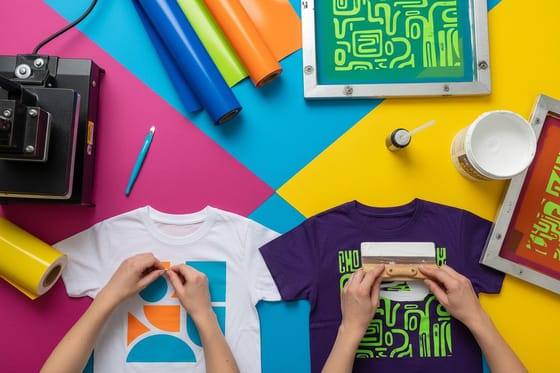
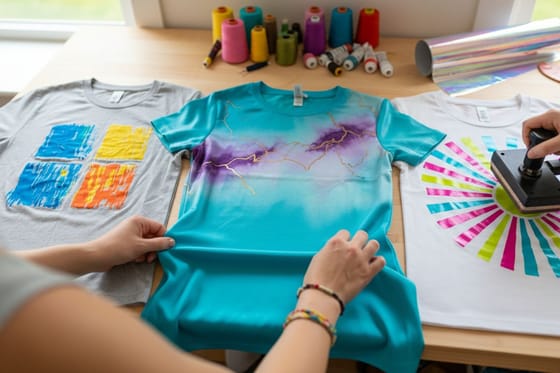
Screen printing pushes ink through a mesh stencil, one screen per color. Direct to garment sprays water based pigment straight into the fabric like an inkjet printer. Heat transfer vinyl cuts your shape out of a colored sheet and presses it on. Everything else in apparel decorating is a variation on one of those three, or it is thread rather than ink.
| Method | Setup | Color handling | How it feels | Best quantity |
|---|---|---|---|---|
| Screen printing | One screen burned per color, charged once. | Spot colors, matched exactly. Photos need halftone work. | A thin flexible film you can feel with a fingernail. | Twelve and up, and it keeps improving. |
| Direct to garment | None. The file goes to the printer. | Unlimited colors and gradients at no extra cost. | Soft, almost part of the shirt on cotton. | One piece to about fifty. |
| Heat transfer vinyl | None, but each color is a separate cut and press. | Solid colors only. No gradients, no photographs. | Slightly raised and rubbery, very opaque. | One piece to a couple of dozen. |
| Embroidery | The artwork is digitized into a stitch file, once. | Thread colors, no blends. Small detail fills in. | Raised, heavy, and the most durable of the four. | Any, on polos, caps and heavy fleece. |
Read the setup column first, because it explains every price you will be quoted. A four color front on 15 shirts carries four screen setups over 15 pieces. The same design on 300 shirts carries the same four setups over 300. That single fact, and nothing about ink quality, is why the per shirt price swings so far.
The limits are worth knowing before you design. Screen printing cannot reproduce a photograph without converting it to halftone dots, which is skilled work and adds screens. Vinyl cannot do a gradient at all, so a logo that fades from blue to green has to be redrawn in flat colors or printed another way. Direct to garment can print anything you can see, but on a dark shirt it lays a white underbase first, and that underbase is what you feel when the print seems stiffer than expected. We break the first two apart in detail in the screen printing versus vinyl printing comparison, and thread against ink in the DTG versus embroidery guide.
Picking the Blank, Because the Fabric Decides the Result

Printers argue about ink. Customers should argue about the blank. The garment underneath does more to the final look than any setting on the press, and it is the one variable you choose before anything is committed.
Cotton grade matters more than the label. Open end or carded cotton is spun from shorter fibers and leaves a slightly fuzzy surface, so fine lines soften. Ring spun cotton is combed and twisted tighter, which gives a smoother face and visibly crisper edges on small type. If your design has 8 point legal text or a thin outline, the blank grade is the difference between readable and mushy. Our premium t-shirts and silk t-shirts sit at that finer end, both starting at $21.96.
Blends trade print density for drape. A 50/50 or tri-blend hangs better, wrinkles less and feels lighter, which is why fashion brands love them. The cost is that direct to garment pigment only bonds to the cotton half, so the shirt color shows through and the print reads faded. That is a genuine style on a heather tri-blend and a disappointment on a job that needed solid coverage. Screen printing and vinyl do not care, because they sit on top rather than soaking in.
Polyester carries a specific risk. Under cure heat, polyester dye turns to gas and migrates upward into the ink above it. A white print on a red poly shirt can leave the shop clean and turn pink over the next few days. It is preventable with a low bleed ink, a poly blocking underbase, or a cooler and longer cure, but only if the printer knows the garment in advance. Fabric weight is the last lever: around 4.2 ounces gives you a light drapey tee, around 6 ounces gives you a substantial one that holds a heavy print without showing texture through the back. If you are still choosing between grades, the premium versus silk versus suede comparison lays the three side by side, and neckline shapes change how much room a chest print actually has.
Sizing and Placing the Design So It Reads on Every Size
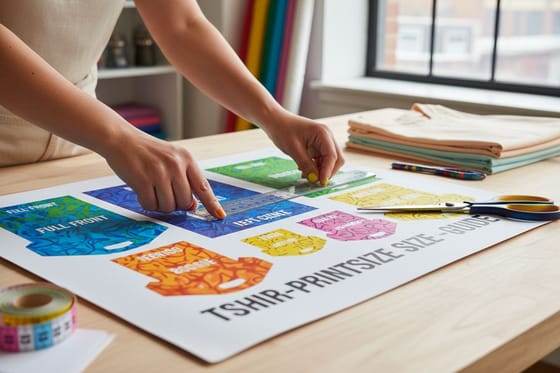
Print size is not a taste question. There is a printable window on every garment, set by the platen the shirt sits on and by where the seams fall, and a design that ignores it either gets scaled down without warning or lands on a seam and prints badly.
The numbers that cover most jobs:
- Full front, adult: about 11 to 12 inches wide, starting 2 to 3 inches below the collar seam.
- Left chest: about 3.5 to 4 inches wide, roughly 7 to 9 inches down from the shoulder seam and about 3 inches in from center.
- Full back: about 12 inches wide, starting 3 to 4 inches below the collar.
- Youth: drop to roughly 8 to 9 inches wide, or the print reaches the side seams.
- Sleeve: about 3 inches wide, kept clear of the hem and the underarm seam.
The size trap catches almost every first order. A single artwork file is printed at one size across the whole run unless you say otherwise, so a 12 inch front sized for an adult large swamps a youth small and looks undersized on a 3XL. If the order spans a wide size range, supply a second scaled version and split the run. Most printers will do it if you ask before production, and nobody can do it after.
Build the file at final print dimensions with fonts outlined, and keep anything you cannot afford to lose at least a quarter inch inside the edge of the print area. For screen printing, separate colors on their own layers and avoid stroke effects that will not translate to a stencil. The t-shirt print size guide has the full placement chart, and our blank template library gives you a correctly proportioned starting file. If the design is a logo rather than an illustration, the logo on a t-shirt walkthrough covers the conversion step by step.
Minimums, Setup and What You Actually Pay

Minimums exist for one reason: setup labor that does not shrink. Burning, aligning and washing out four screens takes the same time whether the run is 12 shirts or 400, so a shop that accepts a run of six either charges enough to cover that time or loses money. Methods with no setup have no real minimum, which is why single custom pieces are always direct to garment or vinyl.
Three costs move your total, in this order. Quantity comes first, because it divides the setup. Color count comes second, because on a screen job every color is another setup and another pass. Garment grade comes third, and it is the smallest of the three unless you jump to a heavyweight or a specialty blank. Print location is a quiet fourth: a front and a back are two separate passes through the press, not one job with a bonus.
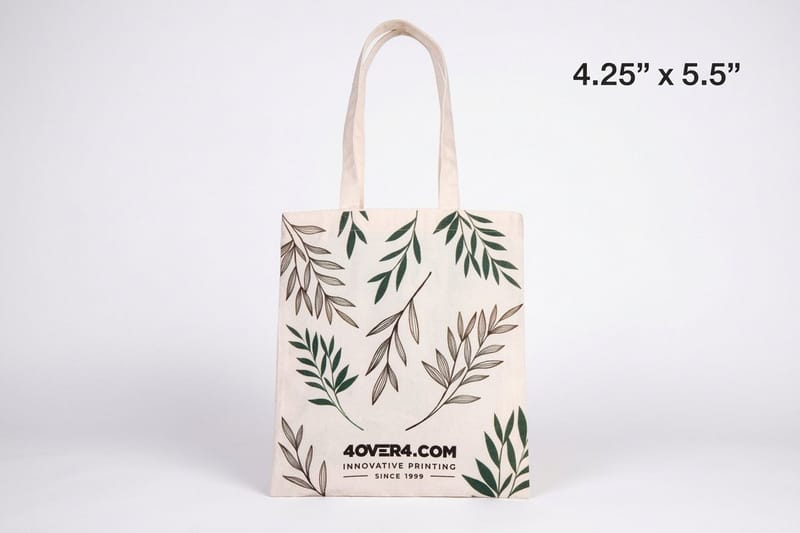
The practical move when a quote comes back high is to cut colors before you cut quantity. Dropping a four color design to two colors removes two setups from every screen job, and it usually costs a designer an hour. Dropping the order from 100 shirts to 50 raises the price of every shirt you do buy. For one-off pieces, names and numbers, vinyl t-shirts avoid setup entirely, and if you want the same artwork on something other than apparel, cotton totes start at $5.00 and print from the same file.
Live quantity tiers and options for every blank sit on the product pages themselves, so the fastest way to price a real job is to open t-shirt printing, set your quantity, and watch the per piece figure move. The full range is on the t-shirt printing category, and if the project is heading toward a broader merch drop, the merch guide covers what to print alongside the shirts.
Wally explains custom printed clothing
Count the shirts, count the colors, then choose
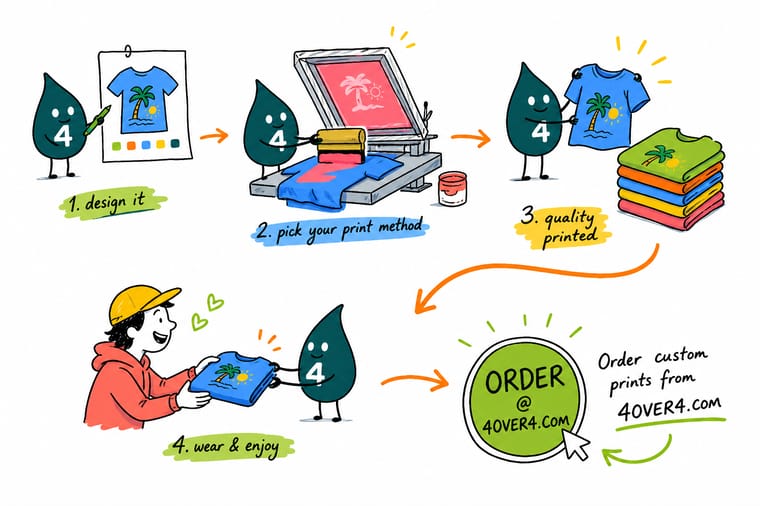
Wally holds three tools. The screen prints one color at a time and costs the same to set up whether he does 12 shirts or 400, so he saves it for the big runs. The garment printer sprays straight into the cotton with no setup at all, which is how he prints a single shirt with a photograph on it. The vinyl cutter carves solid shapes out of a colored sheet, perfect for a name and a number, useless for a gradient. Tell him the quantity and the color count and he already knows which one he is reaching for.
Configure custom t-shirts →Specs and pricing
Blanks, sizes, and starting prices
Compare the tee grades side by side, with live size and quantity choices and starting prices straight from the 4OVER4.COM configurator.



Print it
Order custom printed clothing that survives the wash

Explore more
Where to go next
By the numbers
Apparel printing you can count on at 4OVER4
Common Questions
Your printed clothing questions, answered
What is the cheapest way to print custom clothing?
It depends entirely on how many pieces you need. Under about a dozen shirts, direct to garment or heat transfer vinyl is cheaper because neither charges a screen setup. Above that, screen printing pulls ahead and keeps pulling ahead, because the setup cost is paid once and divided across the whole run. The mistake people make is comparing a per shirt price from a 12 piece quote against one from a 250 piece quote and concluding one method is expensive. Ask for both quotes at your real quantity. Our t-shirt products start at $21.96, and the quantity tiers on each product page show where the price steps down.
Will a print look different on a 50/50 blend than on 100% cotton?
With direct to garment, yes, noticeably. The water based pigment bonds to cotton fibers and largely ignores polyester, so a blend shows the shirt color through the print and reads softer and more washed out. Some brands sell that as a vintage look, and on a tri-blend it genuinely looks good. If you want a dense, saturated print, order ring spun 100% cotton. Screen printing and vinyl sit on top of the fabric rather than in it, so they look much the same on either.
How many shirts do I need before screen printing is worth it?
Roughly a dozen for a one color design, and more as the color count climbs, because every added color is another screen to burn, register and clean. A four color front on 15 shirts carries four setups spread over 15 pieces, which is a heavy load per shirt. The same four color front on 200 shirts is barely noticeable. If you are between quantities, cutting the design from four colors to two often saves more than shopping for a cheaper printer.
Why did the white print on my red shirt turn pink?
That is dye migration, and it usually shows up days after the shirt was printed rather than at the press. Polyester dye turns to gas at the temperature used to cure ink, and the gas passes into the ink film sitting above it, tinting the print. It happens most on red, maroon and royal polyester or poly-rich blends. The fixes are a low bleed ink with a poly blocking underbase, a lower cure temperature held for longer, or choosing a cotton garment for that color. Tell your printer the exact garment before the job runs, not after.
What file should I send for a t-shirt print?
Vector art in AI, EPS or PDF with fonts converted to outlines, sized to the finished print dimensions. Vector lets a printer separate colors for screens or cut a clean path for vinyl, and it scales from a left chest to a full back without softening. If all you have is a raster file, supply it at 300 dpi at final print size with a transparent background, and expect direct to garment rather than screen printing. A 72 dpi logo pulled off a website will not survive being blown up to 11 inches. Start from a correctly sized layout in our blank template library if you are building the file yourself.
How long does printed clothing last in the wash?
Longer than most people expect, and the failure mode differs by method. A properly cured plastisol screen print sits as a flexible film on the surface and typically outlasts the garment. Direct to garment prints fade gradually because the pigment lives in the fibers and goes where the fibers go. Vinyl fails at the edges first, lifting at a corner if it was pressed at the wrong temperature or peeled at the wrong moment. Washing inside out in cold water and skipping the dryer roughly doubles the useful life of all three.
Get Started
Ready to put your artwork on a shirt?
Pick the blank, set the quantity, upload the file, and we print apparel that holds its color through the wash instead of cracking after a month.
Legal Disclaimer
Gold Standard guarantees apply to all standard orders placed through 4over4.com. Price match requires verifiable proof of a competitor's published price for an equivalent product with matching specifications and turnaround time. Satisfaction guarantee covers manufacturing defects and print quality issues. Contact support with order number and documentation. On-time delivery rate based on tracked orders 1999 to 2026. Individual results may vary based on shipping carrier performance.
