
How to Get Fast Brochure Printing Without Losing a Day to the Fold


A deadline brochure is won on three decisions: the fold, the file, and whether you buy speed on the press or on the truck. Each one moves your date by a different amount.
To get brochures fast, keep the spec standard, get the file approved the same day you order, and buy the shipping upgrade before you buy a rush production lane. The fold is what most rush brochure orders lose a day to, because a folded piece needs a scoring and folding pass after the press that a flat sheet never touches. Production turnaround is counted in business days from file approval and covers printing only, so transit from our Queens plant is a separate purchase on top.

Quick answer
Count business days backwards from the event, then subtract the fold
Work back from the date the brochures have to be in your hands. Subtract the ground transit days to your address, then the printing days for your exact size and stock, then one more day if the piece folds, then a day of your own buffer for a file correction. Whatever is left is your real ordering deadline. If it has already passed, the fastest fixes in order are a shipping upgrade, a smaller rushed quantity, and a flat sheet instead of a folded one.
Where a Rush Brochure Order Actually Loses Its Days
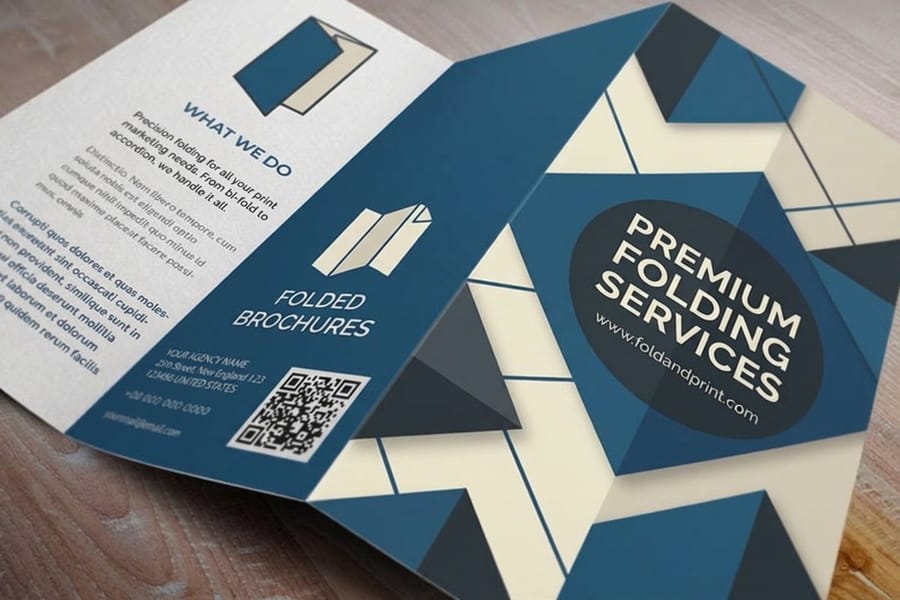
Deadline buyers tend to shop turnaround as a single number. It is really three numbers stacked: press time, bindery time, and transit time. Only the first two appear in the turnaround you select at checkout.
Press time is the most predictable part. A brochure is a four color job on a common sheet, and the press does not care whether it is printing your piece or the next one in the queue. Bindery is where the variation lives. Scoring, folding, perforating and bundling are separate operations on separate machines, and each one is a handoff that has to wait its turn.
Transit is not turnaround at all, though it gets blamed for missed dates more than anything else. It is a separate purchase made at checkout, and it starts only when the box leaves the plant. A one day print with four day ground is a five day delivery, and no rush production lane fixes that.
| Spec choice | Press | Bindery | What it does to your date |
|---|---|---|---|
| Flat 8.5 by 11 sheet | Standard run | None, straight to packing | The fastest brochure we print. Nothing after the press but the box. |
| Half fold or tri fold | Standard run | Folding pass | Adds a machine and a queue after the press. The usual extra day. |
| Fold on cover weight stock | Standard run | Score, then fold | Two bindery operations instead of one. Skipping the score cracks the crease. |
| High gloss UV coating | Standard run | Coating pass, then fold | Another pass before the piece can be handled or folded. |
| 11 by 25.5 inch sheet | Larger press sheet | Different cut and fold setup | Fine on a normal schedule. A poor thing to introduce on a tight one. |
Read that last column and pick your fights. If the piece has to fold, accept the bindery pass and buy back the time in transit. If the date is genuinely immovable, a flat sheet on a standard stock is the version of your brochure that gets there. Our guide to brochure fold types covers what each fold asks for, and the brochure sizes and fold options guide has the panel math you need before you commit to one.
The File Is What Decides How Fast You Start
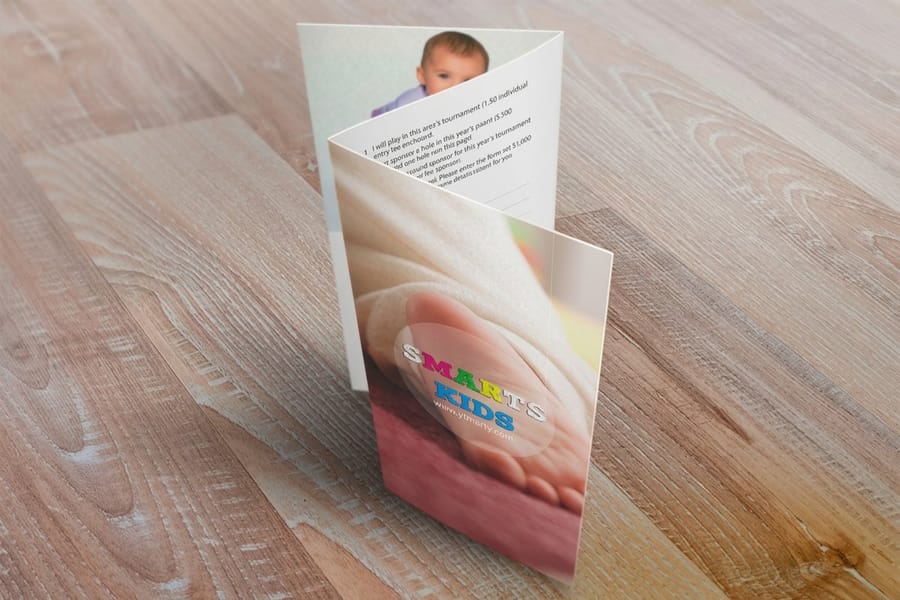
Production starts when your file clears the check, not when you pay. That one sentence explains most of the gap between the turnaround people expected and the delivery they got.
Build the file so the check is a formality:
- Bleed of 0.125 inches on every edge, with nothing you care about closer than 0.125 inches to the trim. A brochure has a printed panel running to the fold, so a short bleed shows as a white sliver on the crease.
- Panels sized for the fold, not divided evenly. On a tri fold the panel that tucks inside has to be shorter, by roughly a sixteenth of an inch, or the piece bulges and the fold sits proud.
- CMYK throughout, fonts outlined, images at 300 dpi at final size. An RGB file will convert, but the conversion is where a saturated brand blue turns dull and you lose a round asking about it.
- One multi-page PDF in reading order, outside first, inside second. Separate files for each panel invite a question, and a question costs you the afternoon.
- Fold marks outside the trim, never printed inside the artwork.
Proof choice matters just as much on a deadline. Brochures carry three proof options, and they are not equal in time. A file check plus an on-screen proof keeps the job moving. A physical proof shipped to you for signature is genuinely useful on a color critical piece, and it stops the clock while it travels both ways, so it belongs on a schedule that has room for it. There is more on the free file review under free proofs.
If you are building the file today, start from a correctly sized layout in the blank template library rather than measuring a folded panel yourself. Two guides will keep you out of the common holds: bleed, cut line and safety, and exporting a print-ready PDF from Illustrator or InDesign. If your layout is in Word, convert it properly first with the Word to print-ready PDF guide, because a Word file dropped straight into an order is one of the slowest ways to start.
The Rush Moves Worth Buying, and the One That Is Usually Wasted

There are four ways to pull a brochure date forward, and printers rank them in a specific order because they do not cost the same or work the same.
Buy the transit, not the turnaround. Upgrading the shipping leg is the cheapest day you will ever buy on a print job, and it changes nothing about the piece. We ship from Queens, New York, so the Northeast sees short ground transit while the West Coast is a multi-day leg on ground. If you are three time zones away, the shipping selection is the lever, not the press.
Split the run. Rush 250 pieces for the event and let 2,250 print on standard turnaround. You pay the premium on the quantity that has a date attached and nothing more. This is the move most people never think of, and it is the one a printer suggests first.
Drop the fold, keep the message. A flat sheet skips the bindery entirely. Standard flyers start at $39.54 and run in seven sizes on seven paper types, so a well laid out flat sheet at 8.5 by 11 inches carries the same content as a tri fold with no folding pass behind it. For an event handout that gets read once and recycled, the fold was never the point. The booklet against brochure against flyer comparison is worth two minutes before you commit.
Simplify the spec. Standard finish instead of high gloss UV. A house stock instead of a specialty one. A size from the middle of the list instead of the 11 by 25.5 inch sheet. Each one removes a handling step.
The move that is usually wasted is paying for the fastest production lane on a job whose file has not been approved yet. The queue you jumped does not start until the artwork clears. Fix the file first, then buy speed. More on how the rush lanes work sits in same-day and rush printing options and on the rush delivery page.
What Speed Costs on a Brochure Order
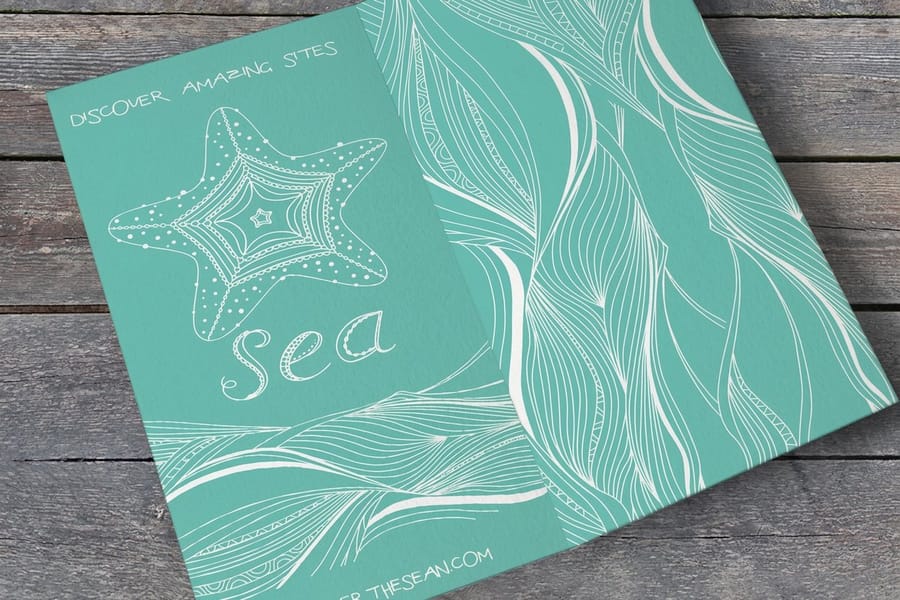
Standard brochures start at $57.11 and run in five sizes, from 5.5 by 8.5 inches to 11 by 25.5 inches, on four paper types with a standard or high gloss UV finish. Folded brochures start at the same $57.11 across four sizes, which tells you something useful: the fold is priced modestly. What it costs you is schedule, not money.
The expensive part of a rush is almost always freight. A production upgrade is a fixed step on the order. An air freight upgrade on a heavy box of 5,000 brochures is charged by weight and distance, and it can pass the print cost on a big run. That is why splitting the run works so well: the rushed 250 fly cheaply, the rest come by ground.
Two more things worth pricing before you decide. Quantity breaks are steep on brochures, so 2,500 rarely costs twice what 1,000 costs, and ordering the larger quantity once beats a second rush reprint later in the month. And if the brochure is a mailer rather than a handout, compare it against standard postcards at $16.48, which need no folding pass at all and post at a lower rate.
Whatever you land on, the whole catalog of sizes, stocks and folds is priced live on the brochure printing category, and the paper decision behind the fold is covered in the best paper types for brochure printing.
Wally races the brochure deadline
Approve the file, mind the fold, buy the truck
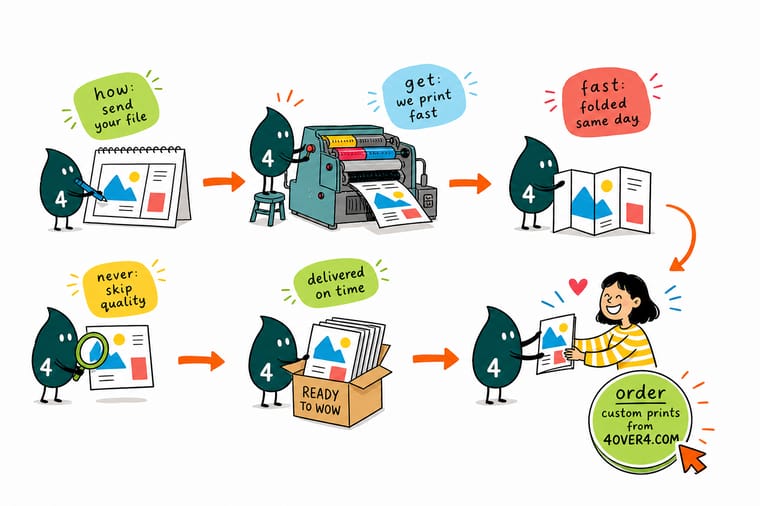
Wally starts the clock the moment your file clears the check, not when you pay. A flat sheet leaves his press and goes straight in the box. A folded brochure detours through the folder, and on heavy stock it gets scored first so the crease does not crack, which is the day people forget to count. Then the box still has to travel from Queens, and that leg is bought at checkout. When Wally is tight on time he rushes the 250 you need in hand and lets the rest come by ground.
Configure your brochures →Specs and pricing
Sizes, stocks and starting prices for a deadline job
Brochures, folded brochures and the flat sheet fallback, with live configuration choices and starting prices straight from the 4OVER4.COM configurator.


Print it
Order brochures that make the date


Explore more
Where to go next




By the numbers
Deadlines 4OVER4 keeps
Common Questions
Your fast brochure questions, answered
How fast can brochures actually be printed?
The honest answer is that it depends on the fold and the stock, and the product page shows the real options for the spec you have selected. A flat 8.5 by 11 inch sheet on a standard paper is the quickest thing we can put on a truck, because it goes from press to packing with no bindery step in between. Add a half fold or a tri fold and you add a scoring and folding pass. Pick the paper and size first, then look at the turnaround choices the configurator offers for that exact combination, because they change with the spec.
Does folding a brochure really add a day?
Often, yes, and it is the single most common surprise on a rush brochure order. Folding is a separate machine and a separate queue. The sheets have to be dry enough to run without marking, they get scored so the fold does not crack, and then they are folded and bundled. On heavier cover stock the score is not optional, because an unscored fold on thick paper splits along the crease and shows white fiber. If your deadline cannot absorb that pass, print flat and fold nothing.
When does the turnaround clock actually start?
At file approval. Ordering does not start production, an approved print-ready file does. This is why two customers who ordered at the same hour can get their brochures days apart. One uploaded a correctly built PDF with bleed and got through the check on the first pass, the other sent a Word document that needed converting and a size that had to be rebuilt. Upload the file with the order, watch for the notification, and answer it the same day.
I need brochures for a Saturday event. When do I order?
Count backwards in business days, not calendar days, and leave the weekend out of the math entirely. Work back from Friday delivery: subtract the ground transit days to your address, subtract the printing days for your spec, subtract the folding pass if the piece folds, and then subtract one more day as your own buffer for a file correction. If that lands before today, either drop the fold, cut the quantity you rush, or pay for faster transit instead of faster printing.
Is faster shipping better than a faster print turnaround?
Usually, when only one of them will fit the budget. Upgrading transit shortens a leg that is measured in whole days and it does not touch the spec of the job, so nothing about the brochure changes. Upgrading production compresses a queue that already has a floor, and it cannot make ink dry or a folder run faster than it runs. Buy the transit upgrade first, and only pay for a rush production lane when the transit upgrade alone still misses the date.
What brochure spec prints fastest?
A flat 8.5 by 11 inch sheet, four color on both sides, on a common house stock with a standard finish, in a quantity that is not unusually large. Every step away from that adds handling. High gloss UV coating is another pass. An 11 by 25.5 inch sheet is a bigger press sheet and a different cutting pattern. Perforation and scoring are bindery operations of their own. None of them is slow by itself, but three of them stacked on one deadline is how a job misses it.
Can I fold brochures myself to save a day?
For a hundred pieces on text weight paper, yes, and people do it the night before an event. Past that it stops being sensible. Hand folding text stock without a bone folder gives you soft, uneven creases that show badly on a piece with a printed panel edge, and cover weight paper cracks unless it has been scored first. If you plan to fold in house, ask for the job to ship flat and scored so the crease is already in the sheet.
Get Started
Have a date to hit? Start the clock now.
Pick your size and stock, upload the file with the order so the check clears today, and choose the transit that fits the deadline. Flat or folded, we print it and get it moving.
Legal Disclaimer
Gold Standard guarantees apply to all standard orders placed through 4over4.com. Price match requires verifiable proof of a competitor's published price for an equivalent product with matching specifications and turnaround time. Satisfaction guarantee covers manufacturing defects and print quality issues. Contact support with order number and documentation. On-time delivery rate based on tracked orders 1999 to 2026. Individual results may vary based on shipping carrier performance.
