
Cheap Brochure Printing Comes Down to Run Size, Stock and Fold


Four things set the price of a brochure, and one of them is worth more than the other three together. Here is the real price ladder, the point where saving stops, and the cuts that show up in the reader hand.
Run size is the lever. A set of 50 standard brochures is $57.11, about $1.14 each; the same brochure at 1,000 is $180.13, about 18 cents each, and 6,000 works out near 7 cents. After 1,000 the curve flattens, so the remaining 24,000 pieces only take another 13.5 cents off. Stay on the six preset sizes, drop the High Gloss UV before you drop paper weight, and keep the 3 business day standard turnaround unless the deadline genuinely will not move.
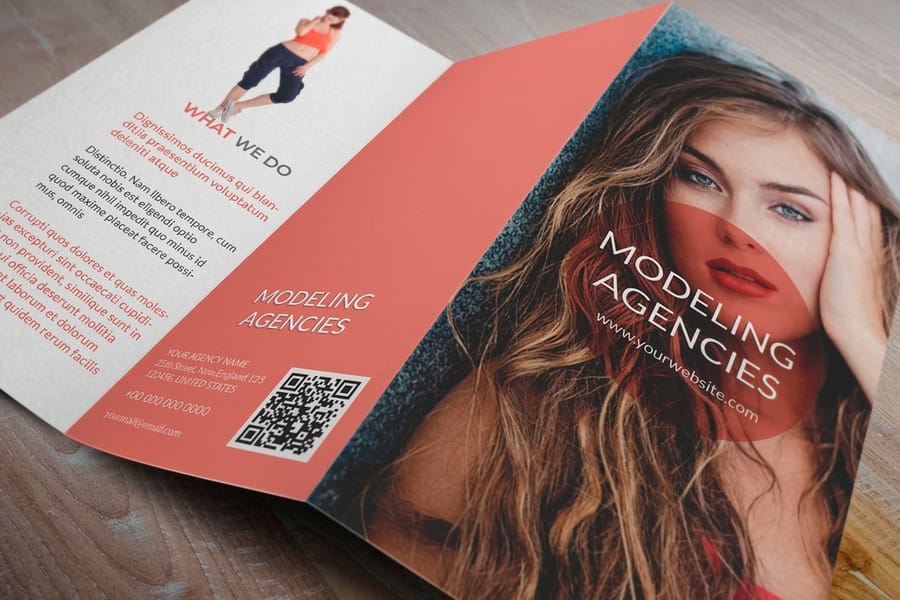
Quick answer
One lever moves the price. The rest is small change.
The cheapest brochure is a bigger run of a standard size that you actually hand out. Fifty pieces cost $1.14 each and a thousand cost 18 cents, so the quantity you type in beats every stock, coating and fold decision on the form. Choose a preset trim rather than a custom one, keep the standard 3 business day turnaround, and spend what is left on paper that survives a rack instead of on a coating nobody will notice.
The Price Ladder, With the Real Numbers On It
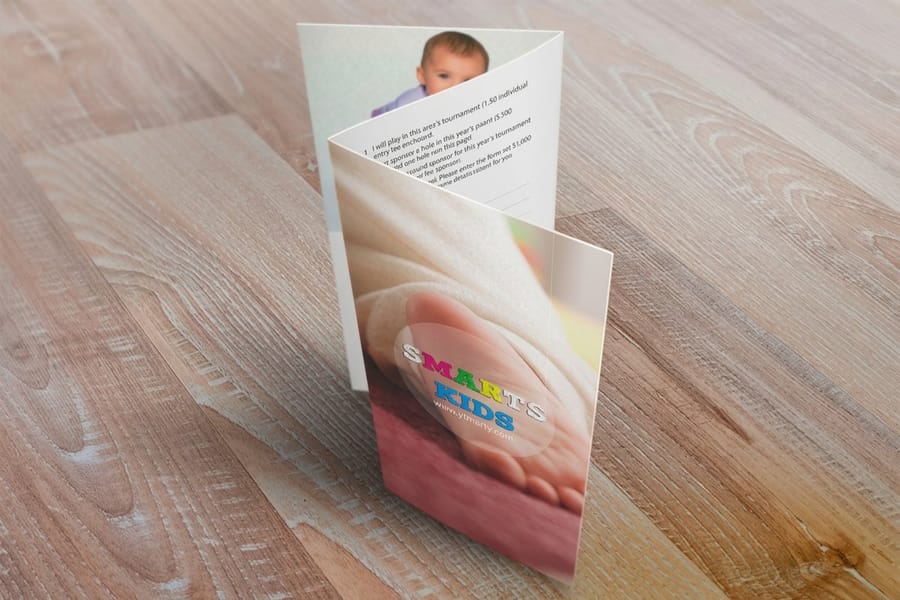
Here is the whole argument in one table. These are the live set totals for standard brochures at 4OVER4.COM, with the per-piece cost worked out beside them.
| Quantity | Set total | Per brochure | What the step up buys |
|---|---|---|---|
| 50 | $57.11 | about $1.14 | A proof run, a board meeting, one open house. |
| 100 | $82.38 | about $0.82 | Double the brochures for $25.27 more. |
| 500 | $155.97 | about $0.31 | The first real drop. A quarter of the 50-piece unit cost. |
| 1,000 | $180.13 | about $0.18 | Another 500 brochures for $24.16. The best value on the ladder. |
| 6,000 | $399.82 | about $0.07 | Campaign volume, if you have somewhere to put them. |
| 25,000 | $1,119.25 | about $0.045 | The floor. Only 13.5 cents below the 1,000 price. |
Read the fourth column and the strategy writes itself. The step from 500 to 1,000 adds $24.16 and hands you 500 more brochures at under 5 cents each. Nobody turns that down on purpose; they turn it down by ordering 500 without checking what 1,000 costs.
The reverse trap is just as expensive. A 6,000-piece run at $399.82 looks brilliant on a spreadsheet right up to the moment 4,000 of them sit in a closet with last year phone number on them. Cheap brochure printing is per brochure handed to somebody, not per brochure produced. Price the run against your real distribution list, and if you are unsure how those price breaks are calculated on any of our products, the guide to how bulk printing price breaks work explains the mechanics.
Size and Fold: Stay Where the Press Is Already Set Up
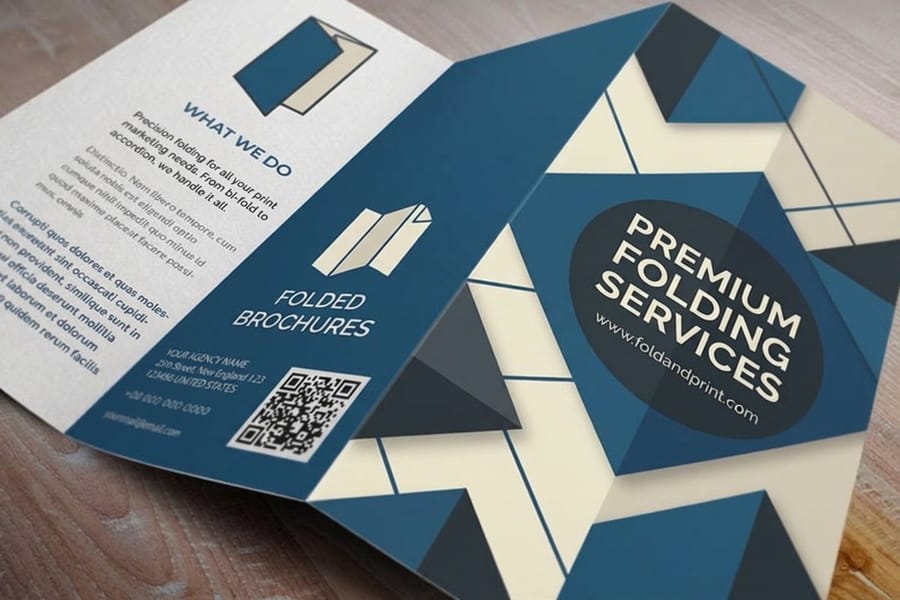
Standard brochures come in six sizes, from a rack-friendly 5.5" x 8.5" up to a wide 11" x 25.5", with custom trims available anywhere inside that range. The presets exist because they cut cleanly out of a press sheet. A custom size that leaves an awkward strip of waste is paid for by you, in the same way an odd cut of timber costs more per usable foot.
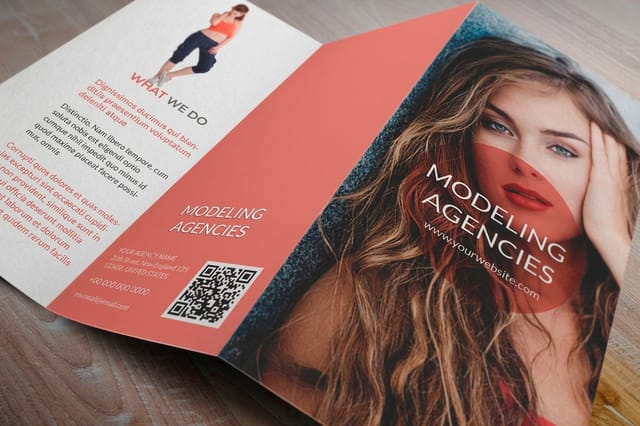
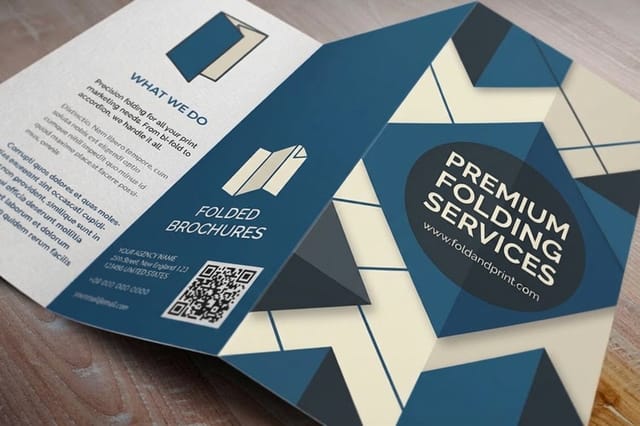
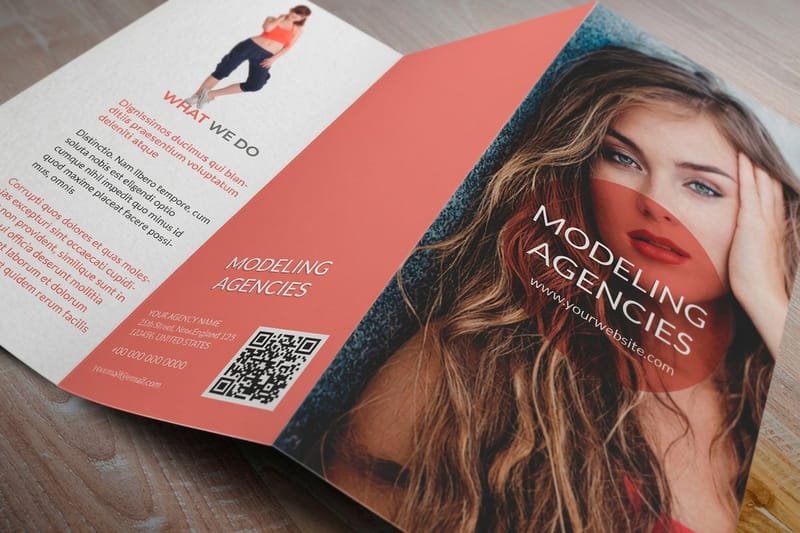
The fold is the second question, and it is where people quietly overspend. Standard brochures offer a half fold: one crease down the middle of an 8.5" x 11" sheet, four printable panels, closing to 5.5" x 8.5". That covers a menu, a price list or an event program with the most uninterrupted space per panel. Larger sheets give you the room for bi-fold, tri-fold, z-fold and gate fold layouts, and each of those is worth choosing for how it organizes the reading order rather than for how it looks in a mockup. Folding pricing is subject to change on file review, so an unusual fold on an unusual trim gets quoted once we see the artwork.
Two things settle the choice for most jobs. If the piece has to sit in a rack or slip into a business envelope, the tri-fold is the format that fits, at roughly 3.67" x 8.5" closed. If it has to lie open and be read left to right in one movement, a timeline or a three-column comparison, the z-fold is the one that does not hide a panel behind a flap. Our guide to brochure fold types walks each one through, and common brochure sizes and fold options maps the closed size each fold produces. If the fold is the whole product for you, folded brochures start at the same $57.11 for 50.
Stock and Coating: Where Cheap Starts Looking Cheap
Four stocks are sold on standard brochures. Three are text weights that fold softly and feel like a magazine page, and one is a cover weight that gives the piece some spine.
| Stock | How it feels | Best use | The catch |
|---|---|---|---|
| 100# Gloss Text | Smooth and shiny, color sits bright on the surface | Photography, food, property, anything sold on the image | A pen skids on it and marker takes a long time to dry. |
| 100# Silk/Matte Text | Low sheen, no glare under overhead light | Text-heavy pieces read indoors or under show lighting | Adding High Gloss UV turns it glossy and removes the reason you picked it. |
| 70# Uncoated Text | Natural and papery, no shine at all | Forms, reply sections, education and nonprofit work | The lightest of the four. It flops in a rack and curls in a humid room. |
| 14pt Gloss Cover | Noticeably stiffer, the only cover weight here | Counter pieces and brochures handled over and over | Costs more than the text weights and folds with a firmer crease. |
If the budget has to come down, take the High Gloss UV Coating off before you take weight out of the paper. The coating is chosen per order alongside the stock, and its job is scuff resistance and extra shine on a cover image. A reader will not miss it. A reader will absolutely notice a brochure that goes limp in the hand, which is what happens when a rack piece is printed on 70# uncoated because it was the lightest line on the list.
There is one exception worth knowing. If people write on the piece, an uncoated sheet is not the cheap option, it is the correct one, because ballpoint and rubber stamp both work on it and slide off the coated stocks. For the longer comparison of how each weight behaves once it is folded, read the best paper types for brochure printing.
Turnaround, Files, and the Two Costs Nobody Budgets For
Standard brochure production is 3 business days. Above that sit 2-Day, Next-Day and Same-Day, and each one adds a set percentage on top of the base price rather than a flat fee. That detail matters more than it sounds: a rush on 100 brochures is small money, and the identical rush on 6,000 is a line item somebody has to approve. Same-Day orders need approval by noon Eastern to ship that day. If the calendar is tight, look at same-day and rush printing options before you assume the whole run has to move.
The other unbudgeted cost is the reprint. A brochure comes back wrong for boring reasons: type sitting too close to the trim, no bleed on a background that runs off the edge, or a fold line running through a word. Every one of those is free to fix before the file uploads and full price to fix afterwards. Build the artwork on a blank brochure template, which is drawn at the real trim size with the 1/8" bleed and safe margin already marked, and order a small proof run first if the job is large. Fifty brochures at $57.11 is cheap insurance against a 6,000-piece mistake.
Shipping is the last one. Brochures ship from our New York plant, and a folded piece is compact and light, so the freight on 1,000 is modest against the print cost. If the brochure is going into the mail rather than into a hand, read how to mail brochures first, because postal size and thickness rules can force a fold or a stock change that you would rather find out about now than after the run.
Sometimes the Cheapest Brochure Is Not a Brochure
Before you optimise the price of a brochure, check that a brochure is the format the job needs. A fold costs money and it costs panel space, and plenty of pieces get folded out of habit.
| Format | Starting price | What it is | Pick it when |
|---|---|---|---|
| Standard Flyers | from $39.54 | One flat sheet, printed one or both sides | The message fits on a page and gets handed out fast. |
| Standard Brochures | from $57.11 | A folded sheet with a cover, an inside spread and a back | You need a reading order: cover, story, contact. |
| Folded Brochures | from $57.11 | The same sheet sold fold-first, with a no-fold option | The fold is the product and you want it set by default. |
| Standard Booklets | from $240.55 | Bound pages in multiples of four | The content will not fit on six panels however you fold it. |
The flyer is the honest answer more often than people admit. If your brochure has one strong image, a short pitch and a phone number, folding it just hides two thirds of what you paid to print. Go the other way and the rule holds too: cramming a twelve-item menu with photographs onto a tri-fold produces six-point type that nobody reads, and a booklet would have done the job.
Once the format is settled, the ordering is simple. Set the size and stock in the configurator on brochure printing, drag the quantity slider until the per-piece number stops falling meaningfully, and print that number. If you want the design side of the same question, which trims show and which stay invisible, cutting brochure costs without cheap results takes it from there.
Wally explains the cheap brochure
Order to the knee, then stop
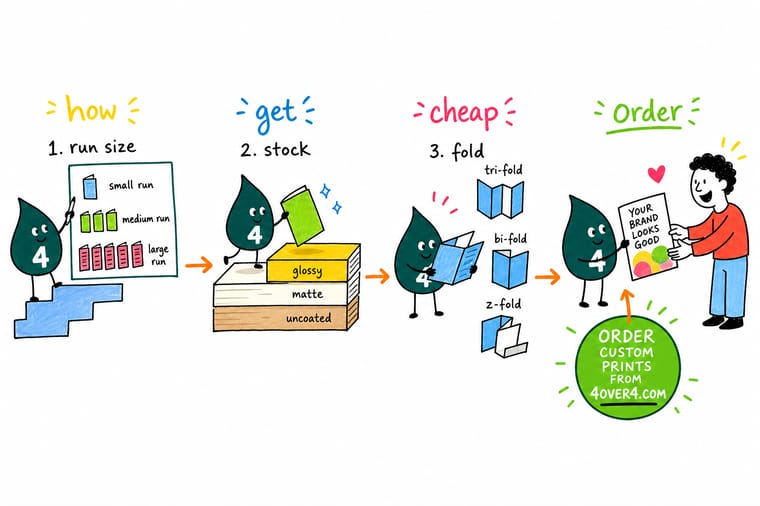
Wally puts 50 brochures on the counter at $1.14 each and a thousand next to them at 18 cents. Same paper, same ink, same press. He drags the slider up until the per-piece number stops dropping in any meaningful way, which happens around a thousand, then he stops. Past there he is buying storage. He keeps the preset size, keeps the standard three day turnaround, and puts the money he saved into paper that does not flop in a rack.
Configure standard brochures →Specs and pricing
Sizes, stocks and live starting prices
Set the size, stock, finish and quantity here and watch the set total and per-piece cost move together, straight from the 4OVER4.COM configurator.


Print it
Order the run that gets handed out
Explore more
Where to go next


By the numbers
Brochure printing you can count on at 4OVER4
Common Questions
Your cheap brochure printing questions, answered
What is the cheapest way to print brochures?
Order one larger run of a preset size on the default stock, at standard turnaround, and hand out every copy. Standard brochures at 4OVER4.COM start at $57.11 for 50, which is about $1.14 each, and 1,000 of the same brochure is $180.13, about 18 cents each. That single decision does more than the stock, the coating and the fold put together. The cheap order is the one you do not repeat, so print the quantity you will actually distribute before the information on the panel goes stale.
How much do 500 brochures cost?
A 500-piece run of standard brochures is $155.97, which works out to about 31 cents each. Stepping to 1,000 costs $180.13, only $24.16 more for twice the brochures, and drops the piece price to about 18 cents. That gap is the most common place people leave money behind: the second 500 costs a fraction of the first 500. Heavier stock, a High Gloss UV coat or a rush turnaround move the total, and the configurator shows the number before you commit.
Is it cheaper to print brochures at home or online?
For anything past a handful, online wins, and the gap is wide. A home inkjet burns two ink cartridges over a few hundred double-sided color sheets, cannot fold, cannot trim to a bled edge, and gives you letter-size paper rather than the six brochure sizes. At about 18 cents a piece for 1,000 printed, folded and trimmed, commercial printing is under the cost of the ink alone. Home printing makes sense for one proof copy you hold in your hand before you order.
Does a tri-fold cost more than a half fold?
The standard brochure product carries a half fold option, and larger sheets give you room for bi-fold, tri-fold, z-fold and gate fold layouts set up in the brochures range. Folding pricing is subject to change on file review, which means an unusual fold on an unusual size can be quoted after we look at the artwork. A half fold on a preset size is the safe, predictable choice when the budget is fixed.
What is the cheapest paper for a brochure?
The 70# Uncoated Text is the lightest of the four stocks sold on standard brochures, and it is the right pick when people write on the piece, when it is a form or a reply section, or when a plain, honest feel suits the message. It is the wrong pick for a rack: an uncoated text sheet flops in a display stand and curls in a humid room. If the brochure has to stand up on its own, the 14pt Gloss Cover is the only cover weight on the product and it holds its shape.
Can I get cheap brochures printed fast?
You can get them fast or you can get them at the base price, and the two pull against each other. Standard production is 3 business days. 2-Day, Next-Day and Same-Day each add a set percentage on top, so the faster tier costs proportionally more on a bigger run. Same-Day orders have to be approved by noon Eastern to ship that day. If the deadline is real, a smaller run at standard speed often lands cheaper than the full run rushed.
Get Started
Ready to price a brochure run properly?
Pick a preset size, choose the stock that suits the rack or the envelope, then slide the quantity until the per-piece cost stops falling. That number is your cheap brochure.
Legal Disclaimer
Gold Standard guarantees apply to all standard orders placed through 4over4.com. Price match requires verifiable proof of a competitor's published price for an equivalent product with matching specifications and turnaround time. Satisfaction guarantee covers manufacturing defects and print quality issues. Contact support with order number and documentation. On-time delivery rate based on tracked orders 1999 to 2026. Individual results may vary based on shipping carrier performance.
