
The Ultimate Brochure Paper Guide


Sofia is our design and templates voice, built from the knowledge of our production team, with over 20 years in printing.
Text or cover, gsm, gloss or matte, 4/4 or 4/0. Each of those terms decides a number on your quote, and this page puts them in plain English.
Brochure paper weight is the stock thickness of the printed piece, measured in pounds (lb) or gsm. Most folded brochures use 80lb to 100lb text (about 118 to 148 gsm), which folds cleanly and feels professional. Flat, single-sheet, or premium pieces step up to 80lb to 100lb cover (roughly 216 to 270 gsm) or 14pt cardstock. Always check whether a weight is text or cover, since 80lb text is a foldable page while 80lb cover is a stiff card.
Quick tips
Quick tips for picking brochure paper weight
Choose 100lb text (about 148 gsm) for most folded brochures because it feels professional and folds without cracking. Step up to 80lb or 100lb cover for flat, single-sheet, or premium pieces. Always confirm whether a weight is text or cover, since the two are different scales. Add gloss for punchy photos or matte for easy reading, and order free samples before committing a full run. 4OVER4.COM customers who match the weight to the job get a brochure people keep.
Why brochure paper weight matters
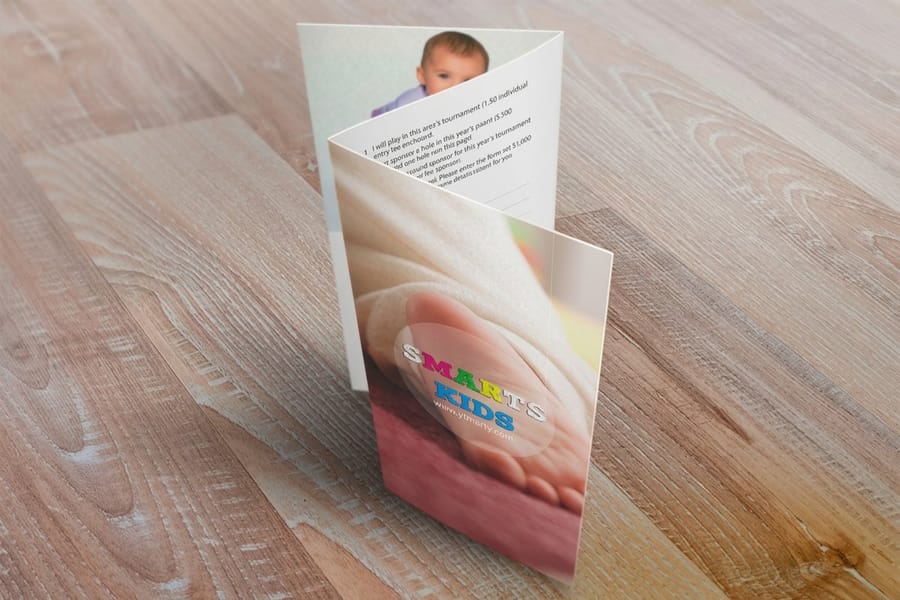
Paper weight decides whether a brochure feels cheap or premium. Pick a stock that is too thin for the job and the piece flops in the hand, shows print from the other side, and reads like a throwaway. Go too heavy, say 100lb cover at about 270 gsm on a piece with two folds, and it cracks at the fold unless it is scored, or costs more than it should. Most folded brochures sit on 100lb text, about 148 gsm, which folds clean and still feels solid. Getting the weight right is the difference between a brochure people keep and one they toss.
The trouble is the language. Paper is described with terms like 80lb text, 100lb cover, gsm, gloss, matte, and 4/4, and none of them are obvious the first time you meet them. This guide defines every term in plain English, shows what each common brochure weight actually feels like, and helps you match the right stock to the right job. If you want the wider picture first, our what is a brochure guide covers types and uses.
By the end you will be able to read a print quote, pick a stock with confidence, and order a brochure that lands the way you want. You can configure a run any time on the brochures page.
What is paper weight?
Paper weight is how heavy a sheet is, and it works as a rough proxy for thickness and stiffness. In the United States it is quoted in pounds (lb), based on the weight of a ream (500 sheets) cut to that paper type basic size. The catch is that each paper type uses a different basic size, so the pound number only means something once you know the category.
That is why text weight and cover weight are not the same scale. An 80lb text is a foldable page, while an 80lb cover is a stiff card, even though both say "80lb." Text weights are for the body of a folded brochure. Cover weights are for flat pieces, mailers, and premium covers that need to stand up on their own.
The cleaner measure is gsm (grams per square meter), the international standard. Because gsm weighs one square meter regardless of paper type, a higher gsm always means a heavier, thicker sheet, so it is the fairest way to compare two stocks. When you look at our best paper types for brochure printing guide, the gsm figure is the number to anchor on.
What is paper finish?
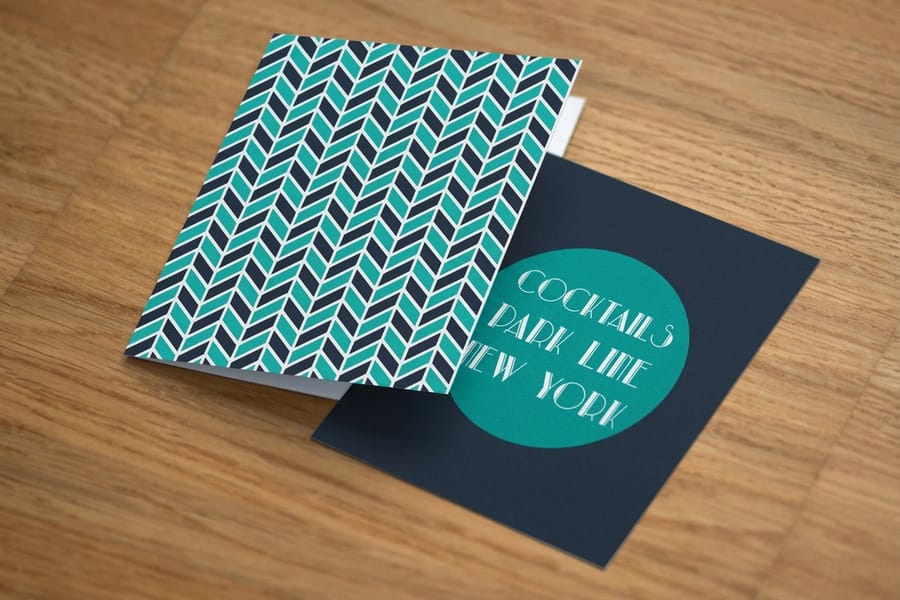
Paper finish is the coating and surface texture on the sheet, and it changes how a brochure looks, feels, and reads. Two brochures on the same weight can feel worlds apart once you factor in the finish.
- Gloss: shiny and reflective, makes photos and saturated colors pop. Ideal for image-heavy, high-impact sales pieces. It can glare under bright light and shows fingerprints.
- Matte (dull): soft and non-reflective, easy to read in any light, and feels premium. A safe default for text-forward brochures.
- Uncoated: natural, slightly toothy surface that takes pen and pencil. Choose it when people will write on the piece.
- Silk or satin: a middle ground with a low sheen, some color punch, and no harsh glare.
Not sure which way to go? Our matte vs glossy brochure guide weighs the two most common choices head to head, and 4OVER4.COM offers both across the brochure printing range.
Common brochure paper weights and what they feel like
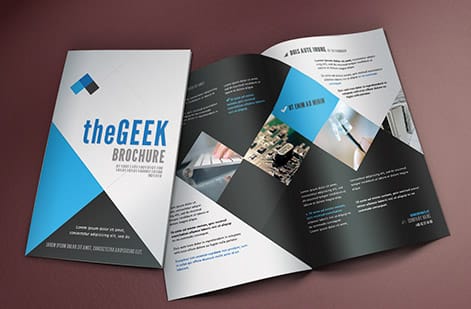
The everyday brochure stocks, lightest to heaviest, with the gsm equivalent so you can compare them fairly.
80lb text (about 118 gsm): light and flexible, close to a quality magazine page. Great for a low-cost, high-volume mailer where folding ease matters more than heft.
100lb text (about 148 gsm): the brochure sweet spot. Solid enough to feel professional, thin enough to fold cleanly. This is where most folded brochures live.
80lb cover (about 216 gsm): a genuine card. Perfect for flat, single-sheet brochures and mailers that need to survive handling and the post.
100lb cover (about 270 gsm) and 14pt: heavy, premium stock for leave-behinds and covers that should signal quality the moment they are picked up. These usually get scored before any fold.
On a 4OVER4.COM brochure order you choose from four stocks. Here is how each one reads in gsm, how thick it feels, and where it fits.
| Stock | Scale | Weight in gsm | Thickness in the hand | Best for |
|---|---|---|---|---|
| 70# Uncoated Text | Text | under 118 gsm | Thinner than 80lb text | Pieces people write on, with a pen or pencil |
| 100# Gloss Text | Text | about 148 gsm | A quality magazine page | Photo-heavy folded brochures, the default stock |
| 100# Silk/Matte Text | Text | about 148 gsm | A quality magazine page | Text-forward folded brochures with no glare |
| 14pt Gloss Cover | Cover | about 300 gsm | A stiff card, about twice the weight of 100lb text | Flat leave-behinds and premium covers, scored before any fold |
Every stock comes in six flat sizes, from 5.5 x 8.5 to 11 x 25.5 inches, with 4/0 or 4/4 ink. To see how these weights pair with the classic sizes, the common brochure sizes and fold options guide lays out the standard trims.
How to choose the right brochure paper weight
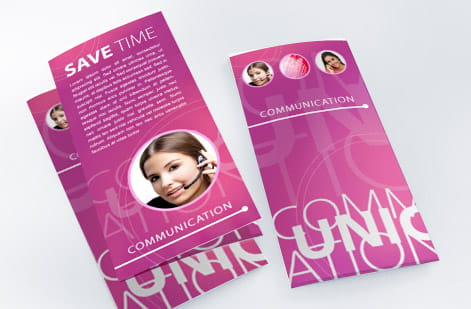
Work from the job backward. Match the weight to how the piece is used, folded, and handled, and the choice makes itself.
- Folded rack brochure or handout: go with 100lb text (about 148 gsm). It folds crisply into a half, tri, or z-fold and feels professional without cracking.
- Budget or high-volume mailer: 80lb text (about 118 gsm) keeps costs down and postage light while still folding cleanly.
- Flat, single-sheet brochure: step up to 80lb cover so the piece stays stiff and does not curl in a rack or an envelope.
- Premium leave-behind or cover: choose 100lb cover or 14pt for a heavy, quality feel, and plan for scoring before any fold.
- Not sure? Order free paper samples and feel the options in your own hands before you commit the full run.
Design the layout to fit whatever weight you pick using the online designer, and if the piece needs to fold, read how to fold a brochure before you finalize the file.
4/0 vs 4/1 vs 4/4: what the print notation means

Print quotes love shorthand, and the one that trips people up most is the ink notation like 4/4. It is simpler than it looks. The first number is the ink colors on the front, the second is the colors on the back. A 4 means full color CMYK, a 0 means blank, and a 1 usually means a single ink such as black.
- 4/4: full color on both sides. The standard for most brochures, since both faces carry imagery and text.
- 4/0: full color on the front, blank on the back. Good for a single-sided sheet or a piece that mounts flat against something.
- 4/1: full color on the front, black-only on the back. A tidy way to trim cost when the back is just text.
Ink coverage is one of the inputs that shapes your quote, alongside weight, finish, and quantity. For a brochure you want people to read on both sides, 4/4 is almost always the right call. You can pick coverage along with everything else on the brochure configurator.
Brochure folds and how weight affects the crease
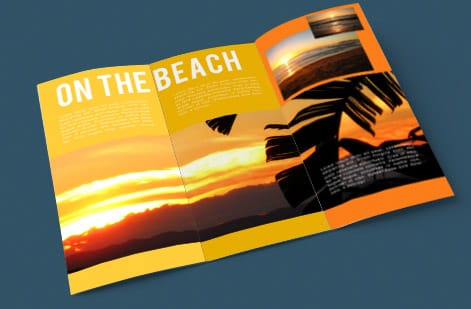
The fold and the paper weight are a package deal. The more folds a brochure has and the heavier the stock, the more the crease has to do, so pick the two together.
Half-fold (bi-fold): one clean fold into four panels. Forgiving on almost any weight. Tri-fold (letter fold): two folds into six panels, the classic rack brochure. Z-fold: two folds in opposite directions, best on lighter text weights so the accordion sits flat. Gate and roll folds: multiple folds that need thinner stock or careful scoring.
Light text weights (80lb to 100lb text) fold cleanly on their own. Heavier cover stocks resist bending and can crack along the crease, so they are scored first, pressing a shallow channel that gives the fibers a clean hinge. The rule of thumb: the heavier the stock and the more folds you want, the more scoring matters. Our standard brochure size and layout guide shows how panel sizes shift with each fold.
What brochure paper weight costs and how prices are set
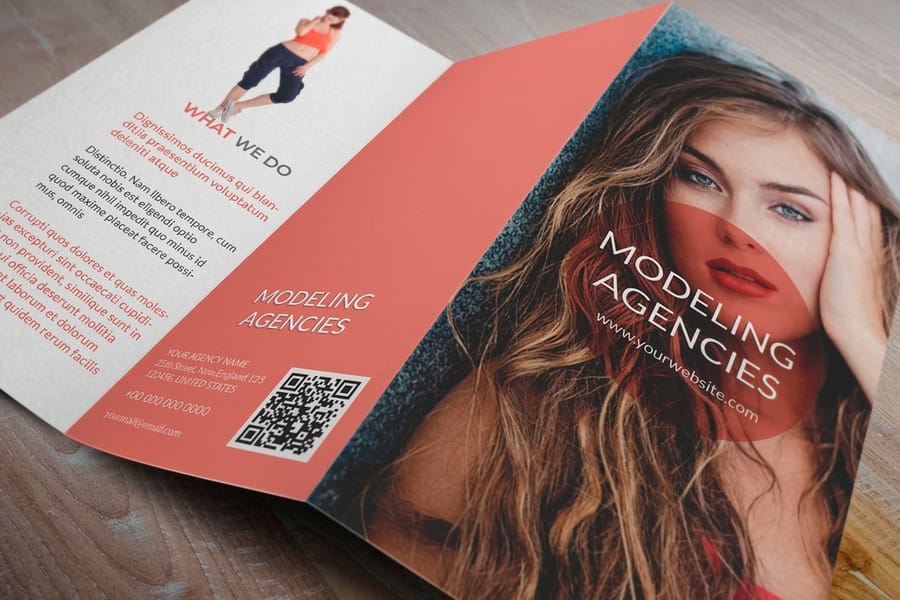
Heavier stocks and specialty coatings cost a little more per sheet, but weight is only one lever. On the default brochure, 5.5 x 8.5 inches on 100# Gloss Text, 50 pieces start at $57.11 and 1,000 cost $180.13, so the run length moves your unit price far more than the paper does. Your final price is set by several inputs working together.
- Trim size: larger brochures use more paper, from 5.5 x 8.5 up to 11 x 25.5 inches.
- Paper stock and weight: heavier cover and premium stocks cost more than standard text weights. Against 100# Gloss Text, 100# Silk/Matte Text adds 10 percent, 70# Uncoated Text 16 percent and 14pt Gloss Cover 60 percent.
- Finish: gloss, matte, or specialty coatings each carry their own cost. High Gloss UV Coating adds 35 percent over the standard finish.
- Ink coverage: a 4/4 run uses more ink than a 4/1 or 4/0.
- Quantity: the biggest lever, because fixed setup spreads across more pieces, so the per-unit price drops sharply as the run grows.
- Turnaround: faster shipping options add to the total.
There is no flat weight surcharge to quote here, because pricing is live and depends on the exact combination you choose. Set your options on the brochures page to see the real number, or browse the wider marketing materials range to plan a matching set. For a full walkthrough from file to finish, see how to make brochures.
Wally explains paper weight
Text or cover, that is the whole trick
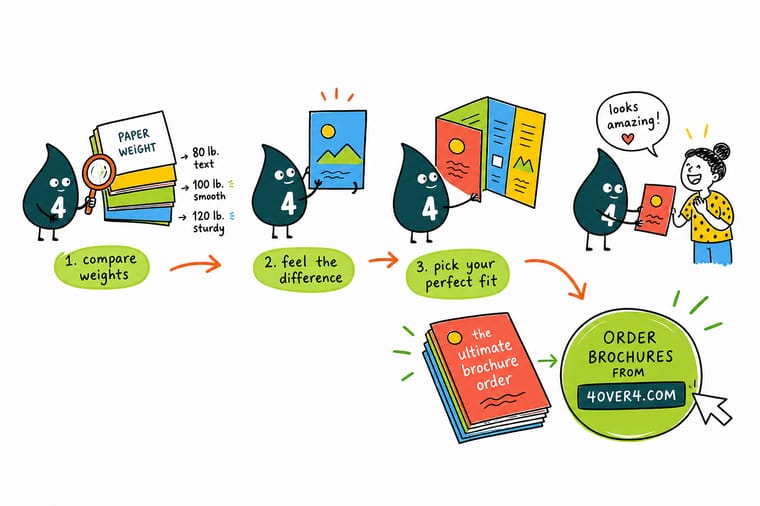
Wally holds up two sheets that both say 80lb: one folds like a page, the other stands like a card. The secret is that text weight and cover weight are measured on different scales, so the pound number only makes sense once you know the type. When in doubt, feel it in gsm and match the weight to the fold. Then send your file to a real press and print brochures that people actually keep at 4OVER4.
Order brochures →
Specs and pricing
Custom brochure specs and pricing
Four stocks, six flat sizes, two ink setups. Once you know the weight you want, pick 100# Gloss Text, 100# Silk/Matte Text, 70# Uncoated Text or 14pt Gloss Cover, a flat size from 5.5 x 8.5 to 11 x 25.5 inches, 4/0 or 4/4 ink, and a standard or High Gloss UV finish. Fifty brochures at 5.5 x 8.5 on 100# Gloss Text start at $57.11 with a 3 business day turnaround. The live specs and price-per-unit below come straight from the 4OVER4.COM configurator.
| Quantity | Price Per Unit | Total |
|---|---|---|
| 50 | $1.14 | $57.11 |
| 100 | 82.4¢ | $82.38 |
| 200 | 53.3¢ | $106.55 |
| 300 | 41.0¢ | $123.02 |
| 400 | 34.9¢ | $139.49 |
| 500 | 31.2¢ | $155.97 |
| 600 | 26.7¢ | $160.36 |
| 700 | 23.5¢ | $164.75 |
Print it
Order brochures and folded print at 4OVER4
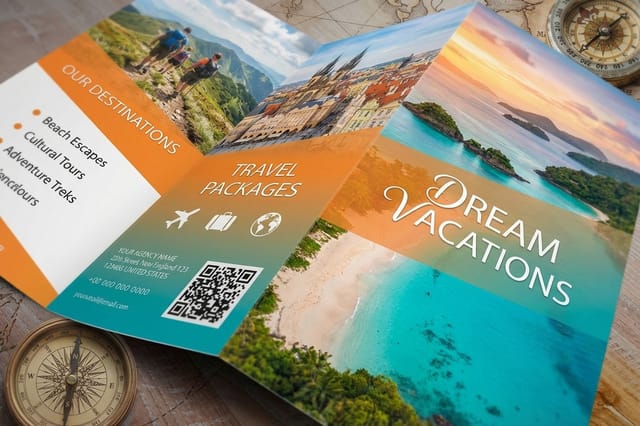
Brochures, folded brochures and travel brochures run on the same four stocks and six flat sizes, from $57.11 for 50 pieces at 5.5 x 8.5 inches. Pick a text stock for anything you fold and 14pt Gloss Cover for a flat piece that has to stand in a rack.
See it in use
Stock choices from real brochure orders
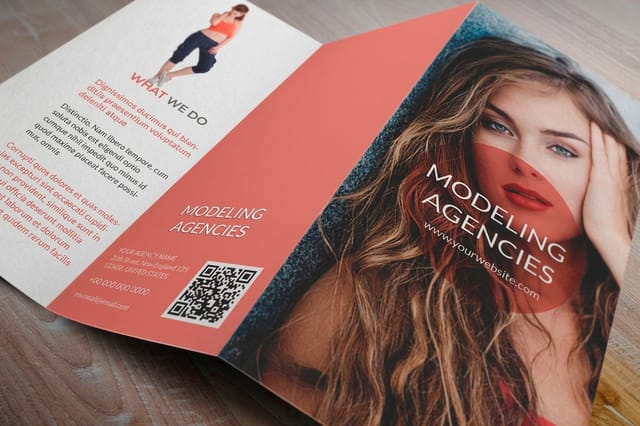
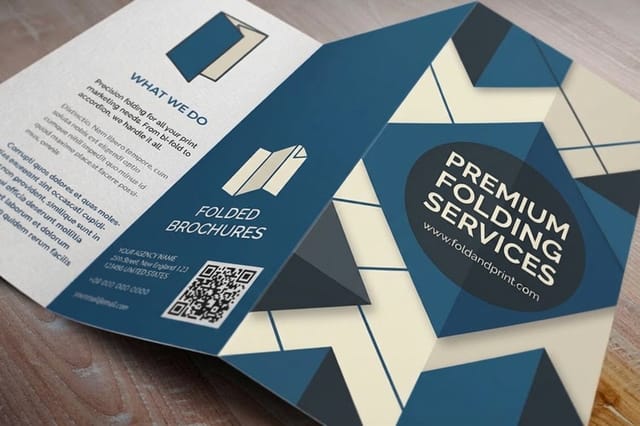
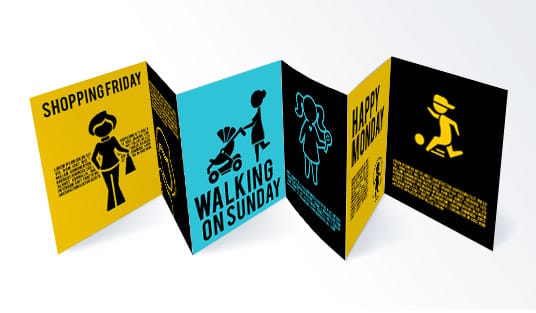
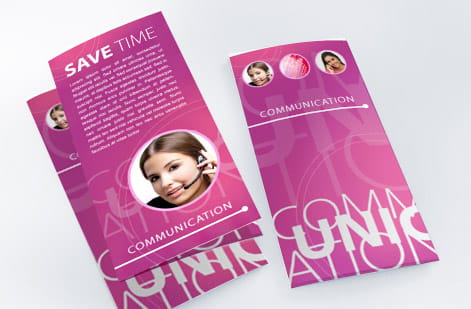
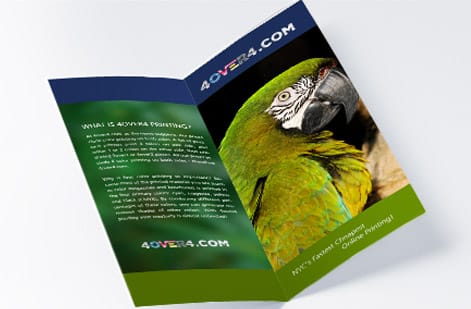
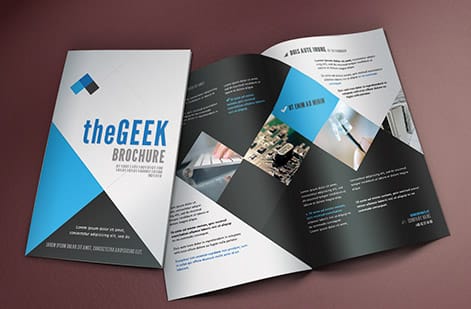
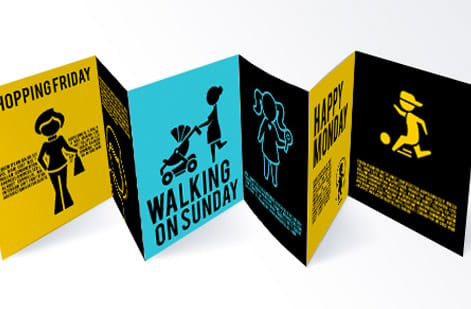
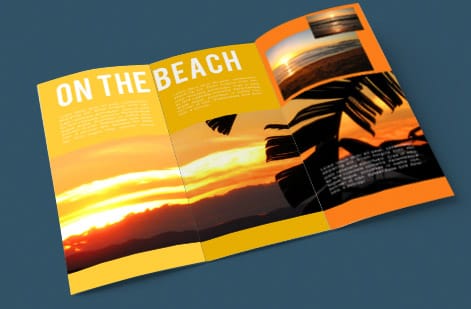
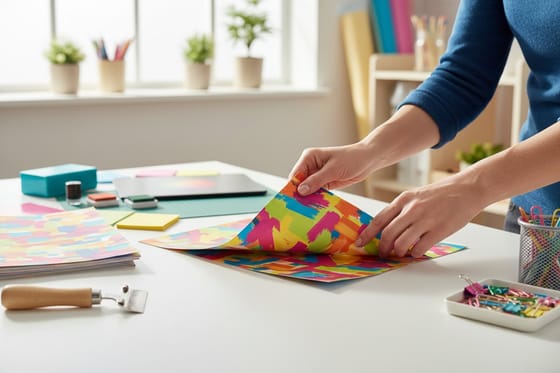
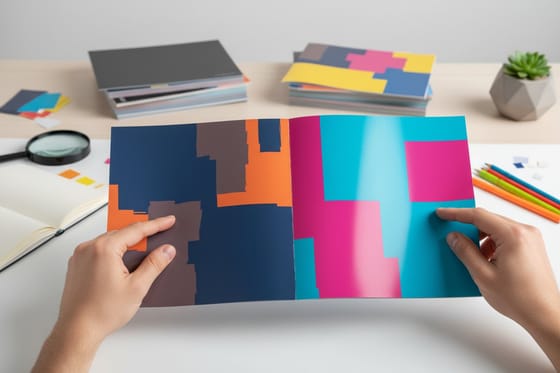
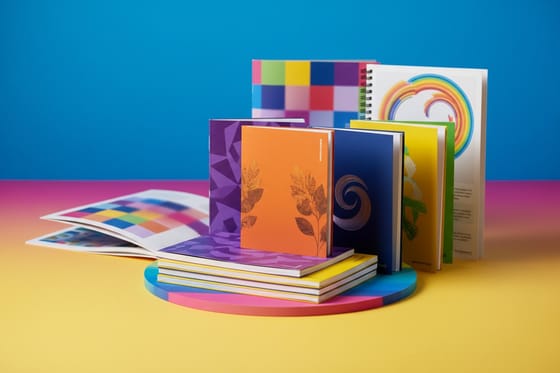
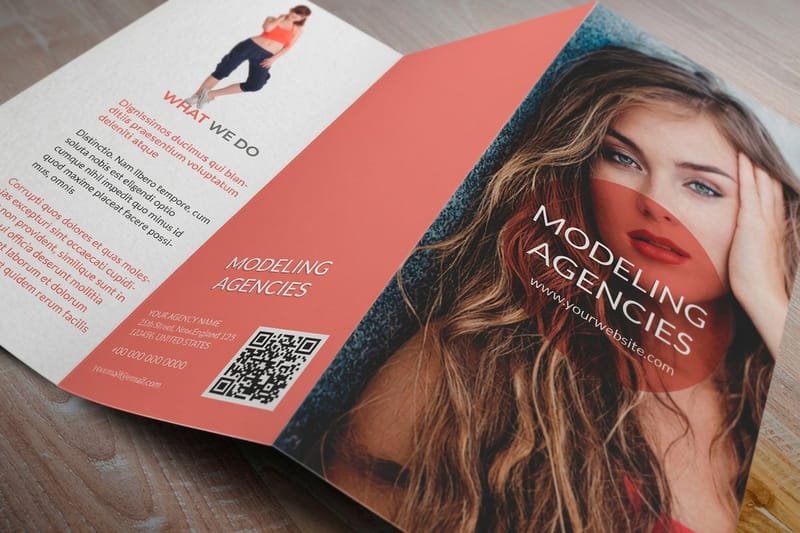
These brochures came off the press in our NYC plant. As you look, check the three things the stock decides: whether a flat piece stays stiff, whether a fold sits flat, and how photos read on gloss against matte.



Explore more
Where to go next
By the numbers
70# Uncoated Text to 14pt Gloss Cover
Common Questions
Common questions about brochure paper weight
What is paper weight?
Paper weight is how heavy a sheet is, and it doubles as a rough guide to thickness and stiffness. In the US it is quoted in pounds (lb), based on the weight of 500 sheets (a ream) cut to that paper type basic size. Because different paper types use different basic sizes, the pound number only makes sense once you know whether the stock is a text weight or a cover weight. The international measure, gsm (grams per square meter), sidesteps that confusion because it weighs a single square meter no matter the paper type, so it is the cleanest way to compare two stocks side by side.
What is paper finish?
Paper finish is the coating and surface texture applied to the sheet, and it controls how the brochure looks and feels. Gloss finish is shiny and makes photos and bold colors pop, which is why it is popular for image-heavy sales pieces. Matte (also called dull) has a soft, non-reflective surface that reads easily under any light and feels premium in the hand. Uncoated stock has a natural, slightly toothy surface that takes pen and pencil, which is handy when people write on the piece. Silk or satin sits in between gloss and matte. See our take on the two most common choices in the matte vs glossy brochure guide.
What is brochure paper weight?
Brochure paper weight is the specific stock thickness used for a printed brochure. Most folded brochures print on a text weight between 80lb and 100lb text (about 118 to 148 gsm), which is sturdy enough to feel solid yet thin enough to fold cleanly without cracking. Single-sheet brochures, mailers, and premium covers step up to a cover weight such as 80lb to 100lb cover (roughly 216 to 270 gsm) or a point-measured cardstock like 14pt. The right weight depends on how many folds the piece has and how it will be handled.
Which weight do I pick for a brochure that gets mailed?
Start with how the brochure is used. For a rack, mailer, or handout that folds two or three times, a 100lb text (about 148 gsm) hits the sweet spot of feeling professional while folding without cracks. For a flat, single-sheet brochure or a mailer that has to survive the post, move up to an 80lb or 100lb cover. If the piece is a leave-behind meant to signal quality, a heavy cover or 14pt stock does the job. When in doubt, order free paper samples and feel the options before you commit the whole run.
What does brochure paper weight cost and how are prices set?
Heavier stocks and added coatings cost a little more per sheet, but weight is only one of several price drivers. Your total is set by the trim size, the paper stock and weight you pick, the finish (gloss, matte, or a specialty coating), the number of folds, the ink coverage, the quantity, and the turnaround you choose. Quantity has the biggest effect because setup cost spreads across more pieces, so the per-unit price drops sharply as you print more. We do not publish a flat weight surcharge because pricing is live in the configurator. Pick your options on the brochures page to see the real number for your exact spec.
What do 4/0, 4/1, and 4/4 mean on a brochure?
That notation describes ink coverage, front over back. The first number is the number of ink colors on the front and the second is the number on the back. A 4 means full color CMYK, a 0 means blank, and a 1 usually means a single color such as black. So 4/4 is full color on both sides (the standard for most brochures), 4/0 is full color on the front with a blank back, and 4/1 is full color on the front with black-only text on the back. More ink coverage can nudge the price up, which is why the notation shows up on quotes.
Does paper weight affect which brochure fold I can use?
Yes. Lighter text weights fold cleanly on their own, so a half-fold, tri-fold, or z-fold in 80lb to 100lb text folds crisply with no prep. Heavier cover stocks resist folding and can crack along the crease, so they are scored (pressed with a shallow channel) before folding to give the fibers a clean hinge. If you plan a multi-fold piece on thick stock, expect scoring, and read the how to fold a brochure guide to match the fold to the weight.
Get Started
Order 50 standard brochures at $1.14 each
Pick your size, stock weight, and finish, upload your file, and we print sharp, cleanly folded brochures that feel exactly right in the hand.
Legal Disclaimer
Gold Standard guarantees apply to all standard orders placed through 4over4.com. Price match requires verifiable proof of a competitor's published price for an equivalent product with matching specifications and turnaround time. Satisfaction guarantee covers manufacturing defects and print quality issues. Contact support with order number and documentation.
