
How to Design Warning Stickers That Meet ANSI and OSHA Rules


Pick the signal word, build the panel the way ANSI Z535.4 expects, then choose a film and laminate that will still be legible when the machine is old. Here is the whole sequence.
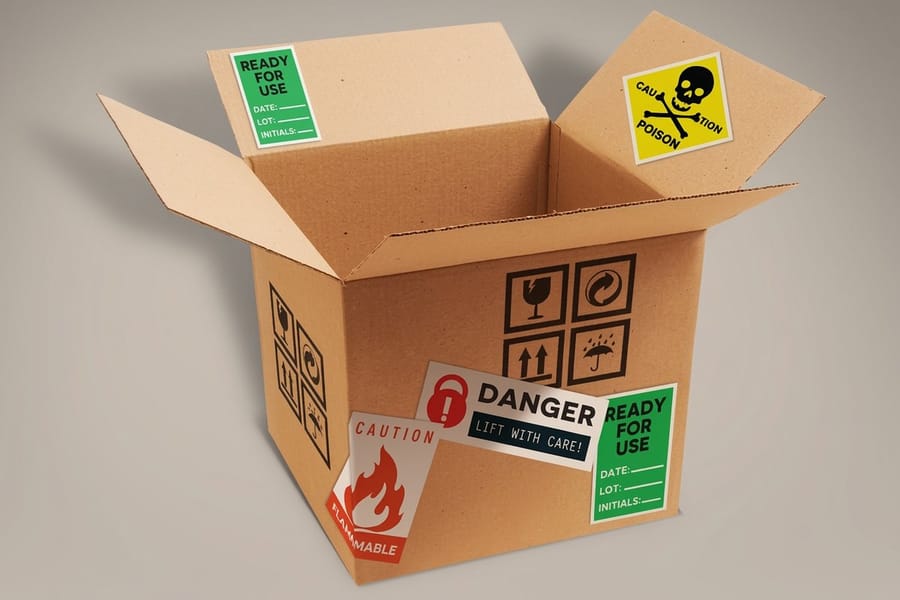
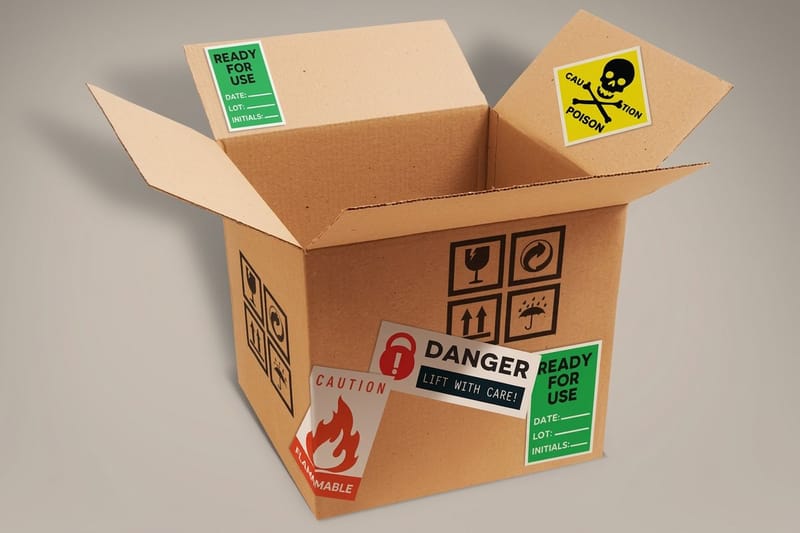
Design a warning sticker in this order: choose the signal word by severity (DANGER red, WARNING orange, CAUTION yellow, NOTICE blue), put the safety alert triangle only on the three injury words, then write the message as hazard, consequence, avoidance. Set the panel color as a spot color so safety red does not drift in a CMYK build, and print on vinyl with a UV laminate for outdoors or polyester where solvents get near it. A label built to ANSI Z535.4 satisfies OSHA 1910.145, which has accepted the Z535 format since 2013.
Quick answer
One word decides the color, the symbol and the wording
A warning sticker is a severity claim before it is a design. ANSI Z535.4 fixes the pairing: DANGER on safety red for a hazard that will kill or maim, WARNING on safety orange for one that could, CAUTION on safety yellow for minor or moderate injury, NOTICE on safety blue for equipment damage with nobody hurt. The triangular safety alert symbol goes on the first three and never on NOTICE. Under the panel, name the hazard, state the consequence, give the instruction. Then choose the film: vinyl with a UV laminate outdoors, polyester where solvents live, paper only indoors.
Start With the Signal Word, Not the Layout
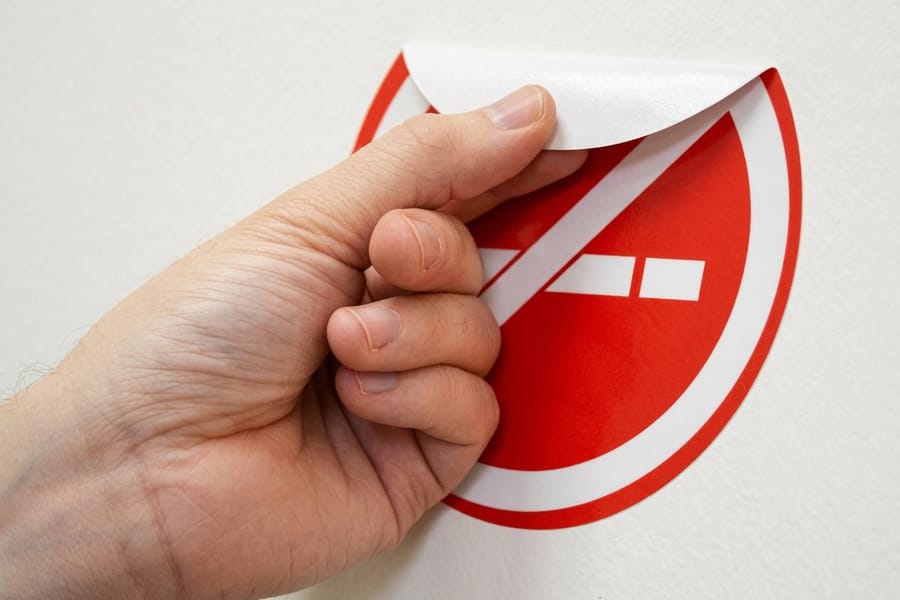
Every warning sticker is built downward from one word, and picking that word is a severity judgement rather than a design choice. ANSI Z535.4 defines four of them plus a green instruction panel, and each one carries a fixed color and a fixed meaning.
| Signal word | Panel and type color | What it claims | Safety alert triangle |
|---|---|---|---|
| DANGER | Safety red panel, white type | Will cause death or serious injury if not avoided. | Yes |
| WARNING | Safety orange panel, black type | Could cause death or serious injury. | Yes |
| CAUTION | Safety yellow panel, black type | Could cause minor or moderate injury. | Yes |
| NOTICE | Safety blue panel, white type | Damage to property or equipment, no injury. | No |
| SAFETY | Safety green panel, white type | Instructions, first aid, where safety equipment lives. | No |
Read the last column twice, because it is the error we correct most often on incoming artwork. The triangle around the exclamation point is the safety alert symbol and it means one thing: a person can be hurt. Dropping it onto a blue NOTICE panel because the layout looked bare makes the sticker argue with itself.
The second error is inflation. A plant that puts DANGER on a warm pipe, a low doorway and a live 480 volt cabinet has taught its own staff that red means nothing in particular. Reserve red for the cabinet. Most machine guarding, chemical storage and lockout labels are honestly WARNING, which is why standard warning labels in orange outsell every other panel color we print.
Lay Out the Panel and Nail the Safety Colors
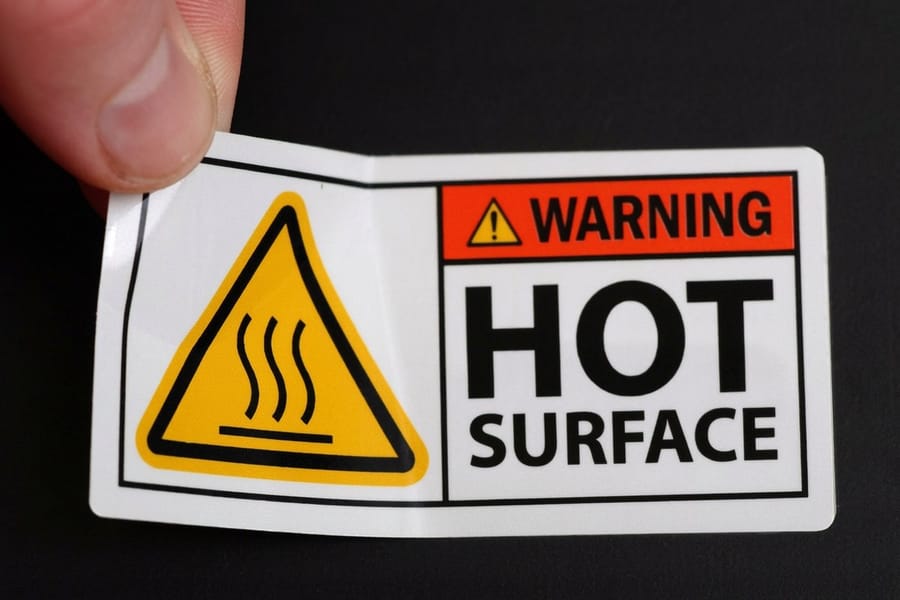
Z535.4 expects a stack: the signal word panel across the top, an optional pictogram panel, and the message panel underneath. Write the message in three moves, in this order, and keep it short enough to read while somebody is holding a wrench.
- The hazard. What is actually dangerous. "Rotating blade." "Contents under pressure."
- The consequence. What happens if it is ignored. "Severe cut." "Eye injury."
- How to avoid it. The instruction. "Lock out power before opening." "Wear face shield."
Sentence fragments beat full sentences here. So does sentence case over all capitals in the message block: solid capitals slow reading because every word becomes the same rectangle. Keep the all caps for the signal word itself, where it belongs.
Color is where files go wrong quietly. ANSI Z535.1 specifies the safety colors in Munsell notation, and a straight CMYK build of safety red on coated vinyl lands near the target rather than on it. The gap is invisible on its own and obvious when the new label sits next to a ten year old one on the same machine. When that matters, specify the panel as a spot color instead of letting it convert, and our guide to converting spot color to CMYK shows what the conversion does to a saturated red before you commit to it.
Build the file like any other print job. Outline the type, keep the artwork at full size, and give the panel a bleed so a small drift on the cutter does not shave the orange to a sliver. If the shape is a rounded rectangle or a die cut, set up the cut line properly, as covered in bleed and trim explained, and start from a correctly sized layout in the blank template library.
Pick a Material That Outlives the Hazard

A compliant design on the wrong film is a label that stops warning anyone in eighteen months. The choice comes down to where the sticker lives and what touches it.
| Material | Outdoor life | Chemical and abrasion | Use it for |
|---|---|---|---|
| Coated paper | Indoors only | Fails on contact with water | Cartons, indoor storage bins, short term stock rotation. |
| Calendered vinyl | Several years with a UV laminate | Good against water, weak against solvents | Flat panels, doors, cabinets, most facility hazards. |
| Cast vinyl | Longest of the vinyls | Same chemistry, better dimensional stability | Curves, tanks, pipes, anywhere calendered film lifts at the corner. |
| Polyester | Long, and it stays flexible | Best of the four, survives solvent wipe down | Equipment nameplates, chemical drums, wash down areas. |
Two details decide more failures than the film does. The first is the laminate: an unlaminated print on vinyl loses its red first, because red pigment is the least UV stable of the process inks, so a DANGER panel outdoors turns pink while the black type is still perfect. The second is surface preparation. Wipe the panel with isopropyl alcohol rather than a household cleaner, since silicone in most sprays leaves a film that adhesive will not grip, and apply above roughly 50 degrees Fahrenheit so the adhesive can flow and wet out.
Low surface energy plastics are the trap nobody warns you about. Powder coated steel, polypropylene and polyethylene shed a standard permanent adhesive within weeks, and the fix is a high tack adhesive specified up front, not a second sticker over the first. If you are weighing films in general, outdoor sticker materials that survive sun and rain and BOPP versus vinyl stickers go deeper, and premium waterproof labels are the stock answer for anything hosed down. One more call to make: gloss laminate is tougher, matte laminate kills the glare that hides type under a work light, and on a label read at an angle the matte usually wins. The gloss versus matte comparison lays out the rest.
What to Order, and When a Sticker Is the Wrong Answer
Most facility jobs are a handful of designs across a lot of machines, which suits sheet and die cut labels. Premium warning labels start at $29.16 and standard warning labels at $23.88, and the premium stock is the one to pick when the label goes outdoors or gets touched. Roll warning labels start at $322.98 because rolls exist to feed an applicator on a production line, so they are the wrong format for twelve machines and the right one for twelve thousand cartons.
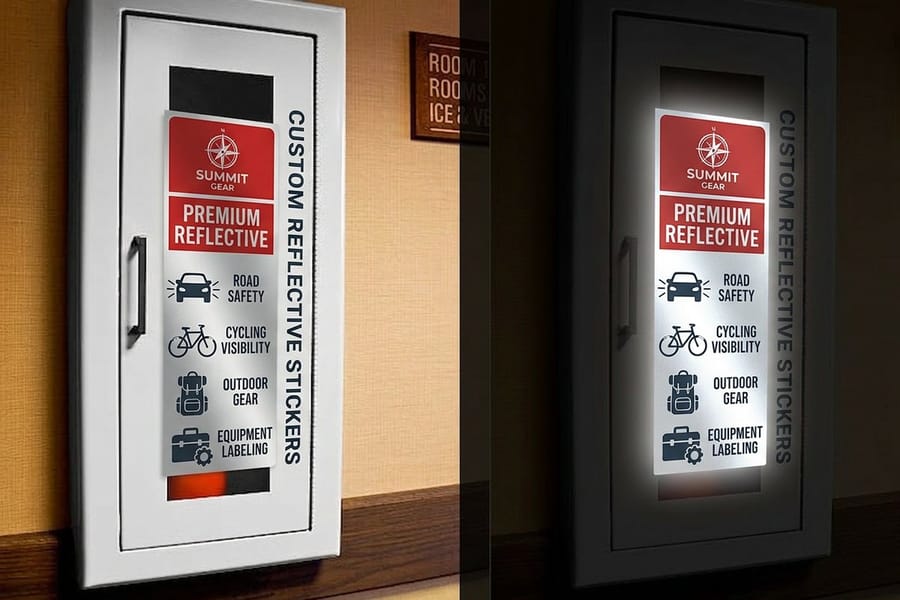
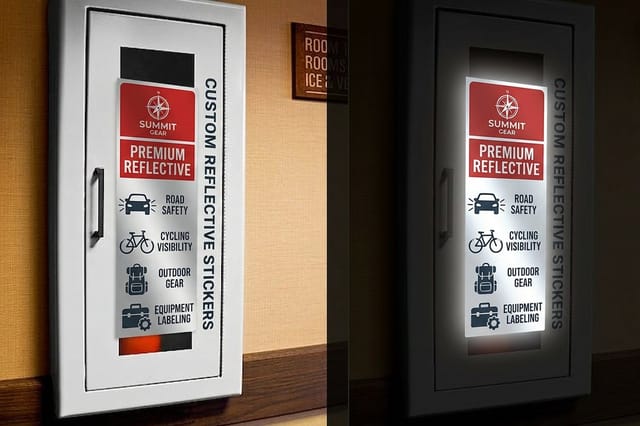
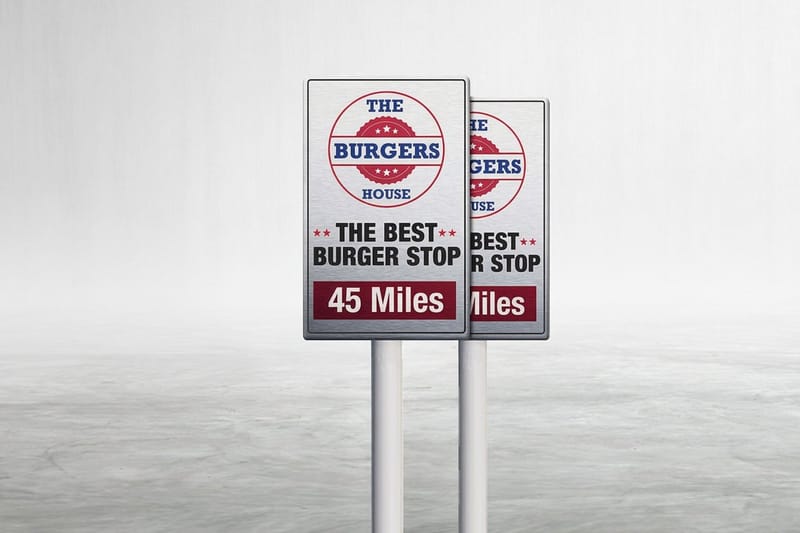
Two hazards deserve a different product entirely. Anything read in the dark, on a loading dock or beside an exit route, should be reflective stickers at $29 rather than a flat print, because a retroreflective face returns a headlight or a torch beam instead of absorbing it. Anything read from more than about fifteen feet, or bolted to a post where no flat clean surface exists, wants a rigid panel: aluminum signs start at $36 and will not peel. Our comparison of aluminum against coroplast and PVC covers which rigid substrate suits which mounting.
Here is the limit worth stating plainly. A printed label discharges the communication part of a hazard, not the hazard. It does not replace a guard, an interlock or a lockout procedure, and no printer can tell you whether a given machine needs WARNING or DANGER. Bring us the decision and we will print it so it is still legible in five years. Browse the full warning labels range, the wider label printing catalog, and the hard hat sticker guide if the labels are going on people rather than equipment.
Wally explains warning stickers
One word sets the color, the symbol and the tone
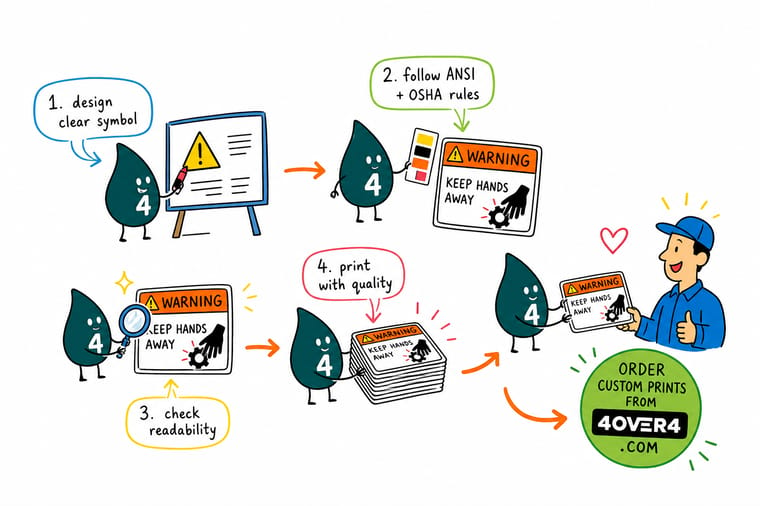
Wally picks the word first. Will it kill you, that is DANGER on red. Could it, that is WARNING on orange. Will it just pinch you, CAUTION on yellow. Will it only break the machine, NOTICE on blue and no triangle, because the triangle means a person gets hurt. Then he writes three short lines under it: what the hazard is, what it does to you, how to keep clear. Last, he laminates it, because a red panel with no UV laminate turns pink outdoors while the black type still looks fine.
Order premium warning labels →Specs and pricing
Warning label sizes, stocks and starting prices
Compare the label options side by side, with live configuration choices and starting prices straight from the 4OVER4.COM configurator.

Print it
Order warning stickers that stay readable

Explore more
Where to go next



By the numbers
Safety label printing you can count on at 4OVER4
Common Questions
Your warning sticker questions, answered
What is the difference between DANGER, WARNING and CAUTION on a sticker?
Severity, and it is a hard ladder rather than a matter of taste. DANGER, white type on safety red, is for a hazard that will cause death or serious injury if someone walks into it. WARNING, black type on safety orange, is for a hazard that could cause death or serious injury. CAUTION, black type on safety yellow, is for minor or moderate injury such as a pinch point or a hot surface. All three carry the triangular safety alert symbol. NOTICE, white type on safety blue, covers damage to property or equipment where nobody gets hurt, and it never carries the triangle. The common mistake is putting DANGER on everything, which teaches people on the floor to stop reading red.
Does OSHA require ANSI Z535 labels?
OSHA 1910.145 is the rule that governs accident prevention signs and tags, and since 2013 it accepts labels built to the ANSI Z535 series as an acceptable alternative to the older wording in the regulation. In practice that means a label designed to Z535.4 satisfies the federal requirement, which is why almost every equipment maker uses the Z535 format. It also means the older red bold DANGER plates already on your machines are not suddenly illegal. What a printed label never does is replace the hazard assessment behind it. We print what you specify. Deciding that a guard needs WARNING rather than CAUTION is a safety call your organization owns, and a safety engineer should sign it off.
How big should a warning sticker be?
Work backwards from where the reader stands. A rule of thumb printers and sign shops use is one inch of capital letter height for every ten feet of viewing distance for comfortable reading, so a label read from arm's length at two feet can run 8 to 10 point type, while a hazard read from across a bay at thirty feet needs roughly three inch letters and stops being a sticker at all. On equipment, the practical constraint is usually the flat area available: measure the panel, subtract a quarter inch of clearance on each side so the edges are not lifted by a rivet or a curve, and size the label to what is left. Common warning label sizes we print are 2 by 3, 3 by 4 and 4 by 6 inches.
What sticker material survives outdoors the longest?
White vinyl with a UV laminate is the sensible default and the one most outdoor warning labels use. Cast vinyl costs more than calendered vinyl and is worth it on curves and compound shapes, because calendered film wants to shrink back flat and lifts at the corners on a curved tank or a pipe. Where the label meets solvents, fuel, or repeated chemical wipe down, polyester outlasts vinyl by a wide margin because vinyl plasticizers migrate and the film goes brittle. Paper labels have no place outdoors on a hazard. They are fine on an inner carton, and nowhere a person makes a safety decision.
Can I print GHS chemical labels as stickers?
Yes, and the design rules are stricter than for a general warning label. A GHS label needs the pictograms inside a red diamond frame with the frame printed in red, not black, the correct signal word, the hazard and precautionary statements, the product identifier and the supplier details. If the container ships by sea, the label may need to meet BS 5609, which tests print durability after months of seawater immersion, and that specification points you at a laminated polyester rather than paper or plain vinyl. Send us the artwork with the diamonds built as vector shapes and the red specified as a spot color so it does not drift between runs.
How much do warning stickers cost to print?
Sheet or die cut warning labels start at $23.88 for standard warning labels and $29.16 for premium warning labels at 4OVER4.COM, which covers most equipment and facility jobs. Roll warning labels start at $322.98 because the format is built for applicator guns and long production runs rather than a handful of machines, so the price only makes sense at volume. Premium waterproof labels start at $84.68 when the label lives on a drum, a cooler or anything that gets hosed down. The cheapest label is almost never the cheapest job, since replacing a faded label on forty machines costs more in labor than the laminate would have.
Get Started
Ready to print a warning that lasts?
Send the artwork, pick the stock and the laminate, and we print labels that hold their signal color years after they go on the machine.
Legal Disclaimer
Gold Standard guarantees apply to all standard orders placed through 4over4.com. Price match requires verifiable proof of a competitor's published price for an equivalent product with matching specifications and turnaround time. Satisfaction guarantee covers manufacturing defects and print quality issues. Contact support with order number and documentation. On-time delivery rate based on tracked orders 1999 to 2026. Individual results may vary based on shipping carrier performance.
