
How to Choose a Flyer Printer That Delivers On Time and Prints Right


Five checks separate a printer that hits your date from one that quotes a fast number. Here is what to ask, where online beats a local shop, and where it does not.
Choose a flyer printer on five things: when the turnaround clock starts and stops, the stock list stated in weights, how proofing works, the price at your real quantity, and the reprint policy. A quoted turnaround covers production only, so add the shipping leg before you compare two printers on speed. Online printing wins on unit price and stock range from a few hundred pieces up. A local shop wins when you need fifty flyers this afternoon and can collect them yourself.

Quick answer
The turnaround clock is the thing most people get wrong
Production time and arrival time are two different numbers, and only one of them appears in the quote. The clock starts when your file passes preflight, which is why the upload cutoff hour matters as much as the printed turnaround, and it stops when the boxes leave the plant, which is why ground transit has to be counted separately. Set the date you need flyers in hand, subtract the shipping days for the distance, subtract production, and the answer tells you whether you need a rush upgrade or just an earlier upload.
Online Printer or Local Shop: What Each One Is Actually Better At
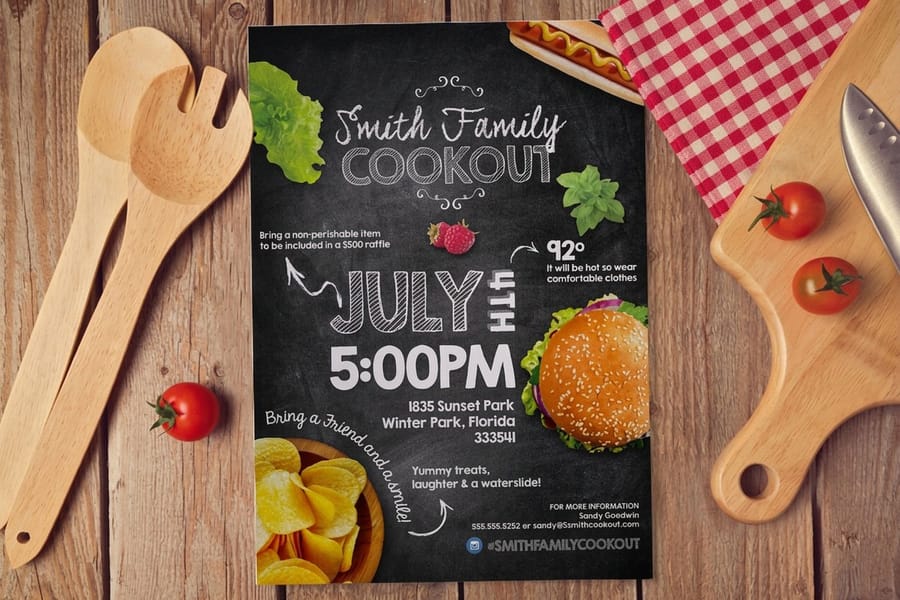
This is the first fork, and it is decided by run size and by how far away you are from a press. Neither answer is right for every job.
| Where you print | Unit price at 1,000 | Stock choice | Time to in hand | Best for |
|---|---|---|---|---|
| Online trade printer | Lowest, because jobs gang on large presses | Widest: text and cover weights, gloss, matte, uncoated, silk | Production days plus a separate transit leg | Runs from a few hundred up, and anything where the stock matters |
| Local commercial shop | Higher, single job on the press | Whatever they hold in the back, usually a handful of house stocks | Same or next day, no transit | Small urgent runs you can collect yourself |
| Office supply counter | Highest per piece | Copier stock only, no real cover weights | Within the hour | Fifty flyers for tonight, nothing more |
The column that surprises people is the last one on time. An online printer with a one day production window can still lose to a local shop on a Thursday afternoon, because the transit leg does not care how fast the press was. Once the run passes roughly 250 pieces the arithmetic flips hard the other way, and the price gap on Standard Flyers at $39.54 against a counter quote stops being close.
There is a third option people forget. Order online, ship to the event city rather than to your office, and you have removed the transit leg from your own schedule. It only works if you trust the printer to hit the ship date, which is why the next section is the one that matters.
Five Things to Check Before You Send a Flyer File Anywhere
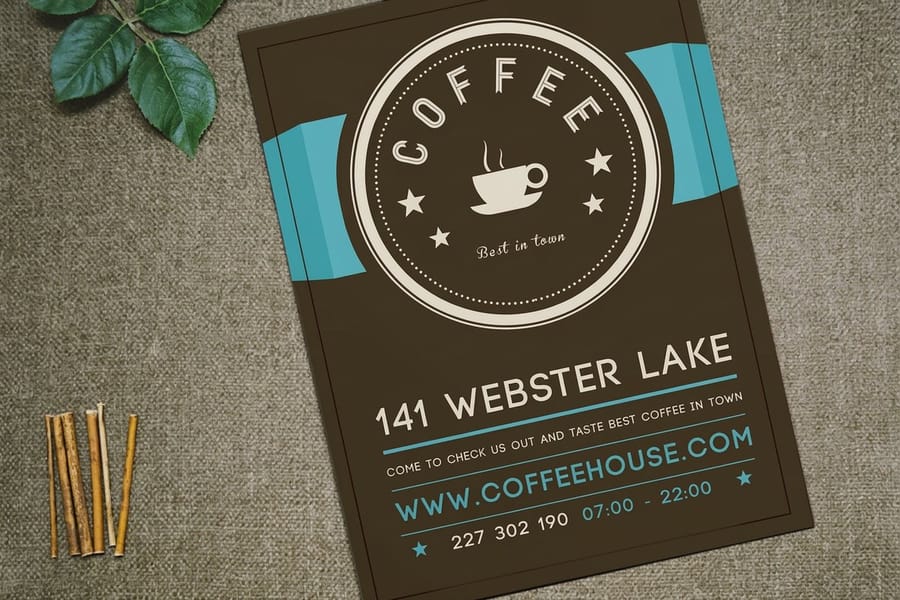
Every flyer job that goes wrong goes wrong in one of five places. Ask about all five and the rest of the vendor comparison mostly answers itself.
- The cutoff hour, in a named time zone. Turnaround counts in business days from the moment the file clears preflight. A 2pm cutoff means a 2:15pm upload is tomorrow, and a printer three zones west of you has a cutoff earlier in your afternoon than you think.
- What preflight actually checks, and what it silently fixes. Some printers reject a file missing bleed. Others scale it up to fill the bleed and cut into your text. Ask which one they do. Our bleed and trim guide covers the 0.125 inch you need on every edge and the safety margin inside it.
- Whether a proof stops the clock. A soft proof is usually free and adds hours. A hard copy proof is a printed sheet in the post and pauses production until you sign it off, which can add three days nobody budgeted for.
- The stock list, by weight and finish. If the site says premium paper instead of 100lb gloss text or 14pt gloss cover, you cannot compare two quotes. Weights are the only common language printers have.
- The reprint policy in writing. Find out what counts as a defect, who pays freight on a reprint, and how long you have to report it. Color variation between two separate runs is normal and usually excluded, which is worth knowing before you reorder a brand color.
If you want the pricing half of this conversation in detail, our guide on comparing flyer printing companies before ordering takes the same quote apart line by line.
How a Flyer Price Is Really Built, and Where You Control It

Four variables set almost the whole price: quantity, size, stock, and turnaround. Design and ink coverage barely move it, which is why full color on both sides costs so little more than one color on one side.
Quantity is the big lever. Plate setup, press makeready and cutting are paid once no matter how many sheets follow, so the unit price falls steeply through the first few thousand and then flattens. That is the whole reason Club Flyers open at $16.48 and Standard Flyers at $39.54: different starting quantities and sizes, same press. The mechanics are laid out in our guide to how bulk price breaks work.
Size is really about how the sheet is cut. Standard sizes exist because they divide cleanly into a press sheet with no waste. Ask for an unusual trim and you pay for the paper that ends up in the bin, which is a real cost rather than a surcharge.
Stock is the tactile budget. Text weight for handouts, cover weight when the piece has to stand or survive a bag. Coating changes both the look and the writability: nothing writes on gloss, and everything writes on uncoated.
Turnaround is a line item you can see. On the flyer configurator each turnaround option is priced separately, so you can look at what one business day costs against a standard window before you commit to it, rather than finding out at checkout. If the calendar is genuinely tight, our guide to fast printing and rush options explains which upgrades change the arrival date and which only change the production date.
Match the Printer to the Job, Not to the Homepage
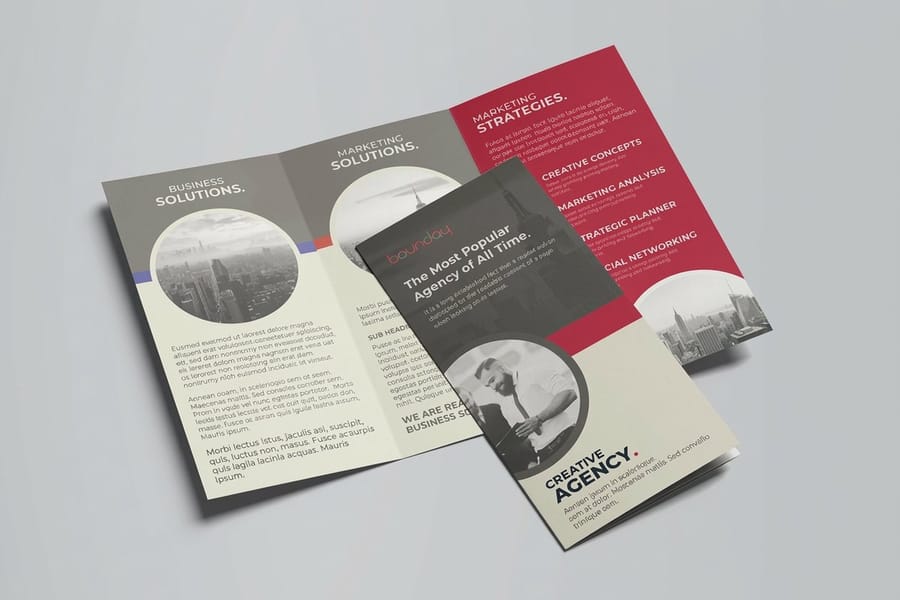
A printer that is excellent at one flyer format can be mediocre at another, because folding, mailing and specialty stock are each a separate capability rather than a setting.
Event and nightlife handouts want gloss cover, a small trim and a large quantity, which is exactly what Club Flyers are built for at $16.48. Nobody keeps them, so spend on quantity rather than on stock.
Anything with more than one message should fold. Folded Flyers at $68.54 give you panels without moving to a stitched piece, and if the content keeps growing, Standard Brochures at $57.11 are the next step. Check that the printer scores heavier stock before folding, because an unscored cover weight fold cracks along the spine every time.
Anything going in the mail has to clear postal rules on size and weight before it is a design at all. That constraint usually pushes people toward a heavier sheet or a different format entirely, and our guide on how to mail flyers sets out what qualifies.
Whichever format you land on, start the artwork from a correctly sized layout in the blank template library so the bleed and safety margins are already right, and browse the full flyer printing range to see which trims and stocks are available before you design to a size we do not cut.
Wally checks the clock, not the headline
Production days and shipping days are two separate counts
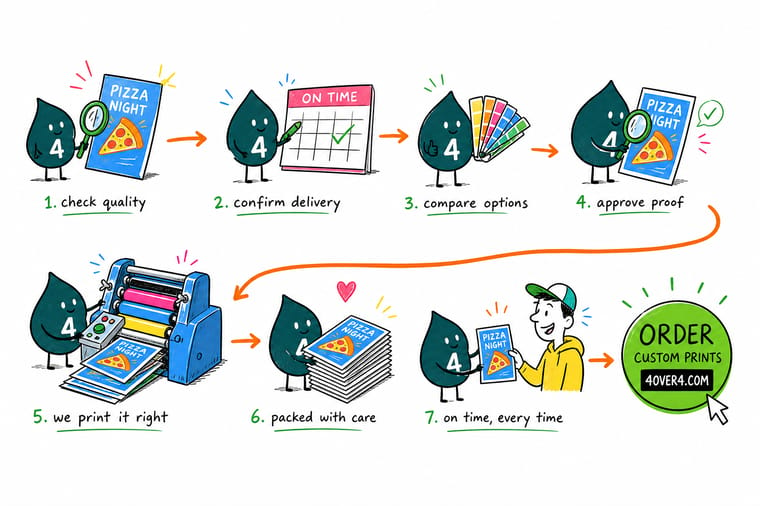
Wally reads a one business day badge and then asks the two questions behind it. When does the clock start, and when does it stop? It starts after preflight clears, so an upload past the cutoff hour costs a day before anything prints. It stops when the boxes leave the dock, so the ground route to your address is still ahead of you. Work backwards from the day you need flyers in hand and the whole schedule stops being a guess.
Configure your flyers →Specs and pricing
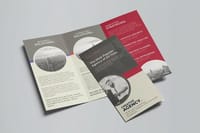
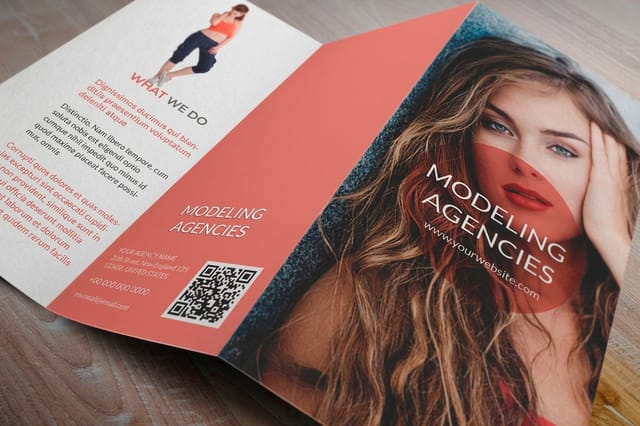
Flyer formats, sizes, and starting prices
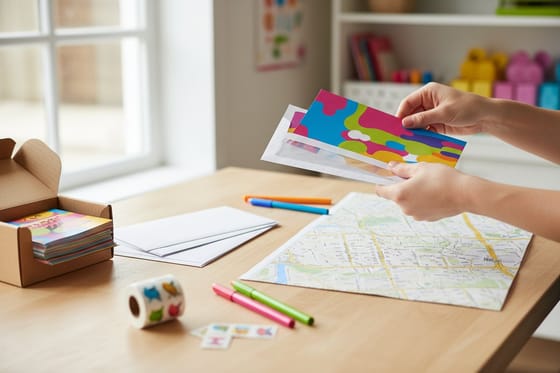
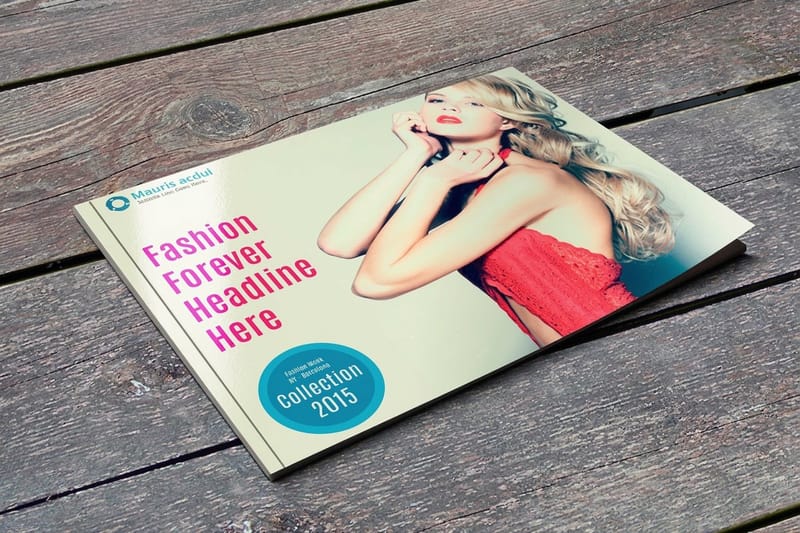
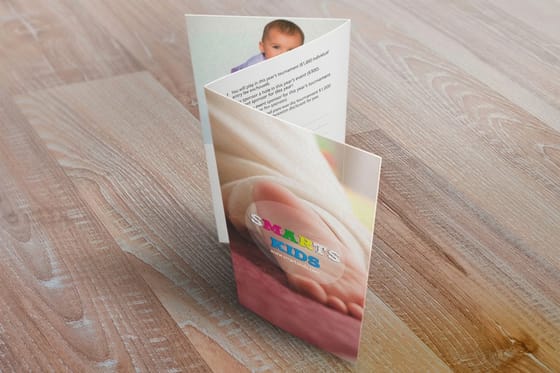
Three flyer formats side by side, with the live configuration choices and starting prices straight from the 4OVER4.COM configurator. Compare the turnaround options the same way you compare stock.


Print it
Order flyers that arrive when you said they would


Explore more
Where to go next

By the numbers
Flyer printing you can plan a date around
Common Questions
Your flyer printer questions, answered
How do I choose a flyer printer?
Work through five things in order: the turnaround clock and its file cutoff, the stock and coating list, how proofing works, the quantity breaks at your real run size, and the reprint policy. Everything else is packaging. A printer that answers all five plainly on its own product pages, with weights and prices you can read before you create an account, is easier to plan around than one that hides the numbers behind a quote form.
Is online flyer printing better than a local print shop?
Online wins on unit price and on stock range, because the presses run ganged jobs at volume and the catalog is wide. Local wins on two specific things: you can hold the sheet before you commit, and there is no transit leg, so a same afternoon pickup beats any shipped order. If your run is under about 250 pieces and you need them tomorrow morning in your own city, walk in. Above that, or on anything where the stock matters, the online price and the coating options usually make the difference.
What paper weight should I ask a flyer printer for?
100lb gloss text is the default for handouts and mailers, because it feels like a real piece of print and still folds and stacks cheaply. Move up to 100lb gloss cover or 14pt when the flyer sits on a counter, gets posted on a board, or doubles as a menu, since a text weight sheet curls once it stands up. Uncoated is the one to watch: it drinks ink, so photographs go flat and dark. The full breakdown is in our guide to the best paper weight for flyers.
How fast can flyers actually be printed and delivered?
Production on a straightforward flyer is measured in one to three business days on standard stock. Delivery is the part people underestimate. Ground freight from the plant to your address takes its own one to five days depending on distance, so a rush upgrade only helps if the shipping leg is already short or you pay to accelerate it too. Set the in hand date first, then work backwards through transit, production, and the file cutoff.
Do I need a printed proof before a flyer run?
For a plain one color job on familiar stock, no, and skipping it saves a day. Ask for one when the flyer carries a brand color you have to match, when you are printing on uncoated or a specialty stock for the first time, or when the run is large enough that a reprint would hurt. Remember that a hard copy proof pauses the production clock until you approve it, so build that pause into the schedule rather than discovering it.
Can the same printer mail the flyers for me?
Some can, and it changes the format you should order. A flyer that goes in an envelope can be any size, but a self mailer has to satisfy postal rules on size, aspect ratio and paper weight, and a thin text weight sheet will not qualify on its own. If mailing is the plan, decide it before you pick the stock, and read our guide on how to mail flyers so the piece is designed to the postal spec rather than trimmed to fit it later.
Get Started
Ready to put a real date on your flyers?
Pick the size, the stock and the turnaround on the configurator, see the price before you commit, and we print and ship from our own plant.
Legal Disclaimer
Gold Standard guarantees apply to all standard orders placed through 4over4.com. Price match requires verifiable proof of a competitor's published price for an equivalent product with matching specifications and turnaround time. Satisfaction guarantee covers manufacturing defects and print quality issues. Contact support with order number and documentation. On-time delivery rate based on tracked orders 1999 to 2026. Individual results may vary based on shipping carrier performance.
