
Calling Card Templates, Sizes and Layout Rules That Print Clean


A calling card is a business card with the job title and the sales copy taken out. The trims and file dimensions come first, then the layout rules for a card that is mostly empty, and the finishes that suit a personal name.
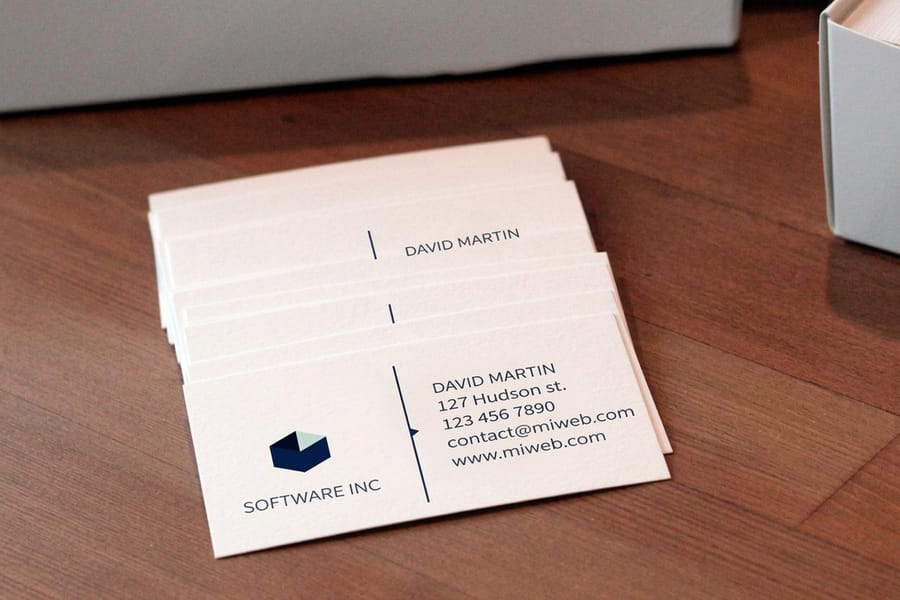
A calling card template is a standard business card template, 3.5 by 2 inches trimmed and 3.75 by 2.25 inches with bleed, carrying only your name and one way to reach you. Slim at 3.5 by 1.5, square at 2.5 by 2.5 and the European 3.346 by 2.165 all work too, and every trim takes the same 0.125 inch bleed and 0.125 inch safe margin. Set the name slightly above true center, keep nothing under 8 point, and choose an uncoated or matte finish if anyone will write on the back.
Quick answer
Same trim as a business card, a quarter of the content
Use a standard 3.5 by 2 inch business card template and delete everything except your name and one contact line. Build the file at 3.75 by 2.25 inches so the 0.125 inch bleed is covered, keep type 0.125 inches inside the trim, and lift the name a little above the true vertical center so it does not read as sinking. Slim, square and European trims follow the same rules with different numbers. The finish is the one decision with a consequence: laminated cards look better and refuse pen ink, uncoated cards take a handwritten note.
Calling Card or Business Card, and Which One You Actually Want
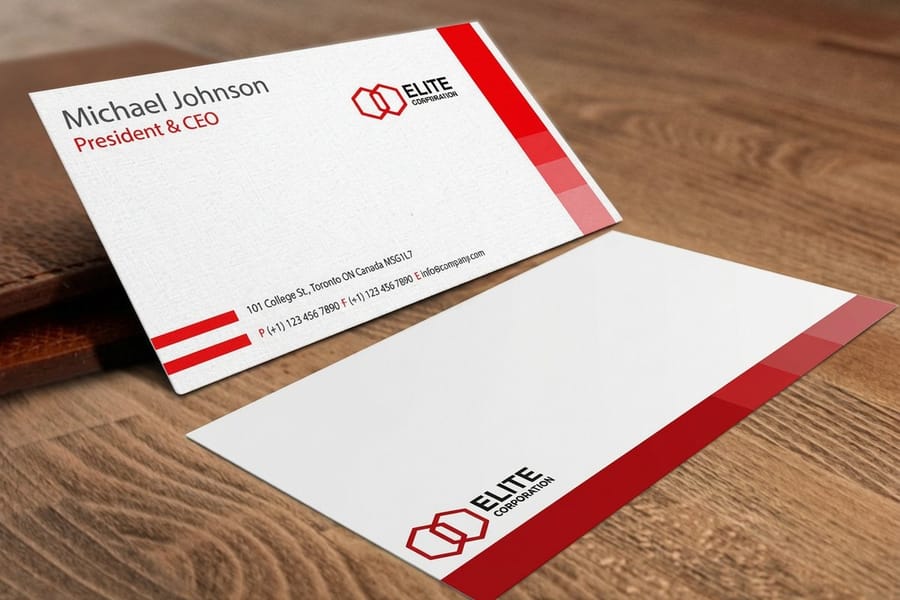
The two formats share a trim and split on content. A business card answers "what do you do and who for". A calling card answers "who are you and how do I reach you", and stops there.
That restraint is the whole design. No title, because a title dates the card the moment you change roles. No tagline, because a tagline is a sales line and nobody hands a friend a sales line. No service list, because a name-only card that carries a service list is just a badly cramped business card. What remains is a name, one contact route, and a lot of paper doing nothing, which is exactly the effect.
Who it suits in practice: consultants between contracts, freelancers trading under their own name, people who introduce themselves at events where a company is irrelevant, parents and coaches swapping numbers, and anyone whose employer changes more often than their phone number. It also suits a second card. Plenty of people carry a company card for work and a plain one for everything else.
The limit is worth naming before you order a box. A calling card carries no context, so if the recipient cannot recall the conversation, the card is a name they will not act on. Cold outreach needs the title and the company. If that is your situation, print a proper business card and read our breakdown of name cards against business cards instead.
Template Sizes, With the File Dimensions That Go With Them
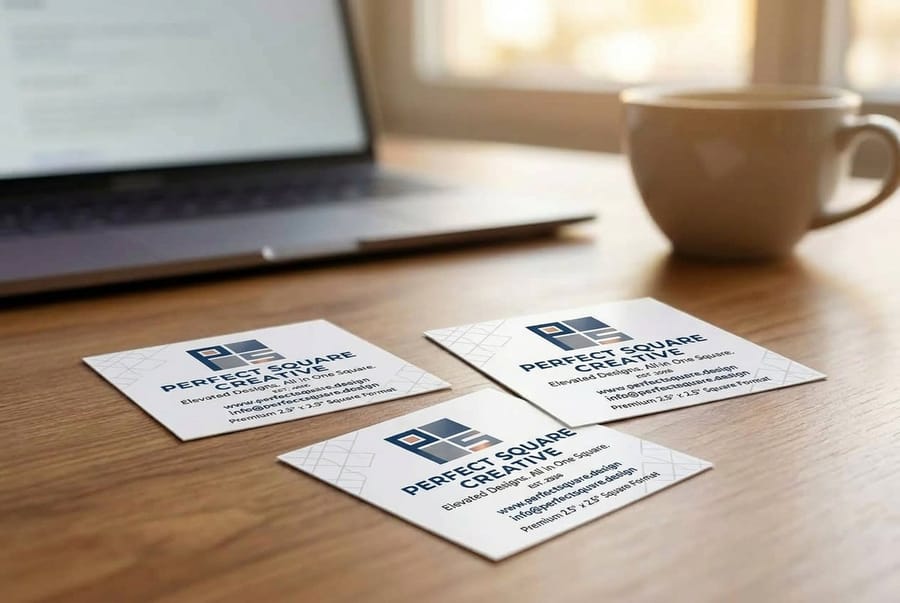
There is no separate calling card size. The historic visiting card had no fixed standard and varied by country and era, so what you are choosing today is simply a business card trim with less on it. Four are worth considering.
| Trim | Finished size | Build the file at | Who it suits |
|---|---|---|---|
| Standard | 3.5 x 2 in | 3.75 x 2.25 in | The default. Fits every wallet, cardholder and card slot in circulation. |
| European | 3.346 x 2.165 in (85 x 55 mm) | 3.596 x 2.415 in | Contacts outside North America, where this is the size cardholders are built for. |
| Slim | 3.5 x 1.5 in | 3.75 x 1.75 in | A name-only card, since the missing half inch is height you were not using. |
| Square | 2.5 x 2.5 in | 2.75 x 2.75 in | People who want the card noticed. It will not drop into a standard card slot. |
Every one of those takes the same 0.125 inch bleed on each edge and the same 0.125 inch safe margin inside the trim. Slim is the quiet winner for a genuine calling card, because a name and one line never needed two full inches of height, and the shorter card reads as deliberate rather than empty. Square is the opposite trade: it gets remembered and it gets left out of the cardholder, so it belongs to people who will be looked up rather than filed.
If you want the exact measurements for the trims we did not list here, the business card size guide has the full set, and the square, folded, slim and mini breakdown covers the odd shapes. Correctly sized starting files for each trim live in the blank template library.
Laying Out a Card That Is Mostly Empty
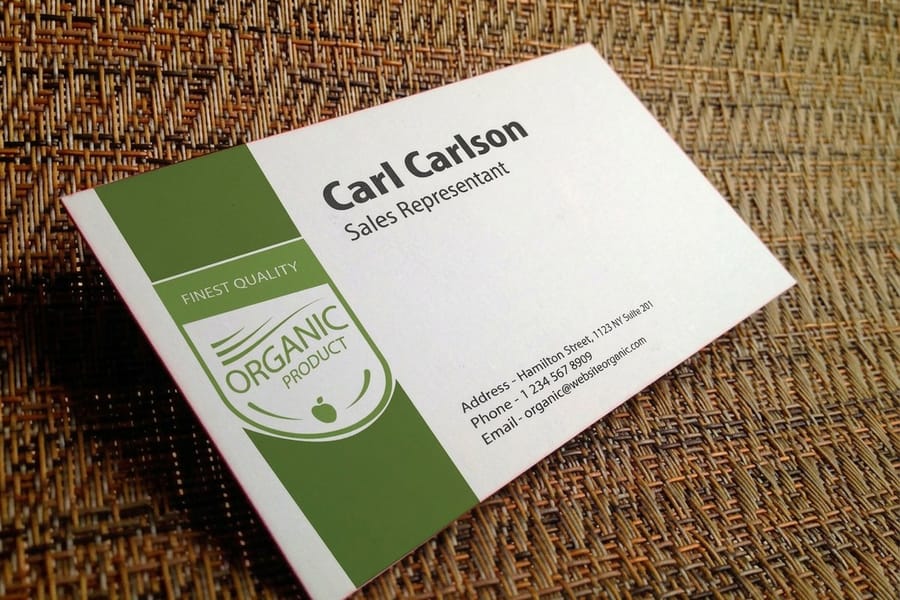
A business card layout is a packing problem. A calling card layout is a spacing problem, and it is harder, because there is nothing to hide behind. Four decisions carry the card.
- Set the name at optical center. Type placed at the true vertical middle of a 2 inch card reads as sitting low. Lift it a few points above center and the card looks settled. This is the single change that separates a card that looks designed from one that looks defaulted.
- Pick one alignment and hold it. Centred reads formal and traditional, which suits a script or serif name. Left aligned with a generous left margin reads modern and is more forgiving when a name runs long. Mixing the two on a card this bare shows immediately.
- Give the name room, not size. The instinct is to set the name large. The better move is to keep it moderate and push the surrounding white space out to the safe margin. A 14 point name with half an inch of air around it looks more confident than a 24 point name pressed against the edges.
- Keep everything inside the safe margin, and nothing under 8 point. Text closer than 0.125 inches to the trim risks being shaved by the cutter, and type under 8 point on a card people read at arm's length is decorative rather than useful.
The back is the decision people forget. Leave it blank if you want the card to take a handwritten note, print a single line if you want a second language or a second number, and avoid a full-bleed color flood unless you are certain nobody needs to write on it. Our layout guide works through hierarchy and margins in more depth, and the free template guide explains how to strip a business card template down without leaving orphaned spacing behind.
Etiquette, Stock, and What a Personal Card Costs to Print
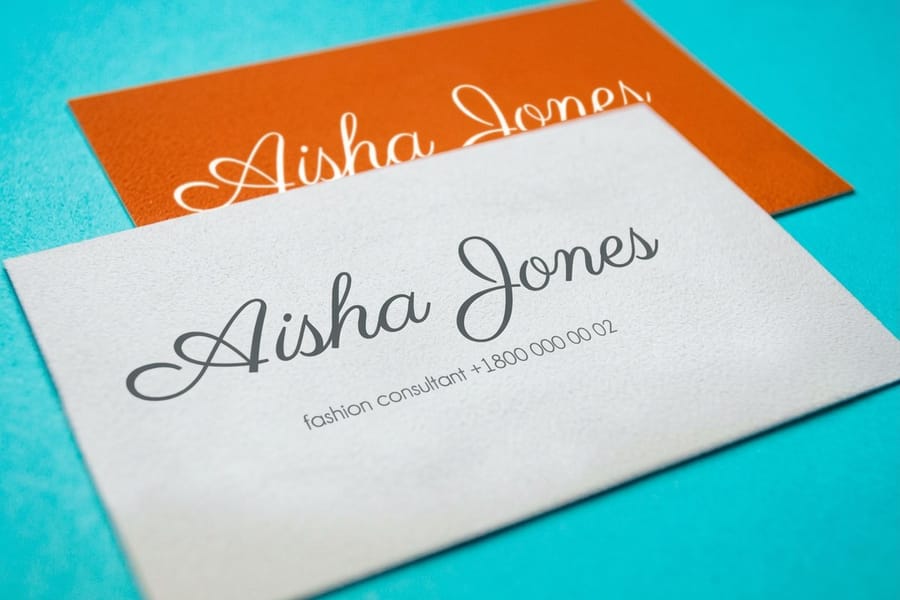
Calling cards are given, not distributed. You hand one over when somebody asks, at the end of a conversation, one at a time and face up so the name is readable to them. Leaving a stack on a counter turns a personal card into a flyer, and a name with no company on a counter means nothing to anyone walking past.
Two habits are worth keeping. Write on the card before you hand it over when there is something specific to remember, since a note in your handwriting outlives a name every time. And do not put a card away in front of the person who gave it to you without looking at it, which is a courtesy that costs nothing and gets noticed.
That writing habit drives the stock choice, and it is where most people order the wrong card. Silk lamination and gloss coating both resist ballpoint ink, so a number written on the back beads up and smears. If handwriting is part of how you use the card, print it uncoated or matte. Standard business cards start at $17.57 and take pen cleanly on an uncoated finish, which makes them the sensible default for a first box.
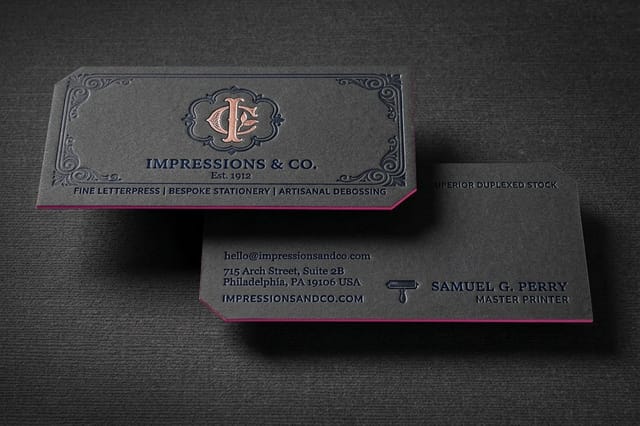
If the card itself is doing the remembering, spend the money on feel rather than color. Silk laminated business cards start at $74.53 for a smooth low sheen surface. Suede business cards start at $87.15 and have the soft velvet touch people comment on when they take one. Edge painted business cards start at $141.70 and put a stripe of color on the card edge, which reads well on a name-only card because the edge becomes the only decoration. At the top, letterpress business cards start at $251.36 and press the name into thick cotton stock, which is the closest thing we print to a traditional engraved calling card.
Weight matters more here than on a company card, because a personal card lives in a pocket for months rather than a week. 16pt survives that noticeably better than 14pt, and the difference is easy to feel before you commit; our stock guide compares them properly, and a card case is the other half of keeping a box presentable. Browse the full range at business card printing.
Wally explains the calling card
Take the job off the card and the name has room to breathe
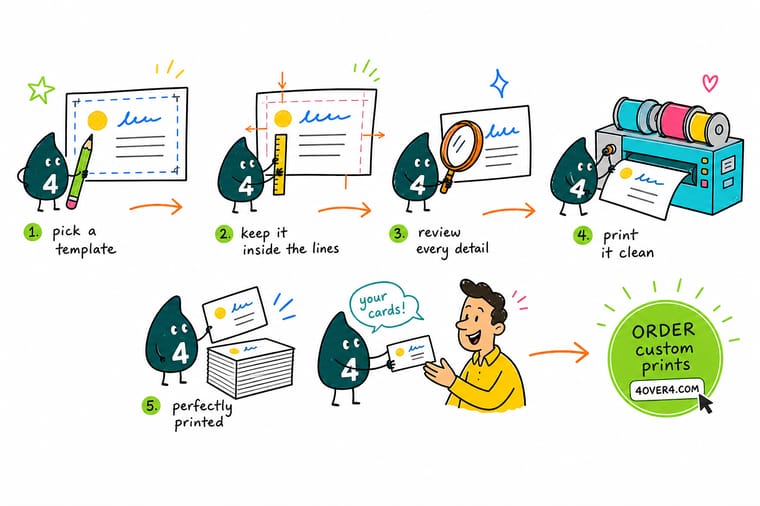
Wally starts with a normal business card template, then crosses out the title, the tagline and the service list. What is left is a name and one number, sitting a few points above the middle of the card with air on every side. The trim never changed, only the content did. His one warning: if you want to write a note on the back, skip the lamination, because a ballpoint slides straight off a silk finish.
Order standard business cards →Specs and pricing
Stocks, sizes, and starting prices for a personal card
Configure the trim, the stock weight and the finish, with live options and starting prices from the 4OVER4.COM configurator.

Print it
Order a calling card worth keeping
Explore more
Where to go next

By the numbers
Calling card printing, 25 years of it
Common Questions
Your calling card questions, answered
What is a calling card and how is it different from a business card?
A calling card carries your name and one or two ways to reach you. A business card carries your name plus a company, a job title, and usually a logo and a tagline. The trim size is normally identical, 3.5 by 2 inches, so the difference is entirely in what you leave off. People print calling cards when the role is not the point: consultants between contracts, freelancers who work under their own name, parents swapping numbers at a school gate, students, and anyone who wants a card that does not expire the day they change jobs.
What size is a calling card template?
The default is the standard business card trim, 3.5 by 2 inches, built as a 3.75 by 2.25 inch file once you add the 0.125 inch bleed on every edge. The other trims that work well for a name-only card are slim at 3.5 by 1.5, square at 2.5 by 2.5, and the European standard at 3.346 by 2.165 inches, which is 85 by 55 mm. Every one of them takes the same 0.125 inch bleed and the same 0.125 inch safe margin inside the trim.
What should go on a personal calling card?
Your name, and then one contact method you actually answer. A mobile number or an email address, not both plus a website plus three social handles. The reason is practical rather than stylistic: a 3.5 by 2 inch card holds roughly four short lines at a comfortable reading size, and every line you add pushes the type smaller. If a second line earns its place, make it the one thing that identifies you when the recipient finds the card a month later, such as a city or a single word for what you do.
Can I use a free business card template for a calling card?
Yes, and it is the fastest route. The trim, bleed and safe margin are identical, so any correctly built business card template works once you delete the company block and the title line. The trap is what the deletion leaves behind: text boxes that were sized for four lines now hold one, and the remaining type ends up floating against a top edge. Rebalance the spacing after you strip the copy rather than leaving the original grid in place.
What stock and finish suit a calling card?
It depends entirely on whether anyone will write on it. Uncoated and matte 14pt or 16pt take ballpoint and fountain pen cleanly, which matters when the whole point of a personal card is adding a note. Silk lamination and gloss look and feel better in the hand but repel most pen ink, so a scribbled number smears. If you want the tactile card and the writable surface, silk laminated cards can be ordered with a spot of uncoated area, or you simply keep the back blank and matte.
Is a printed calling card still worth it when phones share contacts?
It is worth it in the situations where phones are awkward: a crowded room, a handshake at a door, a conversation where pulling out a phone changes the tone. The honest limit is that a card gets typed into a phone later or it gets lost, so a card only pays off if it survives a coat pocket looking intact. That is the real argument for a heavier stock or a suede or letterpress finish on a personal card, since it is the physical object doing the remembering.
Get Started
250 edge painted cards cost $141.70 on 32pt uncoated
Pick the trim, choose an uncoated stock you can write on or a suede finish people remember, and we print a personal card that survives a coat pocket.
Legal Disclaimer
Gold Standard guarantees apply to all standard orders placed through 4over4.com. Price match requires verifiable proof of a competitor's published price for an equivalent product with matching specifications and turnaround time. Satisfaction guarantee covers manufacturing defects and print quality issues. Contact support with order number and documentation. On-time delivery rate based on tracked orders 1999 to 2026. Individual results may vary based on shipping carrier performance.
