
Half Page Size for Flyers, 5.5 x 8.5 Inches Explained


Half page is the size most handouts should be and most people set up wrong. Here are the exact numbers, how it compares to a full page, and the file that comes back from the cutter looking right.
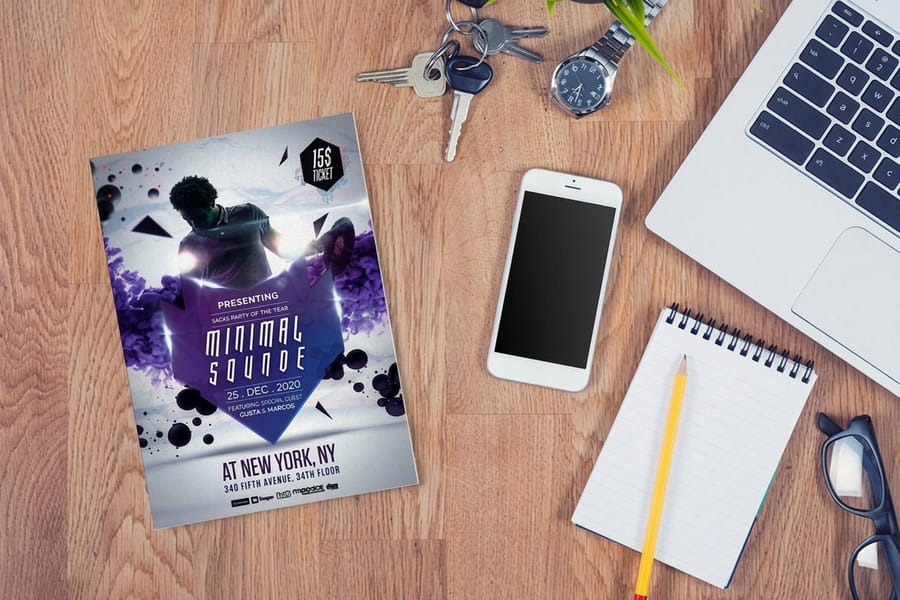
Half page size is 5.5 by 8.5 inches, which is exactly half a US letter sheet cut once across the 11 inch side. A full page is 8.5 by 11, so the half page keeps the same 8.5 inch measurement and loses roughly half the height. In metric that is 139.7 by 215.9 mm, and at 300 dpi it is 1650 by 2550 pixels at trim, or 1725 by 2625 with the 0.125 inch bleed added. It is not A5, which is 5.83 by 8.27 inches.
Quick answer
One letter sheet, one cut, two half pages
A half page measures 5.5 by 8.5 inches because it is a letter sheet cut once across the 11 inch side. The width of the finished piece is 5.5 inches and the height is 8.5, so the long edge of the parent sheet becomes the long edge of the flyer. Build the print file at 5.75 by 8.75 to include 0.125 inch of bleed all round, and keep every piece of type 0.125 inch inside the trim so the cutter cannot touch it. A5, the international size people call half page, is 5.83 by 8.27 and will not drop into the same document.
What a Half Page Actually Is
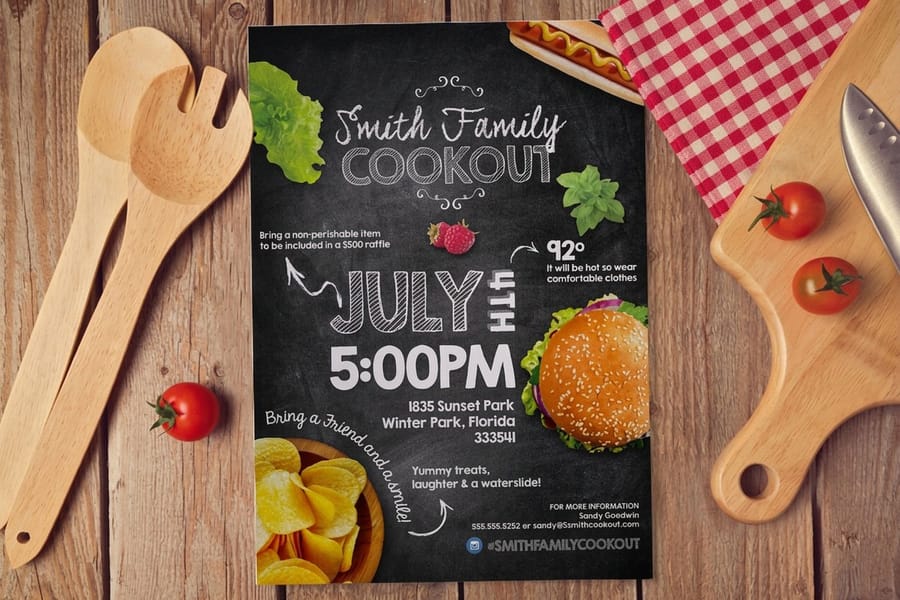
A half page is one US letter sheet cut once across the middle of its 11 inch side. Each piece measures 5.5 by 8.5 inches. Nothing is scaled, nothing is redrawn, and no paper is wasted, which is the whole reason the size exists.
That geometry has a practical consequence people miss. The 8.5 inch measurement carries over from the parent sheet, so a half page in portrait is narrow and tall: 5.5 across, 8.5 down. The full page was 8.5 across and 11 down. You did not shrink the page evenly. You cut the height nearly in half and left the width alone, which is why a full page layout dropped onto a half page always looks cramped side to side before it looks short.
Printers talk about this in terms of the parent sheet. Two half pages per letter, four quarter pages per letter, eight eighth pages. Because the cut is a single straight pass, half page is one of the cheapest non-standard sizes to produce, and at 4OVER4.COM it sits in the same price band as the rest of the standard flyer sizes rather than carrying a custom-cut charge. Standard flyers start at $39.54 and 5.5 by 8.5 is one of the nine stock sizes on the configurator.
One naming warning. In the UK and across Europe, people say half page and mean A5, which is 5.83 by 8.27 inches. Those two sizes are close enough to look identical on a desk and far enough apart to ruin a file. If a designer overseas sends you a half page file, check the numbers before you upload it.
Half Page vs Full Page and the Sizes Either Side
The useful comparison is not half page against full page in isolation. It is the whole ladder cut from the same letter sheet, because each step down doubles the count per sheet and halves the amount of copy the piece can carry.
| Format | Trim size | Per letter sheet | Copy it holds | Where it works |
|---|---|---|---|---|
| Full page | 8.5 x 11 in | 1 | Around 500 words plus a table | Menus, price lists, spec sheets, anything read sitting down. |
| Half page | 5.5 x 8.5 in | 2 | Around 150 words plus one image | Handouts, counter drops, bag stuffers, one offer and one action. |
| Quarter page | 4.25 x 5.5 in | 4 | A headline, three lines, a QR code | Table tents, coupon drops, high volume street handouts. |
| A5 | 5.83 x 8.27 in | Not a letter cut | Same as half page | International work and files supplied from outside the US. |
| Half legal | 8.5 x 7 in | 2 per legal sheet | Around 200 words, wide layout | Wide landscape handouts and rate cards cut from legal stock. |
Read the fourth column before the second. Size arguments almost always turn out to be copy arguments in disguise. If the brief has three offers, a map and a coupon, no amount of clever typography makes a half page work, and the honest move is a full page or a folded piece. Our complete flyer size guide walks the rest of the ladder, and half fold brochures cover the case where you fold the letter sheet instead of cutting it, which gives you four half page panels rather than two half page sheets.
The half page also happens to be the largest piece that still slides into a standard number 10 business envelope after a single fold, which matters when the flyer is going out inside something else. Standard brochures start at $57.11 and offer the same 5.5 by 8.5 trim if you want the folded version.
Setting Up a Half Page File That Prints Clean
Three numbers do all the work here. Trim is 5.5 by 8.5 inches. Bleed adds 0.125 inch on every side, so the document is 5.75 by 8.75. Safety pulls type 0.125 inch back inside the trim, leaving a live area of 5.25 by 8.25.
At 300 dpi that gives you 1725 by 2625 pixels for the full artboard, 1650 by 2550 at trim, and 1575 by 2475 for the safe area. Build raster files at those pixel counts rather than scaling a smaller image up, because a half page is held at reading distance and soft edges show at that range in a way they never do on a banner.
- Colour mode: CMYK, not RGB. A bright RGB blue that looks right on screen prints noticeably duller, and the shift is worst in the saturated blues and greens most brand palettes lean on.
- Background art: extend it the full 0.125 inch into the bleed. Cutting is accurate to a fraction of a millimetre, not to nothing, so art that stops exactly at the trim can leave a white sliver on one edge of a stack.
- Type size: 9 point minimum for body copy on a half page, 10 is more comfortable. If your copy only fits at 8, the page is telling you it needs to be bigger.
- Fonts: outline them or embed them. A missing font substitutes silently and reflows the whole layout.
- Double sided: keep the two sides on separate pages of one PDF, in the order you want them printed, and match the orientation on both.
If you would rather not build the document from scratch, start from a correctly sized layout in the flyer blank templates, which already carry the trim, bleed and safety guides on the right layers. The bleed and trim guide covers what actually happens on the cutter, and every order at 4OVER4.COM includes a free digital proof, so a size or bleed mistake gets caught before anything runs.
When a Half Page Is the Right Call, and When It Is Not
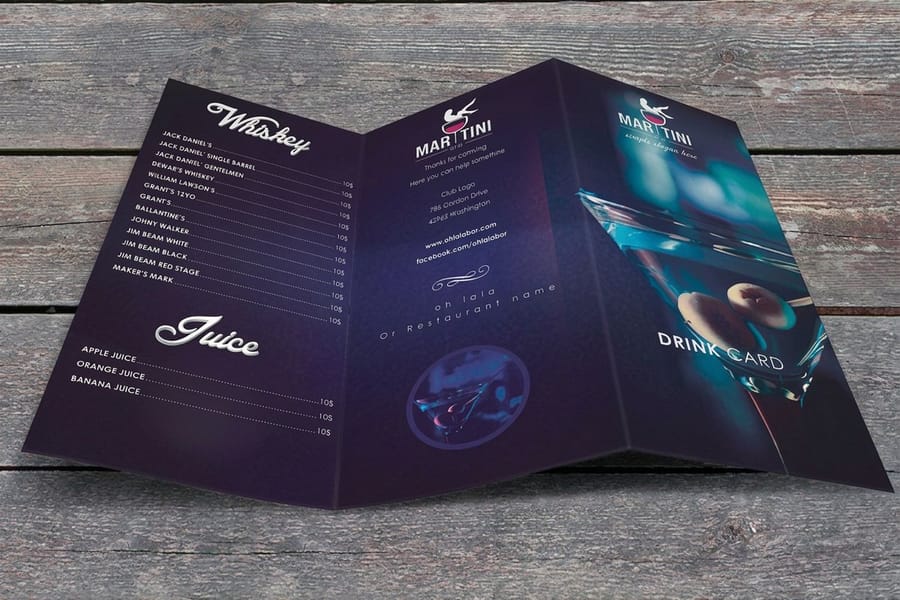
A half page suits a piece that gets handed to someone. It is big enough to carry a photograph and a real headline, small enough to go in a jacket pocket or a shopping bag without folding, and cheap enough to hand out in the hundreds. Event handouts, gym membership offers, real estate open house sheets, restaurant specials and takeaway inserts all sit naturally at this size.
It fails in two specific places. The first is dense information. A half page carrying a full menu or a rate table ends up at 7 point type, which nobody reads, and the money would be better spent on a full page or on business flyers at $57.11, which run on heavier stock in the same 5.5 by 8.5 trim. The second is direct mail. Once the piece is over 4.25 by 6 inches it leaves the postcard rate and gets billed as a letter, so a 5.5 by 8.5 mailer costs more per piece to send than a 4 by 6 postcard at $16.48, before you print a single one.
Paper weight decides whether the size feels serious. A half page on 70 lb text flops in the hand and reads as disposable, which is exactly right for a street handout and wrong for anything representing a price above about $50. On 14 pt or 100 lb gloss cover it has enough spine to stand on a counter. The flyer paper weight guide works through the trade-off, and if you are still deciding between formats, postcards vs flyers compares them on cost, mailing and shelf life. When you are ready to order, the flyer printing category lists every stock size and paper option side by side.
Wally explains half page size
One sheet, one cut, two 5.5 by 8.5 flyers
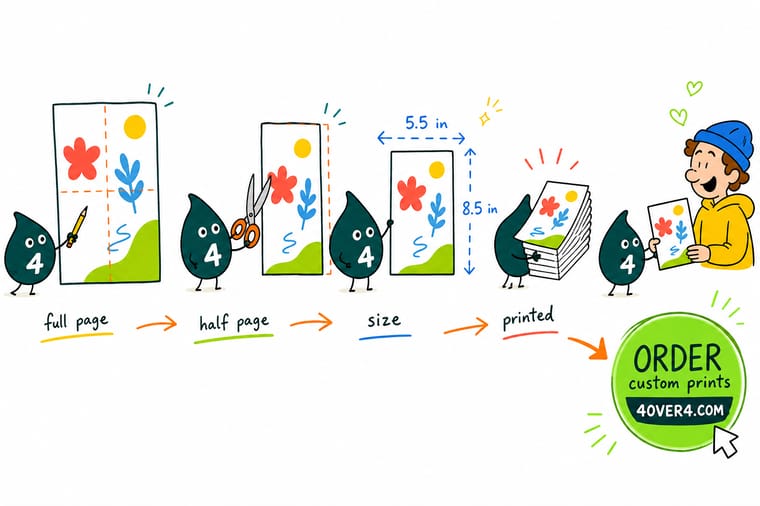
Wally takes an 8.5 by 11 letter sheet and cuts it once across the middle of the long side. Out come two pieces at 5.5 by 8.5 inches, and that is a half page. The width you had stays, the height halves. Before he prints it he stretches the background art a further eighth of an inch past the trim on all four sides and pulls every word an eighth of an inch back in, so the blade has somewhere to land. And no, he will not accept an A5 file for it, because A5 is 5.83 by 8.27 and it does not fit.
Print half page flyers →Specs and pricing
Products that carry the 5.5 x 8.5 trim
Every product below lists 5.5 by 8.5 among its stock sizes. Configure the size, stock and quantity to see live pricing straight from the 4OVER4.COM configurator.


Print it
Order a half page that comes back sharp
Explore more
Where to go next


By the numbers
Flyer printing you can count on at 4OVER4
Common Questions
Your half page size questions, answered
What size is a half page in inches, mm and pixels?
A half page is 5.5 by 8.5 inches. That converts to 139.7 by 215.9 mm, and at 300 dpi it is 1650 by 2550 pixels at trim size. Add the 0.125 inch bleed all round and your artboard becomes 5.75 by 8.75 inches, or 1725 by 2625 pixels. The safe area, where all text and logos should live, is 5.25 by 8.25 inches, or 1575 by 2475 pixels.
Is half page the same as A5?
No, and the difference causes more reprints than any other size mix-up. A5 is 148 by 210 mm, which is 5.83 by 8.27 inches. A US half page is 5.5 by 8.5. A5 is a third of an inch wider and a quarter of an inch shorter, so an A5 file placed in a half page document leaves white on the sides and runs off the top and bottom. Rebuild the layout at 5.5 by 8.5 rather than scaling the A5 art to fit, because scaling shifts every margin at once.
Can you mail a 5.5 by 8.5 flyer?
Yes, but not at the postcard rate. USPS caps a postcard at 4.25 by 6 inches, so a half page goes as a letter instead. It fits the letter maximum of 6.125 by 11.5 inches, its aspect ratio of about 1.55 sits inside the 1.3 to 2.5 window, and it needs to be at least 0.007 inches thick to machine. A 70 lb text sheet is under that threshold, so mail half pages on cover stock. If mailing is the whole point of the job, 4 by 6 postcards start at $16.48 and keep the cheaper rate.
How many half page flyers fit on one sheet?
Two, off a standard 8.5 by 11 letter parent, cut once across the middle of the 11 inch side. On the larger press sheets we actually run, many more fit per sheet, which is why the price per piece at 500 or 1000 drops far faster than the sheet count suggests. That two-up geometry is also why half page rarely carries a size surcharge.
What is half page in landscape?
The same piece turned on its side: 8.5 inches wide by 5.5 inches tall. Set the document to that orientation from the start rather than rotating a portrait file, because rotating leaves the bleed and safety guides in the wrong place and the mistake is invisible on screen. Landscape half pages read well as table drops, shelf talkers and event handouts where the eye scans sideways.
Should I use half page or full page for a flyer?
Use a half page when the piece is handed over, left on a counter or stuffed in a bag, and there is one offer and one action. Use a full page when the reader will sit with it: a menu, a price list, a spec sheet, anything with a table. The honest limit on half page is copy volume. Once you drop body text below about 9 point to make it fit, you have chosen the wrong size, and the fix is a full page or a half fold rather than a smaller font.
Get Started
Ready to print your half page?
Pick 5.5 by 8.5, choose your stock and quantity, and upload the file. Every order gets a free digital proof, so a bleed or size mistake gets caught before the press runs.
Legal Disclaimer
Gold Standard guarantees apply to all standard orders placed through 4over4.com. Price match requires verifiable proof of a competitor's published price for an equivalent product with matching specifications and turnaround time. Satisfaction guarantee covers manufacturing defects and print quality issues. Contact support with order number and documentation. On-time delivery rate based on tracked orders 1999 to 2026. Individual results may vary based on shipping carrier performance.
