
Professional Brochure Printing, From Stock and Fold to Same Day Rush


A buyer's guide to spec'ing a brochure that reads as expensive: the four stocks, the coating decision, the panel arithmetic behind a tri fold, and what same day and volume runs actually change.
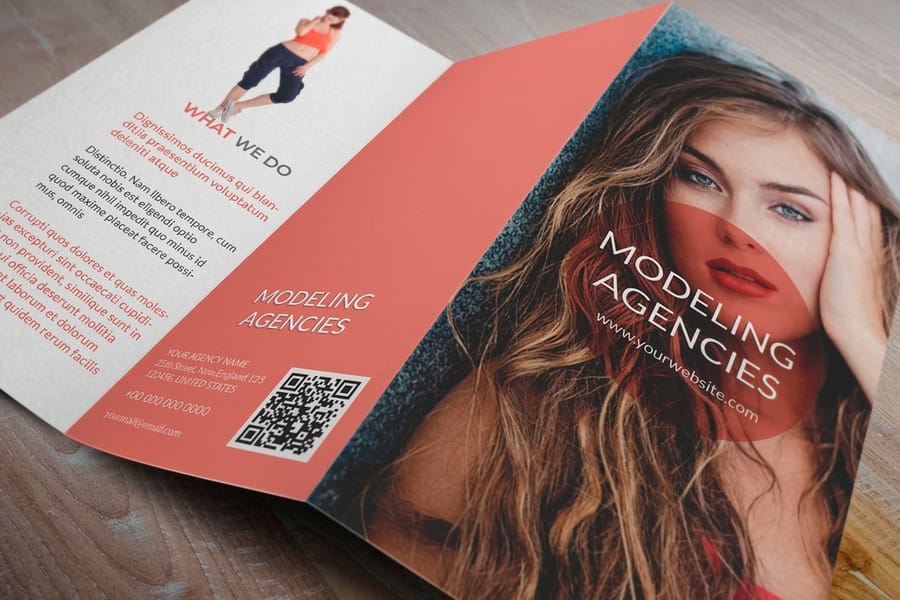
Professional brochure printing comes down to four specs: stock, coating, fold and turnaround. The everyday combination is 100# Gloss Text, no coating, a tri fold, and the 3 business day standard turnaround, which starts at $57.11 for Standard Brochures at 4OVER4.COM. Move to 100# Silk/Matte Text for text-heavy reading, 70# Uncoated Text when people write on it, or 14pt Gloss Cover for a stiff leave-behind that has to be scored before it folds. Same-Day production is available, and the panel that tucks inside a tri fold must be trimmed narrower than the other two.
Quick answer
Spec the fold first, then the stock, then the speed
The fold is the only decision you cannot change after the sheets are printed, so it goes first. Decide whether the brochure lives in a 4 inch rack pocket, an envelope, or a hand. That sets the fold, and the fold sets the panel widths, including the sixteenth of an inch the tucked panel has to give up. Stock comes next, chosen by how the piece is used rather than by weight. Turnaround comes last, because every finishing operation you add is another pass and a shorter list of rush options.
What Separates a Professional Brochure From a Homemade One
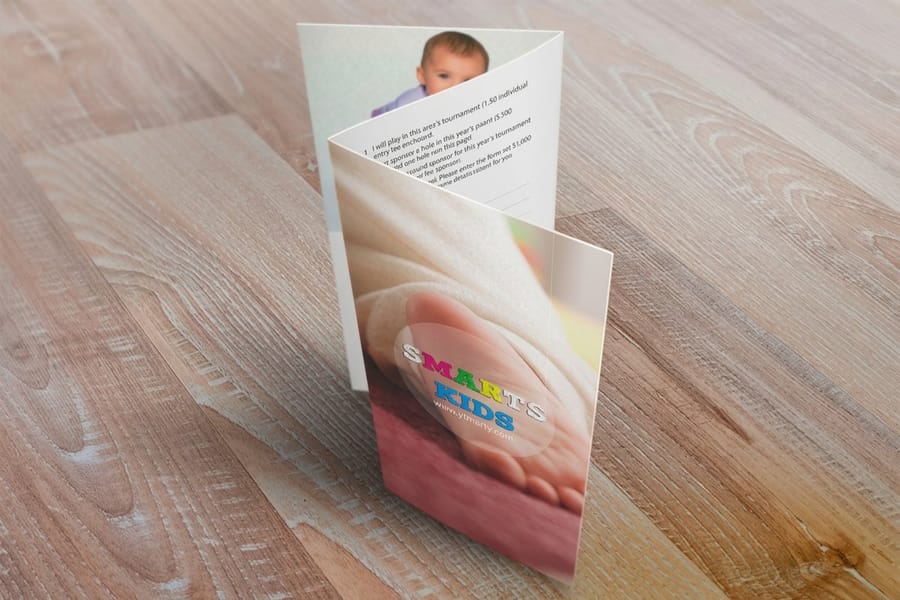
Hand someone two brochures with identical artwork, one from a commercial press and one from an office printer, and they will pick the right one without knowing why. Three things give it away, and none of them are design.
The fold lands where it should. On a commercial job the fold is registered to the printed image, so a panel edge sits exactly on the line the layout planned. Office folding drifts, and once a fold wanders even a sixteenth of an inch the cover panel shows a sliver of the panel behind it.
The ink runs off the edge. A brochure printed on a home printer has a white margin around all four sides because the printer cannot lay ink to the paper edge. A commercial brochure is printed oversize and trimmed, so color runs clean off the sheet. That is why we ask for a 0.125 inch bleed on every side, and why live copy has to sit 0.125 inch inside the trim as well.
The stock is chosen, not defaulted. A brochure on 100# Gloss Text has weight and snap in the hand. The same file on 24# copy paper feels like a memo, and the fold curls open on a table instead of lying flat.
None of that requires a bigger budget. It requires setting the file up as a print file. Start from a correctly sized layout in the blank template library, keep the bleed and the safety margin, and the rest is spec selection. Our guide to how online printing works walks the whole file handoff if this is your first commercial order.
Stock and Coating, and Where Each One Fails
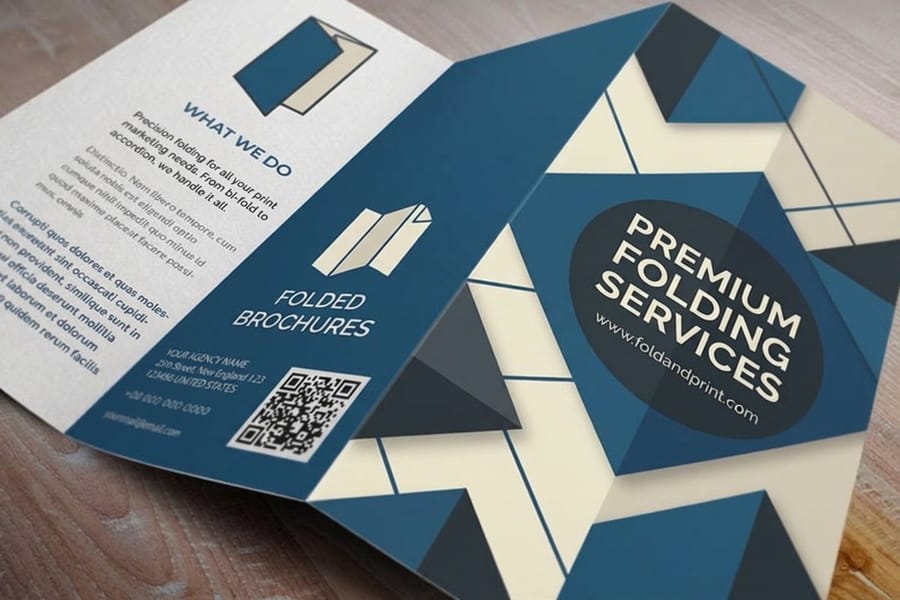
Four stocks cover almost every brochure job, and each one has a job it is bad at. Pick by how the piece will be used, not by which sounds most premium.
| Stock | Feel and look | Best for | Where it fails |
|---|---|---|---|
| 100# Gloss Text | Bright coated snap, photos pop, folds without scoring. | The default. Photo-led brochures, rack pieces, mailers. | Glare across long paragraphs, and a pen will not write on it. |
| 100# Silk/Matte Text | Soft low-glare surface with the same weight in the hand. | Text-heavy brochures read under office or fluorescent light. | Photography looks slightly flatter than it does on gloss. |
| 70# Uncoated Text | Natural, absorbent, takes ballpoint and pencil. | Forms, order panels, anything a customer writes on. | Lighter in the hand, and ink soaks in so colors read softer. |
| 14pt Gloss Cover | Stiff, premium, holds its shape standing on a table. | Short high-value pieces handed over in person. | Needs a score before folding, and a dark fold can crack. |
Read the last column before the first. The crack on 14pt cover is the one that surprises people: coated cover carries a clay layer, and bending it without a score crushes the fibers underneath so the coating splits into a fine white line right through a dark solid. Score it and the sheet creases instead of tearing. That is also why a heavy brochure often reads as less professional than a lighter one, not more.
Coating is a separate decision. A High Gloss UV Coating is chosen per order alongside the stock, and it does two things: it deepens dark colors and it makes the surface unwritable and slightly fingerprint-prone on solid blacks. Put it on a piece people look at. Leave it off a piece people fill in. If you want the comparison in more depth, the matte against glossy brochure guide and the brochure paper guide both go stock by stock.
Folds, Panel Widths and the Rack That Decides Them
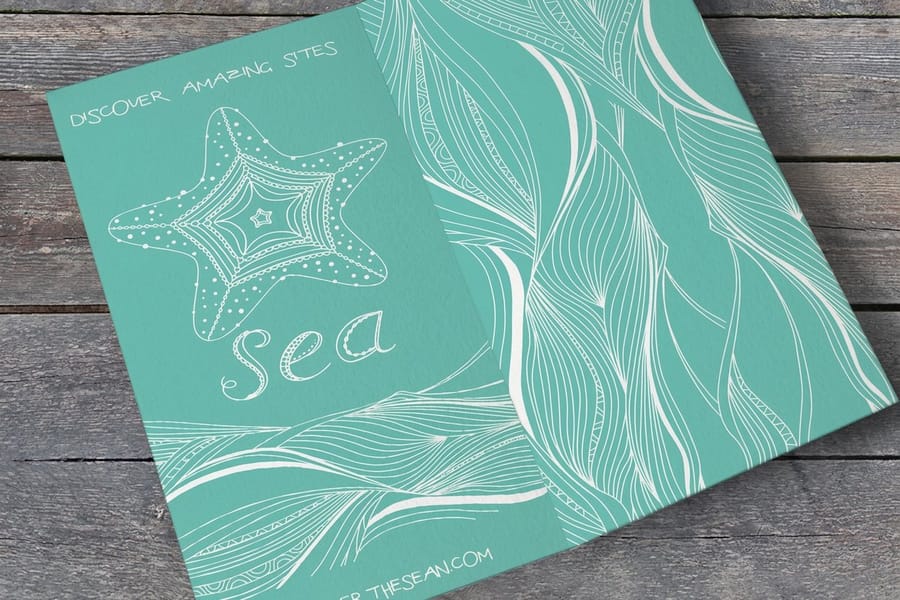
The fold is the decision that costs the most to get wrong, because it is the one you cannot fix after the sheets are printed. Two numbers govern it: the finished width, and whether any panel tucks inside another.
A half fold is available directly in the 4OVER4.COM configurator and turns a flat sheet into a clear cover, an inside spread and a back. The larger sizes, up to 11 by 25.5 inches flat, give room to fold down into bi-fold and tri-fold formats so a full menu or a service overview breaks into sections that read in order. Folding pricing is subject to change upon file review, so send the folded artwork rather than describing it.
| Fold | Panels | Finished width from 8.5 by 11 | Use it when |
|---|---|---|---|
| Half fold | 4 | 5.5 in wide | The piece is handed over or mailed in an envelope. Too wide for a rack. |
| Tri fold (roll) | 6 | About 3.67 in wide | It lives in a literature rack or a No. 10 envelope. The inside panel is trimmed narrower. |
| Z fold | 6 | About 3.67 in wide | The content runs as one continuous story. All three panels stay equal. |
| Gate fold | 6 | Opens to a full 8.5 in spread | You want a reveal. The two outer panels meet in the middle and open together. |
The tri fold trap is worth stating plainly. On an 11 inch sheet the panels are not 3.667 each. Two run 3.6875 and the panel that rolls inside runs 3.625, because a panel folded inside two others needs clearance or it hits the spine, buckles, and springs the cover open on the shelf. A Z fold has no tucked panel, so its three panels stay equal. Get this wrong and the brochure never sits flat in a box.
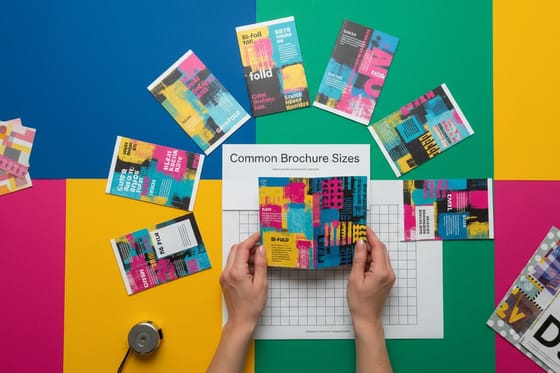
Then check the rack. Standard literature rack pockets are about 4 inches wide, which a tri fold clears and a half fold does not. If the brochure is going into a hotel lobby, a clinic waiting room or a trade show rack, that constraint outranks every layout preference. How to fold a brochure covers the mechanics, and standard brochure sizes and folds lists every flat and finished size we run. For a piece that goes in the mail unenveloped, how to mail brochures covers the tabbing and fold orientation the post office expects.
Same Day Rush, Wholesale Volume and the Proof in Between
Corporate buyers usually arrive with one of two problems: the event is Thursday, or the run is 20,000 and the quote has to hold. They pull the spec in opposite directions.
Speed. Standard Brochures print on a 3 business day standard turnaround, and the configurator offers 2-Day, Next-Day and Same-Day production above that. Each finishing operation you add is another pass through the shop, so the piece that makes a same-day cutoff is a flat or half-folded sheet, not a tri fold with a UV coating and a perforated reply panel. Book the finished version early and keep the rushed version simple. Same day printing sets out what qualifies.
Volume. The per-piece cost of a brochure falls steeply with quantity because the setup is spread across more sheets, which is why a 5,000 run rarely costs anywhere near five times a 1,000 run. Price the quantity you need next to the quantity one step up before you commit, since the step up is often close to free. Standard Brochures and Folded Brochures both start at $57.11, and the full brochure printing range holds eighteen styles including industry-specific versions. Our wholesale printing guide explains how trade and volume pricing is structured.
The proof. Neither speed nor volume saves a job with a wrong phone number on panel four. A free online proof shows the file as it will image, and on Standard Booklets you can order a next-day hardcopy proof to check page order and how the cover folds before committing to a 7 business day run. Booklets start at $240.55 and rush as fast as 1 business day. What proofing is in printing explains what each proof type does and does not catch.
If the piece is really a leave-behind rather than a rack item, price short run presentation folders against a brochure before you decide, and if it is a single unfolded sheet, Standard Flyers start at $39.54 on the same 3 business day turnaround.
Wally explains the tri fold
Two panels the same, one a little narrower
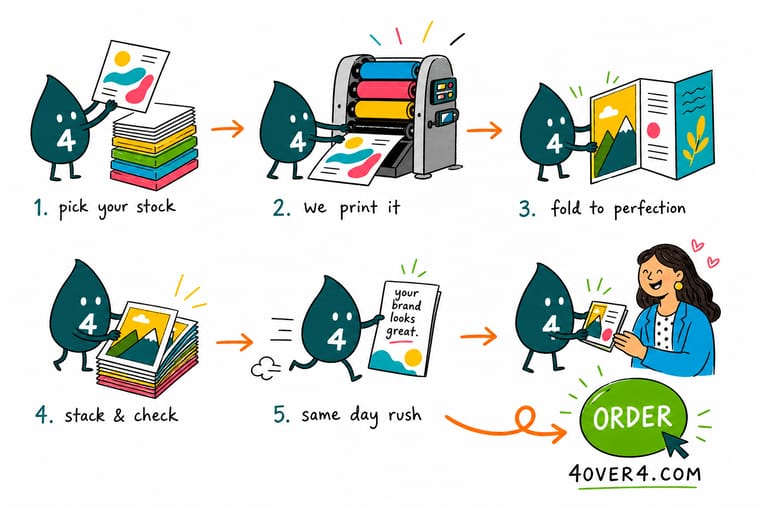
Wally measures an 11 inch sheet into three panels and does not split it evenly. Two panels get 3.6875 inches and the one that rolls inside gets 3.625, because a panel folded inside two others needs somewhere to go. Give all three the same width and the inner one jams against the spine, buckles, and pops the cover open in the rack. A Z fold is different: nothing tucks, so all three panels stay equal. Keep the live copy an eighth of an inch off every fold line either way.
Price brochure printing →Specs and pricing
Brochure sizes, stocks and starting prices
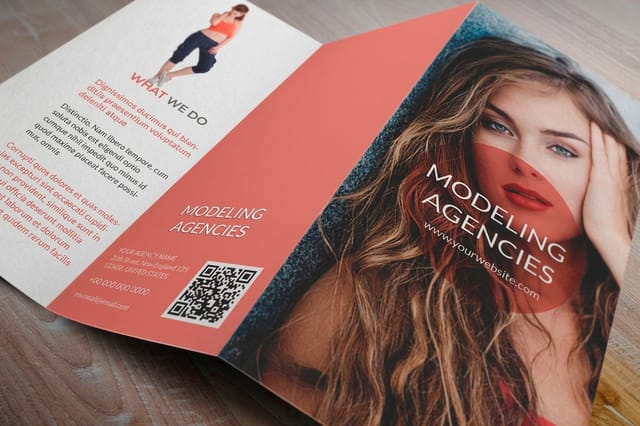
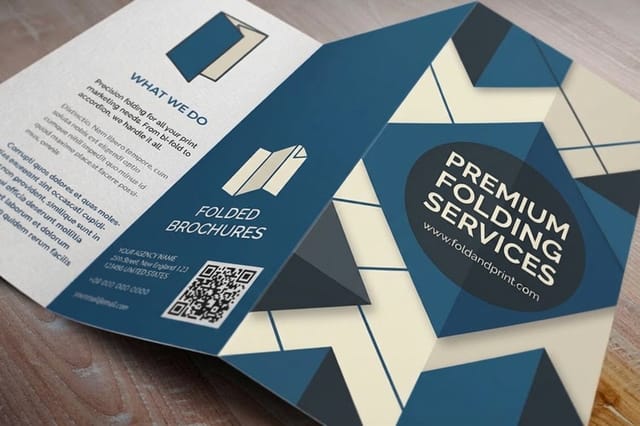
Compare the folded formats side by side, with live configuration choices and starting prices straight from the 4OVER4.COM configurator.

Print it
Order a brochure that racks, mails and folds flat
Explore more
Where to go next

By the numbers
Brochure printing you can count on at 4OVER4
Common Questions
Your brochure printing questions, answered
What paper is best for a professional brochure?
For most jobs, 100# Gloss Text. It is the default on Standard Brochures at 4OVER4.COM, it makes photography look bright, and it folds cleanly without scoring. Switch to 100# Silk/Matte Text when the piece is text-heavy and people will read it under office lighting, because gloss throws glare across a long paragraph. Choose 70# Uncoated Text when someone has to write on the brochure, since ink sits on top of a coated sheet and smears. Save 14pt Gloss Cover for a short, high-value piece that gets handed over rather than mailed in bulk.
How much does professional brochure printing cost?
Standard Brochures start at $57.11 and Folded Brochures start at the same $57.11 at 4OVER4.COM. Standard Booklets, the right move once a brochure runs past eight panels, start at $240.55. The per-piece cost falls as the run grows, and the configurator prices the exact quantity before you commit, so the useful exercise is to price the quantity you actually need next to the quantity one step up. Folding, a High Gloss UV Coating and perforation each add a finishing step to the price.
Can I get brochures printed the same day?
Yes. Standard Brochures print on a 3 business day standard turnaround, and the configurator offers 2-Day, Next-Day and Same-Day production. The catch is finishing. A flat sheet moves through fastest, while folding, coating and perforation each add a pass, and folding pricing is subject to change once we review the file. If a same-day deadline is real, order the piece flat or keep the finishing to one operation.
Will a tri fold brochure fit a standard literature rack?
A tri folded 8.5 by 11 brochure finishes at roughly 3.67 inches wide and drops into a standard rack pocket with room to spare. A half folded 8.5 by 11 finishes at 5.5 inches wide and will not go in. This is the single most common reason a brochure order gets reprinted, and it is decided at the fold, not at the press. If the piece lives in a rack, plan the fold before the layout.
Do I need to score a brochure before folding it?
On 14pt Gloss Cover, yes. Coated cover stock has a clay layer that cracks along a fold when the fibers underneath are crushed rather than creased, and a dark solid running across the fold shows the crack as a white line. A score crushes a channel first so the sheet bends instead of tearing. On 100# and 70# text weights the fibers are thin enough that a plain fold holds up without it.
When should I print a booklet instead of a brochure?
Once the content needs more than about eight panels, or once the reader has to move around inside it rather than read it front to back. A tri fold gives six panels and a Z fold gives six, and past that the panel arithmetic gets fragile and the piece stops folding flat. Standard Booklets start at $240.55, print on a 7 business day turnaround with rush as fast as 1 business day, and include a free online proof or a next-day hardcopy proof, which matters when there are page numbers to check.
Get Started
Ready to print a brochure that holds its fold?
Pick the stock, set the fold, choose a turnaround from 3 business days down to Same-Day, and we print a brochure that racks straight and lies flat in the box.
Legal Disclaimer
Gold Standard guarantees apply to all standard orders placed through 4over4.com. Price match requires verifiable proof of a competitor's published price for an equivalent product with matching specifications and turnaround time. Satisfaction guarantee covers manufacturing defects and print quality issues. Contact support with order number and documentation. On-time delivery rate based on tracked orders 1999 to 2026. Individual results may vary based on shipping carrier performance.
