
Flyers vs Postcards vs Door Hangers for Reaching Local Customers


Three formats, three delivery systems, three very different cost structures. Here is which one fits the job, what each really costs once delivery is counted, and where each one is allowed to land.
Use postcards when you need to reach every household in an area without setting foot in it, flyers when you have hands and permission to put them somewhere, and door hangers when you want to be the only message at the door. The split is who carries the piece and whether it pays postage: only a stamped postcard may legally enter a mailbox, so a flyer or a hanger has to find another surface. Print price is the smaller half of the decision. Postage and walking labor are the half that sets the real budget.

Quick answer
One rule decides the format before any design does
Postage is what buys the mailbox. A postcard pays it and gets carried to every address on a route by USPS. A flyer and a door hanger pay nothing, so both are barred from the mailbox and need a person to place them on another surface. That is why flyers go on counters, boards and doorsteps, why hangers go on handles, and why postcards are the only one of the three that reaches a whole neighborhood without a single hour of your labor.
The Mailbox Rule Sorts These Three Before Anything Else
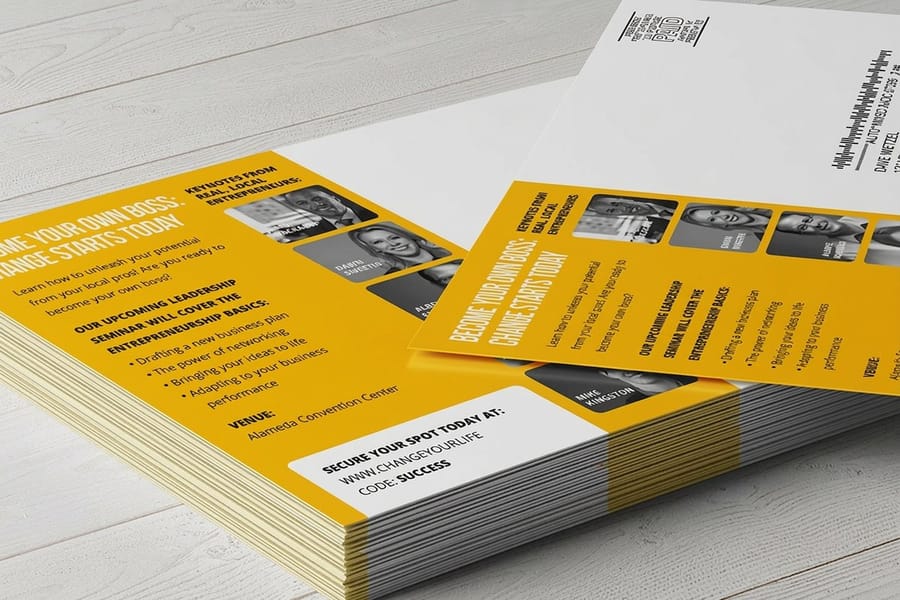
Marketers argue about response rates. The thing that actually decides the format is duller and harder: a mailbox is federal property, and only stamped mail goes in it. That single rule creates three different jobs.
Postcards buy the mailbox. Postage is the ticket, and once it is paid the letter carrier walks the route for you in every weather, to every address, including the ones behind a gate. You never touch the neighborhood.
Flyers buy flexibility. No postage, no address, no list. That freedom is why a flyer can sit on a coffee shop counter, go in a bag at checkout, hang on a community board and land on a doorstep in the same week. Somebody has to carry it, and that somebody is you or a crew you pay.
Door hangers buy the door. A hanger is on the handle, alone, at eye level, and the resident has to physically move it to get inside. Nothing else in local marketing gets that much uncontested attention for the price of a walk.
| Format | Who delivers it | Where it lands | What it costs you beyond print |
|---|---|---|---|
| Flyer | You, your staff, or a paid distribution crew. | Counters, boards, bags, event tables, doorsteps. | Labor, and permission from whoever owns the counter. |
| Postcard | The USPS letter carrier. | Inside the mailbox, in the day's mail stack. | Postage on every piece, plus a list or a route selection. |
| Door hanger | A walker, house by house. | The door handle, on its own. | Walking time, and a permit in some municipalities. |
Read the last column before the first. Most campaigns fail on the delivery cost, not the printing cost, and the delivery cost is the column people skip. If you have no one to walk a route, a hanger is not cheap at any price. If you have a truck on that street every Tuesday, it is nearly free. Our door hanger legal guide goes deeper on the mailbox rule and on solicitation permits, and whether flyers can go in mailboxes covers the same ground for handouts.
What Each One Actually Costs, Print and Delivery Together
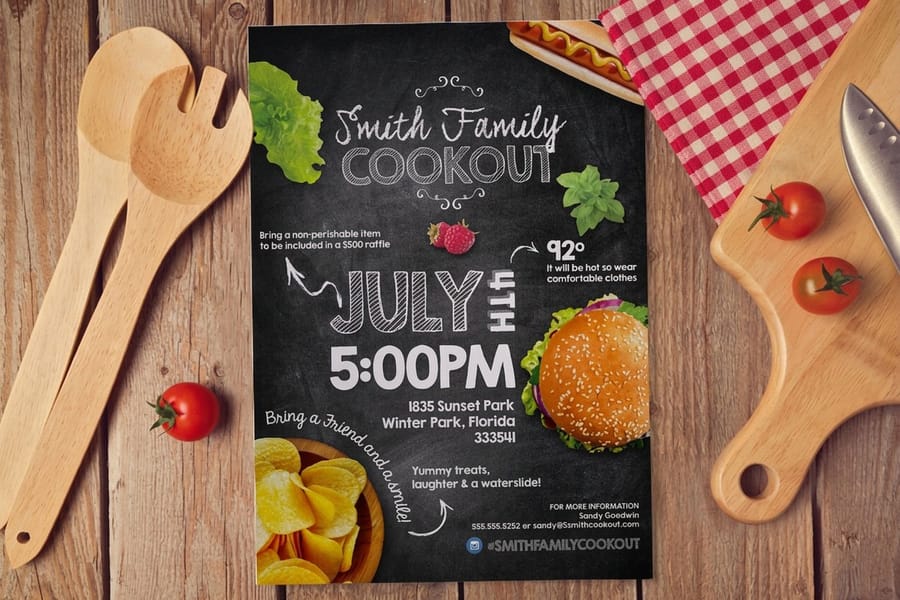
Print price and campaign price are two different numbers, and the gap between them is where budgets get wrecked.
| Product at 4OVER4.COM | Starts at | Delivery cost sits where | Best when |
|---|---|---|---|
| Standard Flyers | $39.54 | Your hours, or a crew rate per hundred. | You have places to put them and people to carry them. |
| Standard Postcards | $16.48 | Postage per piece, every piece, no exceptions. | You want reach without leaving the office. |
| Direct Mail Postcards | $89.68 | Bundled: we print, address and hand it to USPS. | You do not want to touch a mailing list or a post office. |
| Door Hangers | $290.41 | Walking time, roughly a route per person per day. | Your crew already works the streets you want. |
| Standard Brochures | $57.11 | Same as flyers, with more to say. | The offer needs explaining, not just announcing. |
Two things in that table catch people out. First, the door hanger entry price looks brutal next to a postcard, but it reflects a larger minimum run, so compare it per piece across a real quantity rather than at the starting price. Second, the postcard line is misleading on its own: postage frequently costs more than the card, and it scales with size, so a 6 by 9 inch card that looks better in the mailbox also moves you up a rate tier. The postage cost by size and rate tier breakdown is the number to plan against, and direct mail cost per piece shows how print, list and postage stack up together.
If postage is the problem, EDDM pricing is usually the answer, because the retail EDDM rate undercuts standard mail and you skip the list cost entirely. The trade is control: you buy whole carrier routes, not households.
Pick by the Job in Front of You, Not by Preference

Every one of these formats works. They just work on different problems, and the fastest way to choose is to describe the job out loud.
- A crew already on the street. Roofers, pavers, lawn care, pest control, window cleaning. Hangers on the twenty houses around the job you are doing today, while the truck is visible. Follow with mailed postcards to the rest of the ZIP code in the off season.
- A storefront that needs foot traffic this weekend. Flyers. Counters at the businesses next to you, a stack at the register, the community board at the grocery store, and a bag stuffer for every order. Cheap, immediate, and you control every placement.
- A new location opening in a specific radius. Mailed postcards on the carrier routes around the address. It is the only format that reaches every household in a defined area without a single hour of labor.
- A real estate listing. Postcards, mailed to the surrounding blocks, because the neighbors are the ones who refer buyers. See how to run a real estate postcard mailing for the sequence.
- An event with a date. Flyers for boards and counters, postcards for the people you already know are interested. A hanger dated to a single evening wastes the format, because you cannot control which day the resident finds it.
- An offer that needs a page to explain. A brochure instead of any of the three. If the pitch does not fit on one side of a flyer, it will not fit on a hanger at all.
The pattern underneath: walking formats win where you already have a presence, and mail wins where you do not. That is also why the two comparisons people search for most, postcards vs flyers and door hangers vs flyers, keep arriving at the same answer from opposite directions.
Build Each Piece So It Survives Its Own Channel
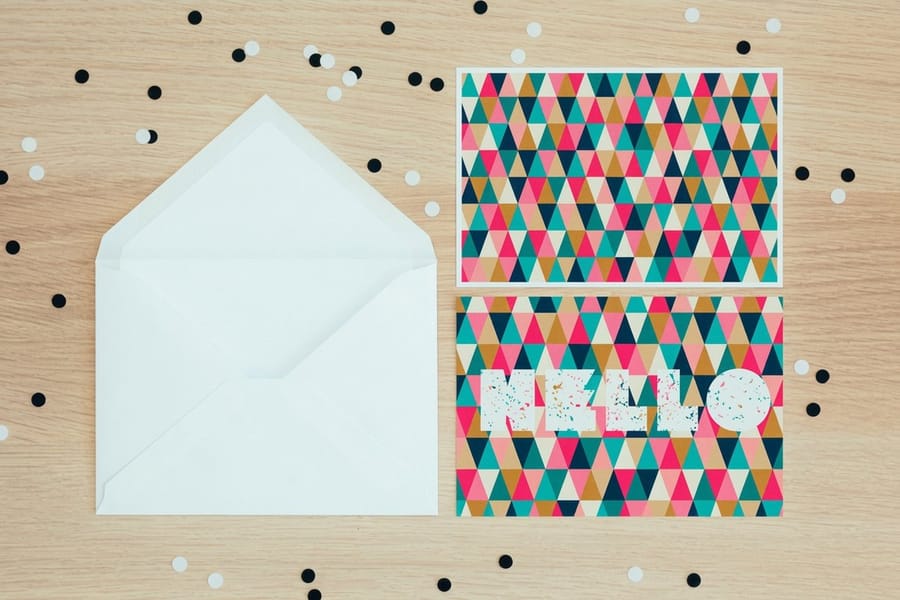
A design that works on one of these will fail on the other two, because each channel takes something away from you.
The postcard gives up half its canvas. USPS needs the address side clear for the barcode and the delivery block, which leaves you a message panel rather than a full side. Design the front as the whole ad and treat the back as a caption. The address side layout and clear zone rules lay out exactly what has to stay empty, and standard postcard sizes covers which dimensions qualify for which rate.
The hanger gives up its top three inches. The die cut hole and the strap above it are structural, not design space. Put nothing there you need read. Stock matters more here than on any other piece: a 14pt or heavier card holds its shape on a handle through a wet afternoon, while a thin sheet curls and slides off. Door hanger sizes and the door hanger paper guide cover the hole placement and the weights that hold up.
The flyer gives up nothing, which is its own trap. With a full 8.5 by 11 inches and no rules, most flyers end up crowded. Pick the paper deliberately: 100 lb gloss text reads well and stacks cheaply for handouts, while a cover weight feels like something worth keeping on a fridge. Flyer paper stocks and weights walks through the difference, and standard flyer sizes covers the cuts.
Whichever you print, build the file at final size with a proper bleed and outlined fonts. You can start from a correctly sized layout in our blank template library rather than measuring it yourself, and if you want to see how a stock behaves before committing to a run, order the piece in the smallest quantity first.
Wally explains the three lanes
One pays postage, two pay a walk
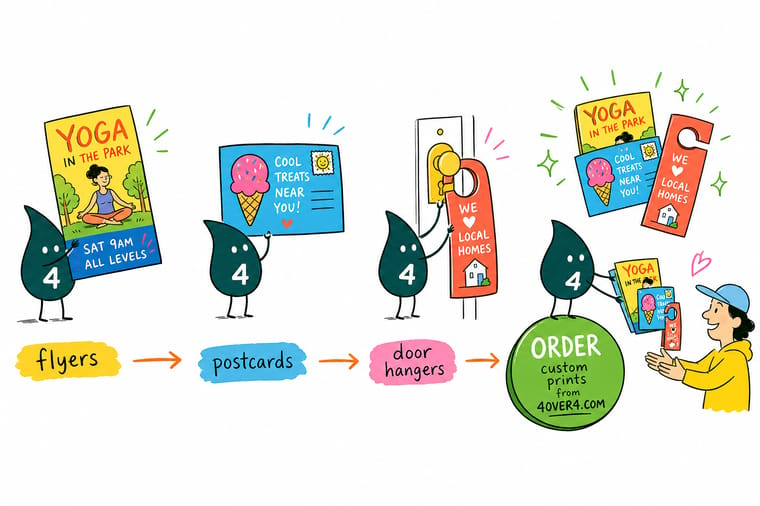
Wally walks up to one house with all three pieces. The postcard has a stamp, so it goes in the mailbox and the letter carrier could have brought it for him. The flyer has no stamp, so it goes on the doorstep or back to the coffee shop counter. The door hanger has no stamp either, so it goes on the handle, where it is the only thing the resident sees. Same house, three surfaces, three different bills.
Compare postcards, flyers and door hangers →Specs and pricing
Sizes, stocks and starting prices for all three
Configure each format side by side, with the live size, stock and quantity choices and starting prices straight from the 4OVER4.COM configurator.



Print it
Order the format that fits your route


Explore more
Where to go next




By the numbers
Local marketing formats inside our product range
Common Questions
Your flyer, postcard and door hanger questions, answered
Can I put flyers or door hangers in mailboxes?
No. A residential mailbox is reserved for material that has paid postage, under 18 U.S.C. 1725, and that rule covers the flag, the post and the inside of the box. Tucking a flyer under the flag or wedging it into the box door is the same violation. It is also the fastest way to get a complaint filed against your business, because the carrier reports it. Hang it on the door handle, wedge it in the storm door frame, or mail it as a postcard.
Which format gets the best response for a home services business?
Door hangers and mailed postcards do different jobs, and most plumbers, roofers and lawn crews we print for run both. The hanger works on the street you are already parked on: neighbors see the truck, then find your hanger on the handle the same afternoon. The postcard works on the streets you cannot reach on foot, and it keeps arriving in the off season when the crew is not out. If you can only fund one, start with hangers on the routes you already serve, because the walking cost is close to zero when the truck is already there.
Do I need a mailing list to send postcards?
Not always. A targeted list lets you mail named households, past customers or a filtered demographic, and it is the right choice when your customer is specific. Every Door Direct Mail skips the list entirely: you pick USPS carrier routes on a map and every address on them receives the piece. EDDM is cheaper per piece and needs no names, but it is a blunt instrument, and it forces a larger mailpiece size. Our guide on how to build or rent a mailing list covers the first path, and the EDDM guide covers the second.
Are door hangers legal on private property?
On a normal single family street, yes, as long as you stay off the mailbox and respect posted no soliciting signs. Where it gets complicated is gated communities, HOA managed streets and apartment buildings, all of which can bar distribution on their own property and often do. Some cities also require a solicitor permit for door to door work. Check the municipality before you print 5,000 pieces for a route you cannot legally walk.
What size should each piece be?
Flyers are usually 8.5 by 11 inches for a handout or a board posting, and 5.5 by 8.5 inches when you want something cheaper that still holds a full offer. Mailed postcards start at 4 by 6 inches for the lowest postage tier and step up to 6 by 9 or 6 by 11 inches when you want the piece to stand out in the stack or to qualify for EDDM. Door hangers are typically 4.25 by 11 inches with a die cut hole sized to clear a lever handle. The size guides linked through this page carry the exact dimensions and bleed for each.
Can one design work for all three formats?
The brand elements travel. The layout does not. A door hanger is read from three feet away while somebody is getting a key into a lock, so it needs one offer, huge type and a phone number that reads at a glance. A mailed postcard is read at the kitchen counter and has to give up its address side to USPS rules, which removes roughly half your canvas. A flyer is the only one of the three with room for detail, a map and a tear off. Design the hanger first, because it has the tightest constraint, then let the flyer and postcard borrow from it.
Get Started
500 direct mail postcards cost $89.68, door hangers 250 for $290.41
Pick the format that matches your route, choose a stock that survives the trip, and we print it and ship it from New York on your schedule.
Legal Disclaimer
Gold Standard guarantees apply to all standard orders placed through 4over4.com. Price match requires verifiable proof of a competitor's published price for an equivalent product with matching specifications and turnaround time. Satisfaction guarantee covers manufacturing defects and print quality issues. Contact support with order number and documentation. On-time delivery rate based on tracked orders 1999 to 2026. Individual results may vary based on shipping carrier performance.
