
How to Get Cheap Door Hanger Printing Without a Flimsy Card


The price of a door hanger is decided by how many you order, not by how thin you make it. Here are the real quantity breaks, the two specs worth paying for, and the distribution math that beats mail.
The cheapest door hangers come from ordering the right quantity, not from thinning the stock. At 4OVER4.COM 250 door hangers cost $290.41, about $1.16 each, while 1,000 cost $332.08, about $0.33 each, so $42 more buys 750 more doors. Past 5,000 the curve flattens toward $0.09 at 25,000, hand delivery removes postage entirely, and the only two specs worth protecting are gloss cover stock and the UV coating that keeps the die-cut hole from tearing.

Quick answer
Buy the quantity, protect the stock, skip the postage
Setup is charged once, so a small run pays for all of it. That is why 250 door hangers land at about $1.16 each and 1,000 at about $0.33, only $42 apart in total. Beyond 5,000 the per-piece price barely moves, so extra volume stops being a saving and starts being inventory. Keep 14pt or 16pt gloss cover with the High Gloss UV Coating, keep to a standard trim so no die charge appears, and let hand delivery do what postage cannot.
What You Are Actually Paying For on a Door Hanger
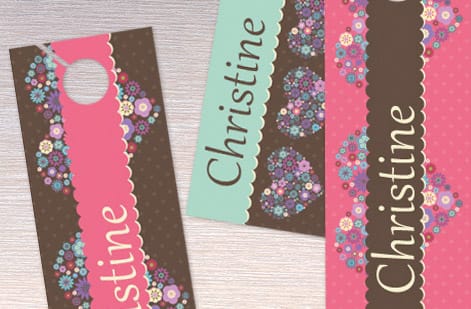
A door hanger price is three things stacked together: a fixed setup, the stock and coating, and the click cost of the pieces themselves. Only one of those three moves much when you shop around, and it is not the one most people argue about.
Setup is charged once per job. It covers the file check, the plate, and the die that cuts the knob hole and the slot at the top. Whether you order 250 or 10,000, that cost is the same, which is why a short run looks so expensive per piece and why the 250 price is a bad number to judge a printer by.
Stock and coating are the next layer. Standard runs use 14pt or 16pt gloss cover, both sealed with High Gloss UV Coating, and the coating is not a luxury on this format. A card hanging on an exterior handle takes morning damp and a few hours of handling, and an uncoated sheet goes soft at the hole.
The third layer, the per-piece cost, is the only one that falls as you order more. That is the whole reason quantity dominates every other decision on door hangers, and it is worth understanding before you start trimming anything else. If you want the general version of this arithmetic across our catalog, the guide to how bulk price breaks work lays out the same curve on other products.
Order the Quantity You Will Actually Walk
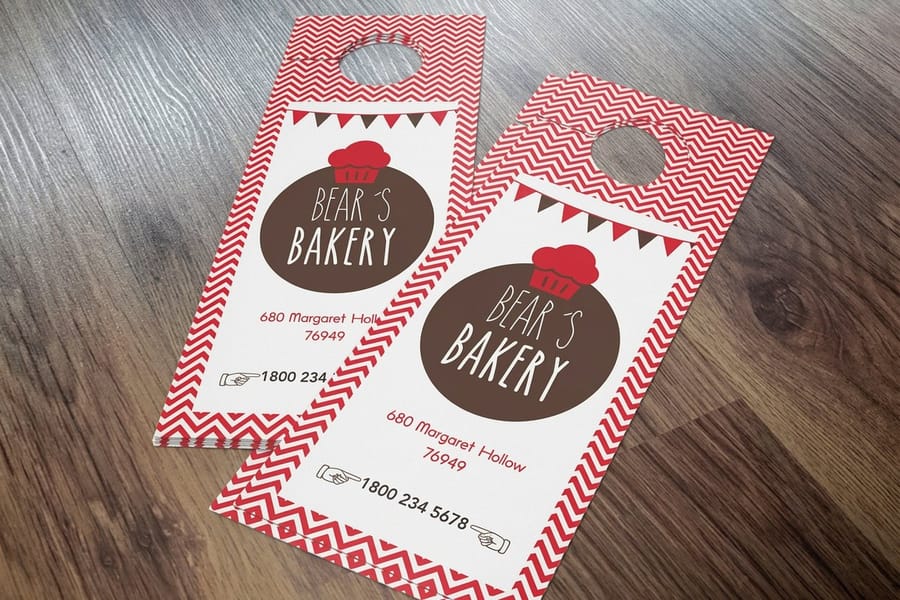
Here is the honest table, straight off the configurator. Read the middle column, then read the last one, because the second half of this table is where campaigns waste money.
| Quantity | Cost per piece | What it tells you |
|---|---|---|
| 250 | About $1.16, $290.41 the run | The setup is spread over almost nothing. This is the worst per-piece price we print. |
| 1,000 | About $0.33, $332.08 the run | The big drop. $42 more in total, four times the doors, and the reason nobody should order 250. |
| 5,000 | About $0.18 | Still real savings, and the sweet spot for a route a small crew can finish in a week. |
| 10,000 | About $0.12 | The curve is flattening. You are now committing serious cash for a six cent improvement. |
| 25,000 | About $0.09 | Cheapest per piece, across 9 quantity tiers, and only worth it if you can deliver them all. |
The trap is at the bottom. Ordering 25,000 because it looks like the best deal is only a saving if 25,000 doors get walked while the offer is still live. A dated coupon, a seasonal service, or a listing that sells turns unwalked stock into recycling, and 15,000 hangers in a garage cost more than the discount ever returned.
The practical rule: work out how many doors your crew covers in a day, multiply by the days you have before the offer expires, and buy that number rounded up to the next tier. If the answer lands under 1,000, buy 1,000 anyway. That one is free money.
The Three Specs Where Cutting Costs Backfires

Not every saving is a saving. Three specs look like easy places to trim and are the three most likely to cost you a reprint.
Stock. 14pt gloss cover is the economical choice and it is genuinely fine for a summer route where the card comes down the same evening. 16pt is firmer in the hand and holds better on a windy handle. Look at the die-cut hole when you decide, because that is where the stock is thinnest and where a day of pulling concentrates. If your route runs through a wet season, the 16pt upgrade is cheaper than reprinting the torn ones.
Size. All four standard trims, 3.5 by 8.5, 3.5 by 11, 4.25 by 11 and 4.25 by 14, run on existing dies, so switching size is a message decision rather than a cost dodge. Smaller uses less stock and prints cheaper, but the die-cut hole and slot take the top of every size, so the usable panel is always shorter than the trim dimension. Squeezing a coupon plus a service list onto 3.5 by 8.5 produces six point type nobody reads, which is a total loss rather than a saving. The door hanger size guide shows what actually fits on each.
Shape. A custom trim up to 4 by 14 is available, and it carries a die charge plus a longer schedule. If the only reason for going custom is an inch of extra height, price it against the nearest standard size first. The novelty rarely survives contact with the invoice.
One upgrade genuinely earns its cost: the optional perforation 2 inches from the bottom, which turns the base of the card into a tear-off coupon the homeowner keeps. That is what rip hangers do by default, and they start at $362.99 for 250 against $290.41 for standard hangers. A coupon that ends up on a fridge outlives the card by weeks.
Hand Delivery Is Where the Real Saving Lives

The largest cost difference between door hangers and every mailed format is not the print. It is postage, and door hangers do not have any. A mailed postcard carries a USPS charge on every single piece on top of the print price, and that per-piece charge does not fall much with volume the way printing does. Our breakdown of postcard postage by size and rate tier shows how quickly it adds up next to a $0.33 hanger.
What replaces postage is labor and rules. The handle is the legal place for a door hanger, and a residential mailbox is not: mailboxes are reserved for material that paid postage, which is why a route that cuts corners there tends to end in complaints rather than calls. Posted no-soliciting notices deserve the same respect, and skipping those houses costs you nothing worth having.
Labor is the part worth planning. Whether you use your own crew or a distribution service, the delivery cost per door usually exceeds the print cost per door once you get past 1,000, so an accurate route estimate saves more than any stock downgrade. The explanation of how flyer distribution services work applies directly, and the flyer distribution best practices cover the timing that keeps cards from being pulled before anyone reads them.
If your target list is genuinely addresses rather than streets, run the numbers both ways before committing. Standard postcards start at $16.48 and standard flyers at $39.54, so the print side is far cheaper, and then postage or handout labor decides the winner. Door hangers against flyers settles the format question, and estimating printing costs before you order keeps the whole budget honest. For a listing route, real estate door hangers start at $252.51 for 250, below the standard price, because the presets are already built.
Wally prices a door hanger run
The cheap card is the one you ordered enough of
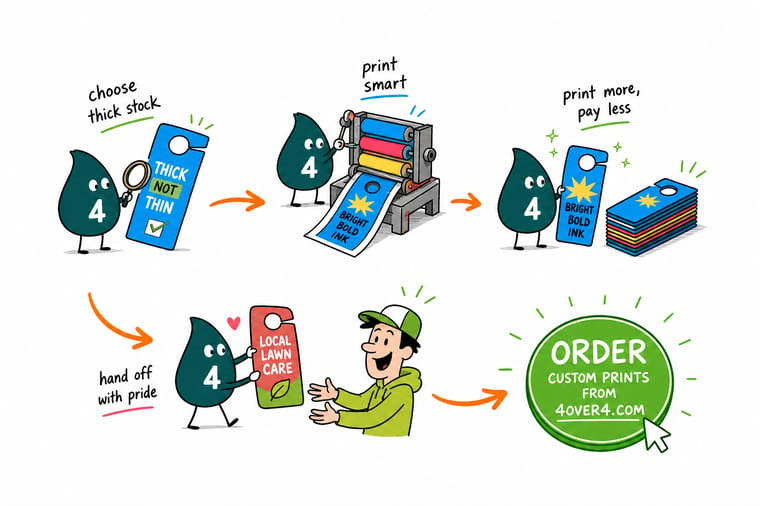
Wally quotes 250 hangers and gets $290.41, about $1.16 a card. He quotes 1,000 and gets $332.08, about $0.33 a card. Same plate, same die, same UV coating, $42 apart, and 750 more doors on the route. Then he stops, because at 25,000 the price only reaches $0.09 and he cannot walk that many before the coupon expires. Order what your crew can deliver, keep the gloss cover, and put the savings into the tear-off coupon instead.
Configure your door hangers →Specs and pricing
Sizes, stocks and starting prices, side by side
Live configuration options and starting prices from the 4OVER4.COM configurator, so you can compare a standard run against the industry presets and the tear-off version before you commit a budget.


Print it
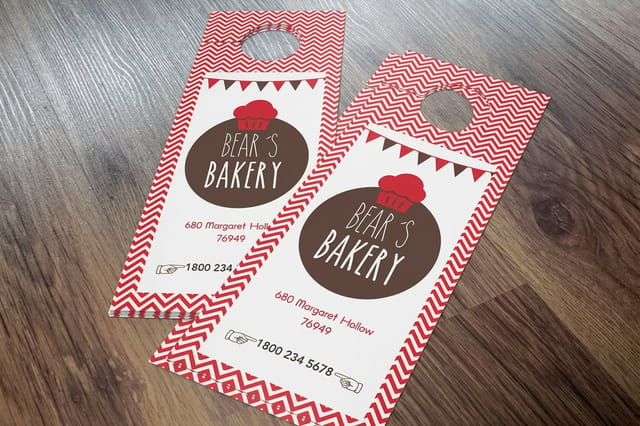
Door hangers that cost little and still hang all day


Explore more
Where to go next




By the numbers
Bulk printing you can count on at 4OVER4
Common Questions
Your door hanger cost questions, answered
How much do 1,000 door hangers cost?
1,000 door hangers cost $332.08 at 4OVER4.COM, which works out to about $0.33 each on 14pt gloss cover with High Gloss UV Coating. The number worth holding next to it is the 250 price of $290.41, about $1.16 each. The two runs are only $42 apart in total because the setup is charged once either way, and that $42 is buying 750 more doors rather than a better card.
What is the cheapest door hanger size?
The smallest standard trim, 3.5 by 8.5 inches, uses the least stock and is the cheapest to run, and it is the right pick when you have one offer and one phone number to communicate. The default 4.25 by 11 gives you room for a coupon and a service list. All four standard sizes, 3.5 by 8.5, 3.5 by 11, 4.25 by 11 and 4.25 by 14, run on existing dies, so the size choice is about the message, not about dodging a die charge. Custom trims up to 4 by 14 are possible but carry the charge and a longer schedule.
Is 14pt or 16pt cheaper, and is the difference worth it?
14pt gloss cover is the economical run and it is the correct default for a dry-season route where the card hangs for a day. 16pt feels firmer in the hand and survives a windy handle better. The failure point on both is the die-cut hole at the top, because that is where the stock is thinnest and where the weight pulls all day. If your route runs through rain or your card has to hang until the homeowner gets back from work, the 16pt upgrade costs less than reprinting the ones that tore off.
Can I save money by leaving door hangers in mailboxes?
No, and it is the most expensive shortcut in this format. A residential mailbox is reserved for material that carried postage, so putting a door hanger inside one exposes you to a postage-due claim and, in practice, complaints that end a route early. The handle is the legal and intended place for it. Our door hanger legal guide and the rules on flyers in mailboxes cover the detail, including posted no-soliciting notices.
How long does the cheap option take to arrive?
Standard production is 7 business days and that clock starts when your proof is approved, not when you pay. Add transit on top, then a buffer for one round of proof changes. Rush production exists and it costs more, so the cheapest schedule is the one where you book your walkers for after the box lands rather than before. Every printer measures production the same way, which makes the honest comparison price at the same turnaround, not price against price.
Does designing it myself save money?
Yes, and it is the safest place to cut. The layout charge disappears if you supply print-ready artwork, and the free online proof still catches the errors that actually cost money, like a headline sitting where the die-cut hole will be. Start from the correct trim in the blank template library so the hole, the bleed and the safe margin are already drawn, then read the door hanger design guide before you commit the file.
Get Started
Ready to price a run that fits your route?
Pick a standard trim, choose 14pt or 16pt gloss cover with the UV seal, and see the per-piece price fall across all 9 quantity tiers before you order.
Legal Disclaimer
Gold Standard guarantees apply to all standard orders placed through 4over4.com. Price match requires verifiable proof of a competitor's published price for an equivalent product with matching specifications and turnaround time. Satisfaction guarantee covers manufacturing defects and print quality issues. Contact support with order number and documentation. On-time delivery rate based on tracked orders 1999 to 2026. Individual results may vary based on shipping carrier performance.
