Custom Bottle Boxes That Actually Protect Glass in Transit


Jordan is our labels, packaging and sustainability voice, built from the knowledge of our production team, with over 20 years in printing.
The insert, the cell width and the board grade decide whether a bottle arrives whole, and all three are settled before anyone builds artwork.
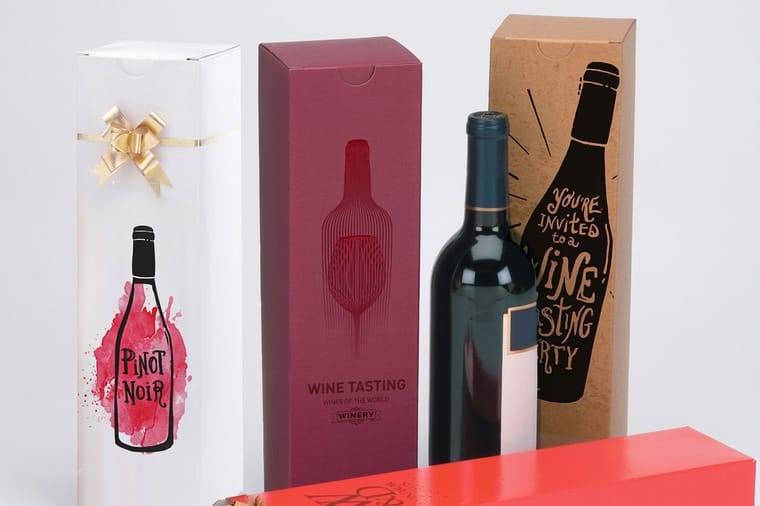
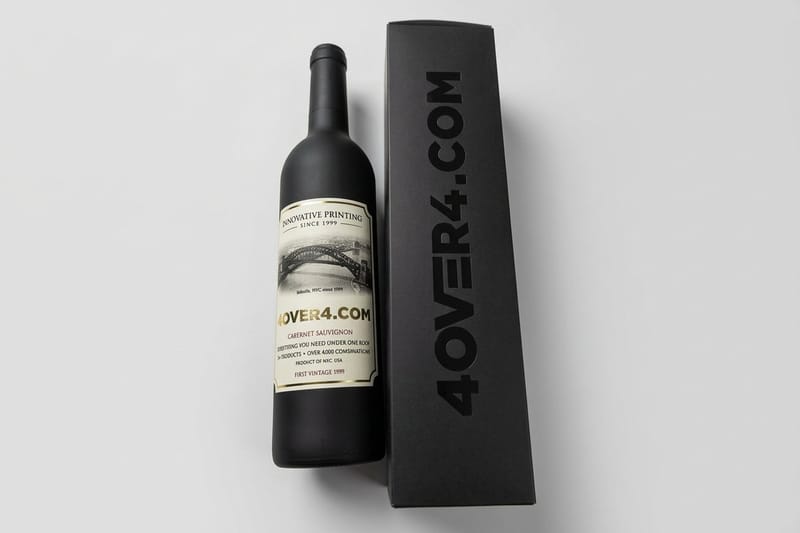
A custom bottle box is a printed shell plus a fitted insert, and the insert is what keeps the glass from touching other glass or the outer wall. Size it from the widest bottle you ship: a 750 ml Bordeaux is about 3 inches across and 12 inches tall, so the cell is cut about an eighth of an inch wider and the inside height lands near 13 inches. Our printed wine box is a 14pt or 18pt paperboard carton for one bottle; to ship it, set it inside a corrugated shipper with a divider.
Quick answer
The insert sets every dimension on the box
Design the partition first, then wrap a printed carton around it. The cell width comes from your bottle, the outside comes from the cells plus their walls, and the height comes from the bottle plus a pad above the capsule and one below the base. Change any of those and the printed shell changes with it, so lock them before artwork.
What to order
Custom bottle boxes and inserts, what to order
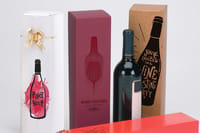
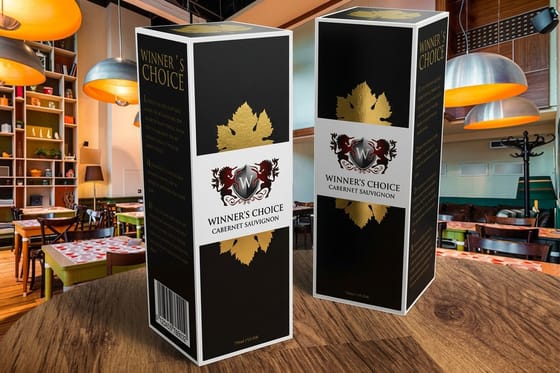
For a single bottle, order the printed wine box: a 3.23 x 3.23 x 13.125 inch carton that takes a 750 ml Bordeaux with under a quarter inch of total play across the body. It prints full color on the outside, on 14pt uncoated or 18pt cover with gloss on one side, with a tuck top or a carry handle, from 50 boxes in 9 business days. We do not print partitions or corrugated shippers, so a two to twelve bottle pack needs a divider and an outer carton from a packaging supplier, with our printed box or a premium packaging label carrying the brand.
What a Custom Bottle Box Actually Is
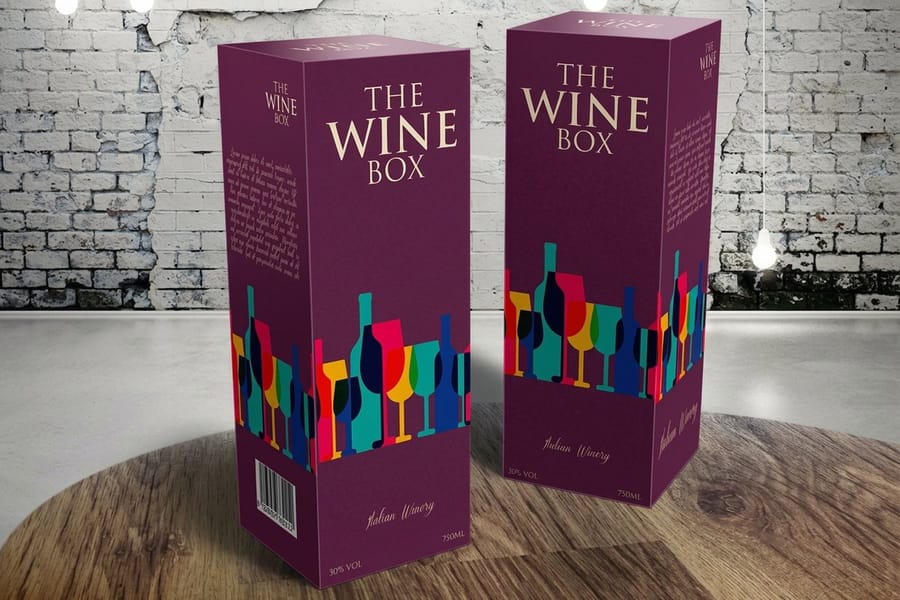
A custom bottle box is two parts that get quoted as one. There is the printed shell, which is the carton people see and photograph, and there is the insert, which is the partition or molded tray that holds the glass still. A good shell with no insert still breaks bottles.
The shell decides how the package reads. It carries the brand, the legal text, the finish, and the shelf presence. The insert decides whether the bottle arrives. Those are separate engineering problems and they get solved with separate numbers: the shell is sized from the insert outward, never the other way round.
Three shapes cover most of the market. A tall single bottle carton like our wine box is the retail and gift shell. A multi bottle case with a fitted divider is the shipper. A rigid magnetic lid box is the presentation option that goes inside a plain outer carton for transit. Our roll end tuck top box, at 5 x 7 x 1.7 or 5.5 inches square, suits miniatures lying flat rather than a full size bottle.
If you are still deciding between styles rather than sizes, our guide to choosing the right box style for your product walks the whole range, and the custom box printing range shows what each style costs to print.
The Insert Is Where Bottles Are Saved Or Lost
Glass fails at the point of contact, not from the fall itself. A bottle that slides two inches inside a loose box arrives at the wall with enough speed to chip the shoulder or crack the base. Hold the same bottle still and the board takes the energy instead.
Three insert types cover almost every bottle pack. A die cut corrugated partition is a set of slotted walls that lock into a grid, the cheapest per unit and the easiest to reorder. Molded pulp trays cradle the neck and the punt in one moulded piece, which suits single bottle gift packs and looks deliberate when the lid comes off. Foam or EPE sleeves hold a bottle inside a plain shipper and are the fastest way to make an existing box work without new tooling.
Two rules matter more than the type you pick. First, the insert should reach the full height of the bottle body, not stop at the shoulder, because a partition that only holds the bottom half leaves the neck free to swing. Second, keep the bottle off the outer wall entirely: the divider wall plus the box wall is two layers of board between the glass and whatever it lands on, and that gap is the whole design.
The base pad matters as much as the side walls, because a bottle dropped upright lands on its punt. Half an inch of board or pulp under it is cheap. A replacement bottle, a replacement box and a second shipment is not.
Sizing the Box for the Bottle You Actually Ship
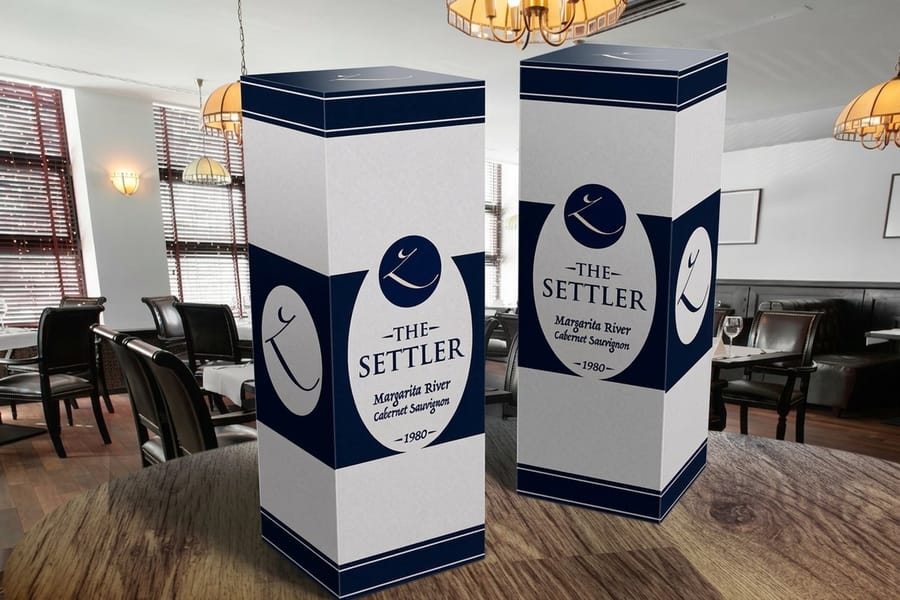
Start with a tape measure and a real bottle from your own line. Bottle names describe a shape, not a standard, and two 750 ml bottles from different suppliers can differ by half an inch across the body.
| Bottle | Body width | Height | Cell width to cut |
|---|---|---|---|
| 750 ml Bordeaux | About 3 in | About 12 in | 3.1 to 3.2 in |
| 750 ml Burgundy | About 3.4 in | About 12 in | 3.5 to 3.6 in |
| Champagne or sparkling | About 3.5 in | About 12.5 in | 3.6 to 3.7 in |
| Spirits, square shoulder | Varies widely | 9 to 12 in | Measure both faces |
Then build the box in three moves. One, set the cell. Bottle width plus about an eighth of an inch of clearance, so the bottle drops in under its own weight rather than being pushed. Two, add the walls. Each B flute divider between two cells eats roughly another eighth of an inch, so a three bottle insert is three cells plus two walls, not just three cells. Three, set the height. Bottle height plus a pad above the capsule and a pad below the base, which usually lands near 13 inches inside for a 750 ml bottle.
Quote the inside dimension to your packaging supplier and let them work out the outside. Outside dimension is what the carrier bills, and our guide to measuring a box and calculating cubic inches shows how a loose half inch turns into a dimensional weight charge.
Do not size a gift box to the tightest possible fit either. A bottle that needs a shove to seat will also need a shove to come out.
Board Grades, Kraft Versus White, and What Each One Costs You
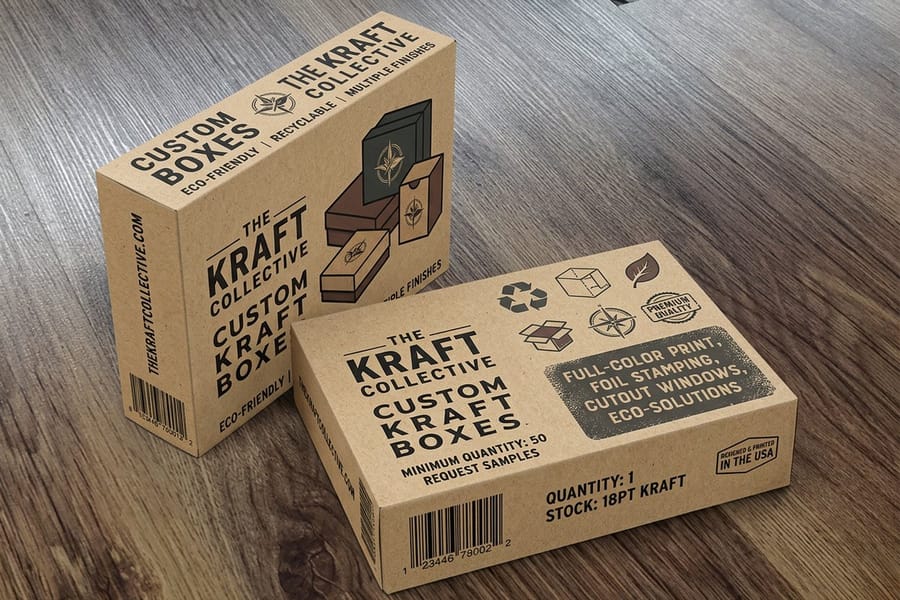
Material choice is really two decisions taken together: how much protection the board gives, and what the surface does to your printed color.
| Board | Thickness | Protection | Best for |
|---|---|---|---|
| E flute | About 1/16 in | Light | Retail cartons and sleeves where print quality leads. |
| B flute | About 1/8 in | Good | One to three bottles, shipped. The usual shipper for a small pack. |
| C flute | About 5/32 in | Strong | Six bottle cases and anything that gets stacked. |
| Double wall | About 1/4 in | Heaviest | Twelve bottle cases and long freight runs. |
Now the surface. Brown kraft liner is absorbent and warm, so ink sinks in and every color drifts toward the board. A deep navy prints closer to slate, and a pale mint mostly vanishes. That is not a defect, it is what unbleached fiber does, and the warm look reads as small batch. Our custom kraft boxes suit miniatures and small gift sets, and the kraft printing collection shows the same stock across other products.
A white liner holds the color you approved. If the brand lives on one exact hue, order white board rather than fighting kraft with heavier ink coverage, because heavy coverage on kraft still misses. On our wine box, the 18pt cover with gloss on one side is the white printing face.
For the mechanics of how flutes carry a load, corrugated board explained covers the structure, and cardstock versus corrugated weighs a folding carton against a corrugated one for something that has to ship.
Branding the Box Without Breaking the Budget

Full outside print on a bottle box is the expensive option and often the wrong first move. There are cheaper ways to get a package that looks designed, and they scale better while a brand is still finding its volume.
- Print one panel, not six. The lid and the front face carry the brand. The bottom and the inner flaps rarely get looked at, and dropping them cuts ink coverage sharply.
- Use a label on a plain box. A single premium packaging label, 3 x 5 to 5 x 7 inches or any size, turns a stock kraft carton into a branded one, and you can change the artwork per batch without reordering boxes.
- Match the label to the carton. The carton and the bottle label should share stock, color and type. Our guide to wine bottle label dimensions sets the label side, and wine label printing handles the bottle itself.
On price, unit cost falls hard with quantity. Wine boxes run $460.22 for 50, about $9.20 each, and $965.47 for 500, under $2 each, which is the gap to weigh against a plain box plus a label.
Whatever you choose, build the file correctly the first time. Packaging artwork needs the die line, the bleed and the fold marks on separate layers, and our guide to preparing files for packaging products covers the setup and the assembly instructions for each box style we print.
Wally explains bottle boxes
Build the divider first, then the box around it
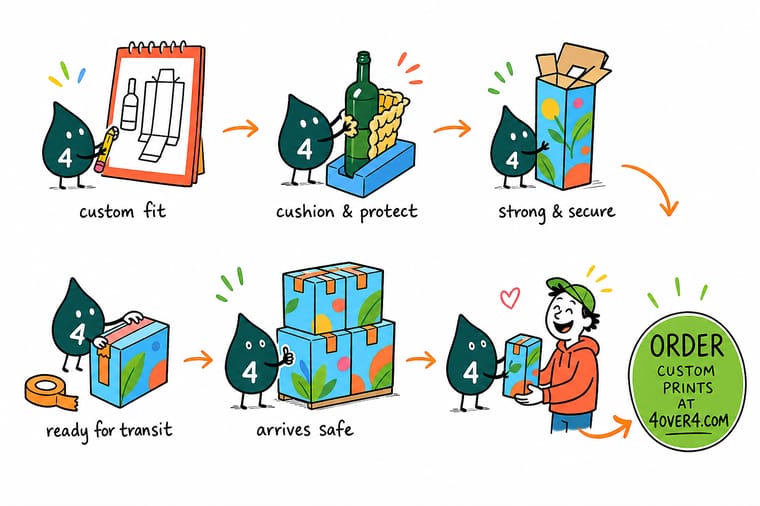
Wally measures the bottle, not the catalog. He cuts each cell about an eighth of an inch wider than the glass so the bottle drops in on its own, slots the divider walls together, and adds their thickness before he sets the outside dimension. A pad above the capsule and a pad under the base finish the height. Then he prints the shell. Give him a Burgundy bottle and a box laid out for Bordeaux and it simply will not go in, which is why he asks for the widest bottle in your range.
Configure custom wine boxes →
Specs and pricing
Bottle box styles, sizes and starting prices
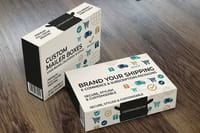
Compare the three box styles that carry bottles well, with live configuration choices and starting prices straight from the 4OVER4.COM configurator. The mailer and roll end tuck top boxes start at 250 and are ready in 7 business days, two days sooner than the wine box.
Print it
Order a bottle box built around your glass
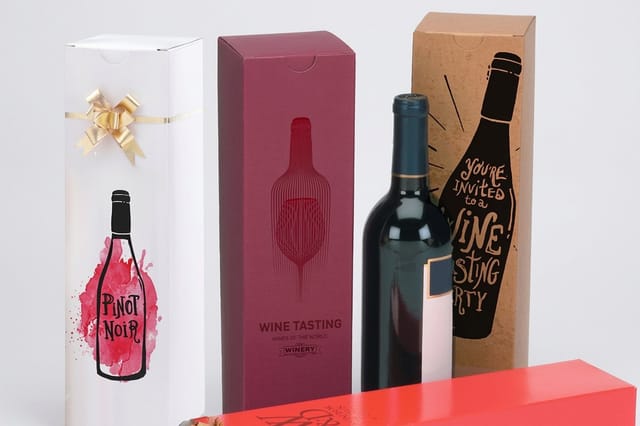
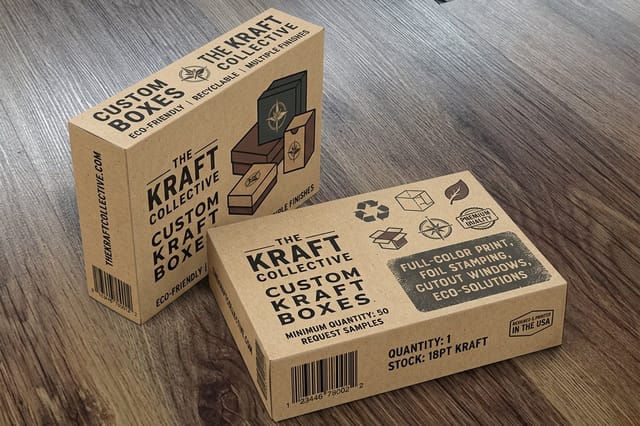
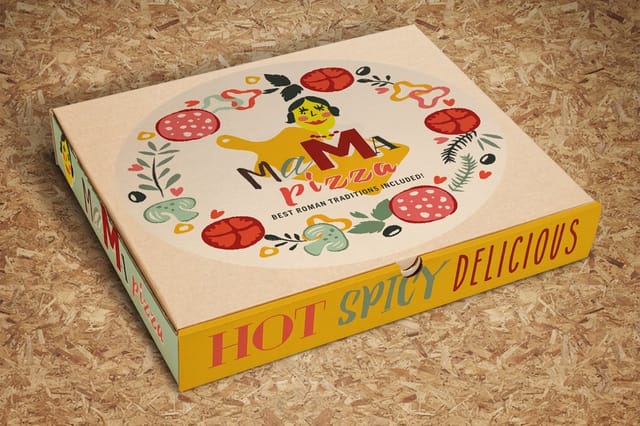
The wine box carries one 750 ml bottle, the kraft box holds a miniature or a small gift set, and the premium packaging label comes on 23 stocks, from paper to white vinyl and clear, to brand a plain carton.
Explore more
Where to go next
Read the packaging inserts guide for what goes in the box once the glass is safe, the cardstock versus corrugated guide before you pick a board, the box measuring guide before you quote a size, and the wine branding guide to match the carton to the label.

By the numbers
The packaging shop that builds a bottle box
Common Questions
Your bottle box questions, answered
What size box do I need for a 750 ml wine bottle?
Work from the bottle, not from a chart. A standard 750 ml Bordeaux measures roughly 3 inches across the body and 12 inches to the top of the capsule. Add half an inch of pad above the capsule and half an inch below the base for the inside height. Our 3.23 x 3.23 x 13.125 inch wine box is cut for that bottle; a wider Burgundy or Champagne bottle needs a test fit first.
Do I really need a divider, or is bubble wrap enough?
For one bottle handed over at a counter, wrap is fine. For anything that enters a parcel network, a fitted divider is the part that works. Loose wrap lets the bottle shift, and a bottle that has room to move gathers speed before it hits the wall of the box. A partition holds the glass in one position, keeps neck away from neck, and turns a corner impact into a load the board absorbs.
Can I ship a bottle in a plain mailer box?
Not a full size one. Our custom mailer boxes are 5 x 7 x 1.7 or 5.5 x 5.5 x 2.625 inches, which fits a miniature lying flat but not a 750 ml bottle. Any mailer that touches the glass on its walls leaves nothing between the bottle and the outside, so pad it or use a shipper with a divider.
Kraft or white board for a bottle box?
Kraft if the brand is warm, rustic or unbleached, white if the brand owns a bright or cool color. Brown kraft liner is absorbent and shifts printed color toward the substrate, so a cool blue prints muddy and a pale pastel almost disappears. A white liner holds the color you approved on screen.
How thick should the corrugated be for glass?
Single wall B flute for one to three bottles, C flute or double wall for six and twelve. A printed paperboard box like our 14pt or 18pt wine box is a retail shell, not corrugated, so it ships inside one of those.
Can I print on the inside of a bottle box?
Not on our printed boxes. The wine box, kraft box and mailer box all print full color on the outside with a blank inside. For a message inside the lid, add a printed card or a label to the inside panel.
Get Started
50 wine boxes cost $460.22, or $9.20 a bottle
Pick 14pt uncoated or 18pt gloss board, a tuck top or a carry handle, and print the outside of a carton cut for one 750 ml bottle.
Legal Disclaimer
Gold Standard guarantees apply to all standard orders placed through 4over4.com. Price match requires verifiable proof of a competitor's published price for an equivalent product with matching specifications and turnaround time. Satisfaction guarantee covers manufacturing defects and print quality issues. Contact support with order number and documentation.