
How to Print Custom Bakery Bags Without a Converter Minimum


Most bakeries brand a plain kraft bag rather than print one. Here is which label stock survives butter and steam, where the adhesive actually holds on a gusseted bag, and when a printed box starts to make sense.
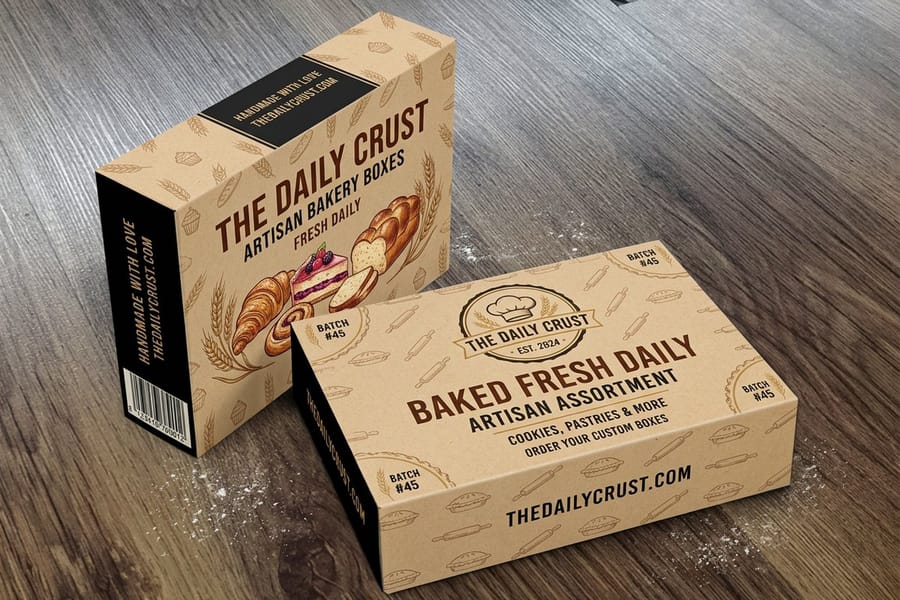
Custom bakery bags are almost never printed as bags. The paper is printed before the bag is folded, so a converter quotes the job in cases, and the practical route is a plain kraft bag with a printed food label or die cut sticker on it. Standard food labels start at $23.88, die cut stickers at $93.37, and a full run of custom printed bakery boxes at $711.78. Keep the label inside the flat middle panel, clear of the gusset creases and the bottom seam, and use a film or laminated face on anything greasy.
Quick answer
Brand the bag with a label, and keep it off the creases
The bag is the cheap part. The branding is a separate print job, and treating it that way is what keeps a small bakery flexible. Buy blank kraft bags by the sleeve, print food labels or a die cut seal, and apply them to the flat middle panel where the paper does not fold. Paper labels are fine on cookies and bread; anything laminated with butter needs a film or laminated face or the oil will show through within a day. Move to printed boxes when the product needs structure or the volume justifies a run, not before.
The Two Ways to Get Your Name on a Bakery Bag
Route one is a printed bag. A converter prints flat paper on a web press, then cuts, glues and folds it into bags. The artwork is part of the bag, the finish is perfect, and the order is quoted by the case because the press has to be set up and the folder has to be run either way.
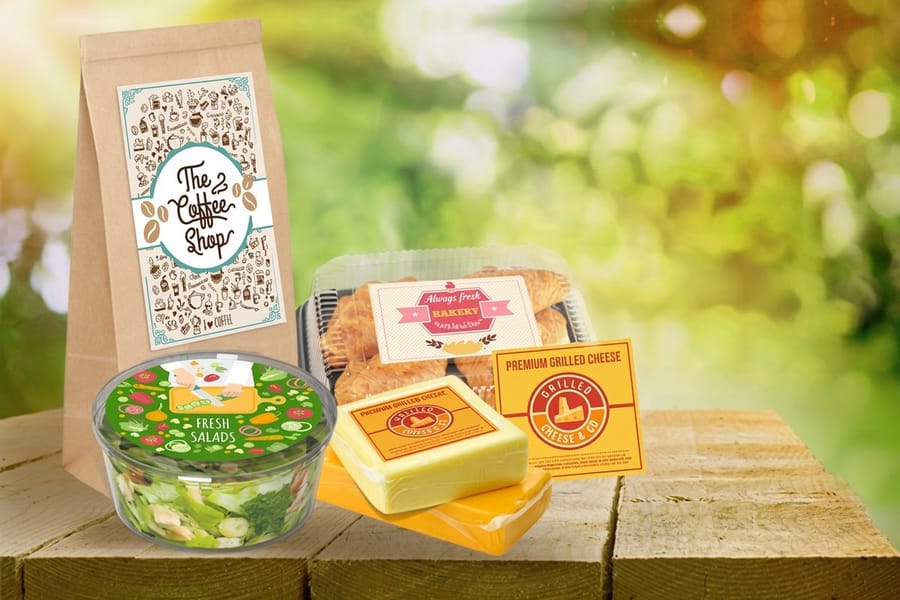
Route two is a plain bag with a printed label on it. You buy blank kraft or white bags from a restaurant supplier by the sleeve, and you print the branding separately. This is what most independent bakeries actually do, and not only for money. A label lets you run a Valentine version, a new logo, a seasonal flavour and a wholesale variant off the same bag stock, and it lets you find out what your packaging should say before you commit to twenty cases of it.
| Route | What it takes to start | What you can change later | Starting price at 4OVER4.COM |
|---|---|---|---|
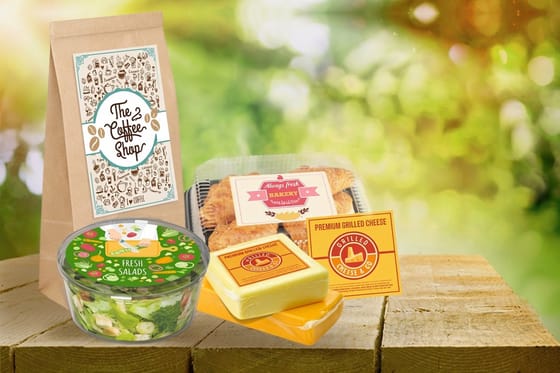
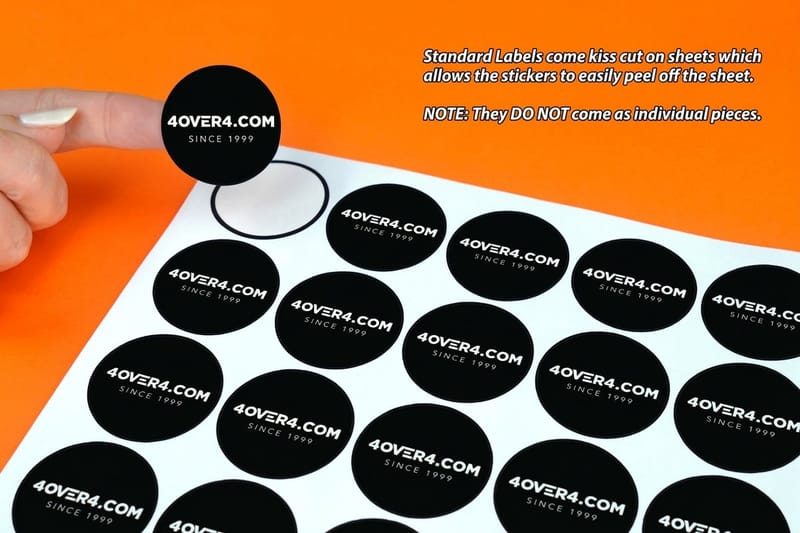
| Label on a blank bag | A blank bag and a sheet of labels. | Everything, on the next print. | $23.88 for standard food labels |
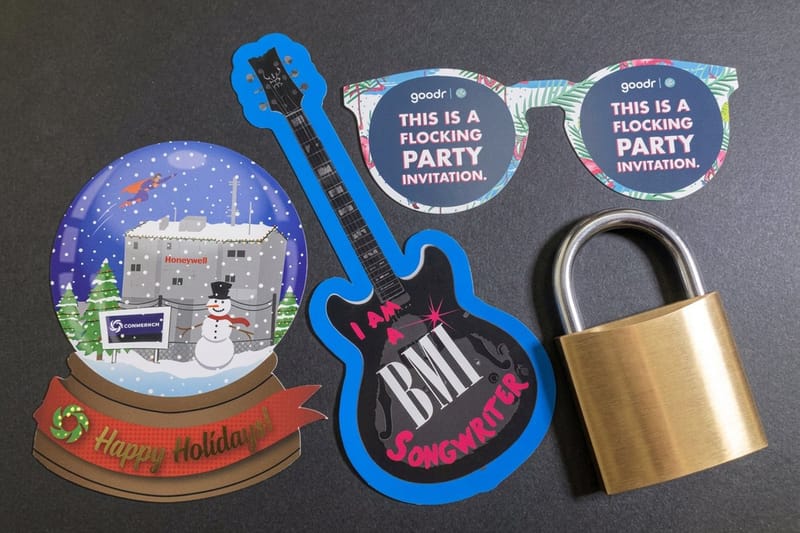
| Die cut sticker seal | One shape that also seals the bag shut. | Everything, and the shape too. | $93.37 for die cut stickers |
| Printed sleeve or band | Artwork sized to wrap the bag or box. | Artwork, but the sleeve size is fixed. | $438.25 for packaging sleeves |
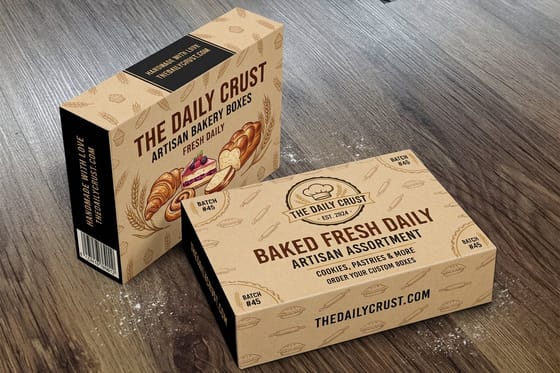
| Custom printed box | A dieline, a run, and the storage for it. | Nothing until the run is used up. | $711.78 for bakery boxes |
Read the last column against how fast you go through packaging. A bakery moving three hundred bags a week can run a sheet of standard food labels and be branded by the weekend. The same bakery ordering a case run of printed bags is committing months of counter traffic to one version of the logo.
Choosing a Label Stock That Survives Grease, Steam and the Case
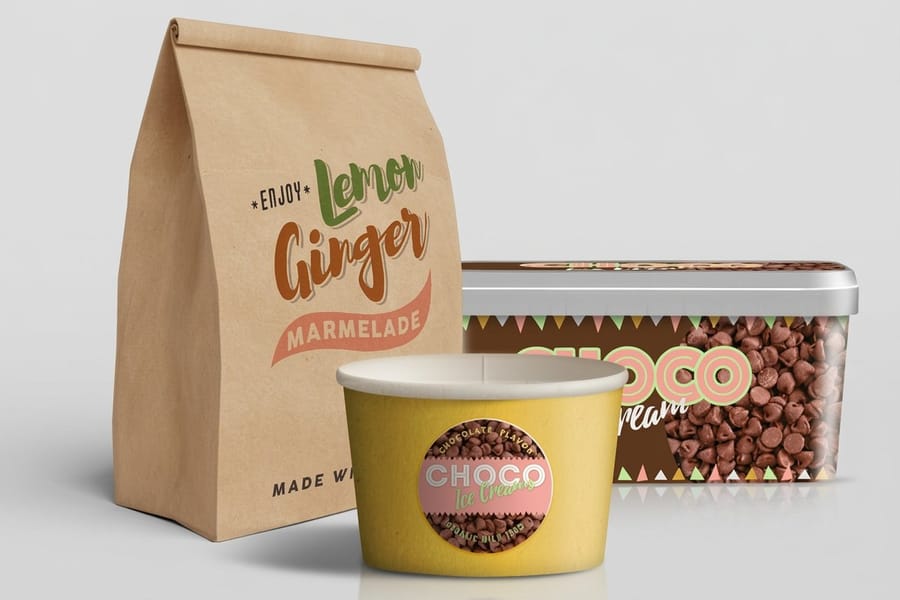
This is where bakery packaging goes wrong more often than anywhere else. Baked goods put out fat, sugar and steam, and a bag is in contact with all three from the moment it is filled.
Uncoated paper labels wick oil. Put one on a bag of croissants in the morning and by afternoon the label has a dark halo and the ink looks muddy. That is not a printing fault, it is the fat travelling through the face stock. The fix is either a laminated paper face or a film face, and both are ordered as an upgrade rather than a different product. Premium food labels start at $29.16 and carry the heavier face and adhesive that pastry work needs.
Steam is the second problem and it is the sneaky one. A warm bag gives off moisture from inside, and a label applied to a bag that is still warm can lift at the edges as the paper cools and contracts. Apply labels to bags before you fill them, or to the cooled bag, never to a bag with something hot in it.
- Dry goods, cookies, bread, boxed slices. Paper label. Cheapest, prints warmest on kraft, and staff can write a date on a matte face.
- Laminated pastry, anything buttered or iced. Film or laminated paper. It keeps the ink clean and the edges down.
- Refrigerated case items. Film with a cold applicable adhesive, applied before the item goes in. Adhesive that goes on cold to a cold surface never fully keys.
- High volume, one artwork. Roll food labels from $322.98, because a roll runs through a hand applicator and a sheet does not.
Finish matters for a reason nobody mentions in the spec sheet. A gloss laminate looks great and refuses ballpoint ink. If your staff date every bag by hand, order matte. If you print the date, order whatever looks best. The label printing range lists which stocks carry which finish, and the guide to choosing the correct label size handles the dieline decision that comes next.
Sizing and Placing the Label so It Stays Down
A bakery bag is not a flat rectangle. A self opening bag has a gusset crease running down each side, a glued seam across the bottom, and a top that gets folded over twice and taped or stapled. Three of those four features are hostile to adhesive, and the fourth is where your label goes.
The arithmetic is simple enough to do at the counter. Take the flat face width of the bag, subtract about one inch for the two gusset creases, subtract another half inch so the label is not sitting on the edge, and what remains is the widest label the face will take. A 6 inch bag gives you about 4.5 inches. A 7 inch bag gives you 5.5. Most bakeries land on a 3 inch round on a 6 inch bag, which sits well inside the safe zone and leaves a strip underneath for a date, a flavour or an allergen line.
Vertical placement is worth thinking about for a second. Put the label too high and the fold over seal eats the top of it. Put it too low and the bottom seam ridge lifts the edge. Centred on the panel, slightly above the middle, is where it survives being carried and reads best when the bag is sitting upright in a display.
If the label is also the seal, the shape changes. A die cut sticker that folds over the top edge holds the bag closed and carries the logo in one move, which is why so many bakeries use a tall oval or a shield shape rather than a circle. Set the artwork up so nothing important crosses the fold line, because that line will crease. Build the file from a correctly sized layout in the blank template library, and check the dieline against our packaging file preparation guide before you send it.
When the Bag Is Not Enough: Boxes, Sleeves and Tissue
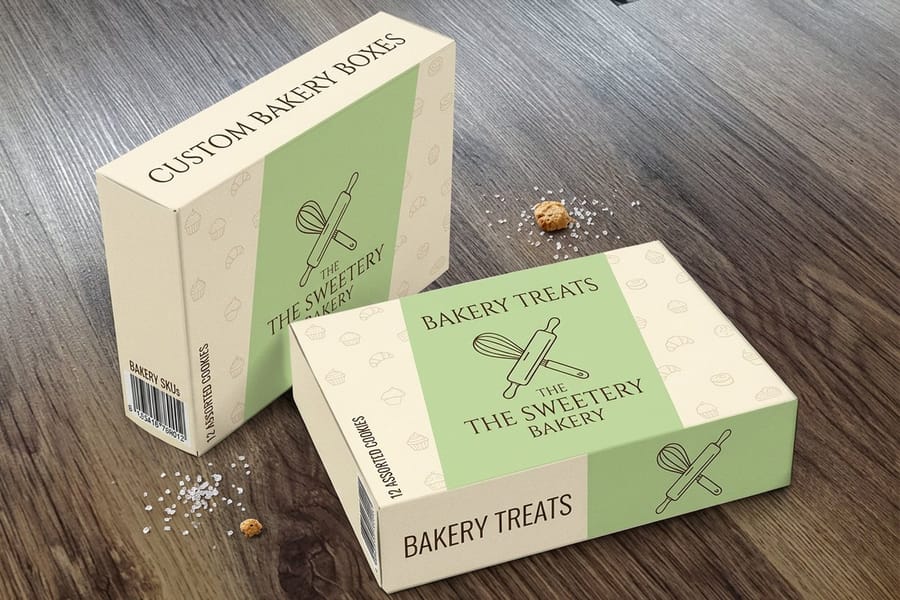
A bag protects nothing. It keeps crumbs off a customer and carries a logo, and for a warm roll or a bag of cookies that is the whole job. The moment the product has icing, height, a filling that moves, or a journey longer than a walk to the car, the packaging has to hold a shape.
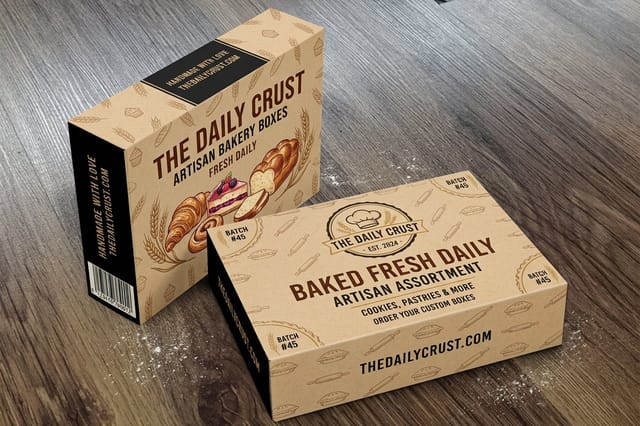
Custom printed bakery boxes start at $711.78 for a run and give you every panel to print on, including the inside of the lid, which is the one surface a customer looks at while the box is open in front of them. Custom kraft boxes sit at the same starting point with the unbleached board look that reads as small batch, and they hide the grease shadow that shows on a white box.
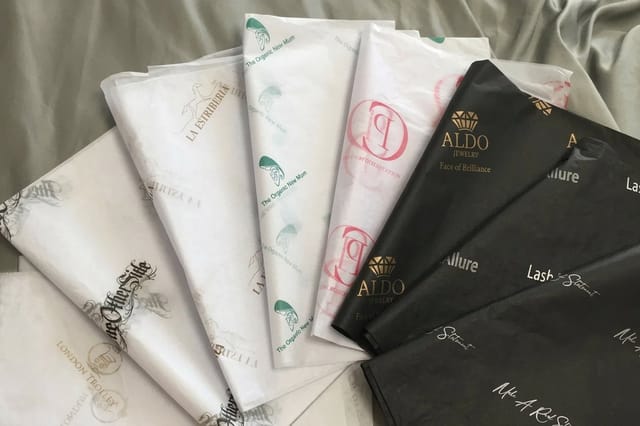
Two cheaper moves cover the middle ground. A printed packaging sleeve from $438.25 wraps a plain box or a bag with a full band of artwork and lets you keep one stock box for everything. And custom tissue paper from $126.32 is the least expected of the three: it lines a plain box, wraps a single pastry, and puts a repeated logo on something the customer physically unfolds. For gift boxes and wholesale cases, a kraft hang tag from $57.96 on a string carries the ingredient panel without covering the artwork.
The order most bakeries end up in is worth stating plainly. Labels first, because they are cheap and they teach you what your packaging should say. Sleeves or a die cut seal second, when one artwork has proven itself. Printed boxes last, when the volume is real. Everything in that progression lives in the packaging printing collection, and the counter pieces that go with it, from bakery business cards to loyalty inserts, sit alongside it.
Wally explains bakery bags
Buy the bag plain, print the label, keep it off the creases
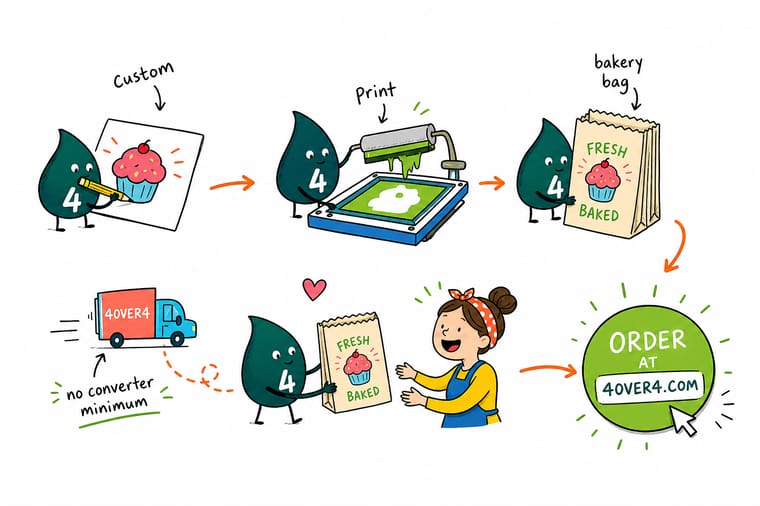
Wally does not print the bag. He buys plain kraft bags by the sleeve and prints the branding as a label, because a printed bag has to be made from flat paper before it is folded and that is a case sized order. He measures the flat face, takes off an inch for the two side creases and half an inch of margin, and that tells him the widest label the bag will hold. Then he checks what is going in it. Cookies and bread get a paper label. Anything buttered gets a film face, or the oil comes through and the ink looks muddy by closing time.
Order custom food labels →Specs and pricing
Bakery labels and boxes, sizes and starting prices
Configure the pieces side by side, with live size, stock and quantity choices and starting prices straight from the 4OVER4.COM configurator.
Print it
Order the pieces that brand a bakery bag
Explore more
Where to go next

By the numbers
Food and packaging printing you can count on at 4OVER4
Common Questions
Your bakery packaging questions, answered
Can 4OVER4 print directly onto paper bakery bags?
No. Printed bags are made by bag converters who print flat paper on a web press and then cut, glue and fold it into bags, which is why their minimums are quoted in cases rather than hundreds. What we print is everything that goes onto or around the bag: food labels, die cut stickers, sleeves, tissue paper, hang tags and boxes. For a bakery selling a few hundred bags a week, a plain kraft bag from a restaurant supplier plus a printed label costs a fraction of a converter run and lets you change the artwork whenever you want.
Will a label actually stick to a kraft bakery bag?
Yes, on plain uncoated kraft it keys well, because the fibre is porous and the adhesive grabs it. Two cautions. Uncoated kraft tears if you peel a label back off, so place it once. And grease resistant bags, the glassine lined and wax treated ones, have a slick face that a general purpose adhesive will lift off within hours; on those, either apply the label to the untreated outer flap or switch to a sleeve that wraps the bag instead of sticking to it.
What size label should I use on a bakery bag?
Measure the flat face of the bag, subtract about an inch for the two gusset creases and another half inch so the label is not crowding the edge. A 6 inch bag face leaves roughly 4.5 inches of usable width, and a 3 inch round sits comfortably inside that with space under it for a date or allergen line. Going wider does not read as bolder, it just puts the edge of the label on a crease where it lifts.
Paper labels or film labels for bakery use?
Paper is cheaper, prints warmer on kraft and takes a ballpoint pen, which matters if staff write a date or a name on every bag. Film resists grease and moisture and survives a chilled case without curling. The practical split most bakeries end up with: paper labels for dry goods such as cookies, bread and boxed slices, and film for anything laminated with butter, iced, or going into refrigeration. Our guide to choosing the correct label size covers the dieline side of the same decision.
Do I need an ingredient label on a bakery bag?
It depends on how the item is sold. A bun handed across the counter into a bag is generally treated as unpackaged food. The same bun sealed in a bag and left on a shelf for a customer to pick up is packaged food, and packaged food carries a statement of identity, an ingredient list, allergen information, net quantity and the name and address of the business. Small business exemptions can apply to the nutrition panel specifically, not to the allergen declaration. Read the FDA food labeling guide before you finalise the artwork, and leave a clear area on the label for the text.
When is it worth moving from labelled bags to printed boxes?
When the item cannot survive a bag, or when the packaging is doing the selling. Cakes, dozens, gift assortments and anything shipped all need a box for structural reasons, and a printed box carries far more artwork than a 3 inch label ever will. Custom printed bakery boxes start at $711.78 for a run, so the honest test is whether you will move that run inside a season. If not, a plain box with a large die cut sticker across the lid gets most of the effect for $93.37.
Get Started
Ready to put your bakery on the bag?
Pick a label stock that suits what you bake, size it to the flat face of your bag, and we print it. Move up to printed boxes, sleeves and tissue whenever the volume is there.
Legal Disclaimer
Gold Standard guarantees apply to all standard orders placed through 4over4.com. Price match requires verifiable proof of a competitor's published price for an equivalent product with matching specifications and turnaround time. Satisfaction guarantee covers manufacturing defects and print quality issues. Contact support with order number and documentation. On-time delivery rate based on tracked orders 1999 to 2026. Individual results may vary based on shipping carrier performance.
