
Custom Printed Food Packaging That Keeps Ink Off the Food


Jordan is our labels, packaging and sustainability voice, built from the knowledge of our production team, with over 20 years in printing.
Custom printed food packaging for branding is boxes, sleeves, labels and tape printed with your mark for kitchens and food brands, and small restaurants order it online from a printer such as 4OVER4.COM, starting with Custom Labels at $25 and moving up to Packaging Sleeves at $438.25 and Custom Kraft Boxes at $711.78. Below: what each format costs, which material survives a hot delivery, and how to brand takeout without printing eight different containers.
Custom printed food packaging is any box, sleeve, label or tape that carries your branding around food, printed on the face that shows rather than the face that touches the meal. The food-contact face is a material decision made before anything is printed: bare board for dry goods, a grease-resistant liner for hot and oily food. Everything visible is fair game for ink, which is why a fully branded package never puts artwork against the food. The full range of restaurantware custom packaging sits in our packaging printing collection.
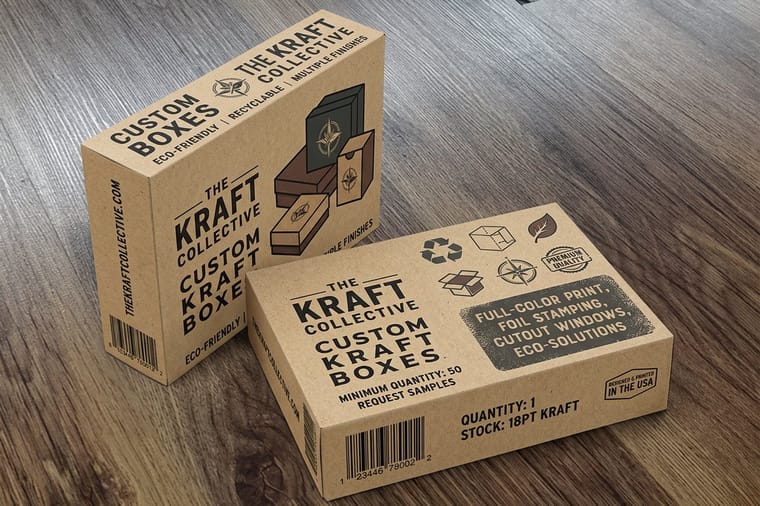
Costs and formats
What custom printed food packaging costs and what you can print
Six formats carry a food brand, from a label on a plain bag to a fully printed box. Design your own on the product page or start from a blank template: labels, menus and sleeves print flat, and a box needs its artwork built on the dieline. The print always goes on the face that shows; for a piece that sits against unwrapped food, the stock and a grease-resistant liner are chosen at quote time.
| Format | Starts at | Minimum | Sizes and stock | Standard production |
|---|---|---|---|---|
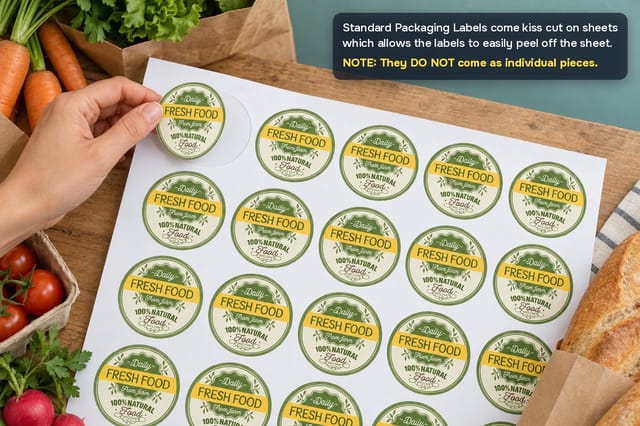
| Custom Labels | $25 | 25 | 2 by 3.5 to 5 by 7 in, or any size up to 11 by 17, on paper, vinyl, clear or brown kraft label | 3 business days |
| Premium Beverage Labels | $29.16 | 25 | 3 by 5 to 5 by 7 in, or any size up to 11 by 17, on gloss, vinyl or clear label | 3 business days |
| Kraft Menus | $166.04 | 100 | 8 by 10 to 11 by 17 in on 18pt kraft uncoated cover | 5 business days |
| Printed Packaging Tape | $347.11 | 1 case | 2 or 3 in wide, 55 or 110 yards a roll, white or clear | 20 business days |
| Packaging Sleeves | $438.25 | 100 | 5 by 5 in sleeve on 14pt to 16pt gloss or uncoated cover | 5 business days |
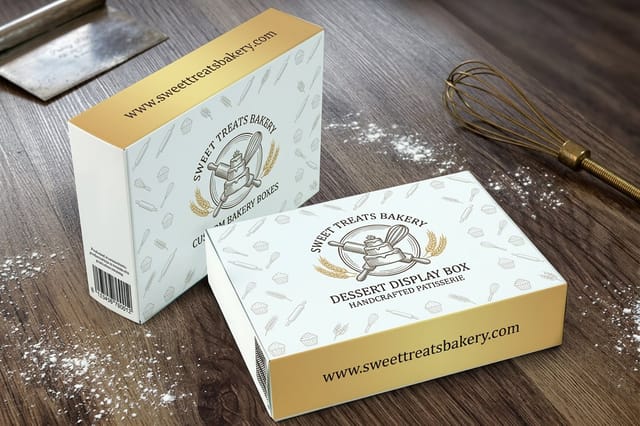
| Custom Kraft Boxes and Bakery Boxes | $711.78 | 250 | 5 by 7 by 1.7 or 5.5 by 5.5 by 2.625 in, 14pt uncoated or 18pt cover | 7 business days |
Where to start
Where small restaurants get custom food packaging for branding
Small restaurants get branded packaging from an online printer that runs short labels as well as full box runs, and they buy it in steps. Start with 25 Custom Labels for $25 on the plain bags and tubs you already stock, printed in 3 business days. Add 100 Kraft Menus for $166.04 in the delivery bag. Move to 100 Packaging Sleeves for $438.25 once the menu settles, and order 250 Custom Kraft Boxes for $711.78, in 7 business days, when the volume and the shelf space are there.
Quick answer
Ink on the outside, material on the inside
Printing decorates the face that shows; the face that meets the food is chosen, not printed. Dry goods sit happily against plain kraft board. Hot and greasy food needs a grease-resistant liner or it stains the base panel from the inside, and no amount of print quality fixes that. Once the material is settled, the cheapest route to a branded pack is a label on plain packaging, then a sleeve, then a fully printed box, and most kitchens should walk that ladder in order rather than jumping to the end.
The One Distinction That Decides Every Food Packaging Job
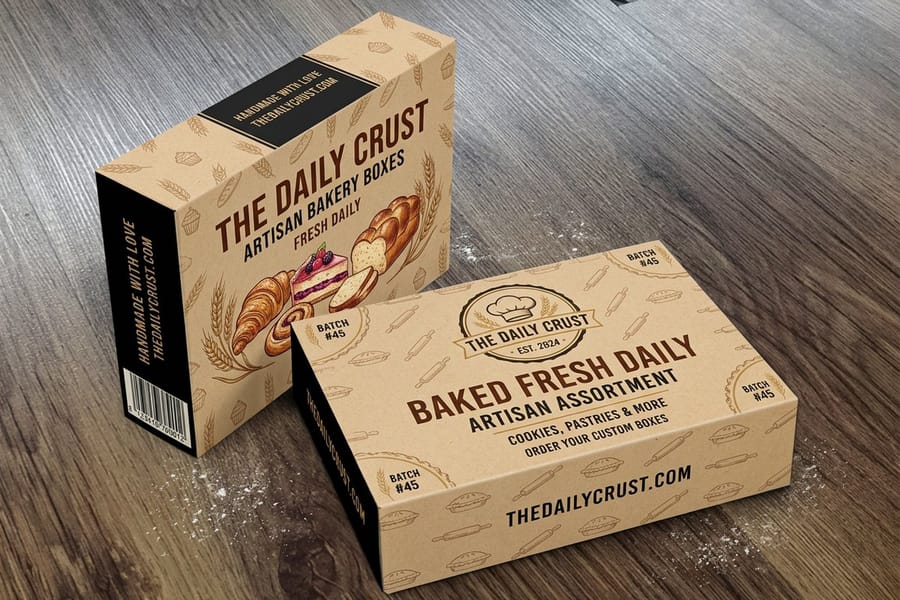
Food packaging splits into two zones, and almost every question about safety, material and cost resolves once you know which zone a piece sits in.
The direct-contact zone is any surface pressing against unwrapped food: the base panel of a pastry box, the inside wall of a tray, a wrapper sheet under a sandwich. Nothing decorative goes here. What matters is the board, the liner, and whether it can handle heat and fat.
The indirect zone is everything else: the outer face of a carton, a sleeve, a bag label, the lid graphic, the tape on a shipping box. This is where custom printing lives, and it is a large area, which is why a fully branded package is normal without a drop of ink ever going near the food.
Get the zone right and the rest follows. A retail cookie in a poly bag is fully wrapped already, so the carton around it can be printed inside and out. A hot rice bowl in an open kraft tray is not wrapped at all, so the tray material carries the whole burden and the branding moves to a sleeve. When you brief a printer, say what goes in the box and how hot and how greasy it is. That sentence changes the quote more than the artwork does.
If the piece ships rather than gets handed across a counter, read the custom shipping packages guide next, because a mailer answers to carrier handling as well as to the food.
Food-Safe Materials and What Each One Survives
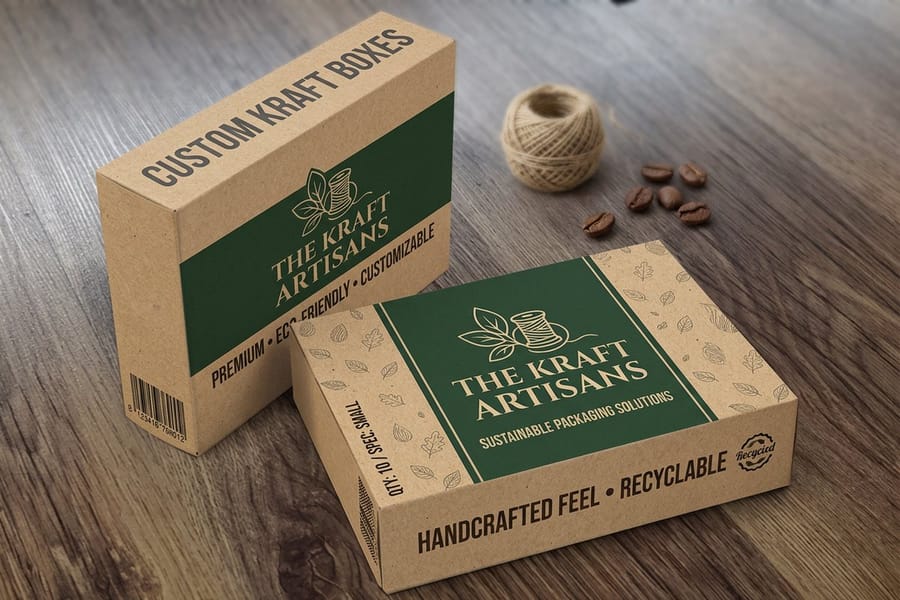
Material choice is made against the food, not against the design. Four families cover almost everything a restaurant or a small food brand orders.
| Material | How it behaves | Right for | Where it fails |
|---|---|---|---|
| Uncoated kraft board | Absorbent, warm brown, takes ink with a slightly softened look. | Pastry, bread, cookies, chocolate, dry retail goods. | Hot or oily food, which stains the base panel from the inside. |
| Coated folding carton | The coating sits on the print side and holds sharp color and fine type. | Retail packs where shelf appearance carries the sale. | The coating does nothing for the inside face, so it is not a grease barrier. |
| Grease-resistant lined board | A barrier on the food-contact face keeps fat out of the board. | Fried food, hot mains, anything buttered or oiled. | Costs more, and the barrier has to be specified at quote time. |
| Label and sleeve stock | Thin, printed flat, applied to packaging you already have. | Branding plain bags, trays, jars, bottles and cups. | Paper labels wrinkle on a cold wet bottle; that job needs a film stock. |
Read the last column first. It is the one that costs money later. The most common mistake we see is a beautiful uncoated kraft box ordered for hot food, which looks right on the desk and looks tired by the time it reaches a customer twenty minutes across town.
The other frequent miss is the adhesive on a label going onto something cold. Condensation forms on a chilled bottle within seconds of it leaving the fridge, and a standard paper face stock swells at the edges. Premium Beverage Labels start at $29.16 and are built for that environment, and the drink label guide covers the stock and shape choices in detail. More on premium beverage labels is in their product story. For a lower start, Standard Beverage Labels begin at $23.88 on uncoated, semi-gloss, hi-gloss, white vinyl or clear label stock.
What a Restaurant Actually Orders, In the Order It Pays Off
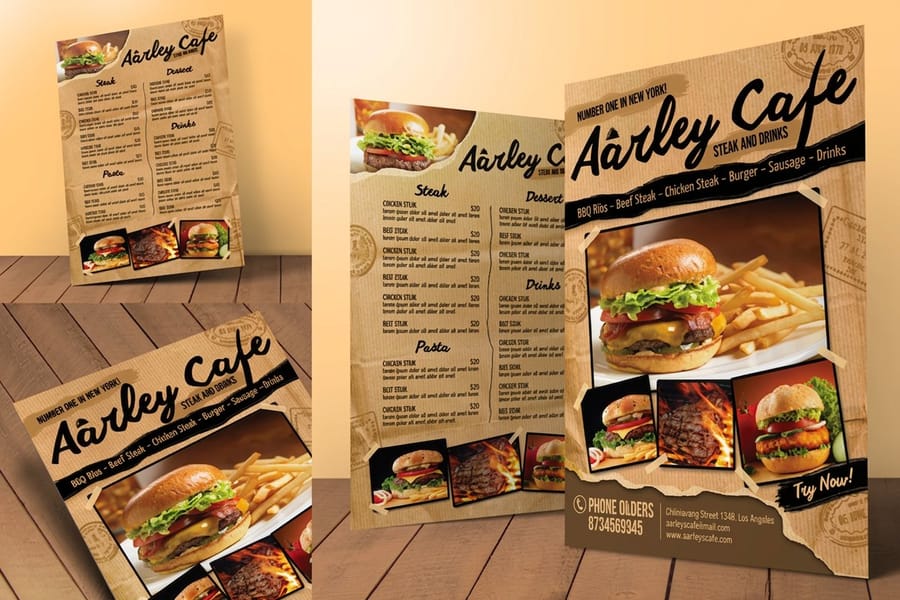
Kitchens rarely start with printed boxes, and the ones that do usually regret the storage. The sequence that works runs from smallest commitment to largest.
- Labels first. Custom Labels start at $25 and turn any plain bag, tub or clamshell into your packaging. They also carry the copy that changes: flavour, allergen line, prep date, the delivery platform you want people to skip.
- Menus and table print next. A takeout order is a one-off unless something in the bag brings the customer back. Kraft Menus start at $166.04 and slip into a delivery bag as a direct-order pitch. The menu printing range covers laminated and standard versions for in-house use.
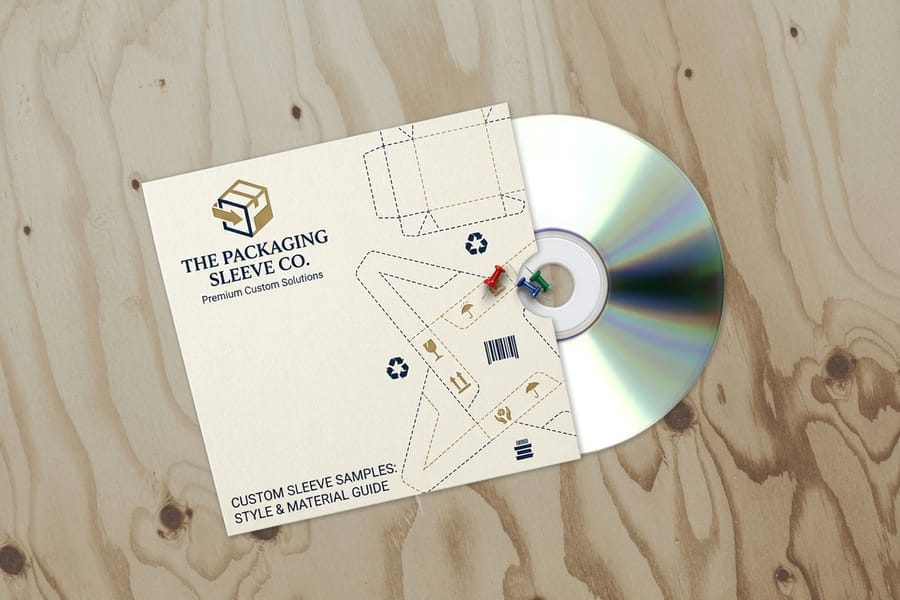
- Sleeves once the menu settles. Packaging Sleeves start at $438.25 and give you a wide printed band across a plain tray, so the artwork can carry a photograph or a seasonal message without touching your tray supply.
- Custom boxes when volume justifies the run. Custom Kraft Boxes start at $711.78 and Bakery Boxes at the same figure. This is the point where the packaging becomes the brand rather than decorating it, and it needs both the volume and the shelf space.
Bakeries and patisseries invert this list, because their product is dry, sits in a window, and is bought as a gift. A printed box there does more work than a label ever could. The bakery printing collection and the restaurant printing collection group the pieces each side of that split.
How to Brand Takeout Without Reprinting the Whole Box
Most kitchens run six or eight container types. Printing all of them means eight dielines, eight runs, and eight stacks of stock in a room that is already full. The way around it is to keep the containers plain and put the print on something that wraps them.
A sleeve is the strongest version of that idea. One printed band slides over a tray, and because the sleeve is a flat rectangle rather than a cut and creased box, you can order a single artwork for several tray sizes by adjusting the band length. Change the sleeve for a seasonal menu and the tray stock never moves.
A label is the lightest version, and the most flexible. It carries the item name, so one plain container plus a stack of labels covers the whole menu. It is also the only piece on this list you can reasonably reprint every few months without a budget conversation, which matters when a menu is still moving.
For anything that ships, Custom Printed Packaging Tape starts at $347.11 and brands a plain corrugated carton along every seam without changing the carton at all. It is the only branding element that also does a structural job, and it survives handling that a paper label would not. You can watch the printed packaging tape video before you order.
Where this approach falls short is retail shelf presence. A sleeve on a plain tray reads as a good takeout brand; on a supermarket shelf, next to competitors in fully printed cartons, it reads as unfinished. If the pack has to sell itself without a person nearby, print the carton. Browse the full packaging and labels range to compare what each format costs before you commit, and set the artwork up correctly with the packaging file preparation guide and a starting file from the blank template library.
Wally explains food packaging
Print the outside, choose the inside
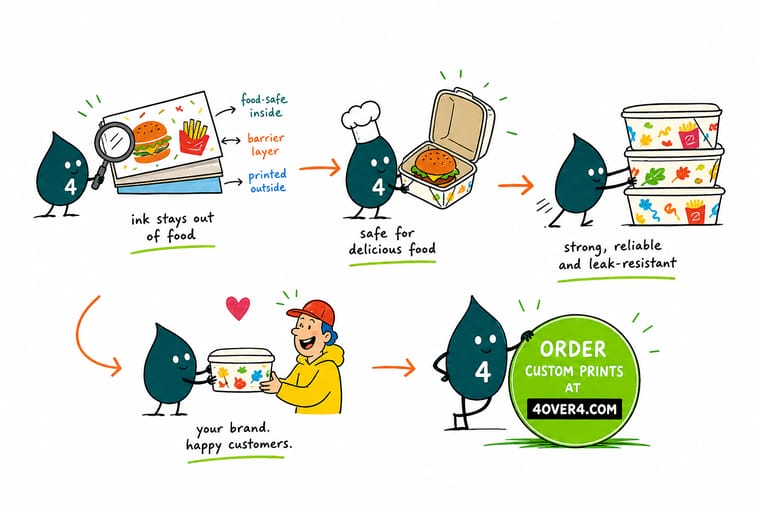
Wally puts your logo on the face people see and leaves the face the food touches alone. For a croissant that is plain kraft board and nothing else. For a hot noodle box it is a grease-resistant liner, decided before a single colour is chosen. When the menu is still moving he skips the box entirely and wraps a plain tray in a printed sleeve, or sticks a label on a plain bag. Same brand on the table, a fraction of the stock in the back room.
Configure custom kraft boxes →
Specs and pricing
Boxes, sleeves and labels side by side
Three formats, three very different commitments. Configure each one live and compare the starting price against the quantity it actually buys. Custom Kraft Boxes start at 250 for $711.78 in 7 business days, Packaging Sleeves at 100 for $438.25 in 5, and Custom Labels at 25 for $25 in 3.
Print it
Packaging that leaves the kitchen looking like a brand
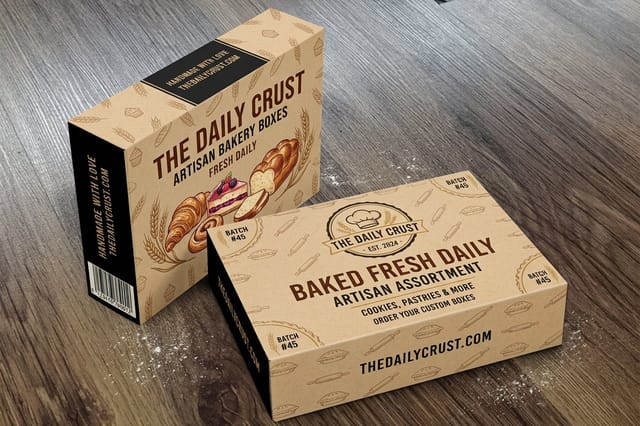
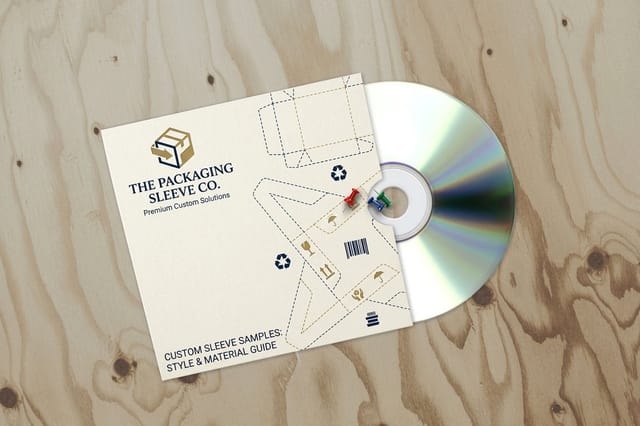
Bakery Boxes come in 5 by 7 by 1.7 or 5.5 by 5.5 by 2.625 inches from 250 for $711.78, the 5 by 5 inch sleeve prints on 14pt to 16pt gloss or uncoated cover, and Premium Beverage Labels start at 25 for $29.16.

Explore more
Where to go next
The guides below take the next step: dielines and layers for a box file, stock and adhesive for a cold bottle, and branding the outer carton when the order ships.

By the numbers
Food packaging printed by 4OVER4.COM
Common Questions
Your food packaging questions, answered
Is custom printed food packaging safe to touch food?
The printed face is not the face that touches the food. On a box, the artwork sits on the outside and the inside stays bare board or carries a liner, so the ink and the meal never meet. Sleeves, labels and cartons that wrap an inner tray keep the two even further apart. The safety question is really a material question about the food-contact face, and it is answered by the stock and the liner, not by the printing. If a piece has to sit directly against wet or hot food, tell us before the job is quoted so the right material is chosen at the start.
Can I custom print food paper?
Yes, as long as the ink goes on the face that shows and the face that touches the food stays bare or lined. A printed wrap, sleeve or label around a sandwich, tray or bag does the branding job. For a sheet that sits directly on hot or oily food, the stock and a grease-resistant liner are chosen at quote time. Custom Labels from $25 are the cheapest way to start.
Can you print on the inside of a food box?
You can print on the inner face of a carton that will not touch food directly, which is common on boxes that hold a wrapped or bagged product. You should not put decorative ink on a surface that presses against unwrapped food. In practice, if a customer wants an interior message we print it on the flaps or the inner lid, where the food is not resting, and keep the base panel clean.
What is the cheapest way to brand takeout packaging?
A label on plain packaging, then a sleeve, then a fully printed box, in that order. Custom Labels start at $25, Packaging Sleeves at $438.25, Custom Kraft Boxes at $711.78. A label lets you change flavour, allergen or date copy per item without touching your box stock, which is the reason most small kitchens never move past labels for their first year.
Do I need grease-resistant packaging for hot food?
For anything fried, buttered, oiled or served hot, yes. Uncoated kraft absorbs fat and shows a dark ring on the base panel, and by the time a delivery order reaches the customer the box can look worse than the food inside it. Ask for a grease-resistant liner on the food-contact face. Pastry, bread, cookies, chocolate and dry retail goods are fine in plain board, which is why Bakery Boxes are usually built without a barrier.
What file do you need for a printed box or sleeve?
A dieline, and artwork built on it. The dieline is the flat cut and crease drawing for that specific box, and your design sits on it in a separate layer so the cutter and the printer read the right things. Convert fonts to outlines, keep important copy well inside the fold lines, and extend background color past the trim so a small shift on the cutter does not expose bare board. Our guide on how to prepare files for packaging products walks through the layers, and the blank template library has correctly sized starting files.
How many boxes do I have to order at once?
Boxes are made from a cutting die, so the economics push toward a production run rather than a handful. The starting prices tell you the shape of it: $711.78 for Custom Kraft Boxes against $25 for Custom Labels. Open the configurator on the product page to see exactly which quantity a given price buys before you commit, and if the run is larger than your storage, brand a plain box with sleeves or labels instead.
Does printed packaging work for a food product sold in shops?
That is where it earns the most. On a retail shelf the pack is the only salesperson, and a beverage or jar needs a label that survives a chilled cabinet without wrinkling. Premium Beverage Labels start at $29.16 and are built for bottle and can work; die-cut labels let the shape follow the mark instead of sitting in a rectangle. Pair the label with a printed carton or a sleeve for multipacks.
Get Started
Order 250 bakery boxes from $711.78
Pick the format that matches your volume, from a $25 label on a plain bag to a fully printed kraft box, and we print it on stock chosen for what goes inside.
Legal Disclaimer
Gold Standard guarantees apply to all standard orders placed through 4over4.com. Price match requires verifiable proof of a competitor's published price for an equivalent product with matching specifications and turnaround time. Satisfaction guarantee covers manufacturing defects and print quality issues. Contact support with order number and documentation.
