
Cover Stock Vs Cardstock What S The Difference


Cover stock and cardstock get used as if they mean the same thing, and mostly they do. The catch is that one is measured by weight and the other by thickness. Here is what each term really means, which weight fits which job, and how to print both.
Cover stock and cardstock describe the same family of thick, rigid paper. Cardstock is the everyday umbrella term for any heavy card, while cover stock is the printing-industry name for the cover-weight papers inside that family. The only real difference is the ruler: cover stock is sold by cover weight in pounds (65, 80, 100, 130 lb), cardstock by thickness in points (12, 14, 16, 18 pt). All cover stock is cardstock, but not every cardstock is a cover grade.
Start here
Cover stock vs cardstock in one paragraph
Cover stock and cardstock are the same thick, rigid paper described by two trades. Cardstock is the general word for any heavy card. Cover stock is the mill grade for cover-weight papers within that family. Printers quote cover stock in pounds and cardstock in points, but they are often describing nearly the same sheet. Learn which weight fits which job, mind the difference between weight and thickness, and even a simple card from 4OVER4.COM feels intentional. The infographic further down sums it all up.
Watch it printed
See 3d lenticular greeting cards on the press, in 157 seconds
Why cover stock and cardstock get mixed up

Ask two printers what separates cover stock from cardstock and you may get two answers, both a little right. The confusion is baked into the language: one term came from the paper mill, the other from the craft-store aisle, and they have been used interchangeably for so long that even seasoned buyers blur them together.
Here is the short version, and the rest of this guide fills in the detail. Cardstock is the everyday umbrella word for any heavy, rigid paper, and cover stock is the printing-industry name for the cover-weight papers inside that family. All cover stock is cardstock. Not every sheet a hobbyist calls cardstock is technically a cover grade, because the same family also holds index and tag stocks.
None of this is academic when you are about to print. The stock you pick decides whether a printed invitation feels flimsy or expensive, whether a postcard survives the mail, and how much the run costs. Get the vocabulary straight first and every later choice gets easier.
What is cover stock?
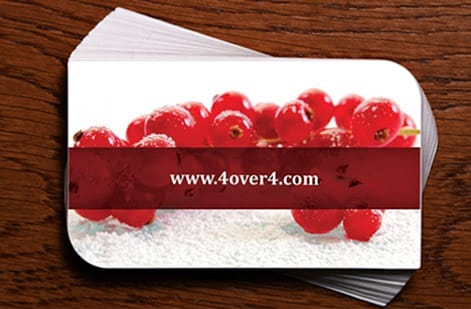
Cover stock, sometimes called cover paper or coverstock, is a heavyweight grade of paper made to do exactly what the name says: form the cover of something. It sits behind book and booklet covers, presentation folders, greeting cards, and premium business cards, chosen because it stays rigid, resists curling, and takes ink and coatings cleanly.
What sets cover stock apart on a spec sheet is how it is weighed. Paper grades each have a basic size, and cover stock is weighed as five hundred sheets of 20 by 26 inches. So 80 lb cover means a ream of that size tips the scale at 80 pounds. Common weights run from a light 65 lb cover up through 80 lb, 100 lb, and a double-thick 130 lb for the sturdiest jobs. If a weight ever looks strange next to text or bond paper, that is because those grades use different basic sizes entirely, which our paper stock guide untangles in full.
Because it is built for display, cover stock loves a finish. A greeting card on smooth 100 lb cover with a soft-touch coat feels worlds apart from the same design on plain paper. When you want that upgrade without a design headache, our design templates are already set up for cover-weight printing, and free paper samples let you feel the difference before you order.
What is cardstock?
Cardstock is the broader, friendlier term for any thick, sturdy paper that behaves more like a card than a sheet you would run through a home printer. It covers everything from craft-store scrapbooking paper to the commercial stocks that postcards, invitations, tags, and table tents are printed on. If it is stiff enough to stand on its edge, most people will call it cardstock.
Where cover stock is usually quoted in cover-weight pounds, cardstock is most often sold by thickness, measured in points. One point equals one-thousandth of an inch, so 14pt cardstock is 0.014 inches thick. Popular commercial weights land at 12pt, 14pt, and 16pt, with 18pt and up reserved for the stiffest cards. Points describe caliper, the physical thickness you feel between your fingers, which is why they are such a practical way to shop for a card.
The takeaway is that cardstock and cover stock are not rivals so much as the same material described by two trades. For a closer look at how cardstock compares with the lighter text and bond papers underneath it, our guide on cardstock versus paper stock lays the whole ladder out.
Cover stock vs cardstock: the real difference
So if they are the same family, what actually separates the two words? Three things: the ruler, the origin, and the connotation.
The ruler is the big one. Cover stock is spoken in pounds of cover weight. Cardstock is spoken in points of thickness. A printer quoting 100 lb cover and a supplier quoting 14pt may be describing nearly the same sheet, just in their own dialect. The origin is next: cover stock is a formal mill grade, while cardstock grew up as a general trade and consumer term. Connotation follows from both, so cover stock tends to imply a printing-grade, coating-ready sheet, while cardstock can mean anything from that same premium paper down to a craft pack.
Two cautions keep you out of trouble. First, weight and thickness are not the same measurement, so a heavier sheet is not automatically a thicker one once coatings enter the picture. Second, cardstock is the wider circle: it also includes index and tag grades that are not cover stock at all. When precision matters, ask for both the weight and the point value. The comparison further down sums it all up at a glance.
How paper weight and points actually work

Two numbers describe every heavy stock, and knowing what each one measures ends most of the confusion for good. Basis weight (the pounds) tells you how much a fixed ream of a given size weighs. Caliper (the points) tells you how thick a single sheet is. One is about mass, the other about height.
Here is a rough field guide for cover-weight papers. A 65 lb cover is a light, flexible card good for simple postcards and inserts. An 80 lb cover is a common all-rounder. A 100 lb cover is the premium standard for business cards and upscale mailers, and 130 lb double-thick cover is the heavyweight for cards you want to feel substantial. In points, that range lines up loosely with 9pt through 16pt, though coatings and fibers shift the exact match. Outside the US, the same papers are quoted in GSM, grams per square meter, a single metric scale that sidesteps the whole pounds-versus-points puzzle.
The reason the two scales never map perfectly is density. A tightly calendered, coated sheet can weigh more while sitting thinner than a bulky uncoated one, so a spec that lists only pounds, or only points, tells half the story. If you are choosing paper for a specific piece, our notes on 100 lb gloss cover paper and on certificate paper show how the numbers play out on real jobs.
Converting points, inches and pounds
One point is one thousandth of an inch, which makes the point scale the easy one. Move the decimal three places and you have the caliper.
- 12pt is 0.012 inches.
- 14pt is 0.014 inches.
- 16pt is 0.016 inches.
To go the other way, multiply the inches by a thousand.
Pounds do not convert, and that is the part people keep trying to force. Basis weight measures the mass of a ream at a grade's basic size, so it answers a different question from caliper. A 100 lb cover usually lands in the 9pt to 12pt part of the range, but a tightly calendered coated sheet can weigh more while sitting thinner than a bulky uncoated one. If a spec gives you only pounds or only points, ask for both before you order, or ask for the gsm figure, which is the one scale that sidesteps the argument entirely.
When to reach for cover stock, and when cardstock is plenty

The best stock is the one that fits the job, not the heaviest one on the menu. Reach for a premium cover weight when the piece is meant to impress in the hand: greeting cards, business cards, folder covers, and invitations all earn their keep on 100 lb or heavier cover, where the extra rigidity reads as quality the moment someone picks it up.
Mid-weight cardstock is plenty for pieces that work hard and travel. Postcards, rack cards, tags, table tents, and event passes do fine on a 12pt to 14pt sheet that keeps costs sensible while still feeling sturdy in a mailbox or on a counter. When a job needs to survive water, heavy handling, or years of use, a specialty stock beats both, which is where durable options like plastic cards come in.
Packaging pushes the same logic further. Folding cartons and printed boxes rely on heavier cardstock and board precisely because they have to hold a structure, a topic our guide to folding carton boxes covers end to end, and heavy covers do the same work in bound pieces like custom notebooks. Whatever the format, our online designer lets you set the piece up and see it on the stock you chose.
Finishes and coatings change how the stock feels

Two cards can share the exact same weight and read completely differently once a coating is on top. Finish is the final variable, and it changes both the look and the hand-feel of cover stock and cardstock alike.
A matte or dull coat softens glare and gives a modern, understated surface that is easy to write on. A gloss coat deepens color and adds shine, which makes photos pop on a postcard. Specialty finishes go further: soft-touch adds a velvety grip, spot UV raises a glossy accent over a matte field, and uncoated leaves a natural, tactile paper you can stamp or sign. Each one interacts with the base stock, so a finish you love on one weight may feel different on another.
None of this is worth guessing at. Because coatings shift color and texture in ways a screen cannot show, order free paper samples and compare finishes in your own light before you commit a full run. If you want the language of the print shop in one place, the printing terms glossary defines every coating and grade you will meet.
How to choose the right stock (and what it costs)
Pulling it together, choosing between cover stock and cardstock comes down to four quick questions: what is the piece for, how should it feel, will it be coated, and how long does it need to last. Answer those and the weight almost picks itself. When you are unsure between two neighbors, the heavier one usually feels more premium and costs a little more per sheet.
Price follows a handful of predictable levers. Quantity is the biggest, since the more you print the lower the unit cost, so a short run of premium cards can cost more each than a large run. Beyond that, weight and coating, size, and turnaround all move the number. At 4OVER4.COM you set each option in the configurator and watch the price update live, so you can weigh a 14pt against a 16pt or a matte against a soft-touch and see the cost of each choice instantly.
The surest way to decide is to hold the paper. Order free paper samples, compare the weights side by side, then set your design up with our ready-made templates or start from scratch. When you know how your stock behaves, every piece you print lands the way you intended, and the paper stock guide keeps the full menu of substrates within reach.
Wally explains cover stock and cardstock
Same paper, two rulers
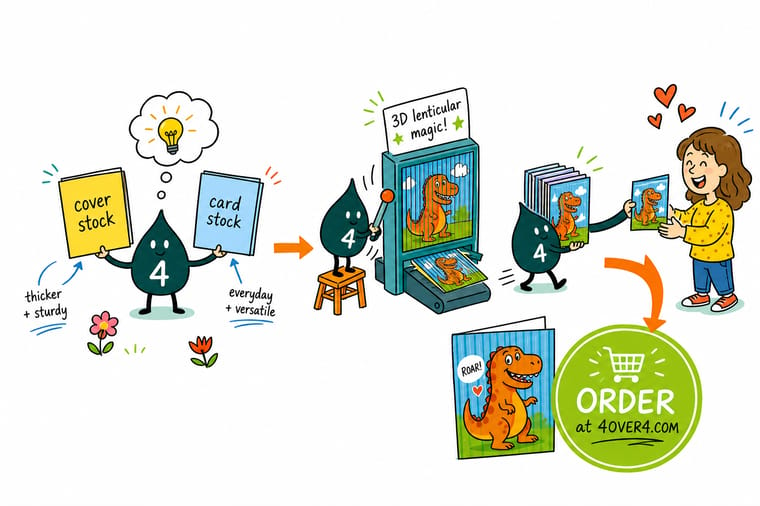
Wally keeps it simple: cover stock and cardstock are the same heavy paper, one measured in pounds and the other in points. Pick the weight that fits the job, choose a finish, and let the piece do the talking. When you are ready, 4OVER4 prints it sharp on the exact stock you picked.
Print on premium stock →Infographic
Cover stock vs cardstock at a glance
One frame, two columns. Save it as a cheat sheet the next time a printer quotes you pounds and a supplier quotes you points for what is basically the same card.
Cover stock and cardstock are the same family of heavy paper. The names only diverge at the ruler, so cover stock is quoted in pounds and cardstock in points for what is often nearly the same sheet.
Specs and pricing
Cover-weight card specs and live pricing
When the design is ready, the printing decisions come down to size, stock, and finish. Here are the live specs and price-per-unit for our greeting cards, printed on premium cover stock at 4OVER4.COM, straight from the configurator.

| Quantity | Price Per Unit | Total |
|---|---|---|
| 50 | $12.63 | $631.57 |
| 100 | $6.54 | $653.55 |
| 200 | $4.37 | $873.21 |
| 300 | $3.64 | $1,092.89 |
| 400 | $3.28 | $1,312.56 |
| 500 | $3.06 | $1,532.24 |
| 1,000 | $1.86 | $1,861.75 |
Print it
Print your project on the right stock

Explore more
Where to go next




By the numbers
Both weights live in the same 60+ paper list
Common Questions
Common questions about cover stock and cardstock
How thick is 100 lb cover stock?
There is no single answer, which is exactly why the two scales exist. A 100 lb cover usually measures somewhere in the 9pt to 12pt part of the range, so roughly 0.009 to 0.012 inches, but density moves it. A tightly calendered coated sheet can weigh 100 lb and sit thinner than a bulkier uncoated sheet at the same weight. If thickness is what matters for your job, ask the printer for the caliper in points rather than the basis weight in pounds.
What is 12pt matte cardstock cover?
A card measuring 0.012 inches thick with a matte coating on it. The 12pt figure is caliper, the matte is the finish, and cover tells you it is a cover grade rather than an index or tag stock. It is a mid weight card, sturdy enough for postcards, rack cards, tags and table tents while costing less than a 14pt or 16pt sheet. The matte surface cuts glare and takes a pen, which is why purchasing teams like it.
What is the difference between cardstock and regular paper?
Rigidity, and the scale it is sold on. Regular text and bond papers are made to flow through a printer and to fold, so they are measured against their own basic sheet sizes and quoted in pounds that look small next to cover weights. Cardstock is stiff enough to stand on its edge, which is what makes it right for covers, cards and tags. It is also why a 100 lb text sheet is far thinner than a 100 lb cover sheet.
What is cover stock?
Cover stock, also called cover paper or coverstock, is a heavyweight grade of paper made to form the cover of something: book and booklet covers, presentation folders, greeting cards, and premium business cards. It stays rigid, resists curling, and takes ink and coatings cleanly. On a spec sheet it is quoted in cover weight, so 100 lb cover means a ream of the grade at its basic size weighs 100 pounds.
Is cover stock the same as cardstock?
For most purposes, yes. They describe the same family of thick, sturdy paper. The difference is mostly vocabulary: cover stock is the printing-industry name for cover-weight papers, while cardstock is the broader everyday term for any heavy card. Every cover stock is a cardstock, but cardstock also includes index and tag grades that are not technically cover stock.
How is cover stock measured, pounds or points?
Cover stock is traditionally quoted in pounds of cover weight, while cardstock is more often sold by thickness in points. One point equals one-thousandth of an inch, so 14pt is 0.014 inches thick. The two scales measure different things, weight versus thickness, which is why a supplier may quote 100 lb cover and 14pt for nearly the same sheet.
What weight of cover stock should I choose?
It depends on the job. A light 65 lb cover suits simple postcards and inserts. An 80 lb cover is a versatile all-rounder. A 100 lb cover is the premium standard for business cards and upscale mailers, and 130 lb double-thick cover feels the most substantial. When in doubt between two neighbors, the heavier one reads as more premium and costs a little more per sheet.
When should I use cardstock instead of cover stock?
Think of cardstock and cover stock as the same material, so it is really a weight question. Reach for a premium cover weight when a piece is meant to impress in the hand, like greeting cards, business cards, and invitations. A mid-weight 12pt to 14pt card is plenty for postcards, rack cards, tags, and table tents that need to be sturdy and affordable.
What does cover stock printing cost, and how are prices set?
Price scales with a few predictable levers: quantity (larger runs lower the unit price), the weight and coating you choose, size, and turnaround. At 4OVER4.COM you set each option in the configurator and the price updates live, so you can compare a 14pt against a 16pt or a matte against a soft-touch and see the cost of each choice instantly.
What sizes, stocks, and finishes are available?
Cover-weight cards come in a range of standard sizes, in weights from a light 65 lb cover up to double-thick 130 lb, with coatings from uncoated and matte to high gloss, soft-touch, and spot UV. Each choice changes how the design reads in the hand. Use the specs and pricing panel on this page to see the exact combinations, or order free paper samples first so you can feel the stock before you commit.
Get Started
Ready to print on the right stock?
Bring your design to 4OVER4.COM and print it on the cover weight, thickness, and finish that fits the job. Adjust every option and watch your price update live.
Legal Disclaimer
Gold Standard guarantees apply to all standard orders placed through 4over4.com. Price match requires verifiable proof of a competitor's published price for an equivalent product with matching specifications and turnaround time. Satisfaction guarantee covers manufacturing defects and print quality issues. Contact support with order number and documentation. On-time delivery rate based on tracked orders 1999 to 2026. Individual results may vary based on shipping carrier performance.
