
Beverage Packaging Essentials for Bottles, Cans and Labels


The container is usually stock. The label is the decision. Here is the material that survives a cooler, the two measurements that keep a wrap flat, and what the FDA and the TTB require before you print.
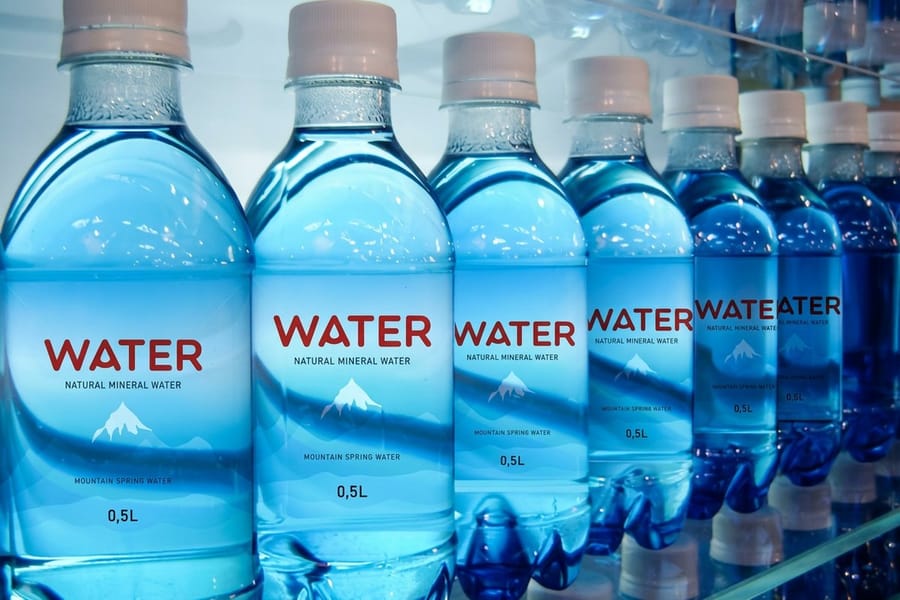
Beverage packaging is the container, the closure and the label, and for most drink brands the label is the only part actually being specified, because bottles and cans come as stock components. Get three things right and the rest is design: a synthetic facestock that ignores condensation, a label sized to the straight wall of the bottle with about an eighth of an inch of wrap overlap, and a mandatory information block laid out before the artwork, since FDA type sizes scale with panel area and alcohol needs TTB approval.
Quick answer
Synthetic stock, the straight wall, and the legal block first
A beverage label lives wet, curved and regulated, and each of those three facts removes options. Wet rules out paper, because water enters at the die-cut edge and lifts the label from the outside in. Curved sets the height, since a flat label only lies down on the straight section of the wall, and sets the width, since the wrap needs the circumference plus a small overlap. Regulated sets the layout, because the mandatory panel has minimum type sizes that scale with panel area, so it has to be placed before the design instead of squeezed in after.
What Beverage Packaging Includes, and Which Part You Choose
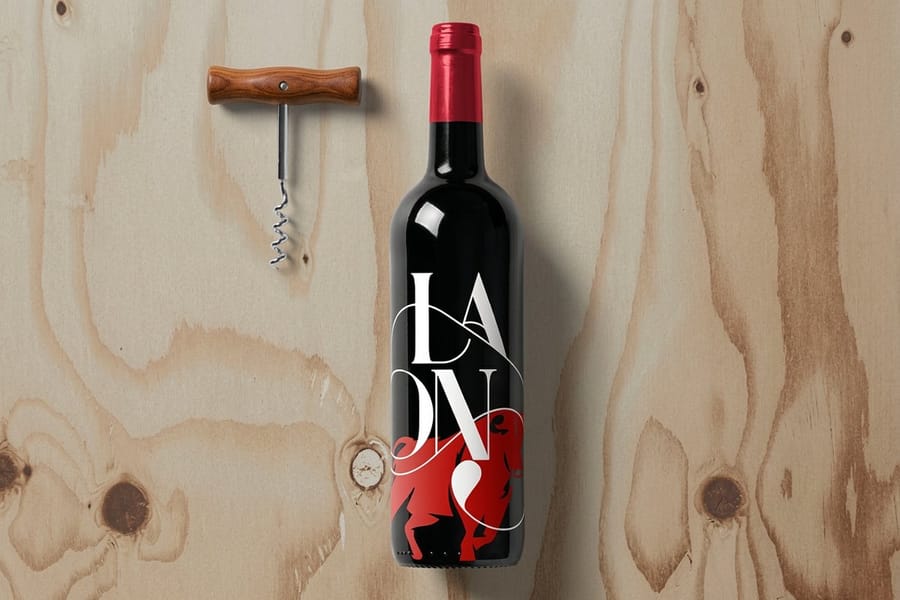
Beverage packaging works in three layers, and only one of them is usually a design decision.
Primary is whatever touches the drink: the glass or PET bottle, the aluminum can, the carton, the cap or crown. Nearly every drink brand buys these as stock components, in sizes the filler already runs. Secondary holds the units together for the shelf, which means carriers, six-pack wraps and sleeves. Tertiary is the shipper case and the pallet, and it exists to survive a truck rather than to sell anything.
The label sits on the primary container and is the only part you can change between runs without changing your filling line. That is why a new drink brand spends weeks on label artwork and an afternoon on the bottle. It is also where the money moves: a container change means a new mould or a new supplier, while a label change is a new print file.
Cans are the exception worth knowing about. Printing directly on aluminum happens at the can plant in truckload quantities, so small runs use either a shrink sleeve or a pressure-sensitive wrap label applied after filling. A wrap label on a blank can is how most independent brands get to shelf, and it prints on the same equipment as our premium beverage labels. If you are still choosing the format, our complete guide to how label printing works covers the process from file to finished roll.
Materials That Survive Condensation, Ice and a Wet Hand
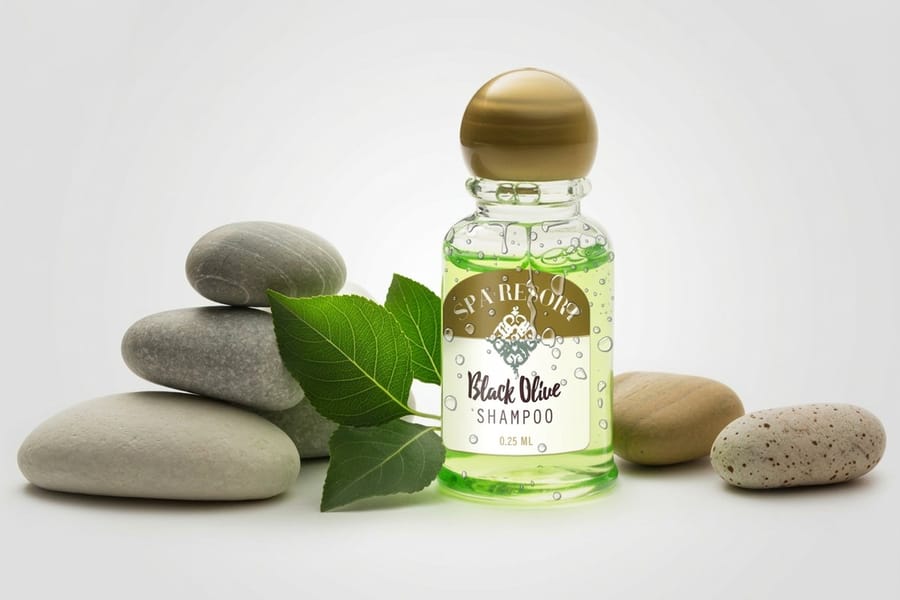
Every beverage label eventually meets water, and the facestock decides what happens next. A cold drink pulls condensation out of the air within a minute of leaving the cooler, so the label spends its working life damp even if it never gets dunked.
| Facestock | In water | Look | Where it fits |
|---|---|---|---|
| Coated paper | Wicks at the cut edge, puckers, then lifts. | Warm, matte or gloss, prints colour beautifully. | Room-temperature bottles, gift sets, anything not chilled. |
| White BOPP | Unaffected. Water beads and runs off. | Bright white, crisp, slightly plastic feel. | The default for water, soda, juice and anything iced. |
| Clear BOPP | Unaffected, and stays invisible when wet. | The no-label look on glass, ink appears to float. | Craft soda, cold brew, anything where the liquid is the hero. |
| Vinyl | Unaffected, and it flexes with a squeezed bottle. | Thicker, tougher, slightly softer edge. | Squeeze bottles, growlers, refillables that get scrubbed. |
| Laminated paper | Face survives, edges still take water in. | Paper texture with a gloss or matte film on top. | Wine and spirits, where the bottle is poured cold but not iced. |
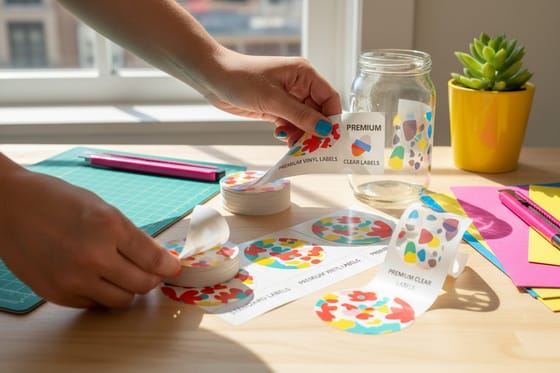
Read the second column before the third. A clear label that looks perfect on a design mock-up is a wasted run if it goes on a bottle that lives in ice, and a laminate does not fix a paper edge, it only protects the printed face. Where the drink is genuinely wet the whole time, the honest choice is a synthetic: premium waterproof labels start at $84.68, against $29.16 for the standard beverage build. The material comparison in paper vs vinyl vs clear labels goes deeper on how each one handles oil and sunlight too.
One limit worth naming: clear labels show every bubble. On a hand-applied run, clear BOPP will punish a shaky application in a way white stock hides completely. If nobody on the team has applied labels before, start white.
Getting the Label Onto the Bottle Straight
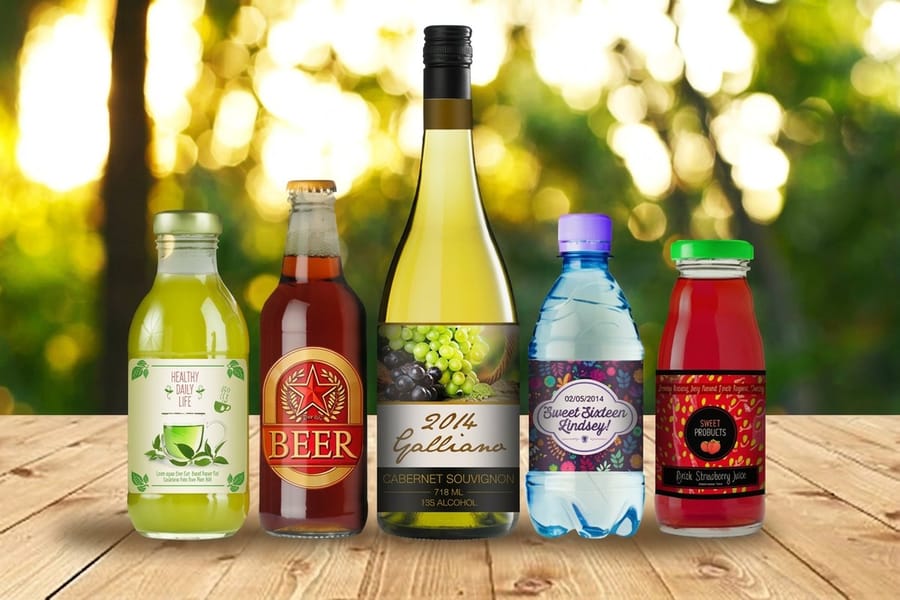
Most label complaints are application problems wearing a printing costume. Four things account for nearly all of them.
- Height that ignores the curve. A label only lies flat on the straight wall of the bottle. Push it up into the shoulder or down over the base radius and it creases, because a flat sheet cannot follow a compound curve. Measure the straight section and stay inside it.
- A wrap cut to the exact circumference. Cut the label to the precise measurement and you get a butt joint that opens as soon as the bottle sweats. Add roughly an eighth of an inch so one end laps over the other, and keep type out of that overlap.
- A cold, wet bottle. Pressure-sensitive adhesive needs a clean, dry surface at room temperature. Labelling straight out of a cooler traps a film of condensation under the adhesive, which is the single most common cause of edges lifting the next day.
- Tapered containers. A cone-shaped bottle or cup needs a die line cut on an arc. Apply a rectangle to a taper and one edge has further to travel than the other, so it wrinkles every time.
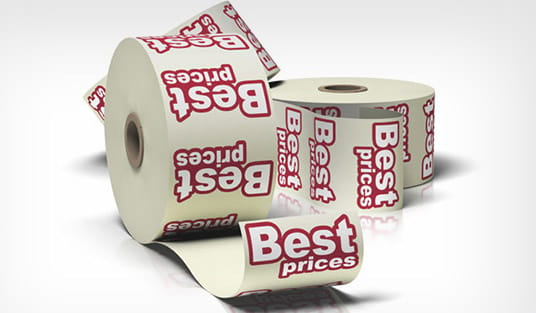
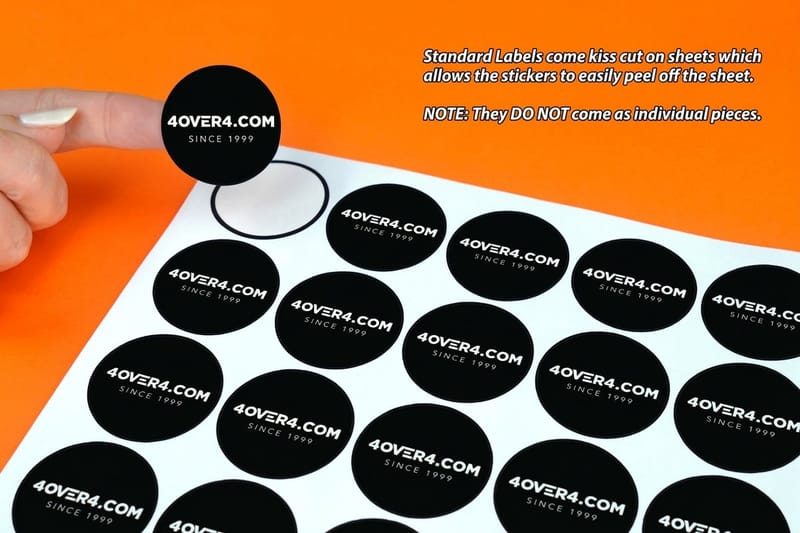
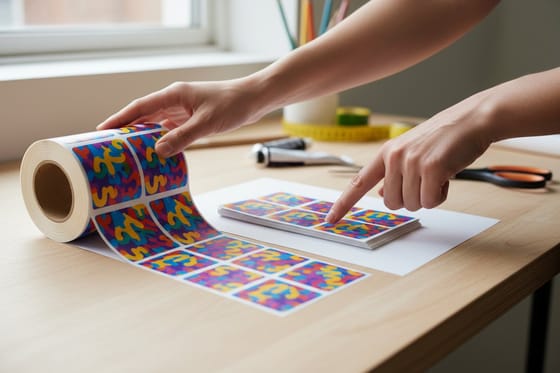
Format follows quantity. Rolls feed an applicator and come at applicator quantities, which is why roll beverage labels start at $322.98. Hand application wants sheets, and standard bottle labels start at $23.88, which makes a first batch cheap enough to test on real bottles before committing. Roll labels vs sheet labels lays out the crossover point, and you can start the die line from a correctly sized layout in the blank template library.
Compliance Basics for Drinks Labels
Which rulebook applies depends entirely on whether there is alcohol in the bottle, and the two sets do not overlap much.
Non-alcoholic drinks follow FDA food labeling. The front, or principal display panel, carries the statement of identity and the net quantity of contents. The information panel next to it carries the ingredient list, allergen declaration, Nutrition Facts, and the name and address of the manufacturer, packer or distributor. Juice products also declare the percentage of juice. The trap is type size: the minimums scale with the area of the panel, so a slim two inch tall label runs out of legal room long before the copy runs out. Sort the mandatory block first and design around what is left, never the other way round. The FDA food labeling guide walks through each panel in order.
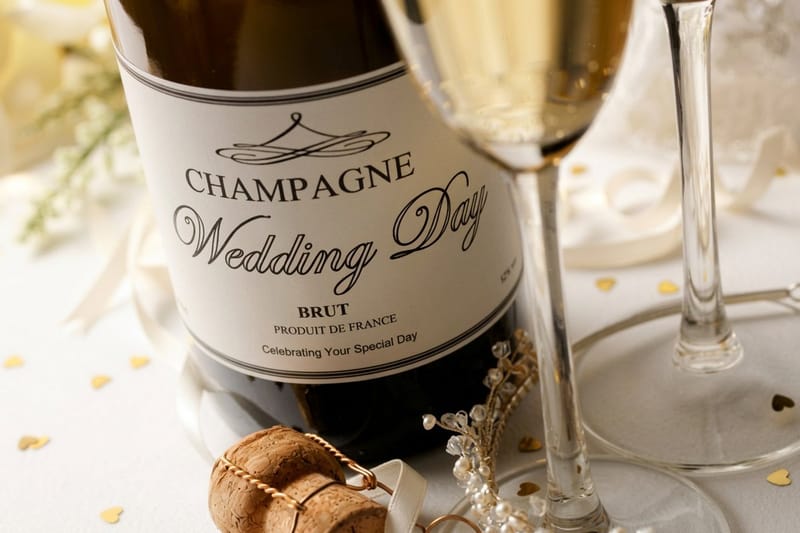
Alcohol follows the TTB. Beer, wine and spirits sold across state lines need a Certificate of Label Approval for the artwork, and the Government Warning statement has to appear word for word. Alcohol content and net contents statements differ by class of product. Get the certificate before the print run, because a rejection means reprinting, not editing. We print exactly what you sign off on the proof, so read it with the regulation next to you: how to check a packaging print proof covers what to look at and in what order.
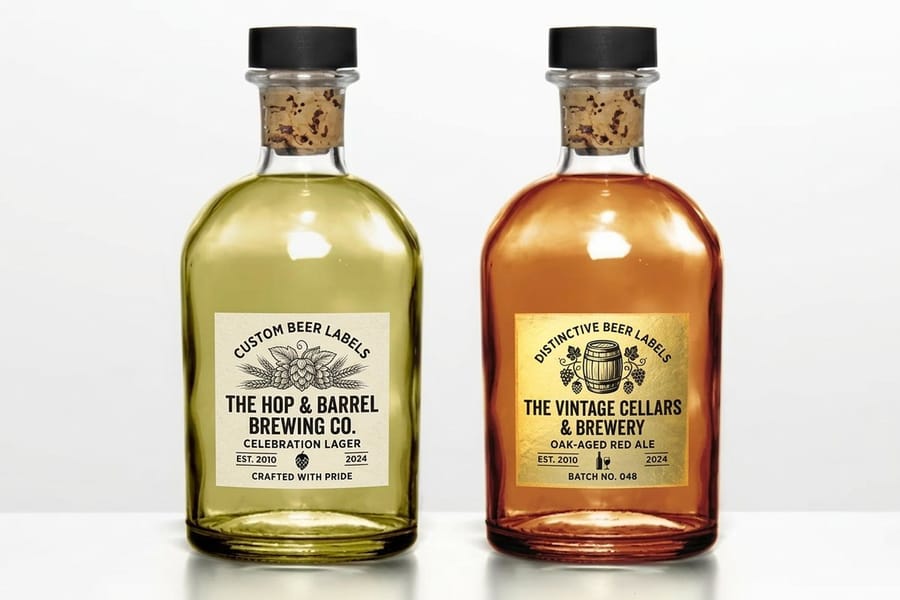
Two more that catch people out. States with container deposit laws require the deposit mark on the label or the container, and that list changes, so check the states you actually distribute in. And if the label wraps a bottle destined for a bar, remember the back label will be read upside down more often than right way up. For the finished catalogue of stock and finish options, the label printing category lists every build we run, and custom beer labels and custom wine labels both start at $25.
Wally explains beverage labels
Measure the bottle, then pick the stock
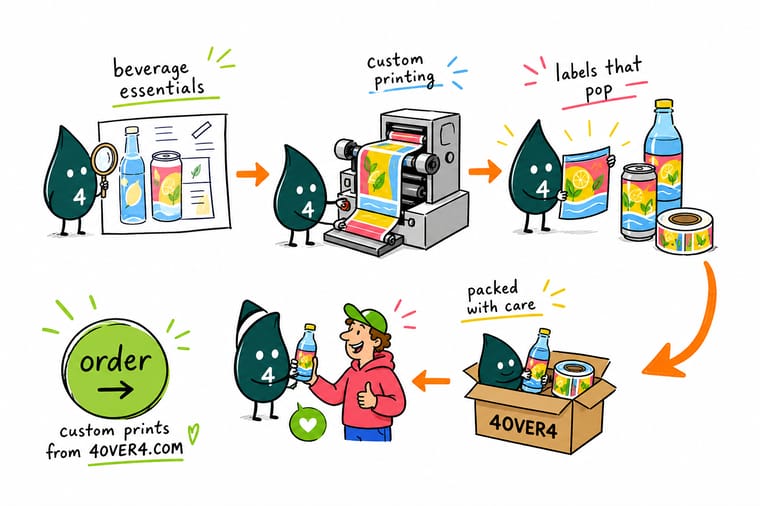
Wally wraps a strip of paper around the bottle to find the circumference, adds a little for the overlap, and checks how much straight wall there is between the shoulder and the base. That is the label size, and no artboard can tell him. Then he picks the stock: synthetic for anything that gets cold, paper only for bottles that stay dry. Last, he drops the ingredient and nutrition block onto the layout before drawing anything pretty, because it has a minimum type size and it always wins the argument.
Order premium beverage labels →Specs and pricing
Beverage label sizes, materials and starting prices
Compare the three builds most drink brands order, with live configuration choices and starting prices straight from the 4OVER4.COM configurator.
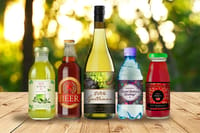
Print it
Labels built to stay flat on a cold bottle
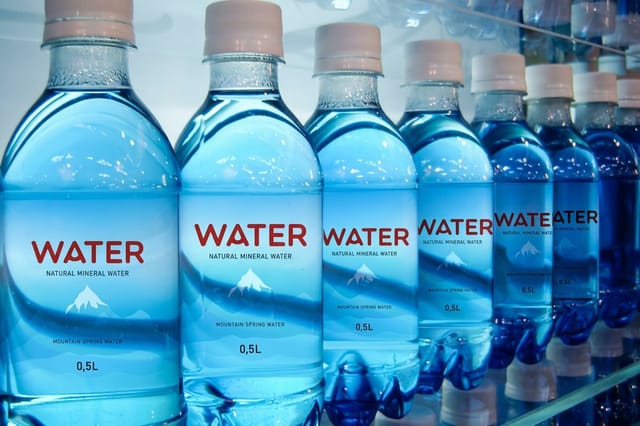
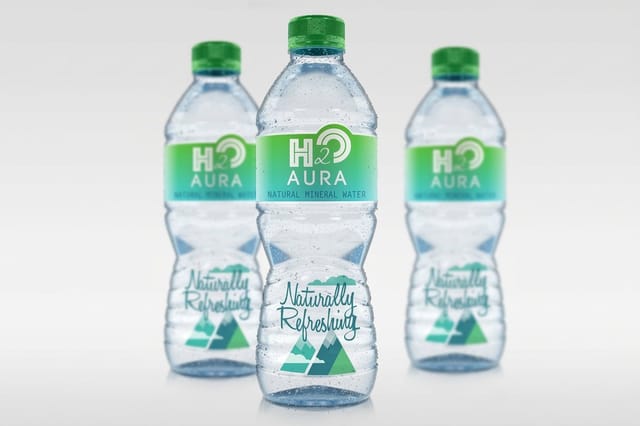
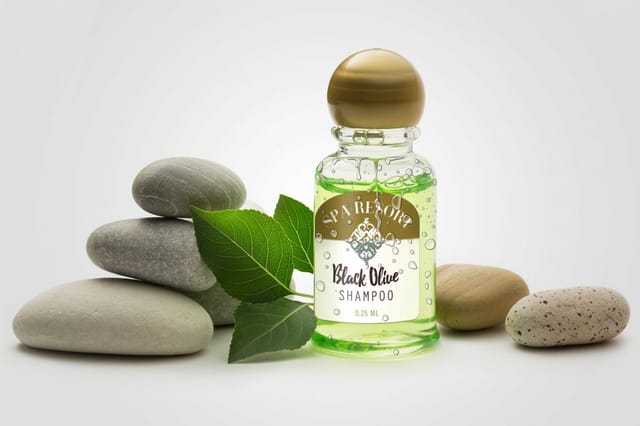
Explore more
Where to go next
By the numbers
Label printing you can count on at 4OVER4
Common Questions
Your beverage packaging questions, answered
Will a paper label survive an ice bucket or a cooler?
Not for long. Coated paper takes water in at the die-cut edge, the fibres swell, and the label wrinkles and lifts at the corners. Water reaches the adhesive next and the whole thing slides. If the drink is served cold, chilled in ice, or handled with a wet hand, print on a synthetic facestock instead. Premium Waterproof Labels start at $84.68 and Premium Beverage Labels start at $29.16, both on stock built to stay flat when the bottle sweats.
What size label fits a standard water bottle?
A 16.9 oz single-serve bottle usually takes a label around 8 inches wide by 2 inches tall, because that is roughly the circumference of the straight wall plus the overlap, and 2 inches is about all the flat height those bottles give you. Bottle shapes vary more than people expect, so measure your actual container with a strip of paper before committing to a die line. The water bottle label size guide lists the common combinations.
Should I order roll labels or sheet labels?
Rolls if a machine applies them, sheets if hands do. Roll Beverage Labels start at $322.98 because a roll run is set up for an applicator and carries the quantity to match, which suits a co-packer or an in-house tabletop applicator. For a launch batch, a farmers market run, or anything under a few thousand bottles, sheets are cheaper and easier: Standard Bottle Labels start at $23.88.
Can you print shrink sleeves for cans and tapered bottles?
No. We print flat pressure-sensitive labels, not shrink sleeves. A sleeve is a printed plastic tube that shrinks around the container under heat, which is what lets it cover a tapered or contoured shape with full 360 degree graphics. It also needs a distortion-compensated file and a heat tunnel to apply. For cans and straight-walled bottles a wrap label does the same job at a much lower entry cost.
Do I need TTB approval before I print a beer or wine label?
If the product crosses state lines, yes. Beer, wine and spirits labels fall under the Alcohol and Tobacco Tax and Trade Bureau, which issues a Certificate of Label Approval for the artwork, and the Government Warning statement has to appear as written. Get the certificate before you order a full run, because a rejected label is a reprint, not an edit. We print what you approve on the proof; the filing is the brand owner's.
How long before a label is fully stuck down?
Give it 24 hours. Pressure-sensitive adhesive grabs on contact but keeps flowing into the surface for about a day before it reaches full bond. That is why an edge that looks slightly lifted right after application often lies down by the next morning, and why judging adhesion in the first minute leads people to over-squeeze and crease the facestock. Apply to a clean, dry, room-temperature bottle and leave it alone.
Get Started
Ready to put your label on the bottle?
Pick a waterproof or clear facestock, size it to your own container, and we print labels that hold their edge through a cooler and a wet hand.
Legal Disclaimer
Gold Standard guarantees apply to all standard orders placed through 4over4.com. Price match requires verifiable proof of a competitor's published price for an equivalent product with matching specifications and turnaround time. Satisfaction guarantee covers manufacturing defects and print quality issues. Contact support with order number and documentation. On-time delivery rate based on tracked orders 1999 to 2026. Individual results may vary based on shipping carrier performance.
