
How to Run a Winning Direct Mail Marketing Campaign Without Hiring an Agency


Nadia is our customer education voice, built from the knowledge of our production team, with over 20 years in printing.
Targeting, offer, format, drop date, print, and measurement, in the order a real campaign gets built. Everything a direct mail campaign agency would charge you to coordinate, laid out so you can run it yourself and order the mail pieces directly. The print step is three pieces, direct mail brochures, flyers and letters, and this guide shows how to choose the size, stock and fold for each. Before you start, read do you need a direct mail marketing agency or should you run it yourself.
To run a winning direct mail campaign, work in this order: define one clear offer, clean and segment the mailing list, pick the format that fits the message, design for a three second read, set the drop date by working backwards from the day the mail must land, print and mail the pieces, then measure response with a unique code or URL. The list and the offer decide most of the outcome. Print is the part you control entirely, and ordering it directly removes the agency markup.

Start here
From list to measured response
A direct mail campaign is a sequence, not a design project. You decide who receives it, what you are asking them to do, and when it needs to arrive. Then you choose a format that carries the message at the lowest sensible cost, design it to be understood in seconds, print and mail it, and track response through a path that belongs to this drop alone. Skip a step and the campaign still mails, it just stops being measurable.
A Direct Mail Campaign in Three Printed Pieces
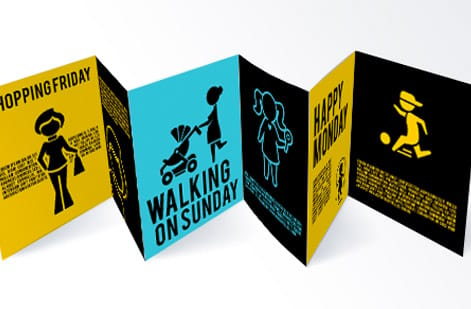
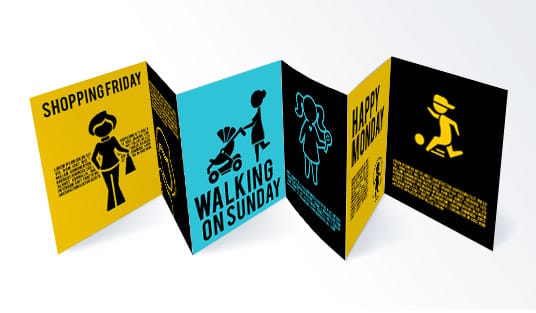
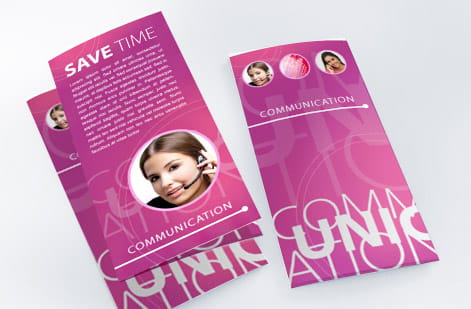
A direct mail campaign is a printed offer mailed to a chosen list on a set date, with a response path you can count. The print side comes down to three pieces you order the same way: direct mail brochures, direct mail flyers and direct mail letters. Each prints at 8.5 by 11, 8.5 by 14, 9 by 12 or 11 by 17 inches on four stocks, 70# uncoated text, 100# gloss or silk text, and 100# gloss cover, in color on one side or both, with nine folds from a half fold to a closed gate.
Quantity is where the budget moves. A run of 500 starts at $238.73, 1,000 comes to $276.63 and 2,000 to $346.10, so the per piece price falls from about 48 cents to about 17 cents as the drop grows. Standard production is six business days. Upload a print-ready PDF at the finished size with the mail panel left clear for the address, and pick 70# uncoated text if you want the reader to write on the reply section.
Why direct mail still beats one more round of digital ads

An email lands in a queue with two hundred others and disappears in a scroll. A printed piece, a folded 8.5 by 11 brochure or a letter in its envelope, lands on a counter, gets picked up, and often sits there for days. That physical dwell time is the whole advantage of the channel, and it is why direct mail keeps working for local services, franchises, dental practices, home improvement, and any business whose customers live inside a drivable radius.
The catch is that mail punishes sloppiness in a way digital does not. You cannot pause a bad postcard halfway through the drop, and every wasted piece costs paper plus postage. That is the real argument agencies make for themselves. It is also the reason a careful in-house process wins: you know your customers better than any vendor will, and direct mail brochures ordered directly cost a fraction of the same job routed through a middleman. If you are still deciding whether the channel fits at all, start with what direct mail is and how to use it, then come back here for the campaign mechanics.
What a direct mail campaign agency does, and which parts you can own
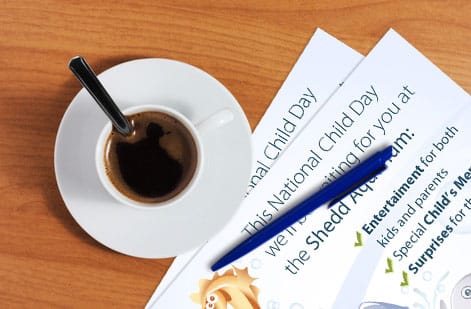
A direct mail campaign agency bundles five jobs: audience selection, creative, list sourcing, print production, and the mail drop itself. Priced together, that bundle usually lands somewhere between one and three dollars per piece before postage, and the print portion is the smallest line in it. Understanding the split is the fastest way to decide what to keep and what to hand off.
Audience selection is yours already. Nobody at an agency knows which of your customers buy twice a year and which vanish after one job. Creative is largely yours too, once you accept that a clear offer in plain type outperforms an award-winning layout with a buried call to action. List sourcing is worth paying for only when you are prospecting cold into households you have no relationship with. Print you order directly, at trade pricing, in the exact format you need.
That leaves the mail drop, which is genuinely fiddly the first time and routine after that. Read how direct mail marketing works for the end-to-end mechanics, then use the step sequence below as your build order. If you want a second angle on the same process, how to create a successful direct mail campaign covers the planning side in more depth.
Start with the offer, not the artwork

Every weak mail campaign has the same root cause: the piece was designed before anyone decided what it was asking for. Write the offer as one sentence you would say out loud to a customer standing in front of you. If that sentence is not compelling spoken, no amount of layout will rescue it printed.
Strong offers are specific, time-boxed, and low-friction. A free inspection booked before the end of the month beats a vague promise of great service. A dollar amount beats a percentage on small tickets and loses to a percentage on large ones. A deadline gives the recipient a reason to act instead of setting the piece aside, which is where most mail goes to die.
Then decide what happens next. One primary action, one path, one phone number or URL. Two competing calls to action split the response and make the results impossible to read. For ideas on how other businesses framed their asks, brilliant examples of direct mail marketing is worth twenty minutes before you write a word.
Build the list that quietly decides half your result
The oldest rule in the channel still holds: list, offer, creative, in that order of impact. A perfect piece mailed to the wrong households loses to a plain piece mailed to the right ones. So before you touch design, get the data honest.
Export everyone you already have a relationship with. Past customers, unconverted quotes, service reminders due, event attendees, referral sources. Standardize the address fields, run deduplication so one household gets one piece, and remove anyone who has moved. Then segment: your best repeat customers deserve a different message from a prospect who asked for a price two years ago and went quiet.
When you genuinely need new names, buy narrow rather than broad. A tightly drawn geographic radius with two or three qualifying attributes will always beat a large consumer file, and it costs less to test. Mail a controlled slice first, read the response, then scale the version that worked. Direct mail outreach collects more tactics for finding and warming those names.
Choose a format that matches what you have to say

Format is not a design preference, it is a budget and message decision. Postcards buy reach because they are cheap per piece and require no envelope opening. Letters buy attention because a sealed envelope with a real address still gets opened, especially for higher-value or more personal offers. Brochures buy explanation, and they earn their extra cost only when the product genuinely needs more than a headline.
Match the format to the length of the argument. A limited-time service discount fits on a postcard. A multi-service business explaining what it does needs the panels of a direct mail brochure. A high-ticket consultative offer, or anything where the recipient needs to feel personally addressed, belongs in direct mail letters. Broad neighborhood saturation with a single loud message is what direct mail flyers are built for.
Size matters for a second reason: postal rates step at specific dimensions and weights. An oversized mailer shows through a stack but can cross into a higher rate tier, so confirm the postage class before you fall in love with a format. If postcards are your lean, postcard marketing that converts goes deep on that one format.
Design so the message lands in three seconds
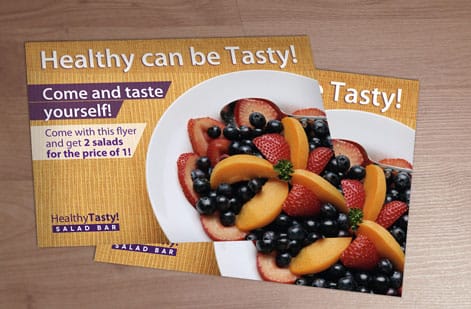
Mail gets sorted standing over a bin. You have roughly three seconds to answer who this is from, what is being offered, and why it matters now. Everything else on the piece is supporting cast.
Practically, that means one dominant headline carrying the offer, one supporting image, and a call to action large enough to read at arm length. Keep body copy short and scannable, put the deadline somewhere it cannot be missed, and leave real white space so the eye has somewhere to rest. Resist the urge to fill every panel just because you paid for it.
Then respect the production rules. Keep live text well inside the trim, extend backgrounds to full bleed, and leave the addressing area clear of artwork so the mail panel stays machine readable. Working from design templates handles most of that automatically, and the online designer lets you lay the piece out without opening professional software. For what is landing well right now, direct mail marketing trends and what is next is a useful sanity check on style.
Time the drop so mail arrives inside the buying window
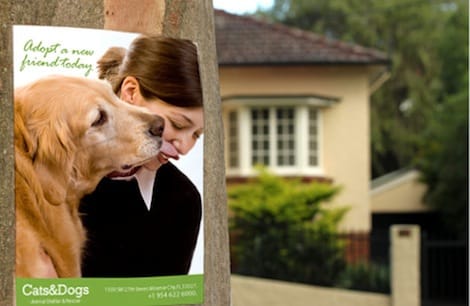
Timing is where in-house campaigns beat agency calendars, because you know your own seasonality. Work backwards from the day you want the piece in hand, not forward from the day artwork is ready. Subtract mailing transit, then shipping from production, then print turnaround, then a buffer for a proof revision. That date is your true deadline for finished files.
Seasonal offers need the mail to land before the decision is made, not during the rush. Home services want to arrive ahead of the first cold week. Retail promotions want the piece in hand a few days before the weekend, not on it. Holiday and seasonal hooks give a campaign a natural reason to exist, and Labor Day marketing and direct mail ideas shows how a single dated occasion can carry an entire drop. For two more dated angles by trade and season, see automotive direct mail ideas and 5 St. Patrick’s Day marketing ideas.
One more scheduling habit worth adopting: plan a follow-up before the first piece mails. A second touch to non-responders two to three weeks later reliably lifts total response, and it costs almost nothing to plan when the list is already segmented.
Print, address, and mail it without an agency in the middle
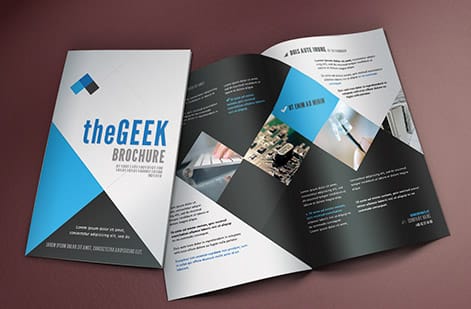
This is the step people assume is complicated. It is not. Upload print-ready files, choose the size, stock, and finish, confirm quantity, and approve the proof. Production runs in a few business days on most mail formats, with expedited options when the calendar is tight.
Order the pieces at the quantity your segments actually need, not a round number that feels safe. Unit cost falls quickly with volume because setup is fixed, so the jump from a small test run to a real drop is usually cheaper per piece than people expect. Direct mail brochures start at $238.73, and the same is true across flyers and letters, which makes it easy to test two formats against each other without doubling the budget.
If you are unsure how a stock will feel in the hand, order free paper samples before you commit. Weight and finish change how a piece reads more than most people expect, and an uncoated sheet that invites a pen mark can outperform a glossy one for response-driven mail.
Measure response so the next campaign costs less

A campaign you cannot measure is a campaign you have to guess about next time. Build tracking into the piece before it prints, because you cannot add it afterwards. A dedicated URL, a unique promo code per segment, a distinct phone number, or a QR code tied to one drop all do the job, and using more than one lets you see which channel the response came through.
Track three numbers: response rate, cost per response, and revenue per piece mailed. Raw reply counts flatter big drops and hide efficient small ones. Hold back a control group that receives nothing so you can separate what the mail caused from what would have happened regardless.
Then feed it forward. The segment that responded twice as well deserves a bigger share of the next budget, and the format that lost gets retired rather than redesigned forever. Run this loop three or four times and you will have something no agency retainer can hand you: a house list that knows what your own customers respond to.
Wally explains the drop
Mail the right people first, then worry about the artwork
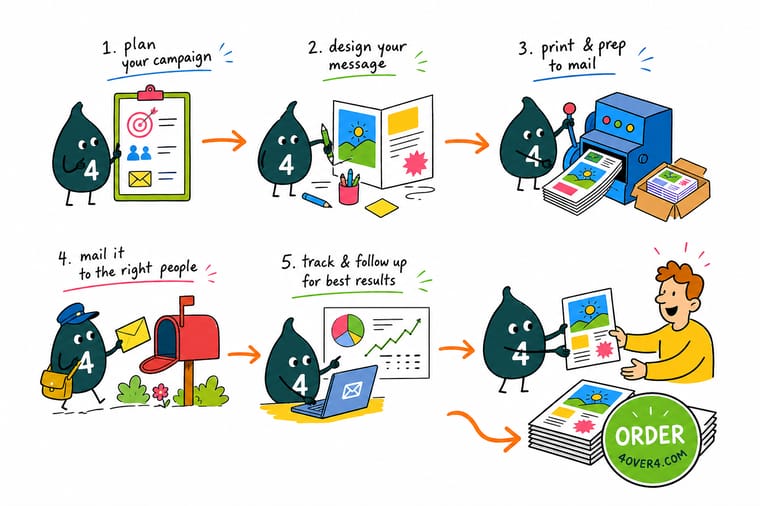
Wally has watched plenty of beautiful mailers underperform, and the reason is almost never the design. It is a list nobody cleaned, or an offer that never gave anyone a reason to act this week. So he builds every campaign backwards: pick the households, write the one sentence ask, then choose the format that carries it. Print is the easy part, and it is the part you get to control completely.
Print direct mail brochures →
Infographic
The 7 steps of a winning direct mail campaign
One frame, seven steps, in the order you should actually build them: one offer with a deadline, a deduplicated list segmented by value, a postcard, letter or brochure format, a design that reads in three seconds, a stock that survives the mail, a drop date inside the buying window, and a code or URL that proves response. Save it, share it with whoever writes the offer, and use it as the checklist before your next drop mails.
No step stands alone. A sharp offer mailed to a stale list fails, and a perfect list receiving a vague ask fails just as quietly, which is why the sequence matters more than any single piece of it.
Specs and pricing
Direct mail brochure specs and live pricing
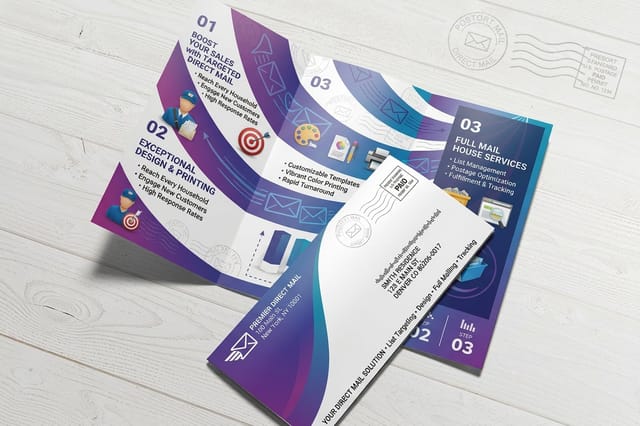
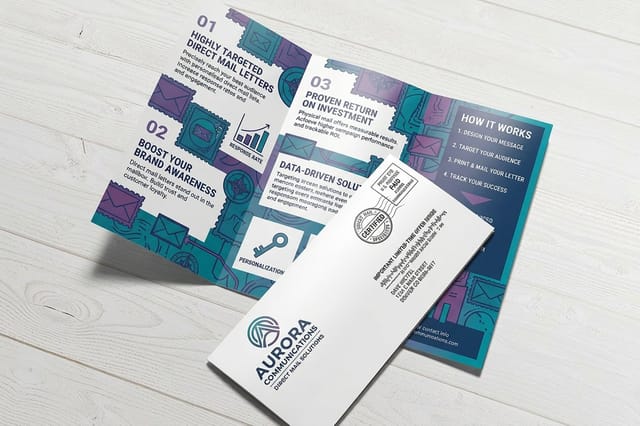
Once the offer and the list are settled, the print decision is size, stock, finish, and quantity. Direct mail brochures come in 8.5 by 11, 8.5 by 14, 9 by 12 and 11 by 17 inches on 70# uncoated, 100# gloss or silk text and 100# gloss cover, with nine fold styles and a six business day standard. Here are the exact options and current pricing for the format most campaigns build around.

| Quantity | Price Per Unit | Total |
|---|---|---|
| 500 | 47.7¢ | $238.73 |
| 600 | 41.1¢ | $246.31 |
| 700 | 36.3¢ | $253.88 |
| 800 | 32.7¢ | $261.47 |
| 900 | 29.9¢ | $269.05 |
| 1,000 | 27.7¢ | $276.63 |
| 2,000 | 17.3¢ | $346.10 |
| 3,000 | 13.9¢ | $415.57 |
Print it
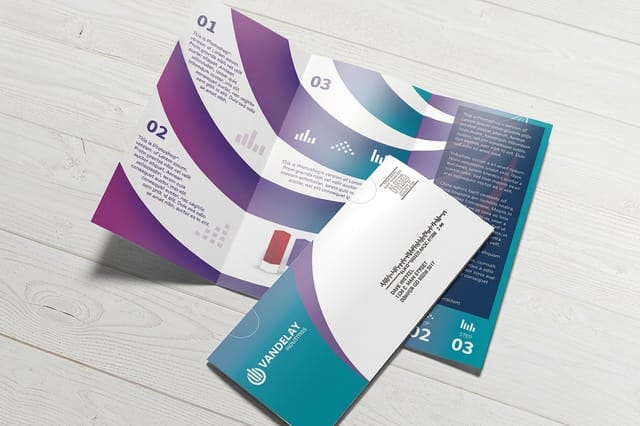
Mail formats to build your campaign on
See it in use
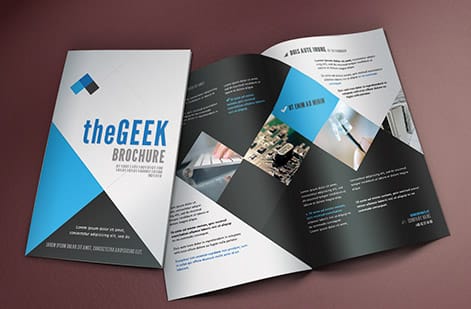
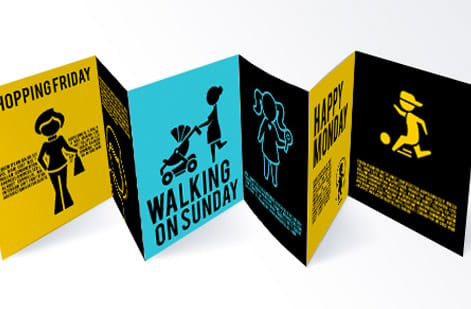
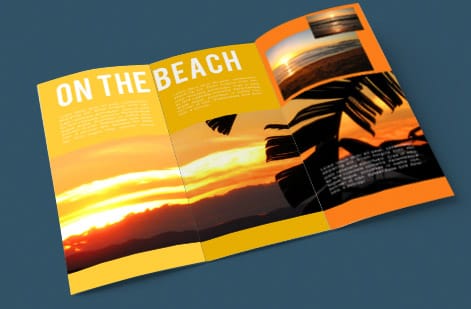
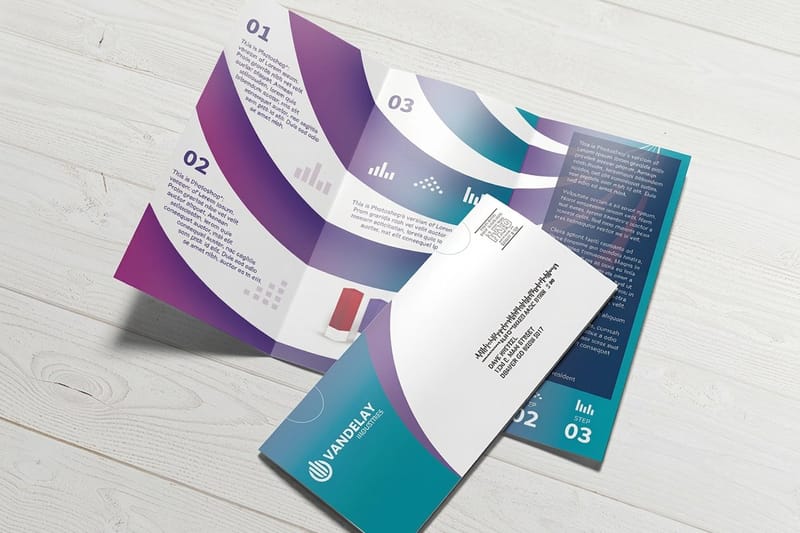
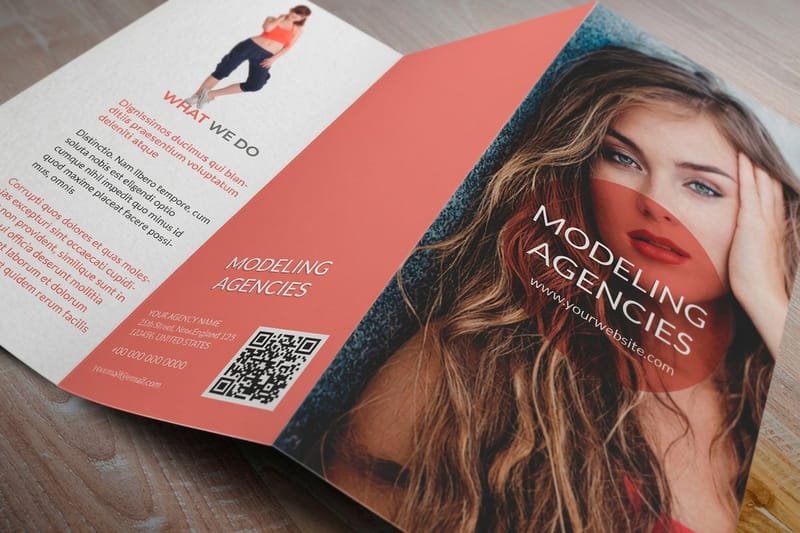
Mailed brochures from campaigns that ran




Explore more
Where to go next

By the numbers
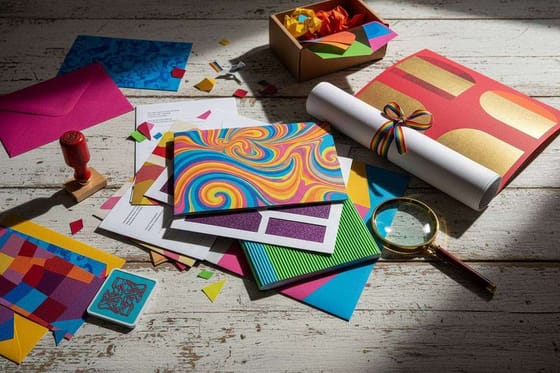
Sixty paper types a mail campaign can run on
Common Questions
Common questions about running a direct mail campaign
What is a direct mail campaign agency, and do you actually need one?
A direct mail campaign agency plans the targeting, writes and designs the piece, buys or rents the mailing list, handles print production, and manages the mail drop with the postal service. It is a coordination service wrapped around work you can source yourself. If you already know your customers, have a list in your CRM, and can brief a designer or start from a template, the agency layer mostly adds markup on printing you can order directly.
Who owns the list, and what does the per piece cost cover?
Ask three things. First, who owns the list, because a rented list you never see makes repeat campaigns expensive. Second, what the per-piece cost breaks down to across creative, print, postage, and management, since bundled pricing hides where the money goes. Third, what they measure, because an agency that cannot tell you response rate by segment is selling production, not marketing. If the answers are vague, run the campaign in house and buy the print directly.
What does a direct mail campaign cost and how are prices set?
Cost has four parts: creative, list, print, and postage. Print is the part you control most directly, and it scales with quantity, size, paper weight, ink coverage, and finishing. Direct mail brochures at 4OVER4.COM start at $238.73 for a mail-ready run, and the unit price drops steeply as quantity climbs because setup is spread across more pieces. Postage depends on class, weight, and whether your addresses qualify for presort discounts.
What sizes, stocks, and finishes are available for direct mail pieces?
Postcard-style pieces run from compact 4 by 6 formats up to oversized 6 by 11 mailers that show through a stack. Letters use standard text weights that fold cleanly into a number 10 envelope. Brochures come in half-fold, tri-fold, and z-fold layouts. Stocks range from light text papers through heavy 16pt cover, with uncoated, matte, gloss, and soft-touch finishes. Uncoated is the right pick when you want the recipient to write on it.
How long does direct mail take to print and ship?
Print production typically runs a few business days once artwork passes preflight, and expedited turnarounds are available on most mail formats. Shipping time depends on distance from the production facility. Plan backwards: add mailing time on top of print and shipping, because First Class delivery and Standard mail move at very different speeds. For a dated offer, build in a full week of buffer before the day the mail needs to land.
How do I build a mailing list without renting one?
Start with what you own. Past customers, quote requests that never closed, event signups, and warranty registrations are all mailable and all outperform rented data. Standardize the addresses, remove duplicates, and drop anyone who has moved. When you do need new households, buy a targeted list by geography and a small number of qualifying attributes rather than a broad consumer file, and mail it in a controlled test before scaling.
How do I measure whether a direct mail campaign worked?
Give every drop its own response path. A dedicated landing page URL, a unique promo code, a distinct phone number, or a QR code tied to one campaign all work. Then track response rate, cost per response, and revenue per piece mailed rather than raw replies. Hold back a small control group that gets nothing so you can see what the mail actually caused instead of what would have happened anyway. Related reading: EDDM campaign ideas by route.
Get Started
Order 500 direct mail brochures from $238.73
Pick the format, upload your artwork, and let 4OVER4.COM print the pieces at trade pricing. Order direct, keep the margin an agency would have taken, and get the mail moving.
Legal Disclaimer
Gold Standard guarantees apply to all standard orders placed through 4over4.com. Price match requires verifiable proof of a competitor's published price for an equivalent product with matching specifications and turnaround time. Satisfaction guarantee covers manufacturing defects and print quality issues. Contact support with order number and documentation.
