
What Is a Travel Brochure? Examples and Design Tips


A travel brochure turns a destination into something a traveler can hold, and the common examples are tourism board guides, tour itineraries, resort pieces, cruise booklets and travel agency menus. Most share one shape that keeps working: six panels, each with one job.
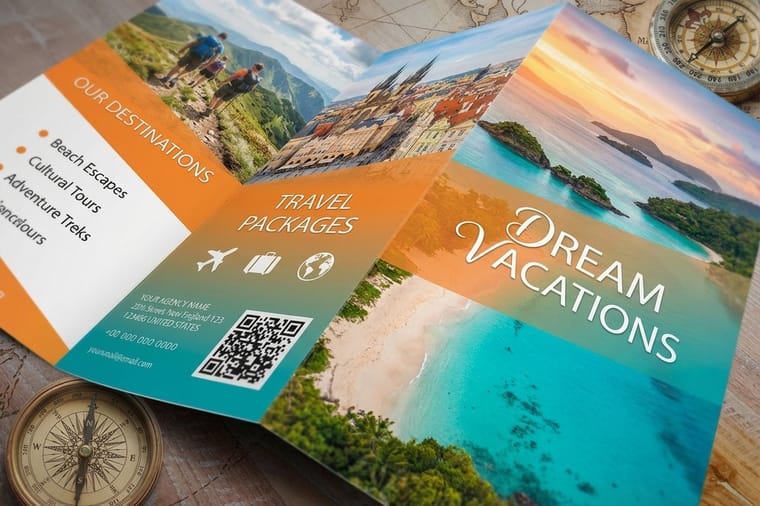
A travel brochure is a folded print piece that promotes a destination, tour, cruise, or vacation package. It leads with photography, sells the experience across a few short panels, and gives the reader a clear way to book. Most are tri-folds: a letter sheet folded into six panels, with a hero cover, inside content, and a back panel for the map and contact details.
Quick answer
Cover, promise, itinerary, proof, price, call
A travel brochure packages a place into images, short copy, and a clear way to book. The cover pulls the reader in with one strong photo, the inside panels sell the experience with highlights and prices, and the back panel carries the map and contact details. Tour operators, resorts, and tourism boards hand them out at counters and expos and mail them to past guests, because a printed piece lingers on a table long after an ad has scrolled by. The usual build is a tri-fold from an 8.5 by 11 inch sheet on 100 lb gloss text, with an 11 by 17 sheet when a map needs the room. 4OVER4.COM prints them across every fold and stock in the Travel Printing Collection.
Examples
Five examples of a travel brochure
Five examples cover most travel brochures: a tourism board's regional guide, a tour operator's itinerary, a resort's amenity piece, a cruise line's booklet and a travel agency's destination menu. The regional guide often runs on an 11 by 17 sheet with room for a fold-out map. The tour and agency pieces are tri-folds from an 8.5 by 11 sheet on 100 lb gloss text. The resort piece moves up to cover stock, and the cruise brochure becomes a booklet. Travel brochures run on 3 business days of standard production.
What it looks like
The tri-fold travel brochure layout, panel by panel
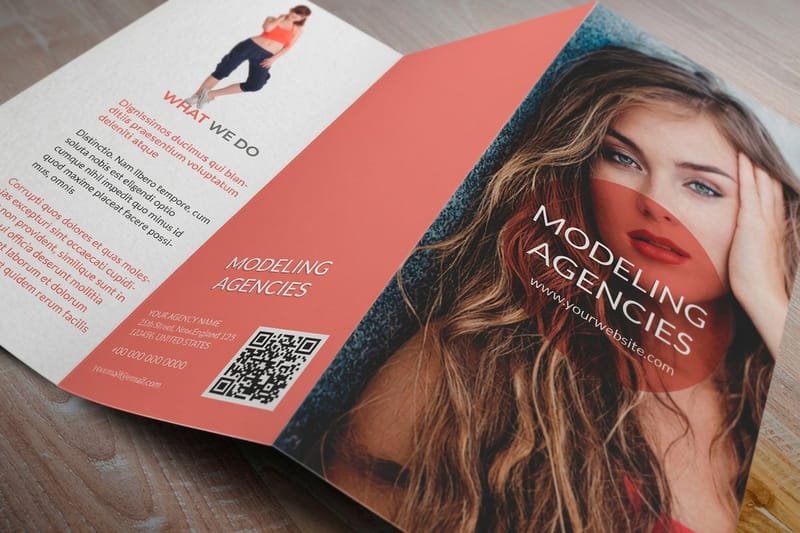
Most travel brochures are tri-folds: one letter sheet folded into six panels. The panels lay out on both sides of the sheet, each with its own job.
What exactly is a travel brochure?
A travel brochure is a folded print piece that packages a destination, tour, cruise, or vacation package into something a person can hold, flip through, and take home. It is part sales pitch and part reference sheet. The standard version starts as an 8.5 by 11 inch sheet folded into six panels of about 3.7 by 8.5 inches each. The cover pulls you in with a single striking image, the inside panels sell the experience, and the back panel gives you the practical details and a way to book.
You have seen them everywhere without naming them: the rack of glossy folders at a hotel front desk, the handout at a travel expo booth, the mailer a cruise line sends after you request a quote. That physical presence is the point. A brochure sits on a kitchen counter for weeks, while an ad scrolls past in a second. For a full definition of the format, our what is a brochure guide covers the fundamentals, and this page focuses on the travel version.
Who prints them? Travel agencies, tour operators, tourism boards, resorts, cruise lines, and destination management companies. If your product is a place or an experience, the travel brochure is still one of the most trusted ways to put it in a customer's hands. When you are ready to print, the full Travel Printing Collection at 4OVER4.COM is built for exactly this.
What to put on a travel brochure

The best travel brochures follow a rhythm. Each panel has one job, and nothing fights for attention. The anatomy runs panel by panel.
- Cover: a full-bleed hero photo and a short, benefit-led headline. Not "Greece Tours 2025" but "Seven Islands, One Unforgettable Week."
- The hook panel: two or three sentences on what makes this destination different, plus the single most beautiful secondary image.
- Highlights or itinerary: a day-by-day outline or a bulleted list of experiences. Travelers want to picture their trip.
- Packages and prices: clear tiers, what is included, and any seasonal deals. Vague pricing kills bookings.
- Back panel: a simple map, contact details, opening hours, and the booking call to action.
Weave one action through the whole piece: a QR code, a short URL, and a phone number, repeated on the cover and the back. If you want the layout templates done for you, 4OVER4.COM offers free design templates and an Online Designer so you can drop your photos and copy into a proven structure instead of starting from a blank page.
Travel brochure examples for your business
"Travel brochure" is a broad term. What it looks like depends on who is handing it out. These are the most common examples and what each one leans on.
Destination and tourism board brochures. These sell an entire region. Think big landscape photography, a fold-out map, and short blurbs on food, culture, and things to do. The goal is inspiration, not a single package.
Tour operator brochures. These sell specific, bookable itineraries. Day-by-day breakdowns, difficulty or pace ratings, inclusions, and firm prices. Detail builds trust here.
Resort and hotel brochures. Aspirational and premium. Room shots, amenities, spa and dining, and a clear reservation path. Paper and finish matter most in this category. A hotel brochure that feels cheap undercuts a five-star room rate.
Cruise and adventure brochures. Often larger or booklet format because there is a lot to say: cabin classes, deck plans, shore excursions, packing lists.
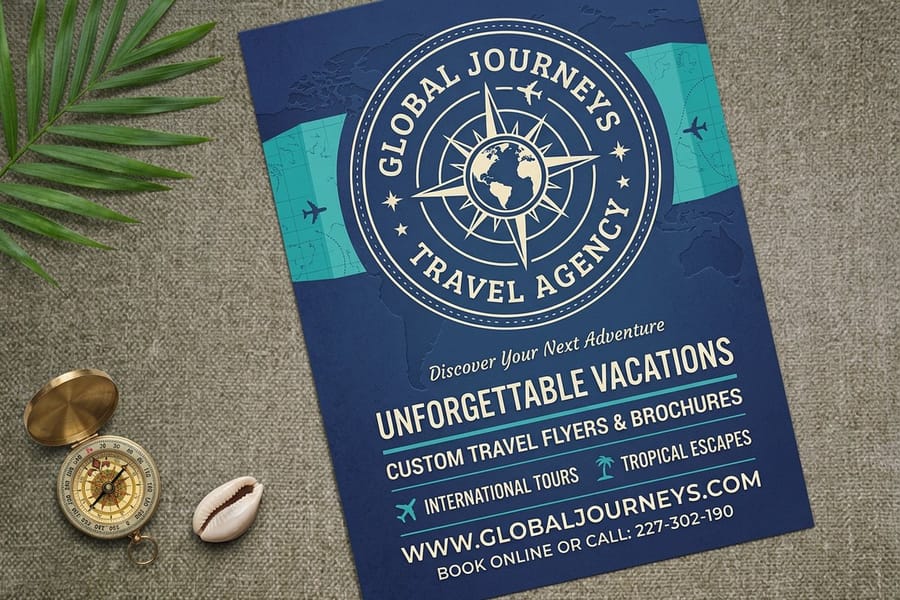
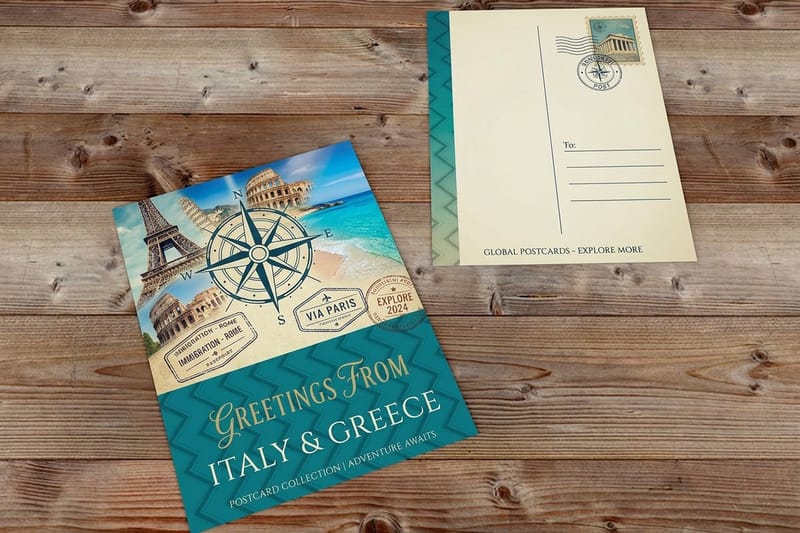
Travel agency brochures. A menu of destinations and services, usually paired with matching travel agent business cards and travel flyers so the whole counter looks like one brand. Flip through the stories on travel agent business cards and travel flyers to see that matched set. For a deeper look at real customer work, browse the brochure printing showcase.
Folds and sizes: the part most guides skip
The fold is a design decision, not an afterthought. It controls the reading order and how the story unfolds in the reader's hands. Pick it before you lay out a single panel.
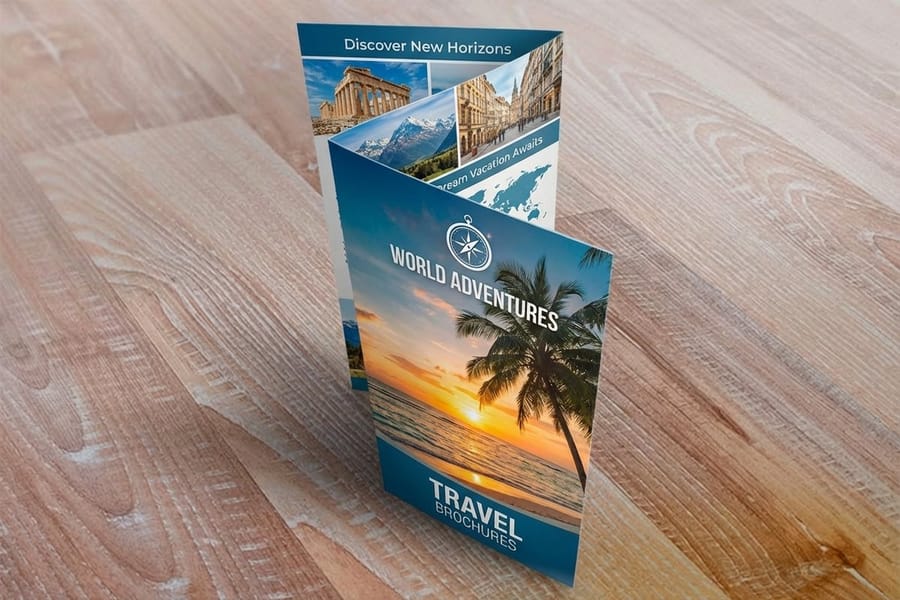
- Tri-fold (letter fold): the travel default. Six panels, compact, and it fits a standard brochure rack and a #10 envelope. Great for a single tour or destination.
- Bi-fold: four larger panels. Good when photography leads and you want fewer, bolder spreads, like a luxury resort piece.
- Gate fold: a dramatic reveal when the two flaps open to a wide inside image. Ideal for a hero landscape or a fold-out map.
- Z-fold and booklets: when a multi-day cruise or a full catalog needs more room than six panels allow.
On size: a US Letter sheet is the usual start, finishing near 3.7 by 8.5 inches per tri-fold panel. Legal and 11 by 17 sheets give you room for maps and long itineraries. To go deeper, see common brochure sizes and fold options and the mechanics in how to fold a brochure. When a job is time-sensitive, like an expo next week, rush delivery keeps the fold and finish without missing the date.
6 design tips for your travel brochure
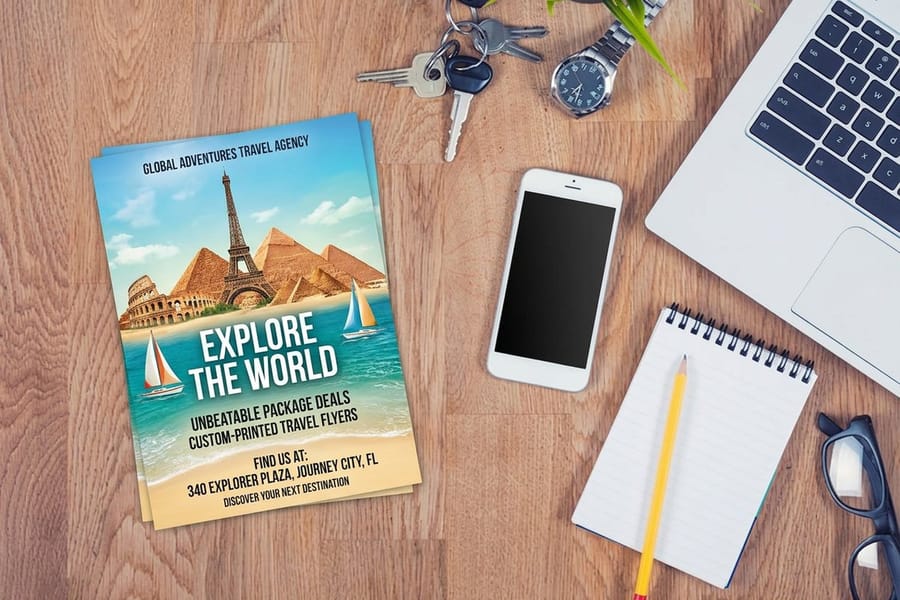
Great travel brochures share the same habits. Steal these six.
- Let one photo dominate the cover. A single, full-bleed image with room for the headline beats a busy collage every time. Sell the feeling first.
- Write for skimmers. Short headlines, tight captions, and bulleted highlights. Travelers browse, they do not study.
- Build a consistent palette. Pull two or three colors from your best photo and use them for headings and accents so the piece feels intentional.
- Respect the folds. Keep important text and faces away from fold lines, and design each panel to stand on its own as the reader turns it.
- Set a clear price and a clear next step. Ambiguity stalls a booking. Show what a trip costs and exactly how to reserve it.
- Mind the bleed and margins. Full-bleed images need a proper bleed so nothing white shows after trimming. See the elements of brochure design for the print-setup details.
Not a designer? The 4OVER4.COM Online Designer handles bleed, margins, and fold guides for you, so your file is print-ready without wrestling with pro software.
Paper and finish that make travel print feel premium
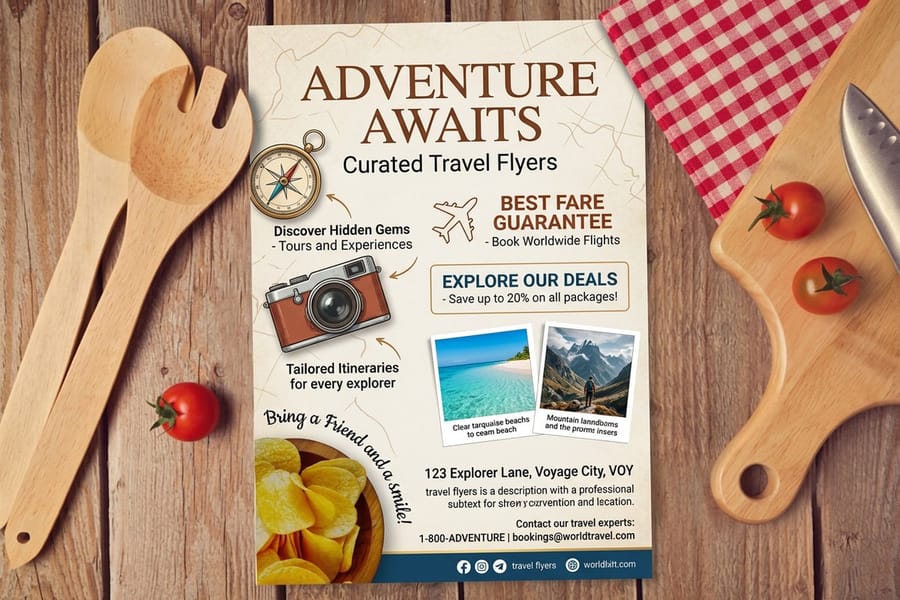
Paper is the first thing a traveler feels, before they read a word. It quietly sets the price expectation for your trip.
100 lb gloss text is the popular default. It makes beaches and skylines pop, folds cleanly, and keeps costs reasonable for larger runs. 100 lb cover with a matte or soft-touch laminate reads high-end, which is why resorts and luxury operators reach for it. If the piece will be mailed or handled at a busy counter, a coating resists fingerprints and scuffing.
Match the finish to the promise. A budget adventure tour can happily live on gloss text, while a honeymoon resort should feel solid in the hand. To weigh the trade-offs, read the best paper types for brochure printing and matte vs glossy for brochures. Every stock and coating here is available across the Travel Printing Collection.
How to create a custom travel brochure

From idea to a stack in your hand, the path is short when you follow it in order.
- Choose the fold and size first. Tri-fold letter for a single tour, larger or booklet for a multi-day trip. This sets your panel dimensions.
- Gather your best photography. High-resolution, horizon-forward destination shots. This is 80 percent of the impact.
- Draft the copy per panel. One job per panel: hook, highlights, packages, booking. Keep it tight.
- Lay it out. Use a template or the Online Designer, or design in your own software and export a print-ready PDF with bleed.
- Pick stock, finish, and quantity. Live specs and pricing update as you choose, so you see the per-piece cost before you commit.
- Order a proof, then print. A free proof catches color and fold issues before the full run.
Printing thousands for a tourism board or a chain of agencies? Bulk discounts drop the per-piece cost sharply, and same-day options keep campaigns on schedule.
Common travel brochure mistakes to avoid
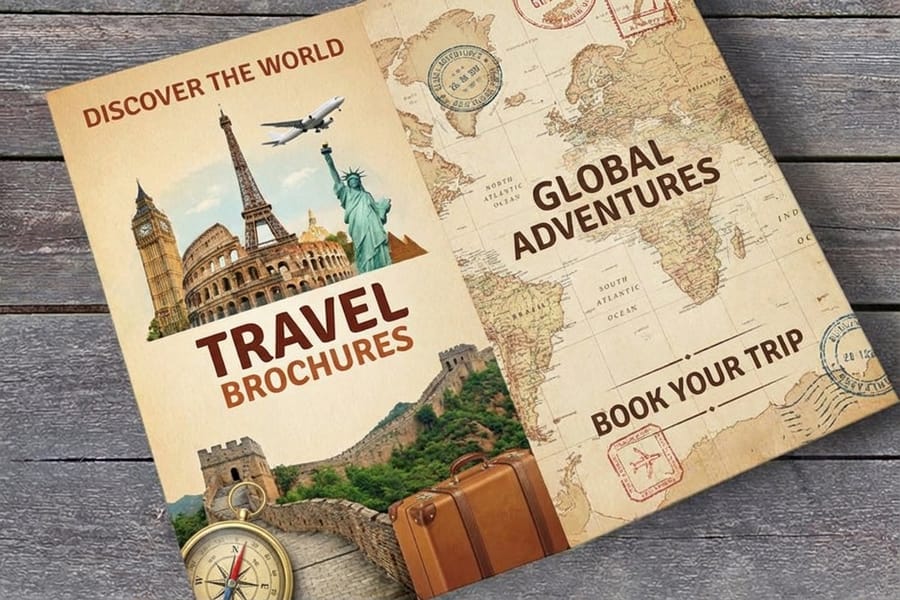
Even good travel brochures trip over the same few things. Sidestep these and yours will out-print the rack.
Too much text. A wall of copy buries the trip. Trust the photos and cut the paragraphs in half.
Low-resolution images. A pixelated beach makes a five-star resort look like a scam. Use high-resolution photography, always.
No clear price or next step. If a reader cannot tell what it costs or how to book, they set the brochure down. One obvious action, repeated.
Ignoring the fold lines. Text or a face split by a fold looks like a mistake. Design each panel as its own frame.
Cheap paper for a premium trip. The stock sets the price expectation before anyone reads. Match the paper to the promise.
Skipping the proof. Color shifts and fold surprises are cheap to fix on a proof and expensive to fix after a run of 5,000. 4OVER4.COM builds the proof into the process so what you approve is what you get.
Wally explains the travel brochure
Sell the place, then make it easy to book
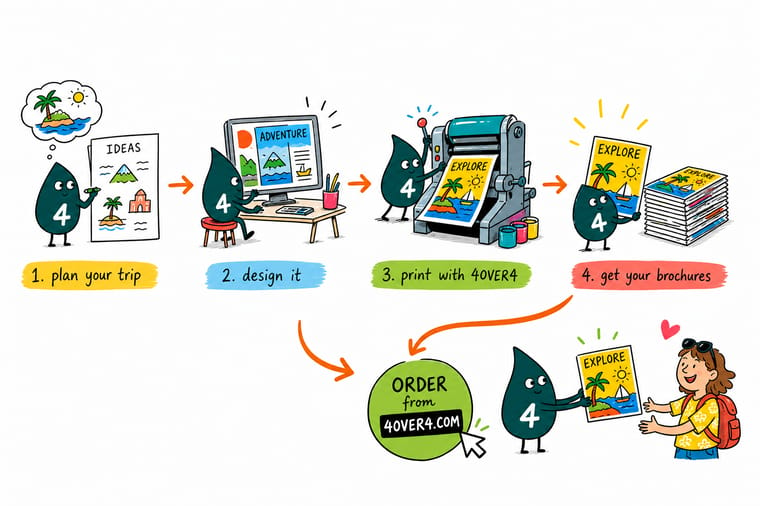
Wally treats a travel brochure like a mini tour: the cover is the postcard that stops you, the inside is the walk-through, and the back panel is the front desk where you actually book. Lead with one gorgeous photo, keep the words short, and repeat a single clear way to reserve. When the design is ready, 4OVER4 prints it on the stock and fold that make a destination feel worth the trip.
Order travel brochures →
Specs and pricing
Travel brochure specs and live pricing
Travel brochures run 50 for $57.11, which is $1.14 each, with live specs and price-per-unit below. Adjust size, stock, fold, and quantity and the numbers update as you go.

| Quantity | Price Per Unit | Total |
|---|---|---|
| 50 | $1.14 | $57.11 |
| 100 | 82.4¢ | $82.38 |
| 200 | 53.3¢ | $106.55 |
| 300 | 41.0¢ | $123.02 |
| 400 | 34.9¢ | $139.49 |
| 500 | 31.2¢ | $155.97 |
| 600 | 26.7¢ | $160.36 |
| 700 | 23.5¢ | $164.75 |
Print the set
Travel print that works as one brand
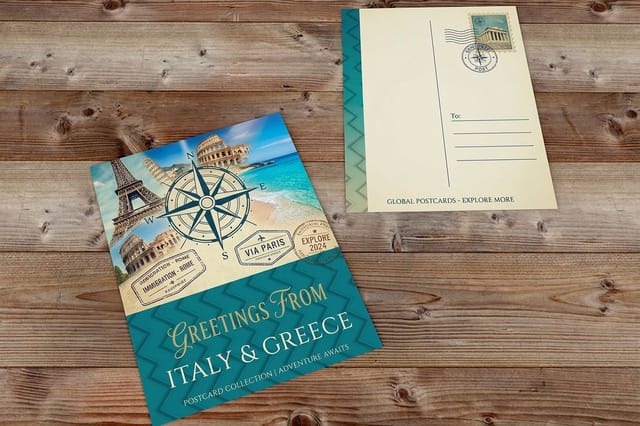
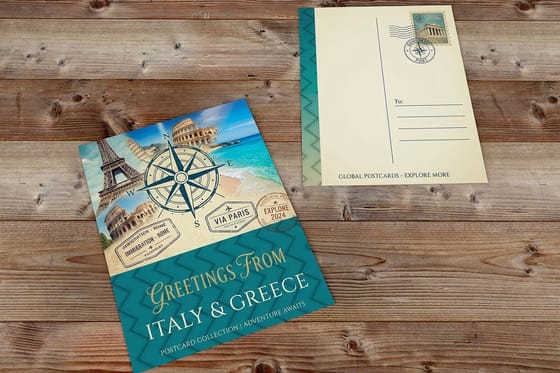
A brochure rarely travels alone. Pair it with travel flyers from 50 at $39.54, travel postcards from 50 at $16.48 in sizes from 4 by 6 to 6 by 11 inches, and travel agent business cards from 100 at $17.57, all on 3 business days, so your counter, expo booth, and mailer all read as one campaign.

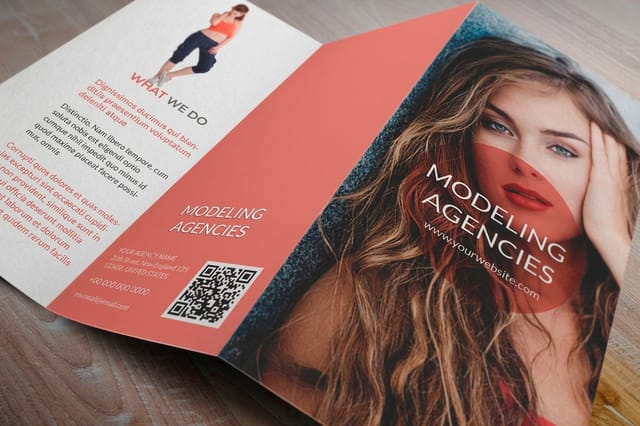
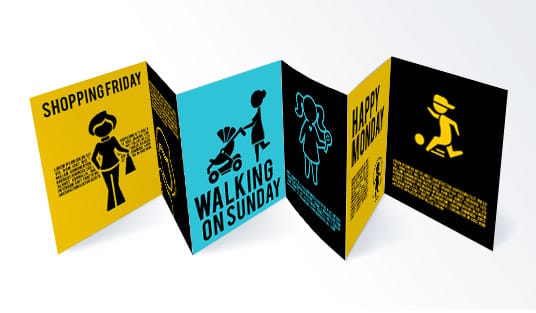
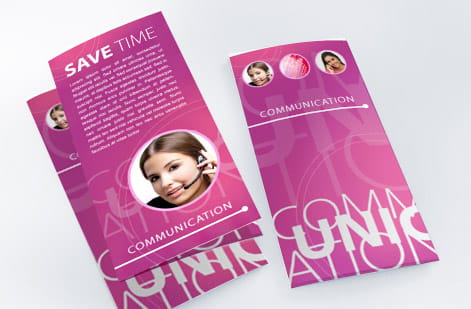
Customer travel brochures
Destination brochures we printed and folded


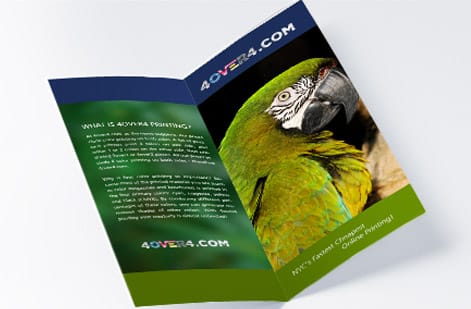
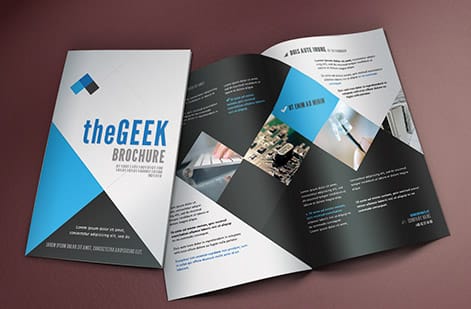
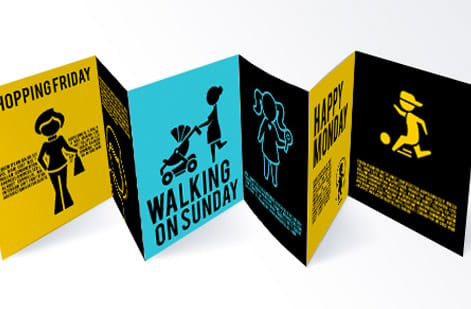
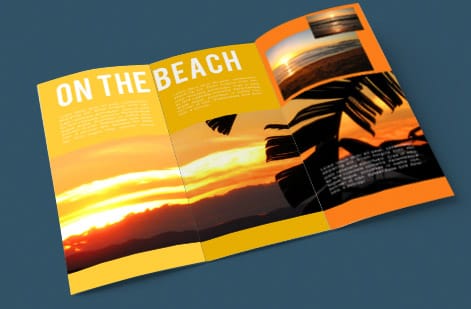

Explore more
Where to go next
By the numbers
Brochure stock for a travel rack
Common Questions
Common questions about travel brochures
What is a travel brochure?
A travel brochure is a folded print piece that promotes a destination, tour, cruise, resort, or travel package. It combines strong photography, short persuasive copy, practical details like itineraries and prices, and a clear way to book. Travel agencies, tourism boards, tour operators, and hotels hand them out at counters, travel expos, and lobbies, and mail them to past guests.
What does a travel brochure look like?
Most travel brochures are tri-folds: a single letter or legal sheet folded into six panels. The front panel is a cover with a hero photo and a headline, the four inside panels carry highlights, itineraries, and package details, and the back panel usually holds a map, prices, and contact information. Bi-folds, gate folds, and small booklets are common too when there is more to say.
What should you put on a travel brochure?
Lead with a hero image and a benefit-driven headline on the cover. Inside, cover what makes the destination special, a sample itinerary or things to do, package options with prices, and practical facts such as best time to visit and what is included. Every panel should point to one clear call to action: a QR code, a website, and a phone number for booking.
What size is a standard travel brochure?
The most common travel brochure is a US Letter (8.5 by 11 inch) sheet folded into a tri-fold, which finishes at roughly 3.7 by 8.5 inches per panel and fits a standard rack or a #10 envelope. Larger tour operators often use legal (8.5 by 14 inch) or 11 by 17 inch sheets for maps and multi-day itineraries.
How much does it cost to print travel brochures?
At 4OVER4.COM, travel brochures start at $57.11 for a run, with the final price set by size, paper stock, fold, coating, and quantity. Larger quantities lower the per-piece cost sharply, so tourism boards and agencies printing thousands pay a fraction per brochure compared to a small run. Live pricing updates as you choose options in the configurator.
What paper is best for a travel brochure?
A 100 lb gloss text stock is the popular default because it makes destination photography pop and folds cleanly. For a more premium feel, resorts and luxury operators use a heavier 100 lb cover with a soft-touch or matte laminate. If the brochure will be mailed or handled a lot, a coated stock resists fingerprints and scuffing.
Get Started
Print a travel brochure in the fold you choose
Pick your fold and size, drop in your destination photos, choose a stock that feels the part, and we print travel brochures that sell the trip and make it easy to book.
Legal Disclaimer
Gold Standard guarantees apply to all standard orders placed through 4over4.com. Price match requires verifiable proof of a competitor's published price for an equivalent product with matching specifications and turnaround time. Satisfaction guarantee covers manufacturing defects and print quality issues. Contact support with order number and documentation.
