
Fitness Flyer Ideas That Fill Classes and Memberships


A fitness flyer works when it carries one offer, one deadline and one instruction, printed at 5.5 by 8.5 inches on 100lb gloss text for a drop, or on cover weight when it has to stand in a counter holder. The ideas that fill classes are the dated ones: a free week that expires, a challenge with a start date, a beginner series that names who it is for, each pointed at a single action rather than at the whole business.
Fitness flyer formats at a glance
| Format | Best for | Stock to ask for | Watch out for |
|---|---|---|---|
| Half sheet, 5.5 x 8.5 in | Neighborhood drops, gym bag stuffers, partner counters | 100lb gloss text | Curls in a humid room if it sits out for weeks |
| Full sheet, 8.5 x 11 in | Class schedules, challenge rules, fridge keepers | 70lb or 80lb uncoated text | Costs roughly twice the half sheet, so only use the space if you need it |
| Handbill, 4.25 x 5.5 in | Race expos, street handouts, event tables | 100lb gloss text or gloss cover | Too small for a schedule grid, so keep it to one offer |
| Counter card, 4 x 6 in | Juice bars, physio clinics, coffee shop counters | 14pt or 16pt cover | Needs the weight to stand in a holder without flopping |
| Tear-off tab, 8.5 x 11 in | Community boards, laundromats, campus corkboards | 70lb uncoated text | Gloss tears badly at the perforation, so keep it uncoated |
Set 0.125 inches of bleed on all four sides and keep live text 0.25 inches inside the trim, whichever size you choose. The rest of the range a gym orders sits in fitness printing, from counter cards to street flags.
What a fitness flyer actually has to do

A flyer has about two seconds on a windshield and maybe five on a counter. In that window it has to say what the offer is, when it ends, and what the reader does next. Everything else on the sheet is decoration, and decoration is what pushes the important line down the page.
The single biggest mistake gyms make is treating the flyer as a brochure. A brochure explains a business. A flyer sells one thing to one person on one date. If you genuinely need to explain the whole facility, the class timetable and the trainer bios, you need a different format, and our booklet, brochure or flyer comparison walks through where each one earns its cost.
The offer is the whole flyer. "Join today" is not an offer. "Free week, ends March 31, bring this sheet" is an offer, because it has a price, a boundary and a physical reason to keep the paper. Deadlines also let you measure: when the drop is dated, you know which flyers brought people in.
Who the flyer is talking to
Write to one person, not to a demographic. The person who picks up a flyer at a physio clinic is recovering from something and worried about doing damage. The person who takes one at a race expo already trains and is shopping on price and schedule. Same gym, opposite copy.
That is also how you decide where the flyers go. A single design dropped everywhere performs worse than three versions matched to three locations, and three short runs cost very little more than one long one.
The one thing to put above the fold
Whatever the reader has to remember at arm’s length goes in the top third, in the largest type on the sheet. On a fitness flyer that is almost always the offer and the deadline, not the gym name. The logo can sit small at the bottom; nobody joins a gym because the logo was big.
Keep live text at least 0.25 inches inside the trim line, and set 0.125 inches of bleed on all four sides. A deadline that gets shaved off in trimming is an expensive lesson, and it happens most often on flyers because the deadline is usually the last thing added to the layout.
Ten flyer ideas that actually fill a class
These are ten flyer concepts that work for gyms, studios and trainers, roughly ordered from the fastest to produce to the most involved. Each one is built around a single action, because a flyer with two calls to action gets neither.
You can print any of them as a short run first. Test the offer on a few hundred pieces, then reprint the version that brought people through the door rather than committing thousands to an untested line of copy.
Ideas one to five: the offer
1. The dated free week. One headline, one date, one instruction to bring the sheet to the desk. The physical hand-over is the point: it tells you the flyer worked, and it gives your staff a reason to start a conversation.
2. The class schedule people keep. Print the month as a grid on 8.5 x 11 uncoated text so it can go on a fridge and be written on. Put the month in type big enough to read across a kitchen. This is the one flyer that survives past the week it was handed out.
3. The bring a friend pass. Two names on one sheet, both redeemed together. Members hand it to someone who already trusts them, which is a warmer introduction than any drop you can buy.
4. The beginner’s honest flyer. Say plainly who the class is for and what the first session involves. The reason most people never walk in is that they think they will be the least fit person there, and a flyer that addresses that outperforms one shouting about results.
5. The six week challenge. A fixed start date, a fixed end date, a cap on numbers. Scarcity and a start date do more work than a discount, and the cohort that finishes together tends to stay.
Ideas six to ten: the placement
6. The tear-off tab board flyer. Community boards, laundromats and campus corkboards still work for local services. Keep it uncoated so the perforation tears cleanly, and see five nontraditional tear-off tab ideas for layouts that are not the usual fringe of phone numbers.
7. The partner counter card. A 4 x 6 on 14pt or 16pt cover in a holder at a juice bar, physio clinic or running store. Offer the partner something back and the card stays up. This is the cheapest form of local distribution there is.
8. The event handbill. A 4.25 x 5.5 piece for race expos and community days, printed with a code specific to that event so you can tell which table produced signups.
9. The lapsed member letter, printed. Same offer as the acquisition flyer, different headline: welcome back rather than come in. Printed mail lands in a place a promotional email does not.
10. The trainer’s personal flyer. One trainer, one specialty, one photo of them in your actual room. Pair it with fitness business cards from $17.57 so the follow-up looks like the same brand rather than a phone number scribbled on the back.
Choosing size, stock and finish
Three decisions set both the cost and the feel: trim size, paper weight, and coating. Artwork can be perfect and still land badly if these are wrong for where the flyer ends up.
Size first. The 5.5 x 8.5 half sheet is the default for a reason, since it runs two up on a press sheet and therefore costs meaningfully less per piece than a full sheet. Go to 8.5 x 11 only when the content genuinely needs the room, which in practice means a schedule grid or challenge rules. Go smaller, to a 4.25 x 5.5 handbill, when the flyer is handed over person to person and has one line to deliver.
Weight next. 100lb gloss text is the standard flyer stock: it feels like a magazine page, it stacks well and it is the cheapest respectable option. Step up to 100lb gloss cover when the piece has to stand in a holder or survive a week of being picked up and put down. For a schedule that people write on, drop the coating entirely and use 70lb or 80lb uncoated text, because gloss rejects ballpoint ink and smears with a marker.
The color trap fitness brands fall into
Fitness branding leans on neon green, electric blue and hot pink, and those are exactly the colors that lose the most life converting from RGB to CMYK. What glows on a laptop can print as a flat olive or a muddy purple. Build the artwork in CMYK from the start, and if a specific neon is central to the brand, order a proof before the full run rather than after it.
Gloss coating helps here. It holds saturation better than matte and it shrugs off a wet windshield. The cost is glare: under the fluorescent strips in most gyms, a gloss flyer on a counter throws light back at the reader. Matte solves the glare and costs a little saturation. There is no option that gives you both.
How many to print
Print to the drop, not to the price break. A partner counter needs 100 to 200 pieces at a time. A neighborhood door drop or a car park pass needs 500 as a floor to be worth the labor of walking it. An event table burns through more than most people expect, so bring roughly twice what you planned.
The temptation is to order 5,000 because the unit price looks better, then change the offer after the first month and throw four thousand away. Order to the offer’s lifespan. If the deadline is on the sheet, the sheet expires with it.
Getting the flyers into hands

A great flyer in a box behind the front desk does nothing. Distribution is where most fitness flyer campaigns quietly fail, and it is worth planning before the artwork is finished, because where the flyer goes changes what it should say.
Windshields are the tempting option and the weakest one. They get pulled off and dropped in the car park, and plenty of towns restrict handbills on vehicles, so check the local ordinance before you spend a Saturday on it. Partner counters, community boards, event tables and member hand-outs all beat it. Our flyer distribution best practices cover the mechanics, including how to track which locations produce.
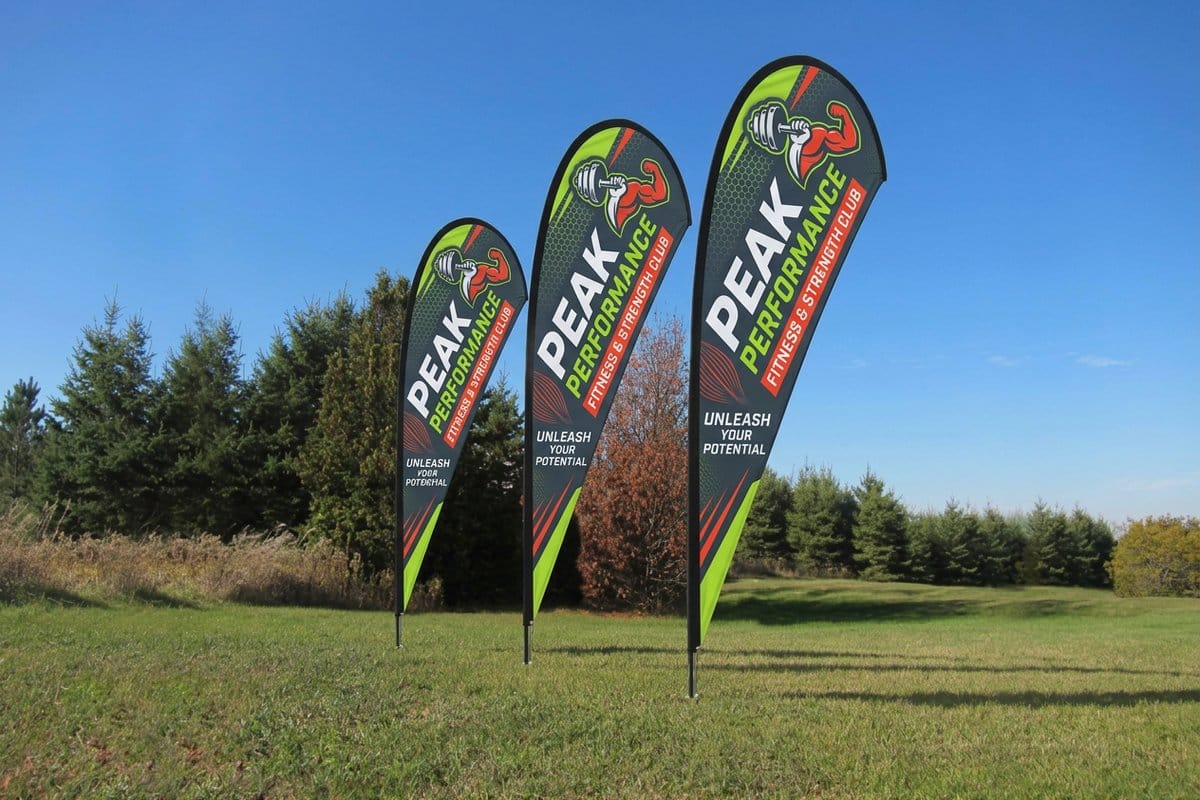
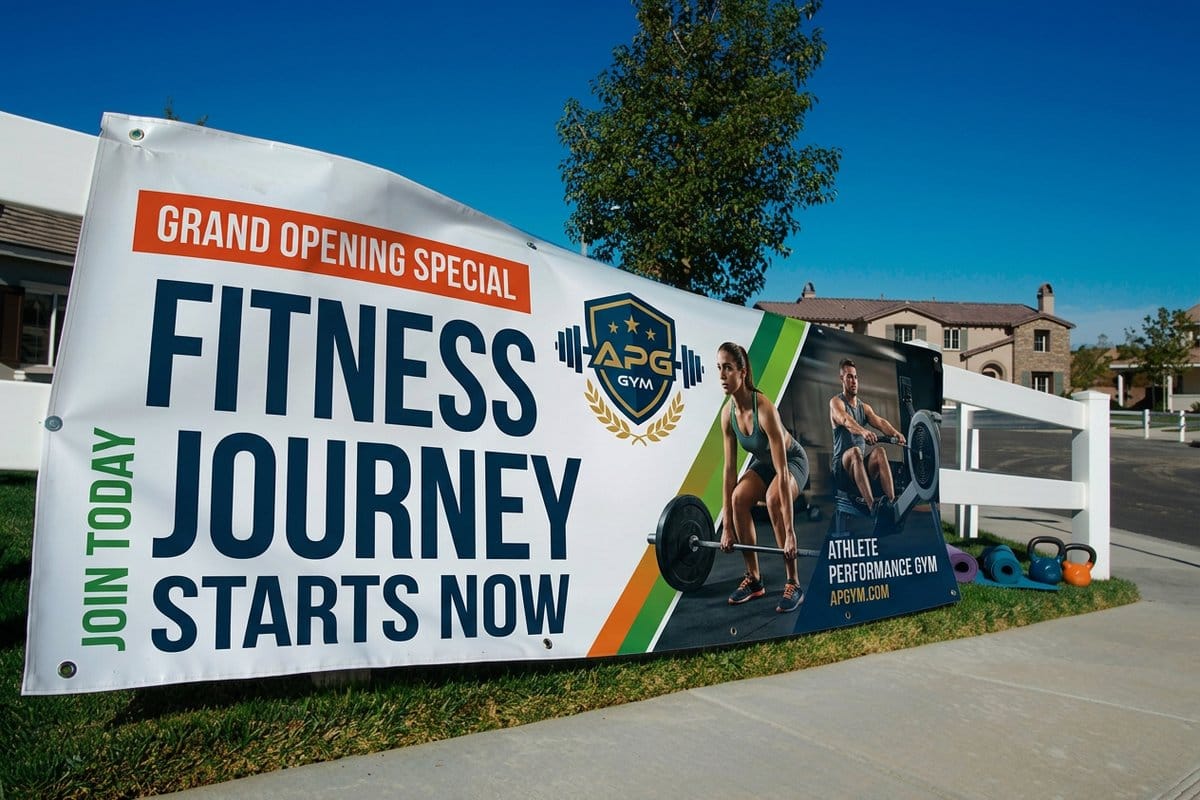
Pair the drop with something permanent at the building itself. A flyer brings someone to the block; a fitness flag from $108.75 or a wall fitness banner from $79 tells them they have found the right door. Flyers expire, signage does not, and the two cost about the same over a season.
Make the drop measurable
Give each location its own code or its own short URL. Not a tracking system, just a different word on the sheet: BOARD, JUICE, EXPO. When someone redeems at the desk, note the word. After one cycle you know which placements earned a reprint and which did not.
Do the same with the deadline. A single date across every location tells you nothing about placement, but a code plus a date tells you both which spot works and how long a flyer stays alive after it lands.
What the fitness print stack costs
Flyers are the cheap end of a gym’s print budget, and they work best when the pieces around them match. The numbers below come straight from the live configurator, so you can size the whole campaign before you order any of it.
Quantity and price
Fitness business card pricing and specs
Real configurator numbers, where the per unit cost drops as the run grows.
| Quantity | Price Per Unit | Total |
|---|---|---|
| 100 | 17.6¢ | $17.57 |
| 200 | 11.5¢ | $23.07 |
| 300 | 9.15¢ | $27.46 |
| 400 | 7.96¢ | $31.86 |
| 500 | 7.25¢ | $36.26 |
| 600 | 6.77¢ | $40.64 |
You can also earn coins on every order and redeem them against future printing, which stretches a small marketing budget across more drops. If postcards suit your offer better than a flyer, our business postcard ideas and examples covers that format.
Flyer ideas by business type
The right flyer changes with what you sell and who walks in, so it splits by business type.
- Big box gyms. Dated joining offers on half sheets, dropped in a tight radius around the building. The catchment for a gym is small, so a wide drop wastes most of the run.
- Boutique studios. A challenge or a beginner’s series with a fixed start date. Studios sell a cohort, not a facility, and the flyer should name the date the group begins.
- Yoga and pilates studios. Schedule flyers on uncoated stock that people can mark up, plus partner cards at cafes and physio clinics. More ideas in our yoga studio marketing guide.
- Personal trainers. One trainer, one specialty, one real photo, paired with matching business cards so the follow-up looks like a brand rather than an afterthought.
- CrossFit and strength gyms. On-ramp or fundamentals course flyers with the start date and the honest description of session one. The barrier is intimidation, not price.
- Physio and rehab led fitness. Referral flyers designed for a clinic counter, written to the patient rather than to an athlete, on 14pt or 16pt cover so they stand in a holder.
Print it
Signage that outlasts the drop
A banner at the building keeps working long after the flyers are in a bin.

Seasonal hooks give a flyer its deadline for free. A new year intake, a spring challenge, a summer countdown, even a holiday themed run all carry an expiry date built in, and the same layout can be reused each cycle with a new date and a new color. For layout inspiration outside the fitness category, St Patrick’s Day poster and flyer ideas shows how far a single seasonal color can carry a design, and branded merchandise ideas covers the giveaway that goes with the offer.
Half sheet blanks at press size
If you are not starting from a blank artboard, templates save the setup. 4OVER4.COM sizes its blanks to exact product specs so your artwork lines up with the cut lines and bleed. Grab a print ready blank from the blank template library with bleed and trim already marked.
Start fast
Half sheet blanks at press size
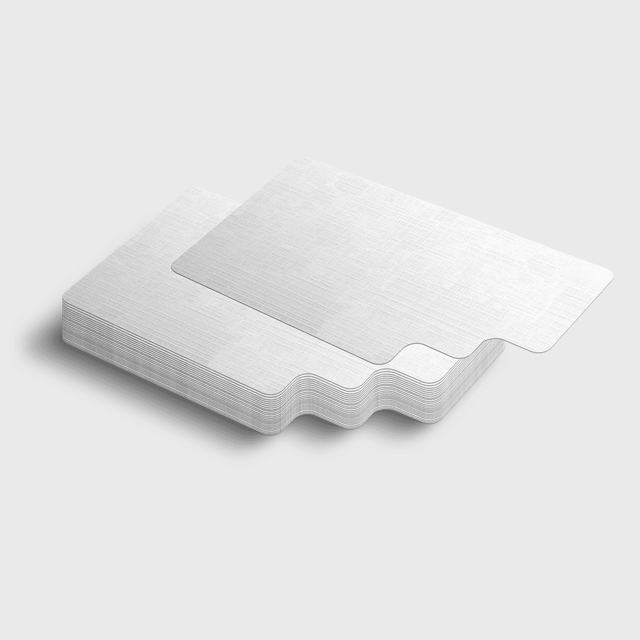
Blanks at 5.5 by 8.5 inches, two up on the press sheet, with the trim already marked.








Wally trims a gym flyer down to one offer
One offer, one date, one thing to do next
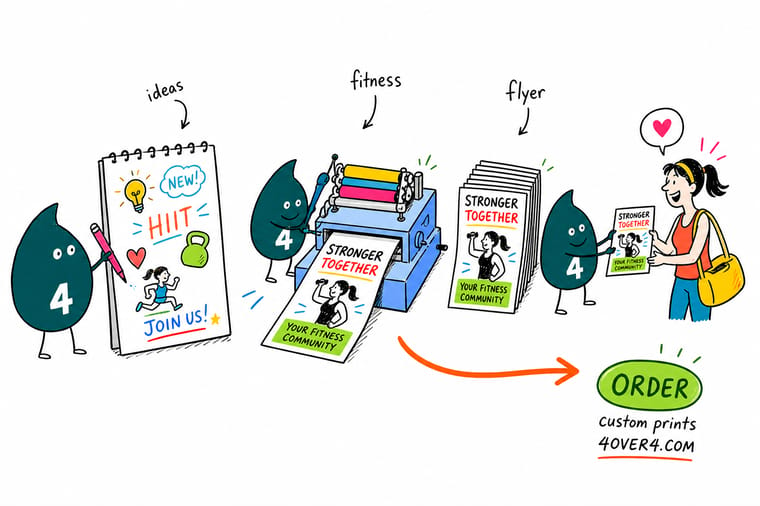
Print at 5.5 by 8.5 inches on 100lb gloss text for a drop, or on cover weight when the flyer stands in a counter holder. Put the offer and the deadline in the top third, add 0.125 inch bleed on all four sides, keep live text 0.25 inches inside the trim, and build in CMYK so your neon brand colors do not flatten out on press.
Print your fitness marketing →What one flyer can carry
Design tips that hold at every size
- One offer, one action. If a reader has to choose between two things on the sheet, they choose neither. Cut the second call to action even when it feels like wasted space.
- Put the deadline in the top third. The date is the reason the flyer gets kept or acted on. It belongs with the headline, not in small print at the bottom.
- Shoot your own room. Stock gym photography reads as a chain. A slightly imperfect photo of your actual space and actual members is more persuasive than a polished one of somebody else’s.
- Proof the neons. Bright greens, blues and pinks shift most in CMYK. Order a proof if a specific shade is part of the brand rather than discovering the shift on 2,000 sheets.
- Match the stock to the life of the piece. Handed over and thrown away, use gloss text. Lives in a holder for a month, use cover weight. Meant to be written on, use uncoated.
- Keep the QR pointed at the offer. Link the code to the booking page for the thing on the flyer. A code that lands on a homepage makes the reader do the work again.
Explore more
More ways to print and promote
A fitness flag is $108.75 on 3oz polyester in 4 business days, and banners print in 3.
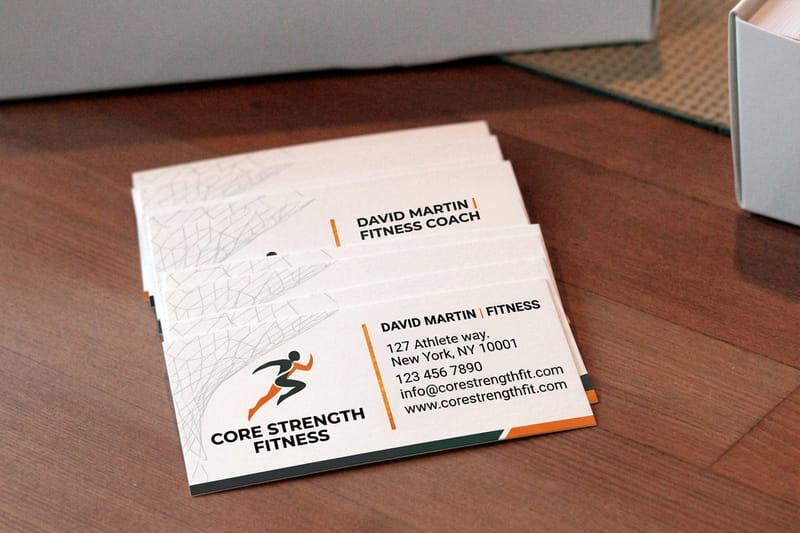 Product Fitness Business Cards The follow-up piece that matches the flyer, from $17.57.
 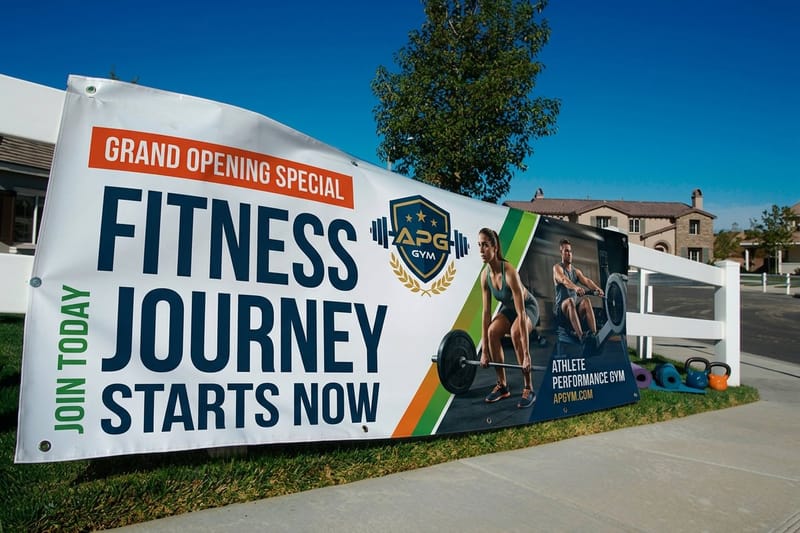 Product Fitness Banners Wall and fence banners that keep selling after the drop, from $79.
 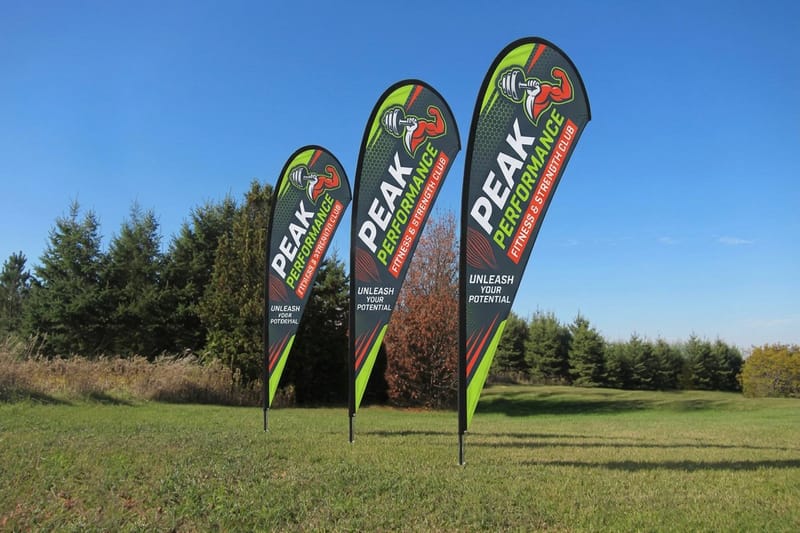 Product Fitness Flags Street-side flags that mark the door, from $108.75. Category Fitness Printing Every print product a gym or studio actually orders.
  Guide Flyer Distribution Best Practices Where to put the run so it is not walked into a bin.
  Article Creative Flyer Design Ideas Layout ideas that survive a two second glance.
 Ready to print your campaign?
Pick your size, drop in your design or start from a free template, and 4OVER4.COM prints it sharp on premium stock, as fast as your intake date needs.
Common questions about fitness flyers
What size should a gym flyer be?
Use 5.5 x 8.5 inches for almost everything. It runs two up on a press sheet, so the per piece cost is meaningfully lower than a full sheet, and it fits a hand, a jacket pocket and a gym bag without folding. Move up to 8.5 x 11 only when the content needs the room, which realistically means a monthly class schedule or the rules of a challenge. Drop to a 4.25 x 5.5 handbill when the flyer is handed over person to person at an expo or on the street, where a smaller piece is easier to give and easier to take.
Do flyers still work for gyms, or is it all social media now?
They still work, but only for a specific job. A flyer is good at putting a dated, low commitment offer in front of people who live or work within a short walk or drive of your door, which is the entire catchment a gym has. It is poor at selling high ticket personal training packages, because that decision needs more trust than a sheet of paper can build. Treat the flyer as the thing that gets someone through the door once, and let the room, the staff and the follow-up do the selling after that.
What paper should a fitness flyer be printed on?
For a standard drop, 100lb gloss text. It is the cheapest respectable flyer stock, it holds color well and it stacks neatly. If the flyer sits in a counter holder for weeks or has to stand up on its own, go to 100lb gloss cover or a 14pt to 16pt cover weight instead. If people are meant to write on it, such as a monthly class schedule that goes on a fridge, use 70lb or 80lb uncoated text, because ballpoint ink will not take on a gloss coating and marker smears on it.
How many flyers should I print for a neighborhood drop?
Around 500 as a floor for a walked drop, because anything less does not justify the time on foot. A partner counter needs only 100 to 200 at a time, and an event table usually burns through roughly twice what you planned for. Resist ordering thousands to reach a lower unit price when the offer has a date on it, since the sheets expire when the deadline does. Print to the lifespan of the offer, see which locations produced, then reprint the version that worked.
Why do my bright brand colors look dull when printed?
Because the neon greens, electric blues and hot pinks that fitness brands favor sit outside what CMYK ink can reproduce. A screen makes those colors with light, and a press makes them with four inks on white paper, so the brightest end of the range flattens out. Build the artwork in CMYK rather than converting at the end, and if a specific shade is central to your identity, order a proof before the full run. Gloss coating recovers a little saturation compared with matte, though it also adds glare under gym lighting.
