
The 12-Piece Farmers Market Vendor Suite That Sells Out Stalls
A market booth gets four seconds of a passing shopper's attention. These are the twelve print pieces that win those seconds, sell while you serve the line, and follow the customer home in the tote bag.
The farmers-market vendor suite is twelve print pieces that make a booth findable, sellable, and memorable: a fabric table cover, feather flag, retail banner, die-cut hangtags, retail labels, business cards, die-cut stickers, tote bags, retail counter cards, rubber stamps, yard signs, and rack cards. The flag, banner, and yard signs pull shoppers in, the cover, tags, counter card, and stamp sell the table while you are busy, and the cards, stickers, totes, and rack cards keep selling after the market closes.
The picks
Twelve products, from the table cover to the hangtag
Start here. The twelve run from 100 business cards at $17.57 to a $225 table cover in 9oz polyester, sized 84 by 126.5 in for a 6 ft table or 84 by 150.5 in for an 8 ft one, numbered in the order a vendor usually needs them. Read on for what each piece does on market day.

The countdown
What a farmers market vendor prints before opening day
Nothing here has to be ordered in one go. This is the order the twelve pieces are usually printed in, counting back from your first Saturday, so the big fabric pieces are already made while the paper pieces are still being tweaked. The table cover and the 8 to 15 ft feather flag come first, because they are the two pieces you buy once for the whole season. Every piece prices your exact quantity live above.
Design and print help
One look from the flag to the label
A booth brand is built from repetition across fabric, vinyl, and paper. Lock the logo once in the online designer for the 9oz polyester cover, the 13oz vinyl banner and the paper hangtags, then check the free proof, because the cover and label colors are the ones you live with all season.
How they work together
A market Saturday, in three moves
A farmers market vendor does the same three things every Saturday: get found from the far end of a row of identical white tents, sell from a table you cannot always stand behind, and send people home able to find you again on Monday. The twelve pieces are grouped below in that order, so you can print one group at a time instead of guessing what matters first.
Each piece owns a distance: across the market, at the table, and after the close. Print the whole suite and every distance keeps selling.
The flag rises above the crowd so regulars and newcomers can steer toward you from the far end. The banner names you and what you sell the moment the tent is in view, and yard signs point the way from the parking rows and the roadside stand.
The cover makes the table a storefront, tags and labels price and pitch every item while you serve the line, the counter card sells the bundle at the pay point, and one rubber stamp brands every kraft bag on demand. The booth works even when you are busy.
A card and a sticker in every bag carry your name past 2 p.m., the branded tote advertises all the way home, and the rack card hands shop buyers the wholesale story: reorders, wholesale asks, and a customer who finds your tent first next weekend.
1. Fabric table covers: the folding table becomes a storefront
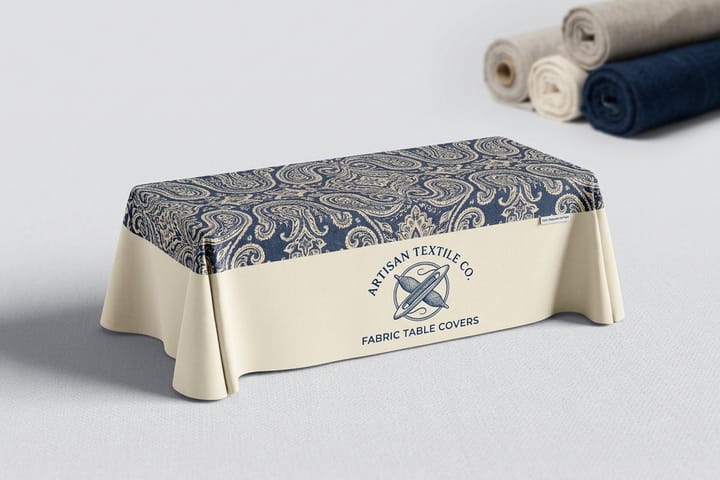
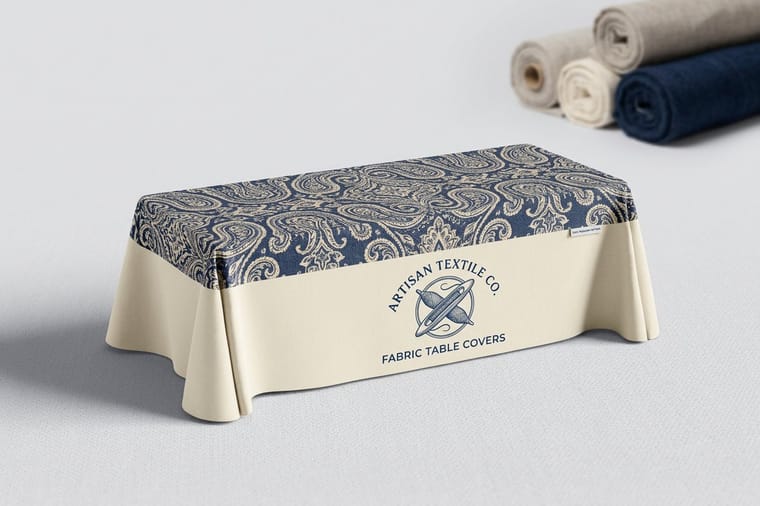
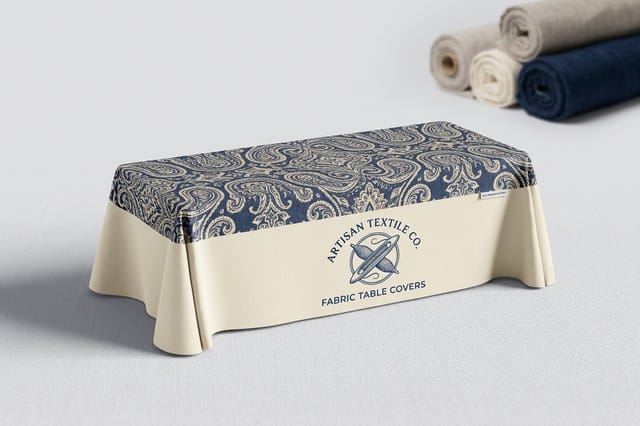
Every market booth starts from the same folding table, and the cover is what decides whether yours reads as a hobby or a brand. A fitted fabric cover with your logo across the front turns the largest surface in the booth into a storefront sign at exactly the eye level of a browsing shopper.
Markets hand out two table sizes, so fabric table covers are cut for both: 6 ft and 8 ft. Take the fitted cut when the table is yours and the width never changes, because fitted corners stay square in wind and the fabric does not creep sideways when three shoppers lean on the front edge at once. Take the throw cut when the market supplies the tables and the size can change on you, because a throw drapes over either a 6 ft or an 8 ft top and still hangs to the ground at the front. Both come open at the back, which is where the crates, the cooler, and your stool live.
Choose a full-color dye-sub print rather than a plain throw with a small logo: the cover is your one big canvas, so let the brand color own it. That is about the artwork, not the cut, since a throw prints edge to edge too. It also hides the crates and coolers underneath, which cleans up the whole stall. Machine-washable fabric means it looks opening-day sharp every Saturday of the season, and dye-sub color is in the fibers rather than sitting on top, so it survives the wash instead of cracking off the way a screened logo does.
Of everything in this suite, the cover changes the booth's perceived price point the most. Vendors routinely notice shoppers handling goods more carefully at a branded table, because presentation sets expectations before the first word.
2. Feather flags: found from the far end of the row
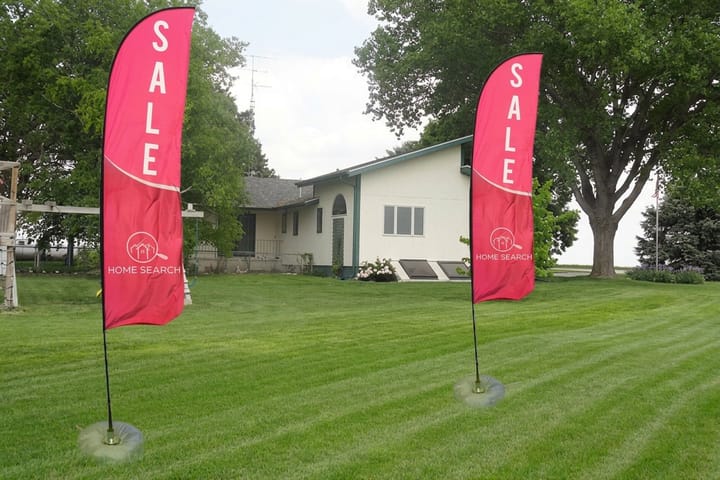
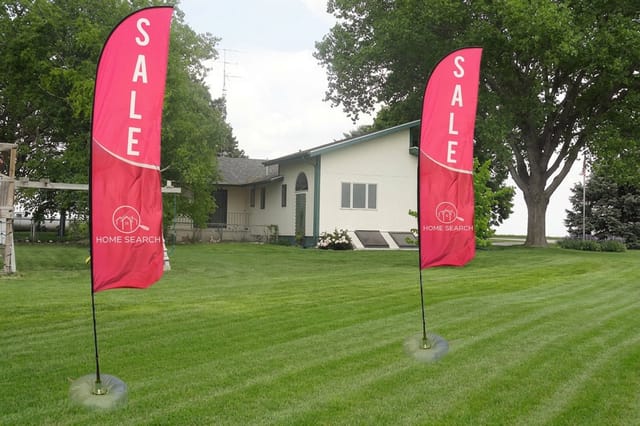
A farmers market is a grid of identical tents, and shoppers navigate it by what sticks up. A feather flag with your name or product word on it is visible over the crowd from the far end of the row, which does two jobs at once: it recruits new browsers, and it lets returning customers walk straight to you.
Keep the flag to one or two words and your mark, set vertically, in your loudest brand color. Movement does the rest, because the fabric swims in any breeze and eyes go to motion. The hardware breaks down to fit a hatchback, and setup is genuinely a two-minute job at 7 a.m.
If you sell at multiple markets, the flag is the thread of continuity. People who saw you at Saturday's market recognize the flag at Wednesday's, and recognition is the beginning of being a regular stop.
3. Retail banners: what you sell, said from thirty feet
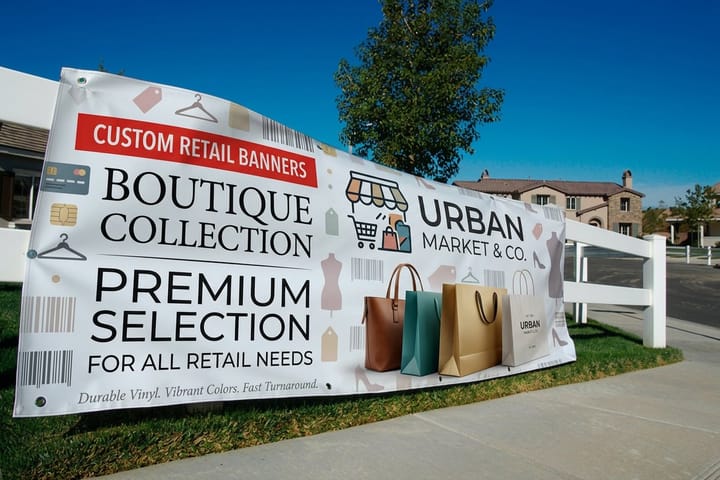
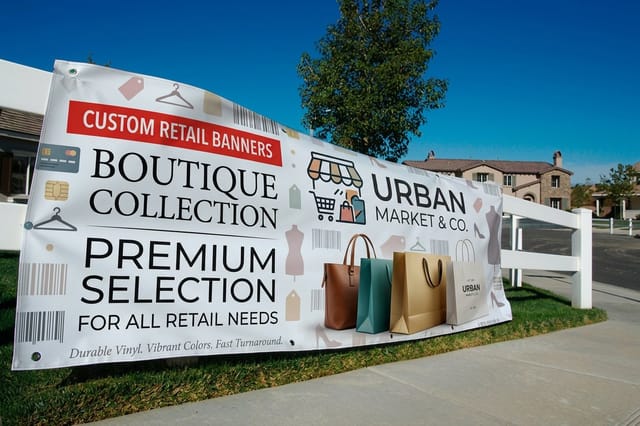
The flag says you exist; the banner says what you are. Tied across the tent frame or the table front, it carries your name and your category, fresh flowers, small-batch hot sauce, cut-your-own herbs, in letters a shopper reads from thirty feet without breaking stride. That is the moment they decide to angle toward your booth.
Write it as name plus category plus at most one hook. Grommets every couple of feet make it tie to any frame, and outdoor vinyl takes a whole season of sun without fading. The standard banner sizes guide matches widths to tent frames, and banner material types settles vinyl versus mesh for windy pitches.
Order the size that fills the frame edge to edge. A small banner floating in a big tent front reads as tentative, and markets reward confidence.
4. Die-cut hangtags: the salesperson tied to every jar
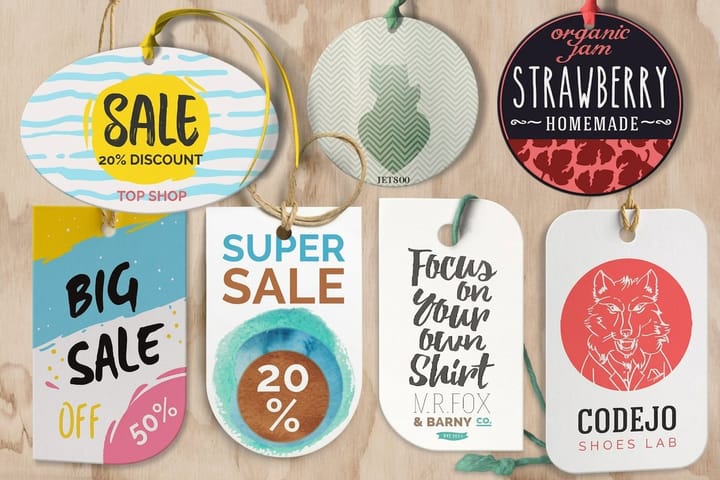
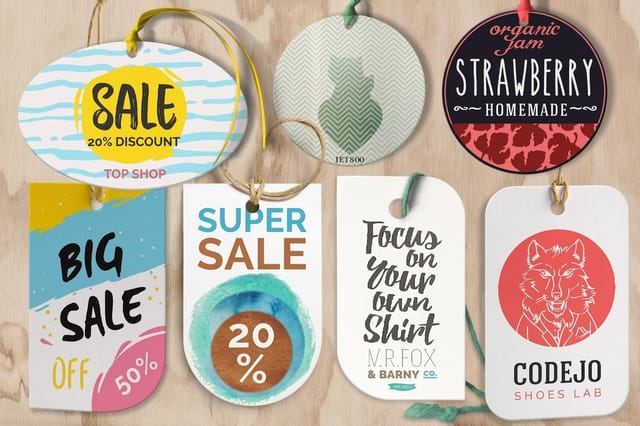
On a busy market morning you can talk to exactly one customer at a time, while ten more pick things up, look for a price, and put them back down. The hangtag is how those ten get served: price on the front, a one-line story on the back, your brand on both. Tagged goods answer their own questions and sell while you make change.
A die-cut shape, a leaf for produce preserves, a hexagon for honey, lifts the tag from price sticker to packaging. Write the story line like you would say it across the table: what it is, what makes it yours. Browse shapes and stocks at die-cut hangtags and keep the string generous so tags swing and catch light.
Consistency matters more than cleverness: when every item wears the same tag family, the whole table reads as a product line rather than a pile of separate crafts.
5. Retail labels: home goods that look shelf-ready
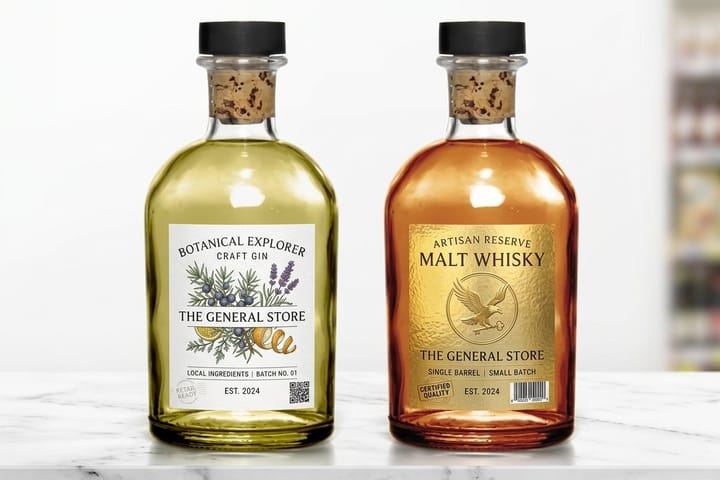
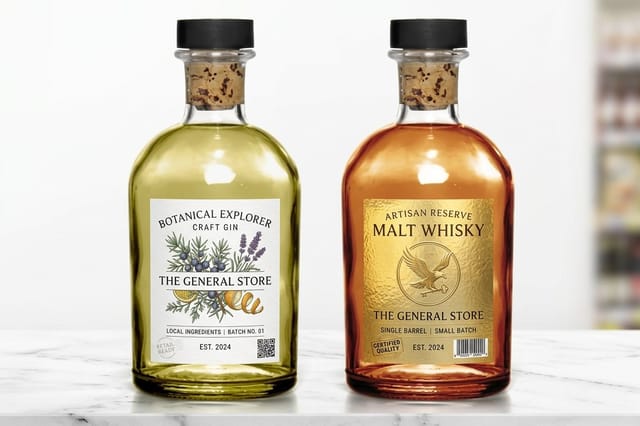
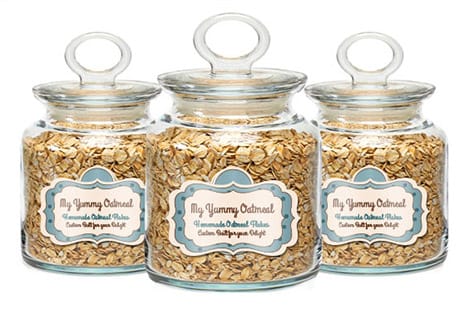
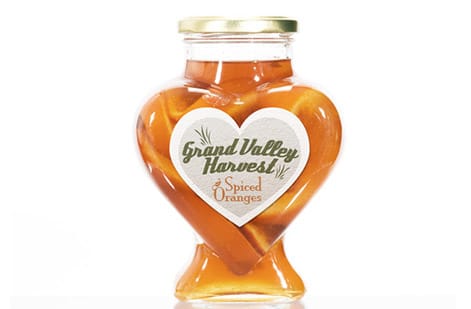
For jarred, bottled, and bagged goods, the label is the packaging, and the packaging is most of the perceived value. The same salsa wears a hand-written sticker at one price and a clean printed label at another, and shoppers do not taste before they judge. A professional label is what earns market products their way into gift baskets and, eventually, onto store shelves.
Get the size right before the design: the guide on choosing the correct label size saves the classic mistake of art that wraps into itself on a curved jar. Include the essentials, name, ingredients or materials, weight, your brand and contact, and pick a moisture-rated stock for anything refrigerated. The full range lives under labels printing.
Labels are also your wholesale audition. The shop owner browsing the market is deciding whether your product would look right on their shelf, and the label is the whole argument.
6. Business cards: the booth that fits in a tote bag
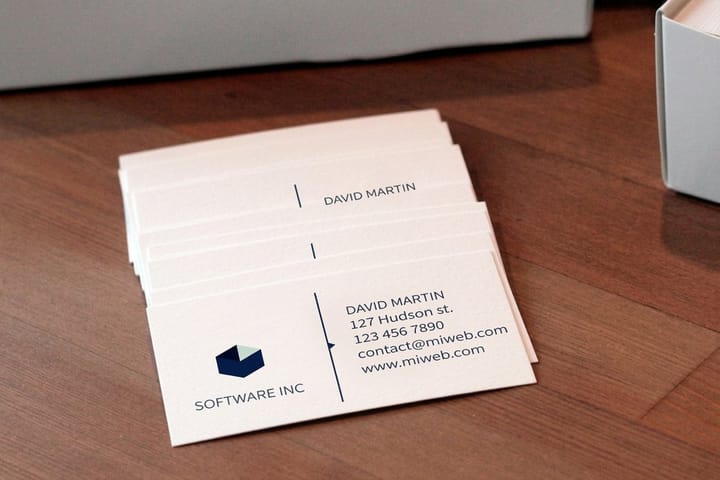
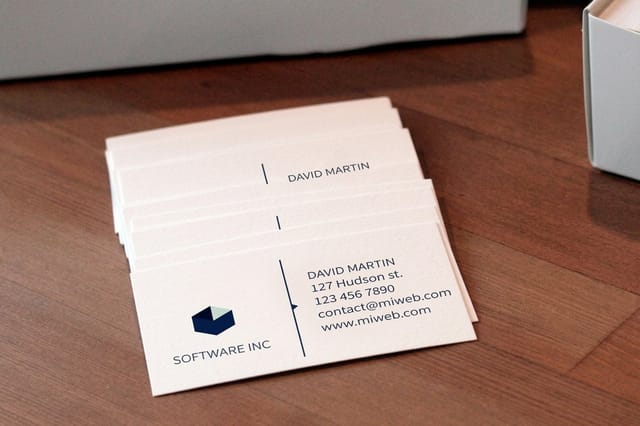
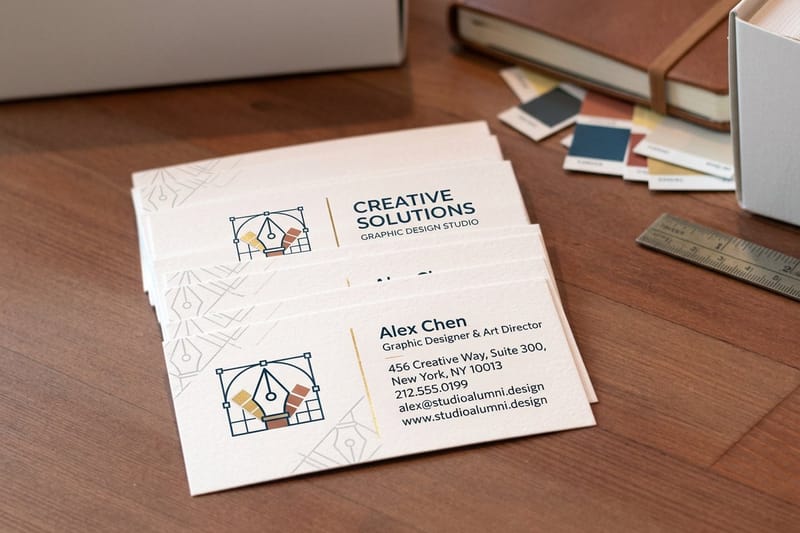
The market closes at 2 p.m., and everything you did not sell stops selling, unless something rode home with the customer. A business card in every bag is the booth in miniature: your name, what you make, and where to order between markets. It is how a Saturday customer becomes a Tuesday online order.
Print the market schedule or an order QR code on the back, because those are the two questions people actually have later. A card also does quiet wholesale work: cafe owners and shop buyers browse markets constantly, and they take cards from vendors who look organized. The stock and finish options at business card printing let the card match the rest of the booth.
Drop one in every bag without asking. The cost per card is nearly nothing, and the one that lands with a wholesale buyer pays for the year's supply.
7. Die-cut stickers: the logo that leaves the market
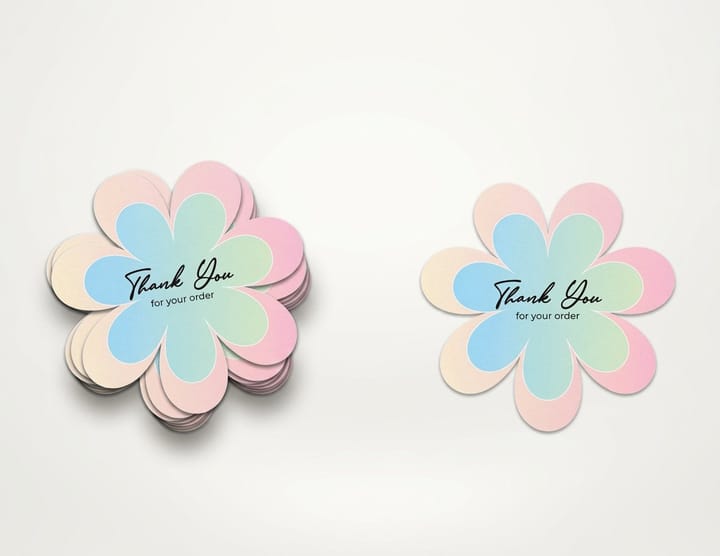
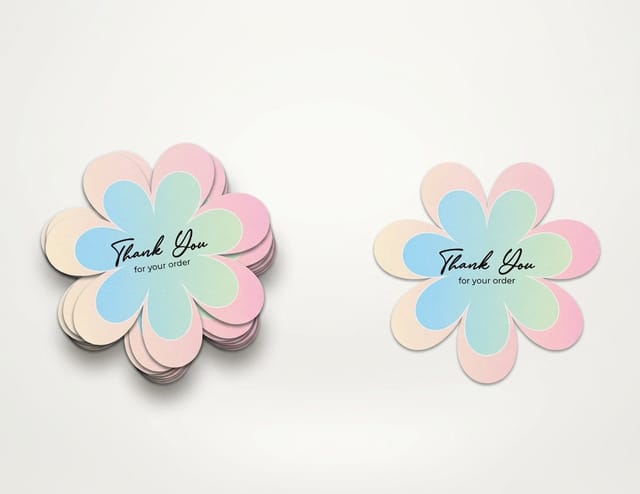
Market shoppers are exactly the crowd that puts stickers on water bottles, laptops, and bumpers, and a die-cut sticker of your mark is the cheapest way your brand travels beyond the tent. Toss one into every bag, give one to every kid, and your logo starts appearing around town on surfaces you could never buy.
Design it as a badge people want, not an ad they tolerate: your mark in its shape, strong color, nothing else. Vinyl survives dishwashers and weather, so the sticker outlives the season. The rundown in how to make stickers covers materials, and sticker cost pricing shows how volume drops the per-piece price to pocket change.
Some vendors sell them too, and that works, but the giveaway math is better: a sticker in the wild is a tiny billboard that cost you cents and never expires.
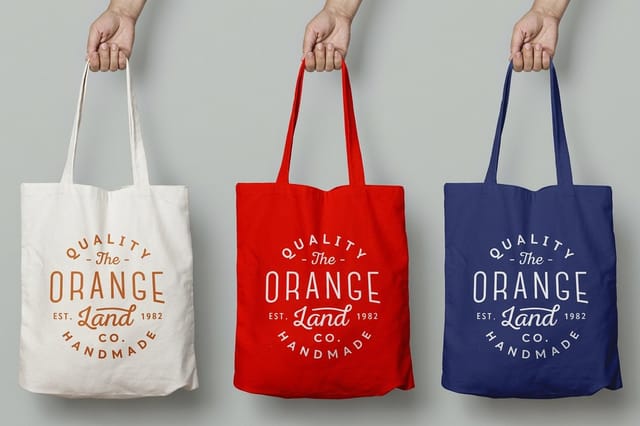
8. Tote bags: the purchase that advertises all the way home
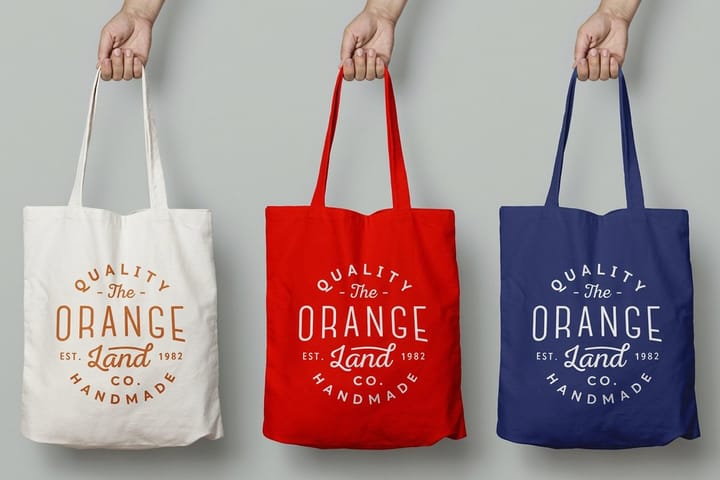
Market shoppers arrive planning to carry things, and the vendor who hands over a sturdy branded tote wins twice: the sale walks the aisles for the rest of the morning with your logo facing the crowd, and the bag gets reused for groceries and errands for months. It is packaging, signage, and a repeat-visit reminder in one piece of fabric.
Print the mark big and simple so it reads across the market, and offer the tote as a small paid add-on or a freebie above a spend threshold rather than giving it to everyone. The comparison in cotton vs canvas vs recycled totes matches the material to your brand, and tote bags configures sizes and quantities.
Watch what happens by mid-season: your totes start arriving at the market on returning customers, and every one of them is a walking endorsement other shoppers recognize.
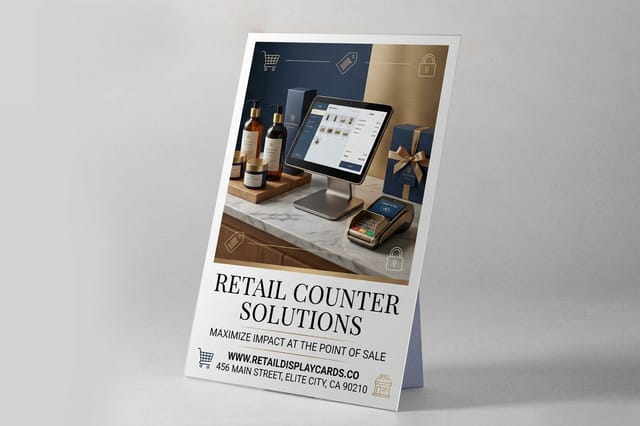
9. Counter cards: the pitch that works the pay point
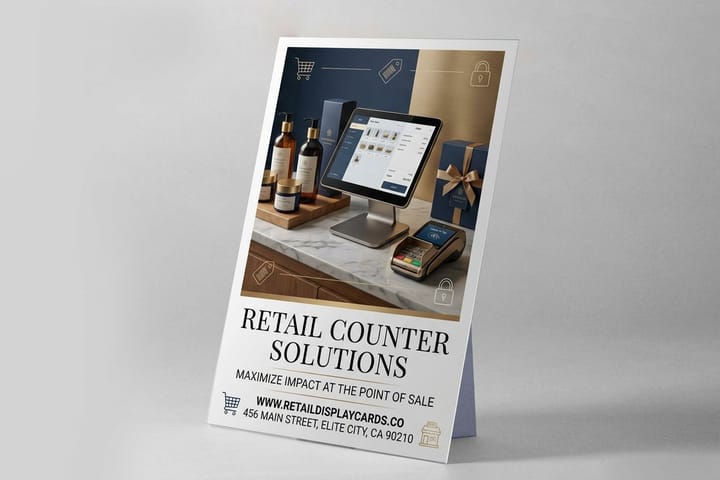
Every sale at your booth funnels through one square foot of table where money changes hands, and whatever stands there gets read while you count change. A counter card is that spot's salesperson: three jars for the price of two, join the CSA, new flavor this week, back next Saturday. One standing card converts the moment when the customer's wallet is already open.
One offer per card in big type, swapped as the season and inventory change. A rigid card with a built-in easel stands up to wind better than a leaning sign, and printing a small set per season keeps the message fresh. Configure sizes and stocks at retail counter cards.
The bundle offer is the market classic for a reason: it moves volume in the hours when the crowd is thick and thins out exactly the inventory you do not want to pack up at 2 p.m.
10. Rubber stamps: packaging on demand, for pennies
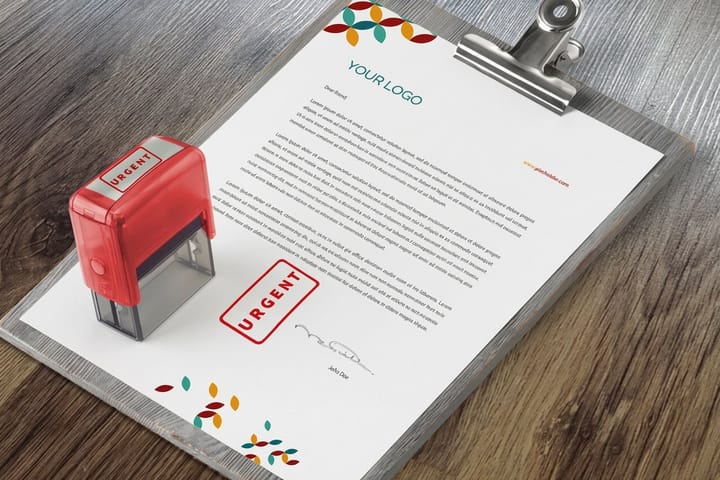
Custom printed packaging has minimums; a rubber stamp does not. One stamp of your logo turns plain kraft bags, boxes, and tissue into branded packaging at the exact moment you need it, one impression at a time. For a vendor whose volumes shift week to week, it is the most flexible branding tool money can buy, and it costs about as much as a jar of your own honey.
Get the mark redrawn in single-color line art so it stamps crisply, and size the stamp to the smallest surface you brand. A second stamp makes a loyalty card on the spot: stamp a card square per visit, tenth visit free. Care is trivial, as how to clean rubber stamps shows, and rubber stamps configures sizes.
The hand-stamped look also sells at a market: it reads as small-batch and personal, which is exactly the story your products are telling.
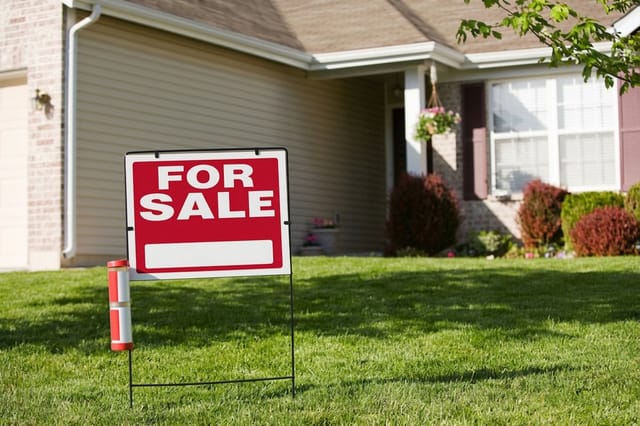
11. Yard signs: the arrows that point buyers to the booth
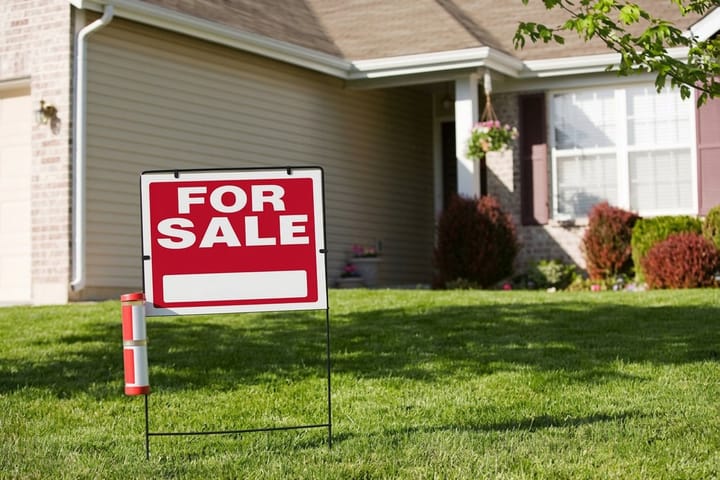
Half the battle on market day happens before the shopper reaches the rows: the parking field, the street corner, the path from the far entrance. Cheap corrugated yard signs with your name and an arrow work all of it, and the same signs moonlight the rest of the week as roadside farm-stand markers that pull cars off the county road.
Design them to be read at speed: your name, an arrow, three words at most. H-stakes plant in grass and gravel in seconds. Our how to make yard signs covers layout and stakes, and durable yard sign materials keeps them standing through a wet season.
A set of five signs costs about what one lost customer would have spent. Plant them on the routes shoppers actually walk and the booth gets found from every direction.
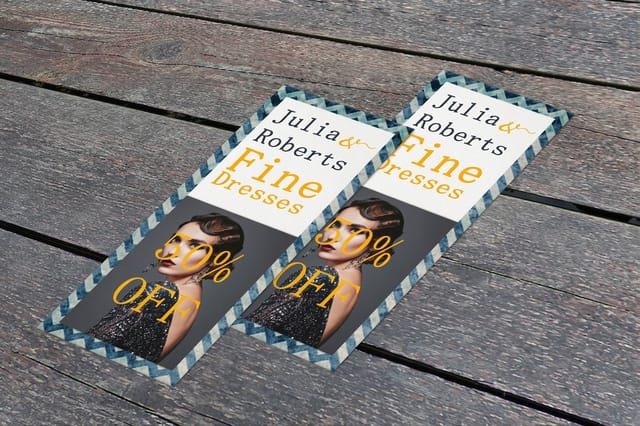
12. Rack cards: the wholesale story a buyer can take away
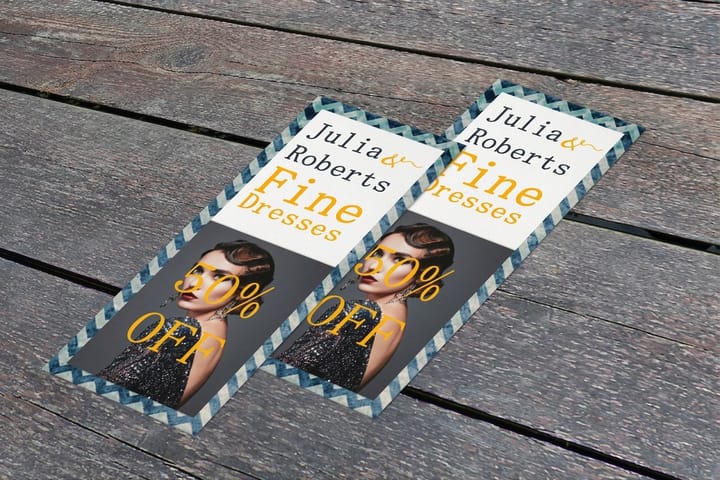
Shop owners, cafe buyers, and CSA prospects browse markets constantly, and they all end the conversation the same way: do you have something I can take? A rack card is that something. One tall panel with your product line, your story, your prices at wholesale volumes, and your contact turns a pleasant booth chat into a follow-up email on Monday.
Lead with the products and a photo of the goods dressed in their labels, then the one-paragraph story, then the contact block. The format is explained in what are rack cards, and creating a captivating rack card design keeps the narrow canvas selling.
Keep a short stack behind the table, not on it. Handing one over deliberately, to the person who asked the wholesale question, makes it a business document instead of a flyer.

Specs and pricing
Anchor the suite: table cover specs and live pricing
Two pieces carry the whole farmers market vendor suite: the fabric table cover at the table, in 6 ft and 8 ft, fitted or throw, and the feather flag above the tent. One brands the surface a shopper is already standing in front of, the other is the reason they walked over. Price both here, lock the brand color, then match it across the other ten pieces so the flag, the banner, and the label all read as one booth.
The table cover is the piece that transforms the booth, so it anchors the order. Here are the live specs and price-per-unit for fabric table covers at 4OVER4.COM, straight from the configurator.

| Quantity | Price Per Unit | Total |
|---|---|---|
| 1 | $225.00 | $225.00 |
| 2 | $222.50 | $445.00 |
| 3 | $221.67 | $665.00 |
| 4 | $218.75 | $875.00 |
| 5 | $219.00 | $1,095.00 |
| 6 | $217.50 | $1,305.00 |
| 7 | $216.43 | $1,515.00 |
| 8 | $215.63 | $1,725.00 |
Wally explains the suite
Twelve pieces, one booth, printed to sell out by noon
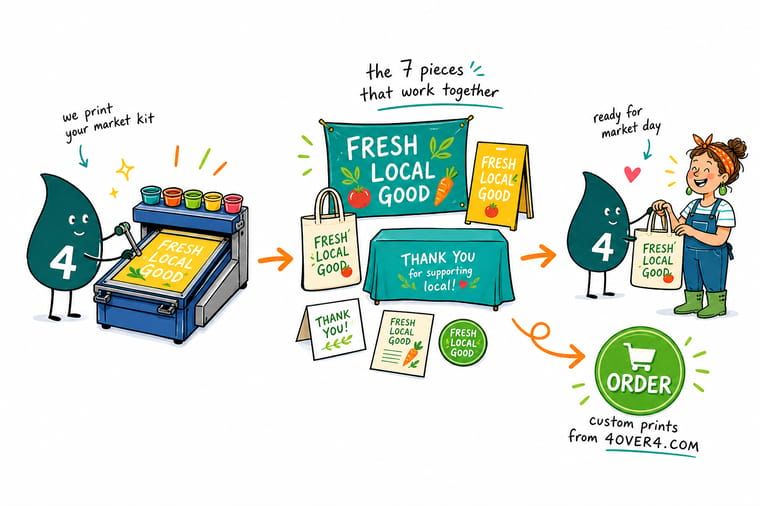
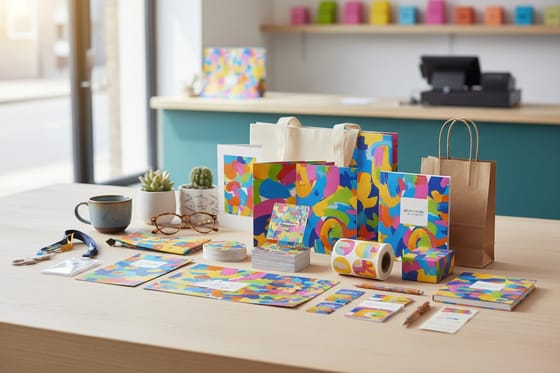
Wally sets up a booth the way shoppers experience it: the yard signs and flag catch them at fifty feet, the banner names you at thirty, the covered table earns the stop at ten, and the tags, labels, and counter card close the sale at arm's length. Then the card, sticker, and branded tote ride home to book the next one, while the rack card works the wholesale buyers. Keep one brand color on all twelve and every distance wears it.
Shop retail printing →See it in use
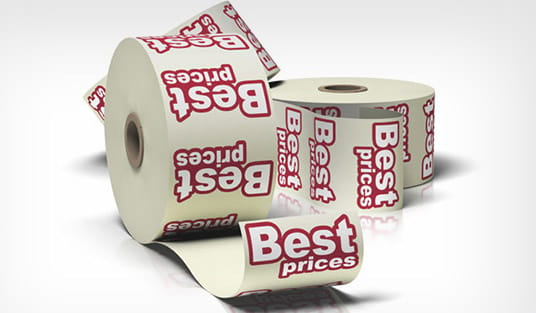
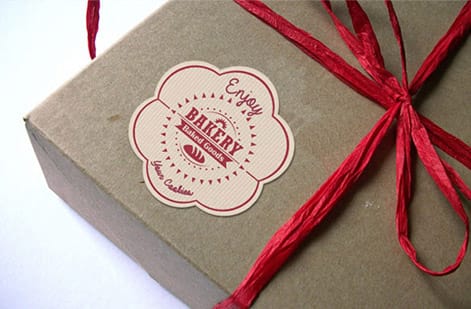
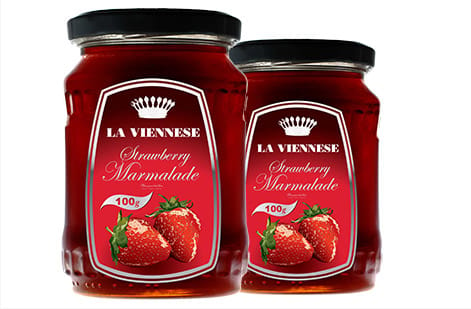
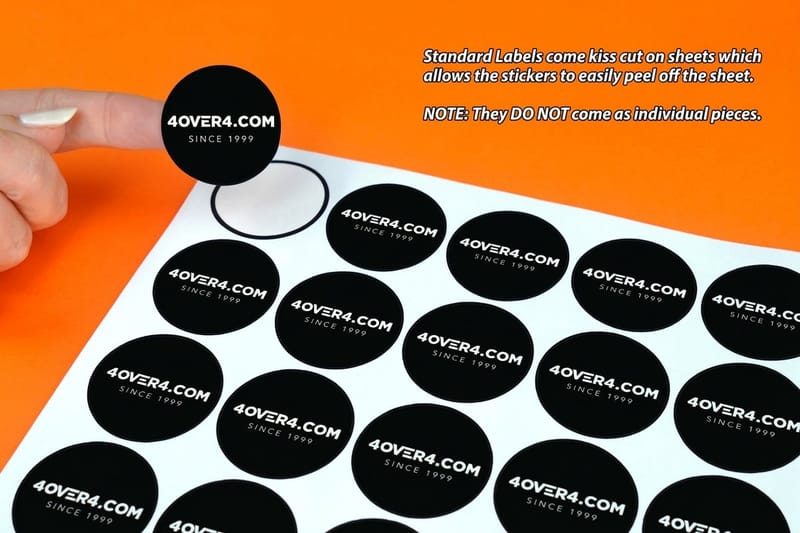
Labels, printed and trimmed


Explore more
Where to go next

By the numbers
One suite, printed for market day
Common Questions
Common questions about the farmers-market vendor suite
What is in the farmers-market vendor suite?
Twelve print pieces that outfit a market booth end to end: a fabric table cover, feather flag, retail banner, die-cut hangtags, retail labels, business cards, die-cut stickers, tote bags, retail counter cards, rubber stamps, yard signs, and rack cards. The flag, banner, and yard signs make you findable, the cover, tags, counter card, and stamp make the booth sell, and the cards, stickers, totes, and rack cards keep selling after the market closes.
What should a new market vendor print first?
The table cover and the hangtags. The cover instantly upgrades a bare folding table into a branded storefront, and tags let your goods answer price and story questions while you handle customers. Add the flag and banner once you have a regular pitch, because being findable matters most when people are coming back to look for you.
Why does a feather flag matter at a market?
Markets are a grid of identical white tents, and shoppers navigate them by landmarks. A feather flag rises above the crowd and is visible from the far end of the row, which is exactly how a returning customer finds you again and how a new one notices you exist. It packs into a car and sets up in two minutes.
What goes on a hangtag versus a label?
The label is the product's packaging: name, ingredients or materials, weight, and your brand, applied flat to the jar, bar, or bag. The hangtag is the salesperson: price, a one-line story, and the brand, tied on so it swings and gets noticed. Products with both look shelf-ready, which is what lets a market vendor charge retail prices.
How weatherproof are these pieces?
The fabric cover, feather flag, and banner are made for outdoor use and handle sun, wind, and the occasional shower through a full market season. For labels on refrigerated or damp goods, choose a stock rated for moisture in the configurator. The paper pieces, cards and tags, ride under the tent and in bags, so standard stocks hold up fine.
How do I make a small booth look like a real brand?
Repetition. One logo, two colors, one typeface on the cover, banner, flag, tags, labels, and cards. When every surface repeats the same identity, a six-foot table reads as a business with a story rather than a garage sale. Send the same color values to every product page so the colors stay close across fabric, vinyl, and paper.
Can I reorder just the consumables?
Yes. The cover, flag, and banner are one-time buys that last seasons, while tags, labels, cards, and stickers are consumables you reorder as you sell. Each product has its own configurator, so topping up labels before a busy weekend takes a few clicks and arrives matching the rest of the booth.
What signage do farmers markets require from vendors?
Rules are set by each market and by your state, so read the vendor handbook you signed, but the same four items come up almost everywhere. First, the name of the farm or business displayed at the booth, large enough to read from the aisle, which is the job of the retail banner across the tent rail. Second, a price on every item, either on a counter card at the pay point or on a die-cut hangtag tied to the jar or bundle. Third, on packaged food, the product name, the ingredients, a net weight, and who made it and where, which is what the retail label carries. Fourth, proof behind any claim such as organic or grass fed, so print the claim only where you can show the paperwork that backs it. Vendors selling from a roadside stand or a market with its own parking usually add yard signs to steer drivers in.
What fits on a 10 by 10 booth?
A 10 by 10 tent holds one 6 ft or 8 ft table across the front with a fabric table cover over it, a second table or shelf along one side for overflow stock, and room for two people to work behind. The feather flag goes just outside a back corner on grass or a weighted base, not inside the tent, so it clears the canopy and can be seen over the crowd from the far end of the row. The retail banner ties to the front rail of the frame, above the heads of the people at your table. Counter cards sit at the pay point, hangtags and labels ride on the goods themselves, and yard signs go out at the parking rows rather than in the booth. Keep the aisle side of the table clear: shoppers stop where they can reach the product.
Get Started
A fabric table cover is $225.00 and prints in 4 business days
A fabric table cover is $225.00 for one and a feather flag $108.75, both in 4 business days. Hangtags are 100 for $36.26 and rack cards 50 for $42.84.
Legal Disclaimer
Gold Standard guarantees apply to all standard orders placed through 4over4.com. Price match requires verifiable proof of a competitor's published price for an equivalent product with matching specifications and turnaround time. Satisfaction guarantee covers manufacturing defects and print quality issues. Contact support with order number and documentation.
