
5 Event Promotion Print Products That Make Every Handout Count
Most event print gets glanced at once and dropped. These five pieces are the ones that keep working after the glance, because each holds something the reader needs later: a date, a seat, a door.
The five print products that promote an event are flyers, posters, tickets, banners and feather flags. Posters and flyers put the date in front of people while the evening is still free, numbered tickets take the money and count the room before the doors, and a banner over the entrance with a flag at the turn stops arrivals walking past. Print them together and one artwork carries the whole run.

The picks
The five pieces, priced live
Start here. These are the five products that carry an event from first announcement to the door, each priced live from its own configurator. Order them together so the date, the color and the turnaround match, then read on for what each one is actually for.
Design and print help
Keep one event across five formats
Paper, vinyl and polyester all behave differently, so the artwork needs help to read as one event. These 4OVER4.COM services do that work before the files reach the press.
How they work together
Print in the order the crowd finds you
Each piece owns one moment in the run-up. Cover all three stages and nobody misses the date, nobody pays at the door in cash, and nobody stands outside wondering which entrance is yours.
Nobody clears a Saturday for something they heard about on Friday. Posters hold the date on a wall people pass twice a day, flyers put the same date in a hand. This is the only stage where lead time, not budget, decides the turnout.
A numbered, perforated ticket sold in advance is cash you hold and a headcount you can plan catering against. It also settles arguments at the door, because the stub is the record.
People who already decided to come still get lost. A banner over the door and a flag at the turn convert a confused arrival into a walk-in, and both come back out for the next date.
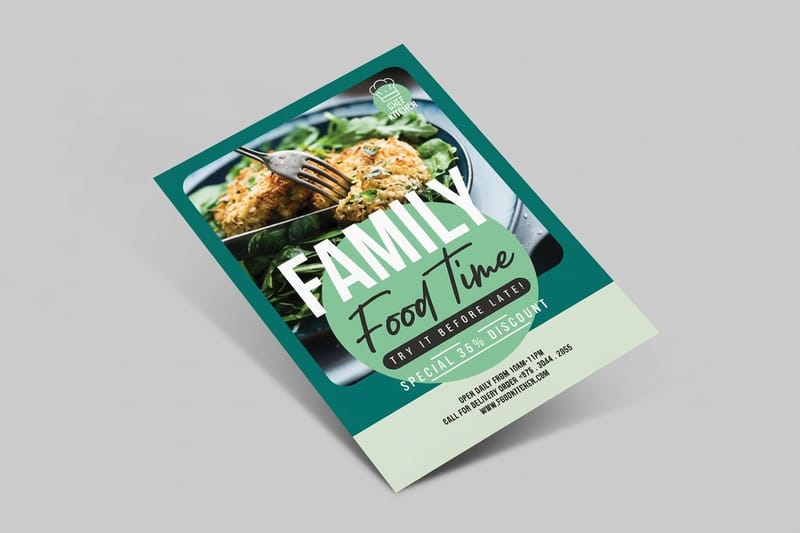
1. Event flyers: the handout that has to survive a pocket

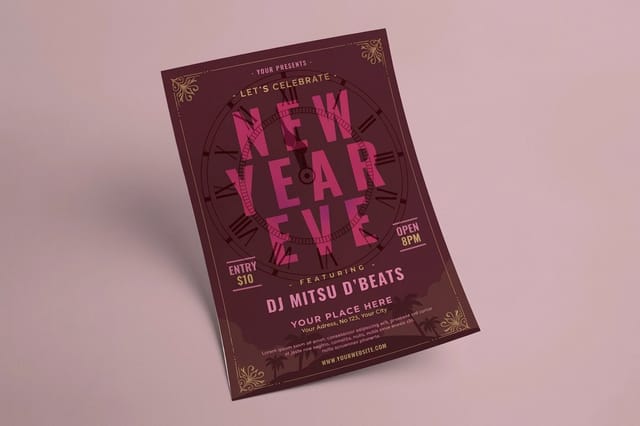
A flyer is the only piece in this kit that travels home with a stranger. That is its whole advantage and its whole problem. It gets handed over in three seconds outside a venue or lifted off a counter, and from there it either sits on a fridge until the date or it goes in a bin at the corner. What decides that is not the artwork. It is whether the date, the venue and one clear reason to come are readable while the person is still walking.
Size is the first real decision. The 8.5" x 11" letter sheet is the default, and it earns that spot because it fits a printer tray, a counter stack and an envelope without trimming. For street handouts the 5.5" x 8.5" handbill costs less per piece and is easier to pass across. Going the other way, 11" x 17" is effectively a small poster you can also hand out, and the tall 11" x 25.5" sheet swallows a whole festival lineup and still folds down. Six sizes, one full color press. If you are starting the layout from scratch, our walkthroughs on how to design flyers and how to make flyers cover the single-focal-point approach, and there is more flyer printing if you want a different stock.
One trade-off worth naming: folding options make a flyer feel like a program, but every fold buries half the message. For promotion before the event, print flat. Save the folded version for the door, where people already have a reason to open it.
2. Standard posters: the date that stays on the wall
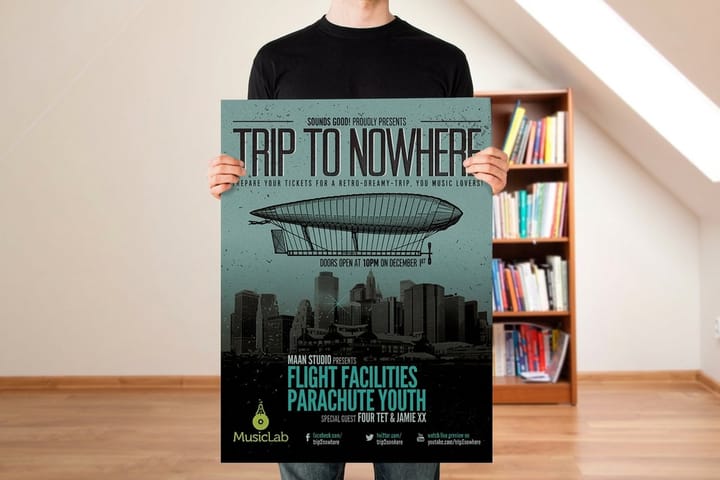
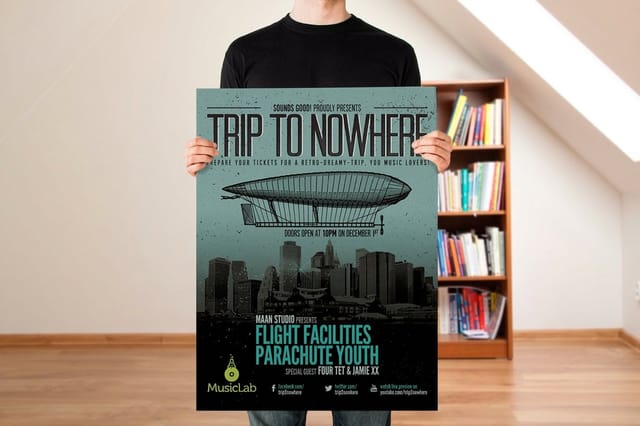
A poster does the one thing a flyer cannot: it repeats. The same person passes the same cafe window on Tuesday and Thursday, and by the second pass the date has landed. That repetition is why posters belong at the front of the campaign, weeks out, not in the week of the show when the evening is already spoken for.
Pick the size by viewing distance, because that is what size actually controls. 11" x 17" reads at arm's reach, which makes it a counter card or a lift lobby notice. 12" x 18" is the classic gig poster on a wall of other gig posters. 18" x 24" carries a corridor or a campus notice wall. 22" x 28" is built to be read from the pavement through glass, which is the size to choose for a storefront window. Custom sizes run anywhere inside that 11" x 17" to 22" x 28" range. Our campaign posters guide works through the hierarchy that keeps a poster legible in a crowded wall, and long posters covers the tall formats when you need a lineup rather than a headline.
Finish is a placement decision too. Gloss lifts photographic artwork but bounces light back at anyone reading it under a window, so for a sunlit storefront the matte option is usually the more readable choice. Browse the range at poster printing or read how to make posters before you commit the artwork.
3. Event tickets: the piece that collects the money and counts the room
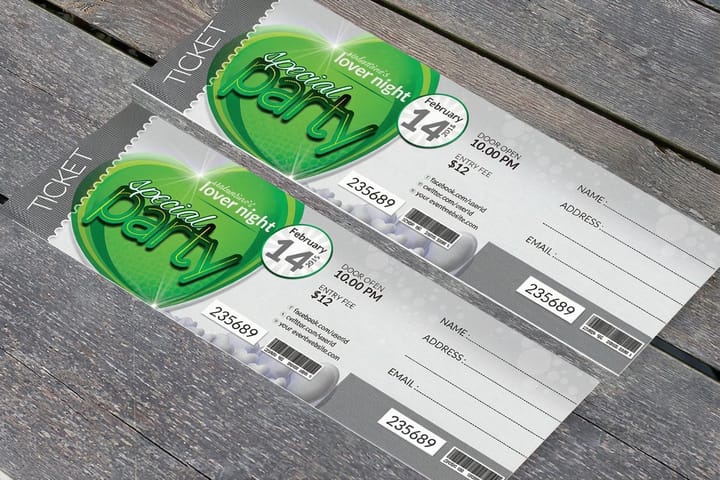
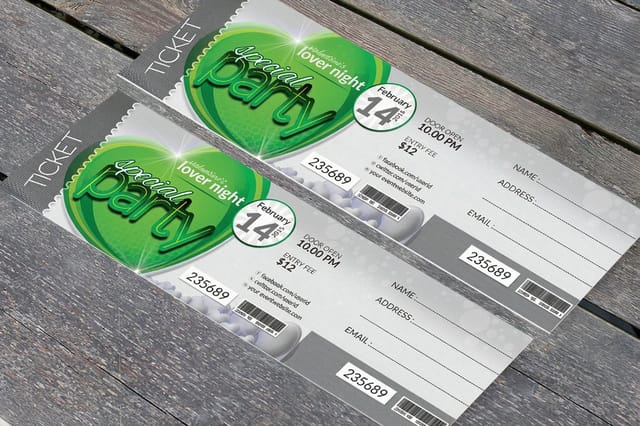
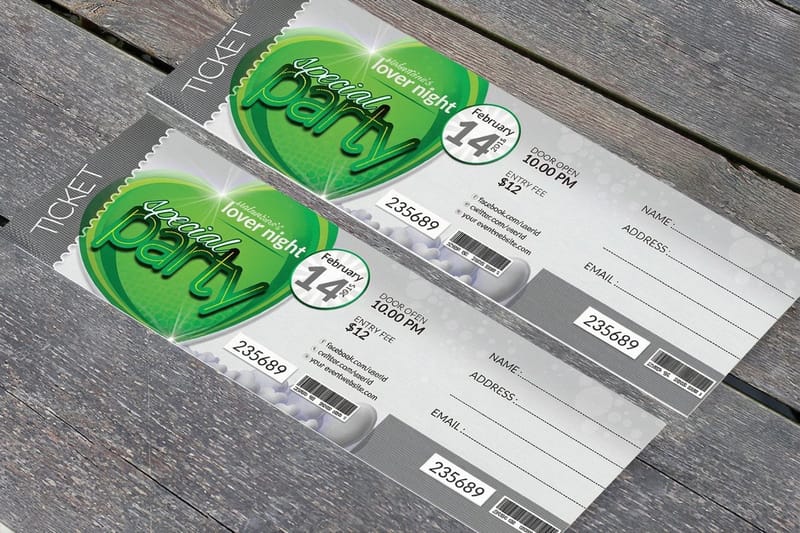
A printed ticket does two jobs at once. It takes payment before the day, which means you are planning catering and staffing against a real number rather than a hope. And it controls the door, because a numbered stub is a countable record that a screenshot on a phone is not.
Two options turn a printed card into an actual ticket. Black-ink sequential numbering gives every ticket a unique identity, so duplicates are obvious and reconciliation at the end of the night takes minutes. Perforation lets a volunteer tear the stub cleanly a hundred times in an hour without mangling the ticket. Add a heavier stock from the 15 paper types if the ticket is also a keepsake, and lighter if it is a wristband-style throwaway.
The pricing rewards ordering to capacity rather than to caution. Tickets start at $25.27 for 50, about 51 cents each. Three hundred run $60.42, six hundred run $92.26, and 3,000 come to $222.97, close to 7 cents each. Running short means paying the setup twice, so order for the room plus comps. See the full quantity ladder on event ticket printing, and pair the ticket with the flyer that sold it so the two carry the same date format.
4. Business banners: the entrance nobody should have to look for
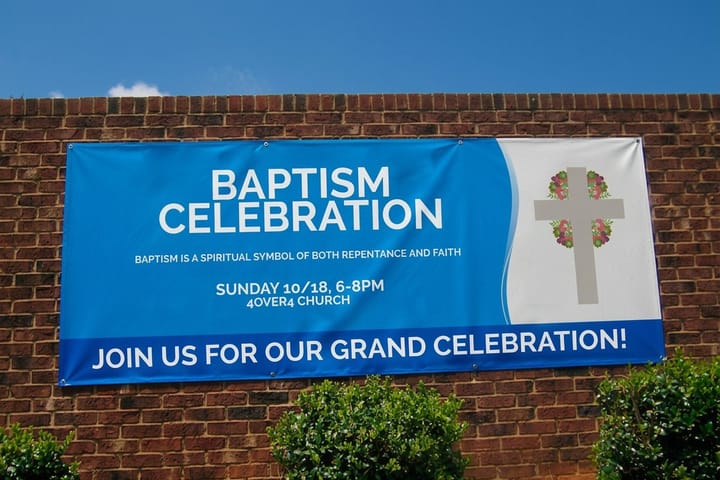
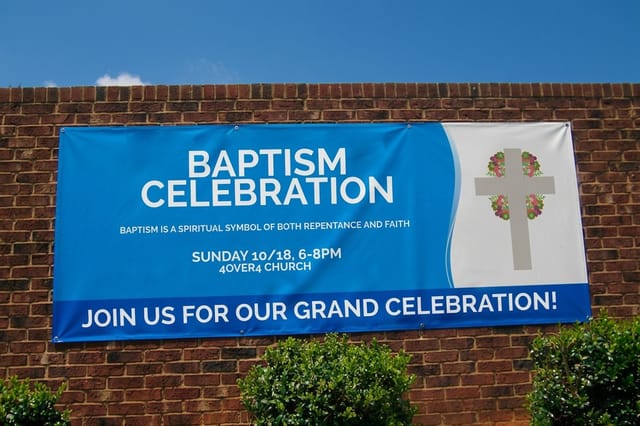
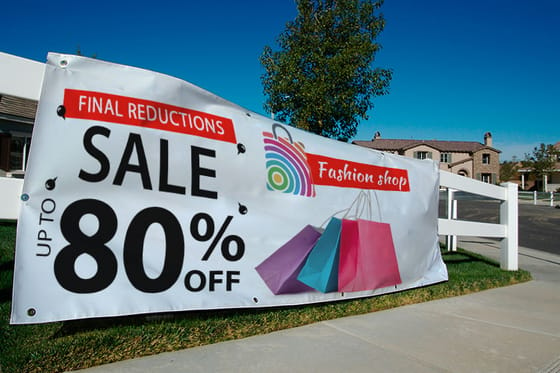
Every event loses people at the last hundred feet. They found the street, they are on time, and then they cannot tell which door is yours. A banner across the entrance closes that gap, and unlike a poster it is legible while somebody is still driving past looking for parking.
Set the copy by distance, not by taste. Allow roughly one inch of letter height for every 10 feet you want the words read from, which is why a large banner facing traffic carries a name and an arrow and almost nothing else. The two working sizes cover most jobs: 2' x 6' at 12 square feet fits a storefront window, a table front, an indoor hallway run or the top rail of a booth, and takes corner grommets with hems top and bottom. 4' x 12' at 48 square feet covers a building face, a fence line or a sponsor wall behind a stage, and wants grommets every 2 feet with reinforced hems on all four sides. Every size in the range is landscape, so plan the artwork wide.
The default 13oz scrim vinyl is the standard outdoor choice and it is what makes the banner reusable across dates. Measure the mounting point before you order, because finishing is the part people get wrong: a banner with no grommets where the fixings are is a banner you end up cable-tying through the print. More options at vinyl banner printing, and how to make banners covers the artwork side.
5. Feather flags: the marker that turns heads at the kerb
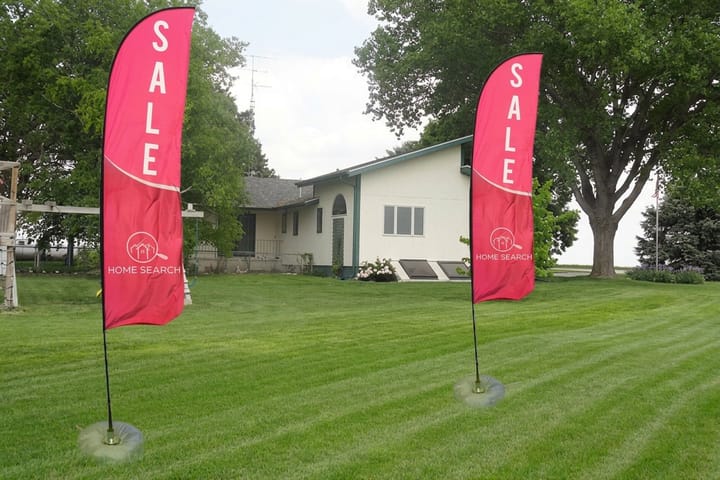
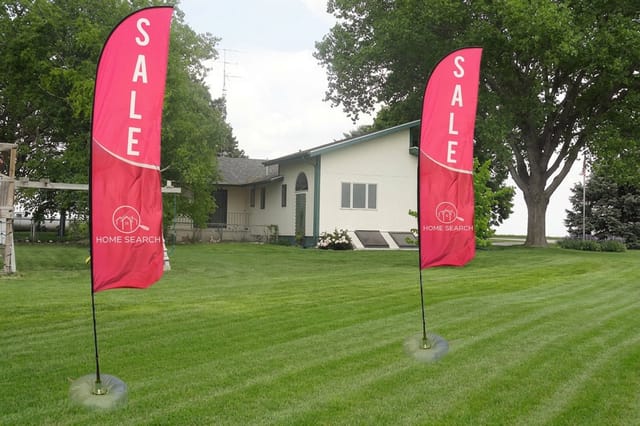
A feather flag works where a flat banner does not: at height, in the open, catching movement. On 3oz polyester it stands up to 15 feet tall and prints full color so it reads from both sides, which is what makes it useful at a turn-off, a car park entrance or the front of a market stall where people are approaching from two directions.
Two choices decide whether it fits your site. Hardware is either an outdoor stake base for soft ground or an indoor X-stand for a hall floor, and the pole sits on the left or the right so a pair can frame an entrance symmetrically. Blank templates are built at the real trim size and account for the curved top and the pole pocket, so your artwork is not swallowed by the sleeve. The 8-foot flag lays out at 24" x 81".
The honest limit is weather. A lightweight flag on a stake base in soft ground needs checking on a gusty day, and it is not a replacement for rigid signage that has to hold a position for months. For a weekend event, that is a fair trade for something one person can carry, plant and take home. If your event lives indoors, compare it against pull-up banner signs, which stand on a hard floor without a stake.
Specs and pricing
Anchor the kit: event ticket specs and live pricing
Tickets are the piece with the most decisions attached, from numbering to stock weight, and the one whose quantity you have to commit to first. Here are the live option groups and the price-per-unit ladder for event tickets at 4OVER4.COM.
| Quantity | Price Per Unit | Total |
|---|---|---|
| 50 | 50.5¢ | $25.27 |
| 100 | 42.8¢ | $42.84 |
| 200 | 25.8¢ | $51.62 |
| 300 | 20.1¢ | $60.42 |
| 400 | 17.3¢ | $69.20 |
| 500 | 15.6¢ | $77.99 |
| 600 | 15.4¢ | $92.26 |
| 700 | 15.2¢ | $106.55 |
Wally explains the kit
Five pieces, one date, printed to fill a room
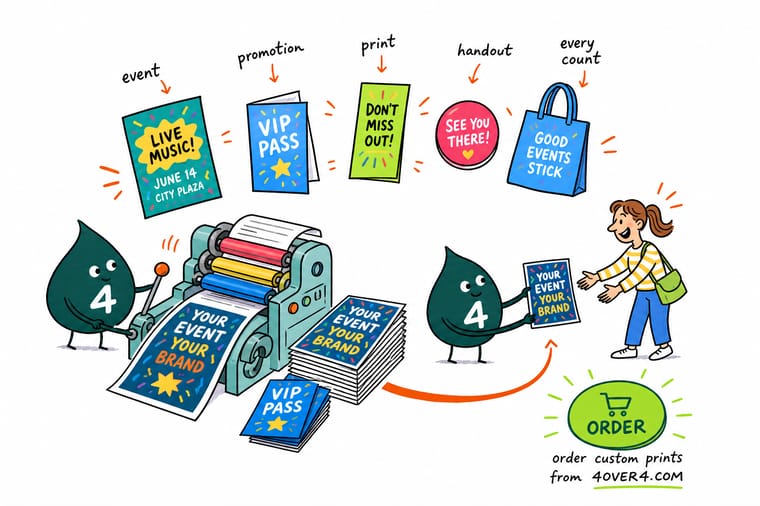
Wally runs the promotion backwards from the door. Posters and flyers go out early, while people can still clear the evening. Numbered tickets take the money and count the room. Then a banner over the entrance and a flag at the kerb catch everyone who already decided to come. Same event name, same color, same date format on all five, printed together at 4OVER4.
Browse event print kits →See it in use
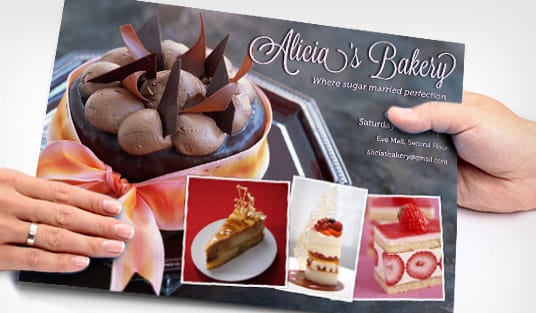
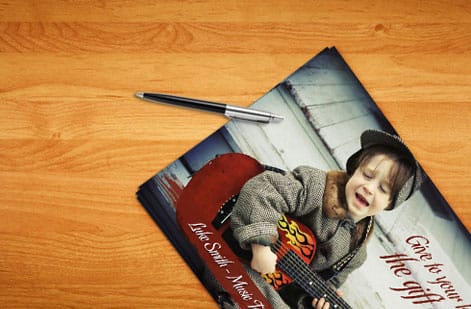
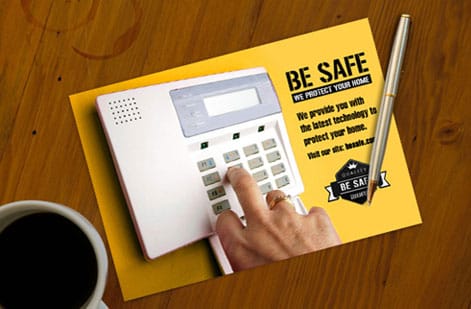
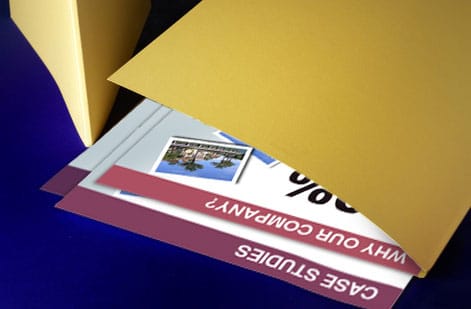
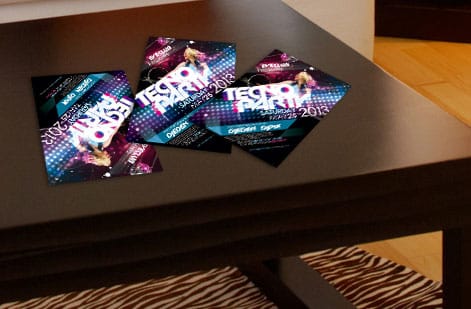
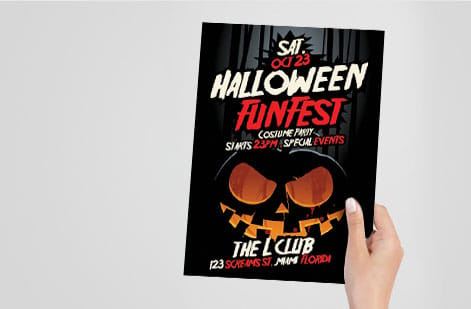
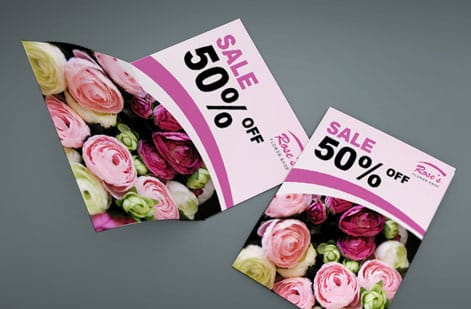
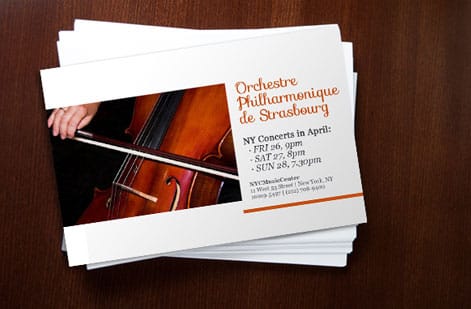
Event flyer work from customer orders

Explore more
Where to go next
By the numbers
One kit, sized for the room
Common Questions
Common questions about event promotion printing
Which print products actually matter for promoting an event?
Five cover the whole run: event flyers for handouts, standard posters for walls and windows, event tickets for pre-sale and door control, business banners for the entrance, and feather flags for the roadside or the booth. Each one owns a different moment, from the person who has never heard of the event to the person standing outside looking for the door. Skip one and that moment goes unattended.
How far in advance should I print event promotion material?
Print the posters and flyers first, because they are the only pieces that need time to work. People need to see a date several times before they commit to it, and a poster that goes up three days before the event is decoration rather than promotion. Tickets can follow once the price and seating are locked, and banners and flags only need to arrive before the day itself. If a date shifts late, same-day printing lets you reprint the piece that changed instead of the whole set.
Do event tickets need sequential numbering?
If money or capacity is involved, yes. Black-ink sequential numbering gives every ticket a unique identity, so the stubs you collect at the door are a countable record of who came in and a defence against duplicates. Pair it with perforation and the stub tears cleanly, which matters when a volunteer is doing it a hundred times in an hour. For a free community event with no capacity limit, plain tickets are fine.
How many event tickets should I order?
Order to your venue capacity plus a small margin for comps and reprints, because the per-ticket price falls fast with quantity. Event tickets start at $25.27 for 50, roughly 51 cents each. At 300 the run is $60.42, at 600 it is $92.26, and 3,000 comes to $222.97, around 7 cents a ticket. The jump from 50 to 300 costs less than the difference between two coffee runs, so the usual mistake is ordering too few and paying setup twice.
What size should an event flyer be?
The 8.5" x 11" letter sheet is the default and the one most template sites are built around. It fits a printer tray, a counter stack and a mailing envelope without trimming. For street handouts, the 5.5" x 8.5" handbill is cheaper per piece and easier to hand over. For a wall or a shop window, 11" x 17" reads across a room, and the tall 11" x 25.5" sheet holds a full festival lineup and still folds down to hand out. All six sizes run the same full color press.
How big should a banner be to read from the street?
Work backwards from the distance. Allow roughly one inch of letter height for every 10 feet you want the words read from, then pick the banner that fits your mounting point. A 2' x 6' banner at 12 square feet suits a storefront window, a table front or the top rail of a booth. A 4' x 12' at 48 square feet covers a building face, a fence line or a sponsor wall behind a stage. Measure the mounting point before you choose, and order grommets and hems to match how it will hang.
Are feather flags worth it for a one-off event?
They pay off when your entrance is not obvious from the road, and they keep paying because the hardware is reusable. A feather flag on 3oz polyester stands up to 15 feet tall, prints full color so it reads from both sides, and takes either an outdoor stake base or an indoor X-stand. The honest limit is wind: a stake base in soft ground on a gusty day needs checking, and a lightweight flag is not a substitute for a rigid sign that has to stay put for months.
Can I keep all five pieces looking like one event?
Repeat three things everywhere: the event name set the same way, one accent color, and the date in the same format. That is what makes a poster on a wall and a flag at the kerb read as the same event rather than two competing ones. Building each piece from the same design template or in the online designer is the quickest way to hold that line, and printing the whole set in one place keeps the color consistent across paper, vinyl and polyester.
Get Started
Event tickets start at 50 for $25.27
Order the five event promotion pieces from 4OVER4.COM and print flyers, posters, numbered tickets, banners and flags on one turnaround. Set size, finish and quantity on any product and the price updates live.
Legal Disclaimer
Gold Standard guarantees apply to all standard orders placed through 4over4.com. Price match requires verifiable proof of a competitor's published price for an equivalent product with matching specifications and turnaround time. Satisfaction guarantee covers manufacturing defects and print quality issues. Contact support with order number and documentation. On-time delivery rate based on tracked orders 1999 to 2026. Individual results may vary based on shipping carrier performance.
