
What a Soap Label Has to Say Before It Can Be Sold


The required elements, the one word that moves your bar from soap to cosmetic, how to declare a net weight that survives the cure, and the facestock that holds up on a wet shelf.
Every soap label needs four things: what the product is, the net quantity of contents, the name and place of business of whoever is responsible for it, and any warning the product requires. True soap sold only as soap stops there, under Consumer Product Safety Commission rules. The moment the wrapper makes a cosmetic claim such as moisturizing or aromatherapy, the FDA cosmetic rules apply and you also owe a full ingredient declaration in descending order of predominance plus a contact for adverse event reports.
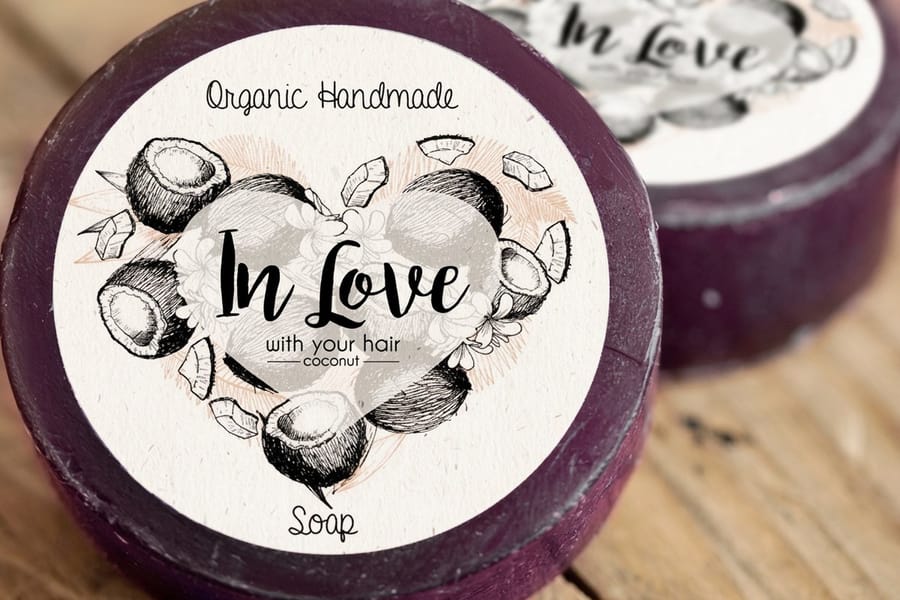
Quick answer
Identity, net weight, responsible party, and then it depends on your claims
Print what it is, how much is in it, and who stands behind it, on every bar you sell. Those three come from the Fair Packaging and Labeling Act and apply to true soap without any ingredient list attached. Add a cosmetic claim and the FDA rules come with it: ingredients in descending order of predominance, net quantity in the bottom 30 percent of the front panel in both ounces and grams, and a domestic address, phone number or electronic contact for adverse event reports. Claim a treatment and you have a drug, with a Drug Facts panel to match.
The Four Elements Every Bar Has to Carry
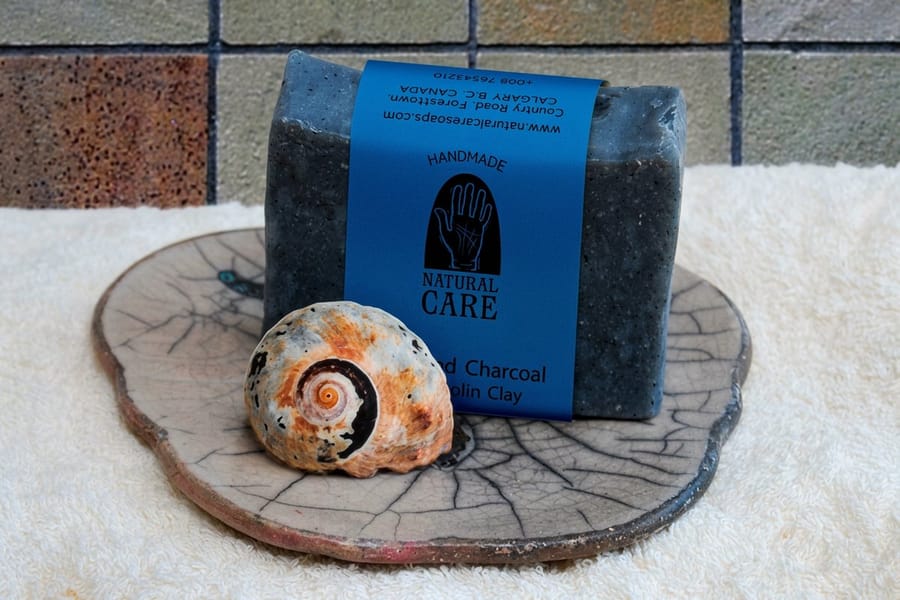
Start with the parts that never come off, whichever agency covers your product. A wrapper that carries these four is legal to hand across a farmers market table.
Identity. Say what the thing is, in plain words, on the front panel. "Lavender Oatmeal Bar Soap" is an identity. "Sunday Morning" on its own is a name, not an identity, so it needs the word soap next to it. The rules ask for bold type in a size reasonably related to the most prominent printing on that panel and generally parallel to the base of the package.
Net quantity of contents. Weight, not count, and by weight excluding the wrapper. On a cosmetic label it sits in the bottom 30 percent of the front panel in both US customary and metric units.
Responsible party. The name and place of business of the manufacturer, packer or distributor. If your firm is listed in a current city or telephone directory, you may leave the street address off and keep city, state and ZIP. Plenty of makers working from home use that provision rather than printing a home address on every bar.
Warnings, when the product needs them. Anything with an obvious hazard, and any statement required for the specific category. Most plain bars need none, and inventing one is not a way to look careful.
| Element | Panel | The detail people get wrong |
|---|---|---|
| Identity | Front (principal display panel) | A brand name printed alone, with no word telling the buyer it is soap. |
| Net quantity | Front, bottom 30 percent | Set too small, or given in ounces only with no gram figure. |
| Responsible party | Information panel | A website URL used in place of a real name and place of business. |
| Ingredients | Information panel | Alphabetical, or by fanciest first, instead of descending by weight. |
Lay the panels out before you pick a size. Our guide to choosing the correct label size walks through measuring the bar first, and every option is priced on the soap label printing page.
The Claim That Turns Soap Into a Cosmetic
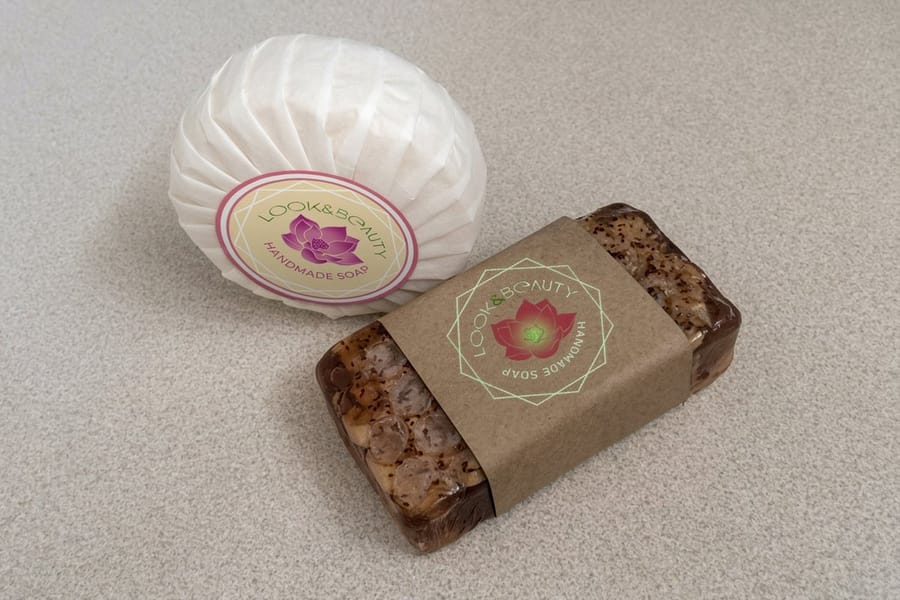
This is the fork that catches most makers, and it is decided by your own wrapper copy rather than by your recipe.
True soap is not a cosmetic in the eyes of the FDA. The carve-out has three conditions: the bulk of the nonvolatile matter has to consist of an alkali salt of fatty acids, the product's cleaning action has to come from those compounds, and it has to be labeled, sold and represented only as soap. Meet all three and the Consumer Product Safety Commission covers the product as a consumer commodity, which means identity, net quantity and responsible party, and no required ingredient list.
Now print one extra word. "Moisturizing." "Aromatherapy." "Softens skin." "Deodorant." Any of those is a cosmetic claim, and the same bar is now a cosmetic. You owe a full ingredient declaration in descending order of predominance, in letters at least one sixteenth of an inch high, with anything present at 1 percent or less allowed in any order after the rest and color additives last. Fragrance may be declared simply as fragrance. Cosmetic labels also have to carry a domestic address, domestic phone number or electronic contact so a customer can report an adverse reaction.
Go one step further and claim a treatment, and you have described a drug. Antibacterial, acne, eczema, psoriasis: those words pull the product into the over the counter drug rules with a Drug Facts panel and a permitted active ingredient. Very few small makers intend that, and quite a few walk into it through a product name.
The honest read is that the exemption is easy to keep and easy to lose. Most sellers who want to talk about oils and scent end up labeling as a cosmetic on purpose, printing the ingredient list, and stopping worrying about which words are safe. If that is you, budget the back panel for it from the first draft rather than squeezing it in later.
Net Weight, Cure Time, and Sizing the Label to the Bar
Cold process soap keeps losing water long after it looks finished. A bar cut on Sunday and weighed on Monday can be noticeably heavier than the same bar six weeks later, which is why declaring the cutting weight is the most common labeling error in handmade soap.
Cure the batch fully, then weigh several bars, including the small ones from the end of the loaf. Declare a figure the lightest bar still meets. A bar that reads 4.5 oz and weighs 4.4 oz on a customer's kitchen scale is a problem you created at the printer, not at the bench, and reprinting a wrap band is the only fix.
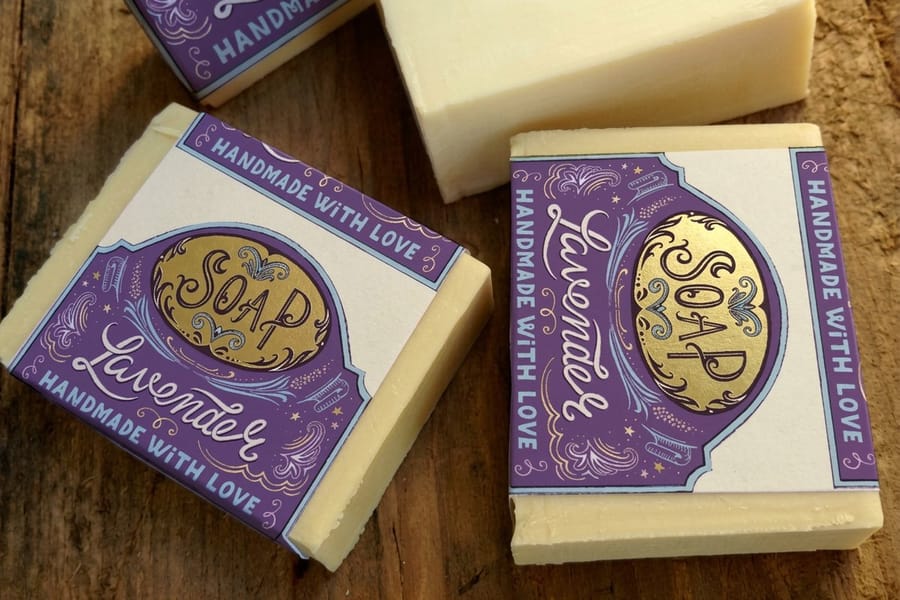
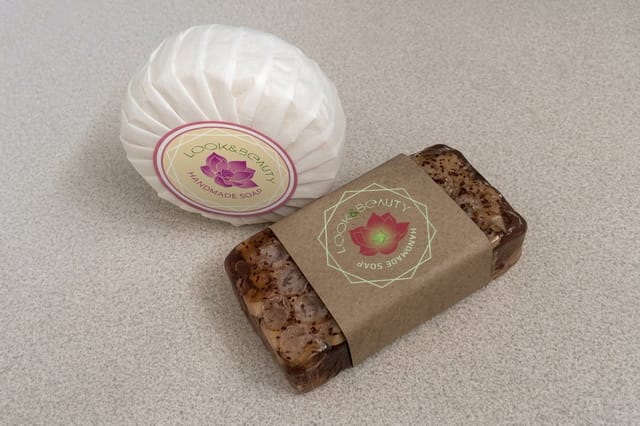
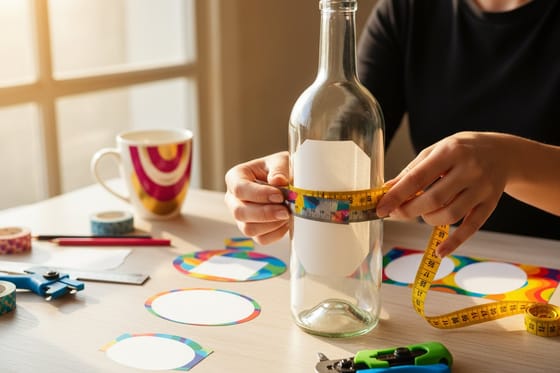
Size the label the same way, from the physical bar rather than from the recipe. Measure the girth you intend to wrap, subtract enough that the two ends overlap on a flat face instead of on a corner, and check that the required text still fits at legal type size on the panel you have left. A wrap band is the usual answer on small bars because it gives you the whole circumference, at the cost of hiding more of the soap.
One timing note that saves a reprint: apply labels after the cure, not during it. Soap shrinks as it dries, so a label applied to a green bar wrinkles as the bar pulls away underneath it. The same shrinkage logic is why label dimensions on a curved surface are worth reading even if you never label a bottle.
Materials and Adhesives That Survive a Bathroom
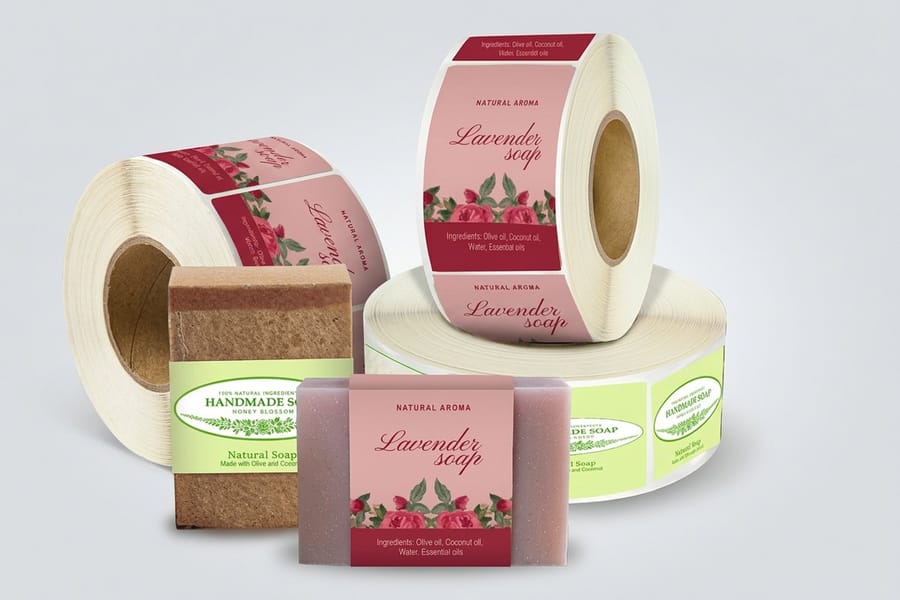
A soap label lives in the worst environment a small label ever sees: a superfatted bar leaching oil from below, steam from above, and a wet shelf underneath. Two failures follow from that, and both are material choices rather than print quality.
The first is oil wicking. Uncoated paper facestock absorbs the free oils in a well superfatted bar and goes translucent in patches, usually right where your logo sits. The second is edge lift, where humidity and a curved bar work the corners loose until the band unrolls in a customer's cabinet. A synthetic facestock with a permanent adhesive answers both, and it is the reason our soap label products exist separately from general Standard Labels at $23.88.
Two application habits matter as much as the stock. Wipe or steam the bar before labeling, because the powdery soda ash bloom on cold process soap is a release layer as far as adhesive is concerned. And press the label down along its whole length rather than tacking it at the ends, since adhesive needs contact and a little time to reach full grab.
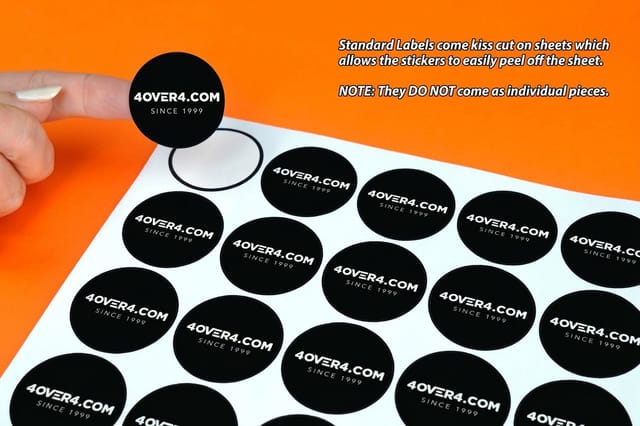
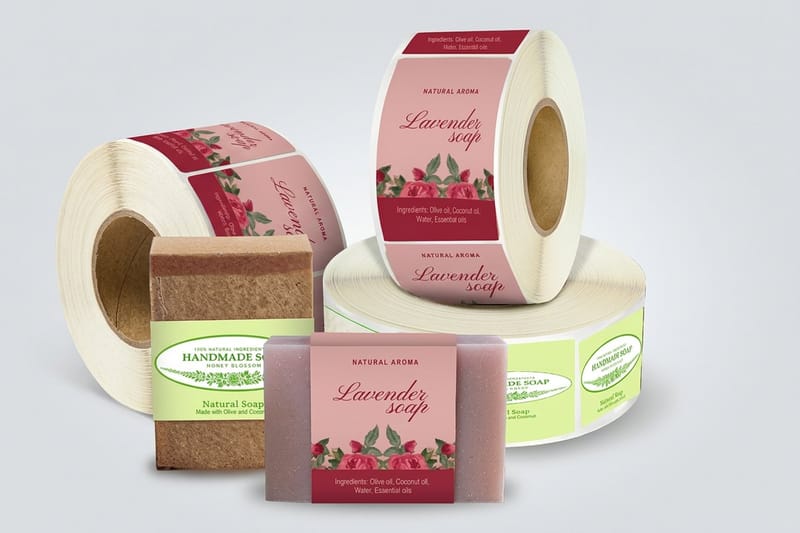
Then match the format to the volume. Standard Soap Labels start at $23.88 and Premium Soap Labels at $29.16, which suits the batch sizes most makers actually run. Roll Soap Labels start at $322.98, priced for a volume run and for hand applicators rather than for a first market stall. If you are still deciding who prints them, the questions in our guide to choosing a label printing company are the ones worth asking, and how label printing works covers the facestock and die vocabulary you will hear back.
Wally explains the soap wrapper
Say what it is, how much, and who made it
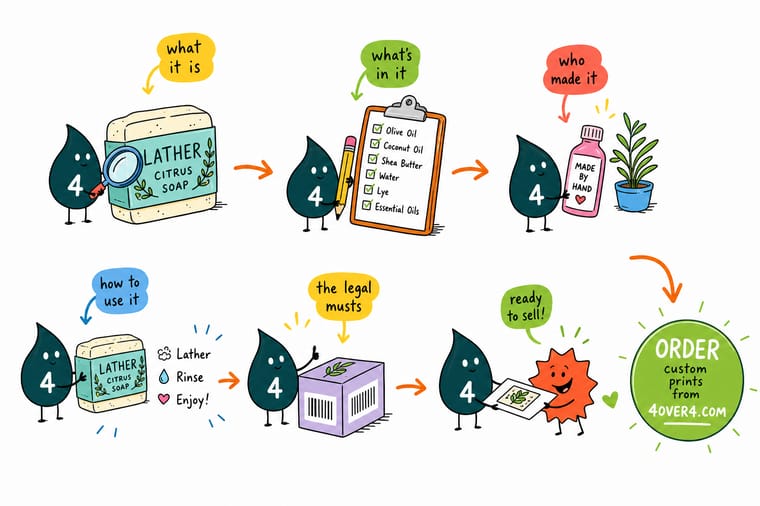
Wally puts the name of the soap on the front, the net weight down in the bottom third where the rules want it, and his own business name and city on the back. That bar is ready to sell. Then he writes moisturizing on it, and now he owes the full ingredient list in order of weight plus a way for a customer to reach him. Same soap, different label, because the wrapper made the promise. He weighs the bar after the cure, never at cutting, and he sticks the label on a dry, wiped bar so the edges stay down.
Order soap labels →Specs and pricing
Soap label sizes, stocks, and starting prices
Standard soap labels start at 25 for $23.88 in 3 business days, roll soap labels at 100 for $322.98 in 6.

Print it
Labels built for a bar that never fully dries out

Explore more
Where to go next



By the numbers
Soap and product labels inside 25 years of printing
Common Questions
Your soap labeling questions, answered
What must be on a soap label to sell it legally in the US?
At minimum: a statement of identity that says what the product is, the net quantity of contents, and the name and place of business of the manufacturer, packer or distributor. Those three come from the Fair Packaging and Labeling Act and apply to true soap, which the Consumer Product Safety Commission covers. If the label makes any cosmetic claim, the FDA rules apply on top and you also need a full ingredient declaration in descending order of predominance, plus a domestic address, phone number or electronic contact for adverse event reports.
Do I have to list ingredients on handmade soap?
Not if the product is true soap and you sell it as nothing more than soap. The FDA ingredient rule applies to cosmetics, and true soap is carved out of the cosmetic definition. The carve-out is narrow: the bulk of the nonvolatile matter has to be an alkali salt of fatty acids, the cleaning has to come from those compounds, and the product has to be labeled and sold only as soap. Say it softens skin, calms you down or works as a deodorant and you have given up the exemption for that product.
Where does the net weight go, and in what units?
On a cosmetic label it belongs in the bottom 30 percent of the principal display panel, generally parallel to the base of the package, expressed in both US customary and metric units, for example 4.5 oz (128 g). Letter height depends on panel size: at least one sixteenth of an inch for a panel of 5 square inches or less, one eighth up to 25 square inches, three sixteenths up to 100, and a quarter inch above that. The type is also the thing most people set too small on a narrow wrap band.
What happens if I call my soap antibacterial or say it clears acne?
You have described a drug, and the label requirements jump again. Treatment claims put the product under the OTC drug rules, which means a Drug Facts panel with active ingredient, purpose, uses, warnings and directions, and an active ingredient that is actually permitted for that use. This is the single most expensive sentence a small soap maker can print. If you have not gone through the drug pathway deliberately, keep treatment language off the wrapper and out of your product name.
My bar is tiny and the required text does not fit. What are my options?
Three that work. Use a wrap-around band instead of a top label, which buys you the full girth of the bar. Split the panels, keeping identity and net weight on the front and moving ingredients and the responsible party to the back of the band. For a very small package, the cosmetic rules allow the ingredient declaration to sit on a firmly affixed tag, tape or card rather than the label itself, and where total package surface is under 12 square inches the ingredient type may go down to one thirty-second of an inch.
Should I print sheet labels or roll labels for my first batch?
Sheets, almost always. Standard Soap Labels start at $23.88 and Premium Soap Labels at $29.16, so a first run of a few designs costs less than the soap in the batch. Roll Soap Labels start at $322.98 because rolls are priced for volume and are worth it once you are labeling by the thousand or feeding a hand applicator. Switching later costs nothing but a reprint, and by then your net weights and ingredient lists will have settled.
Get Started
25 standard soap labels cost $23.88, or 96 cents each
Pick a size that fits the bar, print the panel that carries your identity, net weight and ingredient list, and get labels that stay stuck in a steamy bathroom.
Legal Disclaimer
Gold Standard guarantees apply to all standard orders placed through 4over4.com. Price match requires verifiable proof of a competitor's published price for an equivalent product with matching specifications and turnaround time. Satisfaction guarantee covers manufacturing defects and print quality issues. Contact support with order number and documentation. On-time delivery rate based on tracked orders 1999 to 2026. Individual results may vary based on shipping carrier performance.
