
Take-Out Menu Printing for To-Go and Delivery Orders


The menu that leaves with the food has a different job than the one on the table. There is a right stock, a right fold, a right quantity, and one place the money usually gets wasted.
A take-out menu is printed to be given away, so choose it by cost per piece and by what survives a bag: a coated sheet for grease, a fold that fits beside the containers, and a quantity that matches a month of orders. Standard menus start at $57.11 for 50, about $1.14 each, on 100# gloss text or 70# uncoated text, in seven sizes from 4.25" x 11" up to 11" x 25.5", flat, half folded or trifolded. Laminated menus start at the same $57.11 per 50 and are the copies that stay on the counter, not the ones that leave.
Quick answer
The fold decides how much menu fits in the bag
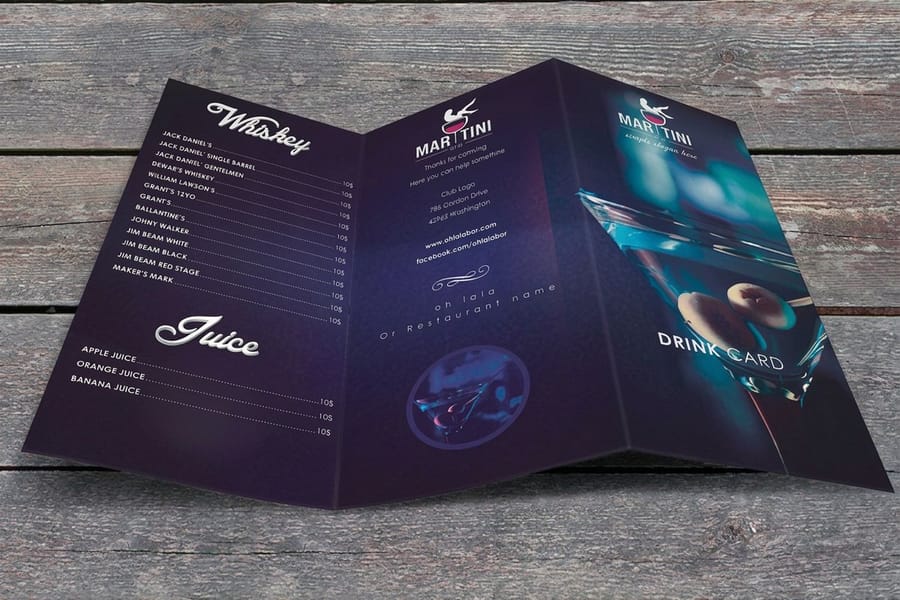
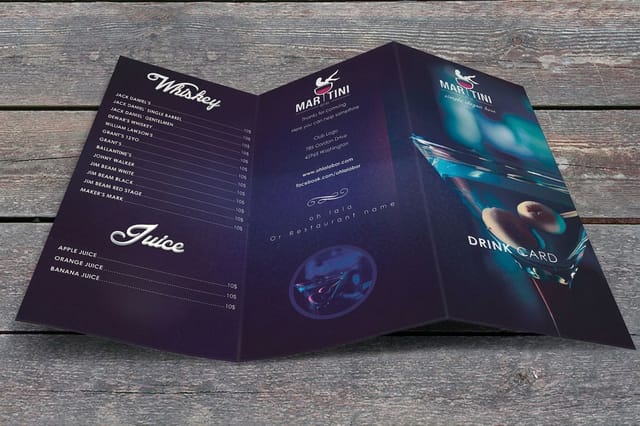
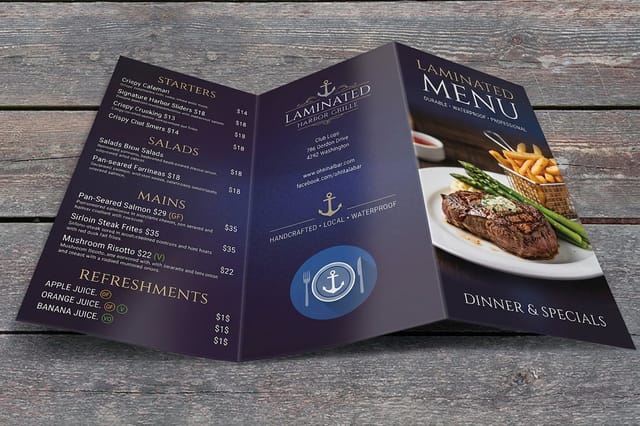
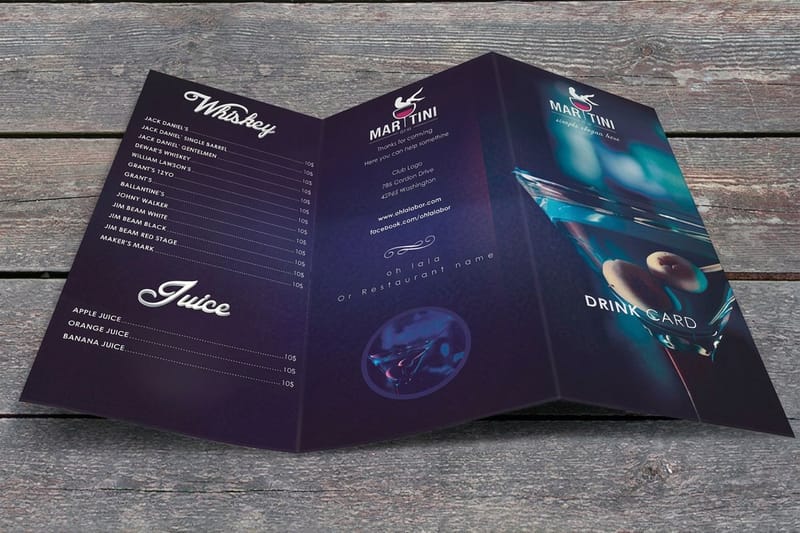
One sheet, three menus. A flat 8.5 by 11 gives you two printable faces and has to lie on top of the food. Half folded it closes to 8.5 by 5.5 with four faces. Trifolded it closes to about 8.5 by 3.67 with six faces and slips down the side of the bag beside the containers. The sheet price does not change with the fold, so the only real cost of folding is panel width, which caps how long a dish description can be.
The Take-Out Menu Formats, and What Each One Is For
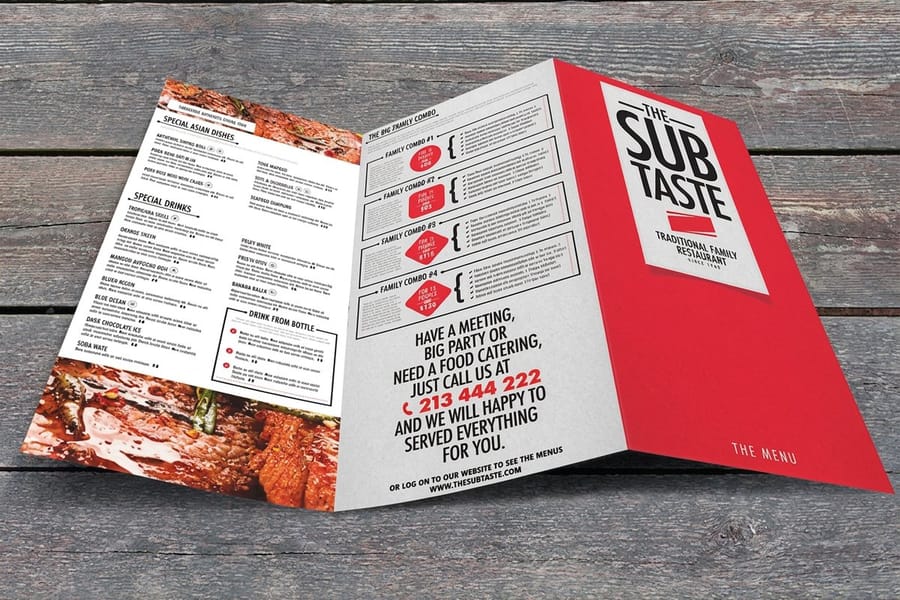
Every take-out menu is one of four things: a flat sheet, a folded sheet, a sealed menu that stays on your counter, or a hanger left on a door. They cost different amounts per piece, and that number matters more than any design decision, because a to-go menu is something you give away hundreds of times.
| Format | Starting price | Where it works | The catch |
|---|---|---|---|
| Flat sheet | $57.11 per 50, about $1.14 each | Short menus that change often, and anything that also has to work as a counter handout. | Full width in the bag, so it lies on the food and picks up condensation. |
| Half fold | Same sheet, fold option | Four faces with a branded cover, good for a menu with two or three real sections. | Dishes split across a spread, so the reader has to open it before deciding anything. |
| Trifold | Same sheet, fold option | Six slim faces that slide down the side of a delivery bag. | Narrow panels force short dish descriptions and small type. |
| Laminated | $57.11 per 50 | The table and the counter, handled all day and wiped between guests. | Sealed film means nobody writes on it, and a price change kills the whole run. |
| Kraft | $166.04 per 100, about $1.66 each | Pop-ups, taprooms, and packaged items where the menu is part of the gift. | Brown stock eats light ink, so pale colors need the CMYK plus white setup. |
| Door hanger | $290.41 per 250, about $1.16 each | Reaching a delivery radius that has never ordered from you. | 7 business day standard production, and someone has to walk the route. |
Read the last column before the second. The three fold options all live on the same standard menus product, which means the fold is a layout decision rather than a budget one. The real fork is between a menu that leaves the building and a menu that stays, and most kitchens need both. Compare the whole lineup on menu printing if you want to see catering and wedding formats next to these.
Folded, Flat, or Hanging on a Door
A fold is not decoration. It changes where the menu ends up in the bag and how much of it a customer sees before deciding.
Flat sheets have one honest advantage: you can reprint them the same week a dish changes, and nothing is lost in a fold. They also fail in one predictable way. An 8.5 by 11 sheet has nowhere to go inside a paper sack except on top of the containers, which is the wettest place in the bag. If your food travels hot and lidded, a flat menu comes out of the bag limp.
A trifold closes to roughly 8.5 by 3.67 inches, which fits down the side of the bag beside the containers. Six faces sounds generous until you lay out dishes, because each panel is only about three and a half inches wide, so descriptions have to be short and the type cannot fall below readable. The half fold sits between the two: four faces, a cover you can brand, and a shape that still slides in edgewise. Our takeout menu design guide covers where to place the sections once you have chosen a fold, and menu layout that sells covers which dishes belong on the panel that opens first.
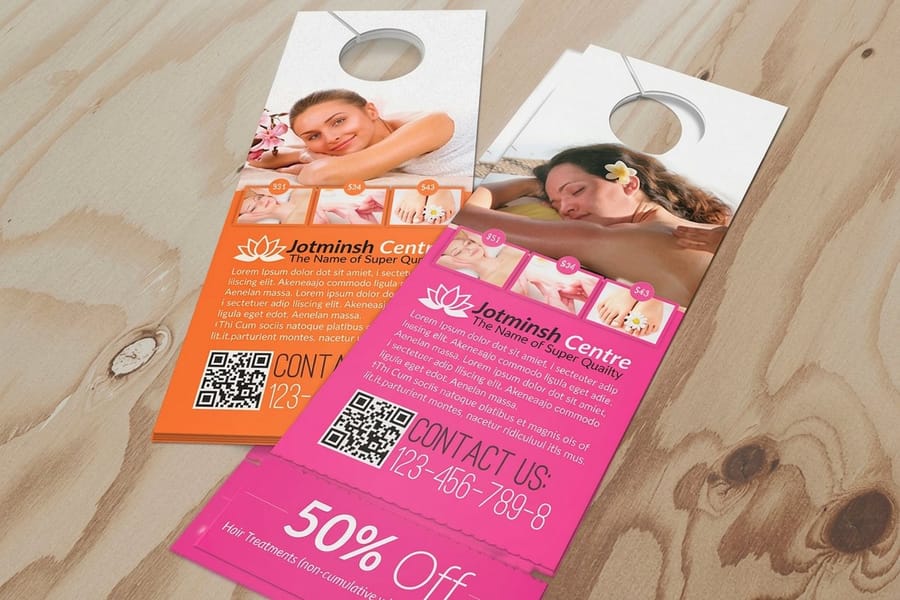
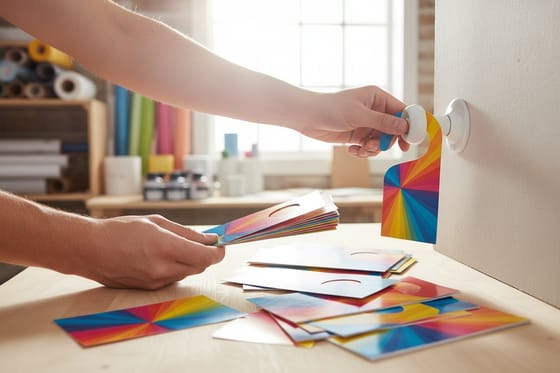
Door hangers are a different job entirely. They are 14pt or 16pt gloss cover with a weather-resistant high gloss UV coating, four sizes from 3.5 by 8.5 up to 4.25 by 14, and an optional tear-off perforation two inches from the bottom for a first-order coupon. They reach households who have never ordered from you, which no bag insert can do, and they take 7 business days to produce plus the time to walk them. If you are weighing that against a cheaper handout, door hangers versus flyers puts the two side by side, and standard flyers are the format to pick when someone else is handing them out for you.
Grease-Resistant Stock: What Actually Survives the Bag
Thickness is not what protects a menu from grease. Coating is. Oil moves into paper fiber, and a coated sheet has a clay layer sitting between the oil and the fiber.
Standard menus come on two stocks and they behave in opposite ways. 100# gloss text holds color hard and keeps a smear of oil on the surface long enough to wipe off, which is why it is the default for anything going into a bag. 70# uncoated text reads matte, feels like paper rather than a flyer, and takes a ballpoint pen, which is why counters and catering drops like it. It also drinks oil. One thumb off a slice of pizza leaves a translucent patch on uncoated stock that never comes out. Pick uncoated when staff write on the sheet, and gloss when the sheet is going to be handled while people eat. The stock behavior carries over to other formats too, which our guide to 100 lb gloss cover for flyers and menus works through.
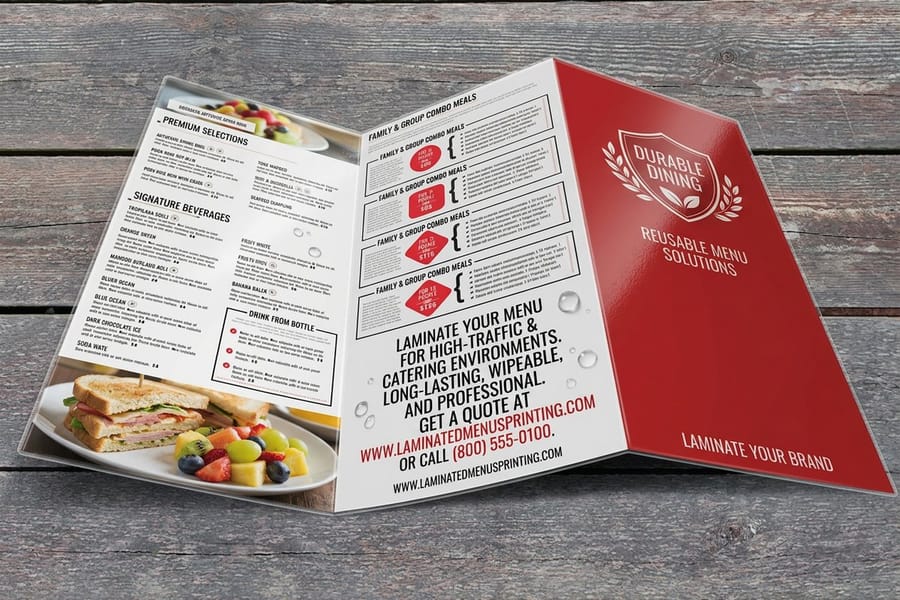
Lamination is the only real barrier. Laminated menus seal the printed sheet under film in the same seven sizes, so spills and condensation sit on top and wipe away, and the menu survives table after table for months. The trade is permanence in both directions: you cannot write on it, and when a price changes the entire run is finished. Order laminated for the copies that stay in the room and plain gloss for the copies that leave in a bag.
Kraft is the third option and it plays by its own rules. Kraft menus print on 18pt uncoated cover made from 100 percent post-consumer waste, brown and textured, in four sizes up to 11 by 17. It is heavy enough to feel like a card rather than a sheet, and the brown ground hides a stain better than white does, but it is still uncoated, so it absorbs oil, and pale inks disappear into it unless you use the CMYK plus white setup. At about $1.66 a menu it is a piece you hand to someone deliberately, not one you staple to every order.
How Many to Order, and the Price Change Trap
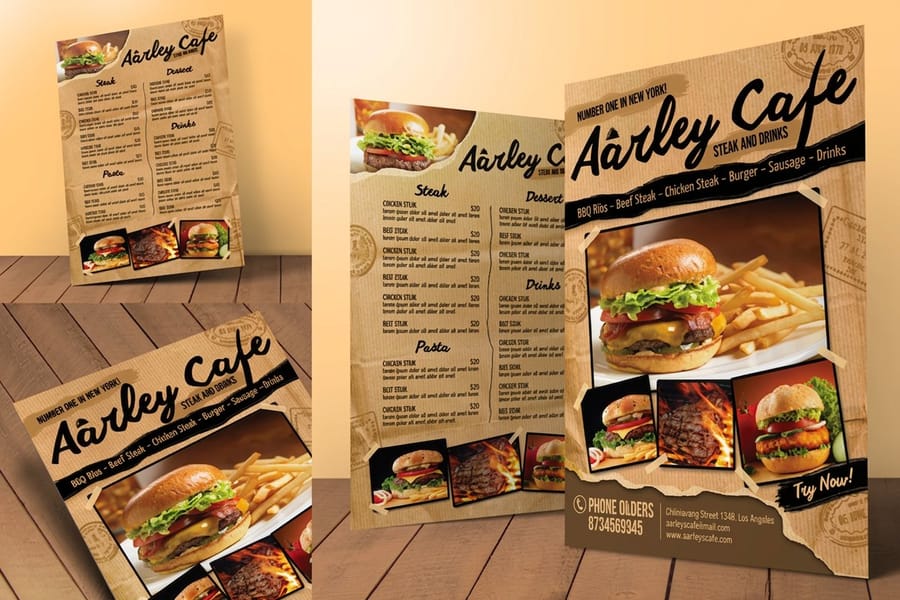
The most expensive mistake on a to-go menu is not the stock. It is printing 5,000 with prices on them three weeks before you raise the prices.
Start with bag count. Take the to-go and delivery orders you fill in a normal month, multiply by the number of months your menu will realistically hold, then buy the quantity tier just above that number. Menus run in 25 tiers up to 25,000 and the per-piece price falls across every one of them, so a kitchen filling 400 to-go orders a month with a settled menu is better served by one run of 2,500 than by ten reorders of 250. A new menu that is still moving deserves the opposite treatment: small runs, higher unit cost, no regret when the chef swaps a dish.
Two habits make a run last. Print the dishes without prices and let a QR code carry the current list, which also lets you point delivery customers at your own ordering page instead of a platform that takes a cut. Our guide to QR codes on flyers, brochures and postcards covers the sizing and the quiet zone that keeps a code scannable after a fold. Second, keep seasonal items on a separate small piece: a standard postcard tucked in the bag costs a fraction of reprinting the whole menu and can be swapped every few weeks.
On timing, standard menu production is 5 business days with 2-day, next-day and same-day rush available, so a Friday opening is workable if the file is right. Set the file up at final size with bleed before you order, and start from a correctly sized layout in the blank template library. If you want the sizes settled first, restaurant menu sizes for dine-in and takeout lists what each one holds.
Wally packs the bag
Coated stock, three panels, down the side
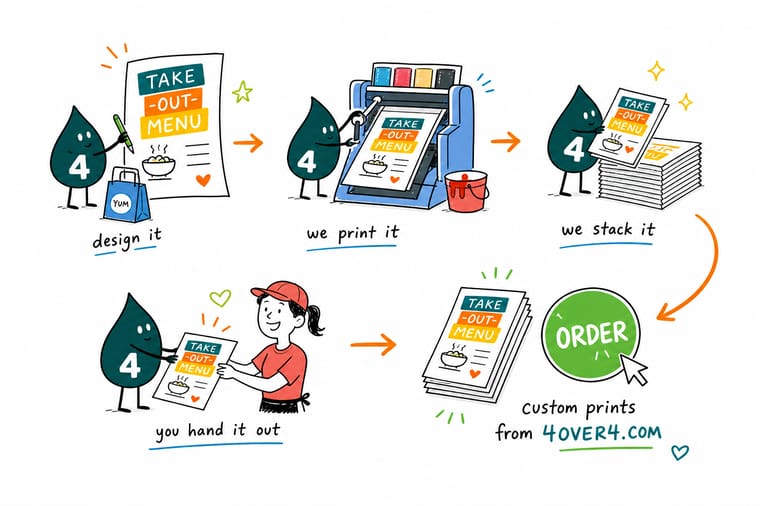
Wally prints the menu on 100# gloss text so a thumbprint of oil wipes off instead of soaking in, folds the sheet into three panels so it closes to about 8.5 by 3.67 inches, then slides it down the side of the bag next to the containers instead of laying it on the hot lid. The laminated copies stay on his counter, where they get wiped between guests. Prices stay off the printed sheet and live behind the QR code, so raising them costs a website edit rather than a reprint.
Order take-out menus →Specs and pricing
Menu sizes, stocks and starting prices
Standard, laminated and kraft menus side by side, with live size, stock and fold choices and starting prices straight from the 4OVER4.COM configurator.

Print it
Order the menu that goes in the bag
Explore more
Where to go next
By the numbers
Take-out, delivery and dine-in menus
Common Questions
Your take-out menu questions, answered
What size should a take-out menu be?
The sizes that actually work in a bag are the slim ones. Our menus run from 4.25" x 11" up to 11" x 25.5", with custom sizing to 11" x 26", and for a bag insert the useful range is a 4.25" x 11" slim sheet or an 8.5" x 11" trifolded down to roughly 8.5" x 3.67". Anything wider than 8.5 inches has to lie flat on top of the food, where it collects condensation from a hot container. Dine-in and counter menus can go bigger because nobody is folding them into a paper sack.
What paper stock resists grease on a take-out menu?
A coating does the work, not the thickness. Standard menus print on 100# gloss text or 70# uncoated text: the gloss sheet has a clay coating that keeps oil sitting on the surface long enough to wipe, while the uncoated sheet absorbs it and leaves a translucent patch you cannot remove. Uncoated is the better choice only when staff write on the menu. For a menu that has to last months of handling, laminated menus seal the print under film so spills and condensation roll off.
Flat, half fold, or trifold for a delivery menu?
Count faces against bag space. Flat gives you 2 faces and the easiest reprint, which suits a short menu that changes often. A half fold gives 4 faces and a cover you can brand. A trifold gives 6 slim faces and closes to about 8.5" x 3.67", so it slips down the side of a bag rather than sitting on the food, at the cost of short dish descriptions. All three are fold options on the same product, so the sheet price does not change with the fold.
How many take-out menus should I print at once?
Work from bags, not from a feeling. Count the to-go orders you fill in an average month, multiply by the number of months before your menu realistically changes, and buy the quantity tier just above that. Menus run in 25 tiers up to 25,000, and the per-piece price falls the whole way, so a restaurant filling 400 to-go orders a month with a stable menu is better off at 2,500 than reordering 250 ten times. If the menu is new and still moving, print small and accept the higher unit price.
Should I put prices on a to-go menu?
Only if you are willing to reprint when they move. Two safer patterns: print the dishes with no prices and let the QR code or the phone number carry the current list, or print prices and keep the run small enough that a repricing costs you one reorder instead of a pallet. Delivery platform prices are usually higher than in-house prices, and a printed sheet that contradicts the app is the fastest way to an argument at the counter.
How fast can take-out menus be printed?
Standard production on menus is 5 business days, with 2-day, next-day and same-day rush available at checkout, and laminated menus add 4-day and 3-day options in between. Door hangers are the slow one in this group at 7 business days standard, because of the UV coating and the die cut, so a neighborhood drop needs planning that a bag insert does not.
Get Started
Take-out menus run 50 for $57.11, kraft 100 for $166.04
Pick your size, choose gloss or uncoated, fold it flat, in half or into three panels, and we print menus that come out of a delivery bag still readable.
Legal Disclaimer
Gold Standard guarantees apply to all standard orders placed through 4over4.com. Price match requires verifiable proof of a competitor's published price for an equivalent product with matching specifications and turnaround time. Satisfaction guarantee covers manufacturing defects and print quality issues. Contact support with order number and documentation. On-time delivery rate based on tracked orders 1999 to 2026. Individual results may vary based on shipping carrier performance.
