
How to Lay Out a Menu Design That Sells More


A menu is your highest-value piece of print: every guest reads it, and its layout quietly steers what they order. Get the structure, pricing psychology, and materials right and the same menu can lift your average check.
Good menu design uses layout and pricing psychology to guide guests toward your most profitable dishes. Group dishes into clear sections, place your highest-margin items where the eye lands first, drop the dollar signs and price columns, use short appetizing descriptions, and print on a durable, food-safe stock. A well-designed menu is a sales tool, not just a list.
Start here
How layout steers what a guest orders
A menu that sells uses clear sections, deliberate placement, and pricing psychology to steer guests toward profitable dishes. Group items into scannable sections, position high-margin dishes in the zones the eye hits first, remove dollar signs and price columns, write short appetizing descriptions, and print on a durable food-safe stock. The layout heat map below shows where attention naturally falls.
What good menu design does for your bottom line
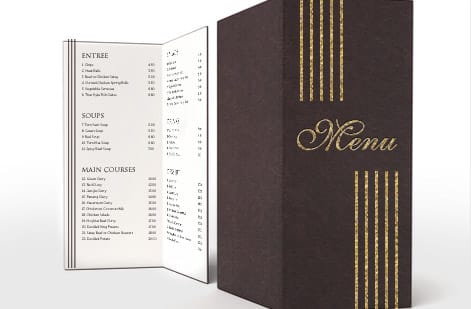
Of everything you print, the menu is the piece every single guest reads. That makes it your most powerful and most overlooked sales tool. The words and layout on that page quietly steer what people order, which means small design choices ripple straight into your average check.
A menu designed with intent does three things: it makes dishes easy to find, it draws attention to the items you most want to sell, and it raises the perceived value of your food. A menu thrown together as a plain list does none of those things and leaves money on the table. The difference is not fancier graphics, it is deliberate structure.
Throughout this guide the goal is practical: layout, pricing psychology, and materials that lift orders on menus you can print today, whether that is a full restaurant menu, a wipeable laminated menu, or a set of table tents for specials. The heat map above shows where guests actually look.
Layout principles that guide the eye
Guests do not read a menu line by line, they scan it, and their eyes move in a fairly predictable pattern. Certain zones get noticed first, which is exactly where your highest-margin and signature dishes belong. Bury your best sellers at the bottom and most people never reach them.
Start with clear sections. Grouping dishes into appetizers, mains, sides, and desserts lets guests find what they want without wading through one long block. Within each section, limit the number of options so the choice feels easy rather than overwhelming, since a shorter, focused menu often outsells a sprawling one.
Then use visual weight deliberately. Box or shade one hero dish per section to pull the eye, keep plenty of white space so the page breathes, and use a simple two-font hierarchy: one display font for headings and one clean font for items. These moves are the heart of a menu that sells, and they carry over to promotional table tents too.
Menu pricing psychology
How you present prices changes how guests order, often more than the prices themselves. The most reliable finding in menu research is that visible currency symbols and dotted price columns push people to shop by cost. Guests scan straight down the column of numbers and pick the cheapest, ignoring the food entirely.
The fix is simple: drop the dollar signs and never right-align prices in a column. Instead, place the price discreetly at the end of each dish description, in the same font and size as the text, so it reads as information rather than a price tag. The food stays the focus and guests choose by appetite.
A few other levers help. Anchoring a premium dish near the top makes mid-priced items feel like good value, and offering a small number of choices per section reduces decision fatigue. Used honestly, these techniques simply make your best dishes easy to choose, which is the whole point of thoughtful menu design.
Descriptions that raise perceived value
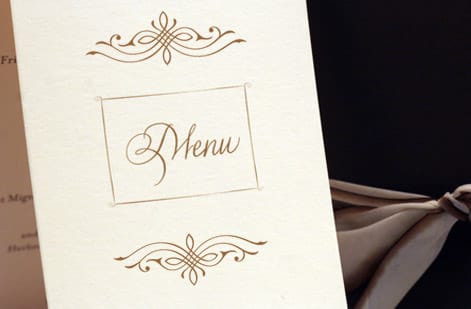
A dish name alone is a missed opportunity. A short, sensory description raises how much a dish seems worth and makes it easier to order. Naming a key ingredient, the preparation, or the origin gives guests a reason to choose it and quietly justifies the price.
Keep descriptions to a line or two and let a few well-chosen adjectives carry the weight: slow-roasted, hand-cut, local, crisp. Avoid overloading every item, since a page of purple prose reads as noise. Reserve the richest descriptions for the dishes you most want to sell, and let simpler items stand on their names.
Consistency matters as much as flair. Match the voice of your descriptions to your brand, whether that is casual and playful or refined and spare, so the menu reads as one confident piece. That same voice should carry onto your table tents and any specials inserts.
Choosing materials and finish
Design does not end at the layout. A menu is handled constantly, folded, wiped, and passed around, so the material is part of whether it keeps looking good. The right stock protects both the appearance and your reprint budget.
For a menu used at every table all day, durability wins. A laminated menu wipes clean and resists creasing, while a heavy cover stock feels substantial in the hand and signals quality. For menus you update often, a lighter uncoated stock keeps reprints cheap, and keeping volatile items on a separate insert saves you from reprinting the whole thing.
Many restaurants run a durable core menu plus inexpensive table tents for specials and drinks, so the main menu lasts while promotions change often. Order free-standing and tabletop pieces together so the finishes and fonts match across your whole table.
Printing your menu and what it costs
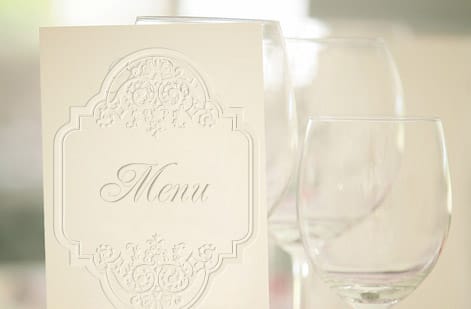
With the layout and material decided, cost is straightforward. Menu printing scales with quantity, size, paper stock, and finish. Larger runs lower the unit price, while lamination and heavier stocks add durability for a small premium. You set each option in the configurator and the total updates live as you adjust it.
A budget-friendly pattern is to print a durable main menu in a modest run and add low-cost table tents for specials, so you promote new dishes without reprinting everything. That keeps your core menu stable and your promotions flexible.
Use the live specs and pricing panel below to compare stocks and sizes for your restaurant menu, and browse the full range in our menu printing collection to match the format to how your dining room actually runs.
Wally lays out a menu that sells
Steer the eye, soften the price, print it tough
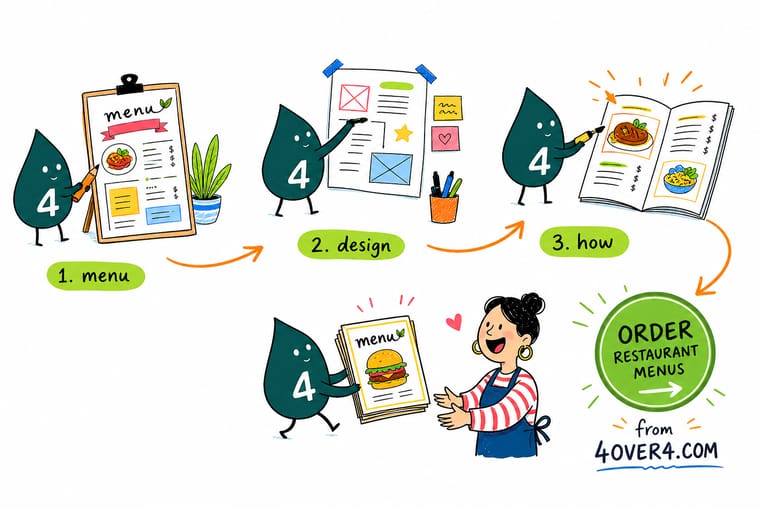
Wally treats the menu like a floor plan: sections that scan fast, the high-margin dishes parked where eyes land first, one hero item boxed to catch the glance. He drops the dollar signs, tucks the price after a tasty description, and prints it on a wipeable stock that survives the dinner rush. Same dishes, higher check, printed at 4OVER4.
Print a menu that sells →Quick reference
At a glance
Size, stock, finish, and format in one table. Match these and the menu survives a service.
| Element | Get it to | Why it matters |
|---|---|---|
| Sections | Clear, logical groups | Grouping dishes into appetizers, mains, and sides lets guests scan quickly instead of getting lost in one long list. |
| Focal zones | High-margin items up top and boxed | The eye lands on certain areas first; place your most profitable dishes there and box a signature item to draw the eye. |
| Pricing | No dollar signs, no dotted columns | Removing currency symbols and price columns stops price-shopping and keeps attention on the food. |
| Descriptions | Short, sensory, specific | A line or two naming ingredients and a vivid adjective raises perceived value and lifts orders. |
| Typography | 2 fonts, clear hierarchy | One display font for headings and one clean font for items keeps the menu readable and on-brand. |
| Material | Laminated or heavy cover stock | Menus get handled all day; a durable, wipeable stock stays clean and cuts reprints. |
Step by step
Step by step
- Map your menu by profit, not just category Before you design, sort dishes by margin and popularity. Know which items you most want to sell so the layout can push them, and consider trimming a bloated menu to focus attention.
- Group items into clear, scannable sections Organize by course or type so guests can find what they want fast. Clear sections reduce decision fatigue and keep the menu from reading as one overwhelming block.
- Place high-margin dishes in the eye's first stops Use the natural scanning pattern to your advantage. Position your most profitable and signature dishes in the top and upper-right zones where attention lands first, and box or highlight one hero item.
- Write short, sensory descriptions Give key dishes a line or two that names ingredients, preparation, or origin, with a well-chosen adjective. Descriptions raise perceived value and make dishes easier to choose.
- Strip the pricing of dollar signs and columns Remove currency symbols and dotted price columns, and place prices discreetly at the end of each description. This keeps guests reading the food instead of comparing numbers.
- Print on a durable, food-safe material Choose laminated or heavy cover stock so the menu survives constant handling. Pair it with table tents to promote specials and drinks without reprinting the whole menu.
Specs and pricing
Restaurant menu specs and live pricing
Once your layout is set, the print choices come down to size, stock, and finish. Here are the live specs and price-per-unit for restaurant menus at 4OVER4.COM.
| Quantity | Price Per Unit | Total |
|---|---|---|
| 50 | $1.14 | $57.11 |
| 100 | 82.4¢ | $82.38 |
| 200 | 53.3¢ | $106.55 |
| 300 | 41.0¢ | $123.02 |
| 400 | 34.9¢ | $139.49 |
| 500 | 31.2¢ | $155.97 |
| 600 | 26.7¢ | $160.36 |
| 700 | 23.5¢ | $164.75 |
Print it
Print a menu that works as hard as your kitchen
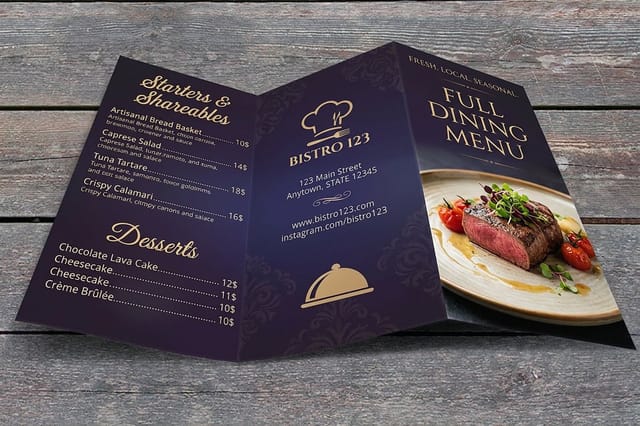
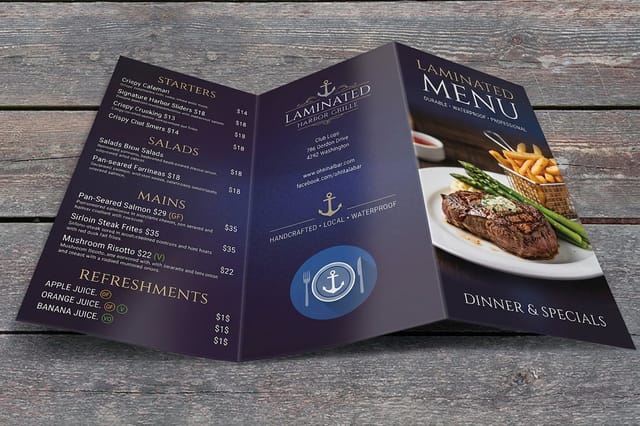
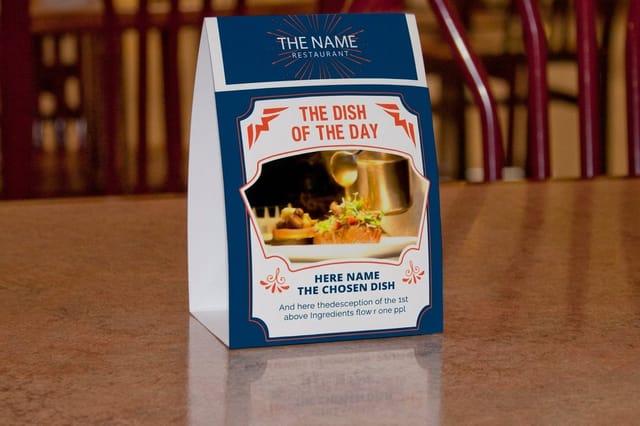
See it in use
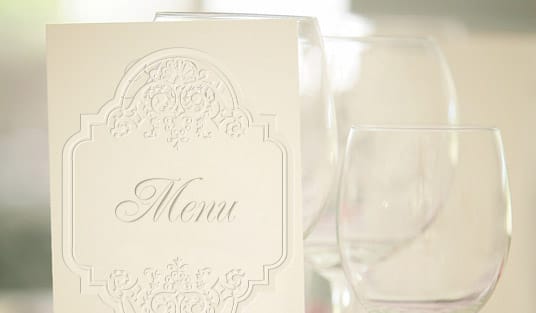
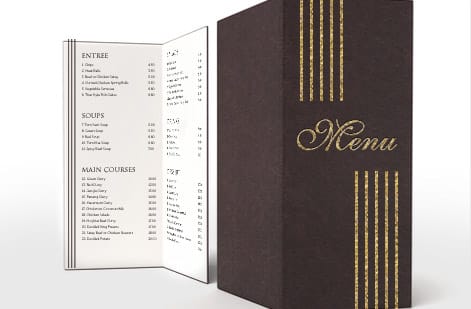
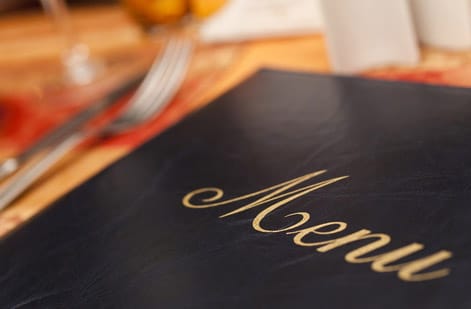
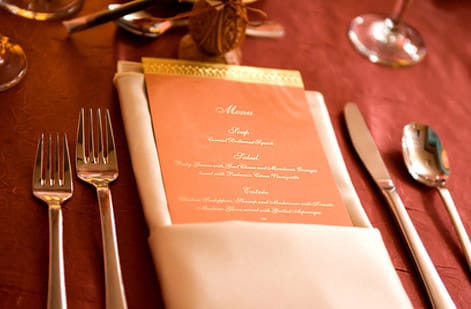
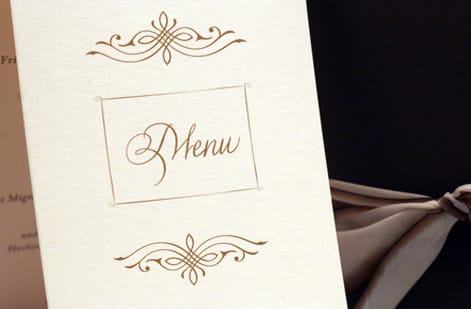
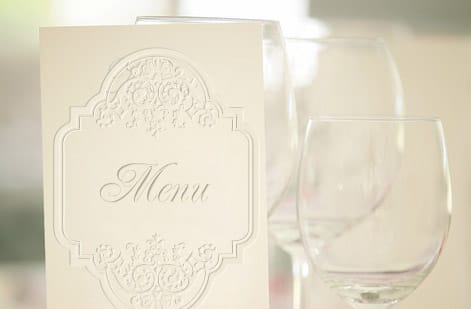
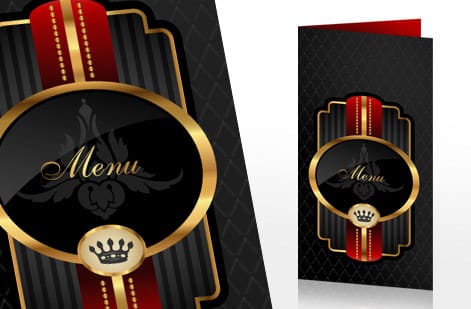
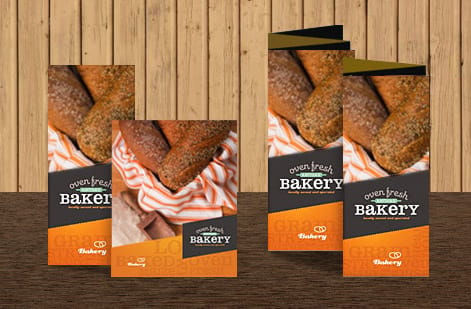
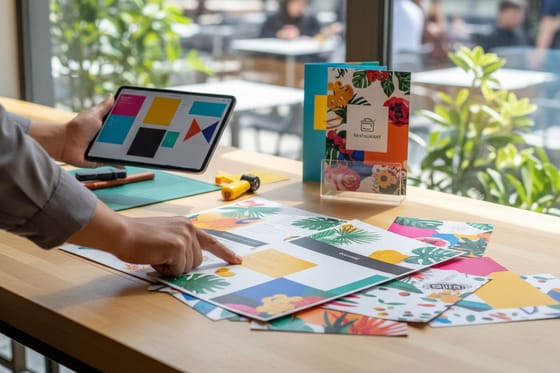
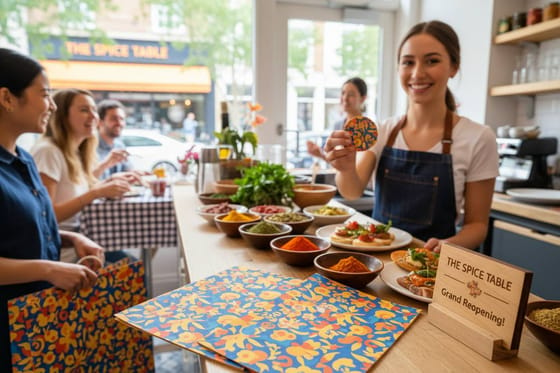
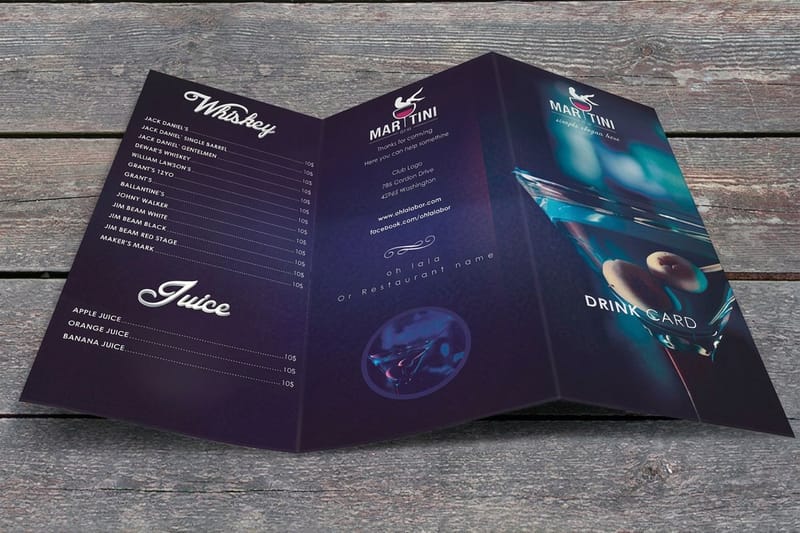
Menu layouts customers had printed
Explore more
Where to go next
By the numbers
The press that prints your dining room
Common Questions
Common questions
What makes a menu design sell more?
A selling menu combines clear structure with quiet psychology. It groups dishes into scannable sections, places the most profitable and signature items where the eye lands first, and uses short sensory descriptions to raise perceived value. It also downplays price by removing dollar signs and price columns so guests read the food, not the numbers. None of this is trickery; it is simply organizing the menu so the dishes you most want to sell are the easiest to notice and choose.
Where do people look first on a menu?
Guests scan a menu rather than reading it top to bottom, and their attention tends to land in predictable zones depending on the format. On a single page it often settles near the top and upper area first; on a folded or multi-panel menu the upper-right region draws early attention. The practical takeaway is to place your highest-margin and signature dishes in those first-glance zones, and to box or visually highlight one hero item so the eye is pulled exactly where you want it.
Should I put dollar signs on my menu?
Generally no. Studies of menu behavior consistently find that removing currency symbols and dotted price columns reduces price-focused ordering, because those cues prompt guests to shop by cost rather than by appetite. The better approach is to place the price discreetly at the end of each dish description, in the same font and size as the text, so it reads as information rather than a sticker price. The food stays the star and guests choose based on what sounds best.
What material should a restaurant menu be printed on?
It depends on how the menu is used. A menu handled at every table all day needs durability, which is why laminated or heavy cover stock is popular; it wipes clean and resists creasing. For a menu you update frequently, a lighter uncoated stock keeps reprints cheap. Many restaurants run a durable core menu plus low-cost table tents for specials and drinks, so the main menu lasts while promotions change often. Choosing the right stock protects both the look and your reprint budget.
How often should I redesign or reprint my menu?
Reprint whenever prices, dishes, or branding change, and review the full design at least once or twice a year. Frequent price changes are a strong argument for a format that is cheap to reprint, or for keeping volatile items on a separate insert or table tent. A periodic redesign is also a chance to apply what the data tells you: promote the dishes that sell and earn well, and quietly demote or remove the ones that do neither.
What does it cost to print restaurant menus, and how are prices set?
Menu printing cost scales with quantity, size, paper stock, and finish. Larger runs lower the unit price, while lamination and heavier stocks add durability at a small premium. You set each option in the configurator and the total updates live, so you can weigh a laminated menu against a lighter one before you commit. A common, budget-friendly approach is to print a durable main menu in a modest run and add inexpensive table tents for specials, so you promote new items without reprinting everything.
Get Started
50 restaurant menus cost $57.11, or $1.14 each
Bring your layout to 4OVER4.COM and print restaurant menus, laminated menus, or table tents on the size, stock, and finish your dining room needs. Restaurant menus print on 100# gloss text or 70# uncoated in 5 business days.
Legal Disclaimer
Gold Standard guarantees apply to all standard orders placed through 4over4.com. Price match requires verifiable proof of a competitor's published price for an equivalent product with matching specifications and turnaround time. Satisfaction guarantee covers manufacturing defects and print quality issues. Contact support with order number and documentation. On-time delivery rate based on tracked orders 1999 to 2026. Individual results may vary based on shipping carrier performance.
