
Return Address Label Sizes, Layouts and Templates That Print Clean


The stock sizes, how many lines each one really holds, the type size that survives a half inch label, and where the label sits on the envelope.
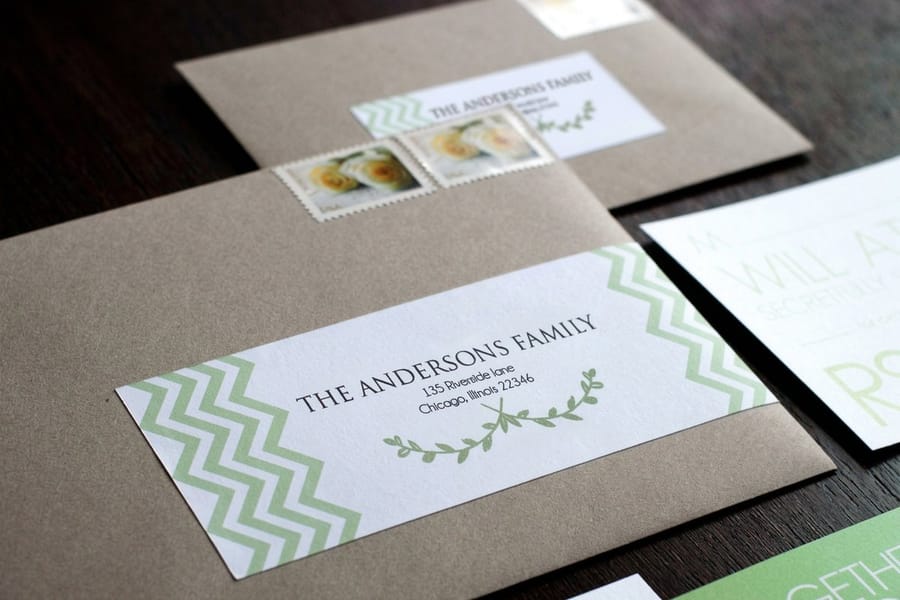
The standard return address label is 0.5 by 1.75 inches, which yields 80 labels from one letter sheet and holds three lines of 8pt type. If your address runs to four lines, step up to 0.67 by 1.75 inches at 60 per sheet. If a logo has to be legible next to the type, go to 1 by 2.625 inches at 30 per sheet. Keep copy 0.0625 inches inside the trim, run any background color 0.125 inches past it, and place the label in the top left corner of the address side.
Quick answer
Three lines fit a half inch label, and not one more
Choose the size by line count, not by taste. A 0.5 by 1.75 inch label loses 0.0625 inches of safe margin top and bottom, leaving 0.375 inches of live area, which is three 8pt lines on 9pt leading and nothing else. A company name, a suite number or a country line makes it four, and four needs 0.67 by 1.75 inches. A logo that has to read at arm length needs a full inch of label height. The diagram below shows the bleed, the trim and the safe area on one enlarged label, with the three stock sizes drawn to scale beside it.
The Three Sizes That Cover Almost Every Return Address
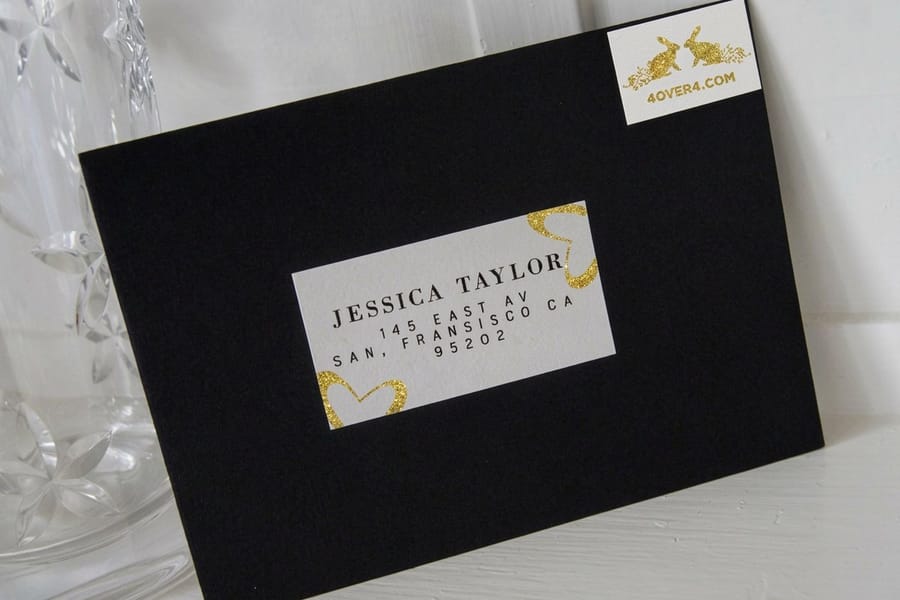
Return address labels come in a short list of sizes because envelopes come in a short list of sizes. Pick by how many lines your address runs, then check the envelope it lands on.
| Label size | Per letter sheet | Lines it holds | Where it fits |
|---|---|---|---|
| 0.5 x 1.75 in | 80 | 3 at 8pt | The default. #10 business envelopes, A2 and A7 invitation envelopes, anything you mail regularly. |
| 0.67 x 1.75 in | 60 | 4 at 8pt | Company name above a personal name, a suite number, or an international country line. |
| 1 x 2.625 in | 30 | 4 at 10pt plus a logo | Business mail where the mark has to be legible, and larger envelopes from 9 by 12 inches up. |
| 2 x 4 in | 10 | Full block plus barcode | Not a return address label. This is the shipping size, used for the delivery address on parcels. |
The 0.5 inch label is the one most people mean, and it is what premium address labels are cut to by default, starting at $29.16. The step to 0.67 inches costs almost nothing and buys a whole extra line, so if you are hesitating between them, take the taller one. Shrinking type to force four lines onto a half inch label is the single most common way a return address ends up unreadable.
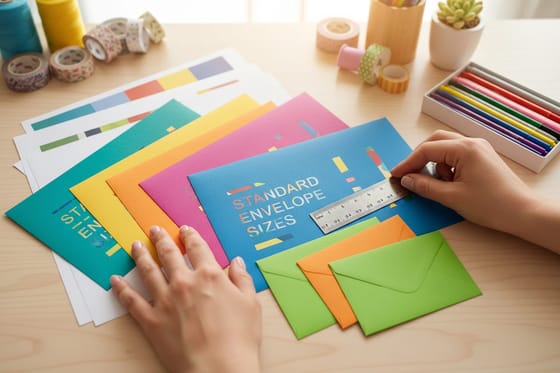
One size that trips people up: A2 and A7 invitation envelopes are small, and a 1 by 2.625 inch label on a 4.375 by 5.75 inch envelope reads as a shipping label rather than stationery. For invitations, stay at 0.5 inches and let the envelope breathe. Our standard envelope sizes guide lists the dimensions if you are matching a label to a stock you already own.
How Much Type Actually Fits on a Half Inch Label
The label is 0.5 inches tall. Your type does not get all of it.
Keep live copy 0.0625 inches inside the trim on every side, because sheet label cutting drifts by about a 32nd of an inch and type that sits on the trim line will lose its descenders on some labels and not others. That leaves 0.375 inches of usable height, which is 27 points. Three lines of 8pt type on 9pt leading is 27 points exactly. There is no room for a fourth line, and no room for extra space between the name and the street.
Horizontally you have 1.75 inches minus the same margins, so 1.625 inches of live width. At 8pt, a condensed humanist sans gives you roughly 30 to 34 characters on that line. Long Island City NY 11101 is 25 characters and sits comfortably. 1201 Jackson Avenue, Suite 400B is 31 and will run tight. Abbreviate the street type rather than shrinking the point size, since postal scanners read Ave and St perfectly well.
Two setup habits save a reprint. Set the address flush left rather than centered, because centered type on a narrow label makes uneven line lengths obvious and gives you no consistent left edge to align to. And convert fonts to outlines before you upload, the same as any print file. If you want the geometry laid out for you, start from a correctly sized file in the blank template library, and read bleed and trim explained if the difference between the two is still fuzzy.
Where the Label Goes and What the Post Office Cares About
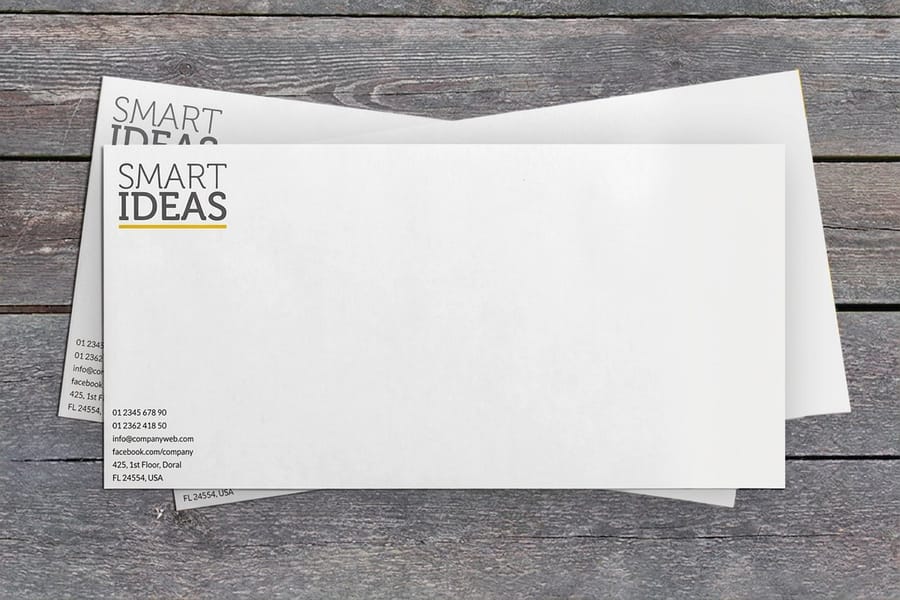
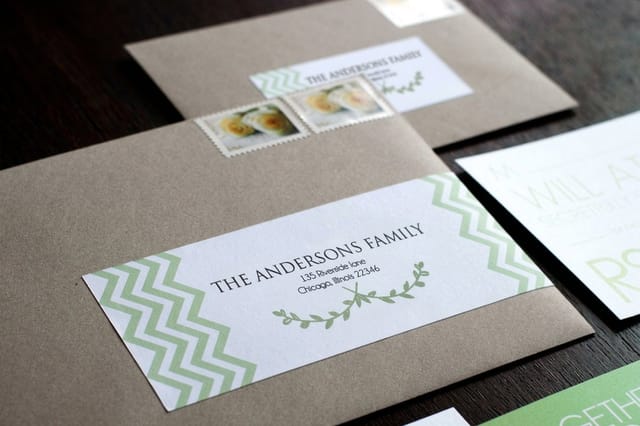
The return address belongs in the top left corner of the address side, about 0.25 to 0.5 inches in from the left edge and the same distance down from the top. That is not decoration. Automated mail sorting reads the delivery address in the lower middle of the envelope, and anything in that read window competes with it.
Two zones to stay out of. The barcode clear zone runs along the bottom right of a letter, 4.75 inches wide and 0.625 inches tall, and it has to stay empty so the sorter can spray a barcode there. The delivery address block sits in the middle band, and on a #10 envelope that band starts roughly 2 inches down from the top edge. A 0.5 inch label placed a half inch from the top corner clears both by a wide margin, which is another reason the small size persists.
Window envelopes are the exception worth naming. If the delivery address shows through a window, the return address still goes in the top left corner, but check that the label does not sit over the window aperture on the reverse fold. On a printed envelope ordered with the return address printed directly on the stock, none of this is your problem, which is the argument for printing rather than labeling once you are mailing the same address more than a few thousand times a year.
Formatting matters as much as position. All caps with no punctuation is the postal preference for machine reading, though a mixed case return address on stationery is fine and always has been. The full line order and abbreviation rules live in how to format a return address.
Sheet, Roll or Die Cut, and What Each One Costs
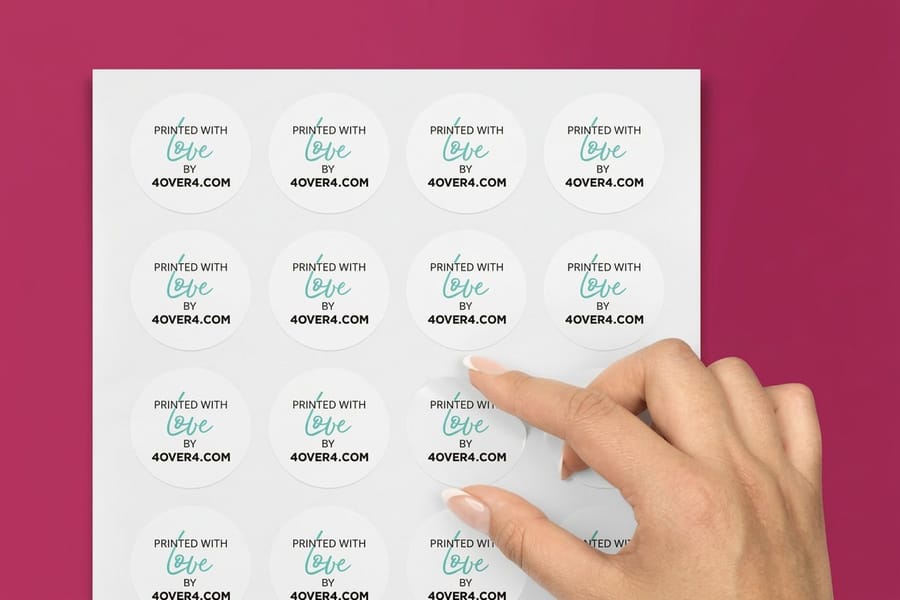
Same address, three very different orders, and the quantity decides which one is sensible.
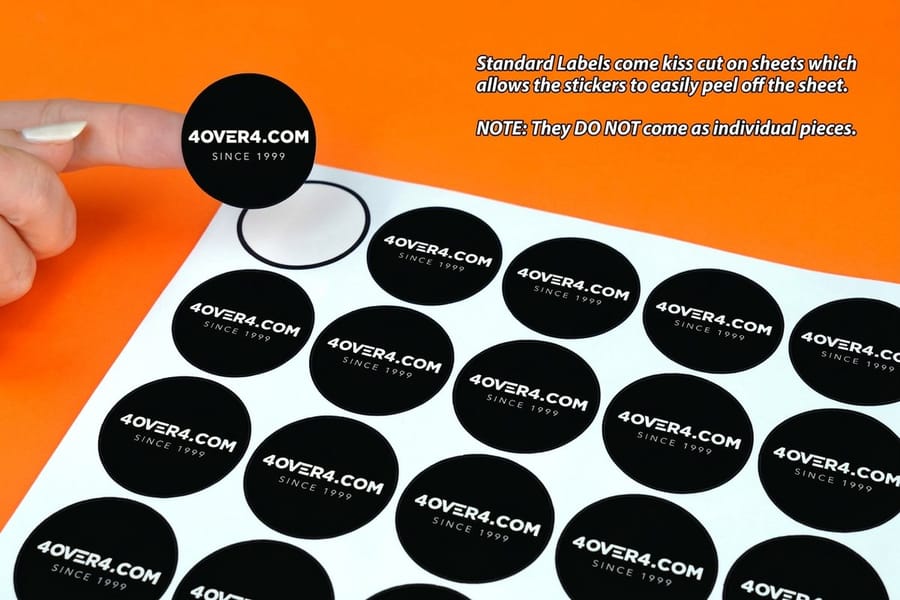
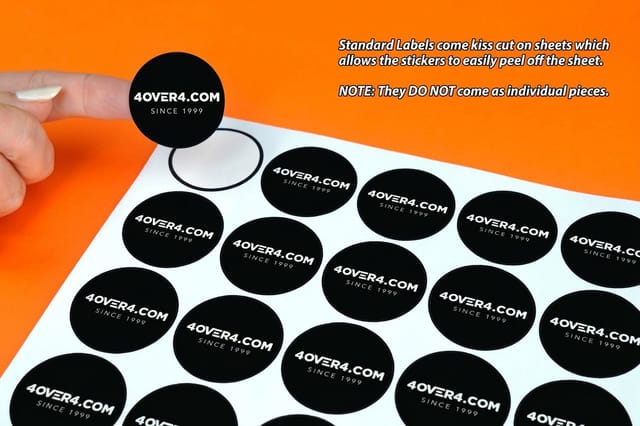
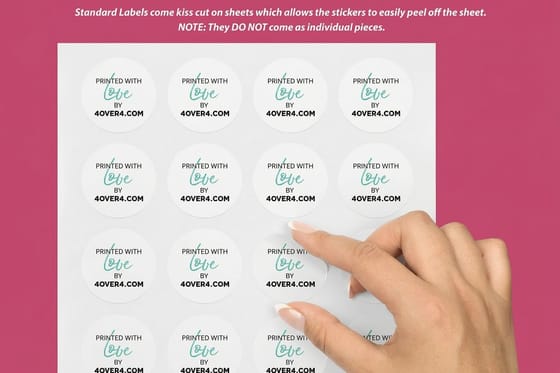
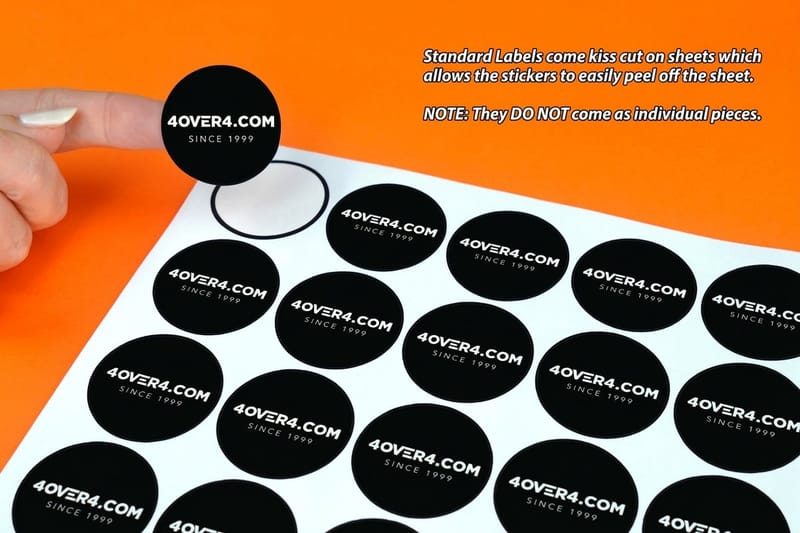
Sheet labels are the default for return addresses. They come flat, you peel them by hand, and they price for the run you actually need. Standard labels start at $23.88 and premium address labels at $29.16, the difference being face stock and finish rather than size. For a few hundred envelopes a month, or a run of wedding invitations, this is the whole answer.
Roll labels solve a different problem. They arrive wound on a core so a machine can strip them off in sequence, which is what a fulfillment line or a print and apply station needs. Roll address labels start at $322.98 because the minimum run is measured in thousands. If you are hand-peeling labels at a kitchen table, a roll is the wrong purchase and the price says so. The full comparison is in roll labels vs sheet labels.
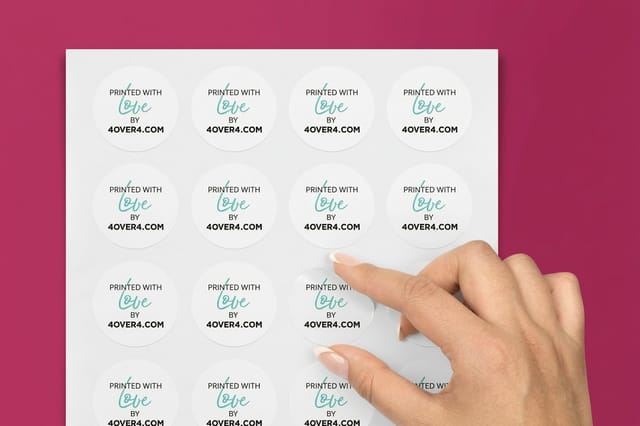
Die cut is about shape, not volume. Die-cut labels start at $93.37 and cut to any outline you draw, which is how a return address label becomes a small oval, a rounded rectangle with a logo notch, or a shape matching your brand mark. It costs more than a rectangle for a reason: the cutting line is yours, not a stock die. For face stock choices on any of these, paper vs vinyl vs clear labels covers where each one holds up, and the full range sits in label printing.
Wally sizes a return address label
Count the lines first, then pick the label
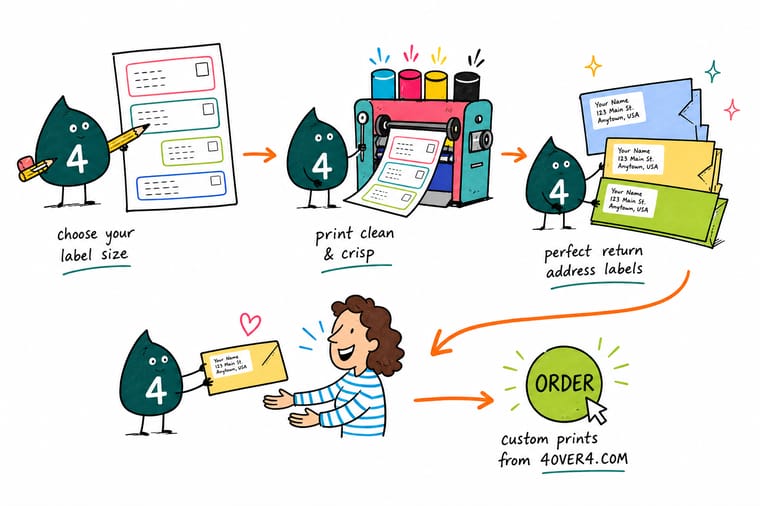
Wally starts with the address, not the label. Three lines means the 0.5 by 1.75 inch size, 80 to a sheet. Add a company name above your own and it is four lines, so he moves up to 0.67 inches. Want the logo readable? That is the 1 by 2.625 inch label. Then he pulls the type 0.0625 inches inside the trim so the cutter never clips a descender, runs any background color 0.125 inches past the edge, and sticks the finished label in the top left corner where the sorter will not confuse it with the delivery address.
Order premium address labels →Specs and pricing
Label sizes, stocks and starting prices
Configure size, material and quantity side by side, with starting prices straight from the 4OVER4.COM configurator.


Print it
Order return address labels that fit the envelope
Explore more
Where to go next

By the numbers
Label printing you can count on at 4OVER4
Common Questions
Your return address label questions, answered
What is the standard return address label size?
0.5 by 1.75 inches. It is the size the label trade settled on for return addresses, it yields 80 labels from one letter sheet, and it fits comfortably in the upper left corner of a #10 business envelope without crowding the flap or the delivery address. If your address needs a fourth line, the next size up is 0.67 by 1.75 inches at 60 per sheet, and after that 1 by 2.625 inches at 30 per sheet.
How many lines fit on a return address label?
Three on the standard 0.5 inch label, four on the 0.67 inch label, and four plus a small logo on the 1 by 2.625 inch label. The arithmetic is simple: subtract 0.0625 inches of safe margin top and bottom, then divide what is left by your leading. A 0.5 inch label leaves 0.375 inches, or 27 points, which is three lines of 8pt type set on 9pt leading with nothing left over.
What font size should I use on a return address label?
8pt is the working default and 7pt is the floor. Below 7pt the counters in letters like a, e and s start to fill in, especially on uncoated stock where ink spreads slightly into the fiber. Stick to a humanist sans or a sturdy slab, avoid hairline weights and fine old style serifs, and set the address in sentence case rather than all caps, which eats horizontal room fast on a 1.75 inch label.
Do return address labels need a bleed?
Only if the color or artwork runs to the edge. A white label with black type needs no bleed at all, because the paper is already white where the die cuts. If you are printing a colored band, a background tint or a photo that touches the edge, extend it 0.125 inches past the trim on every side so the cut never exposes a white sliver. Cutting tolerance on sheet labels is roughly a 32nd of an inch, which is exactly why the bleed exists.
Should the return address label be white or clear?
White for anything you want read at a glance, clear when you want the label to disappear into the envelope. Clear works on white and off white stock and vanishes convincingly. On kraft, colored or textured envelopes it stops working, because clear labels print in CMYK with no white ink underneath, so black type over kraft brown reads muddy and any light color disappears entirely. On dark stock, order a white label or print the address directly onto the envelope.
Where does the return address go on an envelope?
Top left corner of the address side, roughly 0.25 to 0.5 inches in from the left edge and the same from the top. Keep it well clear of the lower right, where the postal barcode clear zone occupies a strip 4.75 inches wide and 0.625 inches tall along the bottom right of a letter, and keep it above the delivery address block so a scanner never has two addresses in the same read window.
Get Started
Ready to print a return address that fits?
Pick the size that matches your line count, choose white or clear face stock, and we cut sheets that peel clean and sit square in the corner.
Legal Disclaimer
Gold Standard guarantees apply to all standard orders placed through 4over4.com. Price match requires verifiable proof of a competitor's published price for an equivalent product with matching specifications and turnaround time. Satisfaction guarantee covers manufacturing defects and print quality issues. Contact support with order number and documentation. On-time delivery rate based on tracked orders 1999 to 2026. Individual results may vary based on shipping carrier performance.
