
Real Estate Sign Riders, From 6 by 24 Sizing to How They Hang


Tobias is our voice for cutting, binding and large format, built from the knowledge of our production team, with over 20 years in printing.
Rider sizes, the materials that survive a full listing, the four ways a rider mounts, and the hole spacing that decides whether it hangs straight.
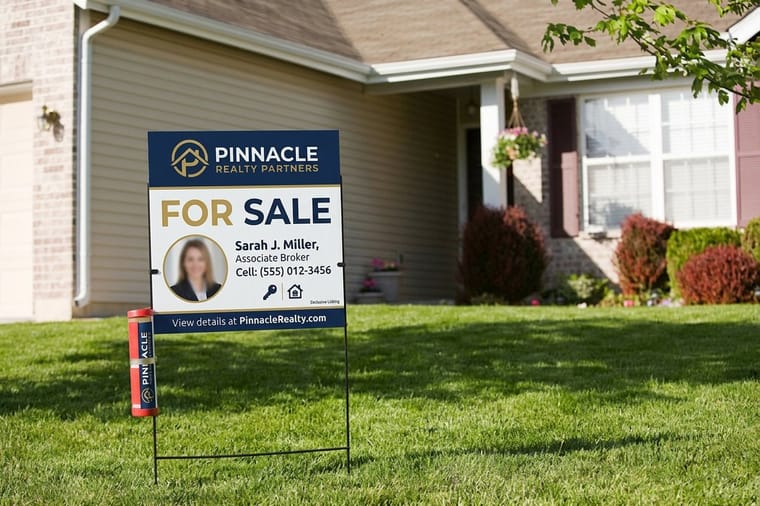
A sign rider is the narrow strip, almost always 6 by 24 inches, that hangs below or bolts above your listing panel and carries the message that changes: sold, pending, price reduced, open house. It is 24 inches wide because the panel is, and it mounts with two holes drilled about an inch in from each end so it lines up with standard rider hooks and rider bars. Aluminum riders last a full listing; coroplast riders tear out at the hook hole and belong on weekend signs.
Quick answer
One panel, a set of riders, two holes that have to line up
A rider carries the changing message so the panel never has to be reprinted. Standard size is 6 by 24 inches, matched to the 24 inch panel above it. It hangs below the panel on S-hooks on a post and arm sign, or sits above the panel in a rider bar on an H-frame, and both mounts expect two holes about an inch in from each end. Aluminum holds that hole for a full listing. Coroplast crushes around it and tears, which is why it belongs on a weekend open house strip and not on a sign that stands for three months. To order one with its sign, the real estate post adds a 24 x 6 in double sided rider under a 1/8 in aluminum panel on a 6 ft white PVC post and arm, from $218.35 with a 4 business day standard turnaround. Upload the rider file at 6 x 24 in and keep the inch at each end clear for the holes.
What a Rider Is, and the Sizes That Actually Fit
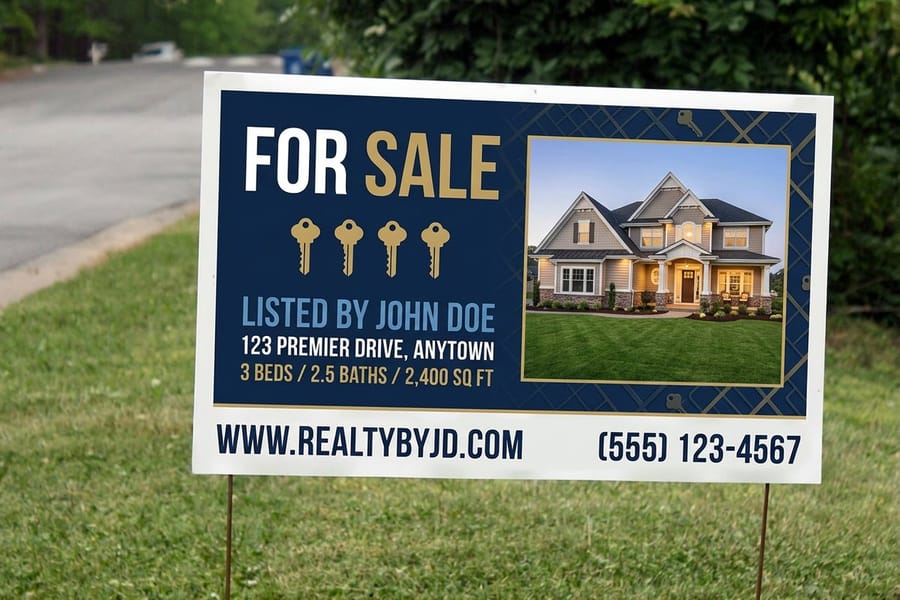
A rider is a narrow printed strip that carries the one piece of information that changes during a listing. Sold. Pending. Price reduced. Open house Sunday 1 to 4. The panel above it carries the brokerage, the agent and the number, and it stays exactly where it is for the whole listing.
That split is the entire economics of the thing. Reprinting a full 24 by 18 panel every time a listing moves status is expensive and slow. Printing one panel plus a set of four riders means the status changes in the time it takes to unhook two S-hooks.
Rider width is not a style choice. It is dictated by the panel, because a rider narrower than the panel looks like a mistake and a rider wider than the panel catches wind and looks worse. The standard panel is 24 inches wide, so the standard rider is 24 inches wide.
| Rider size | Panel it belongs to | What it usually says | The catch |
|---|---|---|---|
| 6 x 24 in | 24 by 18 or 18 by 24 panel | Sold, pending, open house, agent phone | None. Hooks, rider bars and frame channels are built around this size. |
| 6 x 18 in | 18 inch wide yard panel | Agent name and number on a smaller stake sign | Standard rider hardware is drilled for 24 in, so you drill to suit. |
| 4 x 24 in | 24 inch wide panel, stacked | A second line under a 6 by 24, such as a team name | Two riders on one post get top heavy in wind and swing hard. |
| 6 x 30 in | 30 or 36 inch road panel | Brokerage or development name on a wide post | Needs a wide arm. It will not fit a residential rider hook spacing. |
If you are choosing panel sizes at the same time, our guide to real estate sign sizes lays out the panel, directional and road sizes together. The riders themselves are ordered as narrow custom panels: use real estate signs from $25 or cut them from aluminum sign panels from $29 when you want the heavier substrate.
Aluminum, Coroplast or PVC, and Where Each One Gives Up

A rider fails at the hole, not in the middle. Whatever material you pick has to survive two small holes carrying the whole weight of the strip while wind pushes on 144 square inches of surface, all day, for months.
Aluminum is the answer for anything that stands longer than a weekend. At .040 thickness it stays flat, does not drum or flutter on its hooks, and the hole holds its shape because the metal around it does not compress. A .063 panel is stiffer again and shows up on wide road signs where the span is longer. UV printed ink on aluminum holds its color through a full selling season outdoors.
Coroplast is corrugated plastic with hollow flutes running through it, which is why it is light and cheap. It is also why it is the wrong pick for a hanging rider that stays up: a hook passing through the flutes crushes them, the hole elongates a little more with every gust, and eventually the strip tears out and lands in the grass. For a Sunday open house strip that gets used a dozen times a year, that never happens and coroplast is the right spend. Our guide on what coroplast signs are covers the flute direction rule that decides whether a panel bows.
PVC sits between them. It is rigid, prints beautifully, and takes a clean drilled hole, but it softens in sustained heat and gets brittle in hard freeze. Over a 24 inch span that rarely matters, so PVC is a reasonable indoor and sheltered choice and a middling outdoor one. The full comparison lives in aluminum vs coroplast vs PVC.
One material note that gets missed: if your riders go up on roads that people drive at dusk, a reflective face on the panel does more for you than a brighter color. Reflective aluminum signs use a retroreflective sheeting that throws headlights back at the driver, which is the difference between a sign being seen at 6pm in November and not.
How Riders Attach to Posts, H-Frames and A-Frames
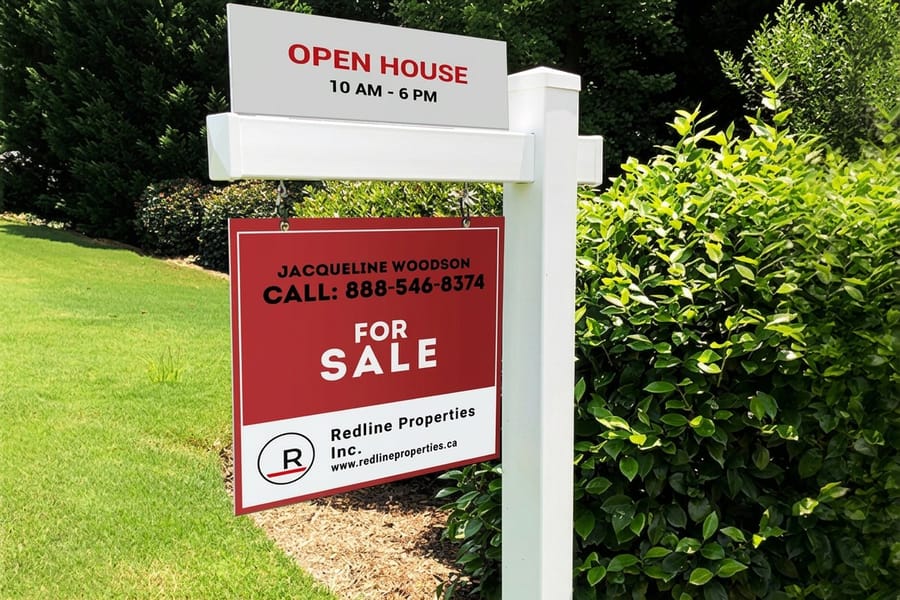
There are four mounts in common use and they are not interchangeable. Pick the mount first, then order the rider drilled to match it.
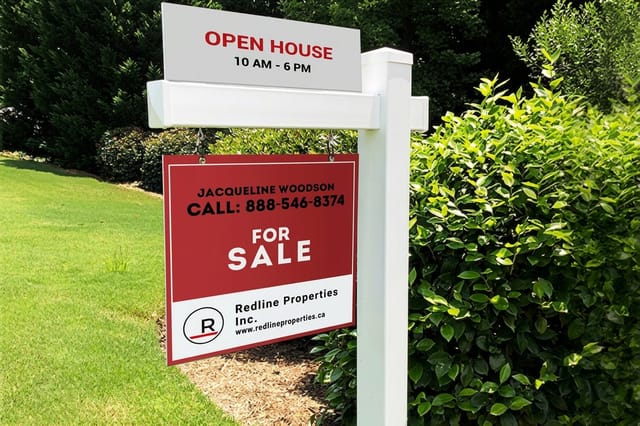
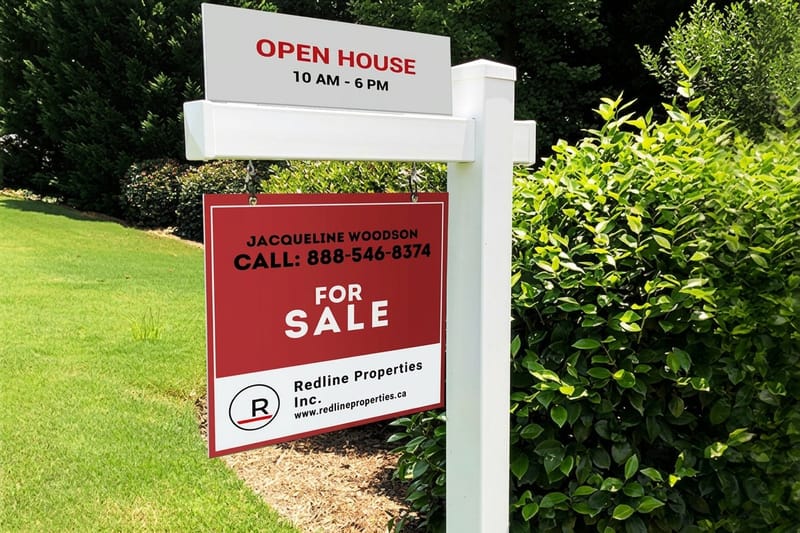
- Post and arm, rider below. The panel hangs from the arm on two hooks and the rider hangs from the bottom of the panel on two more. This is the classic residential setup and the reason riders exist in a 24 inch width at all. Order the real estate post from $218.35 and hang the panel and rider from the same hardware.
- H-frame, rider above. A rider bar clamps across the top of the frame and the rider bolts through it with quarter inch bolts and nylon lock nuts. Above the panel reads better on an H-frame because the whole assembly sits low to the ground. The real estate H-frame is the fastest sign in the truck to put up and take down.
- A-frame, rider in the channel. Sidewalk frames carry the rider in a top slot or bolted flat to the face. Because an A-frame gets moved every open house, use bolts rather than hooks so nothing swings loose in the car. The real estate A-frame starts at $65.90.
- Bolted flat to the panel. The cheapest mount and the one you regret. It works, but it puts two permanent holes through the panel face and covers artwork you paid to print, so the panel is compromised for every listing that follows.
The hole pattern is what makes or breaks all four. Two holes, about an inch in from each end, centered on the 6 inch height, which lines up with the hook spacing on almost every panel sold. Drill them at a different spacing and the rider either hangs crooked or ends up on a single hook, and a rider on one hook spins around in the first wind and shows the road its back.
Order the panel and the riders together, from the same run, so the drilling matches and the color matches too. A rider printed six months later against a different proof rarely sits at exactly the same red as the panel above it.
What to Put on a Rider, and What to Order as a Set

Three words. Four at the absolute outside. A 6 inch strip leaves you roughly 4 inches of cap height once margins are honored, and cap height is what decides reading distance: around one inch of letter per ten feet of viewing distance, so four inches reads from about forty feet. That is a car at 30 mph with a second and a half to take it in. Add a fifth word and the letters drop to a size nobody reads from the road.
Print both sides on anything facing a street. Traffic arrives from both directions, hanging riders turn in wind, and a blank white back is the single most common reason a sign looks abandoned. Keep the type dark on light or light on a saturated brand color, and skip the outline and drop shadow, which cost you contrast at distance rather than adding it.
Check the ordinance before you hang a stack. Plenty of towns cap the total area of a residential real estate sign, and they measure the whole assembly, so a three square foot panel plus two riders can put you over a six square foot limit without anyone intending it. The language varies a lot by state, which is why we wrote the sign permit guide.
The set that covers a normal listing: one panel, four riders (sold, pending, price reduced, open house), a pair of open house signs from $25 for the corner, and a few real estate yard signs from $29.89 for the neighboring streets. Build the whole thing from the real estate printing collection, start your artwork from a correctly sized layout in the blank template library, and read the full real estate signage guide if you are setting up a sign program from nothing.
Wally explains sign riders
One panel stays up, the little strip does the talking
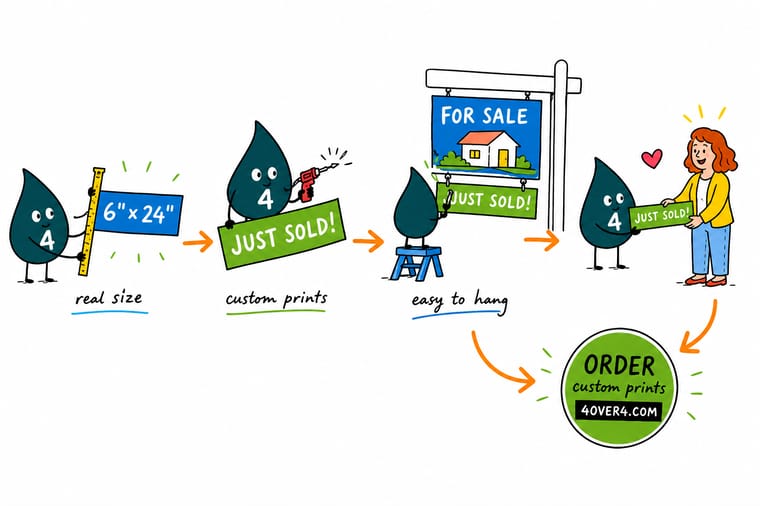
Wally hangs the panel once and leaves it alone. When the listing goes pending, he unhooks a 6 by 24 strip, hangs the next one, and drives off. The two holes are an inch in from each end, so every strip in his set fits the same hooks. He keeps four riders in the truck and one panel on the post, and he uses aluminum on anything that stays up past the weekend because coroplast quietly chews through its own hook hole.
Order real estate signs and riders →
Specs and pricing
Rider and panel options, sizes, and starting prices
Riders are ordered as narrow panels, so the substrate, size and quantity choices are the same as the sign they hang from. Configure them live below. Coroplast signs come in 12 x 18, 12 x 24 and 18 x 24 in with grommets and an H-stake as options, aluminum panels are 1/8 in thick from 11 x 17 in with a gloss or matte laminate, and the yard sign panel is 24 x 18 in printed on both sides.



Print it
Order the panel, the riders and the post as one set
Coroplast panels start at $25 with a 5 business day standard turnaround and aluminum panels at $29 with 4. The post and arm starts at $218.35, takes 4 business days, and is the one piece that can ship with its rider already in the order.


Explore more
Where to go next
Four guides cover sign sizes, choosing a post, frame or stake, sign materials and open house directional signs, and the category and FAQ cover the rest of a listing set.



By the numbers
Riders, panels, frames and posts that fit together
Common Questions
Your sign rider questions, answered
What is a real estate sign rider?
A rider is the narrow printed strip that hangs below or bolts above the main listing panel and carries the one message that changes during a listing: sold, pending, price reduced, open house Sunday, or an agent phone number. The panel stays on the post for months. The rider gets swapped in ninety seconds without touching anything else, which is the whole reason it is printed as a separate piece rather than built into the panel artwork.
What size are sign riders?
The standard is 6 by 24 inches, because the standard real estate panel is 24 inches wide and a rider is always cut to the width of the panel it serves. Smaller 18 inch wide yard panels take a 6 by 18 rider. A 4 by 24 strip is used when an agent wants two stacked riders under one panel without the assembly getting top heavy, and 6 by 30 turns up on wide road panels. Sizing for the panels themselves is covered in our guide to real estate sign sizes.
How do you attach a rider to a real estate sign?
Four ways, and they are not interchangeable. On a post and arm sign the rider hangs below the panel on two S-hooks or rider hooks passed through drilled holes. On an H-frame the rider usually sits above the panel in a rider bar and bolts through with quarter inch bolts and nylon lock nuts. On an A-frame it drops into the top channel or bolts flat to the face. The fourth way is bolting the rider straight onto the panel face, which works but punches holes in a panel you want to reuse.
Should sign riders be printed on both sides?
Yes, on any sign that faces a street. Traffic comes from both directions and a blank white back on a swinging rider reads as neglect from the car that approaches the wrong way. The exception is a rider mounted flat against a wall or a fence, where the back is never visible and single sided saves a little money. Double sided also means the rider still works after wind turns a hanging strip around.
Do sign riders count toward local sign size limits?
In many towns yes, and it catches agents out. Ordinances that cap a residential real estate sign at six square feet usually measure the whole assembly, so a 24 by 18 panel at three square feet plus a 6 by 24 rider at one square foot puts you at four before you add a second rider. Check the rule before you hang three strips off one post, and read our guide to sign permits by state for how the language differs.
What material lasts longest for a rider?
Aluminum, and the gap is not close. A .040 aluminum rider stays flat, does not flutter on its hooks, and holds up through a full selling season with UV printed ink. Coroplast is thinner, cheaper and lighter, but its hollow flutes crush where a hook passes through, so the hole slowly elongates and the strip tears out. If a rider is going up for one weekend, coroplast is the sensible spend. If it is going up for the length of a listing, aluminum costs a few dollars more and outlasts three coroplast strips.
Get Started
A real estate H-frame costs $98.86, a post $218.35
Pick the substrate, set the size, and we print panels and riders in the same run so the holes line up and the color matches.
Legal Disclaimer
Gold Standard guarantees apply to all standard orders placed through 4over4.com. Price match requires verifiable proof of a competitor's published price for an equivalent product with matching specifications and turnaround time. Satisfaction guarantee covers manufacturing defects and print quality issues. Contact support with order number and documentation.
