
The Realtor Guide to Open House Directional Signs That Convert


A trail of directional signs turns passing drivers into open house visitors. The count, the placement, and the type size are what make signs read at 30 miles per hour.
Use one directional sign at every turn between the main road and the listing, plus a lead-in sign and the yard sign. Keep each sign to OPEN HOUSE, one bold arrow, and your color so drivers read it in two seconds. Coroplast on wire stakes handles a weekend; aluminum and A-frames last across seasons.
Start here
How many signs a route actually needs
Directional signs are a trail that leads a driver from a busy road to your front door. Place one at every turn, plus a lead-in sign and the main yard sign, and keep each to an arrow and three words so it reads at speed. Choose coroplast for a weekend or aluminum for repeated use, place them legally, and collect them all. The route map below shows the plan.
Why directional signs still fill an open house
An open house lives or dies on foot traffic, and a surprising share of that traffic is unplanned: drivers who saw a sign, followed the arrow, and pulled over on impulse. Online listings bring the intentional visitors, but directional signs capture the neighbors and passers-by who would never have searched for the address.
Their job is narrow and physical. A trail of coroplast directional signs takes a driver from a busy road to your front door without a single wrong turn or moment of hesitation. Break the chain and the buyer drives on; complete it and they arrive relaxed and ready to look.
This guide covers how many signs you need, where to place them, how to design a sign that reads at speed, which material to choose, and how to set and collect them legally. When you are ready to build the full set, browse the open house printing collection or start with the ready-made realtor open house kit.
How many signs you need, and a simple route plan
Guessing the number is where most agents go wrong, in both directions. Too few and the trail breaks; too many and you are collecting signs from three neighborhoods on Sunday night. The fix is to count, not guess.
Trace the drive from the nearest main road to the listing and mark every turn. The working formula is one directional sign at each turn, plus a lead-in sign on the main road, plus the main sign in the property’s own yard. For a home a few turns off a busy street, that is usually three to six directional signs. The test is simple: a driver should never reach a corner without already seeing your next arrow.
Because you are buying a set, economical coroplast signs make sense, and double-sided printing lets both directions of traffic read each one. Keep a couple of spares in the car for the corner you did not plan for. The yard sign that carries the address and time anchors the route at the destination.
Where to place signs so the trail never breaks
Placement is timing as much as location. A sign has to appear early enough that a driver can react, and clearly enough that the arrow’s meaning is instant.
Put each sign just before the turn it points to, at the corner, where an approaching driver sees it in time to slow down and turn. Start the route with a lead-in sign on the main road so drivers register that an open house is near before the turns begin. Keep signs clear of sightlines, crosswalks, and anything that blocks a driver’s or pedestrian’s view.
Respect the ground rules too. Stay off private lawns unless you have permission, avoid medians and traffic islands where they are prohibited, and check your municipality’s sign ordinance and any HOA restrictions before you stake a single sign. A trail that is both unbroken and compliant is the goal, and getting caught removing illegal signs undoes the whole effort.
Designing a sign a driver reads in two seconds
The single most common mistake is treating a directional sign like a flyer. It is not. At driving speed a person reads a sign in under two seconds, so every extra word is a word that does not get read.
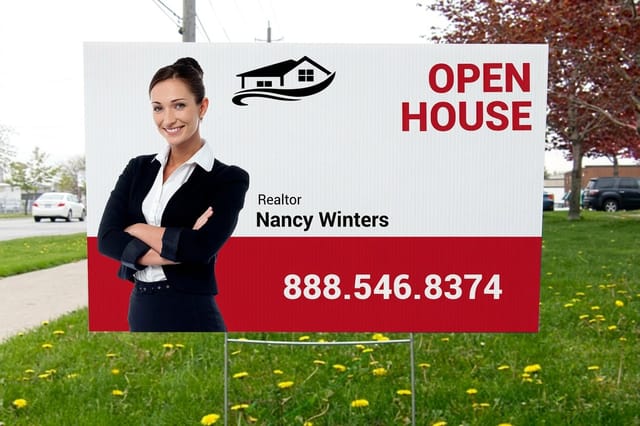
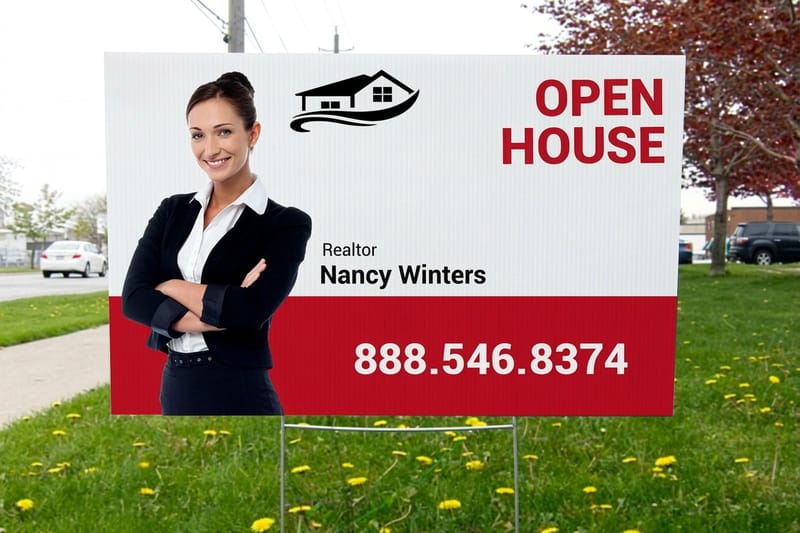
Give a directional sign three things only: the phrase OPEN HOUSE, one bold arrow, and your brand color for recognition. Use a heavy, simple typeface, dark text on a light field for maximum contrast, and make the arrow the largest element on the panel. Everything else, the address, the hours, your name and headshot, belongs on the larger yard sign at the listing, where people have stopped and can actually read.
Consistent color across the whole route also helps drivers lock onto your trail specifically, ignoring other agents’ signs. For the color pairings that read fastest from a moving car, our companion piece on the best colors for real estate signs is worth a look before you finalize the design.
Coroplast, aluminum, and the mount that holds them
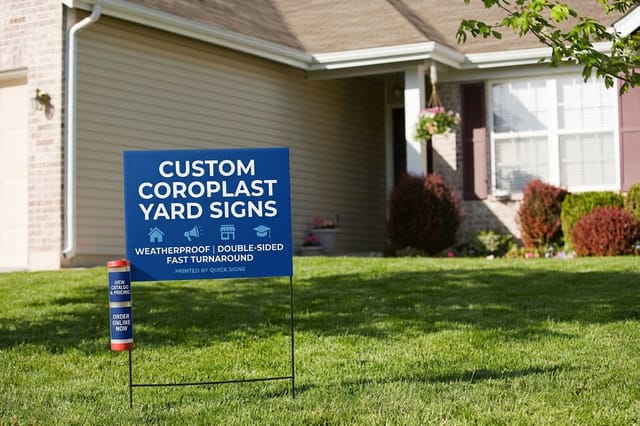
The material decision follows how often you will run open houses. For a single weekend, 4mm coroplast on wire H-stakes is the standard: lightweight, weatherproof, cheap enough to own a stack, and quick to plant in soft ground. It is what most directional trails are made of.
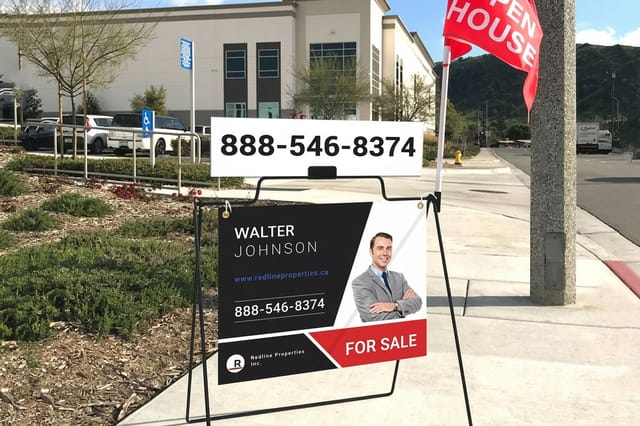
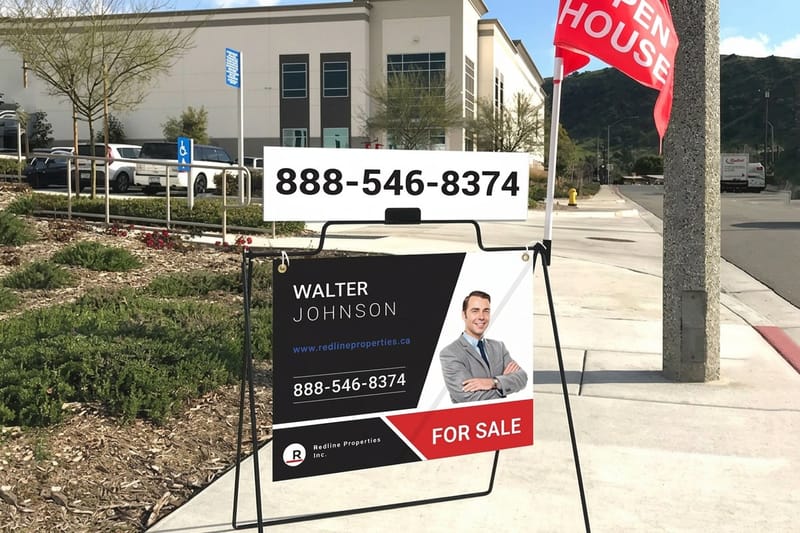
If you run open houses constantly and want signs that survive repeated setup, transport, and storage, rigid aluminum signs and A-frames last far longer and stand on hard surfaces like sidewalks and parking lots where a stake will not go. Many agents carry both: a set of coroplast for the route and a couple of A-frames for the entrance and the corner nearest the door.
The mount matters as much as the panel. Wire H-stakes turn a coroplast sign into a lawn sign instantly, while A-frames give you a freestanding sign anywhere. Keeping a kit of signs, stakes, and frames together means you can deploy a full route in minutes and break it down just as fast. See the live specs and pricing below to build your set.
Setting up, retrieving, and reusing your set
The best sign system is one you can deploy fast and reclaim completely. Set the trail an hour before the open house: plant the lead-in sign, chain the directional signs turn by turn, and place the A-frame and yard sign at the destination.
Keep the signs upright and square as you go, since a leaning arrow reads as ambiguous, and give wire stakes a firm push so weekend wind does not lay them flat. Note where each sign goes, because the single most important step comes at the end.
When the open house closes, walk the route in reverse and collect every sign. A full, clean set is ready to redeploy at the next listing, it keeps you on the right side of local ordinances, and it protects the investment you made in the signs. Treat your directional signs as reusable equipment, not disposable paper, and one good set runs dozens of open houses. Order the complete campaign from the open house collection.
Wally leaves an unbroken trail of arrows
One sign per turn, one arrow per sign
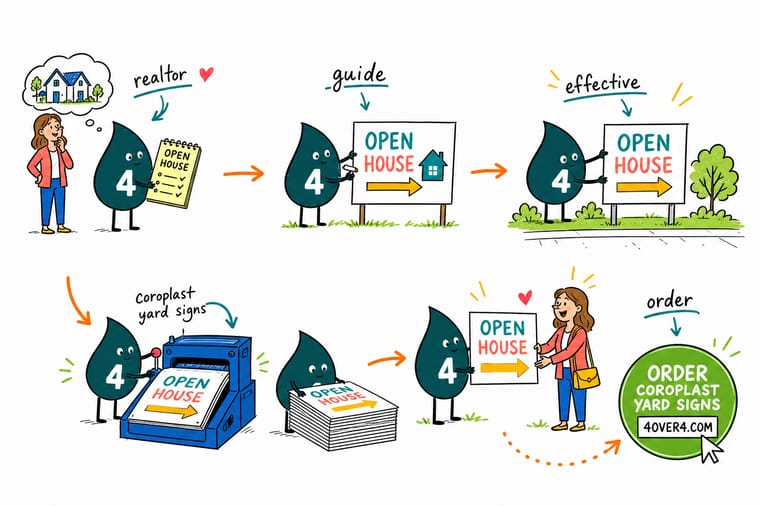
Wally treats an open house route like breadcrumbs: a lead-in sign on the main road, one bold arrow at every turn, and the yard sign waiting at the door. Three words and a big arrow read at speed, coroplast stakes in seconds, and every sign gets collected for next weekend. Plan the trail, then let 4OVER4 print a set that runs dozens of open houses.
Order your directional signs →Quick reference
Open house sign setup at a glance
Match these and your directional trail reads clearly, stakes fast, and holds up on the corner.
| Setting | Get it to | Why it matters |
|---|---|---|
| Popular size | 18 x 24 in | Large enough to read from a moving car, small enough to stake fast and store easily. |
| Material | Coroplast (4mm) | Lightweight, weatherproof corrugated plastic that pops onto a wire H-stake in seconds. |
| Sides | Double-sided | Traffic reads the sign from both directions on a two-way street, so print both faces. |
| Mount | Wire H-stakes or A-frame | H-stakes for soft ground on the weekend, A-frames for hard surfaces and repeated use. |
| Arrow | One bold direction | A single large arrow removes any doubt about which way to turn at the corner. |
| Contrast | Dark text on light | High contrast and few words keep the sign legible at speed and from a distance. |
Step by step
Run a directional sign trail in 6 steps
- Map the route from the main road Start at the nearest busy road a buyer would come from and trace the drive to the listing, marking every turn a driver has to make.
- Place one sign at each decision point Put a directional sign just before each turn, plus a lead-in sign on the main road, so the trail is never broken.
- Keep the message to an arrow and three words OPEN HOUSE, a bold arrow, and your color. Save the address, time, and your name for the sign in the listing’s own yard.
- Choose the right material for the job Coroplast on wire stakes for a one-day open house, or aluminum and A-frames if the signs will be reused across many weekends.
- Set signs safely and legally Stake at the corner where they are visible but not blocking sightlines, stay off private lawns without permission, and check local and HOA rules first.
- Collect every sign afterward Walk the route in reverse and retrieve all of them. A complete, clean set is ready to redeploy at the next listing and keeps you compliant.
Specs and options
Coroplast sign specs and options
Once you know your route, the print choices are size, material, sides, and quantity. Here are the live specs and options for coroplast yard signs at 4OVER4.COM, straight from the configurator, with your price building live as you choose.

Build the set
Everything an open house route needs
See it in use
Real sign work, made in-house
Explore more
Where to go next


By the numbers
Coroplast and aluminum, cut to your route
Common Questions
Common questions about open house signs
How many open house directional signs do I need?
Count the turns. The reliable formula is one directional sign at every decision point between the nearest main road and the listing, plus one lead-in sign on the main road itself, plus the sign in the property’s own yard. For a home a few turns off a busy street that usually means three to six directional signs. If a driver ever reaches a corner without seeing your next sign, the trail is broken, so err toward one more sign rather than one fewer.
Where should I put open house signs?
Place each sign just before the turn it points to, at the corner where an approaching driver sees it in time to react, without blocking sightlines or pedestrian paths. Start with a lead-in sign on the main road so drivers know an open house is near, then chain a sign to each turn along the route. Keep signs out of private lawns unless you have permission, off medians and traffic islands where prohibited, and always check your municipality’s rules and any HOA restrictions before staking.
What should an open house directional sign say?
Almost nothing. At driving speed a person reads a sign in under two seconds, so a directional sign should carry only OPEN HOUSE, one bold arrow, and your brand color for recognition. That is it. The details, meaning the address, the hours, your name and contact, belong on the larger sign in the listing’s own yard, where people have stopped and can read them. Overloading a directional sign with text is the fastest way to make it useless.
What material is best for open house signs?
For a single weekend open house, 4mm coroplast on wire H-stakes is the standard: it is lightweight, weatherproof, cheap enough to own several, and pops into soft ground in seconds. If you run open houses constantly and want signs that survive repeated setup and storage, rigid aluminum signs and A-frames last far longer and stand on hard surfaces like sidewalks and parking lots. Many agents keep both: a stack of coroplast for the trail and a couple of A-frames for the entrance.
What accessories help open house signs work?
The mount matters as much as the sign. Wire H-stakes turn a coroplast panel into a lawn sign instantly, while A-frames give you a freestanding sign on pavement. Rider panels can add OPEN or an arrow above a main sign, and a few flags or balloons at the entrance catch the eye once drivers arrive. Double-sided printing lets both directions of traffic read the sign. Keeping a kit of stakes, frames, and signs together means you can deploy a full route in minutes.
What do open house directional signs cost and how are prices set?
Price scales with the usual levers you set in the configurator: quantity, where a bigger set drops the per-sign price, plus size, material, single or double sided, and the mount you add. Coroplast signs are the most economical per piece, which is why agents buy them in sets, while aluminum and A-frames cost more upfront but last across many listings. The total updates live as you choose options, so you can balance a weekend budget against long-term reuse before you order.
Get Started
A real estate A-frame costs $65.90 and ships in 4 business days
Bring your design to 4OVER4.COM and print coroplast directional signs, yard signs, and A-frames in the sizes and quantities your route needs. Coroplast yard signs run 5 business days, A-frames 4.
Legal Disclaimer
Gold Standard guarantees apply to all standard orders placed through 4over4.com. Price match requires verifiable proof of a competitor's published price for an equivalent product with matching specifications and turnaround time. Satisfaction guarantee covers manufacturing defects and print quality issues. Contact support with order number and documentation. On-time delivery rate based on tracked orders 1999 to 2026. Individual results may vary based on shipping carrier performance.
