
Real Estate Sign Sizes Explained with Standard Dimensions and Best Locations


Real estate signs work when they are the right size for the road and placed where drivers see them. Here are the standard dimensions, what each sign is for, and the best locations to plant them.
The standard real estate For Sale sign is 18 by 24 inches, with 6 by 24 rider strips, 24 by 18 directional signs, and 24 by 36 panels for busy roads. Size the sign to the viewing distance, not the yard, check local and HOA rules, and place a trail of directional signs to guide traffic to the door.

Start here
Real estate sign sizes in one paragraph
The standard For Sale yard sign is 18 by 24 inches, with 6 by 24 riders, 24 by 18 directional signs, and 24 by 36 panels for busy roads. Size the sign to the viewing distance rather than the yard, use coroplast for temporary listings and aluminum for permanent ones, and place a trail of directional signs so drivers can follow them to the door. The dimensions below break it down.
Watch it printed
See yard signs on the press, in 114 seconds
Why sign size decides whether it works
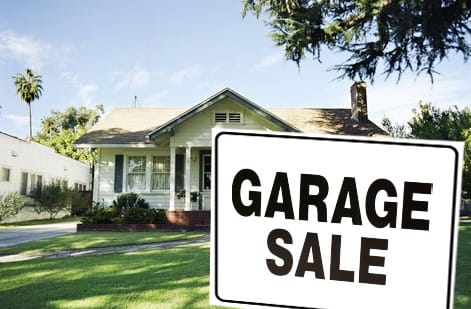
A real estate sign has one job: to be read, quickly, by someone who is usually moving. Get the size right and it does that effortlessly. Get it wrong and it either disappears against a busy road or overwhelms a quiet street and runs afoul of local rules. Size is not a cosmetic choice, it is what determines whether the sign is legible at the distance and speed people actually see it.
The good news is that real estate has settled on a small set of standard sizes, and once you know them, choosing is straightforward. The classic For Sale sign is 18 by 24 inches, riders are 6 by 24, directional signs are 24 by 18, and larger panels run 24 by 36 for busy roads. This guide explains each size, what it is for, and where to place it.
When you are ready to print, our real estate yard signs and the full real estate collection cover every size and material here, from a quick coroplast listing sign to a durable aluminum panel.
Standard real estate sign sizes

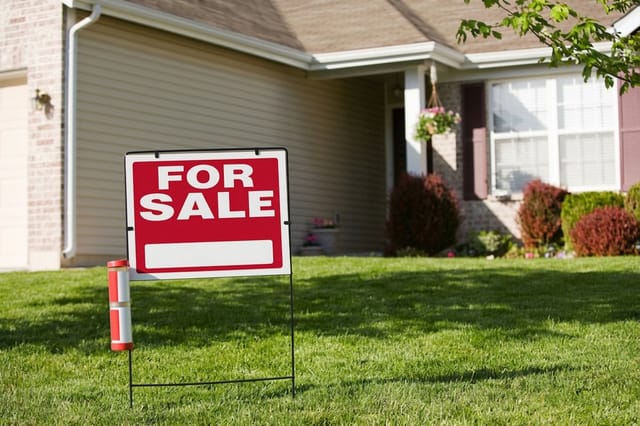
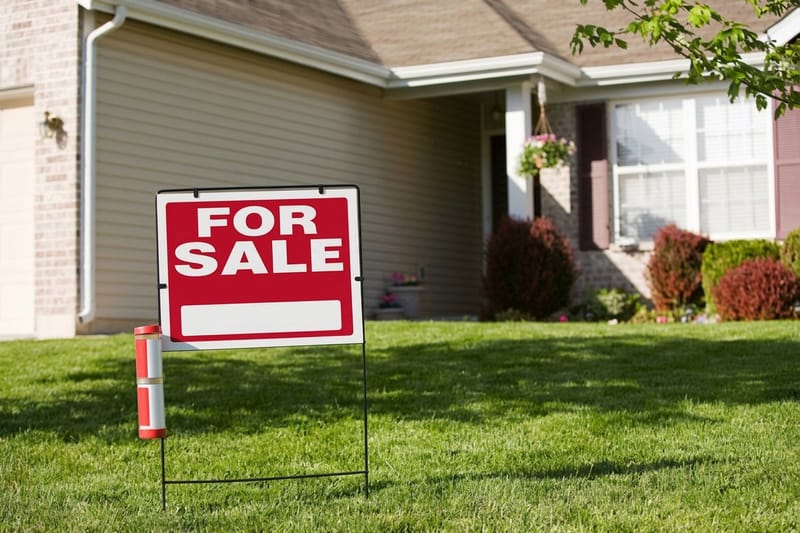
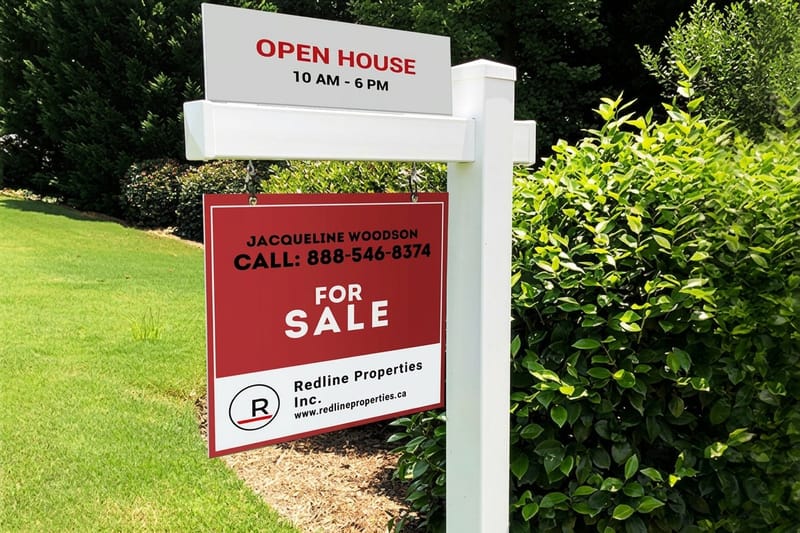
The standard real estate For Sale sign is 18 by 24 inches. Riders are 6 by 24, open house directionals are 24 by 18, and busy roads or large lots call for a 24 by 36 panel. Real estate signage runs on that handful of standard dimensions. The For Sale yard sign is 18 by 24 inches, the size nearly every hanging post and yard frame is built to hold, and it is the default for residential listings; it is the same blank as our standard yard signs, printed for the listing instead of the campaign. Clipped above or below it, a rider strip at 6 by 24 inches adds real-time status like Sold, Open House, a price, or a phone number without reprinting the main sign, and the strips ship with the panel on our real estate yard signs page so the widths and the clip holes match.
For guiding traffic, directional and open house signs are usually 24 by 18 inches, a wider landscape shape that fits an arrow and a short line of text. When a listing sits on a busy road, a large lot, or a deep setback, a post panel or A-frame at 24 by 36 inches gives the visibility a smaller sign cannot, so it reads from a moving car. The trade-off is handling: the 24 by 36 needs a heavier post or frame and more clearance from the sidewalk, while the 18 by 24 drops into almost any existing hanger.
These four sizes cover the vast majority of residential work, with larger formats reserved for commercial and high-traffic listings. Our real estate yard signs come in the standard sizes with matching riders, our yard signs cover the same 18 by 24 and 24 by 36 panels for open listings and events, and our real estate A-frames handle the portable open-house role, all sized to work together as a set.
Which signs a real estate campaign needs
Marking a listing well usually takes more than one sign, because each type does a different job. The yard sign marks the home itself, hanging from a post or standing in a frame at the property, at 18 by 24 inches. Rider strips at 6 by 24 inches layer on top to update its status, turning a For Sale into a Sold or flagging an Open House the moment plans change, which is why most agents print several riders per listing and only one panel.
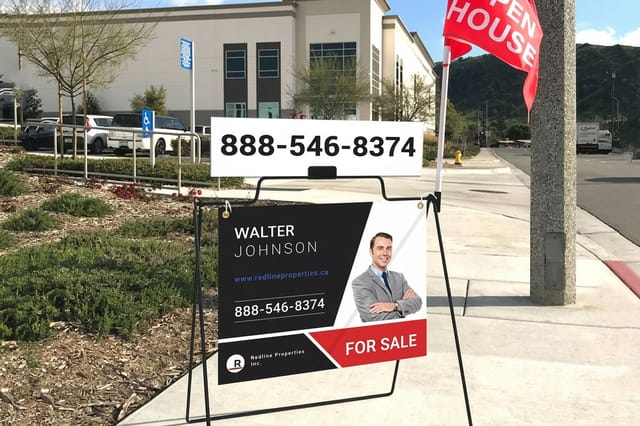
A-frame signs are portable and fold flat, which makes them ideal for open houses, sidewalks, and pointing people in from the street, then packing away at the end of the day. Directional signs with bold arrows do the pulling, guiding drivers from a nearby intersection all the way to the door, usually at 24 by 18 inches so the arrow and one short line still read from a slowing car.
Used together, these cover the three things a sign campaign has to do: mark the home, keep its status current, and drive traffic toward it. Our yard signs, A-frame signs, and aluminum A-frames supply the set, and the online design tool keeps them visually consistent so the whole campaign looks like one brand.
How to choose the correct size
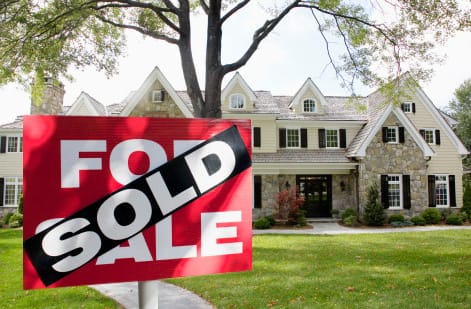
The rule that matters most is to size the sign to the road, not the yard. On a quiet residential street where cars pass slowly and stop signs are frequent, the standard 18 by 24 inch sign is perfectly readable. On a busy road, a large lot, or a home set well back from the street, step up to a 24 by 36 inch panel so it stays legible from a moving car.
For the text itself, a practical guide is roughly one inch of letter height for every ten feet of viewing distance. Keep the most important line, usually the phone number or the word that describes the property, large and uncluttered, and resist the urge to fill every inch. A clean sign with three readable lines beats a busy one with ten.
Before you print, always check local and HOA rules. Many towns and homeowner associations cap sign size, the number of signs, and where they can be placed, and a sign that breaks the rules gets pulled or fined. Confirming the limits first is the cheapest step in the whole process. Our guide on the best colors for yard signs covers legibility from the color side.
The best locations to place your signs
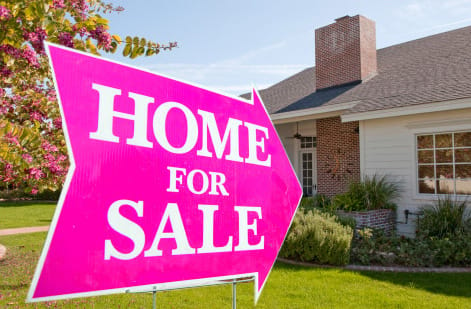
Placement often matters more than size. The main yard sign belongs in the front yard, angled toward oncoming traffic and kept clear of hedges, parked cars, and anything that blocks the sightline. On a corner lot, position it so it can be read from both streets, or use two signs.
Open houses live or die on directional signs. Start with an A-frame or directional sign at the nearest major intersection, then place a trail of them leading toward the property, each with a clear arrow. The goal is an unbroken visual path: a driver should always be able to see the next sign before the last one leaves view, so they never lose the thread on the way to the door.
Think of the signs as a route, not a scattering. One well-placed directional sign at the right corner pulls more traffic than a bigger sign hidden mid-block, which is exactly how investors use directional bandit signs to generate leads. Pair the signage with a real estate mailer and you cover both the street and the mailbox.
Materials, durability, and ordering
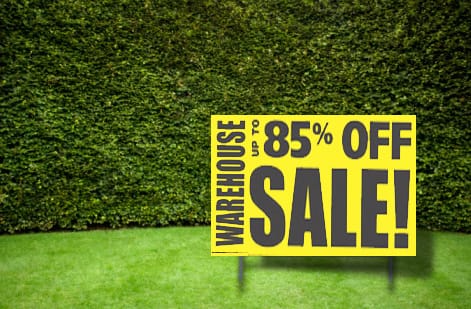
Material follows how long the sign stays out. Coroplast, a lightweight corrugated plastic, is affordable and easy to place, which makes it the go-to for temporary listings that will sell and come down. Aluminum is a rigid, weatherproof panel for permanent signs, development entrances, and anything that faces months of sun and rain. Both can print single or double sided so the message reads from either direction.
Finishing holds it all in place. Grommets, H-stakes, hanging frames, and A-frame stands mount the sign securely, and adding grommets keeps a sign from tearing in the wind. For signs that stay out in the elements, weather-resistant material and proper mounting are what keep them looking sharp through a full listing.
Cost is set by size, material, sides, finishing, and quantity, with the per-unit price dropping as you order more. You choose the options on the product page and the total updates live, so you can see the number before you order. Order the main sign, riders, and frame together from our real estate collection, use the live specs and pricing below, or get free samples to judge the material first.
Wally sizes the sign to the road
Right size, right spot, easy to read
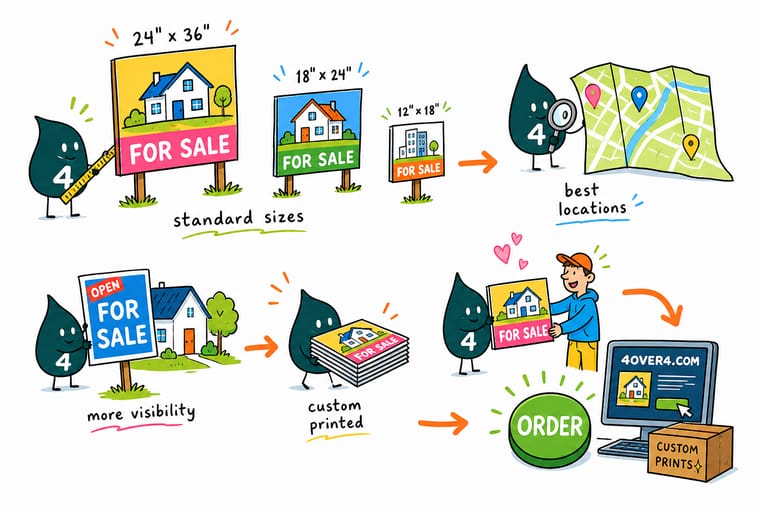
Wally sizes real estate signs the practical way: 18 by 24 for a quiet street, 24 by 36 for a busy road, riders on top to update status, and directional signs leading traffic to the door. Coroplast for a quick listing, aluminum for the long haul. Check the local rules, place them as a route, and 4OVER4 prints signs that get read at a glance.
Order real estate signs →Quick reference
Real estate sign sizes and uses at a glance
Match the sign type and material to the road and the timeline. Order the main sign, riders, and mount together so everything fits.
| Sign | Standard size | Use |
|---|---|---|
| For Sale yard sign | 18 x 24 in | The industry standard, sized to fit most hanging sign posts and yard frames on residential streets. |
| Rider strip | 6 x 24 in | Clips above or below the main sign to add Sold, Open House, price, or a phone number without a reprint. |
| Open house directional | 24 x 18 in | A wider landscape shape that guides drivers along a route with an arrow to the property. |
| Post panel or A-frame | 24 x 36 in | A larger format for busy roads, big lots, and commercial listings that must read from a moving car. |
| Coroplast material | Temporary listings | Lightweight corrugated plastic that is affordable and easy to place for a listing that will sell and come down. |
| Aluminum material | Long-term placement | A rigid, weatherproof panel for permanent signs, development entrances, and signs that stay out for months. |
Step by step
How do I choose the right real estate sign size?
Start from the road. An 18 by 24 yard sign covers a quiet residential street, a 24 by 36 panel covers a busy road or a deep setback, riders are 6 by 24, and open house directionals are 24 by 18. These 6 steps take you from viewing distance to the finished order, including the local sign rules and the material.
- Start from the road and viewing distanceLook at where drivers and walkers will see the sign. A quiet street reads an 18 by 24, while a busy road or a deep setback needs a 24 by 36 so it stays legible at speed. Sidewalk traffic and a slow residential street are comfortable 18 by 24 territory, an intersection where a driver is already slowing to turn is where the 24 by 18 directional does its work, and anything read at road speed or from behind a long front lawn is a 24 by 36.
- Pick the sign type for the jobChoose a yard sign for the listing itself, an A-frame for open houses and sidewalks, riders to add status like Sold or Open House, and directional signs to guide traffic to the door.
- Check local and HOA sign rulesMany towns and homeowner associations limit sign size, count, and placement. Confirm the rules before you print so your signs are not pulled or fined.
- Size the type for the distanceA rough guide is one inch of letter height for every ten feet of viewing distance. Keep the phone number and key line large, and do not crowd the panel. On an 18 by 24 that works out to roughly 3 inch type for a 30 foot read, and on a 24 by 36 to roughly 6 inch type for a 60 foot read, which is why the bigger panel is the one that survives a moving car.
- Match the material to the timelineUse coroplast for temporary listings that will sell quickly, and aluminum for signs that stay out for months or face harsh weather, adding grommets or a frame as needed.
- Order the size, rider, and post togetherOrder the main sign, any rider strips, and the frame or post as a set so everything fits, then place them where they will actually be seen. A 6 by 24 rider is cut to sit across the 24 inch width of the 18 by 24 panel, so buying the two together keeps the holes and the edges aligned.
Specs and pricing
Yard sign specs and live pricing
Yard signs are the backbone of a listing. Here are the live specs and price-per-unit for yard signs at 4OVER4.COM, straight from the configurator. Set the size to 18 by 24 for the standard listing sign, or 24 by 36 when the panel has to read from the road, and the price per unit updates as you change the quantity.
| Quantity | Price Per Unit | Total |
|---|---|---|
| 1 | $25.00 | $25.00 |
Print it
Print your real estate signs at 4OVER4
See it in use
Real signage, produced in-house


Explore more
Where to go next


By the numbers
Substrates a yard sign can print on, and the record behind them
Common Questions
Common questions about real estate sign sizes
How big is an 18 by 24 sign?
It is 18 inches wide and 24 inches tall, a foot and a half by two feet, roughly the size of a large serving tray. At one inch of letter height per ten feet of viewing distance it carries about 3 inch type for a clean 30 foot read, which covers a sidewalk and a slow residential street. It is also the size nearly every hanging post and yard frame is built to hold.
What is a good size for a house sign?
For a house on a quiet residential street, 18 by 24 inches is the right size and the one every frame fits. Step up to 24 by 36 only when the house sits behind a deep front lawn, faces a road where cars are moving, or stands on a corner where the sign is read at an angle. Going bigger than the street needs does not help, and many towns and homeowner associations cap the size anyway.
What are the standard real estate sign sizes?
The standard For Sale yard sign is 18 by 24 inches, which is the size most sign posts and frames are built around. Rider strips that add Sold, Open House, price, or a phone number are typically 6 by 24 inches and clip above or below the main panel. Open house and directional signs are usually 24 by 18 inches in a landscape shape with an arrow, and larger post panels or A-frames run 24 by 36 inches for busy roads and big lots. These sizes cover the vast majority of residential real estate, with larger formats reserved for commercial and high-traffic listings. Viewing distance is what separates them: at one inch of letter height per ten feet, the 18 by 24 carries about 3 inch type for a 30 foot read on a sidewalk or a slow street, the 6 by 24 rider is read at the same distance as the panel it hangs from, the 24 by 18 directional is read at an intersection as a driver slows to turn, and the 24 by 36 carries about 6 inch type for a 60 foot read at road speed or across a deep front lawn.
Which signs are best for real estate?
A complete real estate sign kit usually combines a few types. The yard sign, at 18 by 24 inches, marks the listing itself and hangs from a post or sits in a frame. Rider strips add real-time status like Sold or Open House without reprinting the main sign. A-frame signs are portable and perfect for open houses, sidewalks, and pointing people from the street. Directional signs with arrows guide drivers from nearby intersections to the property. Together these cover marking the home, updating its status, and pulling traffic toward it. A typical listing goes out with one 18 by 24 on a post, two or three 6 by 24 riders so the status can change on the spot, a 24 by 36 if the road is fast, and a set of 24 by 18 directionals for the nearest turns.
How do I choose the correct real estate sign size?
Size the sign to the viewing distance and the setting, not to the yard. On a quiet residential street where cars pass slowly, the standard 18 by 24 inch sign is easy to read. On a busy road, a large lot, or a deep setback, step up to a 24 by 36 inch panel so it stays legible from a moving car. A useful rule for the text is about one inch of letter height for every ten feet of viewing distance. Always check local and homeowner association rules first, since many limit sign size and placement.
Where are the best locations to place real estate signs?
The main yard sign belongs in the front yard, angled toward oncoming traffic and clear of hedges, cars, and anything that blocks the view. Corner lots benefit from a sign readable from both streets. For open houses, place A-frame and directional signs at the nearest major intersections with clear arrows, then a trail of them leading to the door so drivers never lose the thread. The goal is an unbroken visual path from the busy road to the property, with each sign visible before the last one is out of sight.
What does a real estate sign cost and how are prices set?
Sign cost is set by the size, the material, whether it is single or double sided, any grommets or frames, and the quantity, with the per-unit price dropping as you order more. A single coroplast yard sign is the most affordable, while aluminum panels and larger formats cost more but last far longer. You choose the size and options on the product page and the total updates live, so you can see exactly what a bigger size, a sturdier material, or a set of riders does to the number before you order.
What materials and finishes are available for real estate signs?
The two workhorse materials are coroplast, a lightweight corrugated plastic that is affordable and easy to place for temporary listings, and aluminum, a rigid weatherproof panel for permanent or high-traffic signs. Both can be printed single or double sided so the message reads from either direction, and finishing options like grommets, H-stakes, hanging frames, and A-frame stands hold the sign in place. For signs that stay out in the elements, weather-resistant material and proper mounting are what keep them looking sharp through a full listing.
Get Started
Ready to plant a sign that gets read?
Print real estate signs in the right size and material at 4OVER4.COM, from a quick coroplast listing sign to a durable aluminum panel. Adjust every option and watch your price update live.
Legal Disclaimer
Gold Standard guarantees apply to all standard orders placed through 4over4.com. Price match requires verifiable proof of a competitor's published price for an equivalent product with matching specifications and turnaround time. Satisfaction guarantee covers manufacturing defects and print quality issues. Contact support with order number and documentation. On-time delivery rate based on tracked orders 1999 to 2026. Individual results may vary based on shipping carrier performance.
