
Printed Envelopes vs Blank Envelopes and When Each One Wins


One is a finished envelope waiting for your printer. The other is a flat sheet we print and then build into an envelope. That single difference sets what the artwork can do, what it costs, and how long the job takes you.
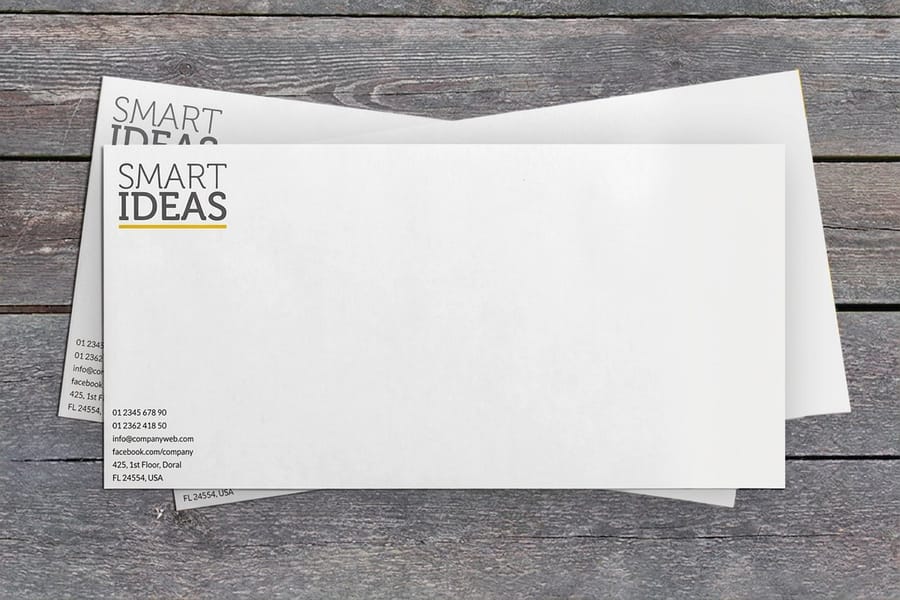
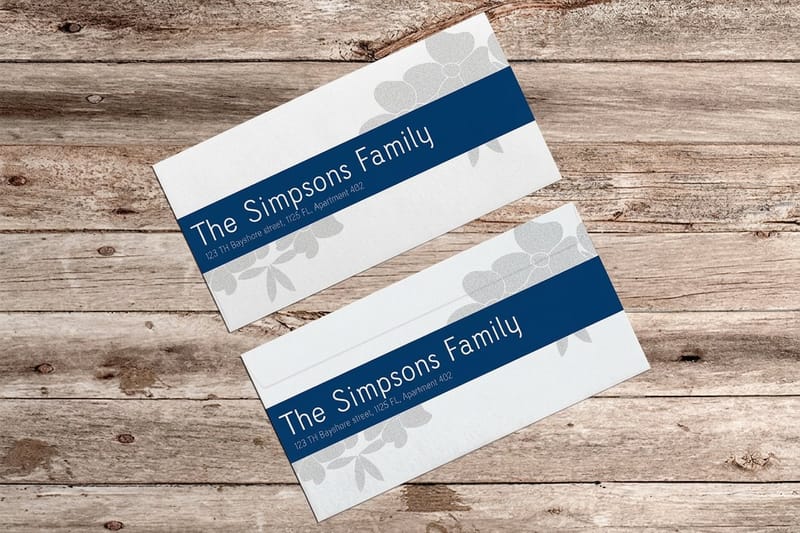
Choose printed envelopes when the same artwork lands on every piece, and blank envelopes when only the recipient changes. Printed envelopes are printed as a flat sheet and folded afterward, so color can run past all four edges and across the seams. A blank envelope is already glued, so anything you print on it stops about a quarter inch from the edge and shifts where it crosses the seam. Blank Envelopes start at $13.17, Printed Envelopes at $142.99.
Quick answer
The order of operations decides everything else
Printed envelopes are printed before they are folded. Blank envelopes are folded before you print them. That is why a printed envelope can carry a full bleed design across the seams and the flap, and why a blank envelope run through any printer loses about a quarter inch of margin on every edge and distorts wherever the paper steps up. Blank stays flexible for changing addresses and small quantities. Printed wins on color, consistency and your own time as soon as the run grows.
What You Are Actually Buying in Each Case
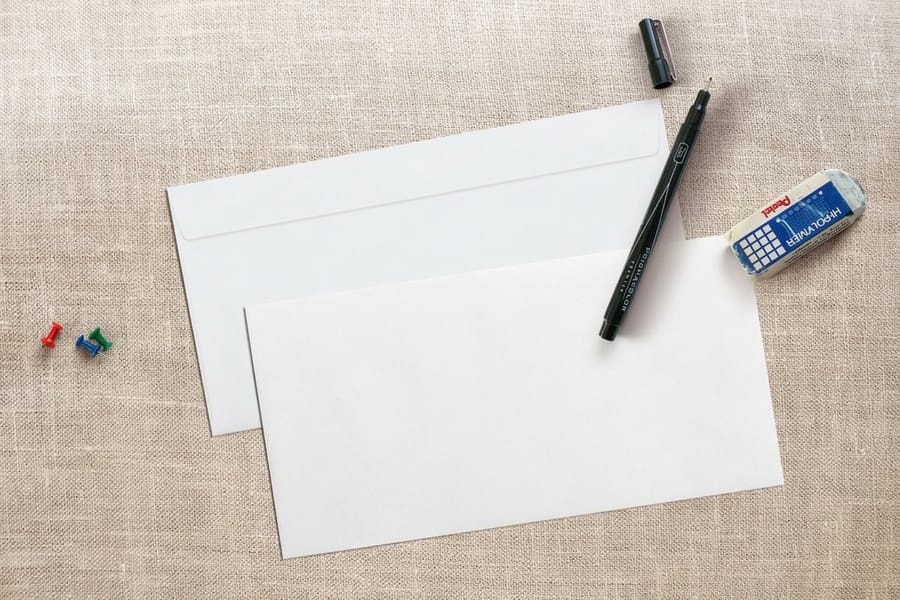
A blank envelope is a finished product. It arrived at us already cut, folded and glued, and it goes to you the same way. Nothing has been printed on it, which means the whole job of putting ink on it is now yours: a desktop printer, a label, a rubber stamp, or a pen.
A printed envelope is not an envelope until late in the process. It starts as a flat sheet with the envelope shape imposed on it. We print that sheet in full color, then a die cuts the shape, a folder creases it and glue closes the seams. That order matters more than anything else on this page, because ink goes down while the paper is still flat and unobstructed.
So the choice is not really printed against blank. It is whether the artwork exists before the envelope does. Blank Envelopes start at $13.17 and are stock goods. Printed Envelopes start at $142.99 because that number buys a press setup, a print run, and a conversion line, not a box off a shelf.
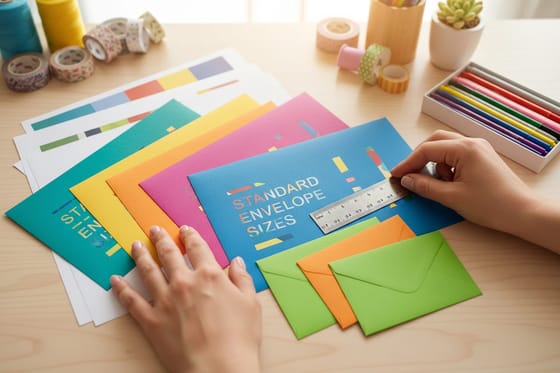
Both live in the same place on the site. The envelopes printing category lists them next to each other along with windowed, invitation and remittance styles, and the standard envelope sizes guide covers which body size actually fits what you are mailing.
Printed vs Blank, Point by Point
Six things separate them in practice. Read the last column first, because that is usually the one that decides the job.
| What matters | Printed envelopes | Blank envelopes | Which way it pushes you |
|---|---|---|---|
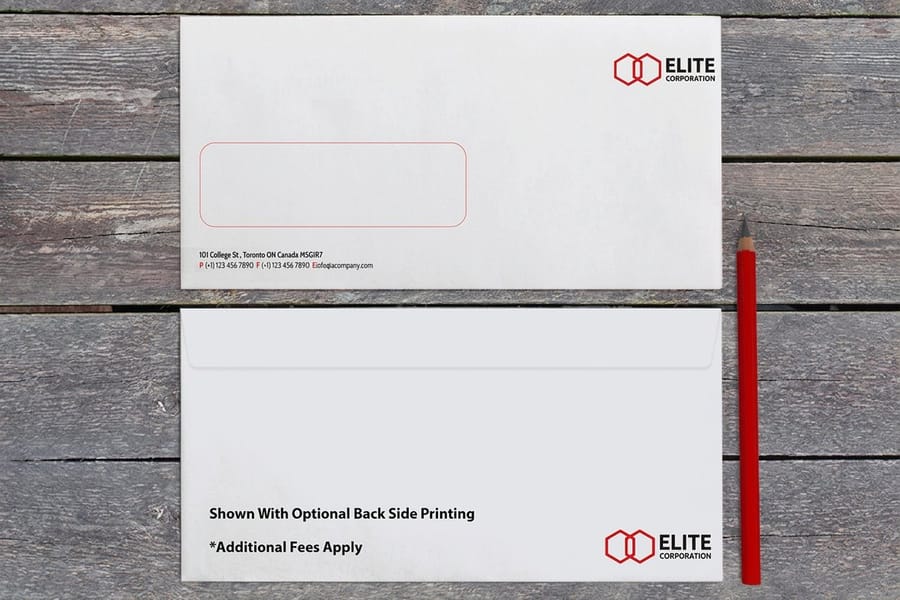
| Where ink can go | All four edges, both sides, seams and flap included. | Front panel only, and about a quarter inch short of every edge. | Any edge-to-edge design forces printed. |
| Color | Full color, photographic images, solid panels. | Whatever your own printer can hold on a three-layer surface. | Logos with tints or gradients force printed. |
| Variable content | Fixed. Every piece comes out identical. | Fully variable, one recipient at a time. | Changing addresses favor blank. |
| Starting price | From $142.99 for the whole run. | From $13.17 for stock envelopes. | Small quantities favor blank on entry cost. |
| Your time | None after the file is approved. | Hand feeding, jams, reprints, drying time. | Volume flips this hard toward printed. |
| Consistency | Same position and same color on every piece. | Drifts as the feed tray empties. | Anything a client sees favor printed. |
The row people underestimate is the fifth. Two hundred envelopes hand fed through an office printer is an afternoon, and about one in twenty comes out crooked enough to redo. That afternoon is rarely priced into the comparison, but it is the reason most businesses order printed once they pass a few hundred pieces.
Why a Finished Envelope Fights Your Desktop Printer
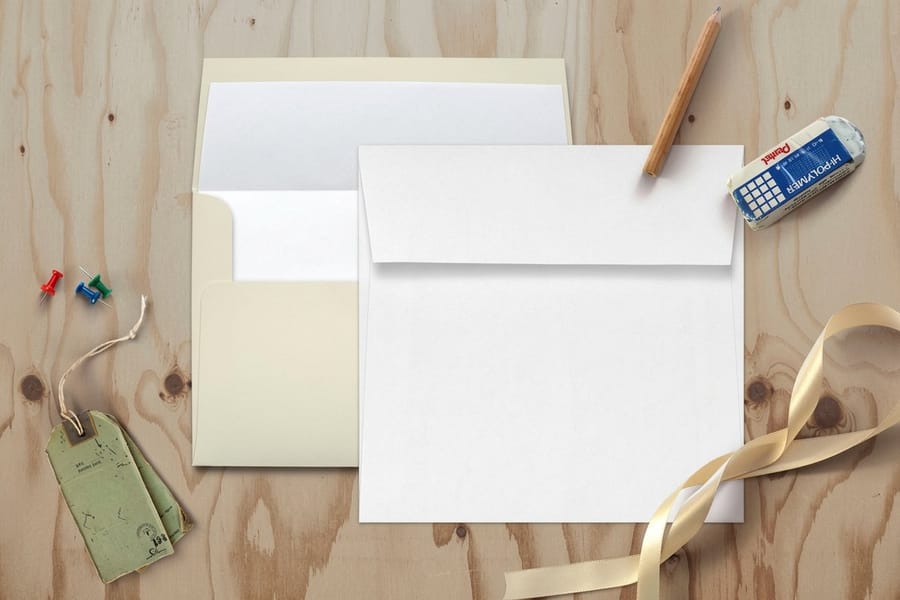
Turn a blank envelope over. You are looking at three or four thicknesses of paper glued into a step that runs down the middle and across the bottom. Now imagine a print head or a toner drum trying to lay an even line across that step.
Three things go wrong, and they go wrong in a predictable order. The seam and flap ridges lift the front panel unevenly, so ink lands slightly out of register wherever it crosses one. Toner cracks along a fold, because it sits on the surface rather than soaking into the fiber, and any fold that moves afterward breaks the line. And the rollers grip the leading edge, which is why you lose roughly a quarter inch of margin all the way around no matter what the design file says.
There is a fourth problem specific to laser printers, and it is the one that ruins a whole box. The fuser runs hot. If the gummed flap is tucked closed as the envelope passes through, the heat can seal it shut. Keep flaps open, feed one at a time, and accept the slower pace.
Practical rules that keep a blank envelope job usable:
- Print the address block on the front panel only, well clear of the side seams.
- Choose a dark single ink on a light stock. Skip solid backgrounds entirely.
- Feed manually with flaps open, and never stack a full tray.
- Let inkjet output dry before stacking, because envelope stock is uncoated and absorbs slowly.
- Keep the lower right barcode clear zone empty, exactly as a printed design must.
If any of those rules cannot be met, the design has outgrown a desktop printer. Our envelope design guide shows where the safe area sits, and the blank template library has correctly sized layouts to build the file on.
Choosing by Job, Not by Price Tag
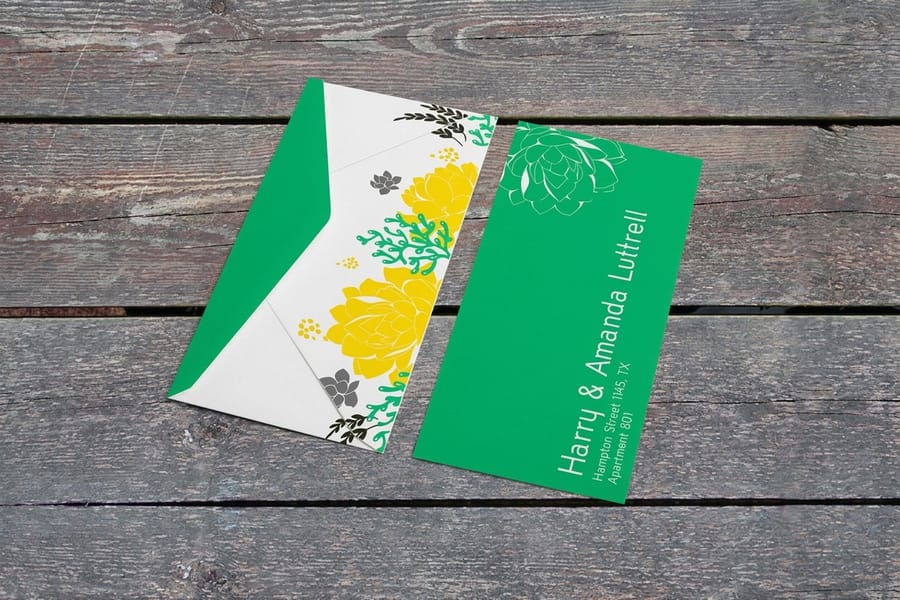
Match the envelope to what the job has to survive, and the decision usually makes itself.
A mailing campaign. Printed, every time. The envelope is the ad, and an unopened one is a wasted piece. Color, a teaser line and a real return address all raise the odds it gets opened, and none of them are available to a desk printer. Pair it with a postcard insert or read the postcard and envelope pairing guide before you settle on a size.
Day to day correspondence. Printed for the return address, plain for everything else. A number 10 with your logo in the corner and nothing else works for years, and it is the cheapest per piece of any printed job because the ink coverage is tiny. Order it alongside Standard Letterheads from the same file so the two match.
Invitations and events. Depends on who addresses them. If a calligrapher or a household is writing names by hand, buy Invitation Envelopes in the color you want and leave the front alone. If the addresses are coming out of a spreadsheet, print the artwork and let the recipient line be added afterward.
Reply and remittance. Printed, because the reply envelope carries a fixed address that must be right on every piece, and often a barcode area that has to be laid out precisely. That is what Remittance Envelopes exist for.
Under a hundred pieces, artwork still moving. Blank. Buy stock envelopes, print them yourself, see what the piece looks like in a real hand, then commit to a print run once the design stops changing.
The verdict
Print them if the artwork is settled, buy blanks if it is not
Order printed envelopes
- The return address, logo or color is the same on every piece.
- The design touches an edge, a seam or the flap.
- You are past roughly two hundred pieces.
- A customer, donor or client sees the outside before the inside.
Buy blank envelopes
- Every piece goes to a different address and the list is short.
- The artwork is still changing and you want to test it in hand.
- A single dark ink on the front panel is all the job needs.
- Someone is addressing them by hand.
Plenty of businesses run both. Printed number 10s for anything a customer opens, a box of blanks on the shelf for the one-off letter that has to go out this afternoon.
Wally explains the two envelopes
One gets printed flat, the other arrives already glued
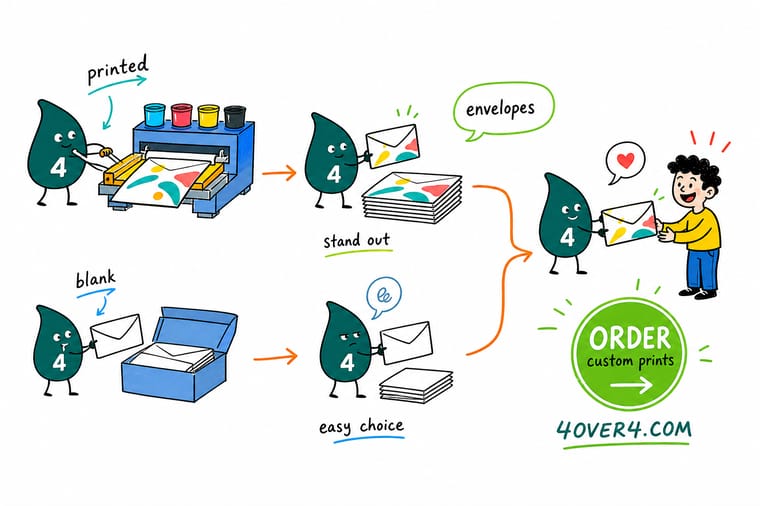
Wally prints the envelope while it is still a flat sheet, so the color runs right off every edge before a die cuts the shape and a folder glues it shut. Hand him a finished blank envelope instead and he has to work around three layers of glued paper, a flap that cracks toner along the fold, and a gripper margin that keeps ink a quarter inch from the edge. Same envelope, opposite order, completely different result.
Order printed envelopes →Specs and pricing
Envelope sizes, stocks, and starting prices
Printed, blank and invitation envelopes side by side, with live configuration choices and starting prices straight from the 4OVER4.COM configurator.
Print it
Order the envelope your job actually needs
Explore more
Where to go next
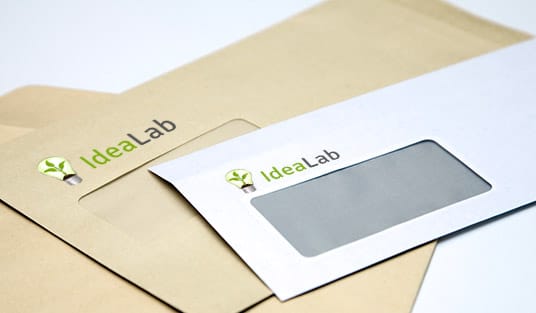
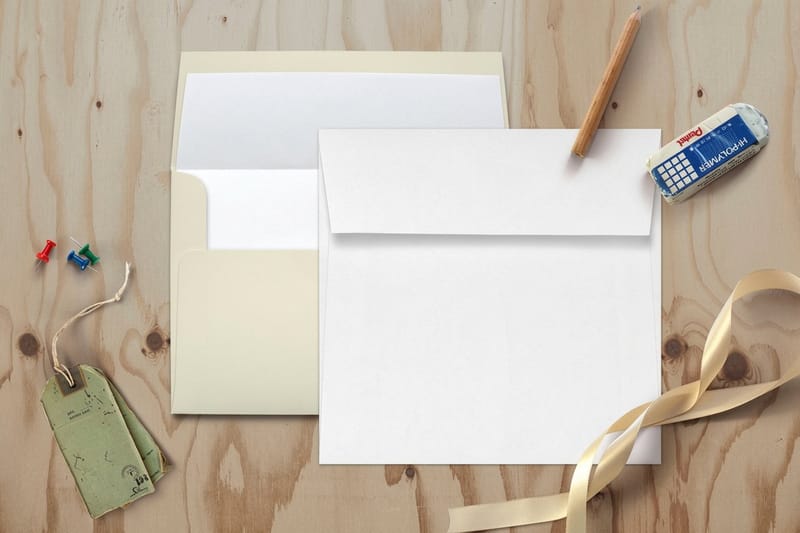
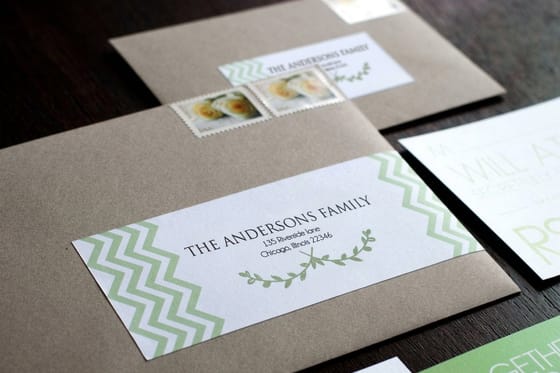
By the numbers
Printed, blank, invitation and remittance envelopes
Common Questions
Your envelope questions, answered
Should I order printed envelopes or blank envelopes?
Order printed envelopes when the artwork is fixed and the run is large enough to be worth a press setup: a return address, a logo, a color panel, anything that has to reach the edge of the paper. Order blank envelopes when the only variable is the recipient, the quantity is small, or you are still testing a design. The dividing question is not budget, it is whether the same ink lands on every piece. If it does, print it once at the plant. If it does not, put blanks in your own printer or run labels.
Can I run blank envelopes through my office laser printer?
You can, within limits, and the limits are physical rather than optional. Feed one envelope at a time or use the manual tray, keep the flap open so the gum does not touch the fuser, and expect the ink to shift where it crosses the side seam or the flap fold. Toner sits on the surface rather than soaking in, so it cracks along any fold that moves afterward. Heavy solid areas are the worst case. A plain black address block on the front panel is the safe case.
Why do printed envelopes cost so much more per order?
Because the starting prices are not measuring the same thing. Blank Envelopes are stock goods pulled from a shelf and boxed, which is why they start at $13.17. Printed Envelopes start at $142.99 because that price covers plates or a digital setup, printing a flat sheet in full color, then die-cutting, folding and gluing every one of them into an envelope. Per piece the gap narrows fast as the quantity climbs, since the setup is spread wider while the paper cost barely moves.
What has to stay blank on any envelope I print?
The lower right of the address side. USPS equipment sprays a barcode there, and it needs a light, uncluttered strip roughly four and three quarter inches long and five eighths of an inch high above the bottom edge. Keep artwork, background tints and dark stock out of it. Also leave clear space around the address block itself and print it in a dark ink on a light field. Colored envelopes are allowed, but the darker the stock, the more contrast the address needs.
Can you print a full bleed design on an envelope?
Yes, but only when the envelope is manufactured from the printed sheet rather than bought finished. We print flat with an eighth of an inch of bleed, then convert, so the color runs past the trim on all four sides and the seams and flap are covered too. If you take a finished blank envelope and put it through any printer, converted or desktop, you lose about a quarter inch of gripper margin on every edge and the design floats in a white frame.
Do printed envelopes have to match my letterhead exactly?
They should be built from the same file and the same ink values, and you should judge them on the same paper. Envelope stock is usually a different weight and often a slightly different white than text stock, so the identical CMYK build can read a shade warmer on one than the other. If an exact match matters, order the envelope and the letterhead together so both come off the same schedule, and check them side by side under one light source rather than on screen.
Get Started
Printed envelopes run 250 for $142.99, blanks 50 for $13.17
Pick a size, choose a stock, and we print your envelopes flat so the color reaches every edge before they are folded and glued.
Legal Disclaimer
Gold Standard guarantees apply to all standard orders placed through 4over4.com. Price match requires verifiable proof of a competitor's published price for an equivalent product with matching specifications and turnaround time. Satisfaction guarantee covers manufacturing defects and print quality issues. Contact support with order number and documentation. On-time delivery rate based on tracked orders 1999 to 2026. Individual results may vary based on shipping carrier performance.
