
Food Truck Marketing That Fills the Line

Marcus is our print marketing voice, built from the knowledge of our production team, with over 20 years in printing.
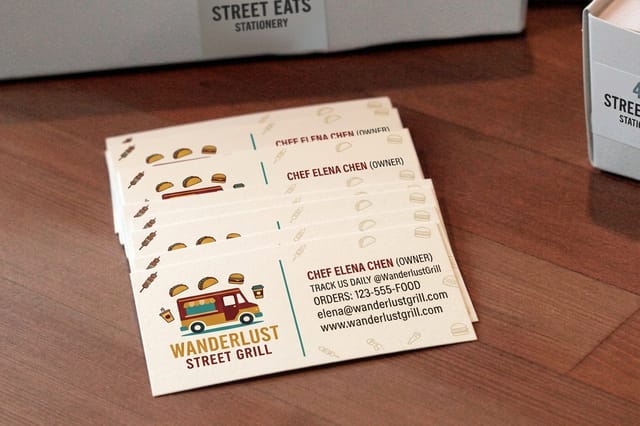
On-truck branding, print handouts, local social, maps, events, and loyalty. These are the modes that keep a window busy. Here is what each one does, how they hand off to each other, and where affordable print does the heavy lifting: food truck flyers from 100 for $57.11, food truck signs in any size up to 48 x 96 inches, food truck business cards from 100 for $17.57, and premium food labels for the bag.
The main modes of marketing for food trucks are on-truck branding, print handouts, local social media, mapping and locator apps, events and catering, and loyalty. On-truck branding gets you noticed, social and maps get you found, print gets you remembered, and loyalty gets you a second visit. The trucks that stay busy run all of them together so each mode hands the customer to the next.
Start here
Food truck marketing in one paragraph
The main modes of marketing for food trucks are on-truck branding, print handouts, local social media, mapping and locator apps, events and catering, and loyalty. You do not choose one. You run them as a loop where the wrap gets you seen, social and maps get you found, print gets you remembered, and loyalty brings people back. Nail the handoffs between them and even a brand-new window from 4OVER4.COM starts to feel like an established brand. The print side of that loop costs little: 100 food truck business cards run $17.57 and 100 flyers $57.11.
Watch it printed
See food truck flyers on the press, in 130 seconds
Why marketing decides whether a food truck thrives or stalls

Great food is the price of entry. On any given block there are three other windows serving something people would happily eat, and the truck that wins lunch is usually the one people already knew to look for. A kitchen on wheels lives or dies on being found, remembered, and returned to, and every one of those is a marketing job. The remembered part can be as small as a 3.5 by 2 inch card with the weekly route on the back, about 18 cents each on a run of 100.
The good news is that a food truck is built for marketing in a way a fixed restaurant is not. It moves to where the crowds are, it wears its brand on every panel, and it puts a human at the window on every single sale. Handled on purpose, those built-in advantages beat an ad budget many times their size.
This guide walks through the main modes of marketing for food trucks one at a time, from the wrap and the menu board to social, maps, events, and loyalty, and shows where affordable print does the quiet heavy lifting. If you want the whole toolkit in one place first, the food truck printing collection gathers the wraps, signs, cards, flyers, and labels this guide keeps coming back to.
What are the main modes of marketing for food trucks?

There is no single channel that carries a food truck. The main modes of marketing for food trucks are on-truck branding, print handouts, local social media, mapping and locator apps, events and catering, and loyalty, and they each cover a different part of the journey from stranger to regular. On-truck branding gets you noticed, social and maps get you found, print gets you remembered, and loyalty gets you a second visit. In print terms that means a wrap and signs on the truck, 8.5 x 11 flyers and 3.5 x 2 cards at the window, and a label on every bag.
Think of them as a relay rather than a menu to choose from. Someone spots your wrap in traffic, checks your feed for tonight’s stop, orders at the window, takes a labeled bag and a business card home, and follows you for next week. Every mode hands off to the next, and a weak link, like a great feed with no printed handout, quietly loses customers you already earned. Our overview of print marketing ideas shows how these pieces reinforce each other.
The two modes you control most tightly are branding and print, because both are one-time design decisions you can execute affordably and reuse for years. Set your identity once with our free online designer or a ready design template, then apply it to the signage, cards, and labels below. Get that foundation right and every other mode gets easier.
Understanding your market: competitive and location analysis
Before you spend a dollar on marketing, spend an afternoon watching. Understanding your market is the mode most trucks skip, and it is the one that makes every other mode cheaper because it stops you from marketing to the wrong people in the wrong place. Walk the block at lunch, note which offices empty onto it and which trucks already park there, and only then decide where the first stack of flyers goes.
Start with a quick competitive analysis. List the other trucks and fast-lunch options on your usual routes, note what they sell and roughly what they charge, and find the gap you can own honestly. Maybe nobody near the office park does a proper vegetarian bowl, or everyone is chasing dinner and lunch is wide open. Your brand and your handouts should point straight at that gap rather than blending into the pack.
Then do the location analysis, because for a mobile business location is a marketing lever, not a fixed constraint. Map where your customers actually cluster by day and hour: weekday office lunches, brewery evenings, weekend markets, game days. Match your route to the crowd, then tell people where you will be. To turn these observations into a real plan with a budget and a calendar, work through our small business marketing plan guide.
Branding your food truck: build one identity and repeat it
Branding a food truck means a system that repeats. Your name, a tight color palette, a type style, and a logo need to look like the same voice on the wrap, the menu board, the cards, the labels, and the feed. That repetition is exactly what turns a one-time customer into someone who recognizes you across town a week later.
Develop your brand identity around how you actually get seen. A food truck brand has to read from thirty feet in moving traffic and still feel right on a two-inch label, so pick colors with real contrast and a name that is easy to say and remember. Keep it simple enough to survive on every surface. When you are ready to make it, our online designer lets you build the whole identity in the browser, and our design templates give you layouts with the spacing and hierarchy already handled.
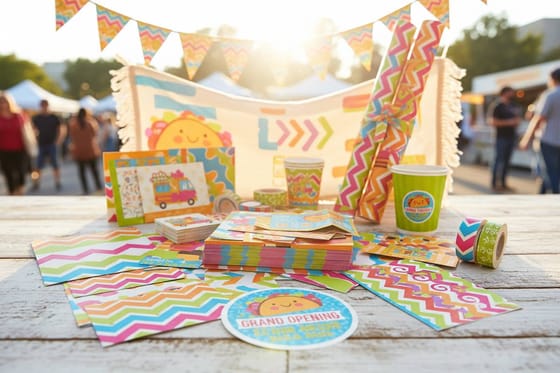
The payoff is consistency across the kit. When your business cards, signage, and packaging all repeat the same system, every piece makes the others stronger and the whole truck reads as an established brand rather than a side hustle. If you are just launching, the food-truck grand-opening kit bundles the pieces that need to match from day one.
Offline marketing: the truck, the signage, and the handouts

Offline is where a food truck has its unfair advantage, because the marketing is physically attached to the business. The single most valuable piece of real estate you own is the truck itself. A full wrap and clean signage market every hour you are parked, at zero ongoing cost, to everyone who walks or drives past. Make the name, the offer, and the menu legible from across the street and the truck sells before anyone reaches the window.
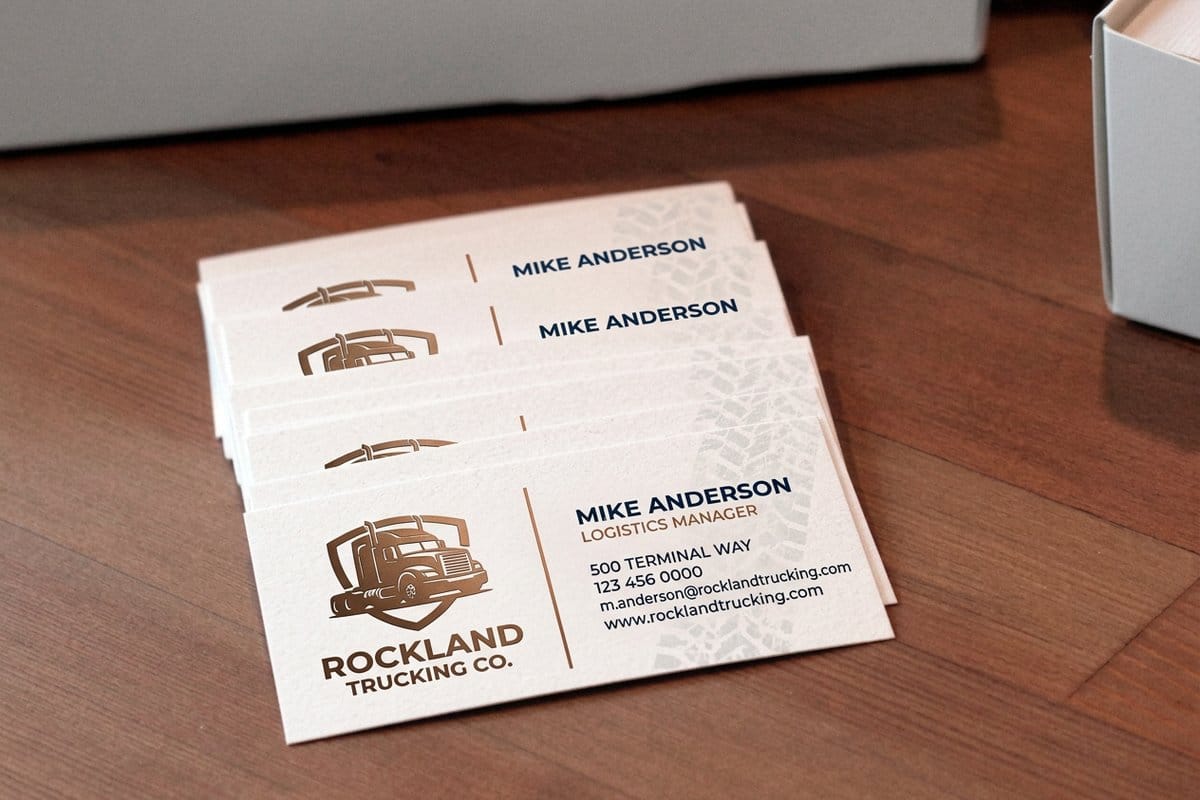
Then arm the window with handouts. A stack of flyers for nearby offices, business cards that carry your schedule and social handles, and a door hanger for neighborhood drops all put your name in a customer’s hand to take home. The Window Cleaning Door Hangers story shows the same door hanger format at work for another route-based business. For where to place printed flyers so they actually get seen, our list of flyer distribution spots is a practical starting point.
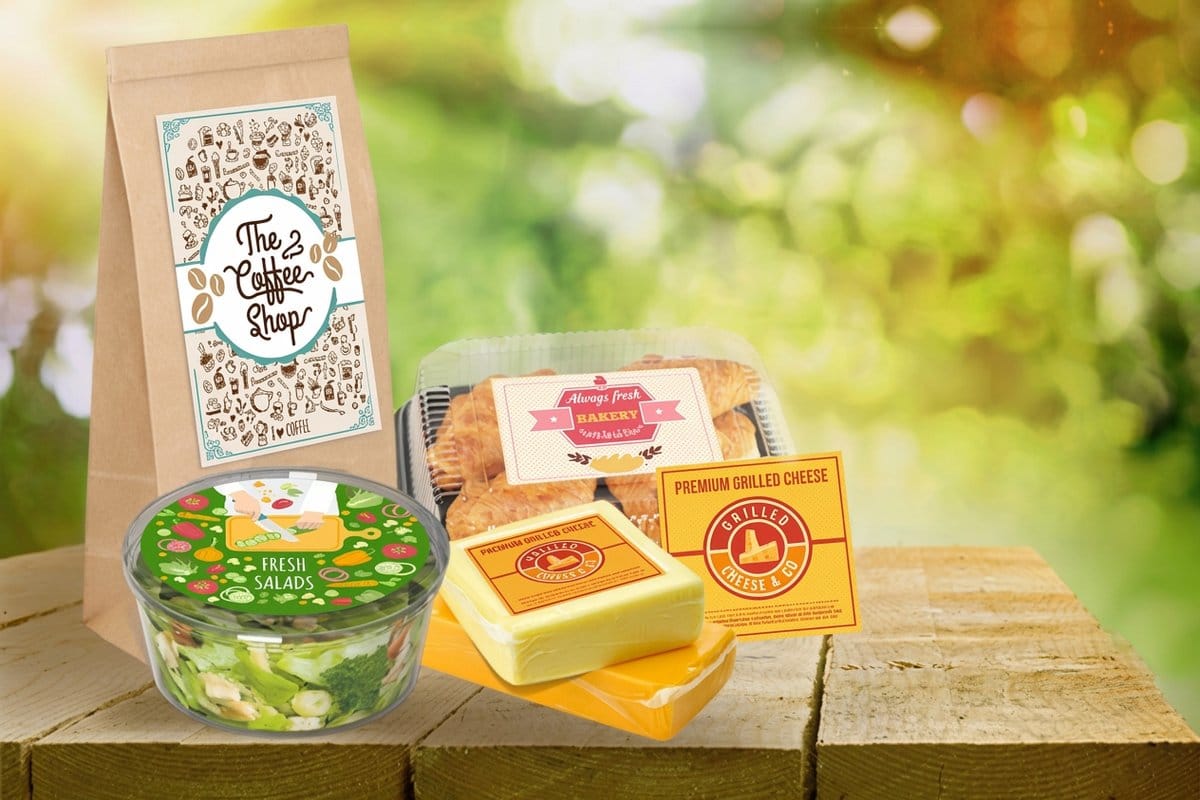
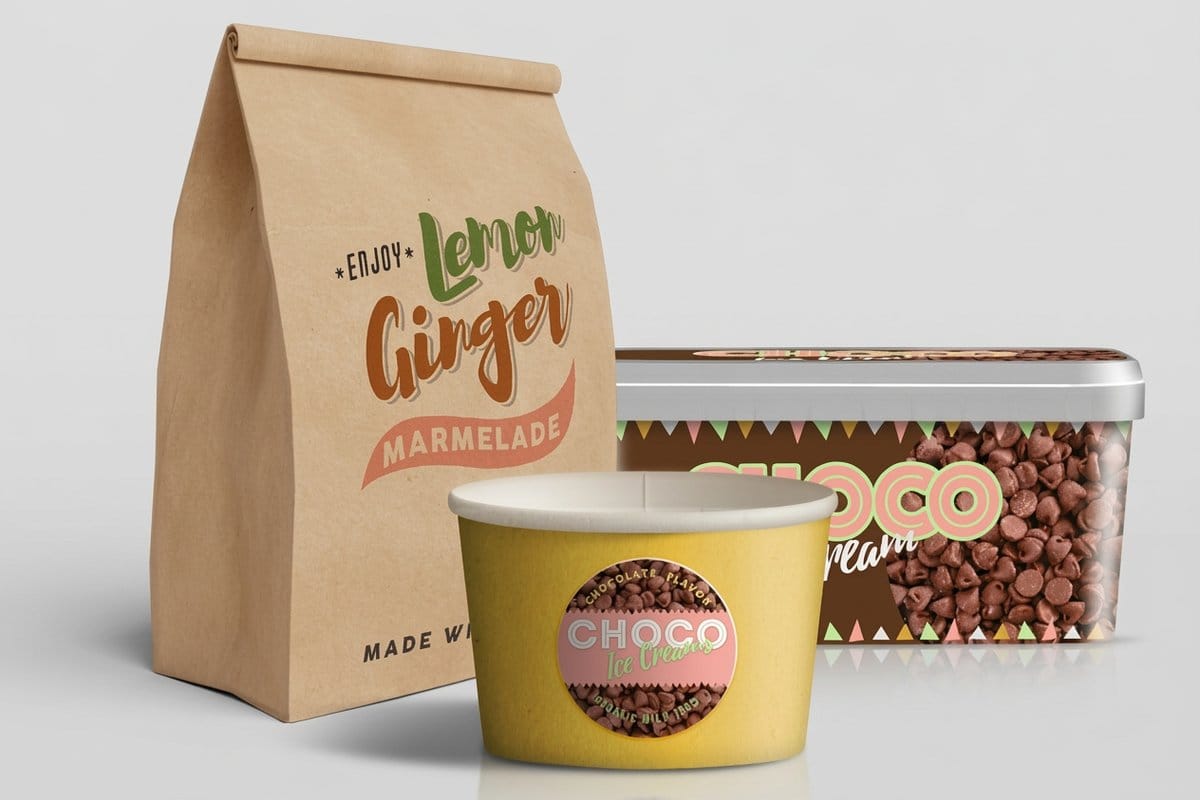
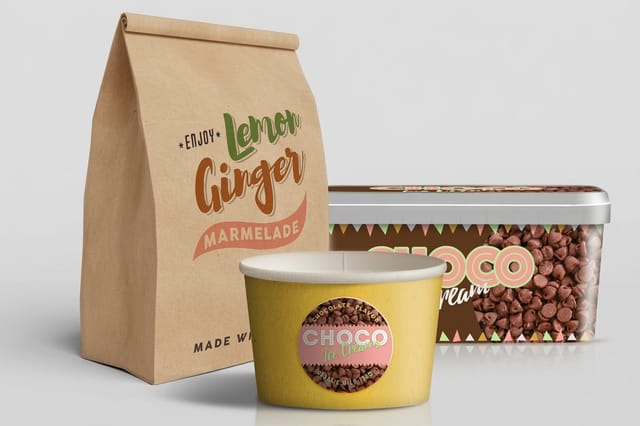
Do not overlook the packaging itself as a marketing surface. A branded food label on the bag or container turns every order into a small billboard that travels home and sits on a counter. Print is also the most budget-friendly mode to run: our roundup of local print marketing campaigns shows how far a modest run of well-designed pieces can stretch.
Food truck print marketing checklist. Six pieces cover almost every truck. Print the set once, then reprint only the two that keep running out:
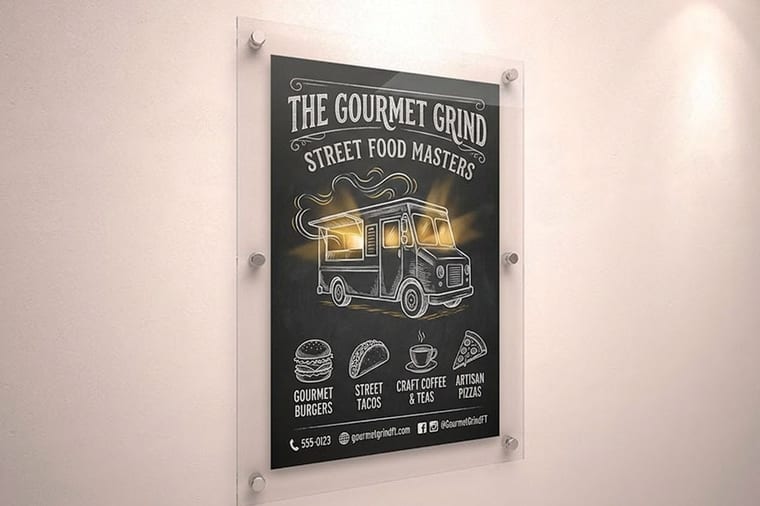
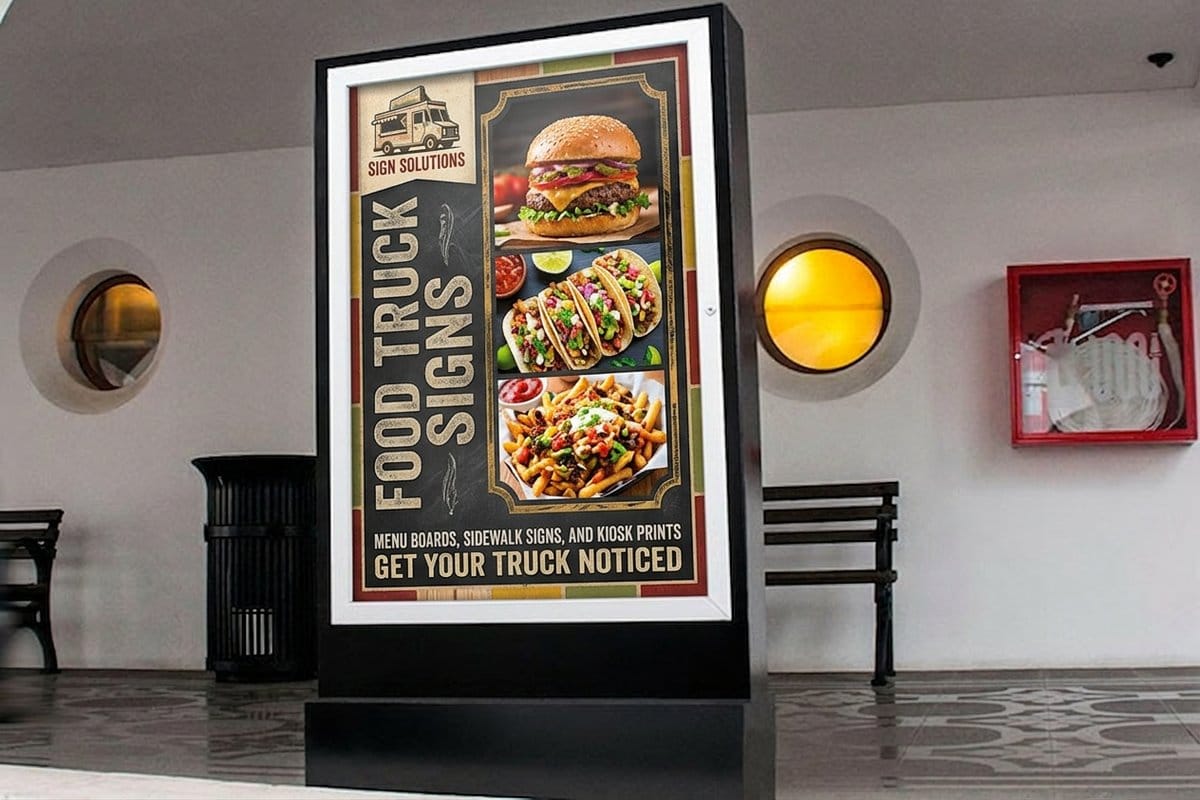
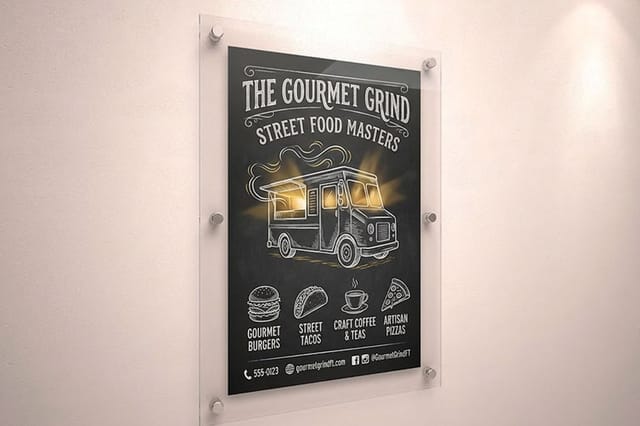
- Menu board and window menu. The piece every customer reads before they order. Run it as rigid food truck signage, sized so the item names are readable from ten feet back and the prices from five, and leave one blank strip you can sticker over when a special sells out, so a sold-out item never costs you a reprint.
- Truck decals and window clings. The name, the social handles, and the service hours on the panels that face the line. A decal set on the serving side does most of the work of a full wrap for a fraction of the outlay, and clings peel off the glass when the offer changes.
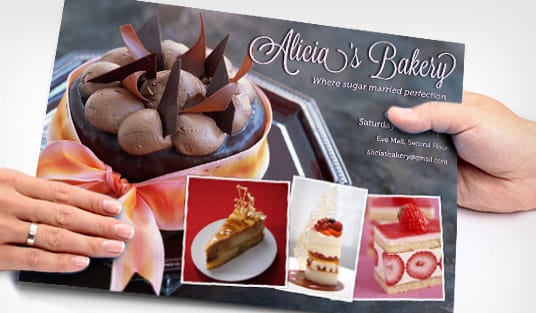
- Flyers. An 8.5 x 11 flyer is the office-drop workhorse: gloss text if you want the food photography to pop, uncoated if staff will write an order on it. Fold it to 5.5 x 8.5 for lobby racks and print the week’s route on the back so the flyer stays useful past lunch.
- Loyalty cards. Run them on the same 3.5 x 2 card stock as your business cards, ten punches for a free item, with the schedule and handles on the reverse. That way the card earns its keep from the first order, before a single punch lands.
- A-frame sidewalk sign. The closest thing to a second window. A two-sided sign set at the corner catches foot traffic that never walks past the truck, and it folds flat and moves with you to the next stop.
- Food labels and door hangers. A branded food label seals the bag, names the item, and travels home on a counter, while a door hanger covers the residential streets around a regular stop the night before you park there.
Specs to order the set: flyers come in nine sizes from 4.25 x 5.5 to 11 x 25.5 inches on 100# gloss or silk text, 70# uncoated text or 80# to 14pt cover, in 3 business days. Signs print in 13 standard sizes or any size on paper, blockout vinyl or 7mil weatherproof polypropylene, with gloss or matte lamination, in 2 business days. Food labels run 3 x 5 to 5 x 7 inches or any size on 23 label stocks in 3 business days. Upload each file at its finished size and take the free online proof.
Online marketing: get found, post the route, own the map
If offline marketing gets you noticed, online marketing gets you found on the day someone is hungry. For a truck that moves, the daily job of social is simple and non-negotiable: post where you will be, when, and what is on. A customer who loves your food but cannot find you tonight is a sale you handed to the next window over.
Beyond the daily route post, claim and complete your Google Business Profile and get listed on the food-truck locator apps people already use to find lunch. Those listings are how strangers discover you at the exact moment of intent, and a complete profile with photos and current hours outperforms a bare one every time. Our small business digital marketing guide covers the profile and social basics without the jargon.
The smartest online plays reach back into the physical world. Print a QR code on your labels, cards, and signage that jumps straight to your schedule or your latest post, so the packaging in someone’s hand pulls them into your feed. That bridge between print and online is the whole point, and our breakdown of digital versus traditional marketing explains why neither wins alone.
Events, festivals and catering as a marketing mode
A festival slot or a catering booking is the one mode where somebody else gathers the crowd for you. A food truck rally, a brewery night or a farmers market puts a few thousand strangers in front of the window in a single day, and a corporate catering job parks the truck where every employee walks past it. The fee or the discount is the ad spend, so treat the day like a campaign rather than a shift.
Three pieces of print turn the day into regulars. An A-frame at the entrance to the festival row pulls people who never reach your truck. A card in every bag carries the weekly route home, so Saturday's festival customer knows where Tuesday's lunch is. And a one page catering menu handed to the office manager who booked you books the next event before the truck leaves. Post the event on the feed the night before with the stall number, and tag the organizer so their followers see the route too.
Integrating offline and online into one loop
Run the modes above as a single loop, and the trucks that grow fastest are the ones that close it. Offline earns attention, online captures it, and print carries it home so the cycle can start again with the same customer next week.
Picture the handoff in order. The wrap catches an eye in traffic (offline), the locator app confirms tonight’s stop (online), the window hands over a labeled bag and a card with your handle (print), the customer follows you and sees next week’s schedule (online), and the loyalty card in their wallet nudges the return visit (offline). Every link points a customer to the next one, and a branded food label or card is usually the piece that keeps the loop from breaking.
To see the loop working in the wild, our restaurant and food marketing case studies trace real campaigns from first impression to repeat visit, and the story of how a food brand stood out with custom labels shows the packaging side of the same idea.
Loyalty and customer engagement, the mode that pays twice
Every other mode buys a first visit. Loyalty buys the second, third and tenth, and it costs the least per sale of anything in this guide because you already know where the customer is. The mechanics are small. A punch card on the same 3.5 by 2 stock as your business cards, ten punches for a free item, with the route on the back so the card is useful before the first punch. A first name learned at the window and used at the next stop. A sticker on the bag for the kid in the back seat.
Engagement is loyalty at the scale of a neighborhood. Ask the office that orders every Thursday what they want on the specials board, then print it. Reply to every review and every tagged photo. Run a text or email list with one message a week, the route and one special, and nothing else. Leave a stack of your cards with the brewery owner for the bar. None of it is clever, all of it compounds, and the print that carries it costs less than one festival fee.
What food truck marketing costs and how to prioritize the spend

A food truck markets well on a small budget when you spend it in the right order. The modes with the best return per dollar are the ones that keep working after you pay for them once: the wrap and signage that market every hour, and the print handouts that leave your window with each order.
Print is also the most predictable line to plan, because the cost scales with a few clear levers: quantity, size, stock, and finish. At 4OVER4.COM you set each option in the configurator and watch the price update live. A run of food truck flyers starts around $57, food truck signs from about $25, and food truck business cards from roughly $18, and the per-unit price drops as the quantity climbs. Use the specs and pricing panel below to price your exact combination. Short stories show the food truck flyers, the food truck signs and the food truck business cards, and the truck business cards story shows another take on the same card.
A sensible order of spend: cover the truck first with a wrap and readable signage, arm the window with cards and labels next, keep social and your map listings current because they are free, and add events or paid reach only once the free and one-time modes are humming. Before committing to a large run, order free paper samples so you can feel the stock in hand.
Wally explains food truck marketing
Run the modes as a loop, not a list
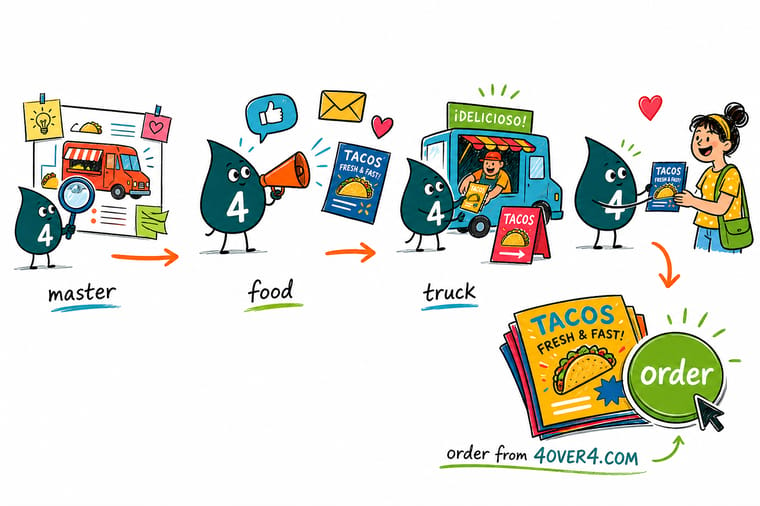
Wally treats a food truck like a relay: the wrap catches an eye in traffic, the map app confirms tonight’s stop, the window hands over a labeled bag and a card, and the loyalty punch brings that customer back next week. No single mode wins on its own, but when they hand off cleanly the truck feels like a brand. Set your identity once, then let 4OVER4 print the signage, cards, and labels that keep every handoff intact.
Shop food truck printing →
Infographic
The main modes of food truck marketing at a glance
One frame, seven modes: on-truck branding, print handouts, food labels, local social, maps and apps, events and catering, and loyalty. Save it and use it as a checklist the next time you plan a route, a launch, or a slow-week push.
No single mode carries a truck. Branding gets you seen, social and maps get you found, print gets you remembered, and loyalty brings people back for the next stop on your route.
Specs and pricing
Food truck flyer specs and live pricing
Flyers are the workhorse handout of the modes above: cheap to print, easy to give away, and simple to update each season. Here are the live specs and price-per-unit for food truck flyers at 4OVER4.COM, straight from the configurator.
| Quantity | Price Per Unit | Total |
|---|---|---|
| 50 | 79.1¢ | $39.54 |
| 100 | 57.1¢ | $57.11 |
| 200 | 37.3¢ | $74.69 |
| 300 | 28.6¢ | $85.68 |
| 400 | 24.4¢ | $97.76 |
| 500 | 21.8¢ | $108.75 |
| 600 | 18.7¢ | $112.03 |
| 700 | 16.5¢ | $115.33 |
Print it
Print the pieces your food truck marketing runs on
See it in use
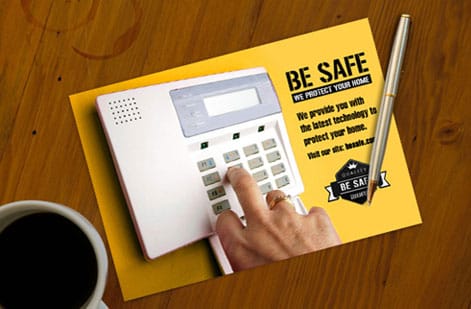
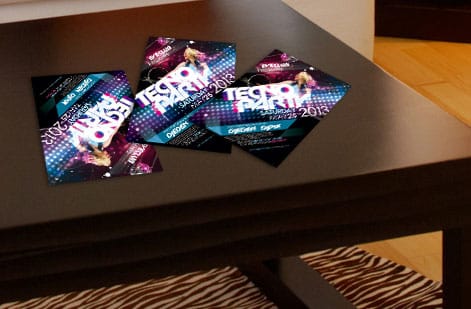
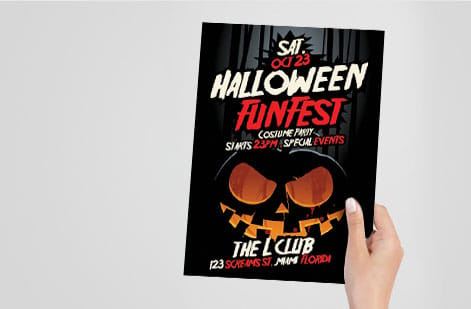
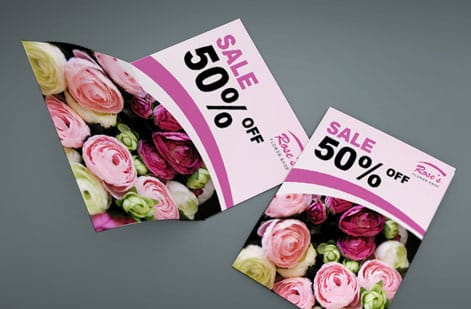
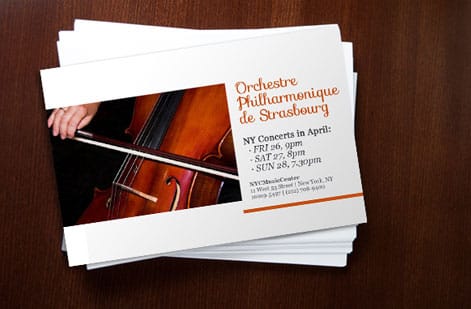
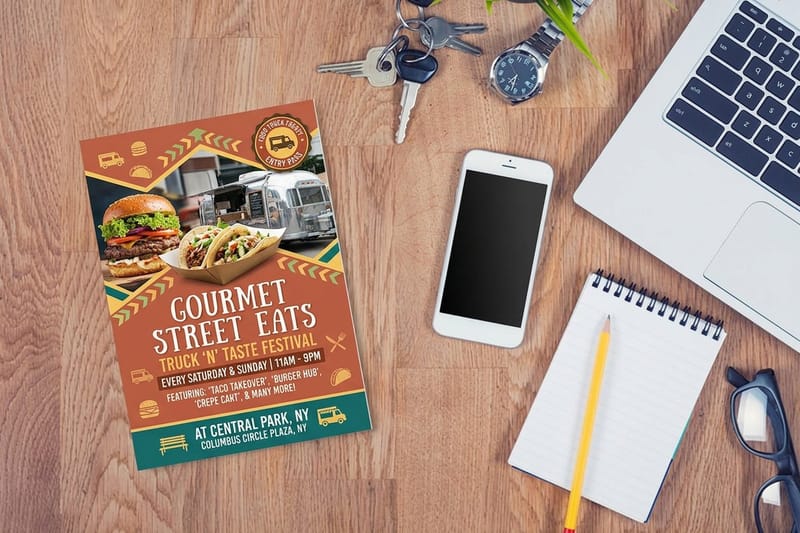
Food truck flyers our customers ordered


Explore more
Where to go next

By the numbers
The stock list a food truck flyer run picks from
Common Questions
Common questions about marketing a food truck
What is the 3-3-3 rule in marketing?
A planning rule of thumb with a few versions. The most useful one for a truck is three channels, three messages and three numbers. Pick three channels you will keep up, say the wrap, the feed and the bag, settle on three messages, what you sell, where you are and why come back, and judge the month by three numbers such as line length, repeat faces and event bookings. The other common version splits content three ways, educational, entertaining and promotional, so the feed is not all specials.
What are some effective marketing ideas for food trucks?
The ones that work are the ones attached to the truck. Post the route every morning with a photo of the day's special. Drop flyers at the office park the day before you park there. Print the schedule on the back of every business card and loyalty card. Put a QR code on the food label that opens the feed. Partner with a brewery for a standing weekly night. Book one festival a month and hand a catering menu to whoever organized it. Each one costs less than a single paid ad and keeps working after you pay for it.
What are the main modes of marketing in general?
Marketers split them into paid, owned and earned. Paid is anything you rent, ads and sponsored posts. Owned is anything you control, the truck, the packaging, the print and the feed. Earned is what other people say, reviews, tags and word of mouth. A food truck is unusual because almost all of its reach is owned, the wrap and the handouts, which is why the modes on this page lean on print and social before any paid spend.
What are the main modes of marketing for food trucks?
Food truck print marketing is the first mode, because it is the only one attached to the truck: on-truck branding (a full wrap, signage, and a legible menu board) and print handouts (flyers, business cards, food labels, and door hangers) sell for you every hour you are parked, with nothing to renew and no feed to feed. Around that sit local social media that posts your daily route, food-truck locator apps paired with a complete Google Business Profile, event and festival appearances, and word-of-mouth loyalty from packaging and repeat regulars. The trucks that stay busy do not pick one. They run all of them together so a customer who spots the wrap can find the schedule online, take a card home, and come back next week.
What does understanding your market mean for a food truck?
Understanding your market means knowing exactly who eats from your window and where they already are. That breaks into two questions: a competitive analysis (which trucks and quick lunch spots you compete with, what they charge, and the gap you can own) and a location analysis (where the lunch crowds, offices, breweries, and events actually cluster on each day of the week). Do it with your own eyes: stand at the stop you are considering during the hour you would serve, count the trucks already there, write down their top three prices, and note how long the line takes to clear. A weekday office park and a Saturday brewery lot want different menus, different price points, and different handouts, so the answer changes by day, not just by neighborhood. You are not guessing at a demographic in the abstract. You are watching real sidewalks and matching your route to where hungry people gather.
What does branding a food truck involve?
Branding is building one recognizable identity and repeating it everywhere. That is a name, a logo, a tight color palette, and a type style that show up on the wrap, the menu board, the cards, the labels, and the social feed without drifting. When those pieces match, a stranger who saw you at a festival on Saturday recognizes you in an office park on Tuesday. A shared set of design templates keeps that identity consistent across every printed piece.
How do I choose the right marketing modes for my food truck?
Start with the modes that work while you sleep. The wrap and signage market every hour the truck is out, so get those right first. Then add the handout that leaves your window with each order (a card or a labeled bag), because that is what brings people back. Layer local social and a Google Business Profile so new customers can find your schedule, and add events when you want a burst of new faces. Match the mix to your route and budget rather than trying to be everywhere at once.
What does food truck marketing cost and how are print prices set?
For this truck kit the numbers are: 100 food truck flyers cost $57.11 and 500 cost $108.75, 100 food truck business cards cost $17.57, and signs are priced by the size you enter. Print cost scales with quantity, size, paper stock, and finish, and at 4OVER4.COM the price updates live in the configurator as you go. Food truck flyers start around $57, food truck signs from about $25, and food truck business cards from roughly $18, and the per-unit price drops as the quantity climbs. That makes print one of the most cost-controllable lines in a food truck marketing plan.
Do food trucks still need printed materials with social media?
Yes, and the two do different jobs. Social media is reach: it tells people where you are today and keeps you top of mind. Print is the handoff: a card, flyer, or branded label physically leaves your window and lands in a pocket, on a fridge, or in a coworker’s hand, carrying your name and schedule with it. Handing a customer something tangible closes the loop that a fleeting post cannot, which is why the strongest food trucks pair a busy feed with print they can give away.
What print materials does a food truck need?
Six pieces cover almost every truck. A menu board and window menu printed as rigid signage, readable from ten feet back. Truck decals and window clings carrying the name, the handles, and the service hours on the panels that face the line. Flyers at 8.5 x 11 for office and lobby drops, folded to 5.5 x 8.5 when you want them to sit in a hand, with the week’s route on the back. Loyalty cards on the same 3.5 x 2 stock as your business cards, so the card carries your schedule from the first order. A two-sided A-frame sidewalk sign that folds flat and moves with you to the next stop. And food labels on the bag plus door hangers for the residential streets around a regular stop. Food truck flyers start around $57, food truck signs from about $25, and food truck business cards from roughly $18, so the whole set is a small line in the budget next to the wrap.
Get Started
Ready to put your food truck on the map?
Bring your brand to 4OVER4.COM and print the wraps, signs, cards, flyers, and labels that market your window every hour it is open. Adjust every option and watch your price update live.
Legal Disclaimer
Gold Standard guarantees apply to all standard orders placed through 4over4.com. Price match requires verifiable proof of a competitor's published price for an equivalent product with matching specifications and turnaround time. Satisfaction guarantee covers manufacturing defects and print quality issues. Contact support with order number and documentation.
