
How to Start a Mail-Order Catalog Company


Nadia is our customer education voice, built from the knowledge of our production team, with over 20 years in printing.
Choose a focused niche, lead with your big sellers, line up a reliable supplier, print a catalog that shows and prices every item, then mail it to a targeted list with a direct mail postcard ahead of it and a printed envelope for the order form. The catalog is the cheapest part, at $9.62 a copy in 25s, and the list is where the money goes.
To start a mail-order catalog company: pick a niche with repeat-purchase potential, choose the big sellers you will feature, vet a reputable supplier or drop shipper with real samples, build a clear catalog with prices and an easy order form, and mail it to a rented or house list. Print starts at $240.55 at 4OVER4.COM, and your job is to keep the loop turning, mail, measure, then re-mail the buyers who responded.
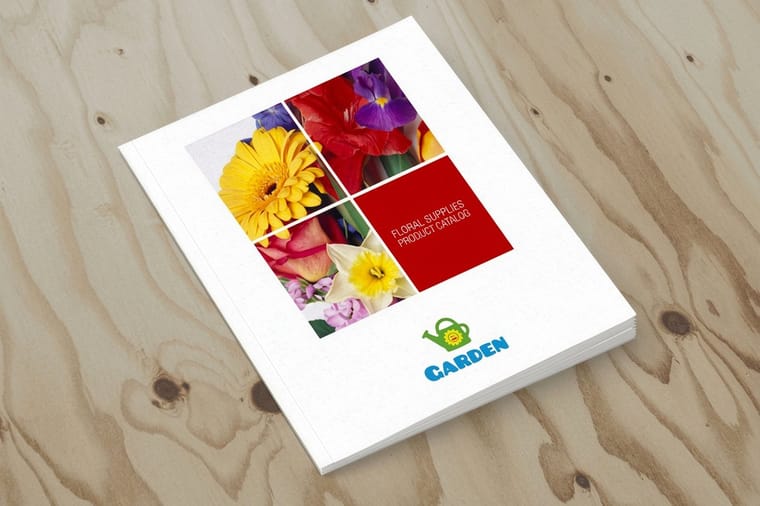
Quick start
Niche, supplier, catalog, list
A mail-order catalog company sells products through a printed catalog mailed to a targeted list. Pick a niche that customers buy from repeatedly, feature your best sellers on the front pages, vet a supplier or drop shipper before you print, and design a clean catalog with clear prices and an easy order form. Match the printing to a real mailing list, code each offer, and re-mail the buyers who respond. 4OVER4.COM prints the catalog, the postcards, and the envelopes so the whole kit reads as one brand.
What a mail-order catalog company really is

A mail-order catalog company runs on four parts. You choose a line of products, print a catalog that shows and prices every item, usually 16 to 32 saddle-stitched pages at 5.5 by 8.5 or 8.5 by 11 inches, mail that catalog to people likely to want it, and fulfill the orders that come back. Between mailings, the catalog on the kitchen counter keeps taking orders for you.
It survives in a digital world for one unglamorous reason: a printed catalog lingers. It sits on a kitchen counter for two or three weeks, gets flipped through more than once, and often gets handed to someone else. An email is gone in a swipe. If your niche has an audience that buys repeatedly, the catalog is a storefront you mail straight into their home. 4OVER4.COM prints catalog and booklet printing for exactly this kind of seller, and the same press runs your reorders when the model starts working.
Before you design a single page, get clear on the loop above. Every decision in this guide, from what you sell to how you mail it, exists to keep that loop turning. If you are weighing the print catalog against a purely online store, read our take on print-on-demand and dropshipping so you can decide how much inventory risk you actually want to carry.
Step 1: Decide what you are going to sell
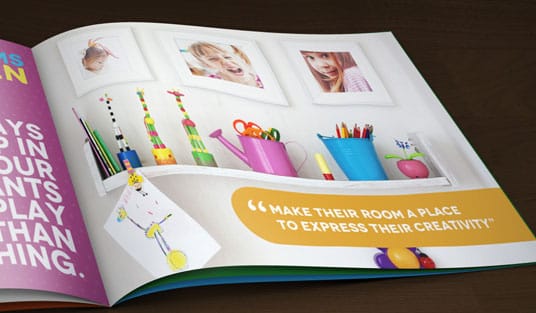
Everything starts with the product line, and the temptation is to sell everything. A focused catalog beats a sprawling one because it is cheaper to print, easier to target, and clearer to the reader. Pick a niche you understand and can speak to with authority.
Weigh three things for every candidate product:
- Repeat-purchase potential. Consumables, refills, hobby and craft supplies, specialty foods, and replacement parts bring customers back. Reorders are what pay for the next mailing.
- Margin after shipping. A product has to carry its share of print and postage and still leave a profit. Thin-margin, heavy items rarely survive the math.
- Mailability. If it breaks, melts, or costs a fortune to ship, it fights you on every order.
Aim for a first catalog of roughly 40 to 80 items in a single, coherent theme. That is enough to feel like a real store without draining your launch budget. If growth is already on your mind, our guide on strategies for expanding a business is a useful sanity check before you commit to a category, and the ecommerce printing collection shows the kinds of goods that mail well.
Step 2: Choose your big sellers

Open any successful catalog and you will notice the same thing: a small group of products gets most of the space and the best photography. In almost every catalog, a handful of anchor items drive the majority of the revenue, and the rest of the pages exist to support them.
So identify your big sellers early, even before you have sales history, by picking the products with the widest appeal, the strongest margin, and the clearest story. Give them the front pages, the largest images, and their own callouts. Then build supporting categories around them, the accessories and companions a buyer naturally adds to the cart.
Once real orders start arriving, let the data reshuffle the layout. Promote what sells, shrink what does not, and cut the dead weight in the next printing. A custom catalog is easy to revise between runs, which is one of the quiet advantages of print you control. When you are ready to see how professionals arrange a page, browse our catalog and booklet printing options and formats.
Step 3: Find a reputable drop shipper or supplier

Your catalog is only as good as the supplier standing behind it. A late or damaged shipment does not read as the supplier's failure to the customer. It reads as yours. Vet before you feature anything.
Put the important questions in writing and hold suppliers to the answers:
- Order samples first. Handle the real product before you photograph it or promise it.
- Confirm minimums and lead times. Know the minimum order quantity and the real turnaround, not the one on the brochure.
- Lock the per-unit cost at your volume. Prices shift with quantity, so price the tier you will actually order.
- Settle who ships to the buyer. If the supplier drop-ships, you carry no inventory but you inherit their packing and speed, so test one order end to end.
Drop-shipping lowers your upfront risk because you do not buy stock until a customer buys from you, and our explainer on how print-on-demand dropshipping works walks through the trade-offs. If you would rather resell printed products under your own catalog, the 4OVER4.COM reseller program is built for that.
Step 4: Build a catalog that sells
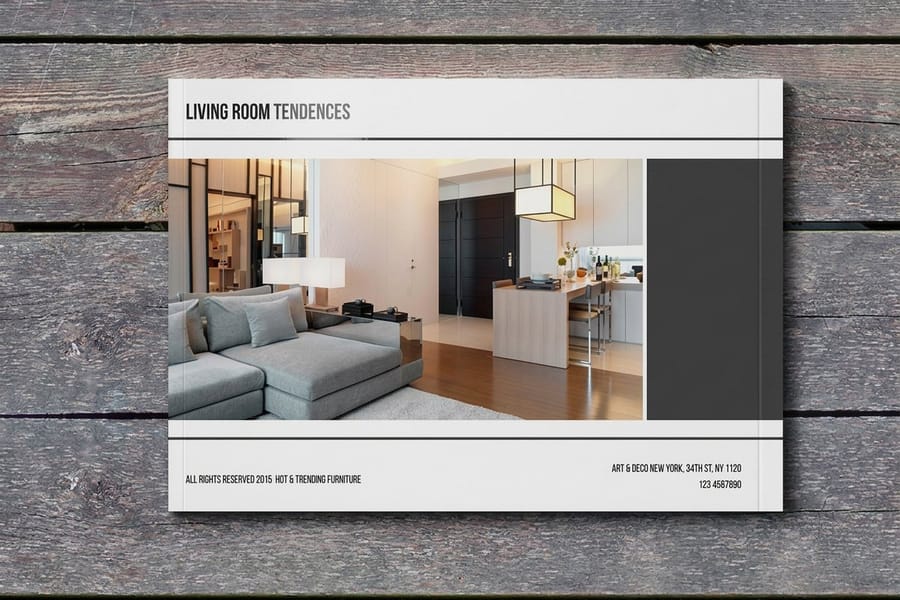
Now you turn a product list into a piece someone wants to flip through. A catalog that sells works as a clear, honest, easy-to-order storefront on paper.
Get the fundamentals right and the rest follows. Use clean, consistent product photos on a plain background. Give every item a short benefit-led description, a real price, and an item number so ordering is unambiguous. Group products so the eye moves logically from category to category. And never bury the order form: put it where a decided buyer can act in seconds, whether that is a mail-in form, a phone number, or a short URL.
Page count and binding matter for cost and feel. Most first catalogs run 16 to 32 pages, saddle-stitched in multiples of four, which is where saddle-stitched booklets and full catalogs share the same press. Our guide to binding types explains when to graduate to perfect binding as the catalog grows. Do not have artwork yet? Build it in the browser with the 4OVER4.COM online designer, start from our free design templates, or use a ready service catalog layout if you sell services rather than products.
Choosing the catalog size, page count and paper before you order

Five choices set what the catalog costs and how it feels in the mailbox. Make them in this order, because the size and page count decide what the paper and the postage have to carry.
| Choice | Options | What to pick for a first catalog |
|---|---|---|
| Size | 5.5 by 8.5, 8.5 by 11 or 11 by 11 inches | 5.5 by 8.5 for a digest of 40 to 80 items, 8.5 by 11 when big sellers need full page photos |
| Page count | 8 to 60 pages in steps of four, cover included | 16 to 32 pages, with the order form on an inside page |
| Inside paper | 100# gloss or silk text, 70# uncoated text, up to 14pt cover | 100# gloss text for product photos, 70# uncoated if buyers write on the order form |
| Cover | 100# gloss text, 80# gloss cover or 14pt gloss cover | 80# or 14pt gloss cover so the catalog survives the mail stream |
| Ink and binding | 4 color or black on both sides, saddle stitched on the long or short edge | 4 color, long edge binding |
Quantity moves the unit price most: 25 catalogs cost $240.55, 100 cost $361.37 and 500 cost $531.61 for an 8 page 5.5 by 8.5 catalog on 100# gloss text, more pages add to each price, and the standard turnaround is seven business days. Supply one PDF with the pages in reading order, the page count a multiple of four, and bleed on every page that prints to the edge. If buyers mail the order form back, add printed envelopes from $142.99 for 250, in #9 remittance or #10 window sizes.
Step 5: Build a mailing list and mail it
A finished catalog with nowhere to go is just an expensive brochure. The mailing list is the other half of the business, and for a first drop you have two honest options: rent a targeted list from a list broker, or mail to any names you already have. Our guide on how to build or rent a mailing list covers both routes and the questions to ask a broker.
Then plan the mailing as a campaign. Decide the offer, the drop date, and how you will measure response before anything hits the post office. The 4OVER4.COM guide to running a successful direct mail campaign lays out that sequence, and if you are choosing a postal class or format, how to mail brochures and addressing mail correctly keep you inside USPS rules.
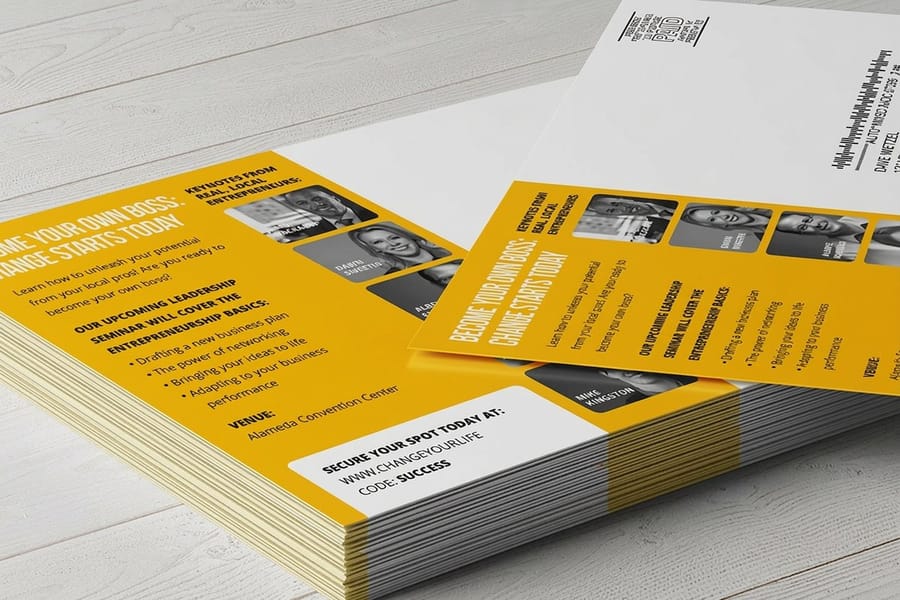
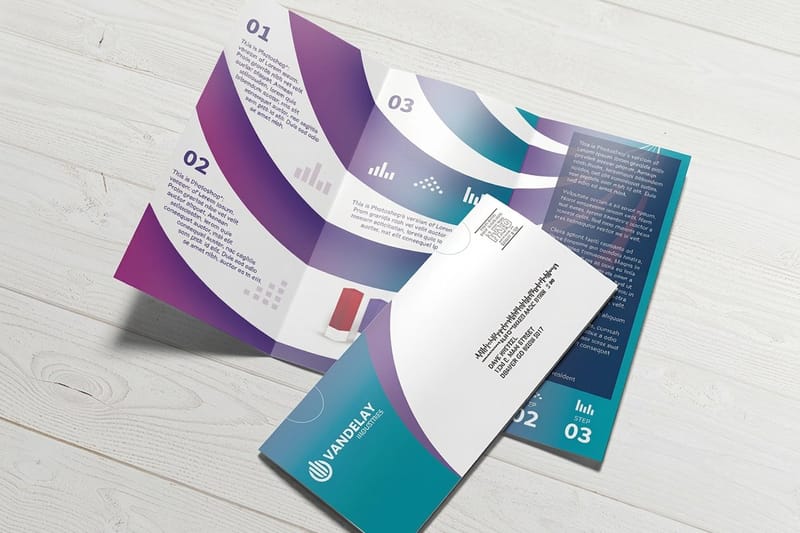
A smart, low-cost tactic: pair the catalog with a cheaper touch. Send a direct mail postcard before or after the catalog to warm the list and lift response without a second full print run. When you scale, the direct mail services collection handles printing and mailing together, and above all, capture every buyer into your own house list, because those names are the asset the whole business compounds on.
What it costs, and how catalog printing prices are set
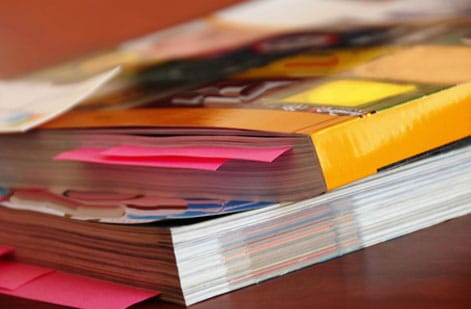
Two line items dominate a mail-order catalog budget: printing and postage. Everything else, from photography to the phone line, is small by comparison. So it pays to understand how print pricing actually moves.
Catalog printing at 4OVER4.COM starts at $240.55 for a full run, and four levers set the final number:
- Page count. More pages means more paper and more binding, so a lean, well-edited catalog is cheaper on every copy.
- Quantity. Printing is a volume game, and the per-unit price drops sharply as the run grows.
- Paper and size. Standard catalogs come in 5.5" x 8.5" and 8.5" x 11", and heavier stock costs more but feels more premium in hand.
- Finish and turnaround. Coatings and rush timelines add cost, so plan your drop date to avoid paying for speed you do not need.
Budget realistically for postage and for the mailing pieces around the catalog, including printed envelopes if you include an order form to return. Many owners keep launch costs low by outsourcing the print instead of buying equipment, and our note on the benefits of outsourced printing explains why that math usually wins early on.
Turn one mailing into a repeatable system
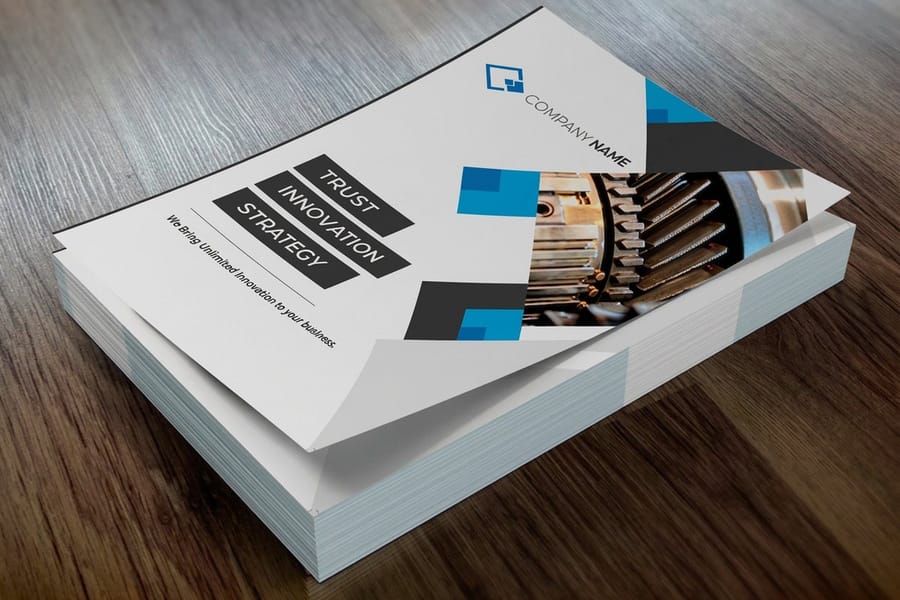
The first catalog is an experiment. The business is what you build from the results. The owners who win are the ones who measure, then mail again with intent.
Code every offer so you know which page, list, and product produced each order. Reorder on a cadence your customers actually buy on, whether that is quarterly, seasonal, or tied to a product cycle. Add a seasonal drop or a slimmer flyer mailing between full catalogs to keep the buyer relationship warm. And keep the branding consistent across every piece so the catalog, the envelope, and the postcard all read as one company. Our guide on building a strong brand identity is worth a pass before your second printing.
A few common mistakes sink new catalogs faster than any of this builds them: mailing a cold, untargeted list, hiding the order form, over-printing quantity before the offer is proven, and letting fulfillment lag the promise on the page. For more formats and inspiration, browse effective direct mail formats, the direct mail outreach library, and real direct mail response benchmarks so your projections start from data. When you are ready to round out the kit, the full marketing materials range prints alongside your catalog, and if a design tool is holding you back, see why sellers move to a real printer in this comparison.
Wally explains the catalog loop
Print it, mail it, measure it, mail it again
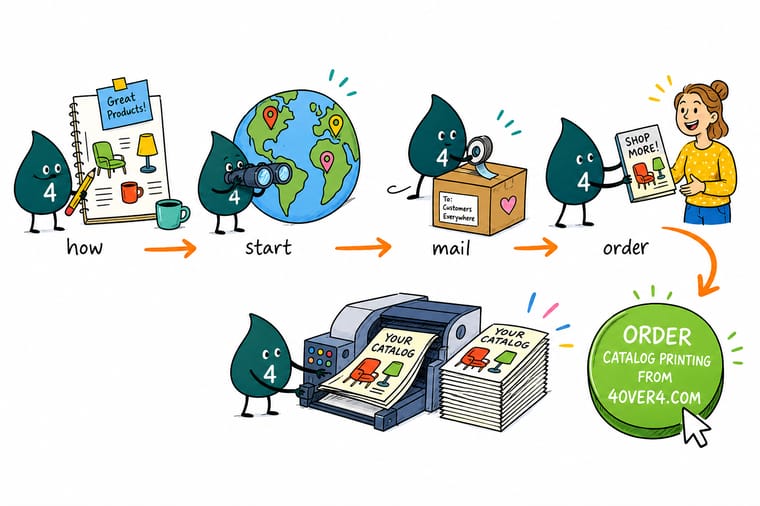
Wally treats a mail-order catalog like a machine with one job: keep the loop turning. Source products, print a clean catalog, mail it to the right list, take the orders, fulfill them fast, then re-mail the people who bought. Every part matters, but the print is where it becomes real. Keep the page count lean, lead with your big sellers, and let the reorders from mailing one pay for mailing two.
Order your catalog →
Specs and pricing
Custom catalog specs and pricing
Catalogs run 25 for $240.55, which is $9.62 a copy, with live specs and price-per-unit for budgeting a first run.

| Quantity | Price Per Unit | Total |
|---|---|---|
| 25 | $9.62 | $240.55 |
| 50 | $6.04 | $302.06 |
| 100 | $3.61 | $361.37 |
| 200 | $2.22 | $444.85 |
| 300 | $1.65 | $495.38 |
| 400 | $1.29 | $515.14 |
| 500 | $1.06 | $531.61 |
| 600 | 91.5¢ | $549.19 |
Catalog, postcard, envelope
The starter kit for a mail-order catalog
A saddle-stitched catalog from $240.55 for 25, a direct mail postcard to warm the list before the drop, and printed envelopes from $142.99 for 250 in #9 remittance or #10 window for returned order forms.

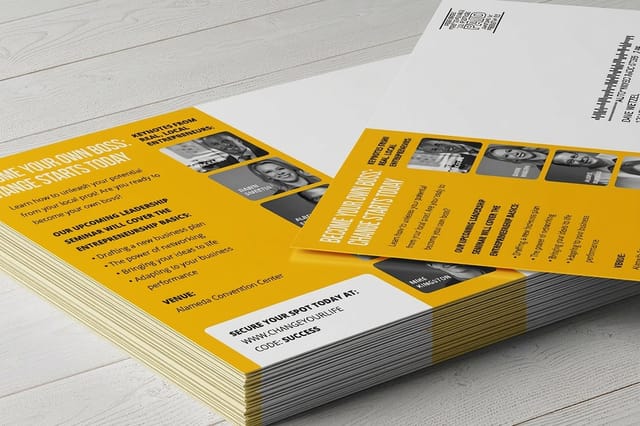

Saddle stitched, 8 to 60 pages
Catalogs we bound and mailed for sellers







Explore more
Where to go next




By the numbers
Catalogs at $9.62, envelopes at $0.57
Common Questions
Common questions about starting a mail-order catalog
What is a mail-order catalog business?
It is a company that sells products through a printed catalog mailed to customers, who then order by phone, mail, or a website printed on the catalog. You choose a product line, print a catalog that shows and prices each item, mail it to a targeted list, and fulfill the orders that come back. The model still works because a physical catalog sits in a home for weeks and gets passed around, while an email disappears in seconds.
How many products does a first catalog need?
Look for a focused niche with repeat-purchase potential, healthy margins, and items that survive shipping. Consumables, hobby and craft supplies, specialty foods, gifts, and replacement parts all fit well because customers reorder. Start narrow rather than broad. A tight catalog of 40 to 80 items you understand deeply outperforms a bloated one, and it keeps your first print run affordable.
How do I find a reputable drop shipper or supplier?
Ask for references, order product samples yourself, and confirm the details in writing: minimum order quantities, real lead times, per-unit cost at your expected volume, return policy, and exactly who ships to the buyer. If the supplier drop-ships, test one order end to end before you feature that product. A supplier who is slow or sloppy becomes your slow, sloppy reputation the moment a customer orders.
How much does it cost to start a mail-order catalog company?
Your two biggest line items are printing and postage. Standard catalog printing at 4OVER4.COM starts at $240.55 for a full run, and the price scales with page count, quantity, paper, and size. Add postage for the mailing, plus your initial inventory or a drop-ship agreement with no upfront stock. Many first catalogs launch for a few thousand dollars by keeping the page count lean and the first mailing tightly targeted.
Do I need a mailing list, and how do I build one?
Yes. A catalog with no list to mail is just an expensive brochure. You can rent a targeted list from a list broker for a first mailing, then build your own house list from every buyer, inquiry, and website sign-up. Your house list is the asset that makes the business compound, because mailing past buyers costs the same to print but converts far better than cold names.
How many pages should my first catalog be?
Most first catalogs land between 16 and 32 pages, printed as a saddle-stitched booklet in multiples of four. That is enough room to give your big sellers real space, group the rest by category, and still fit an order form without ballooning your print and postage cost. You can always expand the page count once a product line proves it earns its space.
Get Started
Order 25 standard catalogs from $240.55
Pick your size and page count, drop in your products and prices, and we print a catalog built to mail, sell, and reorder.
Legal Disclaimer
Gold Standard guarantees apply to all standard orders placed through 4over4.com. Price match requires verifiable proof of a competitor's published price for an equivalent product with matching specifications and turnaround time. Satisfaction guarantee covers manufacturing defects and print quality issues. Contact support with order number and documentation.
