
How to Put Your Logo on Water Bottles That Survive Ice, Sweat and Handling


Sofia is our design and templates voice, built from the knowledge of our production team, with over 20 years in printing.
Branded bottles are stock bottles with a printed wrap around them. Measuring the wrap, picking a stock that shrugs off condensation, and placing a logo that still reads on a curve are the three jobs below.
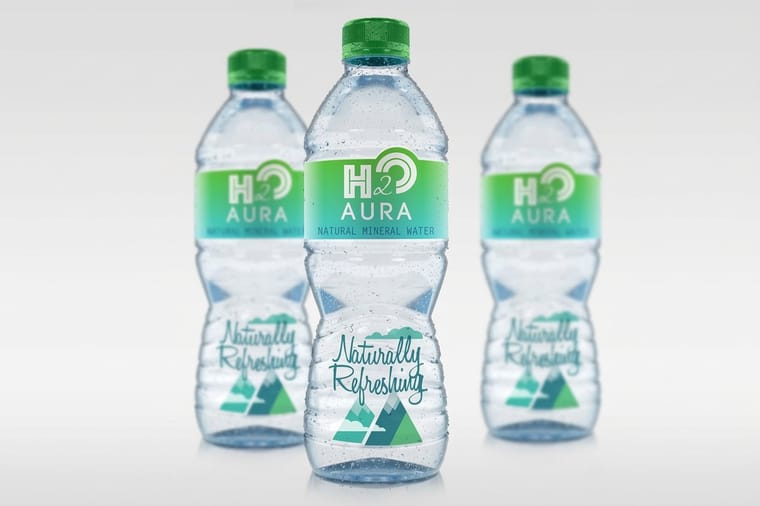
You put a logo on water bottles by wrapping a printed label around a stock bottle, not by printing on the plastic. Measure the smooth panel, add 0.25 in for the glue seam, and print on a polypropylene film so condensation cannot lift the edge. On the usual 16.9 oz bottle that lands near an 8 by 2 in wrap, and because only about a third of the circumference faces anyone at once, the logo belongs in the center third with a smaller repeat on the opposite side.
Quick answer
A wrap label, a film stock, and the logo in the center third
Branding a water bottle is a label job, not a bottle job. Buy stock bottles, print a wrap on polypropylene film, and let the label carry the logo. Width is the circumference of the smooth panel plus 0.25 in of overlap, height sits 0.125 in clear of the shoulder and the base ridge, and on the common 16.9 oz bottle that works out near 8 by 2 in. The part most designs get wrong is placement: a bottle only ever shows about a third of its circumference, so the mark goes in the center third and repeats smaller on the opposite third.
Size the Wrap Before You Touch the Logo
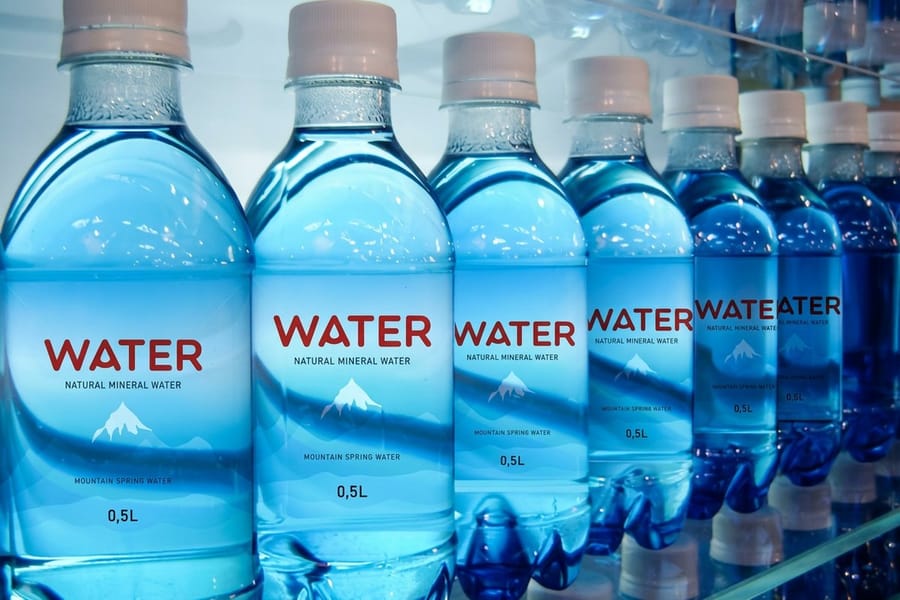
The label, not the logo, sets every decision that follows. Get the wrap wrong and a perfect logo still lands crooked, cut off, or half stuck to the glue seam.
Measure the bottle you are actually buying. Wrap a strip of paper around the smooth section of the bottle, mark where the ends meet, and lay it flat. That number is your circumference. Add 0.25 in so the label laps over itself and glues to its own back rather than to bare plastic, which is a far more reliable bond. For height, measure the flat panel between the shoulder curve and the base ridge, then take 0.125 in off the top and bottom. A label that touches the curve at either end will tent and peel.
On the common 16.9 oz PET bottle those numbers land near 8 in by 2 in, which is why that size is the default across most water bottle label products. It is a starting point, not a guarantee. Bottle molds differ between suppliers, and a 0.2 in error on the circumference either leaves a gap or forces a bulging double overlap. Our water bottle label size guide lists the usual panel dimensions by bottle volume, and choosing the correct label size covers the same measuring method for jars, cans and tins.
Then there is the fact almost every first-time design ignores: a bottle on a table shows about a third of its circumference at once. Split the flat artwork into three panels. The center third is the front, the outer thirds meet at the back and carry the seam. Everything you need read goes in that center third.
Why the Stock Decides Whether the Label Lasts an Afternoon
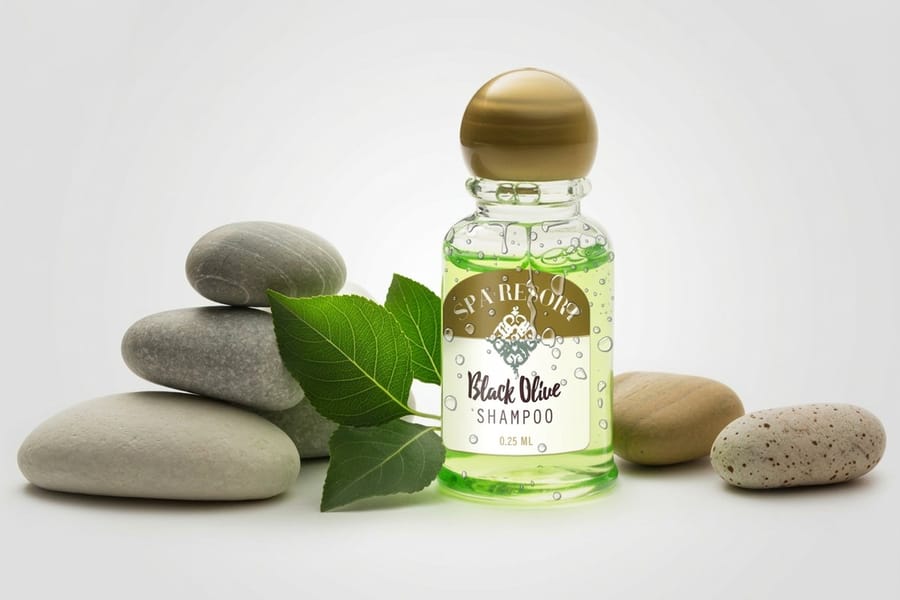
Water bottles fail labels in a way no other product does, and it is not the rain. It is condensation. A chilled bottle sweats continuously in a warm room, so a film of water sits against the label edge for hours.
Coated paper survives a splash and a wipe. It does not survive a soak. Paper is fiber, the cut edge is open, and water travels inward along those fibers until the corner darkens, curls, and eventually lifts with the ink smearing behind it. Polypropylene film has no fiber to wick, so the face stock is simply unaffected by the water and the only remaining variable is the adhesive.
| Stock | Wet performance | Look | Use it for |
|---|---|---|---|
| White film | Handles condensation and full immersion in ice. | Opaque, bright, best color accuracy. | Events, giveaways, races, anything with a logo that has to read across a room. |
| Clear film | Same water resistance as white film. | The no-label look, but contrast drops against water. | Premium bottled water where a dark, solid mark is the whole design. |
| Coated paper | Fine for splashes, fails after hours in a cooler. | Matte, slightly textured, cheapest per label. | Room temperature bottles handed out and drunk the same hour. |
| Metallic film | Water resistant, but ink over foil shifts color. | Reflective, high shelf impact. | Retail beverage lines where the bottle sits next to competitors. |
For most branded water the answer is a white film. Premium water bottle labels start at $29.16 and are built for exactly this job, and premium waterproof labels at $84.68 give you the same immersion resistance in every other shape and size we cut. If you are weighing the stocks against each other beyond water, paper vs vinyl vs clear labels lays out how each behaves against oil, sun and abrasion too.
Designing a Logo That Reads on a Curve
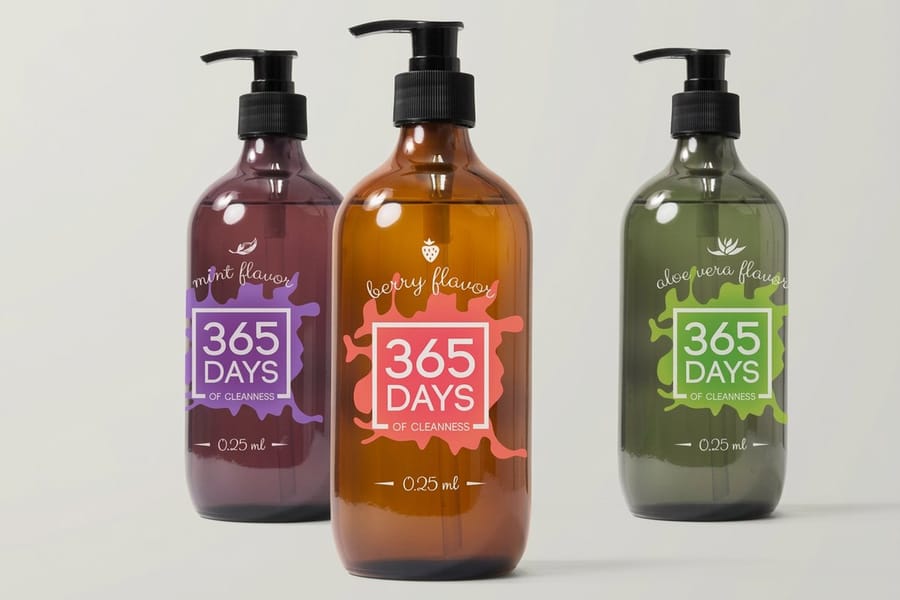
A logo built for a business card behaves badly on a bottle. The surface curves away from the eye, the label is short, and the viewing distance is usually two or three feet across a table.
Keep the logo height under about 60 percent of the label height. On a 2 in label that means roughly 1.2 in, which leaves room above and below so the mark does not crowd the shoulder curve or collide with a nutrition panel. Set everything at least 0.125 in inside the trim on all four sides, and extend any background color 0.125 in past the trim as bleed so a tiny drift on the cutter does not leave a white sliver down one edge.
Three habits do most of the work. Simplify the mark: fine outlines and thin serifs that read at business card distance disappear on a curved surface under fluorescent light, so use the solid version of your logo, not the detailed one. Set type horizontally in the center third and never let a word run across the seam, because the overlap thickens there and any letter crossing it looks doubled. Repeat the mark once, smaller, on the opposite third so the bottle reads from either side.
Clear stock deserves a specific warning. Behind a clear label sits water, which is transparent, so there is nothing to give your ink contrast. A dark solid logo still reads. Anything pastel, thin or mid tone turns into a watermark. If you want the clear look with a colored logo, request a white underprint behind the logo area only, which keeps the rest of the bottle looking label free. Set the file up from a correctly sized layout in our blank template library and follow the water bottle template walkthrough for the artboard and bleed setup.
Sheets, Rolls and What the Run Actually Costs
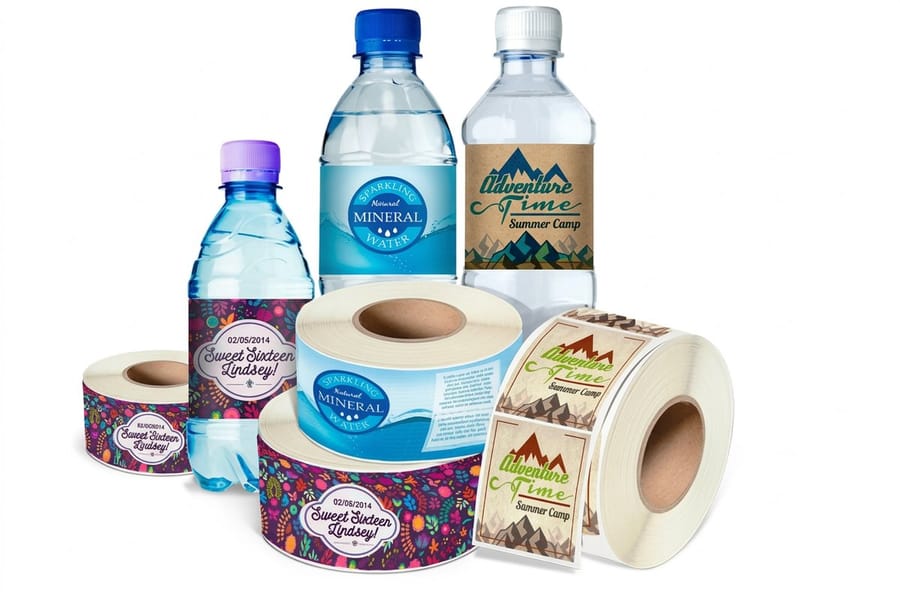
The format question is really a question about who applies the labels. A person applying them by hand wants sheets. A labeling machine can only take a roll.
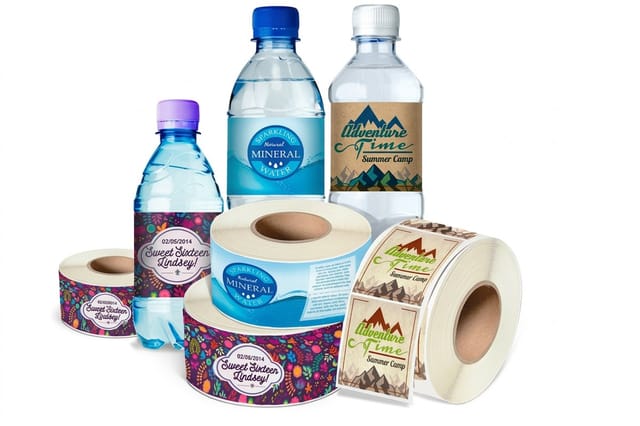
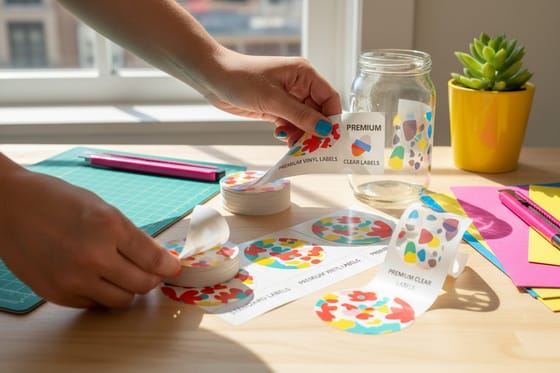
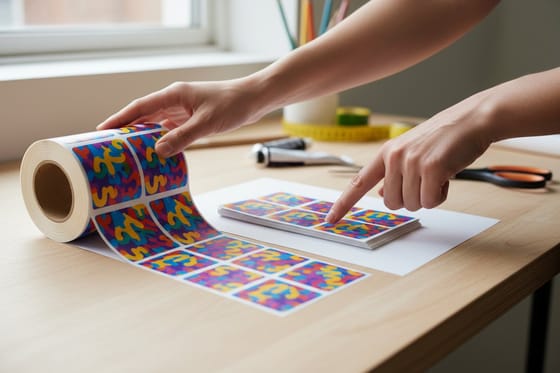
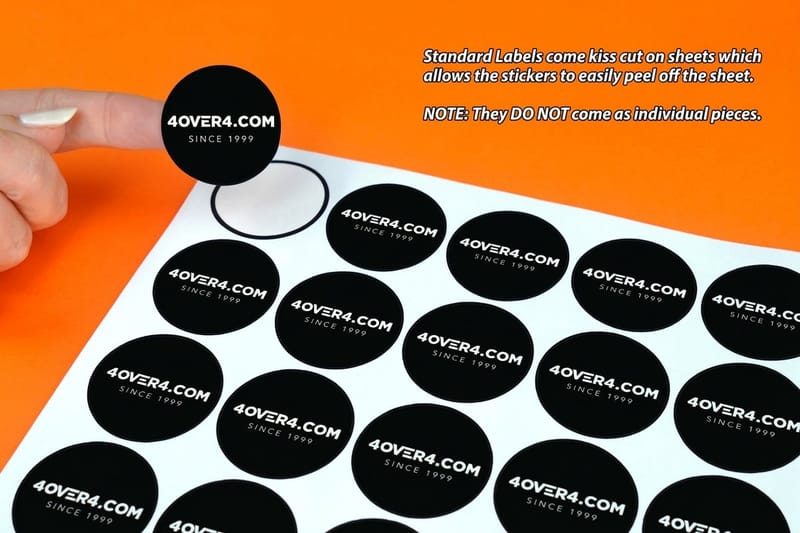
Premium water bottle labels start at $29.16 as sheets, which covers a conference table, a booth, or a few cases for an office event. Roll water bottle labels start at $322.98 because rolls are the volume format, wound on a core in a defined unwind direction so an applicator can feed them in sequence. If a co-packer is running your bottles, ask them for the core size and unwind direction before you order, since a roll wound the wrong way is unusable on their line. Roll labels vs sheet labels goes deeper into where the crossover sits. Watch the premium water bottle labels and roll water bottle labels videos to compare hand applied sheets with a wound roll.
To print on water bottles, pick one of four orders and upload a PDF at your measured wrap size, such as 8 by 2 in, with 0.125 in of bleed on every side.
| Order | Stock | Sizes | From | Standard time |
|---|---|---|---|---|
| Premium water bottle labels | White vinyl permanent or repositionable, clear label, or paper label stocks | 3 by 5 to 5 by 7 in, or any size | $29.16 for 25 | 3 business days |
| Premium waterproof labels | White vinyl permanent | 3 by 5 or 3 by 6 in, or any size | $84.68 for 25 | 3 business days |
| Premium clear labels | Clear label permanent, with an optional white ink base | 3 by 5 to 5 by 7 in, or any size | $86.17 for 25 | 3 business days |
| Roll water bottle labels | White or clear BOPP, gloss or matte lamination, on a 3 in core | Dozens of roll sizes | $322.98 | 6 business days |
Two things are worth resisting. The first is a shaped label. Die-cut labels at $93.37 are excellent on flat and gently curved surfaces, but a shaped outline wrapped tightly around a small-diameter bottle wrinkles at the points, and rectangles wrap cleanly for a reason. The second is ordering the exact count you need. Hand application produces rejects, so budget extra labels rather than extra bottles.
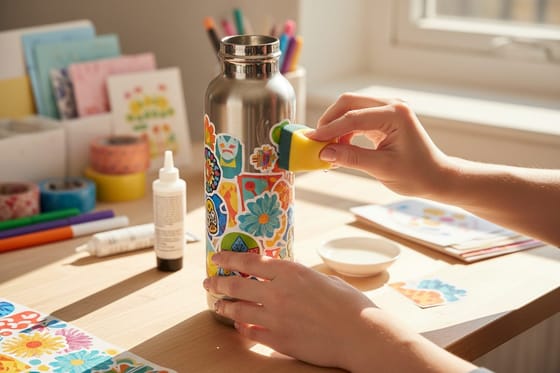
Hand applying them is straightforward if you are unhurried: work at room temperature, since a cold bottle is already wet and adhesive will not grab a damp surface, line the leading edge up vertically, and roll the bottle away from you rather than pressing the label down flat. Browse the full range in custom label printing, or start from waterproof label printing if immersion is the deciding factor.
Wally explains water bottle branding
Wrap the bottle, do not print the bottle
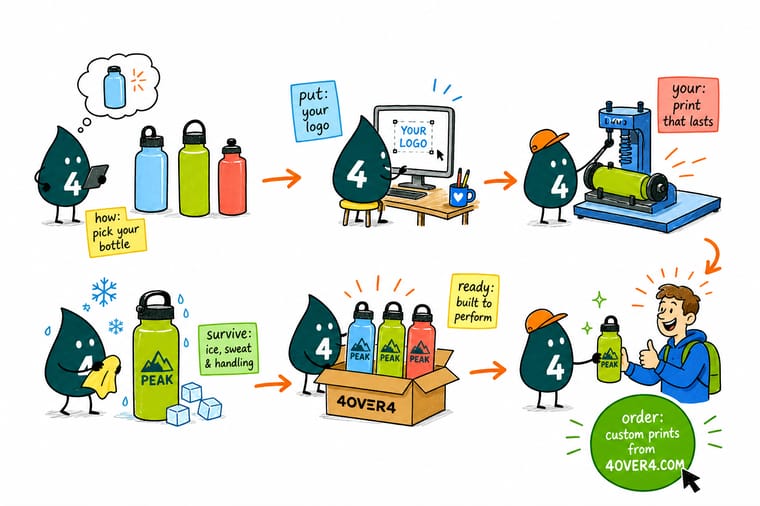
Wally measures around the smooth part of the bottle, adds a quarter inch so the label laps onto its own back, and prints the wrap on film instead of paper because a cold bottle sweats all afternoon. Then he puts the logo in the middle third, where the eye actually lands, and repeats it smaller on the far side so the bottle reads whichever way it gets set down. The seam goes at the back, where nobody reads anything.
Order premium water bottle labels →
Specs and pricing
Label stocks, sizes and starting prices
Compare the three stocks that matter for bottled water side by side, with live configuration options and starting prices straight from the 4OVER4.COM configurator: premium water bottle labels from $29.16 for 25, premium waterproof labels on white vinyl from $84.68, and premium clear labels with an optional white ink base from $86.17, each in 3 business days.
Sheets or a roll
Order the wrap that carries your logo
Sheets of premium water bottle labels from $29.16 for an event table, roll water bottle labels from $322.98 on a 3 in core for a labeling machine, and premium waterproof labels from $84.68 for bottles that sit in ice.
Label sizes, templates and stocks
Where to go next
Printed in our Queens plant
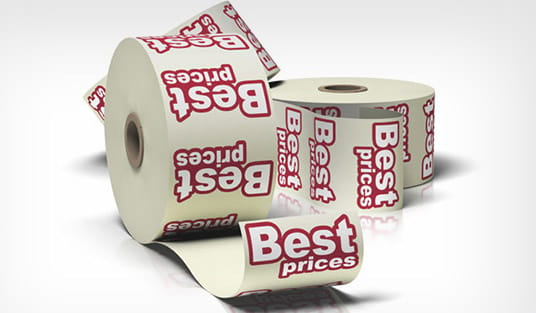
Die-cut and roll labels sized for a bottle
Common Questions
Your water bottle logo questions, answered
What size label fits a standard 16.9 oz water bottle?
Around 8 in wide by 2 in tall for the common 16.9 oz (500 mL) PET bottle, which is why that size is the default on most water bottle label products. Do not trust it blindly though. Bottle molds vary between suppliers, so wrap a strip of paper around the smooth panel of the exact bottle you are buying, mark where it meets, add 0.25 in for the overlap, and measure the flat panel height between the shoulder curve and the base ridge. That measured number beats any chart.
Will the label survive an ice bucket?
A film label will, a paper one will not. Coated paper labels handle a splash and a wipe, but a bottle sitting in melting ice is a two-hour soak, and the paper wicks water from the cut edge inward until the corner lifts and the ink greys out. Polypropylene film has no fiber to wick, so the sheet itself is unaffected and the only failure point left is the adhesive. Order a film stock like our premium waterproof labels for anything that goes in a cooler.
Can I print my logo directly onto the bottle instead?
You can, but the economics only work at volume and you lose all flexibility. Direct printing on plastic means screen printing or pad printing at a bottling facility, with a screen or plate per color, a high minimum, and a lead time measured in weeks. A wrap label is printed digitally, so a run of a few hundred is normal, artwork changes cost nothing, and you can run one design for a conference and a different one for a race the following month using the same stock bottles.
Should I choose a clear label or a white one?
White if the logo has to read, clear if the look matters more than the mark. A clear label over water gives the no-label effect that premium brands like, but the water behind it kills contrast, so anything printed in a light or mid tone turns ghostly. If you want clear, ask for a white underprint behind the logo area, or accept that your mark reads as a watermark. A white film label is the safe default and it is what most event and giveaway runs use.
How many labels should I order, and do I want sheets or a roll?
Sheets for hundreds, a roll for thousands or for anything applied by machine. Premium water bottle labels start at $29.16 and come as sheets you separate and apply by hand, which is fine for an event table. Roll water bottle labels start at $322.98 because rolls are the volume format, and they are the only option if a co-packer is feeding a labeling machine, since the machine needs the labels in sequence on a core with a defined unwind direction.
How do I stop the logo ending up on the back of the bottle?
Design for it rather than fight it. Applying wraps by hand means the seam lands wherever the person applying it starts, so a single logo on a single third of the wrap will face away from the camera on plenty of bottles. Put the logo in the center third, repeat a smaller version on the opposite third, and keep the middle band of the third that carries the seam free of anything you need to read. Then every bottle looks correct from any angle.
Get Started
Order 25 die-cut labels from $93.37 for the bottle
Pick your wrap size, choose a white or clear film that ignores condensation, and we print labels that stay put from the cooler to the last sip.
Legal Disclaimer
Gold Standard guarantees apply to all standard orders placed through 4over4.com. Price match requires verifiable proof of a competitor's published price for an equivalent product with matching specifications and turnaround time. Satisfaction guarantee covers manufacturing defects and print quality issues. Contact support with order number and documentation.
