
How to Print Large Signs That Read From the Street and Last


Substrate, resolution at the finished size, letter height and mounting. Four decisions, in that order, and a large sign comes back right the first time.
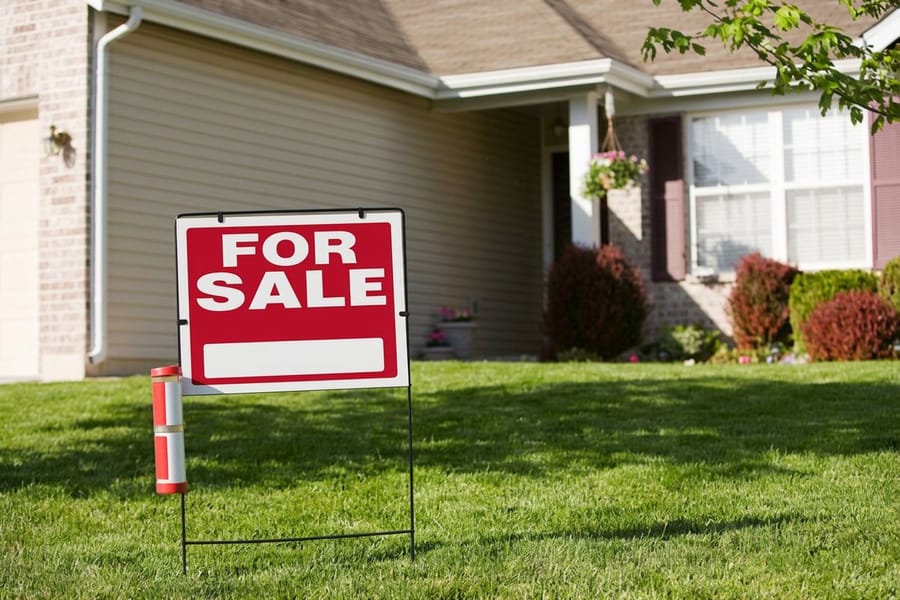
Printing a large sign is three decisions in order: the substrate, the resolution measured at the finished size, and how the sign is mounted. Choose 4mm coroplast for a season, 3mm PVC for a couple of years, .040 aluminum for permanent, and 13 oz vinyl for anything wider than four feet that has to roll. Set artwork at roughly 100 ppi at full size for a sign read from fifteen feet and 50 ppi for one read from sixty, then specify grommets, stakes, drilled holes and flute direction before the sheet is cut.
Quick answer
Substrate first, resolution at full size second, mounting third
Every large sign problem traces back to one of three things: the wrong material for the exposure, resolution judged at the wrong size, or finishing that was never specified. Coroplast for months, PVC for years, aluminum for permanent, vinyl for width. Resolution is measured at the finished size, so 100 ppi is right for a sign read from fifteen feet and 50 ppi is right for one read from sixty. Grommet spacing, flute direction and hole positions have to be on the order, because none of them can be added cleanly after the panel is printed.
Choosing the Substrate for How Long the Sign Has to Live
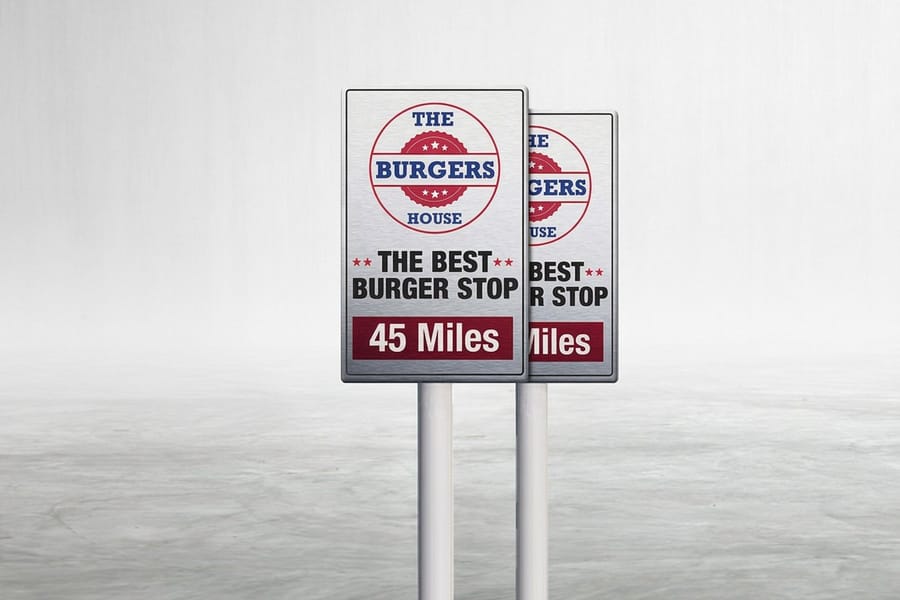
The substrate decides almost everything else: how the sign mounts, how it behaves in wind, and how many seasons you get. Start from the lifespan and the rest follows.
| Material | Typical thickness | Realistic outdoor life | Where it belongs |
|---|---|---|---|
| Coroplast | 4mm, 10mm for heavy duty | Six months to a year | Yard, real estate, campaign and event signs on H stakes. From $25. |
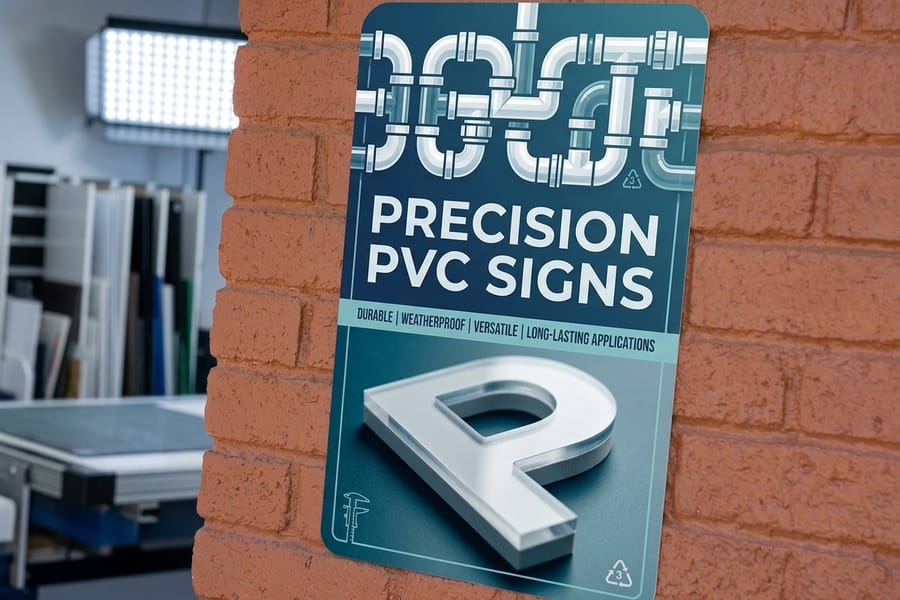
| Expanded PVC | 3mm or 6mm | Two to three years | Storefront, directional and wall mounted signage with a smooth painted face. From $25. |
| Aluminum | .040 or .063 gauge | Years, limited by the mount | Parking, property, safety and anything bolted to a post. From $36. |
| Foam core | 3/16 in or 1/2 in | Indoor only | Easel signs, trade show boards, lobby displays. From $49.99. |
| 13 oz scrim vinyl | 13 oz, 18 oz blockout | One to two seasons | Anything wider than four feet that has to roll up and travel. From $79. |
Two things trip people up here. Coroplast is corrugated, so it has flutes running one direction through the panel, and an H stake only seats if the flutes run vertically. On a horizontal sign that means asking for horizontal flutes for hanging and vertical flutes for staking, which is a print instruction rather than a design one. The second is PVC in heat: a long unsupported span of 3mm board on a south facing wall will bow slightly in summer, so anything over about four feet wide should be 6mm or backed with a frame.
If the sign is going on a fence or a building face in an exposed spot, skip rigid board and go to mesh banners at $75, which are perforated so air passes through instead of loading up the panel. The full material breakdown sits in our guide to aluminum versus coroplast versus PVC, and the fabric side is covered in banner material types.
Setting Resolution Against Viewing Distance, Not Habit
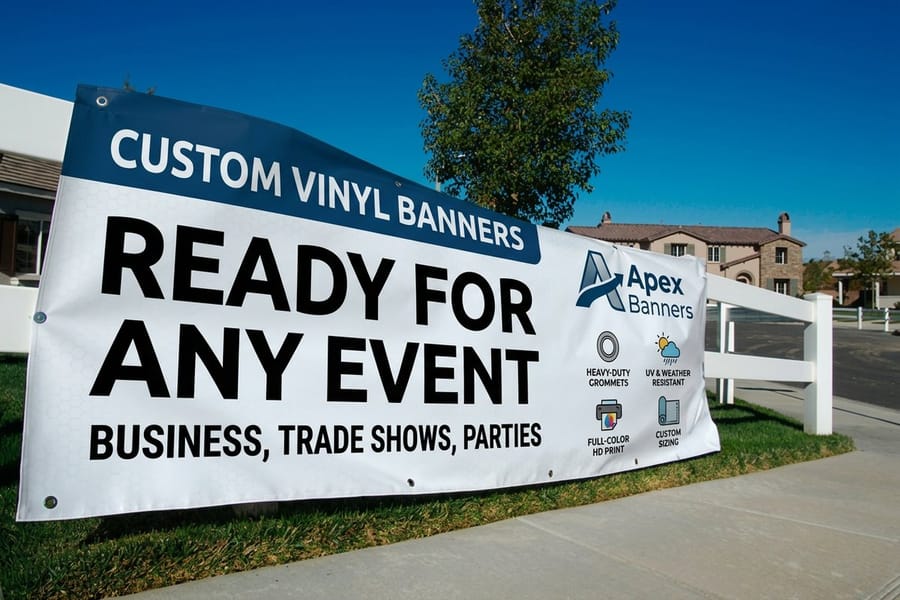
The 300 dpi rule is a stationery rule. It exists because a business card sits eighteen inches from your eye. A sign read from across a street does not need anything close to it, and pushing the number up costs file size, upload time and processing without changing what anyone sees.
Work from the distance. Around 150 ppi at full size for a counter or point of purchase sign. Around 100 ppi for a yard sign or a storefront banner read from ten to twenty feet. Around 50 ppi for a banner on a building read from sixty feet or more. Those are effective resolutions at the finished size, which is the only place resolution means anything.
Building at full scale gets unwieldy fast, so most designers work at quarter scale and multiply. A file built at 25 percent size at 300 ppi lands at 75 ppi when it is blown up to full size, which is right for a large banner and short for a small sign. Keep type, rules and logos as vector and the question disappears for those elements entirely, because vector art has no resolution to lose. Only photographs force the decision. If you want the underlying difference between the two numbers, DPI versus PPI spells it out.
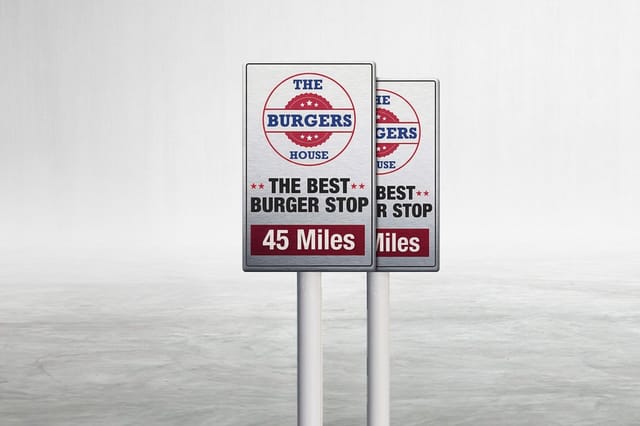
Letter height matters more than resolution and gets less attention. One inch of capital height per ten feet of viewing distance is the comfortable read, and roughly one inch per fifty feet is the point where the word is barely identifiable. Run that math before you write the copy, because it usually means cutting the message to a headline, a number and a phone. Contrast does the rest, and the colors that stay visible outdoors are not always the ones that look best on screen.
Finishing and Mounting, Specified Before the Sheet Is Cut
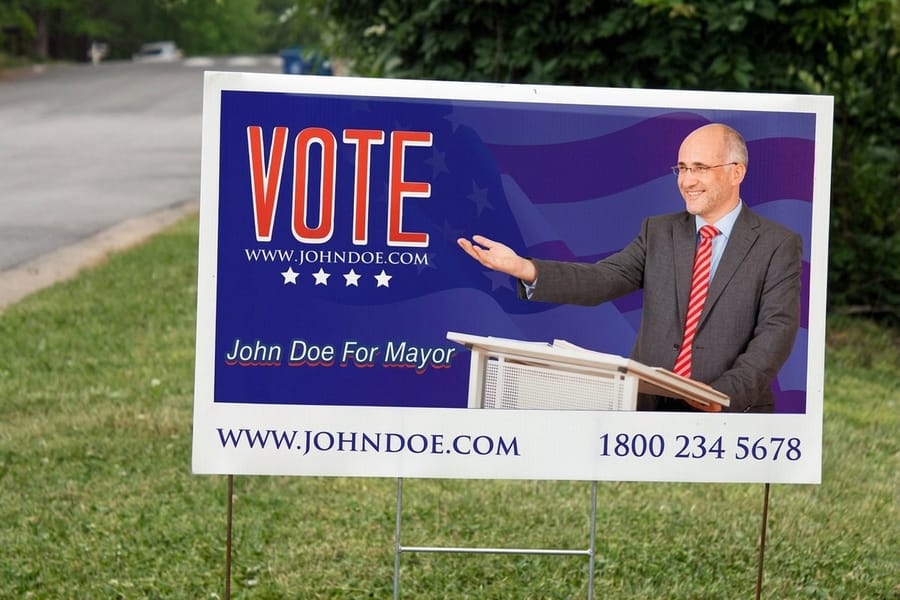
Finishing is where a good print becomes a sign that survives, and almost all of it has to be decided at order time. You cannot add most of it afterward without damaging the piece.
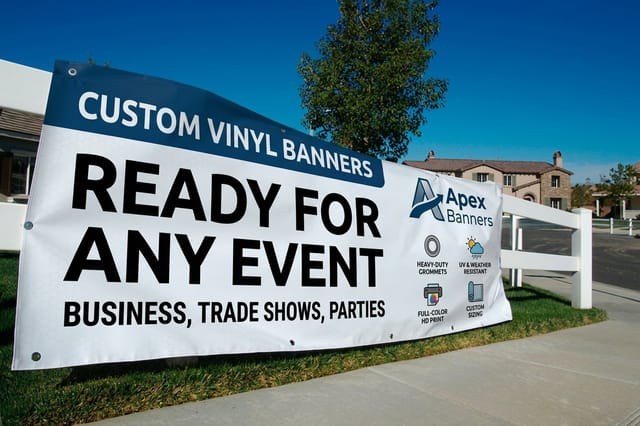
- Grommets and hems on banners. Hem all four sides so the edge does not fray, then set grommets every 24 to 36 inches, with one in each corner. Wider spacing lets the banner belly out and tear at the mounting points first.
- Wind, honestly. Wind slits cut into a solid banner do very little, and they weaken the panel where they are cut. If the location is exposed, use a mesh banner or leave the bottom edge free with a pole pocket instead of pinning all four corners.
- H stakes and flute direction. The stake legs slide inside the flutes, so the flutes have to run the same direction as the stake. Specify it when you order rather than discovering it on the lawn.
- Drilled holes in rigid board. Hole positions are punched before or during finishing. Drilling a printed aluminum or PVC panel afterward chips the printed face around the hole.
- Rounded corners. On coroplast and PVC, rounding the corners removes the point where a knock starts a crack and stops the corner catching people. It costs almost nothing.
- Gloss or matte. A gloss face looks richer in a photo and mirrors the sky outdoors. For a sign read at an angle in direct sun, matte reads better every time.
Set the file up for the finishing you chose. A quarter inch of bleed on every edge, critical copy half an inch inside the trim on rigid board, and at least one and a half inches clear of the edge on a hemmed banner so the fold and the grommets do not eat your text. Our bleed, cut line and safety checklist covers it in one page, and the correctly sized starting files are in the blank template library.
What to Order for the Job You Actually Have
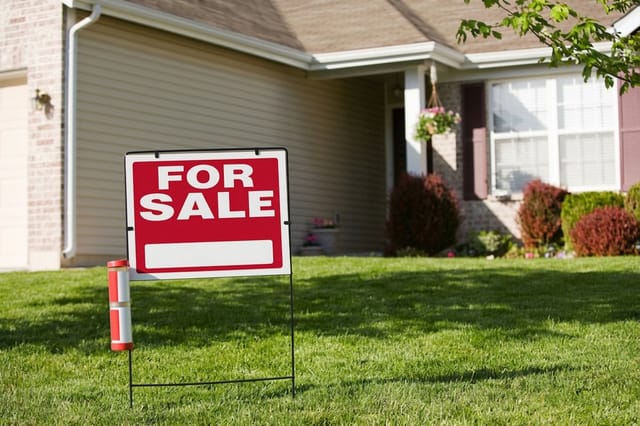
Match the product to the job and the decision takes a minute. A short campaign on a lawn is yard signs from $25 with H stakes, printed both sides so it reads from either direction of traffic. Quantity is where the money is on these, and the coroplast cost and quantity breakdown shows where the price per sign drops.
A permanent sign on a post or a wall is aluminum signs from $36, ordered with the hole positions specified. A storefront or directional sign that needs a clean face but not a decade of life is PVC signs from $25. Anything wider than four feet, or anything that has to roll into a tube and travel, is a vinyl banner from $79, or mesh at $75 if wind is a factor. Indoor easel work is foam core signs from $49.99, and it should never go outside.
Prices shown are starting points and move with size, quantity and finishing. Configure the real number on the product page, where the size and quantity you pick drive the price directly. Browse the whole range in large format printing, or narrow to vinyl banner printing and yard sign printing if you already know the format. If you are still deciding between a rigid panel and a fabric one, banners versus signs compares them head to head.
Wally explains large signs
Read it from where people will actually stand
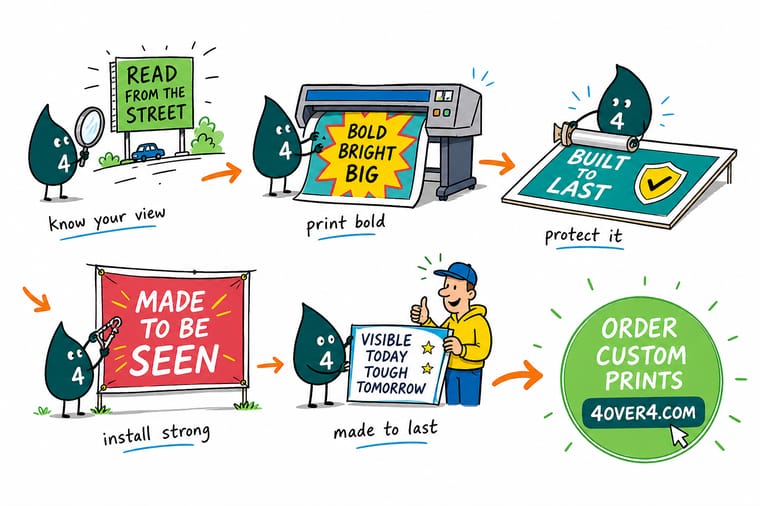
Wally walks backwards until the sign is the size a driver sees, then checks two things. Can he read the words, and is the material going to be there next season. One inch of capital height per ten feet of distance is his rule, so a sign read from eighty feet wants eight inch letters and a short message. He worries about resolution last, because at that distance a photograph at 100 ppi at full size looks perfect and a 300 ppi file just takes longer to upload.
Order yard signs →Specs and pricing
Sizes, materials and starting prices
Aluminum and PVC signs both print in 4 business days, and vinyl and mesh banners in 3, with sizes set on each product page.

Print it
Order a sign built for where it is going
Explore more
Where to go next



By the numbers
The wide format shop behind a large sign
Common Questions
Your large sign questions, answered
What resolution should a large sign be printed at?
Measure it at the finished size, not at the size of the file on your screen. For something read at arm's length, 150 ppi at full size is plenty. A yard sign or a storefront banner read from ten to twenty feet looks sharp at 100 ppi. A banner on a building read from sixty feet or more holds together at 50 ppi. If you build the artwork at quarter scale to keep the file manageable, multiply your working resolution by four to find the real number: a 300 ppi quarter scale file is 75 ppi at full size. Type and logos kept as vector have no resolution at all and stay crisp at any size, which is why the only thing that needs a ppi decision is a photograph.
What is the best material for an outdoor sign?
It depends on how many seasons it has to survive. 4mm coroplast is corrugated plastic, light, cheap and stake friendly, and it is the standard choice for real estate, campaign and event signs that live outside for months rather than years. 3mm expanded PVC has a smooth painted looking face and stands up to a couple of years, so it suits storefront and directional signage. Aluminum in .040 or .063 gauge is the permanent option for parking, property and safety signs. Foam core is paper faced foam that softens and warps as soon as it gets damp, so keep it indoors.
How big do the letters need to be on a large sign?
Use one inch of capital letter height for every ten feet of viewing distance as the comfortable read, and treat one inch per fifty feet as the outer limit where the words are only just identifiable. A sign that has to be read from a car crossing a parking lot at eighty feet wants eight inch capitals for comfort. That single number usually decides how much copy the sign can hold, and cutting the message down is nearly always the right move.
Can a large sign be printed on both sides?
Yes, and the way it is done differs by substrate. Coroplast and PVC are printed on both faces directly, which is normal for yard signs and A frames. A vinyl banner is a different problem, because a single layer of 13 oz scrim lets the reverse image ghost through. Double sided banners use an 18 oz blockout material with an opaque core between the two printed faces. Ask for blockout by name when you order, otherwise you get a banner that reads as a muddy mirror from behind.
How long does an outdoor sign actually last?
Outdoor UV inks on 4mm coroplast typically stay presentable for six months to a year before the color starts to fade and the flutes soften at the stake. Expanded PVC runs two to three years. Aluminum lasts as long as the mounting does. Sunlight is the main variable: a south facing panel in full exposure fades noticeably faster than the same sign in shade, and dark solid areas and reds show the fade first.
Do large signs need bleed?
Yes, and the amount is bigger than on stationery. Large format cutting is less precise than a guillotine on a stack of business cards, so plan on a quarter inch of bleed on every edge and keep critical text at least half an inch inside the trim. On a banner that will be hemmed, keep type at least one and a half inches from the edge, because the hem folds material over and the grommets punch through it. Our print ready checklist on bleeds, cut lines and safety margins covers the rest.
Get Started
Order an aluminum or PVC panel, printed in 4 business days
Pick the substrate, set the size, and we print, cut and finish it with the stakes, grommets or drilled holes already in place.
Legal Disclaimer
Gold Standard guarantees apply to all standard orders placed through 4over4.com. Price match requires verifiable proof of a competitor's published price for an equivalent product with matching specifications and turnaround time. Satisfaction guarantee covers manufacturing defects and print quality issues. Contact support with order number and documentation. On-time delivery rate based on tracked orders 1999 to 2026. Individual results may vary based on shipping carrier performance.
