
How to Design a Banner Advertisement That Pays for Its Placement


A banner advertisement is a media buy that happens to be printed. Here is how to pick the spot, size the message to the seconds it gets, and make the response countable.
Design a banner advertisement by choosing the placement first, then cutting the copy to the seconds that placement gives you. A fence on a 45 mph road buys about two seconds, which is a logo and one offer at roughly six words, while a banner beside a queue can carry a full pitch. Give it one response route you can count, then pick the material by wind and campaign length: mesh where it is exposed, vinyl where color matters most.
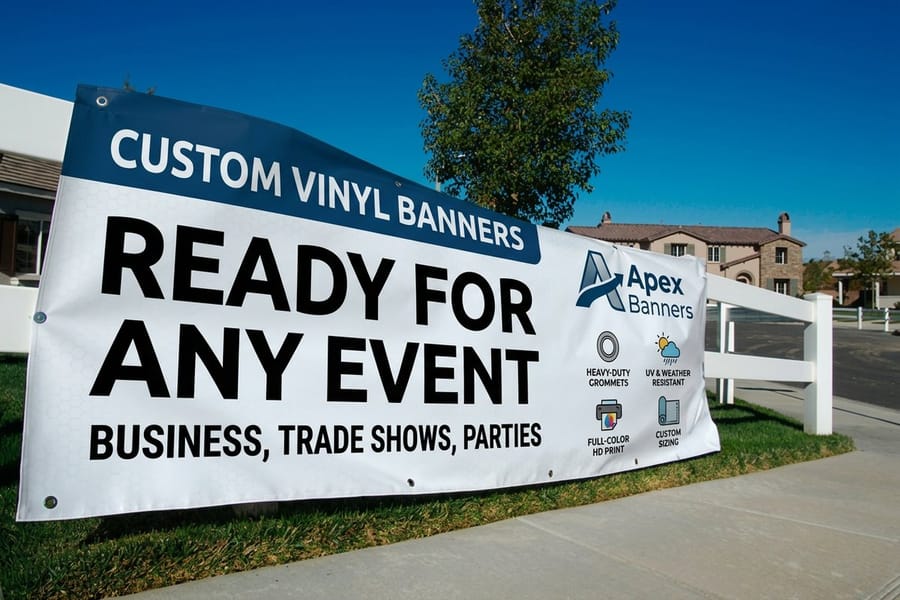
Quick answer
The placement writes the ad
Stand where the reader will stand, count the seconds the banner is in view, and budget about three words per second. Two seconds on a road-facing fence means a logo, one offer, and one way to respond. Five or six seconds on a sidewalk buys a proof line and a QR code that can actually be scanned. Everything else follows from that: mesh where wind gets at it, vinyl where color has to hold, and a response route unique to this banner so you can tell whether it worked.
Choose the Placement Before You Choose the Message
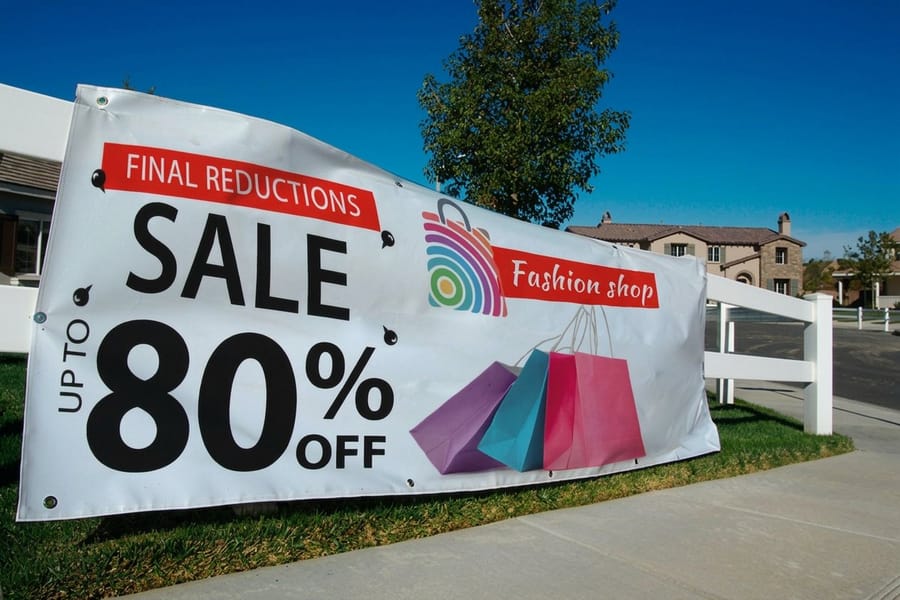
A banner advertisement is a media buy that happens to be printed. The spot you hang it in sets the audience, the viewing time, and the copy budget, and everything you decide afterward is downstream of that choice.
Walk the site and time it. Stand where the reader will be, count the seconds the banner stays in view, and note the angle. A banner on a fence beside a 45 mph road holds attention for roughly two seconds. The same banner on a sidewalk gets five or six. Beside a checkout line or in a trade show aisle it can hold someone for a minute, which is a completely different ad.
| Placement | Viewing time | What fits | Material that suits it |
|---|---|---|---|
| Road-facing fence | About 2 seconds | Logo and one offer, roughly six words | Mesh, tied at every grommet |
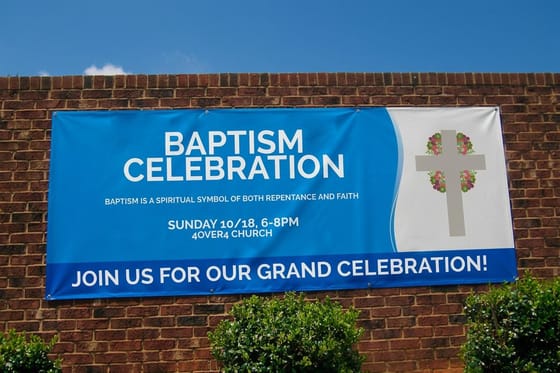
| Storefront or building wall | 4 to 6 seconds | Offer plus one way to respond | Vinyl if sheltered, mesh if exposed |
| Sidewalk or entrance | 5 to 10 seconds | Offer, a proof line, and a QR code that scans | Vinyl or fabric |
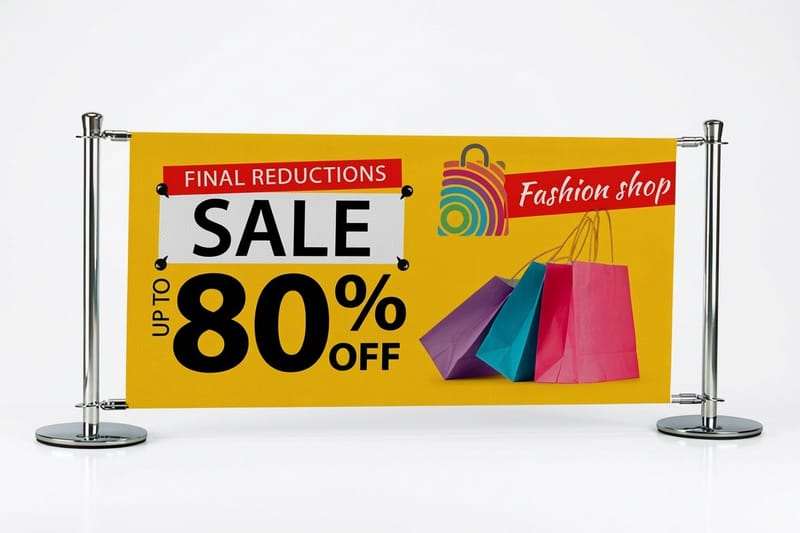
| Light pole run | 2 to 3 seconds each, repeated | One image, one word, repeated down the street | Double-sided pole banners with pole pockets |
| Booth, queue, or lobby | 30 seconds and up | Full pitch, pricing, and a scan | Fabric or a retractable stand |
Read the second column and then look at your draft. Most banner ads that fail were written for the sidewalk and hung on the road. If the spot is exposed and high up, order outdoor banners and accept that the ad has to work at six words. Our banner material guide covers the weight and coating side of the same decision.
Write to the Second Count, Then Cut Again

Plan on about three words per second of viewing. Two seconds is six words, six seconds is eighteen, and a booth banner someone reads while waiting can carry a paragraph. That single constraint does more for a banner ad than any font choice.
A banner advertisement holds five things at most, and the short placements hold two of them:
- Who it is. The logo or the business name, sized to be recognized rather than read.
- The one offer. Not a service list. One thing, stated in the words a customer would use.
- A reason to believe it. Years in business, a licence number, a guarantee. One line.
- One way to respond. A short URL, a phone number, an arrow to the door, or a QR code. Pick one.
- Where, if the ad is not at the destination. A cross street, never a full postal address.
What gets cut every time: social media icons, a tagline that means nothing to a stranger, a list of five services, a full address, and stock photography that could belong to any business on the street. Each of those steals width from the type that is doing the work.
Then check the contrast at size. Dark type on a light field, or light type on a solid dark field, both survive glare. Thin type over a photograph does not, and no amount of drop shadow rescues it. The mechanics of type size, bleed and hem allowance are covered in our guide to designing advertising banners, and you can start the layout from a correctly sized file in the blank template library.
Make the Ad Measurable Before It Goes to Print
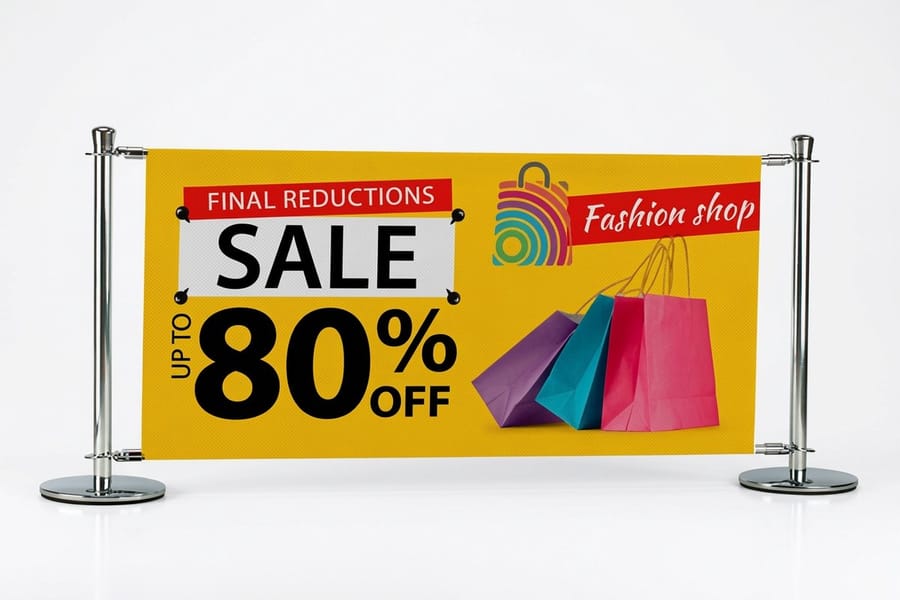
Most banner advertising is never measured, which is why nobody can say whether it worked. The fix costs nothing if you do it before the file is sent, and it is impossible afterward.
Give the banner a response route it does not share with anything else. A short URL that redirects, a promo code that only appears on that banner, a phone extension, or a QR code where the reader is standing still. Then you know what the banner produced instead of guessing.
The QR code is the one people get wrong. It needs roughly one inch of width for every ten inches of viewing distance, so a code meant to be scanned from twenty feet away has to be about two feet across. On a 3 by 6 foot road banner that is most of the artwork, and the reader is moving anyway. Save the code for indoor banners, booth graphics, and retractable banner stands where somebody is queuing with a phone already in hand.
One more habit worth keeping: photograph the banner in place on the day it goes up, from where the reader stands. It is the only record of whether the ad was legible in the real light, and it settles the argument next time somebody wants smaller type.
Match the Material to the Campaign, Then Do the Monthly Math
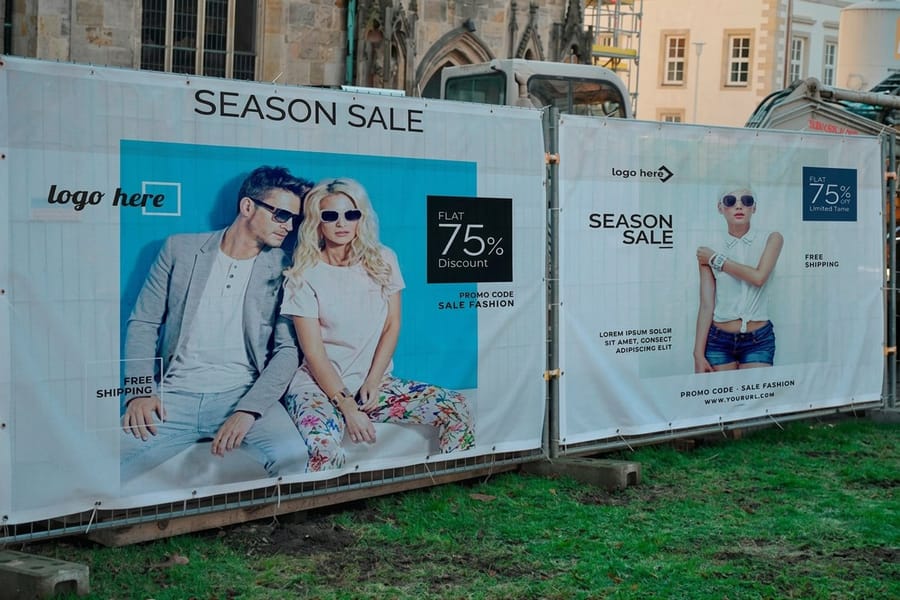
Material is a durability and wind decision first, an appearance decision second. Wind load is what tears banners, and a solid vinyl banner on an exposed chain-link fence acts like a sail every time a truck goes past.
Vinyl banners start at $79 and hold the densest color, which makes them the default for sheltered walls, indoor spaces, and anything hung for a season. Mesh banners start at $75 and are perforated so air passes through, which is why fences, scaffolding, and stadium rails get mesh. The trade-off is honest: the perforations lighten the print, so solid dark fields read a shade weaker and small type softens at the edges. Go bolder on type and skip fine detail. Fabric banners start at $57.20 and are the indoor choice when glare from a vinyl surface would wash the message out under spotlights. Pole banners start at $97.76 and print double-sided with pole pockets for a street-light run.
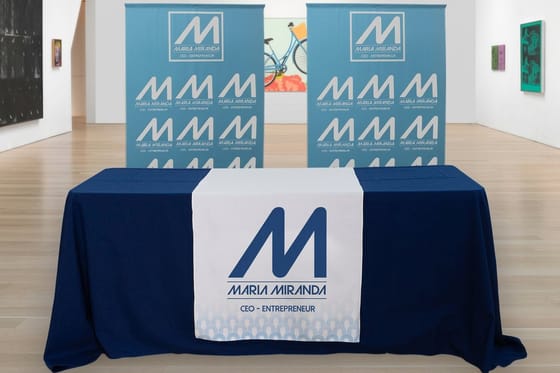
Now run the arithmetic that decides the budget. A $79 vinyl banner on your own fence for twelve months is under $7 a month of advertising. That is the number to hold next to any rented sign space or paid placement quote, and it is why a banner on property you control is usually the cheapest media a small business owns. A step-and-repeat wall at $217.50 looks expensive next to it, until you count the photos that come off one event.
Where a banner is the wrong buy: a message that changes weekly, an audience that never passes the same spot twice, and any placement where you cannot hang it legally. For a full breakdown of what drives the number on the invoice, see banner prices explained, or compare every material in the banner printing collection.
The Five Things That Waste a Banner Advertisement

Almost every banner that gets thrown out early failed for one of the same handful of reasons, and four of them are decided before printing.
A date printed on a long-run banner. The grand opening ends, the sale closes, and a perfectly good banner becomes waste. Split it: an evergreen banner for the permanent message, and a cheaper dated one you expect to replace.
Two grommets holding a banner that needs eight. Corners alone let the middle flap, and flapping tears hems and pulls grommets through the vinyl. Tie every grommet, use bungees rather than rope so the banner can move without loading the seam, and check the spacing in our grommet placement guide.
Solid vinyl in the wind. If the site is open, mesh is not a downgrade, it is the correct material. The vinyl versus mesh comparison shows what the perforations cost you in color and what they buy in survivability.
Hanging first, permit later. Cities cap temporary banner size and duration, and enforcement usually arrives as a removal notice after you have paid for the print. Check the rules in the sign permit guide before ordering, because a size cap can change the banner you buy.
Copy written at a desk, approved on a screen. Print the artwork small, tape it to a wall, and walk to the distance the reader will actually stand. If you cannot read the offer, the banner is not finished. The same test applies to every piece in our large format printing range.
Wally explains banner advertising
Count the seconds, then count the words
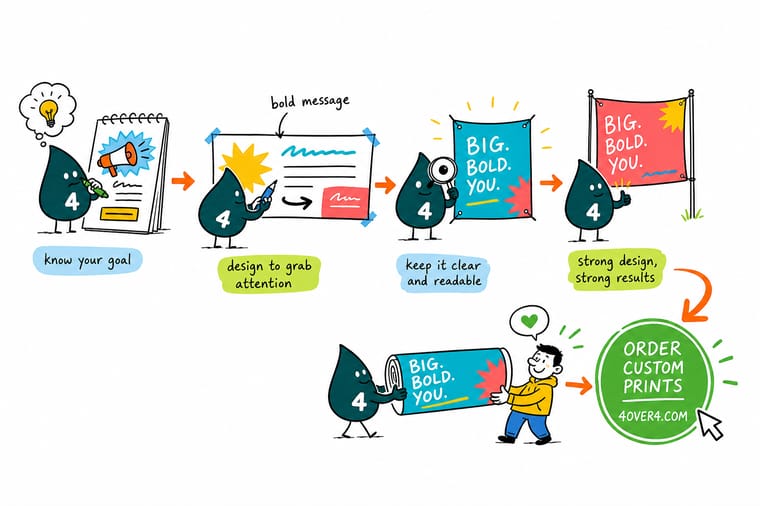
Wally walks to where the customer will be and times the view. Two seconds from a passing car means six words, so the phone number stays and the service list goes. Six seconds on the sidewalk buys a proof line and a QR code big enough to scan. He ties every grommet, picks mesh when the fence is exposed, and never prints a date onto a banner he wants to keep hanging next year.
Order vinyl banners →Specs and pricing
Banner sizes, materials, and starting prices
Configure the banner the way the placement demands, with live size, finishing and quantity options straight from the 4OVER4.COM configurator.


Print it
Order the banner that fits the spot

Explore more
Where to go next


By the numbers
Banner printing you can count on at 4OVER4
Common Questions
Your banner advertising questions, answered
What size should a banner advertisement be?
Size it to the distance and the mounting points, not to a number you like. The sizes that cover most jobs are 2 by 4 feet for a doorway or a table front, 3 by 6 feet for a fence or a railing, and 4 by 8 feet for a building wall or a road-facing spot. Measure the gap you are hanging into first and subtract a few inches on each side, because a banner cut to the exact opening leaves no room for the hem and the tie-downs. If the banner has to clear a window or a light fixture, that constraint decides the shape before anything else.
How long will an outdoor banner last?
A year or two of full sun and weather is a fair expectation for a printed vinyl banner, and considerably longer in shade or when it comes down between events. What kills banners early is rarely the print. It is wind whipping a solid banner against a hard edge until the hem tears, and grommets pulling out because the banner was tied at only two corners. If the banner is going up permanently on an exposed fence, mesh and a tie at every grommet buy you more life than any coating.
Do I need a permit to hang a banner advertisement?
Often yes, and it depends on your city rather than your state. Most municipalities treat a banner on a building or a fence as temporary signage with a permit, a size cap, and a time limit measured in weeks. Banners inside a window, at a private event, or on your own trade show booth usually fall outside that. Check before you print, since the permit will sometimes cap the square footage and change the size you order. Our guide to sign permits in every U.S. state is the starting point, then call the local building department.
Should a banner advertisement have a QR code?
Only where the reader can stop and aim a phone. A rough rule that works in practice: a QR code needs about one inch of width for every ten inches of viewing distance, so a code read from twenty feet has to be roughly two feet across, which is most of a small banner. Indoors, at a booth, or beside a queue, a QR code is the cleanest way to measure the ad. Facing a road, it is decoration. Use a short URL you can say out loud instead.
Mesh or vinyl for a fence?
Mesh for anything exposed to wind, vinyl for anything sheltered where color matters most. Mesh banners are perforated, so air passes through instead of loading up the fence and the hems. The trade-off is real: the holes lighten the print, so solid dark backgrounds look a shade weaker and small type gets slightly softer edges. Compensate by going bolder on the type and avoiding fine detail. On a sheltered wall or indoors, vinyl gives you the denser color.
What does a banner advertisement cost to run?
The print is usually the smallest number in the campaign. Vinyl banners start at $79 and outdoor banners at $79, mesh banners at $75, pole banners at $97.76, and step-and-repeat banners at $217.50. A $79 banner hanging on your own fence for a year is under $7 a month, which is the comparison to make against any rented ad space. The costs that catch people out are the mounting hardware, the permit, and reprinting a banner because a phone number or a date was printed onto it.
Get Started
Ready to hang an ad that earns its spot?
Pick the size the placement allows, choose mesh for wind or vinyl for color, and we print a banner hemmed and grommeted ready to go up.
Legal Disclaimer
Gold Standard guarantees apply to all standard orders placed through 4over4.com. Price match requires verifiable proof of a competitor's published price for an equivalent product with matching specifications and turnaround time. Satisfaction guarantee covers manufacturing defects and print quality issues. Contact support with order number and documentation. On-time delivery rate based on tracked orders 1999 to 2026. Individual results may vary based on shipping carrier performance.
