
How to Choose a Business Yard Sign That Gets Read From the Road


Size, material, stake and sides, decided in the order that actually matters. Includes the cap height math, the wind limit on a staked board, and the point where a yard sign stops being the right product.
Measure the distance from where the sign will stand to where people will read it, then size the sign around the letter height that distance needs, roughly 30 feet of legible distance per inch of cap height. Material, stake and printed sides follow from that. 4mm coroplast on an H-stake covers most lawns up to 18 by 24 inches, hard surfaces take a weighted A-frame with 24 by 36 inch panels, and anything permanent should be .040 inch aluminum.
Quick answer
Setback decides the letters, the letters decide the sign
Pick the size from the reading distance, not the budget. Plan on about 30 feet of comfortable legible distance per inch of cap height, which puts a 12 by 18 inch sign on sidewalks and small lawns and an 18 by 24 inch sign on street frontage. Then match the board to how long it must stand: 4mm coroplast for a season, .040 inch aluminum for years, a Signicade A-frame wherever a stake cannot go into the ground. Print both faces on any two-way approach, and order the stake or grommets with the sign rather than after it arrives.
Measure the Setback Before You Pick Anything Else
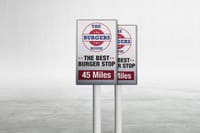
Walk out to where the sign will stand, then walk to where the person reading it will be. That distance is the whole brief. Signmakers plan on roughly 30 feet of comfortable legible distance for every inch of cap height, so a headline set in 2 inch capitals holds up to about 60 feet and 4 inch capitals to about 120 feet. Under that, the sign is technically readable and practically ignored.
Speed compresses it further. A car at 35 mph covers 51 feet every second, so 120 feet of legibility is a little over two seconds of reading time, and two seconds is five or six words. That is the real reason a busy yard sign fails. It is not the design, it is the word count.
- Measure the setback from the sign position to the traffic lane or the sidewalk it faces.
- Divide by 30 to get the cap height in inches your headline needs.
- Pick the size that fits that headline plus one supporting line. A 12 by 18 inch board fits 2 inch caps comfortably, 18 by 24 inches fits 4 inch caps, and 24 by 36 inch panels fit 6 inch caps.
- Choose the material from how long the sign has to stand and what it is fixed to.
- Add the hardware in the configurator, stake or grommets, before you check out rather than sourcing it later.
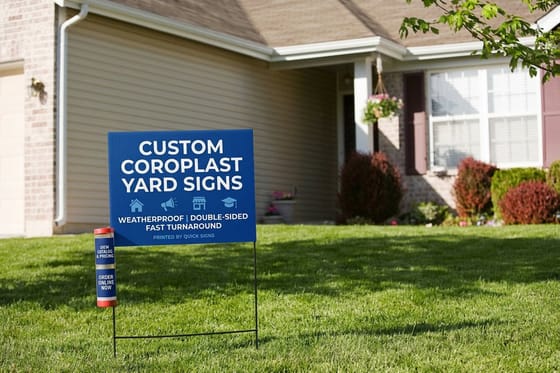
Our yard signs print at 12 by 18, 12 by 24 and 18 by 24 inches on 4mm white coroplast, with the custom Any Size option made to order up to 18 by 24 inches. If your setback math says you need bigger letters than an 18 by 24 inch board will hold, skip ahead to the A-frame and aluminum options rather than trying to squeeze the layout. The yard sign sizes and materials guide lays the standard sizes out side by side.
Coroplast, Styrene or Aluminum, and What Each One Costs You
Four boards cover almost every business sign that stands at street level. They are not interchangeable, and the gap between them is durability against price rather than print quality, since all four take the same full color printing.
| Board | Thickness | Sizes we print | Where it wins | From |
|---|---|---|---|---|
| Coroplast yard sign | 4mm fluted plastic | 12x18, 12x24, 18x24 in | Soft ground, short runs, the cheapest way to put a message on a lawn. | $25 |
| Styrene sign | .020 in white styrene | 11x17 in up to a 48x96 in custom cut | Panels that get hung, wired or taped, indoors and out, in sizes coroplast will not reach. | $29 |
| Aluminum sign | .040 in aluminum | 12x18, 18x24, 24x36 in | Anything permanent and bolted down. It will not rust, warp or fade. | $36 |
| Signicade A-frame | 4mm panels in a plastic frame | 24x36 in panels, 25x45 in frame | Concrete, gravel and sidewalks where nothing can be driven into the ground. | $182.32 |
Read the last column against the first. Coroplast is cheap because it is thin and fluted, and that same structure is what creases when a mower clips it or a stake wire tears out sideways in wind. Aluminum costs more per sign and then stops costing anything, which makes it the honest answer for a sign that has to say the same thing in three years. Styrene sits between the two and earns its place on large flat faces, because .020 inch stock bows badly on a big panel unless you order grommeted corners and support it.
Corrugated plastic gets sold under half a dozen names, so if the quotes you are comparing use different words for the same board, our explainer on what coroplast signs actually are and the aluminum against coroplast against PVC comparison line the terminology up.
Stakes, Grommets, Frames and the Wind Problem
The mounting decides where the sign can go, and it is the part people leave until the sign has already arrived. A steel H-stake has two prongs that slide up into the flutes of the board, which means the flutes have to run top to bottom on a staked sign. That is set when the sheet is cut, not afterwards, so order the stake with the sign rather than buying stakes separately and discovering the flutes run the wrong way.
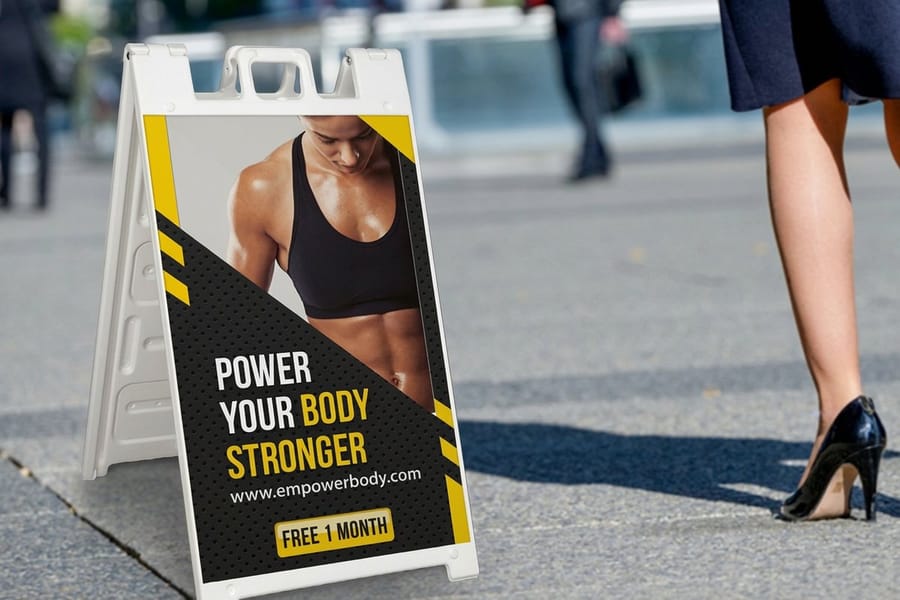
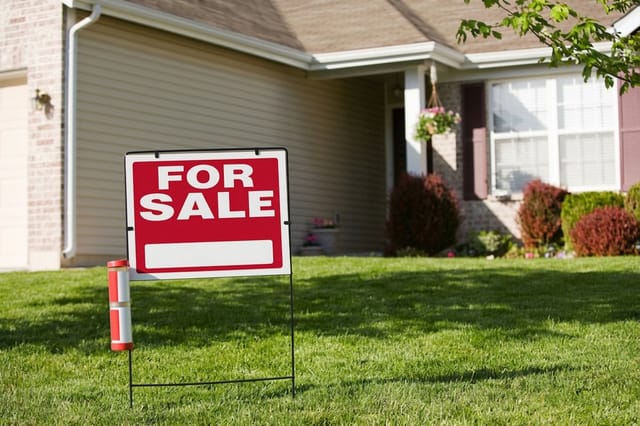
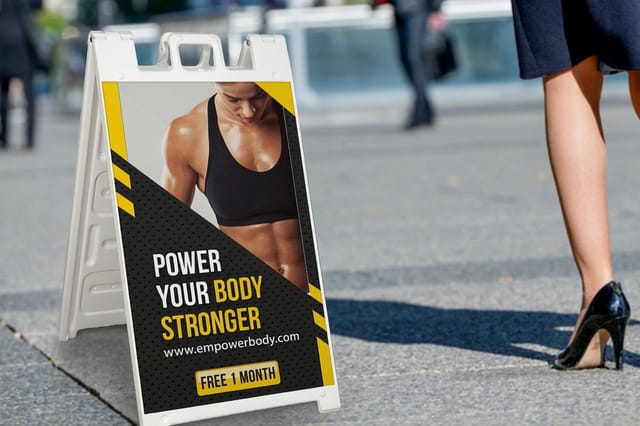
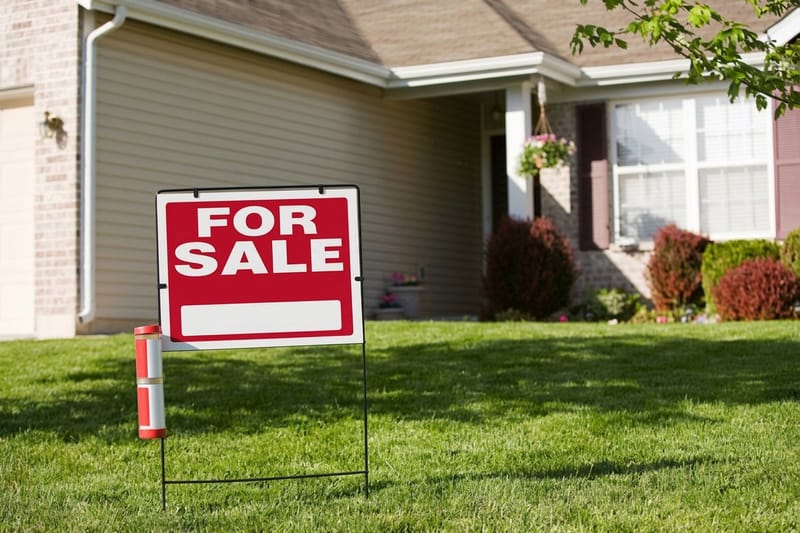
Stakes need ground that gives. Lawns, verges and flower beds are fine. Frozen soil, gravel, hardpack and anything paved are not, and forcing a stake into them bends the wire and splits the flutes. On hard surfaces the answer is a weighted Signicade A-frame, which stands on its own footprint and holds two 24 by 36 inch panels, so the same frame carries a different message on each face. Our guide to choosing an A-frame sidewalk sign covers the frame styles.
Wind is where staked signs actually die. A large board catches air like a sail, the load concentrates at the two points where the stake wires enter the flutes, and the board tears from those points outward. Three things reduce it. Keep the sign at 18 by 24 inches or under. Push the stake in fully so the board sits low rather than perched on the wire tips. Where a fence or railing is available, order grommets in the top corners or all four and cable-tie the sign flat against the structure, which removes the lever arm entirely.
Grommets are also the fix for a sign that has to move. A grommeted board goes up and comes down in seconds, survives being stacked in a van, and does not need soft ground at the next stop. On our yard signs both the grommets and the H-stake are configurator options, so the choice is made at checkout.
Two Sides, Local Rules, and a Layout That Survives Two Seconds

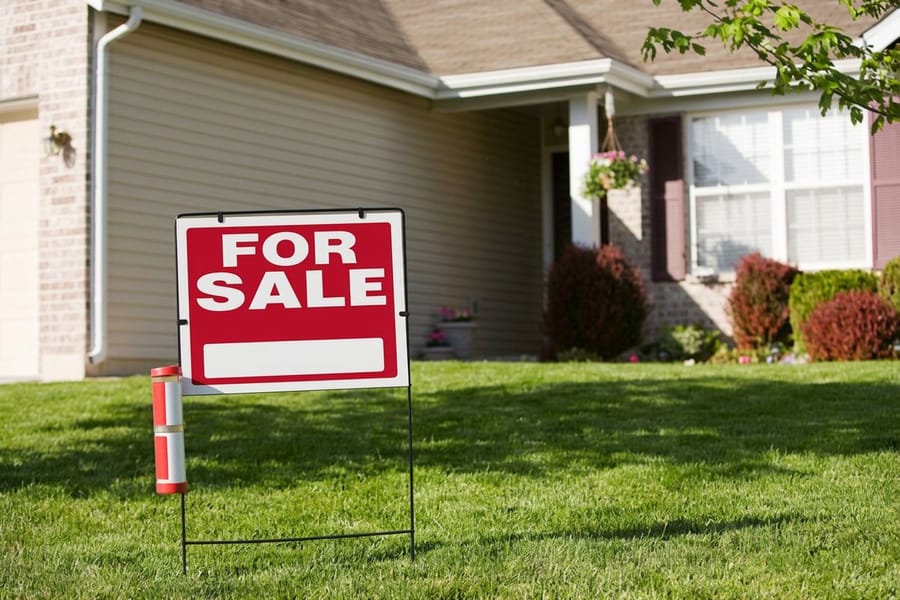
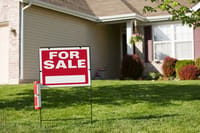
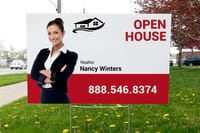
Print both faces unless the sign backs onto something solid. Traffic approaching from the other direction sees a blank white board, and the second face costs a fraction of a second sign plus a second stake. On a corner lot you can put a different message on each face, one for each approach. Real estate yard signs at 24 by 18 inches ship double sided by default from $29.89, which is the pattern worth copying for any business on a two-way street.
Check the local rules before the quantity, not after. Temporary signs on your own property are usually permitted with limits on size, count and duration. The public right of way, which in many towns includes the grass strip between the sidewalk and the curb, is where signs get removed and sometimes fined. The rules change from one municipality to the next, and our state by state sign permit guide is the place to start.
Then keep the layout brutal. One headline in the cap height your setback demands, one supporting line, one way to act on it, and nothing else. Dark type on a light board or light type on a saturated one, never mid tone on mid tone, because contrast falls apart at distance faster than size does. Leave the logo small and the phone number big. Bleed the artwork past the trim so a stake slot or a rounded corner never eats a letter, and the blank template library has the yard sign sizes already set up. For the composition itself, how to design a yard sign walks through a full layout, and real estate yard sign rules and design tips covers the version with rider panels and agent branding.
Wally sizes the sign
Pace out the distance, then pick the letters
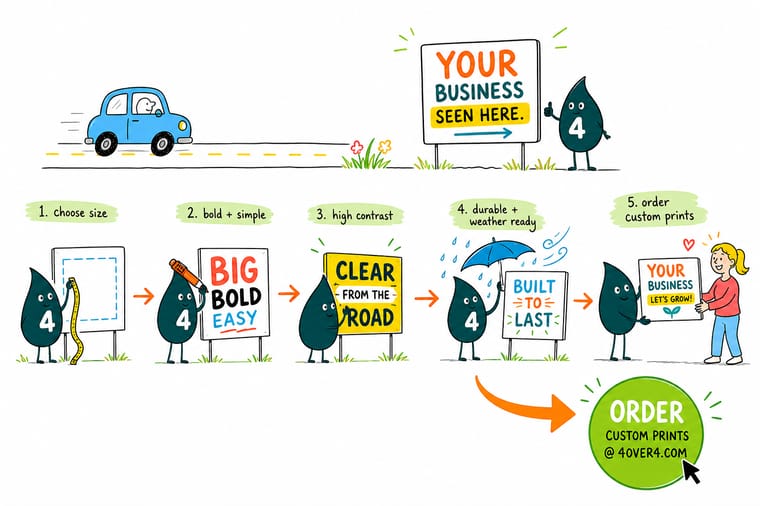
Wally walks from the sign to the spot where drivers will read it and counts the feet. Divide by 30 and that is the cap height in inches the headline needs. Two inch letters read to about 60 feet, four inch letters to about 120. Then he checks the ground: soft lawn takes an H-stake, concrete takes a weighted A-frame, a fence takes grommets and zip ties. Last he flips the board over and prints that side too, because half the traffic arrives from the other direction.
Configure your yard signs →Specs and pricing
Sizes, options and starting prices, straight from the configurator
Compare the staked and mounted options side by side, with the live size, stock and turnaround choices behind each one.
Print it
Order the sign that fits your ground and your setback

Explore more
Where to go next

By the numbers
Signs printed and shipped by 4OVER4
Common Questions
Your business yard sign questions, answered
What size yard sign works best for a business?
18 by 24 inches for anything read from a street, 12 by 18 inches for a sign people walk past. The deciding number is the distance between the sign and the reader. A rule signmakers use is about 30 feet of comfortable legible distance per inch of cap height, so 2 inch letters hold up to roughly 60 feet and 4 inch letters to roughly 120 feet. An 18 by 24 inch board has room for 4 inch caps plus a phone number underneath. A 12 by 18 inch board does not, so it belongs on a sidewalk edge or a small front lawn rather than on a road with traffic moving through it.
Can I get a yard sign bigger than 18 by 24 inches?
Not as a staked yard sign. Our yard signs run 12 by 18, 12 by 24 and 18 by 24 inches, and the custom Any Size option is made to order up to 18 by 24 inches. Past that the wind load beats the stake. The two products that cover the larger sizes are Signicade A-frames, which hold two 24 by 36 inch coroplast panels in a weighted plastic frame, and aluminum signs, which print up to 24 by 36 inches on .040 inch stock for bolting to a post or a wall.
How long does a coroplast yard sign last outdoors?
A full season of weather is normal, and the print usually outlasts the board. Coroplast does not absorb water and the inks are UV cured, so rain and sun are not what kills it. What kills it is mechanical: a mower catching a corner, a stake wire tearing out of the flutes in wind, or the board getting bent and never sitting flat again. If the sign has to stand for years rather than months, order aluminum from $36 instead and mount it properly.
Do I need a permit for a business yard sign?
It depends on the city and on whose land the sign stands. On your own property, temporary signs are usually allowed within limits on size, number and how long they stay up. In the public right of way, which includes the strip between the sidewalk and the curb in many towns, signs are frequently prohibited and get pulled by code enforcement. Check the ordinance before you order a hundred of them, and start with our state by state breakdown of sign permit rules.
Should I print one side or both?
Both, unless the sign backs onto a wall or a fence. Traffic that approaches from behind sees a blank white board, and the second side costs far less than a second sign and stake. On a corner lot the two faces can even carry different messages, one aimed at each approach. Real estate yard signs are built double sided from $29.89 for exactly this reason.
How much do business yard signs cost?
A single 12 by 18 inch yard sign starts at $25 at 4OVER4.COM, and the price per sign drops as the run gets longer, up to 100 in one order. Related options: real estate yard signs at 24 by 18 inches start at $29.89, styrene signs start at $29, aluminum signs start at $36 for 12 by 18 inches, and a complete Signicade A-frame with two printed 24 by 36 inch panels starts at $182.32. Stakes and grommets are configurator add-ons, so quote the sign with the hardware you actually need rather than the bare board.
Get Started
Order a Signicade A-frame from $182.32
Pick the size your setback needs, print one face or both, add the H-stake or the grommets, and we ship weatherproof coroplast signs from $25.
Legal Disclaimer
Gold Standard guarantees apply to all standard orders placed through 4over4.com. Price match requires verifiable proof of a competitor's published price for an equivalent product with matching specifications and turnaround time. Satisfaction guarantee covers manufacturing defects and print quality issues. Contact support with order number and documentation. On-time delivery rate based on tracked orders 1999 to 2026. Individual results may vary based on shipping carrier performance.
