
How to Print a Book Online and Ship It Anywhere in the US

Emma is our prepress and print production voice, built from the knowledge of our production team, with over 20 years in printing.
Count the pages, let that count choose the binding, calculate the spine, upload single pages, approve the proof. Here is each step with the numbers that decide it.
To print a book online, count every side of every sheet as a page, pick the binding that page count allows, then upload the interior as single pages with bleed and a cover built around a calculated spine. Saddle stitch covers 8 to about 64 pages in multiples of four, perfect binding starts around 28 and gains a printable spine near 48, and coil handles any count. Order it in the configurator, approve the proof, and it ships from our Queens plant to any state.

Quick answer
Your page count decides almost everything else
Count the pages first, because that number chooses your binding and your binding changes your file. Saddle stitch runs 8 to about 64 pages and has to land on a multiple of four. Perfect binding grips from roughly 28 pages and gives you a spine worth printing on from about 48. Coil and Wire-O take any count and lie flat. Once the binding is set, export the interior as single pages with bleed, build the cover around a spine you calculated from the real stock caliper, and order it through the configurator on our book printing range.
The Five Steps From Manuscript to Delivered Box
Printing a book online is a short sequence, and every step exists to stop a specific problem happening on press.
One, count your pages properly. Every side of every sheet is a page, cover included, blanks included. This number decides your binding, so settle it first. Our multipage printing guide covers the counting rules if your file has unusual front matter.
Two, choose the binding the count allows. Under 64 pages you have a real choice. Over it you are into perfect binding or coil, and the decision moves to how the book will be used rather than what it costs.
Three, build the interior and the cover as separate files. The interior is single pages in reading order. The cover is one flat piece spanning back, spine and front. Start from the sizes in our blank template library instead of measuring your own.
Four, configure and upload. On perfect bound books you set trim size, page count, interior stock, cover stock and quantity, and the price updates as you go. Run two or three quantities before you commit.
Five, read the proof like a stranger. Check the page order, check the spine text sits centered, check nothing important is inside the trim margin. Approve only when it matches your file, because approval starts the production clock.
Here is what each book product lets you set when you print online at 4OVER4.COM:
| Product | Trim sizes | Pages and stocks | Quantity and production |
|---|---|---|---|
| Perfect bound book | 5.5 x 8.5, 6 x 6, 6 x 9, 8.5 x 11 in | 40 to 300 inside pages on 100# gloss, 100# silk or matte, or 70# uncoated text; 14pt or 80# gloss cover | 10 to 500 copies, 5 business days |
| Spiral coil book | 5.5 x 8.5, 6 x 6, 6 x 9, 8.5 x 11 in | 40 to 300 inside pages on the same text stocks, black or white plastic coil | 10 to 500 copies, 5 business days |
| Saddle stitch booklet | 5.5 x 8.5, 8.5 x 11, 11 x 11 in | 8 to 60 pages including the cover, text or cover weight inside | 25 to 5,000 copies, 7 business days |
Pick the Binding Your Page Count Allows
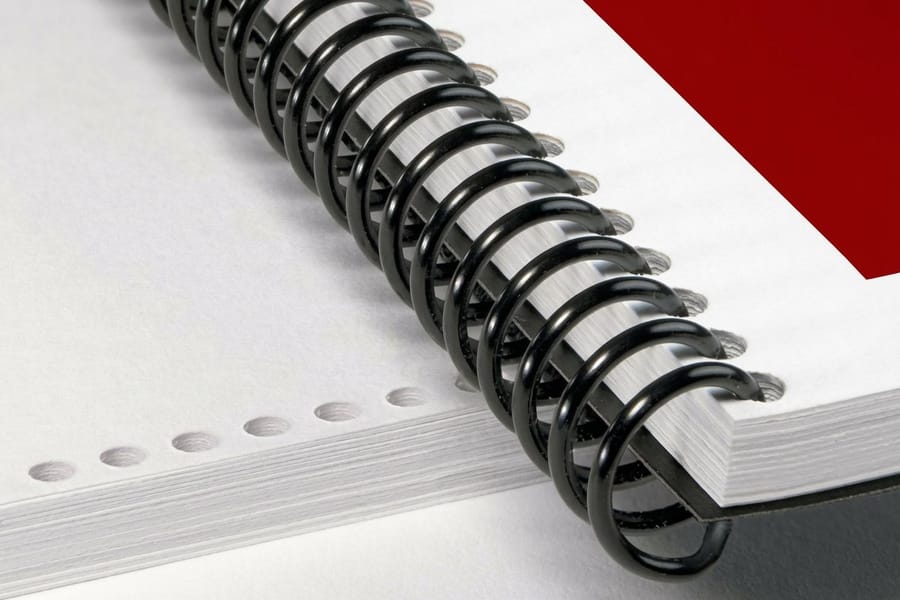
Binding is the one decision that is partly made for you. Staples, glue and coil each have a working range, and pushing past it produces a book that falls apart or looks wrong.
| Binding | Page range | Spine | Best for |
|---|---|---|---|
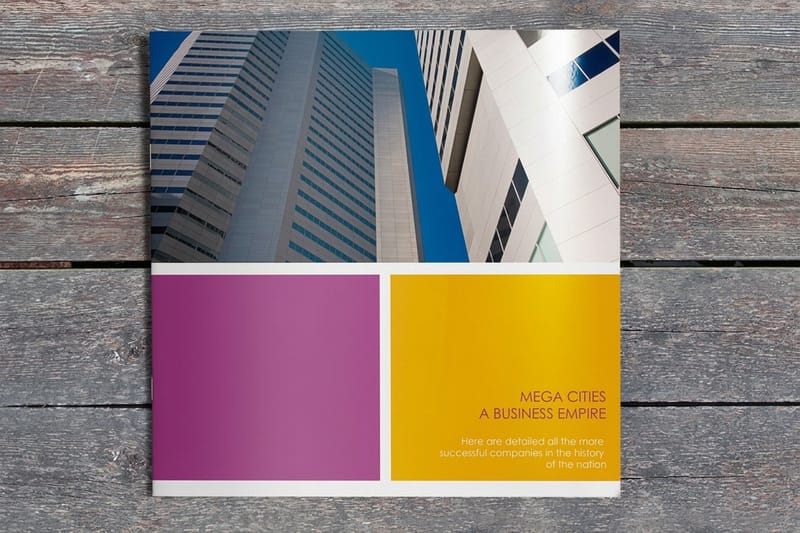
| Saddle stitch | 8 to about 64, in multiples of four | No printable spine, just a folded edge. | Programs, thin catalogs, short reports and zines. |
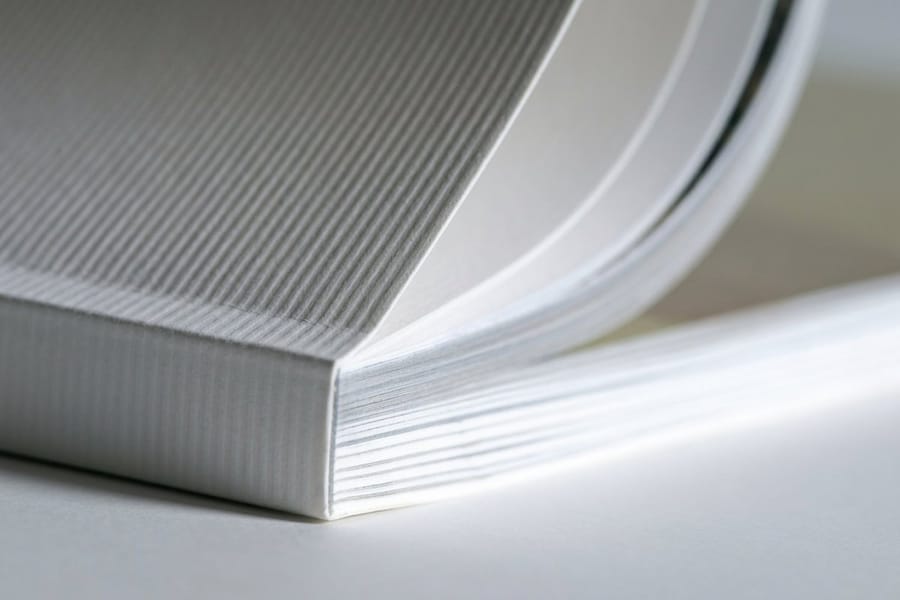
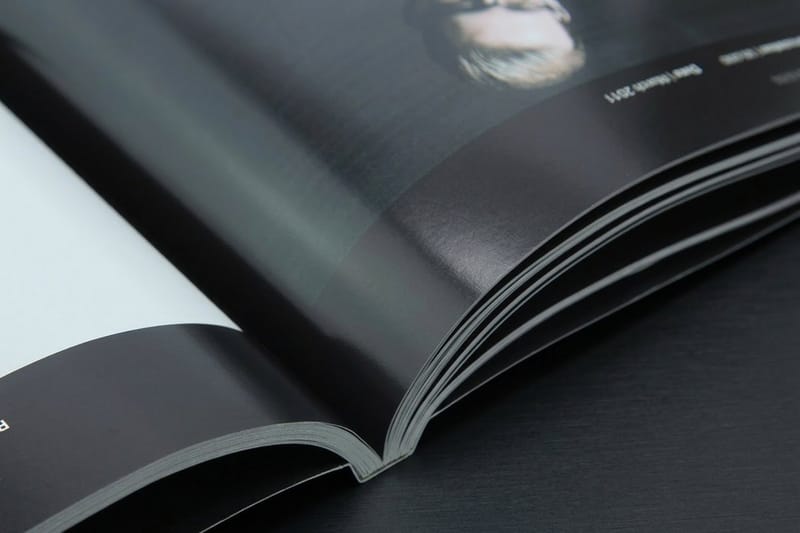
| Perfect bound | About 28 up, printable spine from roughly 48 | Flat, squared, printable like a paperback. | Novels, annual reports, thick catalogs, anything shelved. |
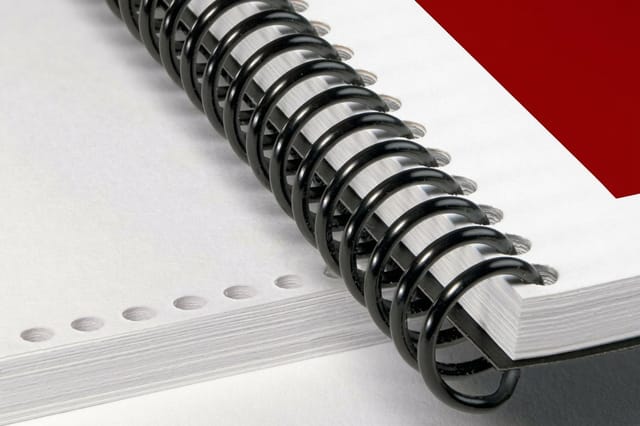
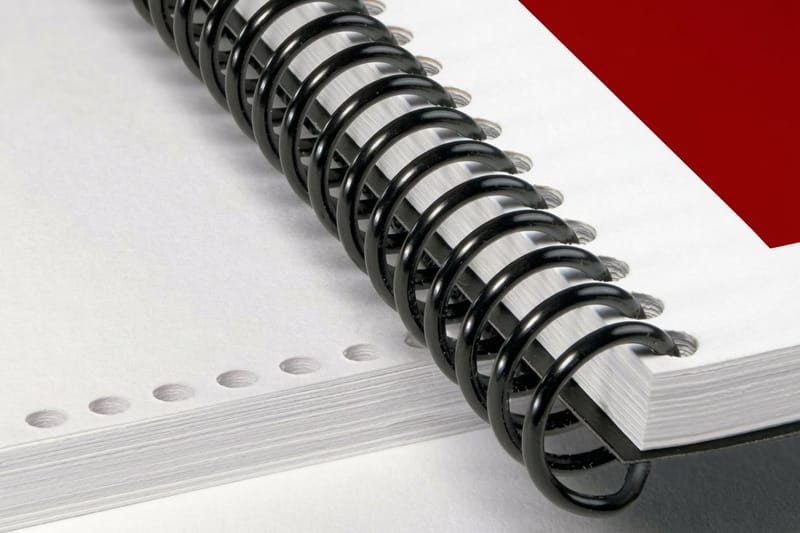
| Spiral coil | 8 up, no practical ceiling | None, the coil replaces it. | Manuals, workbooks, cookbooks, anything written in. |
| Wire-O | 8 up, same as coil | None, double-loop wire instead. | Client-facing decks and proposals that still need to lie flat. |
Between 28 and 64 pages all three physically work, and that overlap is where people stall. The honest split: saddle stitch is the cheapest and the lightest in the hand, perfect binding is the one that looks like a book on a shelf, and coil is the one that stays open on a bench without a hand on it. A cookbook at 60 pages should be coil even though perfect binding would look smarter, because nobody wants to hold a book open with a wet thumb.
Coil and Wire-O differ mainly in material and impression: a single plastic coil resists crushing and reads as workmanlike, double-loop metal wire looks sharper and holds its shape. The full binding guide goes deeper on each, and the binding options collection shows what each finish looks like on a real product.
To get the book printed and bound in one order, you choose the binding on the product itself, then set the rest: long or short binding edge, 4 color or black ink on both sides, and for perfect bound and coil books an optional velvet, silk or gloss laminate on the cover. The configurator lists saddle stitch up to 60 pages; the perfect bound and coil options start at 40 inside pages.
Build the File So It Imposes Correctly
Most delayed book jobs are file problems, not print problems, and they are the same four every time.
- Single pages, in reading order. Export the interior as sequential single pages, not facing spreads. The press imposes the signatures itself, and a spread has to be split before it can do that.
- Bleed on every page, no crop marks. Anything that touches the trimmed edge runs past it. Our bleed and trim explainer covers how far, and why the safety margin matters more on a bound edge.
- A page count the binding accepts. Saddle stitch has to be a multiple of four. If your content ends at 62 pages, add two blanks rather than let someone else decide where they go.
- A cover built around a calculated spine. Interior pages divided by two, times the caliper of the stock, in inches. Lay it out as one flat piece and keep the title clear of the fold on both sides.
Gutter is the other thing worth thinking about before you export. On a perfect bound book the glue swallows a few millimeters at the inside edge, so text set tight to the gutter disappears into the spine on the copies with the highest page counts. Pull inner margins wider than outer ones, which is the opposite of what most word processor defaults do.
Interior stock affects both the read and the spine. An 80 lb gloss book sheet holds photographic detail and is the usual pick for anything image-heavy, and our explainer on 80 lb gloss book paper covers where it helps and where it glares. If you would rather start from a working file than a blank canvas, the booklet template guide walks through setting one up.
What It Costs, and When a Local Shop Still Wins
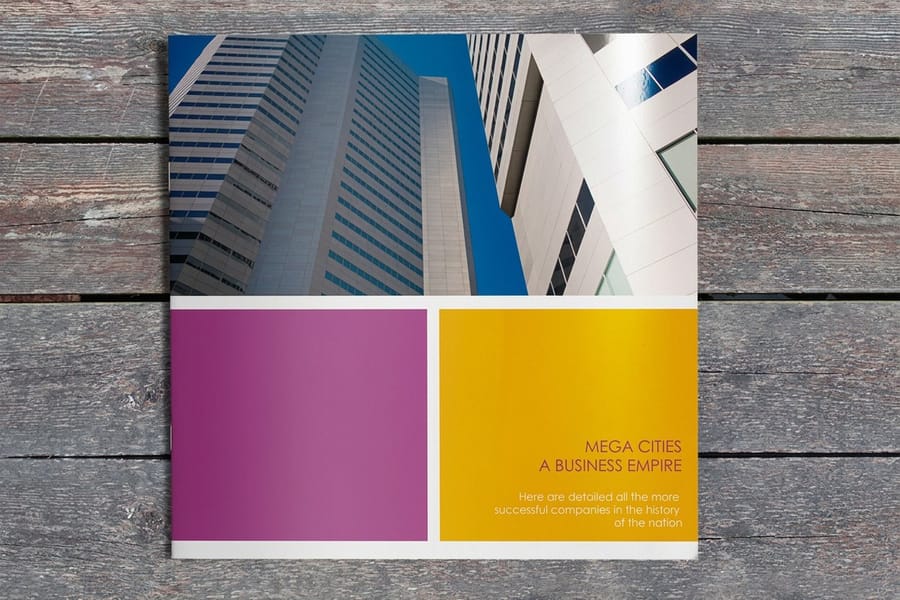
Book work starts higher than flat printing because binding is a separate pass with its own setup, and that setup is charged whether you order fifty copies or five hundred. At 4OVER4.COM a perfect bound book starts at $375.05, a spiral coil book at $423.28, and a saddle stitch booklet at $240.55. The per-copy number falls quickly as the run grows, which is why the quantity dropdown is worth playing with before you settle.
Ordering online is the right call when the run is more than a handful, when the binding you want is beyond what a copy shop keeps in the back, or when the boxes need to land in another state. Trade equipment gives you a squared printable spine and consistent trim across the whole run, and shipping from our Queens plant reaches any address in the country without you finding a printer there.
It is the wrong call in two situations, and pretending otherwise wastes your week. If you need five copies by five o'clock, walk to the copy shop. If the job hinges on a color you have to see on the actual stock before you commit, order the stock first and look at it, because a screen will not settle that argument. Our local shop versus online printing comparison lays out where each one genuinely wins.
One more thing worth knowing: if another printer has already quoted your book, bring the quote. The price match guarantee is faster than rebuilding your file around another shop's specs. For shorter runs and lighter formats, the booklets and catalogs range covers the same binding options at lower page counts, and kids books handle the small trim sizes and heavier stocks children's titles need. The kids books story shows finished titles in that format.
Wally explains printing a book online
Count the pages, then let the count pick the binding
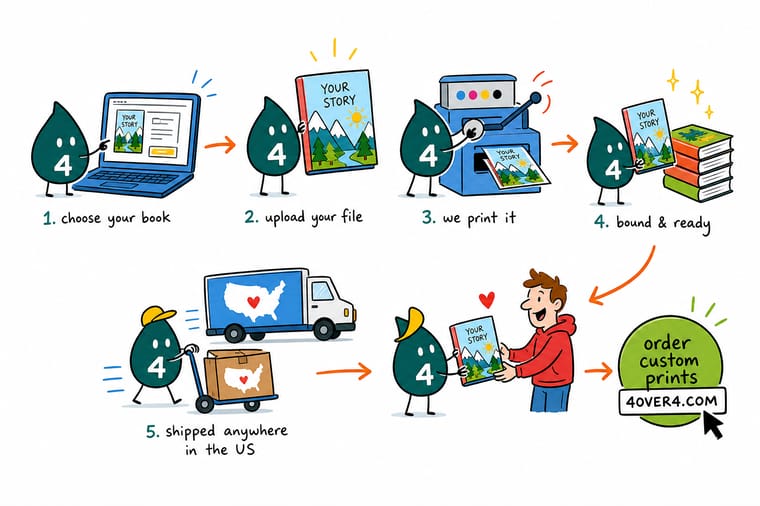
Wally counts every side of every sheet, cover and blanks included, and writes the number down. Under 64 pages he can staple it. Past that he needs glue, and the spine only becomes worth printing on around 48 pages. Then he divides the pages by two, multiplies by the stock caliper, and that is his spine width. Interior goes up as single pages with bleed, cover goes up as one flat piece, and he reads the proof line by line before approving it. Then the box leaves Queens for whatever state you are in.
Configure a perfect bound book →%22%2F%3E%3Ccircle%20cx%3D%2247%22%20cy%3D%2220%22%20r%3D%2222%22%20fill%3D%22%23a78bfa%22%20opacity%3D%220.15%22%2F%3E%3Ccircle%20cx%3D%2254%22%20cy%3D%2227%22%20r%3D%22-3%22%20fill%3D%22%23a78bfa%22%20opacity%3D%220.1%22%2F%3E%3Crect%20x%3D%2277%22%20y%3D%22-9%22%20width%3D%2232%22%20height%3D%2220%22%20rx%3D%224%22%20fill%3D%22%23a78bfa%22%20opacity%3D%220.08%22%20transform%3D%22rotate(42%2080%2030)%22%2F%3E%3C%2Fsvg%3E)
Specs and pricing
Book bindings, sizes, and starting prices
Three bindings side by side, with the live configuration choices and starting prices straight from the 4OVER4.COM configurator. Perfect bound books start at $375.05 and spiral coil books at $423.28, both from 10 copies at 40 to 300 inside pages, and saddle stitch booklets start at $240.55 for 25.
Print it
Order the binding your page count calls for
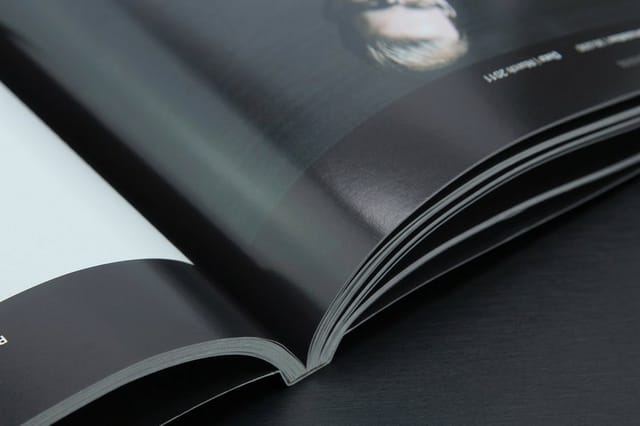
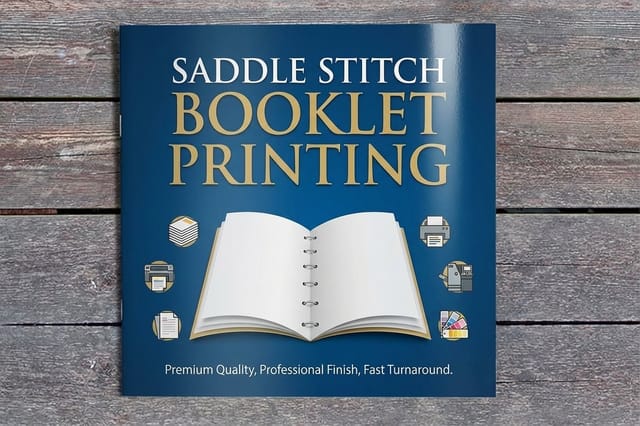
Perfect binding for a shelf-ready book from 40 inside pages, saddle stitch for a thin run of 8 to 60 pages, and spiral coil for a manual or cookbook that has to lie flat.

Explore more
Where to go next
Four guides cover every binding type, catalogs against booklets and books, ordering booklets and local against online printing. The last two cards open book printing and the bookbinding collection.


By the numbers
Perfect, coil and saddle binding priced by page count
Common Questions
Your book printing questions, answered
How many pages does my book need for perfect binding?
Glue starts to hold at around 28 pages, but a spine you can actually print a title on takes about 48 pages, or 24 sheets. Below that the spine is a thin edge, the text creeps onto the front and back covers, and the book looks like a booklet pretending to be a paperback. Heavier interior stock reaches a printable spine at a lower page count, so a 40-page book on 100 lb text can spine up better than a 60-page book on 60 lb. If you are under the line, saddle stitch or coil gives a cleaner finished piece than a forced perfect bind.
How do I calculate the spine width for my cover?
Divide the interior page count by two to get the number of sheets, then multiply by the caliper of your stock in inches. A 200-page interior is 100 sheets; on a stock measuring 0.004 inches that is a 0.4 inch spine. Use the caliper of the exact stock you selected in the configurator, not a rounded number from another job, and build the cover as one flat piece: back cover, spine, front cover, with bleed all the way around. Confirm the final measurement before you lock the cover file, because a spine that is off by a sixteenth of an inch pulls the title off center on every copy.
Should I upload single pages or facing spreads?
Single pages, in reading order, with bleed on every page and no crop marks. The press imposes the file into signatures itself, so a spread has to be cut in half before anything else happens and that is where pages land in the wrong order. Count the cover: every side of every sheet is a page, including blank ones. For saddle stitch the total has to be a multiple of four, so if your manuscript ends on page 62 you add two blanks rather than hope the printer improvises.
Can I order a book online in a small quantity?
Yes, and the quantity dropdown on each product page is where you see the real floor for that binding. Book work carries a higher entry point than flat printing because binding is a separate pass with its own setup: a perfect bound book starts at $375.05 and a spiral coil book at $423.28, while a saddle stitch booklet starts at $240.55. Run two or three quantities through the configurator before you commit, since the per-copy cost drops sharply as the run grows and the next bracket up is often barely more money in total.
What paper should the interior pages be?
Text weight for the interior, cover weight for the cover. An 80 lb gloss book stock is the common choice for anything with photographs, because coated sheets hold ink detail and keep images from going flat and muddy. For a novel or a manual that is mostly type, an uncoated text stock is easier on the eyes and less prone to glare under a desk lamp. Heavier interior stock also thickens the spine, which is worth remembering if your page count is sitting near the perfect-binding threshold.
Is printing a book online cheaper than a local copy shop?
For anything past a handful of copies, usually yes, because a trade printer runs the binding equipment in volume and quotes accordingly. Where a local shop wins is a run of five copies you need this afternoon, or a job you want to stand over while it prints. Ordering online costs you that immediacy and adds transit time, so plan backwards from the date you need the boxes rather than the date you upload. If you have a written quote from another printer, our price match guarantee is the faster route than rebuilding the file to fit someone else's specs.
When does the turnaround clock actually start?
At proof approval, not at upload. Your file goes through preflight first, and anything that fails, a missing bleed, a page count that is not a multiple of four for saddle stitch, fonts that were never outlined, comes back to you before production begins. Every day you sit on a proof is a day added to delivery. The practical move is to have the file checked against the template before you place the order, so the proof is a confirmation rather than a negotiation.
Get Started
Order 25 kids books from $240.55
Set your trim size and page count, pick the binding that count allows, upload the interior and cover, and we print and bind it in Queens and ship it to your door.
Legal Disclaimer
Gold Standard guarantees apply to all standard orders placed through 4over4.com. Price match requires verifiable proof of a competitor's published price for an equivalent product with matching specifications and turnaround time. Satisfaction guarantee covers manufacturing defects and print quality issues. Contact support with order number and documentation.
