
How to Order Signs Online Without Getting the Material Wrong


Five decisions stand between an empty cart and a sign on a post: material, size, one printed side or two, mounting hardware, and how fast you need it. Here is each one with the real specs, the real starting prices, and the places people get caught.
To order signs online, choose the material first, then the size, then whether it prints one side or both, then the mounting hardware, then the turnaround. The material sets the rest: a 4mm coroplast yard sign starts at $25 and takes a ground stake, a .040 inch aluminum panel starts at $36 and takes drilled holes, a 13oz vinyl banner starts at $79 and takes hems and pole pockets. Upload artwork or build it in the browser, choose a Free Online Proof if you want to see it before it prints, and the file goes to press.
Quick answer
Material, size, sides, hardware, speed, in that order
The material is the decision that constrains every other one. It fixes the size list, the hardware you can add, how long the sign survives outside, and the price band. Coroplast at $25 stakes into a lawn. Rigid PVC at $25 hangs flat on a wall. Aluminum at $36 bolts to a post and ignores the weather. Acrylic at $152.72 earns its money at close range indoors. A vinyl banner at $79 does the spans no rigid sheet can. Everything after that is a size, a side count, a piece of hardware and a turnaround.
Start With the Material, Because It Decides Everything After It
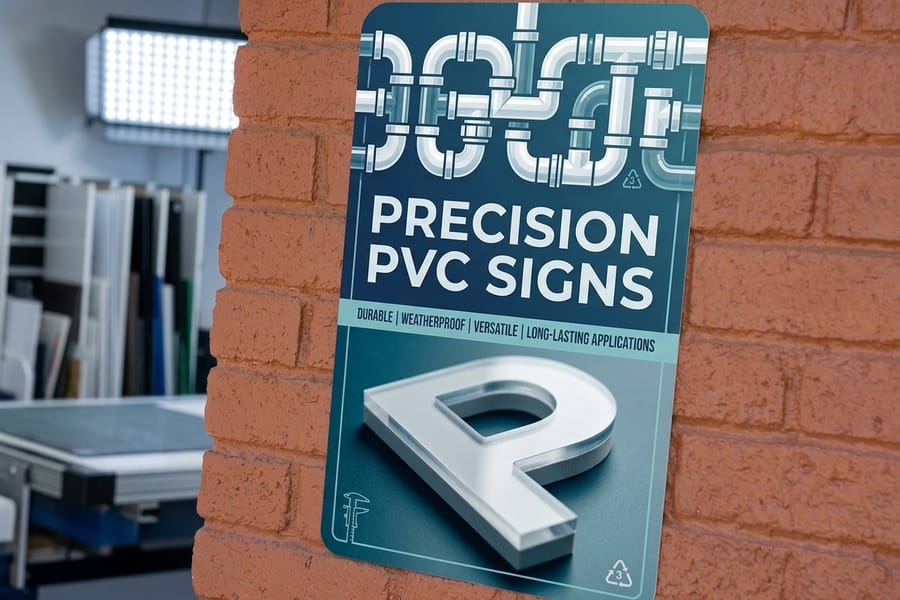
Sign shopping goes wrong when people pick a size first. Size is the easy part. The material is what fixes your available sizes, the hardware you can bolt on, how long the sign lasts outside, and what it costs, so settle that and the rest of the order takes about four minutes.
| Material | What the body is | Sizes we print | Starts at | Where it belongs |
|---|---|---|---|---|
| Yard signs | 4mm fluted white coroplast, hollow and light. | 12x18, 12x24, 18x24 inches, plus any size to 18x24. | $25 | Lawns, open houses, campaigns, anything staked into soil for weeks rather than years. |
| PVC signs | Solid rigid PVC, stiff the whole way through. | 14 sizes, 11x17 up to a custom 36x40 panel. | $25 | Storefront and event signage that hangs on a wall or sits on an easel and must not curl. |
| Aluminum signs | .040 inch aluminum sheet that will not rust or warp. | 12x18, 18x24, 24x36 inches. | $36 | Parking, safety and property signs that get screwed to a post and forgotten. |
| Acrylic signs | 1/4 inch plexiglass, clear gloss vinyl front over white vinyl backing. | 16x24, 20x30, 24x36 inches, plus custom to 24x36. | $152.72 | Lobby walls and reception desks where people stand close and the sign has to read permanent. |
| Vinyl banners | 13oz outdoor vinyl or 15oz BlackOut with a light-blocking core. | 24 sizes from 2x4 feet up to a custom 240x180 inches. | $79 | Spans wider than any rigid panel, and anything that has to roll into a tube and travel. |
Two things in that table are worth arguing over. The first is coroplast versus PVC at the same $25 entry price. Coroplast is hollow, so under a raking light you can often see the flute lines through a solid ink area, and it dents. PVC has no flutes and stays flat on a wall, which is why a storefront panel should be PVC even though a lawn sign should not.
The second is acrylic at $152.72 against aluminum at $36. Acrylic is not four times more durable. What it buys is depth and edge quality at close range, so it earns the money on a lobby wall someone stands two feet from and wastes it on a post by a driveway. When the sign lives outdoors and nobody gets closer than ten feet, aluminum wins on every measure that matters. The full range sits in the rigid signs collection and the wider signs and banners hub.
Size It for the Reading Distance, and Be Honest About Outdoors
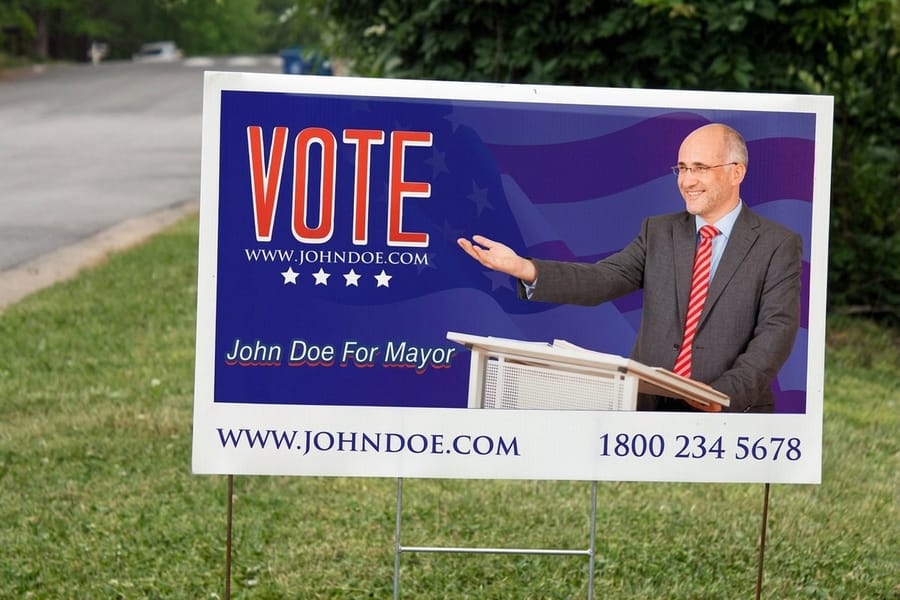
Sign people size copy by distance, not by wall space. The working rule is roughly one inch of capital letter height for every ten feet the reader is away. A sidewalk message read at twenty feet wants two inch caps. A message read from a slow road at eighty feet wants eight, and eight inch caps plus a phone number will not fit an 18 by 24 board without becoming a gray block.
So run the maths backwards. Write the one sentence that has to land, set it at the height the distance demands, and then pick the smallest panel that holds it with white space around the edge. Most oversized sign orders happen because somebody sized the panel first and then crammed four messages onto it. One message per sign, every time.
Outdoors is where the honest limits live. Coroplast, PVC and .040 inch aluminum all handle rain and sun; the difference is time and wind. A large 18 by 24 coroplast board flexes noticeably in a gust because it is hollow, and a 24 by 36 aluminum panel on a single post acts like a sail, so it wants a fastener in all four corners rather than the top two. That is exactly the choice the hole drilling option is asking you to make. Our guide to durable outdoor yard sign materials goes deeper on how each board ages.
Indoors the calculation flips. Nothing is fighting weather, so spend on surface quality instead of toughness: acrylic signs for a wall people approach, PVC panels for a corridor or an easel. And when a message has to span twelve feet of wall, no rigid sheet will do it in one piece, which is the point at which a vinyl banner stops being the cheap option and becomes the only one.
Choose the Mounting Hardware in the Cart, Not After the Box Arrives
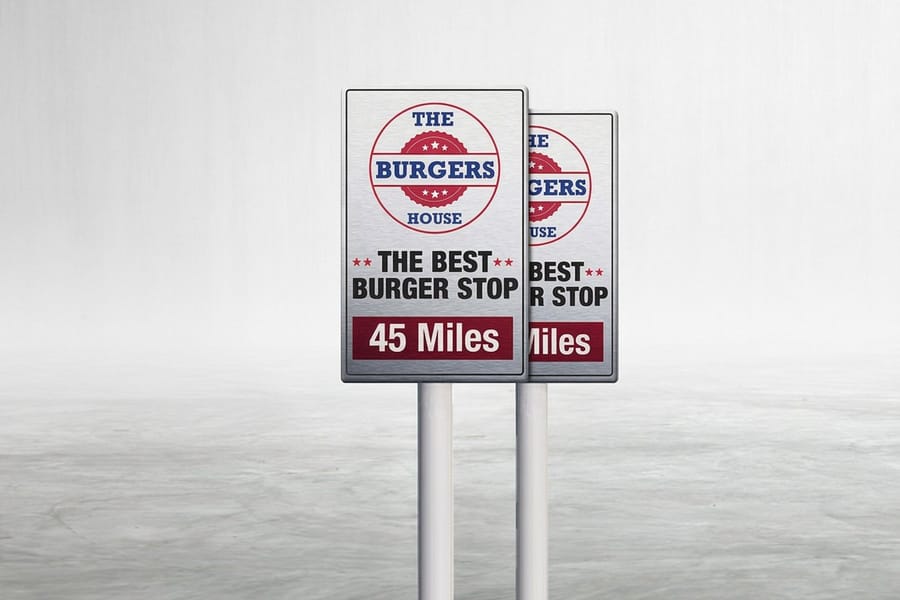
Every finishing option that holds a sign up defaults to none. That is deliberate, because plenty of buyers already own stakes or frames, but it catches first-time buyers constantly. Each material accepts different hardware, and each choice has its moment.
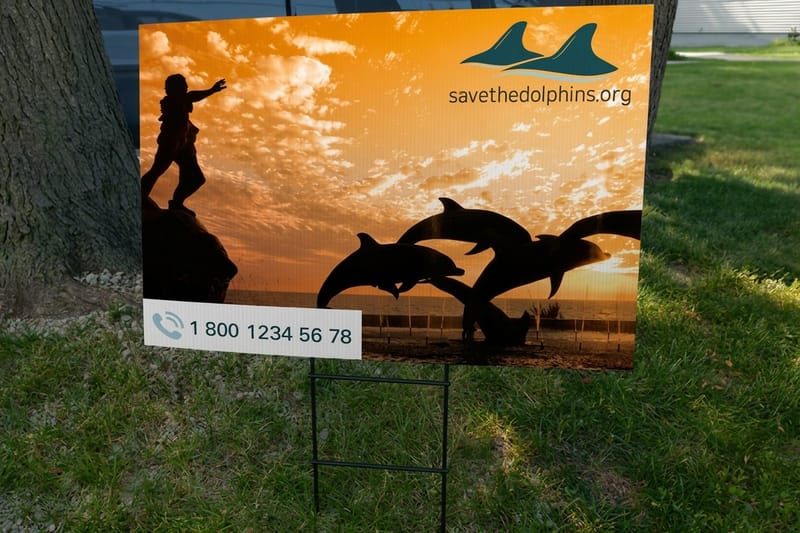
Yard signs take a steel H-stake that pushes into soft ground, and grommets in the top corners only or in all 4. Choose the stake for lawns and soil. Choose grommets when the sign is going onto a chain link fence, a railing or a post with zip ties, because a stake is useless there and the grommet is what stops the zip tie tearing through the board.
Aluminum signs take drilled holes in all 4 corners, the top corners only, or centered top and bottom, plus optional 0.75 inch rounded corners. Top corners are fine for a small panel under a canopy. Outside on a post, use all four so wind cannot lever the bottom edge. Centered top and bottom is the one to pick for a narrow panel bolted to a single upright, like a parking bay marker.
PVC signs take grommets and 1 inch rounded corners. The rounded corner is not decoration on a panel at head height in a busy shop; a square PVC corner is genuinely sharp.
Vinyl banners have the most decisions and the most regret. Hems on none, top and bottom, or all 4 sides. Grommets none, corners only, or every 2 feet. Pole pockets of 2 or 4 inches, top and bottom or left and right. The rule that saves banners: never order grommets without hems, because a grommet punched into a single layer of unhemmed vinyl is the first thing to tear in wind. Grommets every 2 feet only earn their cost on spans past roughly eight feet. And pole pockets are usually an either/or with grommets, since a pocket folds the top over a pole and covers where the grommets would sit.
If the answer is that you would rather not drill or stake anything, the format changes rather than the hardware. Retractable banner stands at $139 carry their own base and pack into a case, and the A-frame and sidewalk sign ranges stand on pavement and come indoors at closing time.
Design It, Upload It, and Actually Read the Proof
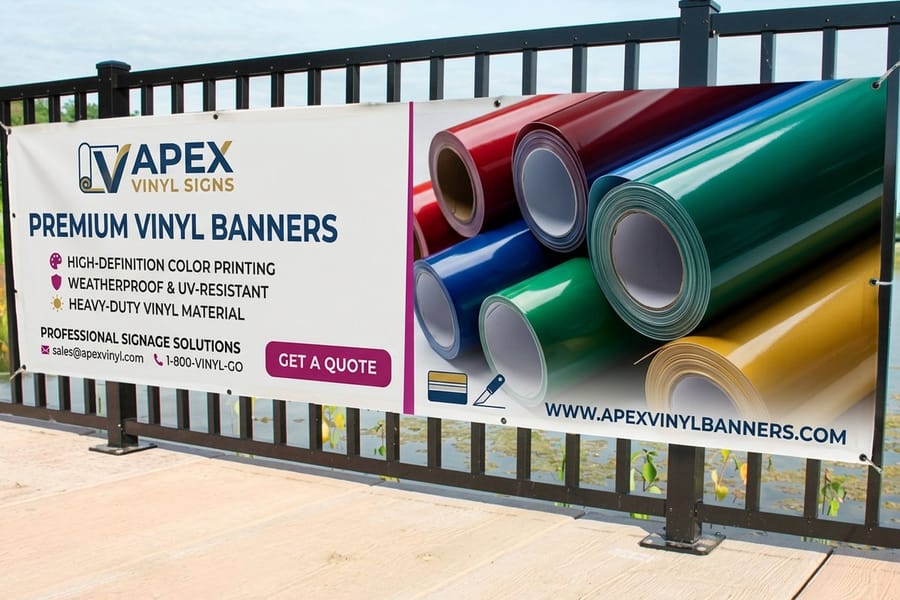
You have two routes into artwork. Start from a layout in our free online designer and template library, which has more than 10,000 editable designs and puts your file at the right trim size without you measuring anything, or build the file yourself from a correctly sized blank template and upload it.
Large format resolution is the thing designers most often get wrong in the cautious direction. A business card needs 300 dpi because it is read at arm's length. A banner read from across a car park does not, and a 300 dpi file at 8 by 4 feet is an enormous upload for no visible gain. Somewhere between 100 and 150 dpi at final size is normal for signage, and scaling a photo up to that with clean interpolation beats sending a monster file that times out. If the difference between resolution and print size is fuzzy, the DPI and PPI explainer sorts it in five minutes.
Then keep the important content away from the edges, because the hardware eats into it. A grommet sits inside the corner. A 2 inch pole pocket folds a full 2 inches of your artwork over the top rail and hides it. Drilled holes land where the drill lands, and a hole through a letter looks like a mistake even when it is not. Leave a generous margin on any edge that is getting hardware and place logos and phone numbers inside it.
Last, the proof. Every sign product offers Straight To Production or a Free Online Proof. Straight To Production sends your file to press as supplied and is right when you have printed the same file before. Free Online Proof holds the job until you approve it, so it is the safer choice on a first order or after any late edit, with one real consequence: the turnaround clock effectively starts when you click approve, not when you place the order. Approve it the same day or a two day rush quietly becomes a three day one. The full sequence from upload to delivery is in our walkthrough of how online printing works.
What Happens After You Place the Order
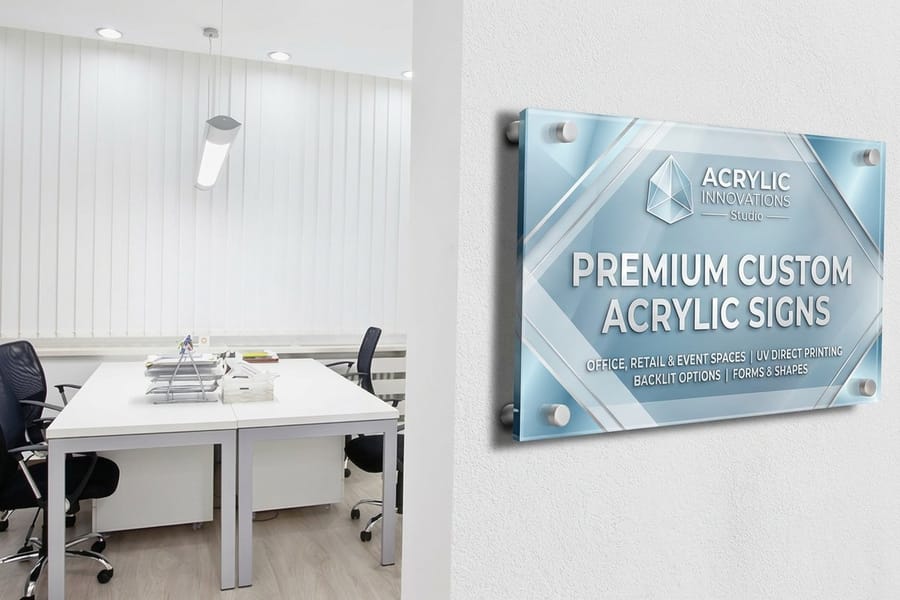
The configurator prices quantity live from a single sign up to 100, so there is no minimum to work around and no need to over-order to hit a price break you have not seen. Set the quantity, watch the per-unit figure fall, and stop where the number stops improving much.
| Product | Standard turnaround | Fastest rush | Starts at |
|---|---|---|---|
| Vinyl banners | 3 business days | Same-Day | $79 |
| Aluminum signs | 4 business days | Same-Day | $36 |
| PVC signs | 4 business days | 2 business days | $25 |
| Acrylic signs | 4 business days | Next-Day | $152.72 |
| Yard signs | 5 business days | 2 business days | $25 |
Read those as production days at the plant, not delivery dates. A Same-Day rush gets your banner off the press today and hands it to a carrier; how long the carrier takes is a separate line in the cart. This is the one place where signs behave differently from a box of business cards, because rigid panels ship flat and bulky while banners roll into a tube, so the shipping quote on a 24 by 36 aluminum order can be a real share of the total. Check it before you commit to the rush.
Everything else is ordinary online printing: upload or design, choose the proof, pay, and track it. If you are ordering signage alongside other print for the same campaign, the large format range and the banner stand collection are the two places to look next, and the banner and sign guides cover the design side in more depth than one page can.
Wally orders a sign
Material, then size, then the thing that holds it up
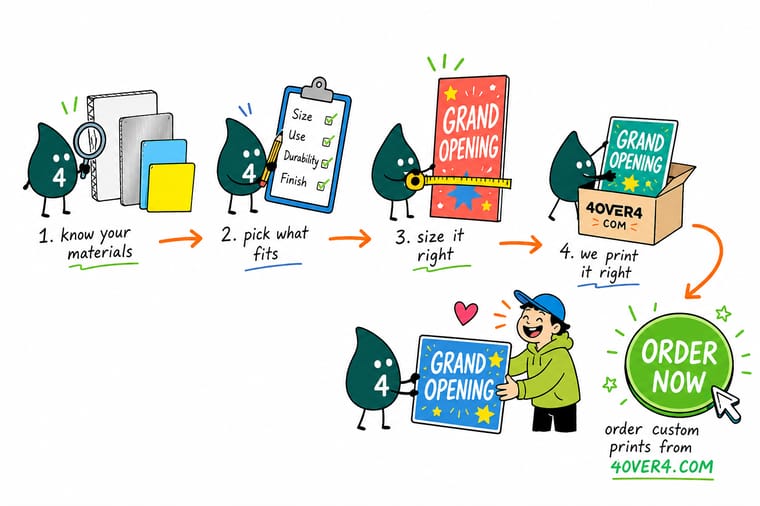
Wally picks the body before anything else. Soft ground and a few weeks, he takes 4mm coroplast and a steel H-stake. A post and a few years, he takes .040 inch aluminum and asks for holes in all four corners. A twelve foot wall, he takes 13oz vinyl, hems all four sides, then grommets, because a grommet in unhemmed vinyl is the first thing to tear. Then he sizes the biggest word at one inch of cap height for every ten feet of reading distance and leaves the edges clear so no hardware lands on a letter.
Configure your sign →Specs and pricing
Sign options, sizes and starting prices
Every configurable choice on the three most ordered sign formats, straight from the live 4OVER4.COM configurator, with the default on each option marked.

Print it
Order the sign that fits where it is going
Explore more
Where to go next

By the numbers
25+ years printing, 1,000+ products deep
Common Questions
Your sign ordering questions, answered
Where can I order custom signs online?
You can configure and order signs directly at 4OVER4.COM, with the price updating live as you change size, quantity and finishing. Yard signs on 4mm coroplast start at $25, PVC panels start at $25, aluminum signs start at $36, vinyl banners start at $79, and acrylic signs start at $152.72. Every one of them is priced from a single unit up to 100, so a real estate agent ordering one open house board and a franchise ordering fifty storefront panels use the same configurator.
What is the cheapest sign material for outdoor use?
Coroplast, the 4mm fluted plastic board used for yard signs, at $25 for a single sign. It does not rust, it does not soak up rain, and a steel H-stake pushes straight into soft ground. The trade-off is that it is hollow, so it dents if a mower flicks a stone at it and it flexes in strong wind on the larger 18 by 24 size. If the sign has to survive more than one season on a post, aluminum at $36 is the better spend.
How big should the lettering on a sign be?
The rule sign shops work to is about one inch of capital letter height for every ten feet of reading distance. A message read from a sidewalk twenty feet away needs roughly two inch caps, and one read from a road at a hundred feet needs closer to ten inches, which is why highway-adjacent messages end up on banners rather than an 18 by 24 board. Set the largest word first at that height, then choose the panel size that holds it with room to breathe.
Do signs come with stakes, grommets or mounting holes?
No. All of them are separate options in the configurator and every one of them defaults to none. Yard signs offer a ground H-stake and grommets in the top corners or all 4. PVC signs offer grommets and 1 inch rounded corners. Aluminum signs offer hole drilling in all 4 corners, the top corners, or centered top and bottom. Vinyl banners offer hems, grommets at the corners or every 2 feet, and 2 inch or 4 inch pole pockets. Add them while you are in the cart, because they cannot be added to a printed sign afterward.
What is the difference between 13oz and 15oz BlackOut vinyl?
The 13oz is the everyday outdoor banner material and light passes through it. The 15oz BlackOut has a light-blocking core, which matters in two places: when a banner hangs in front of a window or a lit wall and the backlight washes out the artwork, and when you print both sides and do not want side one ghosting through side two. If neither of those applies, 13oz does the job and costs less.
How fast can I get signs printed and shipped?
Vinyl banners run 3 business days standard with 2-day, Next-Day and Same-Day rush. Aluminum, PVC and acrylic signs run 4 business days standard, with aluminum reaching Same-Day. Yard signs run 5 business days standard with 3-day and 2-day rush. Those are production days at the plant and do not include transit, so for a Saturday event, work backwards from the delivery date rather than the print date and pick the ship method to match.
Get Started
Order a PVC sign panel, printed in 4 business days
Pick the material, set the size, add the stake, the grommets or the pole pockets, and we print it full color and ship it ready to stand up.
Legal Disclaimer
Gold Standard guarantees apply to all standard orders placed through 4over4.com. Price match requires verifiable proof of a competitor's published price for an equivalent product with matching specifications and turnaround time. Satisfaction guarantee covers manufacturing defects and print quality issues. Contact support with order number and documentation. On-time delivery rate based on tracked orders 1999 to 2026. Individual results may vary based on shipping carrier performance.
