
How to Design Backing Cards for Pins and Earrings That Sell


Sizes that fit the product, hole positions that punch cleanly, the stock that takes a pin post without cracking, and the file setup that gets it right the first time.
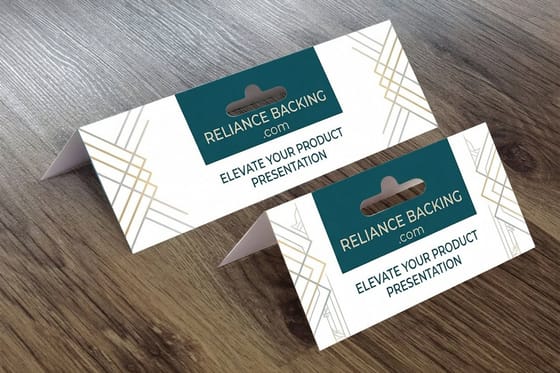
Design a backing card at 2 by 3 inches for earrings and 2.5 by 3.5 inches for a one inch enamel pin, on 16pt uncoated or kraft stock, with two 1.5 mm holes half an inch apart and three quarters of an inch down from the top. Skip the lamination: a pin post cracks a coated surface at the pierce point and a hole punch skids on gloss. Keep every punch at least a quarter inch from the trim edge, add an eighth inch bleed, and leave the area directly behind the product lighter than the rest of the card.
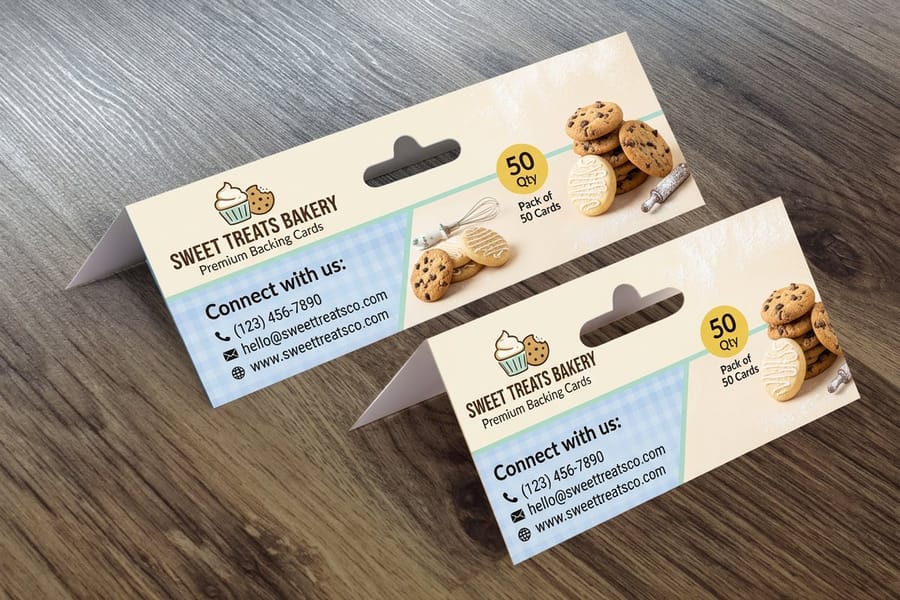
Quick answer
Size to the product, punch to the finding, and leave the coating off
A backing card is a printed mount, so the product sets the size and the finding sets the holes. Two by three inches suits earrings, two and a half by three and a half suits a one inch enamel pin, and 16pt uncoated or kraft board is the stock that takes a punch and a post without splitting. Holes go half an inch apart and three quarters of an inch down, never closer than a quarter inch to the trim. Everything else is layout.
Why a Backing Card Does More Work Than Its Price Suggests
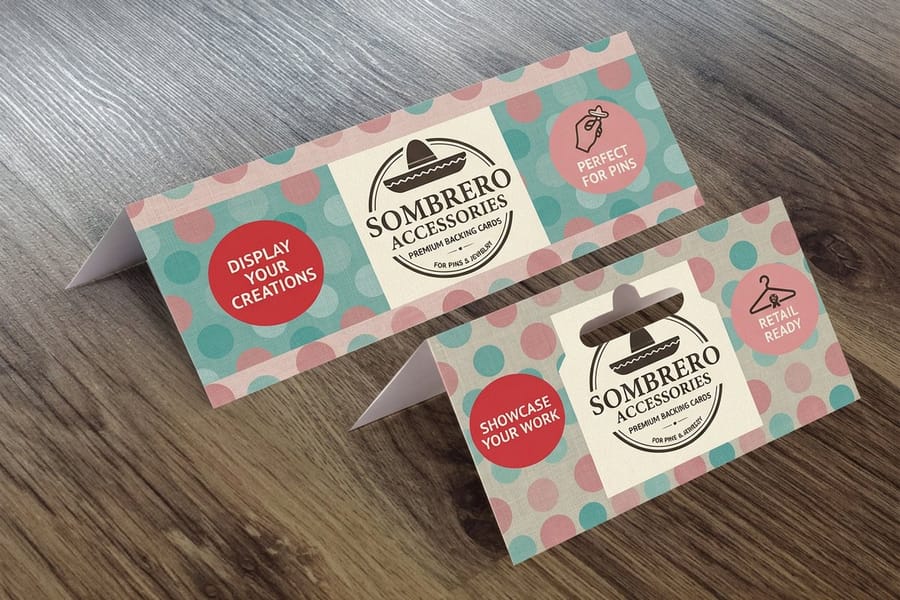
A pair of earrings in a plastic bag is a component. The same pair mounted on a printed card is a product, and the difference shows up in three places that matter to a small maker.
It fixes the display problem first. A card hangs on a grid wall hook, stands in a tabletop rack, or lies flat in a tray, and it holds the pair the right way up so the buyer sees the earrings as a pair rather than a tangle. At a market table that alone changes how many people pick something up.
It carries the information a bag cannot. Metal type, nickel free, the size in millimetres, your shop handle, a care line, a price if you sell unattended. Buyers ask those questions and a card answers them before anyone has to.
Last, it survives the sale. The card goes home in the bag, sits on a dresser, and gets photographed. That is free reach that a bare bag never produces. If you are building the wider brand around this, the home jewelry business guide covers where display cards sit in the rest of the setup, and business card ideas for crafters is worth reading alongside it, because the two pieces usually share one design language.
Backing Card Design Ideas That Print Well
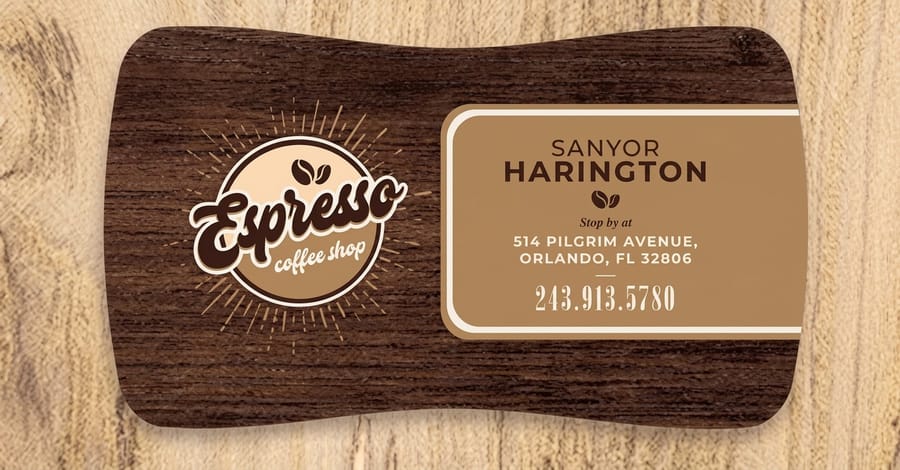
The designs that survive contact with a print run share one trait: the artwork gets out of the way of the product. Here are the layouts makers keep coming back to, and what each one demands from the file.
- The quiet rectangle. Logo small at the top, earrings in the middle third, handle and care line at the bottom. It is the least interesting to design and the most reliable to print, because nothing competes with the product for attention.
- The illustrated frame. A hand drawn border or botanical corner around an empty centre. Works beautifully on kraft since it is all line work. Keep the line at half a point or heavier or it drops out on uncoated board.
- The full bleed colour field. A single flat colour edge to edge with knocked out white type. Only on a white coated or uncoated stock, never kraft, and it needs a real 1/8 inch bleed or a white sliver shows on one edge after trimming.
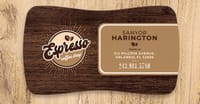
- The die-cut silhouette. An arch, a scallop top, a cloud, a leaf. This is the one that photographs best and the one that costs most, because it needs a cut path in the file. Custom shaped business cards start at $95.56 and are the practical way to buy a shaped card at maker volumes.
- The multi-taskers. One card that mounts the product on the front and works as a thank you note or a discount card on the back. Print both sides, keep the back type above 8 point, and remember that anything printed behind the earrings will be hidden.
Whichever you pick, hold one rule: the darkest, busiest part of the design should not sit directly behind the product. A silver stud on a dense black centre panel disappears in a photograph and on a table.
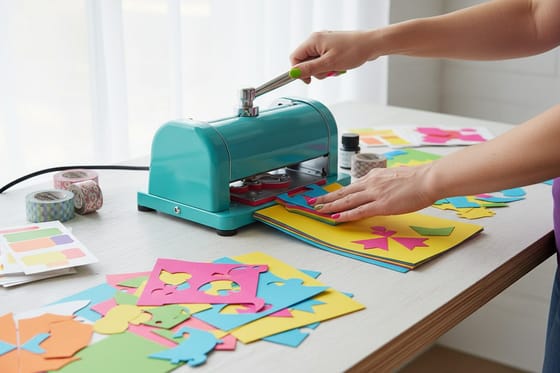
If you want the shaped route, read how die cutting actually works before you draw the outline. A shape with a tight inside corner or a 2 mm neck is a shape that comes back with tears in it.
Sizing for Pins and Earrings, With the Hole Positions
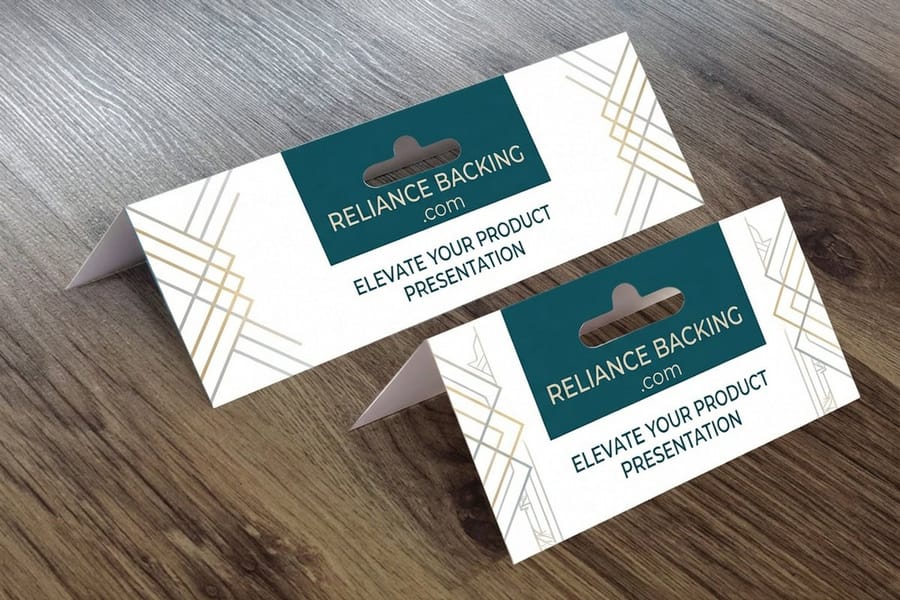
Size the card to the product plus the branding, not the other way round. Measure the piece at its longest point, add half an inch of clear space below it, then add whatever height your logo and care line need at the top and bottom. That total is your card height. These are the sizes that keep coming out of that arithmetic.
| What it holds | Card size | Holes or piercing | Watch for |
|---|---|---|---|
| Stud earrings | 1.5 x 2 in | Two 1.5 mm holes, 1/2 in apart, 1/2 in from the top | Too small for more than a logo and a shop handle. |
| Hooks and lever backs | 2 x 3 in | Two 3 mm holes, 5/8 in apart, 3/4 in from the top | A hook over 1.5 in long overhangs the bottom edge. |
| Statement dangles | 2.5 x 3.5 in | Two 3 mm holes, 3/4 in apart, 3/4 in from the top | Heavier pieces swing, so a 16pt card sags at 14pt. |
| One inch enamel pin | 2 x 3 in | No punch, the post pierces the card | Laminated stock cracks around the puncture. |
| Two inch pin or a set of three | 3 x 4 in | One pierce per pin, spaced 1 in clear | Pins too close together snag each other in a bin. |
The measurement people get wrong is the vertical one. Earrings hang below the hole, so the space you need is measured from the punch downward, not from the top of the card. Set the holes 3/4 inch down and a 3 inch card leaves you 2.25 inches of hang. A 2 inch drop earring fits with a quarter inch to spare, which is exactly enough and not a millimetre more.
Every size above is a trim size. Build the file 1/8 inch larger on all four sides for bleed and keep type 1/8 inch inside the trim, the same discipline covered in bleed and trim explained. Correctly sized starting files live in the blank template library. If you want the card to hang from a string rather than sit on a hook, you want a tag instead, and hang tag sizes covers those dimensions.
Stock, Coating, and the Eco Options Worth Paying For
Stock choice on a backing card is not a taste decision. The card has to take a punch, hold a post, and stay flat under the weight of the product, and those three demands rule out most of the finishes people ask for first.
Weight. 14pt is the floor and it sags with anything heavier than a small stud. 16pt is the sensible default and handles a statement piece without curling. 18pt and up feels excellent but a hand screw punch starts to fight it, so if you punch your own holes in volume, 16pt is the kinder choice.
Coating. Leave it off. Gloss and matte laminate both put a plastic film over the board, and that film cracks in a star pattern the moment a pin post goes through it. A hole punch on gloss skids before it bites, so the holes end up slightly out of line across a batch. Uncoated takes a punch cleanly and takes pencil or a rubber stamp if you want to hand number a run.
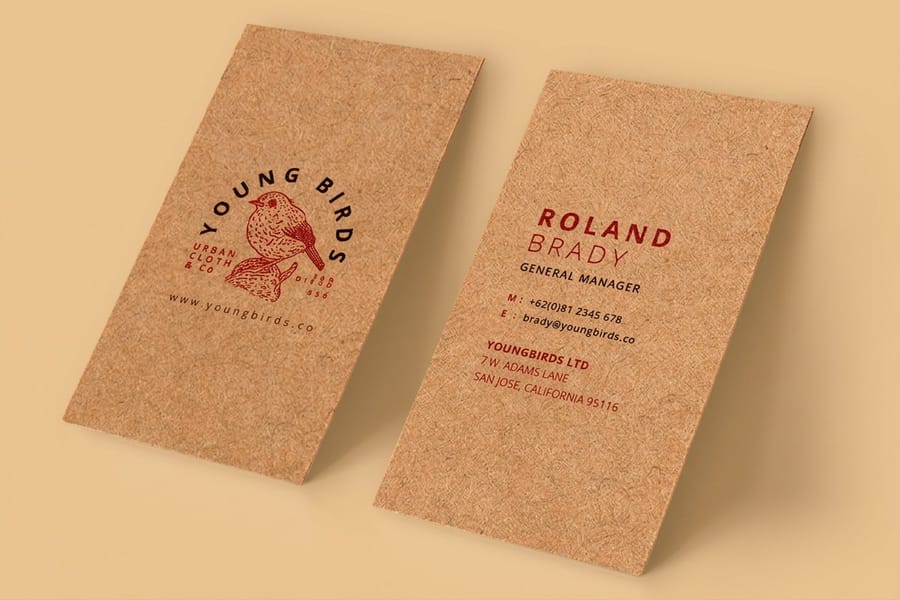
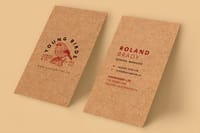
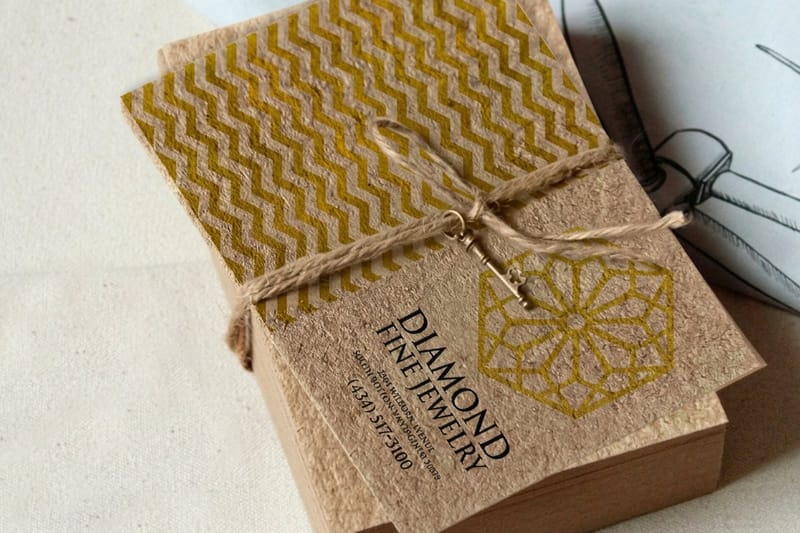
Kraft. Natural brown board is the maker default for good reason: it looks handmade, it hides handling marks, and it makes metal read warm. The trade is colour. Kraft prints CMYK with no white plate, so pale artwork disappears into the board and soft greys go beige. Design in dark ink and line work and it sings. Kraft against standard stock shows what the shift actually looks like, and kraft business cards at $24.75 are the cheapest way to hold the real board before committing.
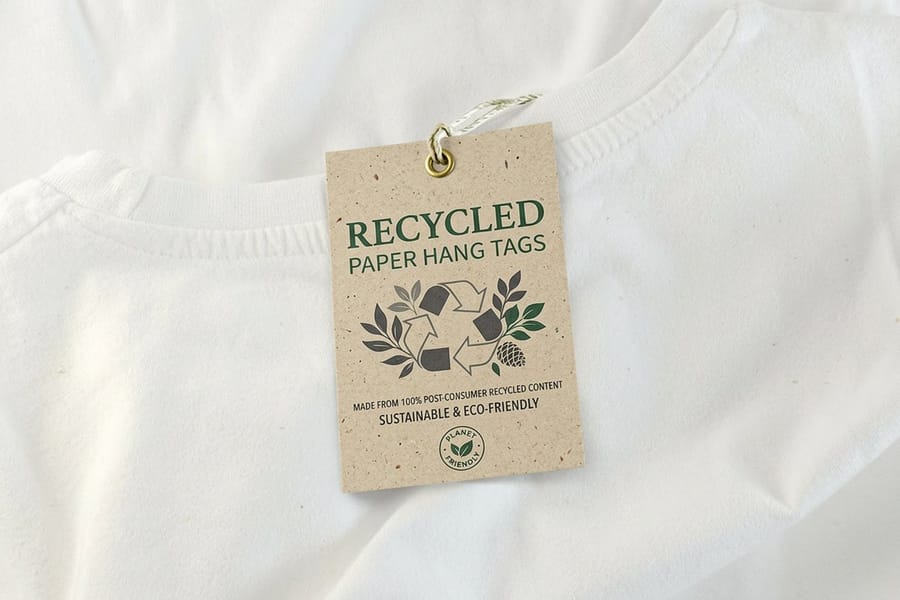
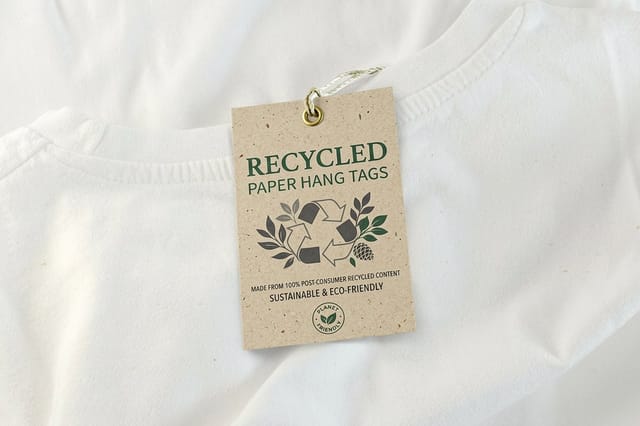
Recycled. If the sustainability claim is part of your brand, put it on a product that supports it rather than in a line of small type. Recycled hang tags start at $25.27 and pair naturally with a card of the same character. The eco-friendly printing collection lists the rest, and how to choose an eco-friendly printing service is the honest version of what those claims mean.
How to Design and Print Your Backing Cards, Step by Step
Nine steps, in the order that saves reprints. Do them out of order and you will discover the hole placement problem after the box arrives.
- Measure the product first. Longest dimension, at the widest point, with the finding attached. Everything else follows from this number.
- Pick a trim size from the table above. Then add 1/8 inch bleed on all four sides and mark a 1/8 inch safety margin inside the trim.
- Place the holes before the artwork. Draw them on a non-printing layer at the real spacing. Design around them, not the reverse.
- Keep the centre calm. Whatever sits behind the product should be lighter and quieter than the rest of the card.
- Set type at 8 point or above and rules at half a point or heavier. Uncoated and kraft both soften fine detail slightly.
- Convert fonts to outlines and supply artwork at full size in CMYK. Our guide to how online printing works walks the whole handoff.
- Order a small batch first if the design is still moving. Print, punch, hang the product, and look at it in daylight and under market lighting.
- Cut a punch jig. A scrap card with the holes in the right place, taped over each new card, makes a hundred cards line up in minutes.
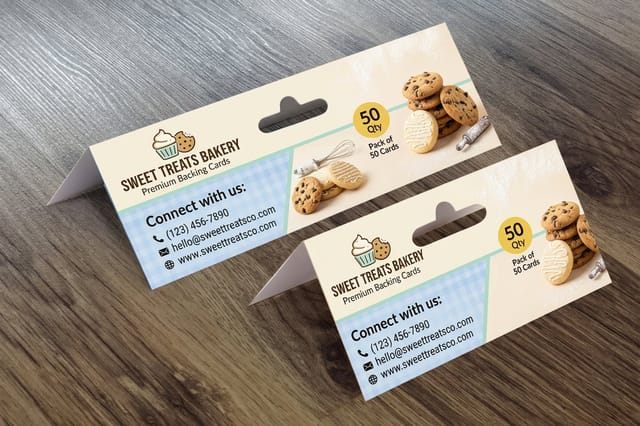
- Order the real run. Backing cards start at $218.30, and the per card cost drops sharply with quantity, which is why makers usually order once the design has settled rather than in small repeats.
Two products often ordered alongside: die-cut hangtags at $36.26 when a piece needs to hang from a string instead, and a matching card from the business card range so the card in the bag and the card on the wall speak the same language. The full tag range sits under hang tag printing.
Wally sets the holes first
Punch positions come before the artwork, not after
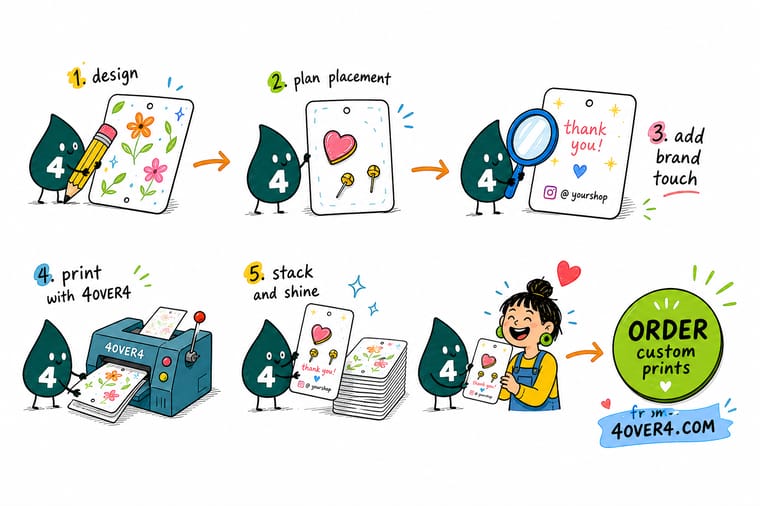
Wally draws the two holes on a layer of their own, half an inch apart and three quarters of an inch down, then designs the card around them. He keeps the middle of the card calm so the earrings stand out, and he keeps every punch a quarter inch clear of the trim so the paper does not tear out. No lamination on a pin card either. A post through plastic film cracks it in a little star, and that star is the first thing a buyer sees.
Order backing cards →Specs and pricing
Card sizes, stocks, and starting prices
Compare the three stocks makers actually use for display cards, with live configuration choices and starting prices straight from the 4OVER4.COM configurator.
Print it
Print the card your product hangs on
Explore more
Where to go next
By the numbers
Small-run printing you can count on at 4OVER4
Common Questions
Your backing card questions, answered
What size should an earring backing card be?
Two by three inches is the workhorse. It carries a pair of studs or short hooks, leaves room for a logo at the top and a care line at the bottom, and still fits a standard poly bag and a small jewelry box. Drop to 1.5 by 2 inches only for tiny studs sold in bulk, where the card is really just a mount. Go to 2.5 by 3.5 inches for long dangles, because a hook longer than about 1.5 inches will hang past the bottom edge of a 3 inch card and catch on everything in a market bin.
How far apart should the earring holes be?
Half an inch between centers works for the large majority of stud posts and lever backs, and 3/4 inch reads better on a wider card with statement pieces. Set them 3/4 inch down from the top edge so the branding sits above the earrings rather than behind them. Punch at 1.5 mm for posts and 3 mm for hooks. Keep both holes at least 1/4 inch in from the trim edge, because a punch that close to a cut edge tears out the strip of paper between the hole and the trim.
Do backing cards come with the holes already punched?
No. We print and trim the card to your size or your custom shape, and the small post holes are a hand step almost every maker does with a 1.5 mm screw punch and a template. That is normal practice and it is faster than it sounds once you cut a jig. If you want a hole that is part of the printed product rather than a post hole, a hang tag is the right product instead, because die-cut hangtags ship with the tag hole already made.
Will an enamel pin post tear the card?
Not on 16pt or heavier uncoated stock, as long as you make the hole before you push the post through. Pierce the card first with a pushpin at the mark, then seat the pin. What does tear, or rather split, is a laminated card: the coating is a plastic film and it cracks in a star pattern around the puncture, which looks like damage on an otherwise clean product. That is the single strongest reason to leave a pin card uncoated.
Can I print white ink on kraft backing cards?
No. Kraft prints CMYK on brown board with no white plate, so white in your file simply comes out as the kraft colour itself. Pale tints go muddy for the same reason, and a soft grey turns into a dirty beige. The kraft look works when the design is built for it: black or dark ink, bold type, line illustration, plenty of exposed board. If your brand depends on a white knockout, print on a white uncoated stock and get the natural feel from the texture instead of the colour.
What does a backing card cost, and is there a cheaper way to start?
Backing cards start at $218.30 at 4OVER4.COM, which suits a maker who is already selling steadily and wants a run that lasts. If you are still settling the design, kraft business cards start at $24.75 and land at 2 by 3.5 inches, which is a real backing card size. Print a small batch, punch a few, hang the earrings, and see what the layout does in your hand. Move to a full backing card run once the design has stopped changing.
Get Started
Ready to put your work on a proper card?
Pick your size, choose uncoated or kraft board, and we print backing cards that take a punch, hold a post, and make a handmade piece look like a product.
Legal Disclaimer
Gold Standard guarantees apply to all standard orders placed through 4over4.com. Price match requires verifiable proof of a competitor's published price for an equivalent product with matching specifications and turnaround time. Satisfaction guarantee covers manufacturing defects and print quality issues. Contact support with order number and documentation. On-time delivery rate based on tracked orders 1999 to 2026. Individual results may vary based on shipping carrier performance.
