
Types of Banners and How to Choose Between Vinyl, Mesh, Fabric and Retractable


Four constructions cover almost every banner job. Here is what each one is made of, the mounting situation it was built for, and the point where it fails.
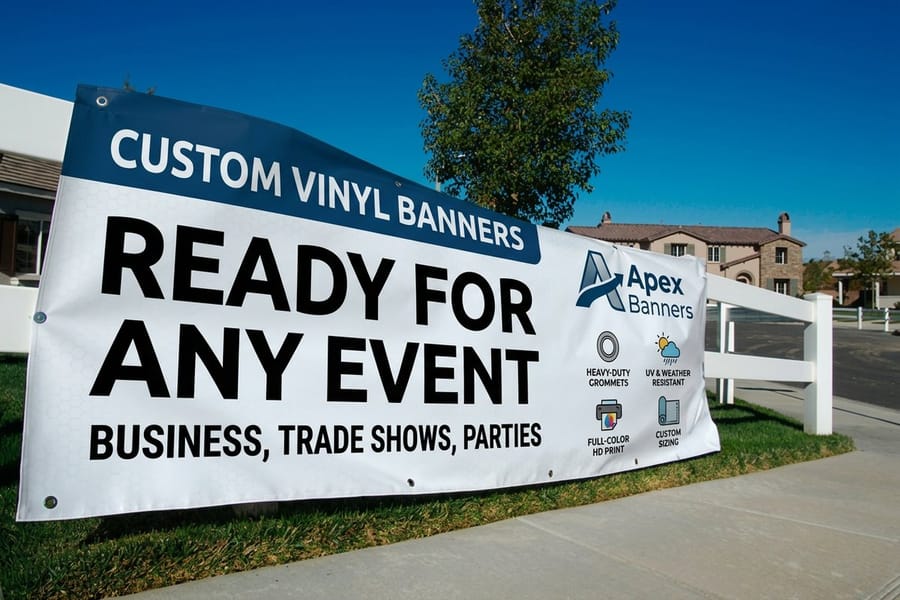
Use 13 oz scrim vinyl for a banner mounted flat, mesh for anything strapped to a fence or scaffold where wind can reach it, dye sublimated fabric for indoor booths and photo backdrops, and a retractable stand when there is no wall to hang from. The place it hangs picks the material, not the design. Everything after that decision is size, hem and hardware.
Quick answer
Wind, glare and whether there is a wall
Three questions settle the choice. Can wind reach it, which sends you to mesh instead of vinyl. Will it be photographed or lit, which sends you to fabric instead of glossy vinyl. Is there anything to hang it on, which sends you to a retractable stand instead of a printed sheet. Material only becomes a design question once those three are answered, and the price gap between the four is smaller than the gap between a banner that suits its mounting and one that does not.
The Four Banner Types and What Each Material Actually Is
Strip away the marketing names and there are four constructions on the market, and each one exists because of a physical problem the others could not solve.
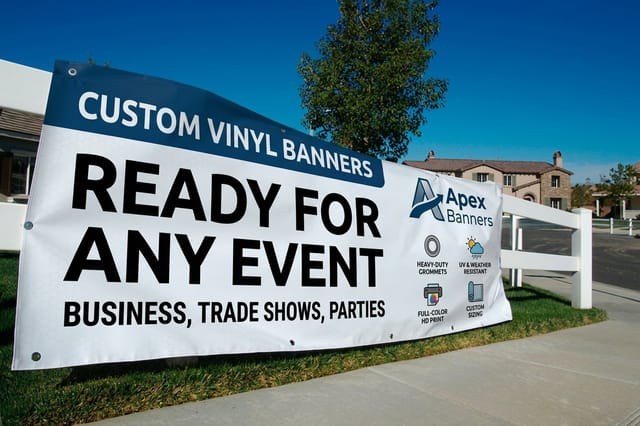
Scrim vinyl is the default. A 13 oz sheet of PVC with a woven polyester scrim laminated inside it, which is the layer that stops a tear from running across the whole banner. It is solid, so it blocks light and holds the heaviest ink coverage of the four. Vinyl banners start at $79 and cover most of what people mean when they say banner. If you want the construction explained properly, our scrim vinyl guide takes the material apart layer by layer.
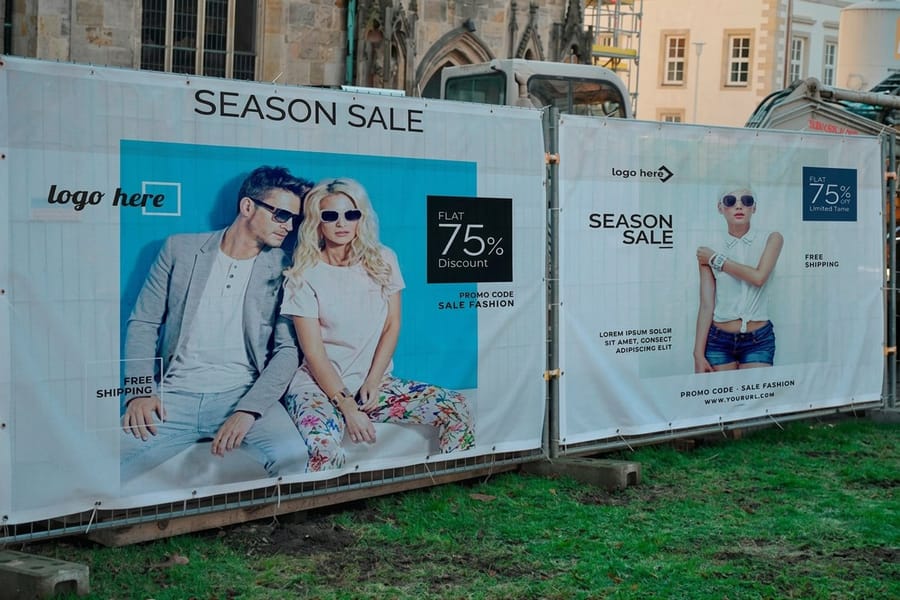
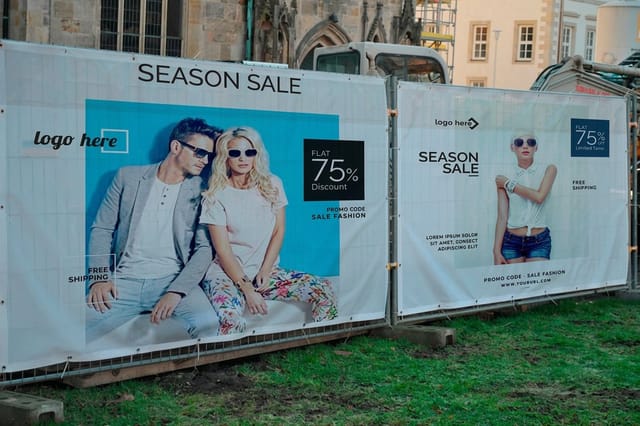
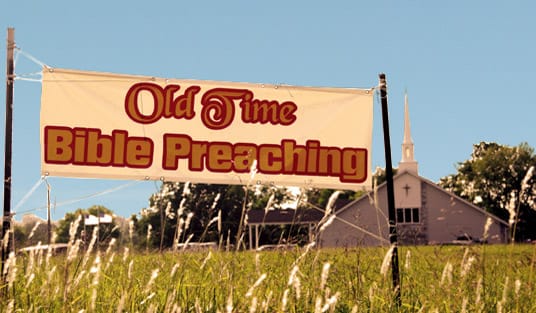
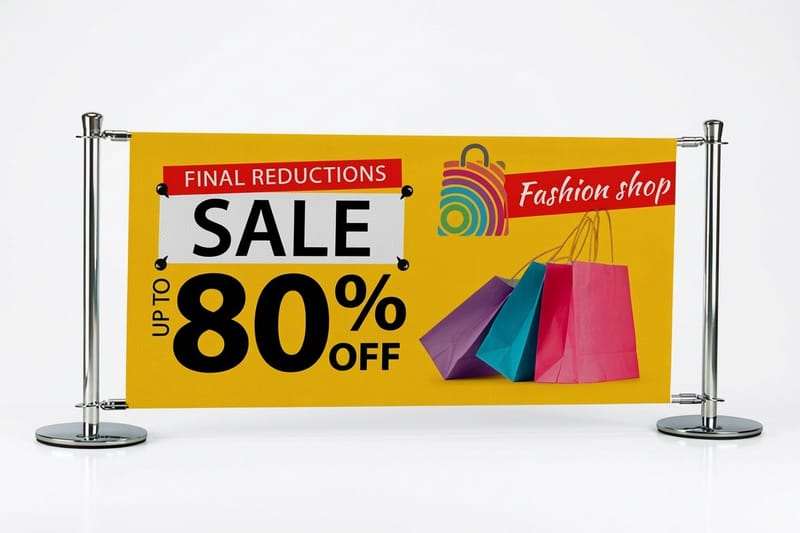
Mesh is the same idea with holes in it. The weave leaves a large fraction of the surface open, so air moves through the banner instead of pushing against it. That single property is why every fence wrap, scaffold cover and stadium rail you have seen is mesh. Mesh banners start at $75.
Fabric is dye sublimated polyester. The ink turns to gas and bonds into the fibre rather than sitting on a surface, which is why a fabric banner has no glare and why the color survives being folded. It packs flat in a bag and the creases relax out within an hour of hanging. Fabric banners start at $57.20.
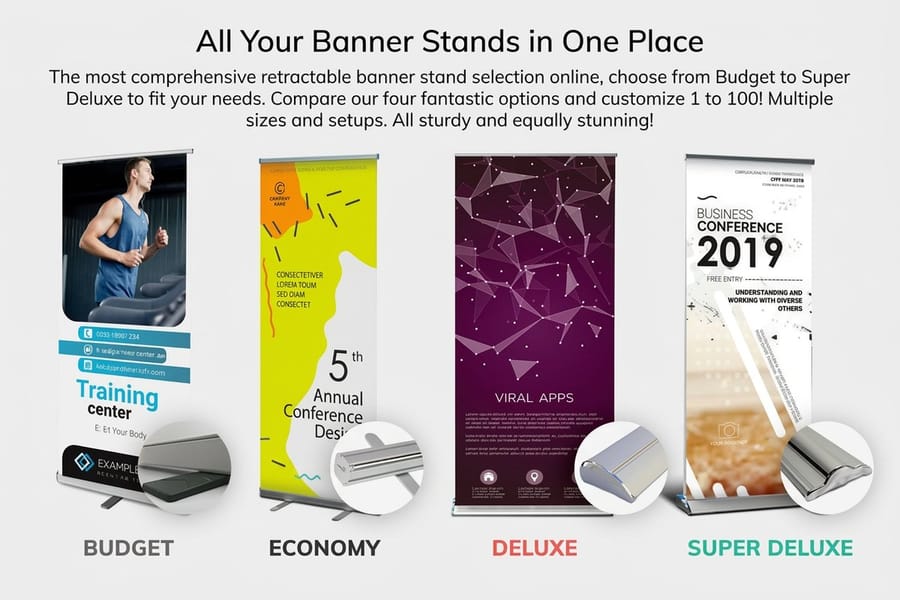
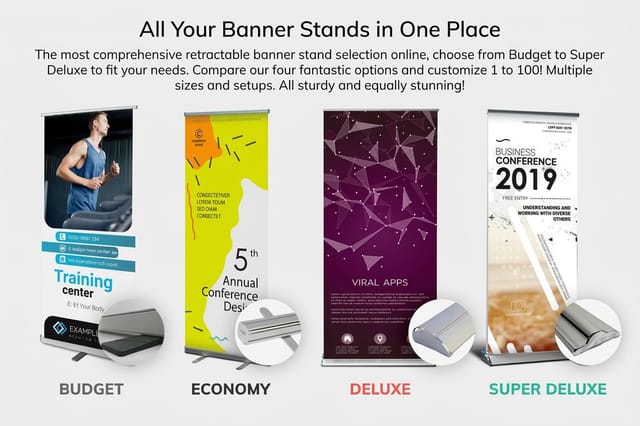
Retractable is not a material at all, it is a format. You buy an aluminium cassette with a spring roller and a graphic that lives inside it, and the whole thing goes up in about thirty seconds without touching a wall. Retractable banner stands start at $139 because the hardware is in the price.
Match the Banner to Where It Hangs

Read this table by the second column first. Almost every wrong banner order starts with someone picking a material they liked and then discovering where it had to go.
| Type | Where it belongs | Wind | Finish | The catch |
|---|---|---|---|---|
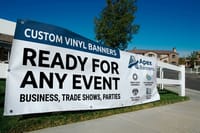
| Vinyl | Flat on a wall, a building face, a railing, a frame. | Fine when mounted flat, poor when it can billow. | Glossy or matte, blocks light completely. | Turns into a sail on a fence line and pulls its own corners out. |
| Mesh | Chain link fence, scaffold, stadium rail, anything exposed. | The reason it exists. Air passes through the weave. | Matte, slightly open, background shows faintly. | Solid dark fills print a shade lighter than on vinyl. |
| Fabric | Trade show booths, photo backdrops, indoor events. | Not an outdoor material. It stretches and holds water. | No glare at all, the reason photographers ask for it. | Frays at an unsewn edge and needs a pole pocket or a frame. |
| Retractable | Lobbies, booths, conference doorways, anywhere with no wall. | Indoor only. A base tips in the lightest outdoor breeze. | Matte film, self supporting, up in half a minute. | The graphic is a consumable and keeps a curl if left deployed. |
| Pole | Street light poles, main street programs, campus routes. | Built for it, with sewn pole pockets top and bottom. | Double sided, read from both directions of traffic. | Most cities require a permit before anything goes on a pole. |
Two rows deserve a second look. Pole banners at $97.76 look expensive next to a flat sheet until you notice the price covers double sided printing and sewn pockets, which is a different job entirely. And the fabric row is where most trade show budgets go wrong: teams order fabric because it photographs beautifully, then use the same banner at an outdoor sponsor activation and it comes home stretched. If both settings are on the calendar, order the fabric one for indoors and a vinyl twin for outside. Choosing trade show banners walks through the full booth kit.
What Each Banner Costs, and Where the Money Actually Goes
Starting prices tell you less than people expect, because a printed sheet and a complete display are being compared as if they were the same purchase.
| Product | From | What the price includes | What you still need |
|---|---|---|---|
| Fabric banners | $57.20 | Dye sublimated polyester, printed edge to edge. | A frame, a pole pocket, or a crossbar to hang it from. |
| Mesh banners | $75 | Perforated mesh, hemmed with grommets. | Zip ties or bungees. Rigid rope tears corners. |
| Vinyl banners | $79 | 13 oz scrim vinyl, hemmed with grommets. | Mounting hardware, and a frame if it faces the wind. |
| Pole banners | $97.76 | Double sided print with sewn pole pockets. | Pole brackets and, in most cities, a permit. |
| Retractable banner stands | $139 | Graphic, cassette base and carry bag together. | Nothing. It is the only complete display on this list. |
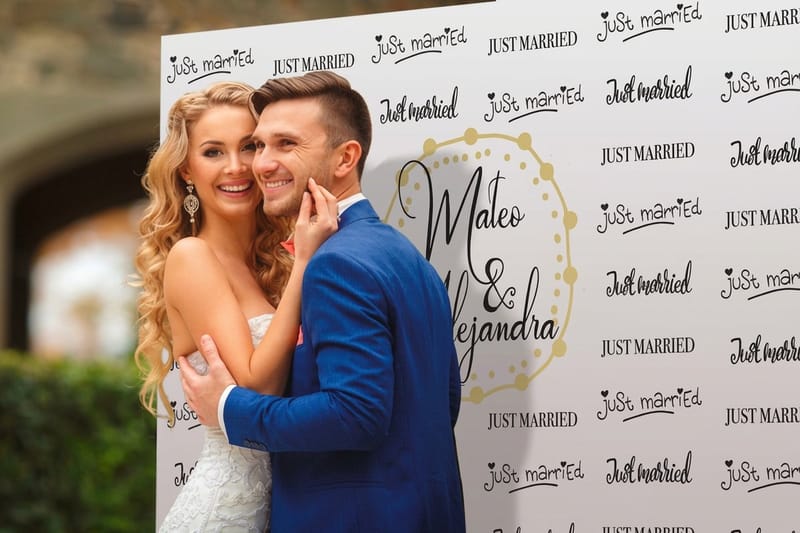
| Step and repeat banners | $217.50 | Large format matte backdrop built for camera flash. | A backdrop frame, unless you already own one. |
The fair comparison is the installed cost. A $79 vinyl banner that needs a frame is not cheaper than a $139 retractable stand that needs nothing, and a fabric banner is only the bargain of the group if you already own the hardware to hang it. Where size drives the bill rather than material, ordering the run together is what moves the number, and ordering banners in bulk covers how the quantity breaks work.
Sizes, Grommets and the Setup Mistakes That Kill a Banner Early
The print outlives the installation almost every time, so the useful knowledge sits in the hardware rather than the artwork.
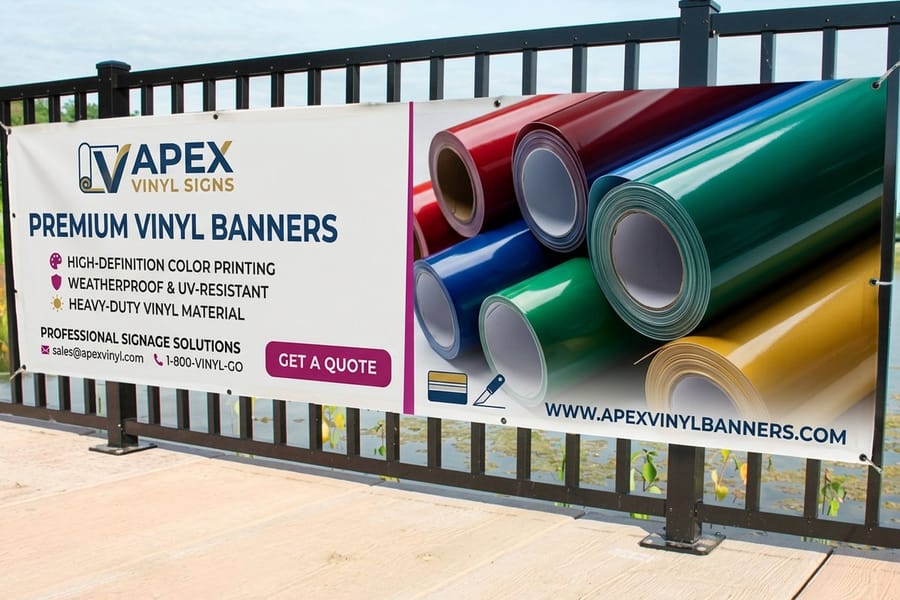
Order the hem. A raw cut edge on vinyl is where a tear begins, and a folded and welded hem roughly doubles the thickness the grommet bites into. Then space grommets about every two feet rather than only at the four corners. Four corners on a 10 foot banner means each corner carries a quarter of every gust, and a corner is exactly what tears out. Grommet placement gets into the spacing in detail.
Tie it with bungee cord or shock cord, never with rope pulled tight. Rope holds the banner rigid, so the whole load lands on the hem the instant the wind hits. A bungee lets the sheet move a few inches and absorbs the shock instead of transferring it. This one change costs a few dollars and is the single biggest predictor of whether a banner survives its first storm. Ten ways to hang a banner covers the mounting options for surfaces that will not take a grommet.
On sizing, work backwards from reading distance rather than from the space available. A headline that has to be read from across a parking lot needs letters several inches tall, and once you know the letter height you know the banner height, not the other way around. The banner size guide maps the standard sizes to distances. Build the file at full size with the bleed our blank template library already has set up, keep live text at least two inches inside the hem so the grommets never punch through a letter, and check the finished spec against the configurator before you upload. Every option on the list lives in the signs and banners category.
Wally explains banner types
Wind, glare, and whether you have a wall
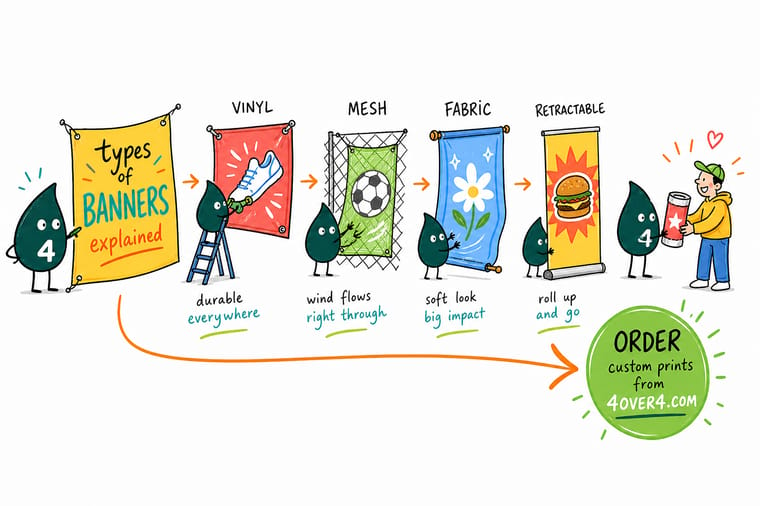
Wally hangs a solid vinyl banner on a fence and watches the wind turn it into a sail until a corner grommet lets go. He swaps in mesh, the air goes straight through the weave, and nothing moves. Indoors he uses fabric, because the booth lights bounce off glossy vinyl and straight into the camera. When there is no wall at all, he opens a retractable stand and the whole display is up in half a minute. Same artwork every time. Different material every time.
Shop banners and stands →Specs and pricing
Vinyl, mesh and fabric side by side
Sizes, finishing options and starting prices for the three flat banner materials, pulled live from the 4OVER4.COM configurator.


Print it
Order the banner that fits where it hangs
Explore more
Where to go next

By the numbers
Large format printing you can count on at 4OVER4
Common Questions
Your banner questions, answered
What is the difference between a vinyl banner and a mesh banner?
Vinyl is a solid sheet, mesh is perforated. A 13 oz scrim vinyl banner blocks light and holds the densest color, which is what you want flat against a wall or a building face. Mesh has thousands of small holes so wind passes through it rather than pushing on it, which is why fence wraps, scaffold covers and stadium rails are almost always mesh. The trade-off is real: on mesh the ink covers less surface, so solid blacks and deep blues read a shade lighter, and whatever is behind the banner shows faintly through it.
Can I use a fabric banner outdoors?
For an afternoon, yes. For a season, no. Dye sublimated polyester takes on water, sags once it is wet, and the edges start to fray where they rub against a mount. It also has no scrim layer, so a gust that a vinyl banner shrugs off will stretch it. Fabric earns its place indoors, where it kills the glare that a glossy vinyl banner throws back at booth spotlights and camera flashes. Outdoors, print the same artwork on vinyl or mesh and keep the fabric one for the trade show.
What size is a standard retractable banner?
The common footprint is 33 inches wide by roughly 81 inches tall, which fits a 10 by 10 booth back wall and clears the heads of people seated at a table. Wider 47 inch models exist for backdrops. Height matters more than width in practice, because anything below about 60 inches puts your message at waist level in a crowded room. Set the top third of the artwork as the part that has to read from across the hall.
Do wind slits help a vinyl banner survive wind?
No, and this is the most persistent myth in banner buying. Cutting half moon slits into solid vinyl relieves almost none of the pressure, because the material around each slit still catches the wind. What the slits reliably do is give a tear somewhere to start. If wind is the problem, print on mesh, which is engineered for exactly this, or mount the vinyl banner to a rigid frame so the sheet cannot billow at all.
Which banner type is cheapest?
Fabric banners start at $57.20 at 4OVER4.COM, then mesh banners at $75 and vinyl banners at $79, and a retractable banner stand is $139 because the price includes the hardware and the carry bag. Comparing those numbers straight across misleads, though. A retractable stand replaces a banner plus a frame plus a way to hang it, and a $79 vinyl banner still needs rope, bungees or a wall mount. Price the whole installation, not the printed sheet.
How long does an outdoor banner last?
A hemmed 13 oz vinyl banner mounted flat and out of constant direct sun typically gets through a couple of seasons before it looks tired, and the first thing to go is almost never the print. It is a corner. Wind works a grommet back and forth until it tears out of the hem, and then the loose corner flaps and the tear runs. Bungee cords instead of rigid rope, and a grommet every two feet rather than only at the corners, do more for lifespan than any material upgrade.
Why do step and repeat backdrops need a matte finish?
Because of the camera. A glossy vinyl surface bounces a flash straight back into the lens, and the logos closest to the hot spot wash out completely in the photo, which defeats the whole purpose of a sponsor wall. A matte or fabric surface scatters that light instead. Plan the logo grid the same way: repeat the mark often enough that a head and shoulders crop still contains a full logo, not a corner of one.
Get Started
Ready to print a banner that survives its first week?
Pick the material for the spot it hangs in, add the hem and the grommets, and we print it at full size with the color checked before it ships.
Legal Disclaimer
Gold Standard guarantees apply to all standard orders placed through 4over4.com. Price match requires verifiable proof of a competitor's published price for an equivalent product with matching specifications and turnaround time. Satisfaction guarantee covers manufacturing defects and print quality issues. Contact support with order number and documentation. On-time delivery rate based on tracked orders 1999 to 2026. Individual results may vary based on shipping carrier performance.
