
How to Create Advertising Mailers That Convert


The format sets the postage, the postage sets the math, and the offer decides whether anyone calls. Here is the order to work in, the formats worth using, and the layout rules USPS enforces.
An advertising mailer converts when one offer, one proof element and one response device sit on a format the mail stream charges you a sane rate to carry. Settle the list first, choose the size against the postage tier second, then write the offer and lay the piece out around the way people are meant to reply. Keep the right half of the address side and the barcode clear zone free of artwork, and order the print and the mailing on the same job so nobody has to sort a pallet by hand.
Quick answer
One offer, one proof, one way to reply
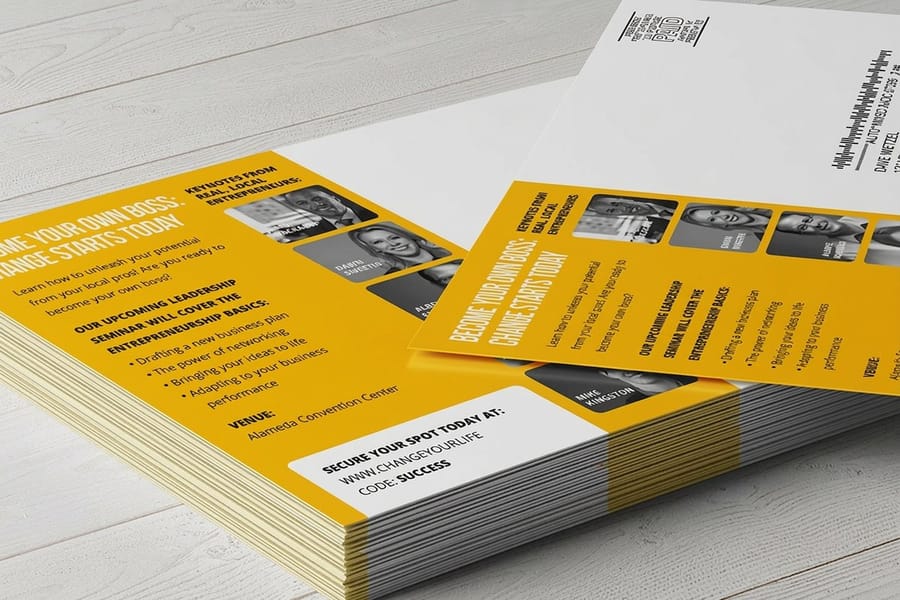
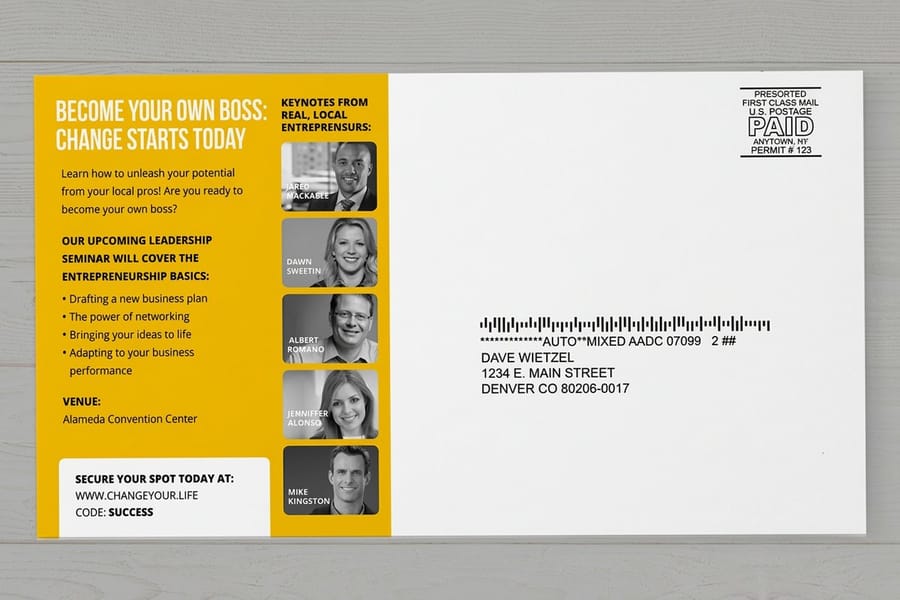
Pick the format against the postage tier, then design the piece around a single response device. A 4.25 by 6 inch card mails at the postcard rate, a 6 by 9 inch card mails at the letter rate and stands out more, and anything larger becomes a flat and costs noticeably more per piece. On the address side, the right half belongs to the address block and the postage, and the barcode clear zone at the bottom right has to stay free of ink or the piece falls out of automation.
Building an Advertising Mailer, Step by Step
Work in this order. Reversing steps one and two is the single most common reason a campaign that looked good in a proof returns nothing.
One, settle the list. Past customers, lapsed customers, a rented list filtered by geography and household type, or a saturation route where you mail every address a letter carrier walks. Each of those wants a different piece, and the size of the list sets your budget per piece. Our guide to building or renting a mailing list covers the selections that matter and the ones that only add cost.
Two, pick the format against the postage. Postage is charged on every piece forever, so a format choice made casually gets paid for a thousand times. The format table below shows where each one earns its place.
Three, write the offer before the layout. Not a slogan. A thing the reader gets, a reason it is worth acting on now, and a date it stops. "20 percent off your first service call, book by March 14" is an offer. "Quality service since 1998" is a sign on a van.
Four, lay it out around the response device. Place the QR code, the tracked number or the coupon code first, then build the rest of the piece around it. Designers who add the response device last end up squeezing it into whatever space is left, which is usually the worst spot on the card.
Five, order print and mail together. Upload the artwork and the list on the same job, choose the mail class, and the addressing, sorting and drop-off happen on our side. Direct Mail Postcards start at $89.68 on that basis, and the whole direct mail services range works the same way.
Which Mailer Format to Use, and What Each One Costs You
Format is a postage decision wearing a design costume. Read the second column before the fourth.
| Format | Postage behaviour | Starts at | Use it when |
|---|---|---|---|
| Postcard, 4.25 x 6 | Qualifies for the USPS postcard rate, the cheapest option in the mail stream. | $89.68 | You mail the same list every month and cumulative postage is the real budget. |
| Card, 6 x 9 | Letter rate. Still inside the 6 1/8 by 11 1/2 inch letter limit. | $89.68 | You need the piece to stand out in a stack without paying flat rates. |
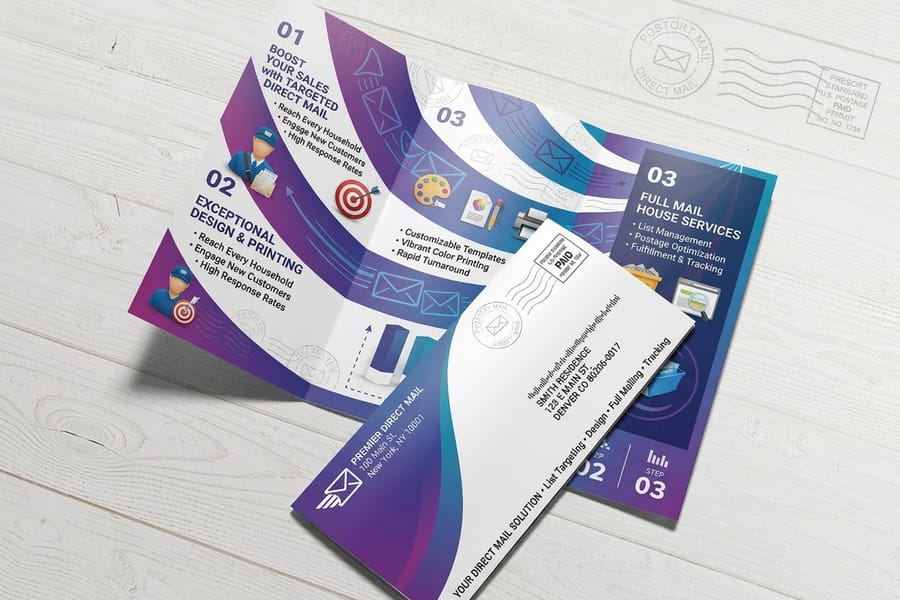
| Flyer or self-mailer | Letter or flat depending on size, and needs tabs or a fold seal to travel. | $238.73 | The offer needs more than one panel, or you are running an EDDM saturation drop. |
| Brochure | Usually a flat, the most expensive per piece to mail. | $238.73 | The product genuinely needs explaining, and the list is small and qualified. |
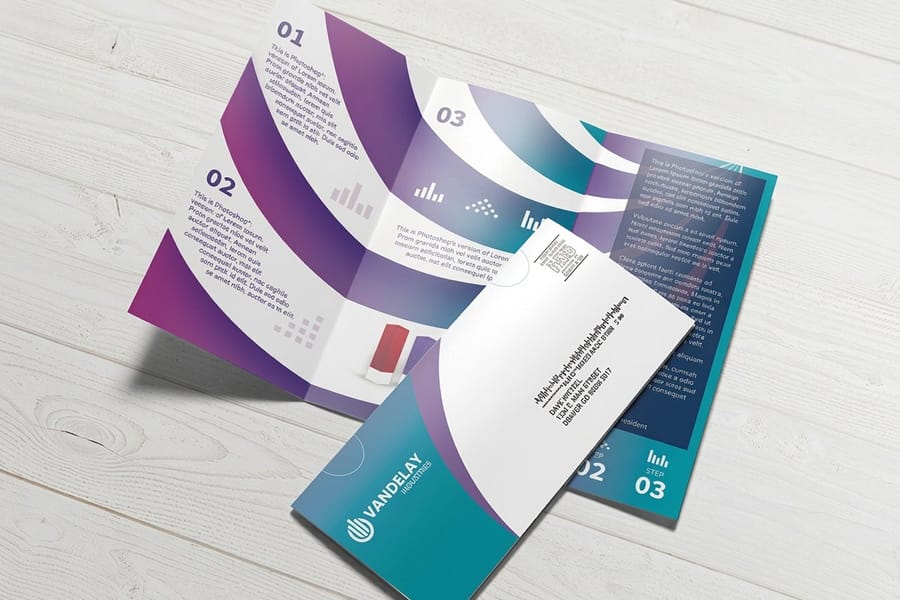
| Letter in an envelope | Letter rate, plus the envelope and insertion. | $238.73 | The message is personal, private, or long. Renewals, invitations, legal notices. |
The trade-off nobody mentions in a brochure pitch: an envelope has to be opened before it can work, and a postcard cannot be avoided. That is the whole argument. If your offer survives being read in a hallway in two seconds, a card wins on cost and on read rate. If it needs a page of context, Direct Mail Letters buy you that page at the price of a lower open rate. Direct Mail Flyers sit in between and are the usual choice for saturation routes, because Every Door Direct Mail requires a flat-size piece rather than a letter-size card.
One more thing to check before you commit to a size. If you are comparing a card against an envelope for the same campaign, our postcards versus letters comparison puts the two side by side on cost, open rate and what each one can carry.
Designing the Offer Side for Response
A mailer is read at arm's length, in motion, by someone deciding whether to keep it. Design for that reader rather than for a screen at 200 percent zoom.
The headline is the offer, not the brand. Your logo belongs on the piece, but it is not the reason anyone reads further. Put the thing you are giving in the largest type on the card, and keep it short enough to read while walking.
One proof element, not three. A single strong photograph, a before and after pair, or one named customer. Adding a second proof element does not double the credibility, it halves the attention the first one gets.
The deadline does more work than the discount. A 10 percent offer that expires on a printed date outpulls a 20 percent offer with no end, because the second one can always be dealt with later, and later never arrives.
Keep contrast brutal. Dark type on a light panel, or reversed white on a solid colour. Grey text on a photograph looks refined on a monitor and disappears on a card held under a porch light.
Bleed and safety are not negotiable. Anything you want to run to the edge needs 1/8 inch of bleed, and anything you need to keep needs to sit 1/8 inch inside the trim. Start from a correctly built layout in the blank template library and the trimming stops being a risk.
On the address side, design the left half and leave the right half alone. The delivery address, the return address and the postage indicia all need their space, and the barcode clear zone at the bottom right has to be free of ink. The address side layout rules give the exact measurements. If you are placing a scan target, our QR code guide covers minimum size and quiet zone so the code actually scans off a matte stock.
Where Advertising Mailer Campaigns Lose Money
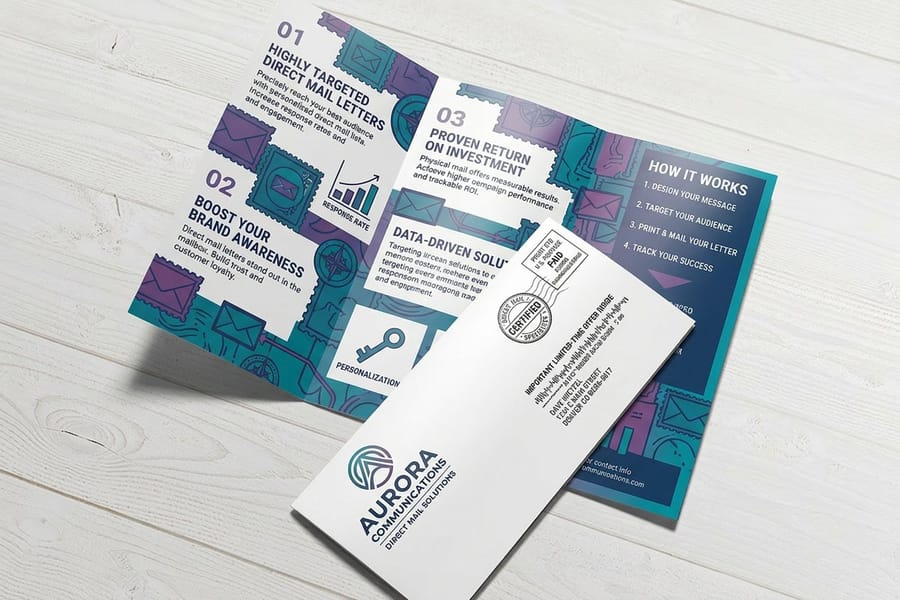
Most failed direct mail is not a design failure. It fails in four predictable places, and all four are avoidable.
- A dirty list. Undeliverable addresses are paid for in full. Run the file through address standardization before the drop and delete anything that has bounced twice.
- One drop. A single mailing to a cold list tells you almost nothing. Splitting the same budget across three drops two weeks apart gives the offer a chance to land while someone actually needs it.
- Untraceable response. Without a device unique to the drop, you end up arguing about attribution instead of scaling what worked.
- Judging too early. Response builds for two to three weeks after the in home date. Calling it dead on day four is how a working campaign gets cancelled.
Set the target before the drop, not after. Work out what one new customer is worth over a year, divide the cost of the drop by that number, and you have the number of responses the mailing has to produce to break even. That figure, not a gut feeling, is what tells you whether a $16.48 standard postcard run you address yourself or a fully handled direct mail postcard campaign is the better use of the money. For a sanity check on what a realistic return looks like in your sector before you set that target, see the response rates by industry breakdown.
The honest limit: direct mail is slow and it is not free. If you need leads this week, or your margin per sale is a few dollars, this is the wrong channel and no amount of design fixes it. It earns its keep on repeat purchases, on local services with real customer value, and on lists you already own.
Wally explains advertising mailers
One offer, one proof, one way to reply
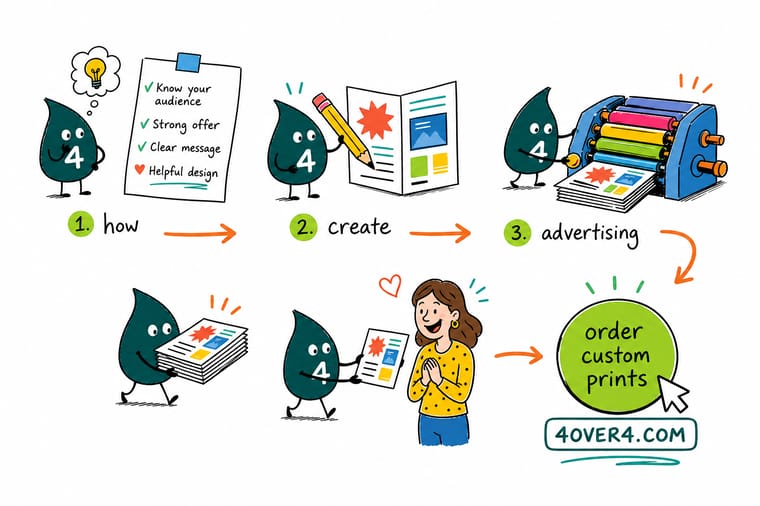
Wally starts with the list, because a great card sent to the wrong 20,000 people is just expensive confetti. Then he picks the size against the postage tier, writes the offer with a date on it, and puts the QR code down before anything else so it never gets squeezed into a corner. He keeps the right half of the address side clear for the address and the postage, and he never prints into the barcode strip. Then he sends the artwork and the list on one order and lets us address, sort and drop the mailing.
Order direct mail postcards →Specs and pricing
Mailer formats, sizes, and starting prices
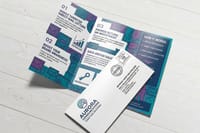
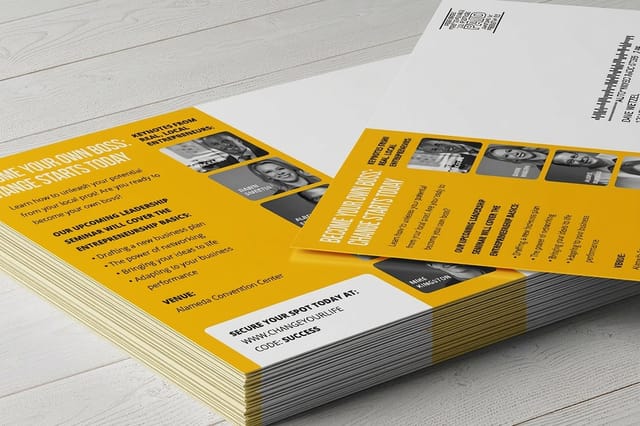
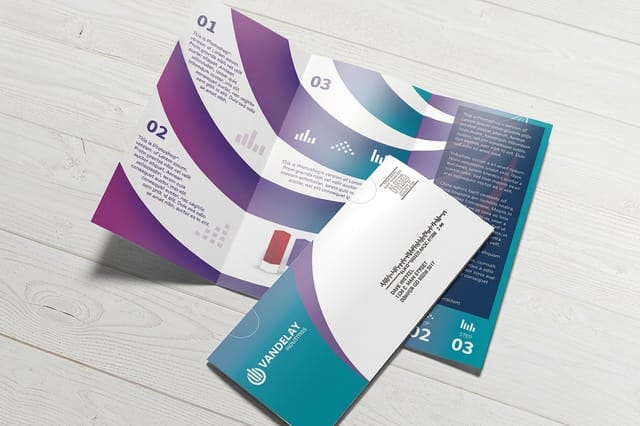
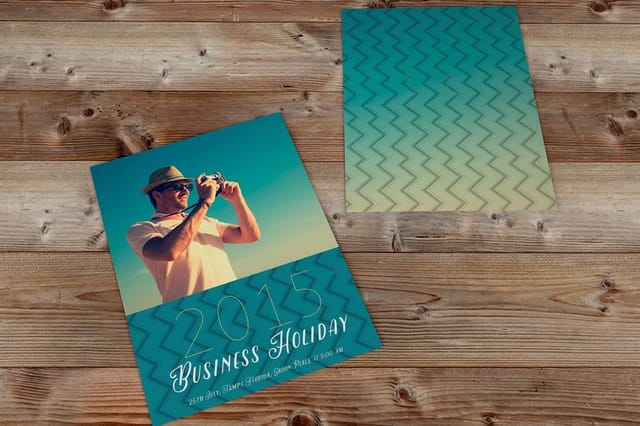
Compare the three formats that cover most advertising campaigns, with live configuration options and starting prices from the 4OVER4.COM configurator.
Print it
Print the mailer and let us handle the mailing
Explore more
Where to go next

By the numbers
Direct mail printing you can count on at 4OVER4
Common Questions
Your advertising mailer questions, answered
What is an advertising mailer?
An advertising mailer is any printed piece sent through the mail to sell something: a postcard, a folded self-mailer, a flyer, a brochure, or a letter in an envelope. What separates it from a brochure you hand out at a counter is that it has to survive the mail stream and be readable in the two seconds between the mailbox and the recycling bin. That constraint is why advertising mailers carry one offer rather than a full product line, and why the response device sits in a fixed place instead of wherever the layout looks best.
Which mailer size gets the best response for the money?
For a first campaign, a 6 by 9 inch card is the usual sweet spot. It is large enough that it does not disappear inside a stack of bills, it still falls inside the USPS letter dimensions of 6 1/8 by 11 1/2 inches, and it costs far less to mail than a flat. The 4.25 by 6 inch card is cheaper per piece because it qualifies for the postcard rate, so it wins when you are mailing the same list repeatedly and the cumulative postage matters more than the first impression. Our breakdown of postcard postage cost by size covers where each rate tier starts and stops.
How much of the address side can I design?
The left half. USPS needs the right half of the address side for the delivery address, the return address and the postage indicia, and it needs the barcode clear zone at the bottom right, five eighths of an inch tall and four and three quarter inches in from the right edge, free of printing. Anything in that strip risks the piece being rejected by automation and charged at a higher rate. Use the left half for a short repeat of the offer and the deadline, because a lot of mail is first seen address side up.
Do I need a mailing list before I order?
Yes, and it should be settled before the design is finished, because the list changes the format. A list of 400 past customers justifies a heavier piece and a personalized letter. A saturation route where you mail every address in a carrier walk does not, and it pushes you toward Every Door Direct Mail, which has its own size rules. If you do not have a list, you can rent one by geography, household income, home ownership or business type, and our guide to building or renting a mailing list explains what each selection actually costs you in reach.
How do I track which mailer produced the sale?
Give each drop a response device that only exists on that drop. A QR code with a unique destination, a tracked phone number, a coupon code printed on the card, or a personalized URL all work, and all of them beat asking staff to remember who mentioned a postcard. Print the code large enough to scan from a phone held at arm's length, and keep it out of the barcode clear zone. One device per piece, because two split the data and neither number ends up trustworthy.
How long should I wait before judging a campaign?
Give it three weeks from the in home date, not from the day you placed the order. Standard mail class takes days to move, response trickles in for two to three weeks after delivery, and phone calls generally start before online redemptions. Judging a drop on the first weekend is the fastest way to kill a campaign that was about to work. It is also why a single drop tells you less than three smaller drops to the same list, spaced two weeks apart.
Is it cheaper to print mailers and send them myself?
On paper yes, in practice usually not. Standard Postcards print from $16.48 because the price stops at the box on your loading dock. From there someone has to buy the list, run addresses through address standardization, apply postage, sort to USPS presort requirements and drop the mailing at a business mail entry unit. Direct Mail Postcards start at $89.68 with that whole chain handled on the same order. Self mailing wins when you have a mail room and a permit already. It loses when the person doing it also has another job.
Get Started
Ready to put an offer in 5,000 mailboxes?
Upload the artwork and the list on one order. We print, address, sort and drop the mailing, and you watch the response device do the counting.
Legal Disclaimer
Gold Standard guarantees apply to all standard orders placed through 4over4.com. Price match requires verifiable proof of a competitor's published price for an equivalent product with matching specifications and turnaround time. Satisfaction guarantee covers manufacturing defects and print quality issues. Contact support with order number and documentation. On-time delivery rate based on tracked orders 1999 to 2026. Individual results may vary based on shipping carrier performance.
