
How to Collect Wedding Guest Addresses and Print Invitations That Mail Correctly


Nadia is our customer education voice, built from the knowledge of our production team, with over 20 years in printing.
Send one form link, let guests type their own address, then group the replies into one row per household before anything goes to print. Here is the whole path, from the first request to the stamped envelope.
Collect wedding guest addresses by sending every guest one shared form link that asks for title, full name, street, unit number, city, state, ZIP and country, then phone the handful who never fill it in. Clean the replies into a spreadsheet with one row per household, keep the ZIP column formatted as text so leading zeros survive, and close the list two weeks before the invitations print. That household count, not the guest count, is what you order invitations and envelopes against.
Quick answer
One form, one cleanup, one row per household
The address list is a print file, so build it like one. A shared form gets the addresses from the people who actually live at them. A phone call gets the rest. The cleanup turns a per person list into a per envelope list, which is where the household count comes from, and the household count is what you order against. Close the list on a date you set, then print the suite and weigh one assembled envelope before buying postage.
Collect the list
How to collect wedding addresses from every guest
To get addresses for a wedding, send one form link to the whole list, hand each family branch to one relative, and phone whoever is left. Ask for title, full name, address line one, the unit on its own line, city, state, ZIP and country, plus a phone number or email for follow-up.
Put a closing date in the message, at least two weeks before the invitations print, and paste the replies into one spreadsheet with the ZIP column formatted as text. Then collapse the rows to one per household, because that count is what you order invitations and envelopes against.
Print and mail
Sending printed invitations by mail once the addresses are in
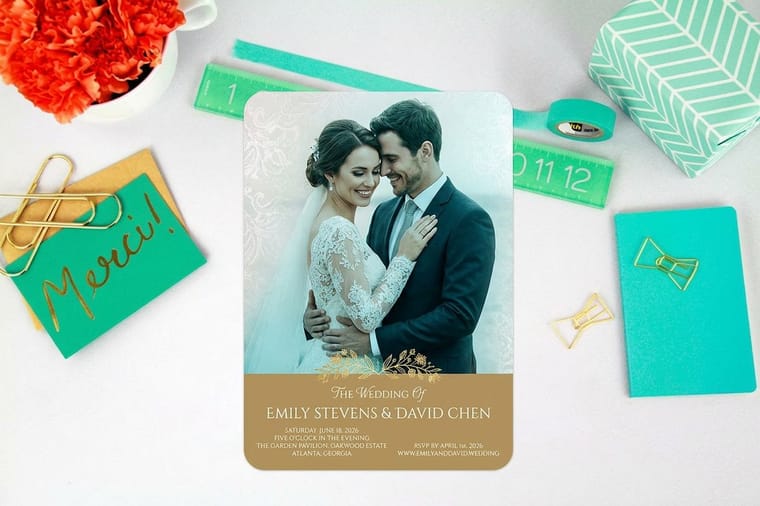
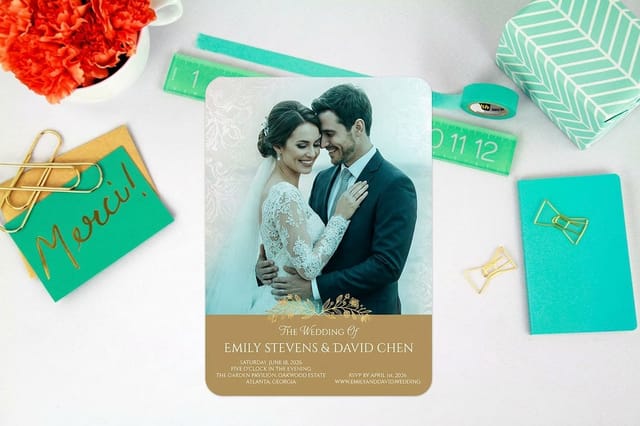
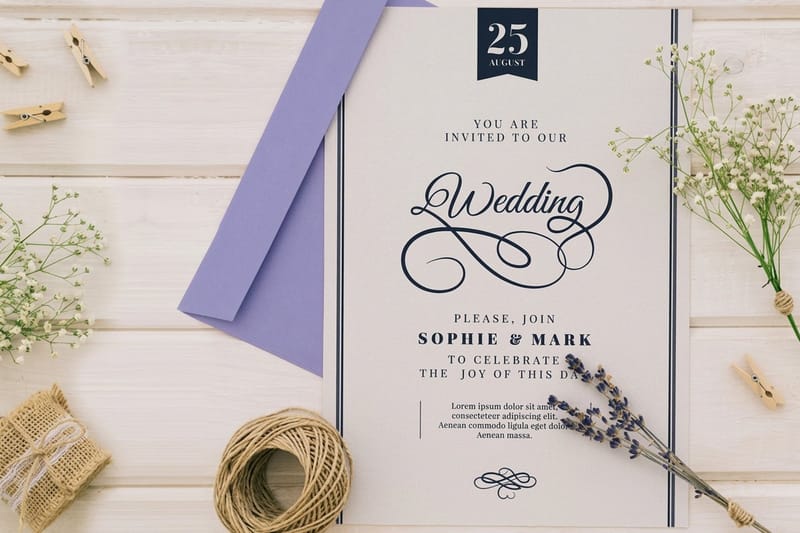
Print against the household count plus a margin, weigh one assembled suite, then mail six to eight weeks before the date. Wedding invitations start at 25 for $19.77 in 4.25 by 5.5, 5 by 7 or 6 by 6 inches with 3 business days of production, and a 5 by 7 card takes an A7 envelope at 5.25 by 7.25 inches.
A suite with an RSVP card and a reply envelope usually passes one ounce, so it needs more than the base letter rate, and a square envelope adds a nonmachinable surcharge. Stamp the reply envelopes too, address them from the same clean list, and send international invitations in the first batch.
Where Wedding Guest Addresses Actually Come From
Four channels bring in a guest list, and each one covers a group the others miss. Run them in parallel rather than in sequence, because the slow channel is always the one you started last.
| Channel | Best for | Where it fails |
|---|---|---|
| One shared form link | The bulk of the list. Guests type their own address, so spelling and apartment numbers come from the person who lives there. | Silent on anyone who does not click links, and it returns a per person list you still have to group. |
| Group text or email | Friends and coworkers who reply in minutes. Fastest response of the four. | Answers arrive as loose text with no fields, so someone has to retype them into columns. |
| A delegate per family branch | Grandparents, distant relatives, and anyone your partner has never met. One relative usually holds half the branch already. | You inherit whatever format they keep, which is often a list of names with no ZIP codes. |
| A phone call | The last stubborn names. Also the only channel that confirms a recent move. | It costs you an evening, so save it for the remainder rather than starting here. |
Write the form fields the way the envelope reads, not the way a database would. Title, full name spelled out, address line one, unit or apartment on its own line, city, state, ZIP, country. Add a plain question at the end asking how the guest wants to be addressed, because that single answer settles a surprising number of arguments about titles and hyphenated surnames.
Set a deadline on the form and put it in the message. Address collection is not finished when responses slow down, it is finished when you decide it is. Give yourself a closing date that sits at least two weeks before the invitations go to print, and use our wedding planning checklist to place that date against everything else on the calendar.
Turning Replies Into a List You Can Print From
Raw responses are not a mailing list. They are a pile of sentences from a hundred different people, and the cleanup is where most couples lose a weekend they did not budget for.
Start with the columns. One row per envelope, with these headers and nothing merged: Household Name, Addressee Line, Address 1, Address 2, City, State, ZIP, Country. Format the ZIP column as text before you paste, or the spreadsheet will read 07030 as a number and print 7030 on an envelope that then bounces around New Jersey. The same trap eats leading zeros in Massachusetts, Connecticut, Maine, and Puerto Rico.
Then collapse the rows. Your form gave you one line per person, and your printer needs one line per envelope. Anna, Marco, and their nine year old are three responses and one invitation. Roommates who were each invited on their own are two responses and two invitations. Do this before you count, because the household number is the number you order against.
Standardize what is left. Move apartment numbers out of the street line into Address 2, spell out Street and Avenue consistently, and run anything that looks wrong through the USPS ZIP Code Lookup. International guests need a country line and will not have a state, so leave that cell empty rather than inventing something. If you plan to print the addresses instead of writing them, this file is the print file, and our guide to addressing wedding invitation envelopes covers the wording rules that sit on top of it. For a return address that stays consistent across every envelope you send, see how to format a return address.
Printing the Suite Once the List Is Closed
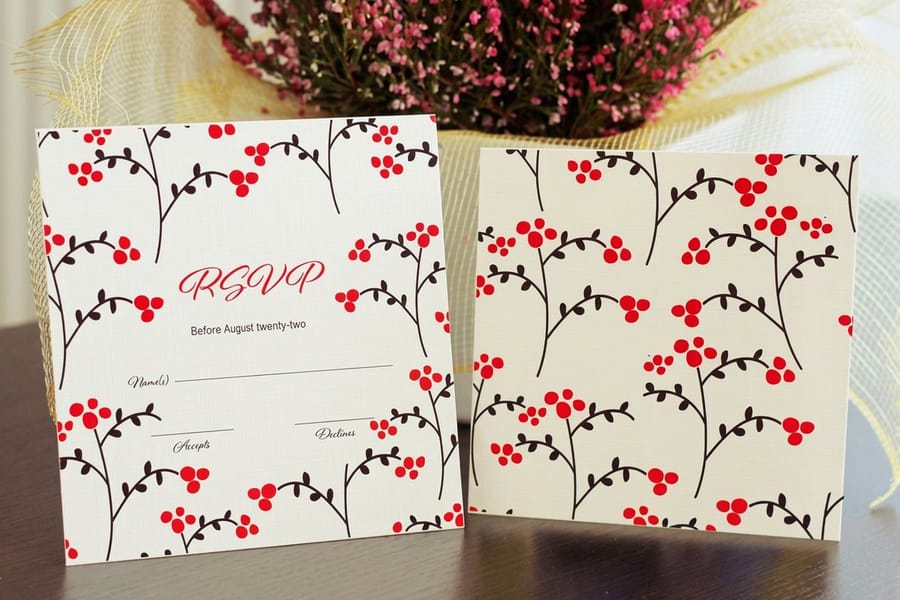
With a household count in hand, the order stops being a guess. Wedding invitations start at $19.77, RSVP cards start at $19.77, and save the date cards start at $19.77, so a full suite is priced per piece rather than per guest.
Order more than your household count. Envelopes take the worst of it, because a mis-addressed envelope is thrown away and you cannot reprint a single one at a sensible price. Add a margin for handwriting mistakes, for the two people who resurface after the list closed, and for the copy you keep. Printed envelopes start at $142.99, which is the number to plan around if you want the return address printed rather than stamped by hand.
Send the save the dates first and the invitations later, and treat them as two separate print runs against two versions of the list. Save the dates go out while addresses are still arriving, so print those for the names you have and keep collecting. Invitations wait for the closed list. If you want to see the paper before committing the whole run, order stationery samples first, and our guide to wedding stationery samples explains what to look at when they land. Layout dimensions for every card in the suite live in the blank template library, and RSVP card sizes are worth checking against your envelope before you finalize artwork.
Postage, Weight and the Trip to the Post Office

Assemble one complete suite before you buy a single stamp. Invitation, RSVP card, reply envelope, any enclosure card, and the outer envelope, sealed exactly as the real ones will be. Take that to a post office counter and have it weighed.
Two things usually surprise people. The first is weight: a suite with more than one card in it commonly crosses the one ounce line, so the base letter rate does not cover it. The second is shape. A square envelope will not feed through automated sorting equipment, so it carries a nonmachinable surcharge regardless of weight, and it is worth asking for hand cancelling if the envelope is delicate or has a wax seal.
Stamp the reply envelopes too. An RSVP card without return postage gets a slower reply and a lower reply rate, and the whole point of the deadline is a headcount you can hand to the caterer. Write the reply address on those envelopes at the same time you address the outer ones, since both come off the same clean list.
For anything mailing outside the country, budget extra time rather than extra worry. International post is slower and less predictable, so send those invitations in the first batch instead of the last. If you are also mailing a change of address card or a thank you card later, the same list carries straight over, and how to make save the dates and the RSVP wording guide cover the two pieces that travel most.
Wally explains the guest address list
One form link, then one row per envelope
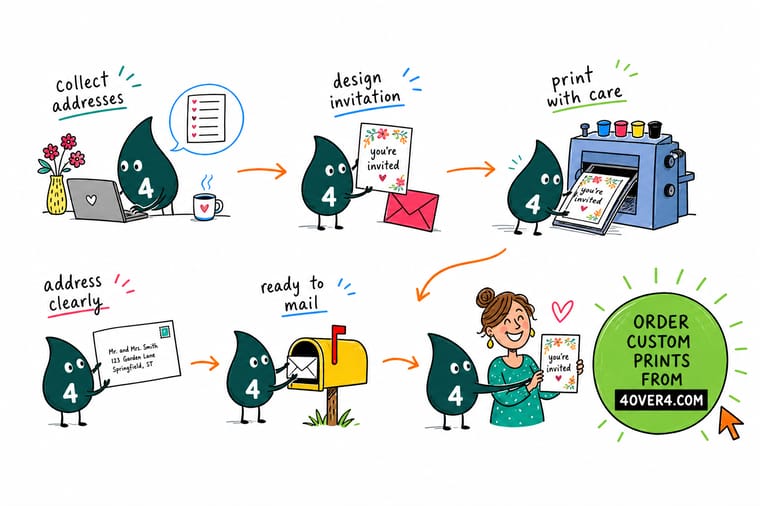
Wally sends every guest the same link and lets them type their own street, apartment number and ZIP. He phones the four people who never open links. Then he collapses the replies so a family of three becomes one envelope, formats the ZIP column as text so 07030 does not turn into 7030, and counts households rather than heads. That count is what he orders invitations and envelopes against, with a few spare envelopes for the ones he addresses wrong.
Order wedding invitations →
Specs and pricing
Sizes, stocks and starting prices for the suite
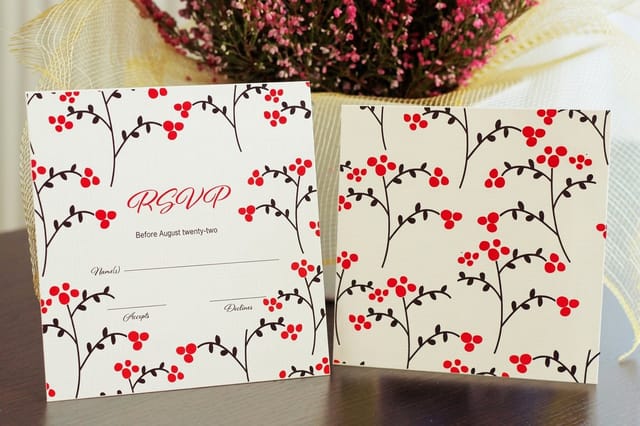
Configure each piece against your household count, with live options and starting prices straight from the 4OVER4.COM configurator. Wedding invitations start at 25 for $19.77 and 100 for $42.84, in 4.25 by 5.5, 5 by 7 or 6 by 6 inches. RSVP cards are 4.25 by 5.5 inches at the same prices, both with 3 business days of production. Printed envelopes start at 250 for $142.99 in sizes including A7, with 7.



Print it
Print the suite your list is ready for
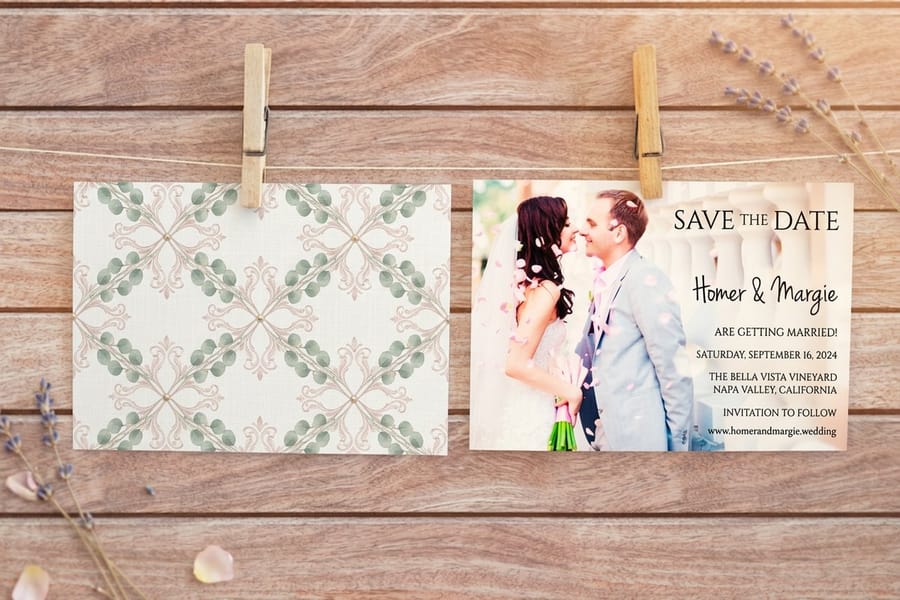
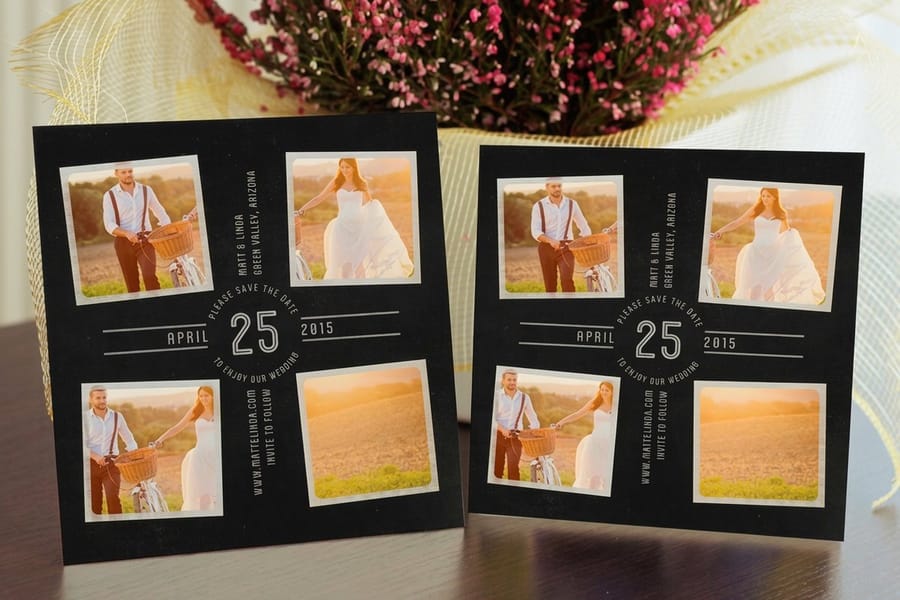
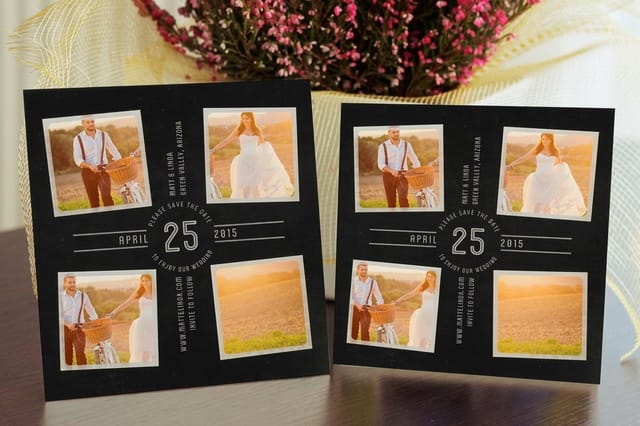
Save the dates go first, from 25 for $19.77 with 5 business days of production, printed for the names you already have. Invitations and RSVP cards wait for the closed list, ordered at the household count plus a few extra.

Explore more
Where to go next
Address inner and outer envelopes, word the RSVP so replies come back on time, see where invitation money goes, and place the stationery deadlines on the wedding timeline, then shop invitation and envelope printing.
By the numbers
Wedding stationery printed on time at 4OVER4
Common Questions
Your guest address questions, answered
What should I ask for besides the street address?
Ask for the title the guest uses, their full name spelled the way they want it printed, address line one, the apartment or unit number in a separate field, city, state, ZIP, and country. Add a phone number or email so you can chase a bad address later, and a yes or no field for whether children are invited if you plan to name them on an inner envelope. The extra thirty seconds a guest spends on those fields saves you a round of phone calls in the week you can least afford one.
How do I get addresses from guests who ignore the form?
Call them. A shared link collects the people who live on their phones, and it will never reach the great aunt who does not open links from unknown numbers. Work the remaining names in one sitting with the spreadsheet open, and ask a parent or a sibling on each side of the family to handle their own branch. Delegating by family branch is faster than chasing individuals, because one relative usually already has half the addresses written down somewhere.
How many invitations do I need to order?
Count households, not guests, then add extras. A couple living together gets one invitation. Two roommates who are each invited separately get two. Once you have the household count, order a few more than you need for calligraphy mistakes, a last minute addition, and the copy you will want to keep. Reprinting a single invitation later costs far more per piece than adding a handful to the first run.
When do save the dates and invitations go out?
Save the dates go out six to eight months ahead, and earlier for a destination wedding where guests need flights. Invitations go out six to eight weeks before the date, with an RSVP deadline three to four weeks before, which gives you time to give the venue a final headcount. Working backwards from that deadline is what sets your address collection deadline: you want the list closed before the invitations go to print, not while they are printing.
Do wedding invitations need extra postage?
Usually yes. A suite with an invitation, an RSVP card, a reply envelope and an outer envelope generally weighs more than one ounce, which puts it above the base First Class letter rate. A square envelope is charged a nonmachinable surcharge because it does not run through automated sorting equipment. Assemble one complete suite, take it to a post office counter, and have it weighed before you buy anything. Do not forget the stamp on the reply envelope.
Can I have the addresses printed on the envelopes instead of hand writing them?
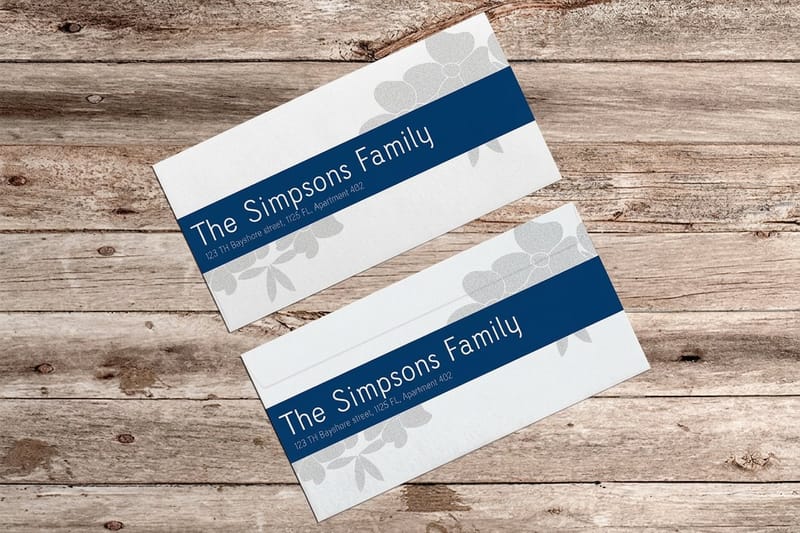
Yes, and for a large list it is the sane option. Once the list is clean and grouped by household, each row becomes one printed envelope, which removes the handwriting bottleneck entirely. The trade off is that the file has to be right before it prints, since an error repeats across the whole run rather than showing up on one envelope you can quietly redo. Proof five rows from different parts of the list, including one apartment address and one international address, before you approve.
Get Started
List closed? Print the suite.
Pick your size and stock, upload the artwork, and we print invitations, RSVP cards and envelopes that match, so every household on your list gets one clean envelope.
Legal Disclaimer
Gold Standard guarantees apply to all standard orders placed through 4over4.com. Price match requires verifiable proof of a competitor's published price for an equivalent product with matching specifications and turnaround time. Satisfaction guarantee covers manufacturing defects and print quality issues. Contact support with order number and documentation.
