
How Foam Board Easel Backs Hold a Sign Up on a Table


A folding card wing, an adhesive strip, and a board that stands on a registration desk without a frame. Here is where the wing goes, which sizes stay up, and where a floor stand takes over.
An easel back is a folding card kickstand with an adhesive spine that sticks to the back of a foam board so the board leans on it and stands by itself on a table. Place the hinge centered side to side and about halfway up the height, and pick a wing roughly half as tall as the board. It works reliably up to about 22 by 28 inches indoors. Above that, or anywhere with damp or a draft, the job moves to a floor stand or a rigid PVC panel.

Quick answer
Two feet, one weight line, and a size ceiling
An easel back turns a flat printed board into a self standing sign by giving it a second foot. The bottom edge of the board is one contact point, the foot of the folded wing is the other, and the sign stays up while the board's weight falls between them. Center the hinge and set it about halfway up the height. Stay at or under roughly 22 by 28 inches on a table, keep it indoors, and print one side only, because the wing owns the middle of the back.
How an Easel Back Actually Holds the Board Up
Two contact points do all the work: the bottom edge of the board and the foot of the wing. Between them sits a footprint, and the sign stays up only while the board's weight line falls somewhere inside it. Everything else about easel backs follows from that one sentence.
Lean the board back and the weight line moves toward the wing, which is stable. Stand it nearly upright and the weight line creeps toward the front edge, which is the position that folds forward when somebody sets a coffee cup down beside it. Around 15 degrees of lean is the sweet spot most stock easel wings produce, and it is not an accident: it is far enough back to be forgiving and not so far that the reader is looking at the sign edge on.
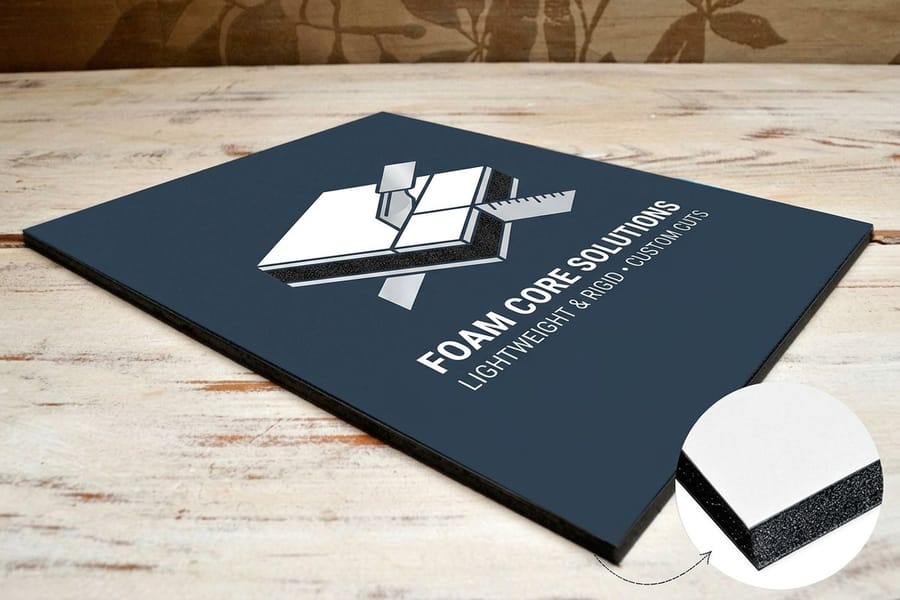
The other variable is wing length. A longer wing lands further back and widens the footprint, so a big board with a generous wing is steadier than a small board with a stubby one. That is why the fix for a wobbly sign is almost never a steeper lean. It is a longer wing, a second wing, or a smaller board. Foam core itself helps here, because a foam core sign at 3/16 inch weighs very little for its area, which keeps the load on that card hinge small.
Rigidity matters as much as weight. A limp board bows in the middle and drags its own weight line forward, which is the failure people blame on the easel. If a board over 20 inches tall feels floppy in your hands, the difference between gator board and foam board is worth reading before you print it.
Attaching an Easel Back Without Ruining the Print
This takes about a minute per board, and the whole job is in the placement. Do it on a flat table with the print face down on a clean sheet of paper, because grit under a foam board leaves a permanent dent.
- Find the center line. Measure the width of the board and mark the halfway point lightly in pencil near the top and the bottom of the back.
- Mark the hinge height. Halfway up the board is the default. On anything taller than about 20 inches, drop it slightly below halfway so the wing reaches further back.
- Dry fit before you peel. Hold the easel against the back with the fold facing up and the wing hanging down, and check the wing clears the bottom edge of the board by an inch or so. A wing that touches the table before the board does carries nothing.
- Peel and press in one go. Adhesive strips grab immediately and foam core does not survive a repositioning attempt, so line it up first. Press along the whole spine with the flat of your hand for a few seconds, not just the ends.
- Stand it and watch it. Set it on the surface it will live on, open the wing, and leave it for a minute. If it creeps, the wing is short or off center, and you will find out now rather than in front of guests.
Two habits save boards. Keep the artwork clear of the mounting area at the design stage, because although the wing sits on the back, a heavy press can telegraph a faint line to the front on a dark solid. And start from a correctly sized file: our blank template library has the trim sizes ready, and the guide to ordering custom printed foam board covers bleed and mounting choices in more detail.
The Sizes That Stand and the Sizes That Tip

Nobody publishes a hard cutoff, so here is the working rule from the counter: an easel back is a table solution, and it stops being one somewhere around 22 by 28 inches. Past that the board is not too heavy, it is too tall, and a tall panel catches every draft in a room.
| Board size | Typical use | What holds it | Watch for |
|---|---|---|---|
| 11 x 17 | Registration desk, menu board, table price card | One wing, around 8 to 9 inches | Light enough to slide, so tape the front edge on a slick table. |
| 16 x 20 | Welcome sign, seating chart, product callout | One wing, around 10 inches | Center the wing carefully. An inch off center shows as a rock. |
| 18 x 24 | Event directional, agenda board, retail promo | Two wings, or one long wing with a taped front edge | Bowing in the middle if the board is stored flat under weight. |
| 22 x 28 | Lobby notice, conference session board | Two wings, on a table nobody leans on | The practical ceiling. Any breeze at all and it goes over. |
| 24 x 36 | Floor level wayfinding, main entrance sign | An A frame or a floor easel, not an adhesive wing | A card hinge cannot carry this much sail area on a table. |
Read the last column before the first. Most easel back complaints trace back to a board that was one size class too big for the hardware, not to a bad easel. If your layout genuinely needs 24 by 36, print it as a mounted poster and put it on a stand, or size the message down and let the sign do its job from a table where people are already standing. The foam board sign sizes guide lays the standard sizes out side by side.
When to Skip the Easel and Use Something Else
An easel back wins on cost, setup time and the fact that it disappears behind the print. It loses in four specific situations, and knowing them saves a reprint.
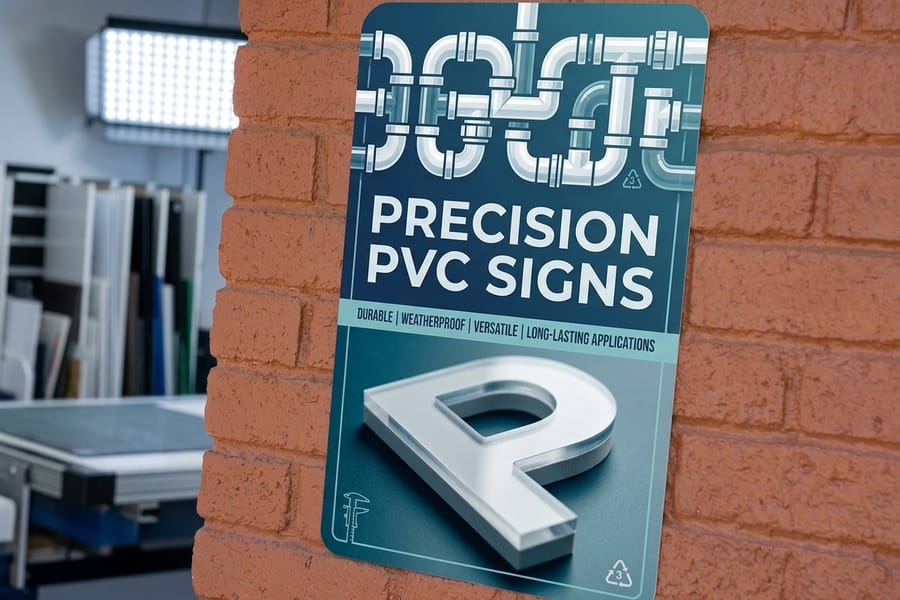
Anywhere with weather or moisture. Foam core drinks humidity and the face lifts. For a patio table, a market stall or a doorway, print the same artwork on PVC signs from $25 and stand them in a rigid holder. PVC shrugs off damp and stays flat, and the foam core versus PVC comparison lays out the cost difference honestly.
Anywhere the sign has to be seen across a room. A table sign reads from a few feet. If the audience is 20 feet away and moving, a retractable banner stand from $139 puts the message at eye level with a weighted base that a bumped table cannot undo. Our event signage planning guide maps which sign type belongs at which point in the room.
Anywhere the sign gets handled. Menus, price lists and specials get picked up, and a card wing does not survive that. A table tent folds from one sheet with nothing to snap off.
Anywhere you need a run of 50 or more. Attaching easels one at a time is fine for a dozen boards and tedious for fifty. At that volume, look at the whole display rather than the stand: browse the foam core printing collection for board options, or the large format printing range if the job has outgrown the table entirely.
Wally explains easel backs
One wing, halfway up, centered
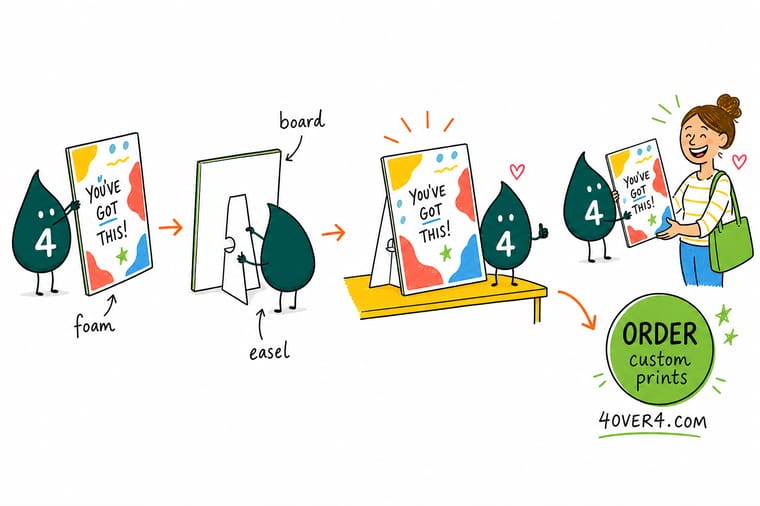
Wally lays the board face down, finds the middle of the back, and presses the easel spine on about halfway up the height. Fold the wing out and the board now has two feet: its own bottom edge and the foot of the wing. It stands as long as the weight falls between them. Give him an 11 by 17 board and it holds all day. Hand him a 24 by 36 and he passes it to a floor stand, because a card hinge cannot carry that much panel on a table.
Print foam core signs →Specs and pricing
Board options, sizes, and starting prices
Compare the rigid board options side by side, with live size and finish choices and starting prices straight from the 4OVER4.COM configurator.
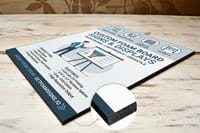
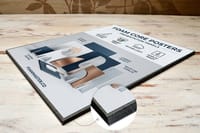

Print it
Order the board, then pick how it stands
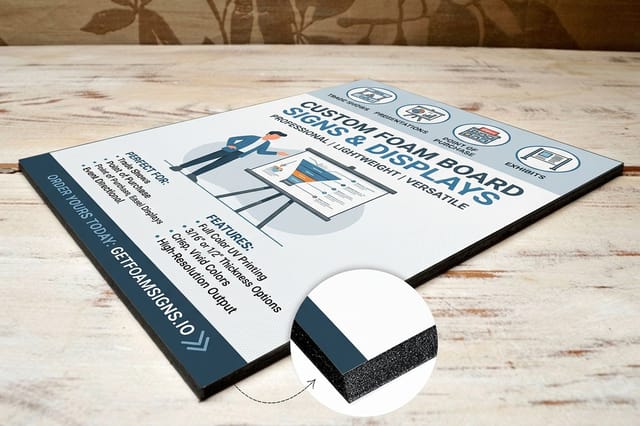
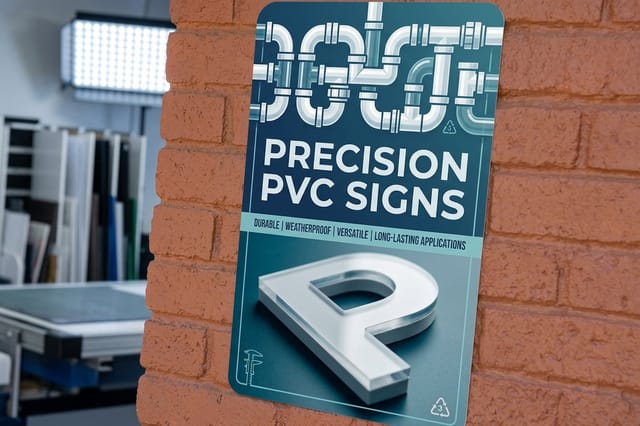

Explore more
Where to go next
By the numbers
Easel backed displays from 25 years of printing
Common Questions
Your easel back questions, answered
What is an easel back on a foam board sign?
It is a folding card kickstand with a self adhesive strip along its spine. You peel the liner, press the spine onto the back of the printed board, and fold the wing out so the board leans against it. There is no frame, no pole and no base plate, which is why it is the cheapest way to make a printed board stand on a table. The trade is stability: a frame holds the sign whatever happens, an easel back holds it only while the weight line stays inside the footprint the wing creates.
Where exactly should the easel back go on the board?
Centered left to right, and with the hinge about halfway up the height of the board. Centering matters more than people expect, because a wing that sits an inch off center makes the board rock on one corner and creep as the table gets bumped. If the board is wide and short, such as a 24 by 12 header, two wings spaced about a third in from each side beat one wing in the middle.
What size easel back do I need?
Pick a wing roughly half the height of the board. On an 11 by 17 portrait board that is a wing around 8 or 9 inches, and on an 18 by 24 board it is closer to 12 inches. A short wing forces a steep lean, and a steep lean pushes the weight line forward toward the front edge, which is exactly the geometry that tips. Longer wing, wider footprint, calmer sign.
Can a foam board easel sign go outside?
No. Two things go wrong. Foam core is paper faced over a foam center, so morning damp is enough to make the face lift and the board bow, and our guide on whether foam board is waterproof covers what that looks like after a few hours. The second problem is the wing: it is a piece of folded card holding a flat panel that acts like a sail, so it folds at the first gust. Outdoor table signs belong on PVC, and outdoor ground signs belong on coroplast with a stake.
Can I print both sides of a board that has an easel back?
You can print both sides, but you will only ever see one of them. The wing covers the middle of the reverse side, and the adhesive strip pulls the top paper layer off if you ever take it back off. If the sign genuinely needs two faces, use a table tent style piece or two boards back to back, and keep the easel budget for the stock instead.
How do I stop an easel sign from creeping forward on a registration table?
Three fixes, in order of how often they work. Put a strip of removable tape or a pair of adhesive dots under the front edge of the board so it cannot slide. Move it back from the table edge so a passing bag catches nothing. If it is still walking, the board is too big for the wing, and the answer is a second wing or a different display rather than more tape.
Get Started
Foam core signs and PVC signs both run 4 business days
Pick your size, upload the artwork, and we print foam core boards flat, sharp and rigid enough to hold a lean all day.
Legal Disclaimer
Gold Standard guarantees apply to all standard orders placed through 4over4.com. Price match requires verifiable proof of a competitor's published price for an equivalent product with matching specifications and turnaround time. Satisfaction guarantee covers manufacturing defects and print quality issues. Contact support with order number and documentation. On-time delivery rate based on tracked orders 1999 to 2026. Individual results may vary based on shipping carrier performance.
