
Foamboard vs Sintra Board Pros and Cons


Sofia is our design and templates voice, built from the knowledge of our production team, with over 20 years in printing.
A Sintra board is a rigid sheet of waterproof expanded PVC, a closed-cell plastic built for outdoor and long-term signs. Foamboard is a light, cheap, paper-faced board built for indoor, short-run displays, and water is the divider that everything else follows from.
Sintra board vs foam board, in one line: Sintra is a rigid sheet of waterproof expanded PVC that holds up outdoors and lasts for years, while foamboard is a lightweight polystyrene core faced with coated paper that suits indoor, short-term displays. Choose Sintra when the sign faces weather or heavy handling, choose foamboard when it needs to be light, cheap, and indoor, and reach for corrugated plastic when you want weatherproof on a budget. For a writable board, our dry erase version is a custom PVC sheet with a dry erase laminate, at any size.

Quick answer
The short answer before the deep dive
Sintra beats foamboard anywhere water or time is involved. Sintra is solid, waterproof expanded PVC that stays flat, prints sharp, and survives outdoors for years. Foamboard is a paper-faced foam core that is light and inexpensive but warps the moment it gets wet, so keep it indoors and short-term. If you need weatherproof on a tight budget, corrugated plastic is the smarter buy than either. 4OVER4.COM prints all three to your exact size, cut and finished to order.
What a Sintra Board Is When You Order One

A Sintra board is a sheet of expanded PVC, closed-cell and waterproof, printed and cut to the size you set. On our order form it is PVC rigid plastic, and the choices are short.
- Size. 13 sizes from 11 by 17 to 36 by 36 inches, or any custom size.
- Print. Full color on the front, or on both sides.
- Corners. Square, or rounded at a 1 inch radius.
- Time and proof. 4 business days, with a free online proof or straight to production.
What is Sintra board, and what is foamboard?

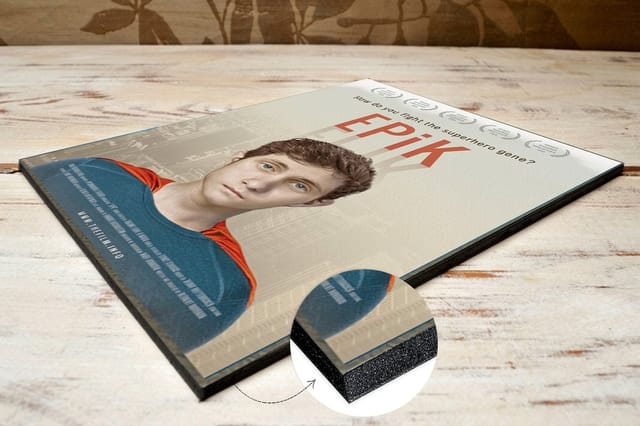
They look similar leaning against a wall, but the two boards are built nothing alike. Sintra is a brand of expanded PVC, a closed-cell plastic foam pressed into a smooth, solid sheet. There is no paper anywhere on it, so it is the same waterproof material edge to edge. Foamboard (also written foam board or foam core) is a slab of polystyrene foam faced on both sides with coated paper. That paper is what makes it light and cheap, and it is also its weakness.
The paper facer is the fault line in almost every decision that follows. Sintra can sit in the rain, get wiped down, and take a knock without giving up. Foamboard wants a dry room, gentle handling, and a short working life. If you want the tougher paper-faced option that lands between the two, our guide to gator board and foam board covers the wood-fiber upgrade in detail.
Both are staples of the sign world, and 4OVER4.COM prints on each of them across its rigid signs printing lineup. Knowing which board you are actually holding is the first step to a sign that lasts as long as you need it to.
Sintra board vs foamboard at a glance

Seven specs separate the two boards, from the material to the cost. The cross-section tells most of the story: Sintra is one continuous plastic body in gauges from 3mm up, while foamboard is a paper-foam-paper sandwich at 3/16 or 1/2 inch.
| Spec | Sintra, expanded PVC | Foamboard, foam core |
|---|---|---|
| Material | Closed-cell expanded PVC, solid plastic edge to edge | Polystyrene foam center between two coated paper facers |
| Waterproof | Yes. Nothing soaks in, edges do not fray, humidity does nothing to it | No. The paper facer drinks moisture, then warps and peels away from the foam |
| Thickness range | 3mm (1/8 inch) for counter and retail signs up to about 18x24 inches, 6mm (1/4 inch) for panels that span a frame, 10mm and thicker for dimensional and freestanding work | 3/16 inch is the everyday sheet, 1/2 inch for large mounted boards that need to stay flat |
| Weight | Heavier for its size, which is exactly what keeps it rigid and flat | Very light. One person carries a big sheet and hangs it with tape or standoffs |
| Outdoor life | Months to years outside with UV-stable inks or a laminate | Days. It is an indoor material, full stop |
| Print method | Printed full color direct to the sheet, then cut or routed without crumbling | Printed full color direct to the facer, cut clean with a blade |
| Cost | Rigid PVC board starts at $25, set by sheet size, thickness, quantity, and finishing such as rounded corners, drilled holes, or lamination | The cheapest board in this comparison, which is the whole argument for it |
In plain terms: pick Sintra when the sign faces weather, gets handled a lot, or needs to look sharp for a long time. Pick foamboard when the sign lives indoors, needs to be light and inexpensive, and only has to last through an event or a season. Corrugated plastic sits between them as the cheap weatherproof option. You can browse every substrate side by side on our printing materials hub to compare weight, rigidity, and use before you commit.
Sintra board: outdoor and indoor use
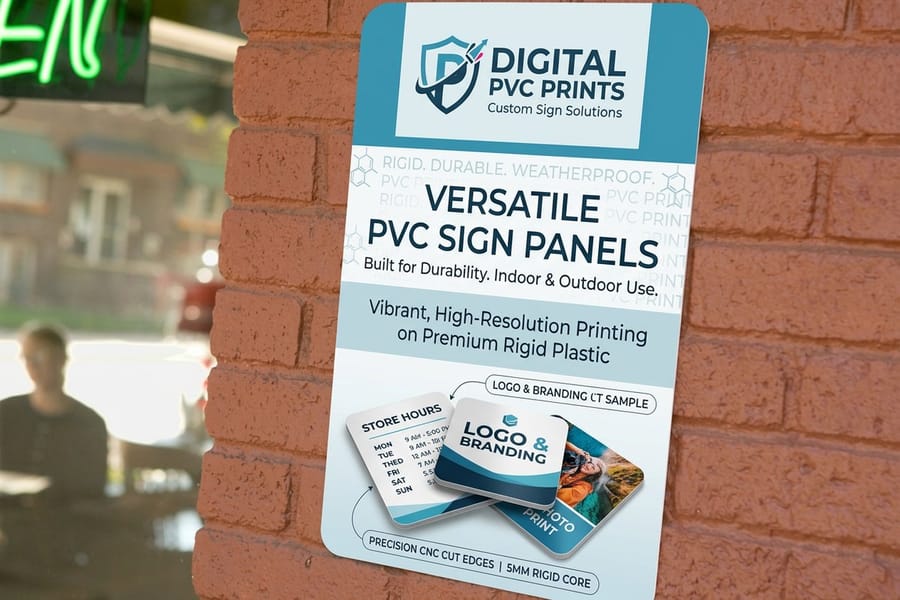
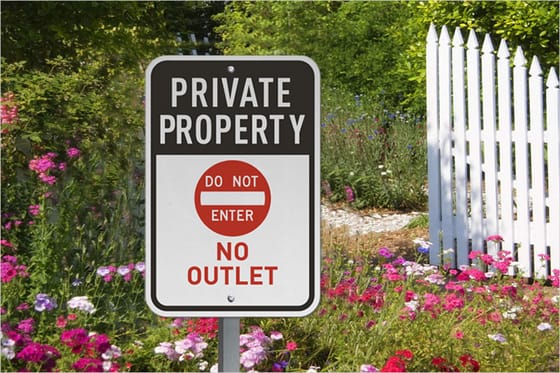
This is where Sintra earns its keep. Because the whole board is closed-cell PVC, moisture has nowhere to go. Rain, sprinklers, wash-downs, coastal humidity, none of it soaks in or swells the material. Pair the print with UV-stable inks or a laminate and a Sintra sign holds its color and its shape outdoors for months, often years.
Indoors, Sintra is just as at home. Its clean matte face reads well under retail lighting, and it stays flat on a wall without the dents foamboard picks up. Lobby signage, wayfinding, menu boards in a humid kitchen, point-of-sale displays that get bumped daily, all of it suits Sintra. Retailers lean on rigid signage for a reason, and the signage industry data tracks how much on-premise signs move foot traffic and recall.
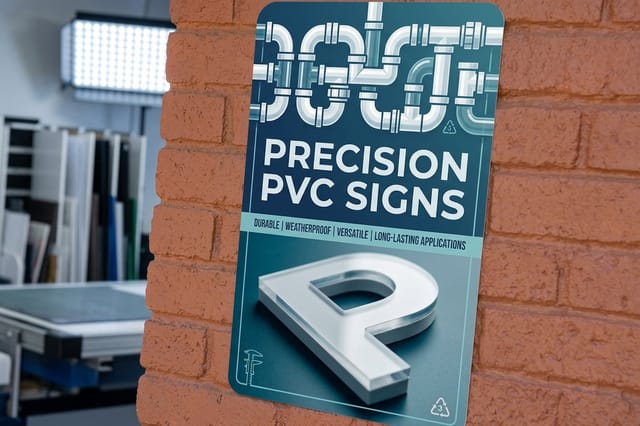
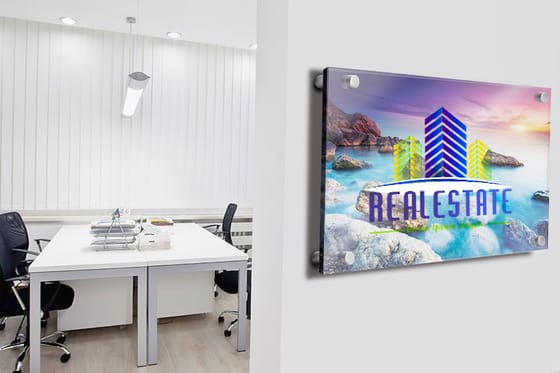
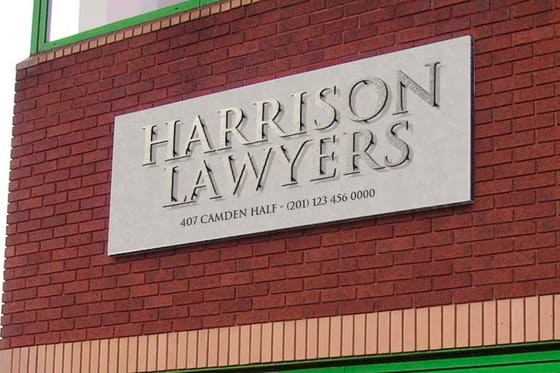
If your sign needs to survive a parking lot or a storefront, start with our PVC signs printing or configure a sheet of rigid PVC board to your exact size. Both are cut, drilled, and finished to order at 4OVER4.COM. The PVC signs video shows one being printed.
For a sign that has to take water, three boards are built for it, and each has its own specifics.
| Board | Sizes | Print and finish | Production |
|---|---|---|---|
| PVC rigid plastic and PVC signs | 11 by 17 to 36 by 36 in, or any size | Full color one or both sides, square or 1 inch rounded corners | 4 business days |
| Coroplast | 11 by 17 to 30 by 40 in, or any size | 4mm white corrugated plastic, one or both sides, H-stake optional | 3 business days |
| Reflective coroplast | Any size | 4mm corrugated plastic with a reflective film face | 4 business days |
Printing options and thickness for Sintra board
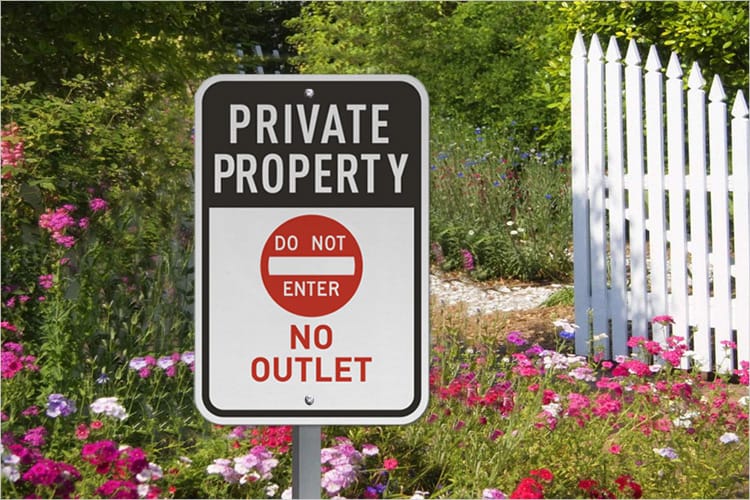
Sintra is a printer's favorite because it takes graphics several ways. Direct-to-substrate UV flatbed printing lays full-color artwork straight onto the surface with no laminating step. For long runs it can be screen printed, and for very large formats it wraps cleanly in printed adhesive vinyl. The smooth face means fine text and logos stay crisp, not fuzzy.
Thickness is where you tune the board to the job. Sintra is stocked from a thin 1mm all the way up to a structural 19mm, and the gauge you choose sets the rigidity.
For most signs, 3mm keeps small pieces rigid and cheap while 6mm carries larger panels without bowing. Go thicker only when the sign is freestanding or dimensional. You can see the full run of PVC options in the PVC printing collection, or add finishing like rounded corners and drilled holes when you order PVC signs.
Pros and trade-offs of Sintra board printing

Sintra earns its reputation, but it is worth knowing the give-and-take before you order.
- Waterproof and weather-ready. The closed-cell PVC never absorbs moisture, so it holds up outside where paper boards fail.
- Rigid yet light. It stays flat on a wall and resists dents, while weighing far less than metal.
- Clean, printable face. The smooth matte surface takes sharp UV and screen prints and hides fingerprints.
- Easy to fabricate. It cuts, drills, and routes into custom shapes and dimensional letters without crumbling.
The trade-offs: Sintra costs more than foamboard, a large thin sheet can sag in high heat if it is not braced, and as a PVC product it is not biodegradable. If you need the toughest, longest outdoor life of all, step up to metal with our aluminum signs printing. For most rigid signs, though, a made-to-order sheet of PVC board hits the sweet spot of durability and price.
Foamboard: outdoor and indoor use
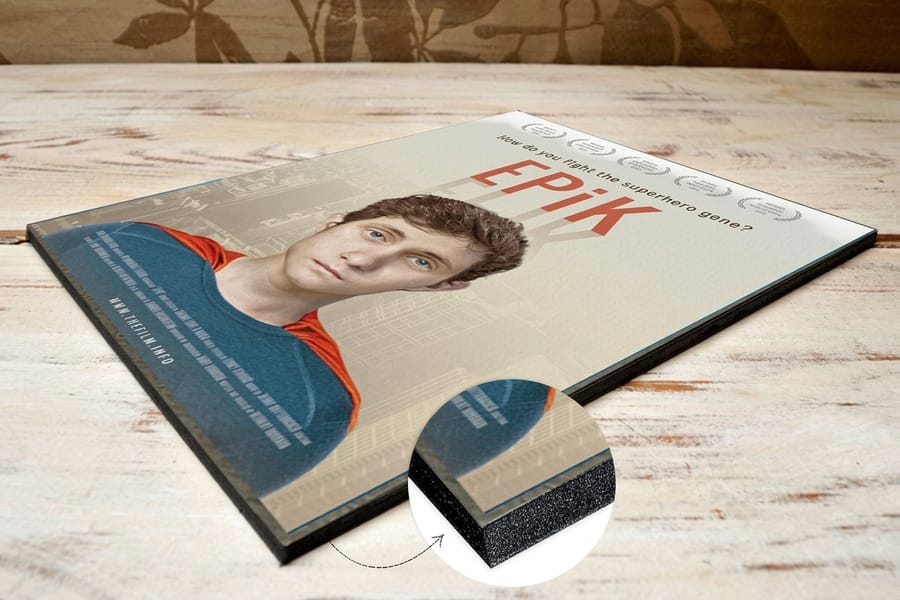
Foamboard belongs indoors, and it is very good there. It is feather-light, perfectly rigid for its weight, and inexpensive, which makes it the default for presentation boards, mounted photography, trade show graphics, and point-of-purchase displays. A large foamboard print is easy to carry, easy to pin or prop, and easy on the budget when you need a batch for one event.
Where it struggles is anywhere wet. The paper facer that keeps foamboard so smooth is the same layer that swells, ripples, and peels the moment it meets rain or high humidity. Leave a foamboard sign outside overnight and it often comes back curled. Treat it as a short-term, climate-controlled material and it rewards you. Ask it to face weather and it will not last.
For indoor displays and mounted prints, browse the foam core printing collection, or if you are wall-mounting artwork our guide on how to put a poster on a wall pairs nicely with a foam-mounted print.
Printing options for foamboard
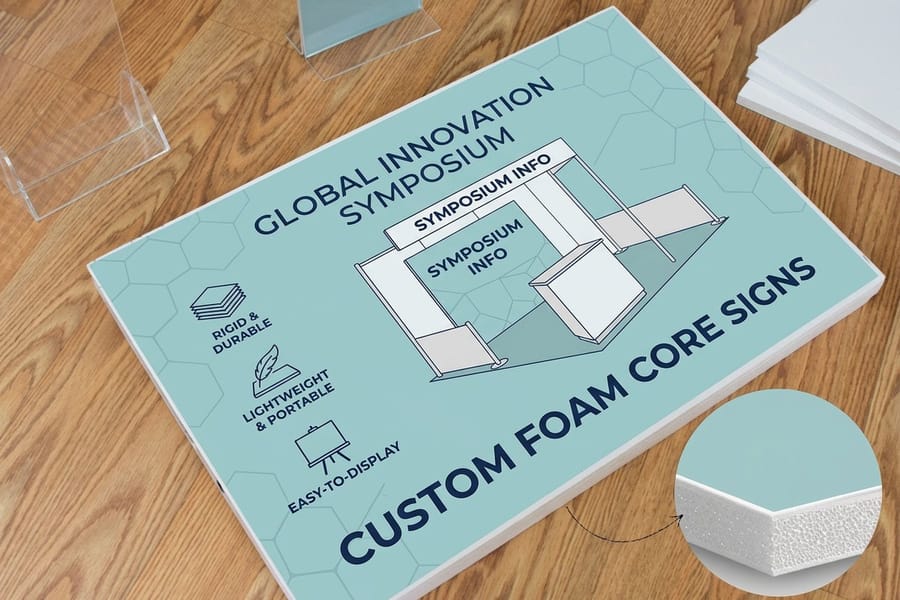
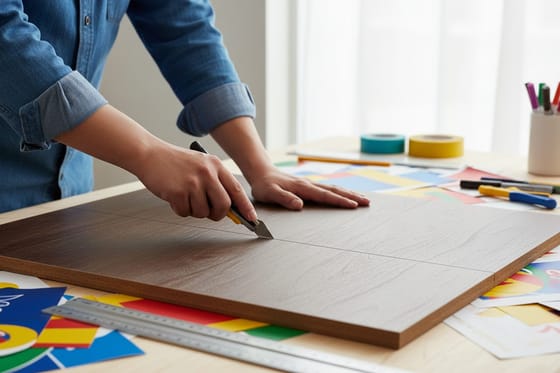
Foamboard prints beautifully for indoor work. The most common route is a full-color graphic printed and mounted to the board, giving you a smooth, edge-to-edge display panel. Direct UV printing works too, landing sharp text and images right on the coated face. Because the core is soft foam, the board also cuts with a simple craft knife, so custom sizes and quick trims are painless.
That easy handling is exactly why events and retail lean on it. A single afternoon can produce a stack of mounted signs, easel-backed displays, and directional boards for a show floor. Pair those with the rest of your booth using our marketing materials, and keep the finish matte so overhead lighting does not glare. When the job is indoor, light, and short-run, a printed sheet of foam core is hard to beat on price.
Which board wins where
Strip away the jargon and the choice is a few honest questions. Walk them in order and the right board picks itself.
- Will it live outside or get wet? Choose Sintra. If the budget is tight for outdoor, choose corrugated plastic instead of foamboard.
- Is it indoors, short-term, and light? Choose foamboard for presentations, mounted prints, and event displays.
- Does it need to look premium and last for years? Choose Sintra, and step up to aluminum only if it must survive the harshest exposure.
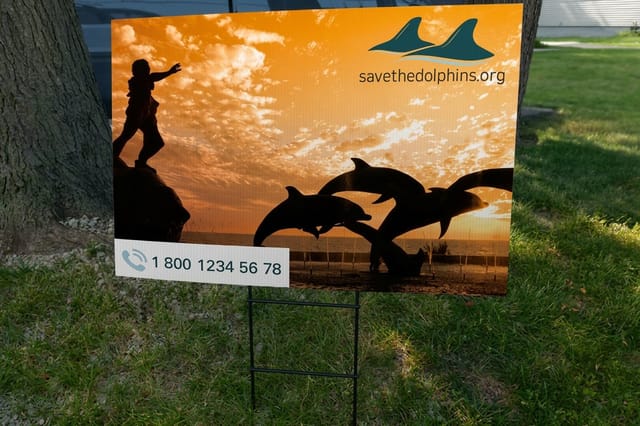
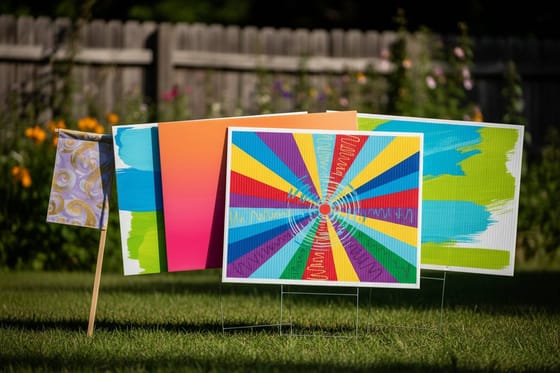
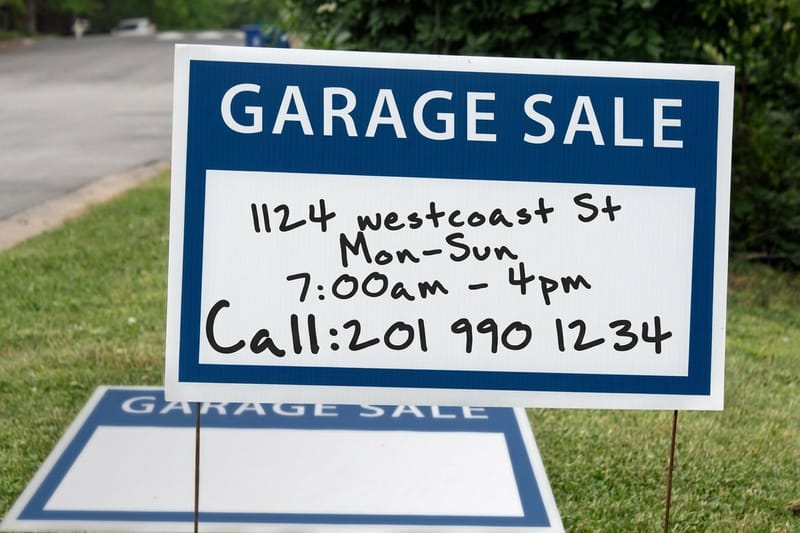
- Is it a temporary yard or lawn sign? Skip both and go corrugated plastic, the cheap weatherproof standard.
For that budget outdoor lane, our coroplast signs printing beats foamboard on durability at a similar price. For night visibility, coroplast posters with a reflective film come at any size, and the plastic coroplast signs video overview shows the board on press. If a rigid board is not the answer at all, our roundup of alternatives to signs weighs banners, decals, and posters for the same message. And for proof that the right substrate pays off, see how a crew turned printed boards into results in this yard sign case study. Whichever way you land, you can configure it to size and order it from rigid signs printing at 4OVER4.COM.
Alternatives to Sintra board
Sintra is a brand name, not a material, so the first thing to know is that a substitute is easy to find. Five boards cover almost every job Sintra would have done. Each one replaces something different, and reaches a different job.
- Another expanded PVC. Komatex, Celtec, and Palight are the same closed-cell expanded PVC in the same gauges, so any of them is a straight swap with no change to how the sign performs. That is exactly what you are ordering with our rigid PVC plastic and PVC signs: waterproof board from $25, 3mm for small signs, 6mm for panels that span a frame.
- Foamboard. The cheap indoor swap. Lighter, easier to cut, and the least expensive board here, but the paper facer warps the first time it meets moisture, so keep it to presentations, mounted prints, and event displays. Order it as foam core.
- Gator board. Foamboard with a hard wood-fiber veneer in place of the paper facer. It dents less and stays flatter across a big span, which makes it the pick for indoor displays that get moved and stored, though it is still not a wet-weather board.
- Corrugated plastic. The budget outdoor answer. Fluted polypropylene is weatherproof, takes a wire stake, and costs less than any rigid board, which is why yard and lawn signs are made of it. Configure it as coroplast.
- Aluminum composite. Two thin aluminum skins bonded to a plastic core. Heavier and dearer than Sintra, but it stays dead flat at large sizes and shrugs off years of exposure, so it is the step up for permanent exterior signage.
The short rule: swap Sintra for another expanded PVC when you simply need the material, coroplast when the sign is temporary and outdoors, foam core or gator board when it lives indoors, and aluminum composite when it has to survive outside for years. Every one of them can be configured to size and ordered from rigid signs printing.
Wally explains the board choice
Water is the whole decision
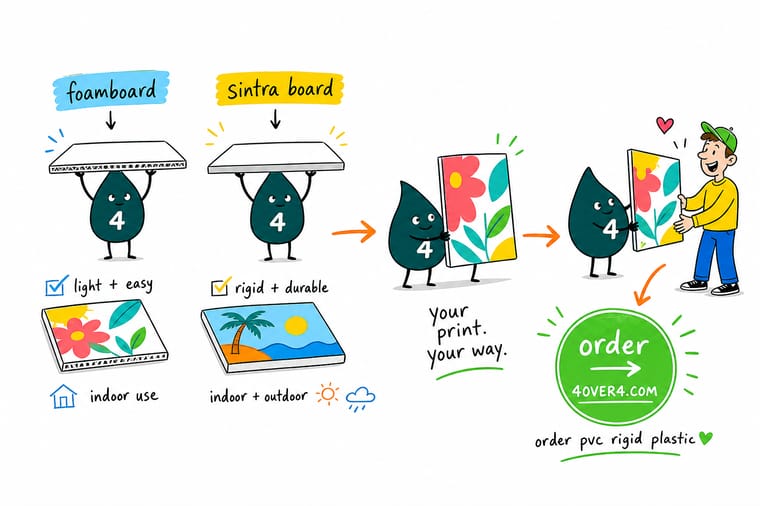
Wally keeps it simple: if the sign will ever meet rain, sprinklers, or a humid kitchen, reach for Sintra, the waterproof expanded PVC that stays flat for years. Save foamboard for the dry indoor jobs it was built for, like presentation boards and event displays. Need weatherproof without the premium price? Corrugated plastic is the budget pick. Tell 4OVER4 the size and the setting, and we cut the right board to match.
Order rigid PVC board →
Specs and pricing
Rigid PVC board specs and live pricing
Sintra-style expanded PVC is the board most rigid-sign buyers land on. PVC rigid plastic comes in 13 sizes from 11 by 17 to 36 by 36 inches or any size, printed on one or both sides with square or 1 inch rounded corners, and ships in 4 business days, with live specs and price-per-unit below.

| Quantity | Price Per Unit | Total |
|---|---|---|
| 1 | $25.00 | $25.00 |
Print it
Order PVC, coroplast and foam core signs at 4OVER4
Order PVC signs for anything that faces weather or handling, 4mm coroplast from 11 by 17 inches with an H-stake for the lawn, and 3/16 inch foam core for indoor displays that only need to last an event.
See it in use
Boards we cut and printed for signs






Explore more
Where to go next


By the numbers
Sintra from 1mm to 19mm, across 60+ materials
Common Questions
Common questions about Sintra board and foamboard
What is Sintra board vs foam board?
Sintra board is a rigid sheet of expanded, closed-cell PVC that is solid all the way through and completely waterproof. Foam board (foamboard) is a lightweight polystyrene core sandwiched between two sheets of coated paper. The short version: Sintra is a plastic board built to survive weather and handling, while foamboard is a paper-faced board built for light, indoor, short-term use. That difference in construction is what drives every other trade-off between the two.
Is Sintra better than foam board?
Outdoors, wet, or handled a lot: yes, and it is not close. Sintra is solid closed-cell PVC edge to edge, so rain and humidity do nothing to it, while a foamboard facer warps and delaminates the first time it gets wet. Indoors the answer flips. If the sign hangs in a lobby for a week or rides to one event, foamboard is lighter, cheaper, and easier to mount, and paying for PVC buys durability you will never use. Ask how long the sign has to live and where it lives, and the board picks itself.
What can I use instead of Sintra board?
Sintra is a brand of expanded PVC, not a one-of-a-kind material, so the closest substitute is another expanded PVC such as Komatex, Celtec, or Palight in the same 3mm and 6mm gauges, which is what our rigid PVC board is. Beyond a like-for-like swap: corrugated plastic if the sign is temporary and outdoors, foam core if it is indoors and light, gator board if you want foamboard that dents less and stays flat, and aluminum composite if it has to survive years of exposure without bowing.
What is Sintra board made of?
Sintra is a brand of expanded PVC, a plastic foam that is extruded into a smooth, uniform sheet with a fine matte surface. Because it is closed-cell PVC and not paper-wrapped, moisture cannot soak in, the edges will not fray, and the face takes ink cleanly. That same PVC makeup is why it stays flat, cuts and routes without crumbling, and holds up outdoors far longer than a paper-based board.
Is Sintra board or foamboard better for outdoor signs?
Sintra wins outdoors, and it is not close. Its waterproof PVC body handles rain, humidity, and temperature swings, and with UV-stable inks or a laminate it keeps color for months to years outside. Foamboard is an indoor material. Once its paper facer meets moisture it warps and delaminates, so a foamboard sign left outside usually fails within days. If the budget is tight and the sign lives outside, corrugated plastic is the better value than either.
How thick does PVC need to be for an outdoor sign?
Match the gauge to the size and the mounting. For small counter and retail signs up to about 18x24 inches, 3mm (1/8 inch) stays rigid and keeps the price low. For larger wall panels, directional signage, and anything that spans a frame, 6mm (1/4 inch) resists flexing. Reserve 10mm and thicker for freestanding letters, dimensional signage, or pieces that need real structural presence. When in doubt, go one step thicker for a large span so the board does not bow.
What does Sintra board cost and how is the price set?
At 4OVER4.COM, rigid PVC board starts at $25, and the live price is driven by four things: sheet size, board thickness, the quantity you order, and any finishing such as rounded corners, drilled holes, or lamination. Bigger sheets and thicker gauges cost more, while quantity brings the per-unit price down fast. The configurator on each product page updates the total as you change those options, so there is no guessing before checkout.
Can you print full color directly on Sintra and foamboard?
Yes. Both boards accept direct-to-substrate UV flatbed printing, which lays full-color, edge-to-edge graphics right onto the surface with no separate mounting step. Sintra can also be screen printed or wrapped in printed vinyl for large runs. The print quality on the two boards is comparable out of the gate, so your choice is where the sign lives and how long it needs to last, not how sharp the artwork looks.
Get Started
Order PVC signs, printed in 4 business days
Pick your size and thickness, drop in your artwork, and we print a crisp, made-to-order Sintra, coroplast, or foam core sign built for exactly where it will live.
Legal Disclaimer
Gold Standard guarantees apply to all standard orders placed through 4over4.com. Price match requires verifiable proof of a competitor's published price for an equivalent product with matching specifications and turnaround time. Satisfaction guarantee covers manufacturing defects and print quality issues. Contact support with order number and documentation.
