
Is Foam Board Waterproof? What Survives Rain and What Does Not


Tobias is our voice for cutting, binding and large format, built from the knowledge of our production team, with over 20 years in printing.
Foam board is a paper-faced indoor material, and rain takes it apart from the edges in. The failure sequence, the boards that do survive weather, and what each one costs all follow.
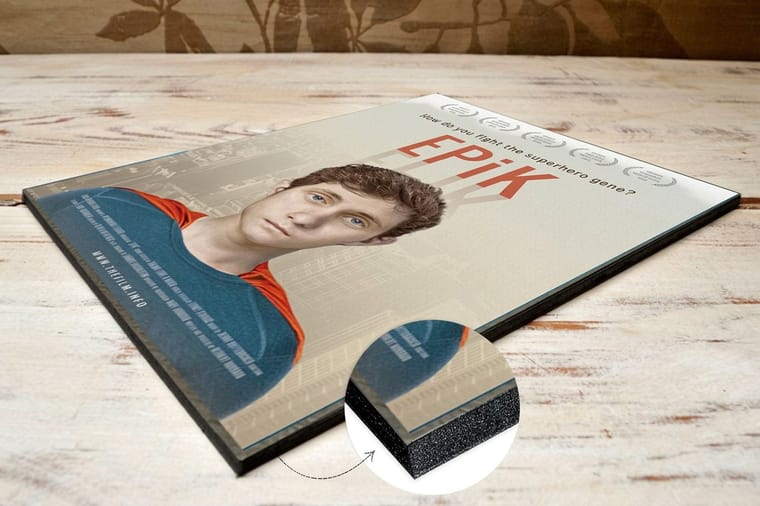
No, standard foam board is not waterproof. The polystyrene core resists water, but the clay-coated paper liner bonded to each face absorbs it, swells, and bows the board, usually within hours of getting wet. The material sold as waterproof foam board is almost always expanded PVC, a closed-cell plastic sheet with no paper on it. For anything that lives outside, print on PVC rigid plastic from $25, coroplast from $25, or aluminum from $36, and keep foam core from $49.99 for indoor work.
Quick answer
The foam is fine. The paper on it is not.
Foam board fails in water at the liner, not at the core. Extruded polystyrene is closed-cell and ignores moisture, while the clay-coated paper glued to both faces drinks it, expands against a core that does not, and curls the board. Cut edges leave that paper open on all four sides, so laminating the front changes very little. If the sign has to face weather, move to a substrate with no paper in it: coroplast for stakes and short campaigns, PVC for flat mounted signage, aluminum when it is permanent.
What Water Actually Does to a Foam Board
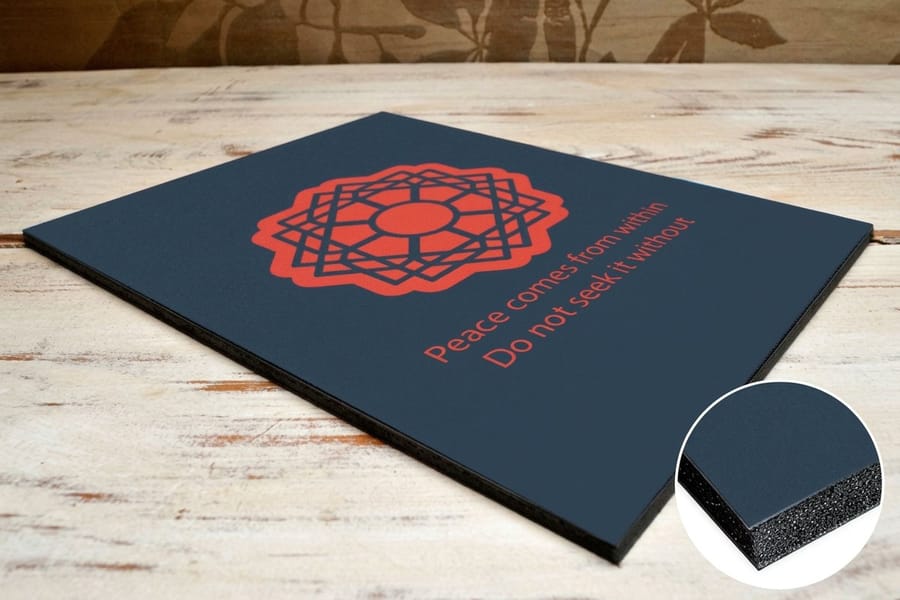
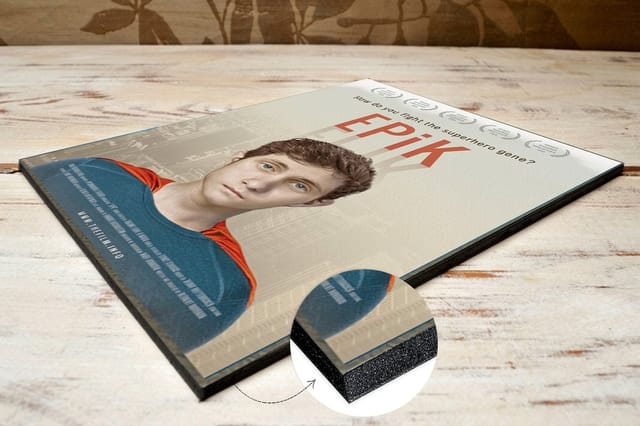
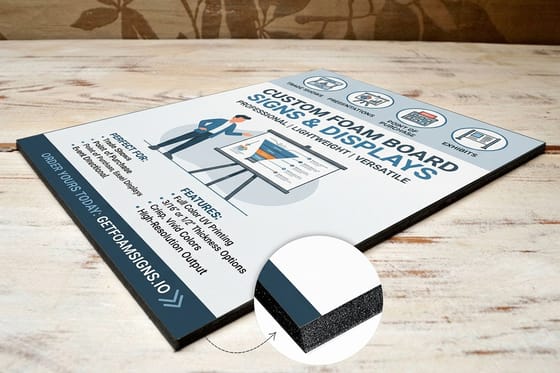
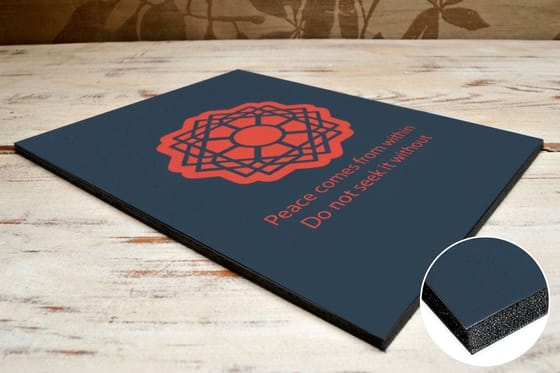
Take the sheet apart in your head and the failure is obvious. Foam board is three layers: a clay-coated paper liner, a slab of extruded polystyrene, and a second paper liner. Only the middle layer is plastic. The two surfaces you print on, handle, and cut through are paper.
Water finds the paper at the edges. A trimmed board leaves raw liner and open foam all the way round, and that perimeter wicks like a paper towel. The wet liner expands. The foam under it does not. One face grows, the other stays put, and the board curls toward whichever side got wetter. On a 24 by 36 that curl is visible from across a room within a couple of hours.
Then the adhesive lets go. The bond between liner and core is a thin glue line that was never designed for a soaked substrate, so the paper starts lifting at the corners and peels in sheets. If the board was direct printed, the ink film stays whole while the liner beneath it ripples, which is why a rained-on sign often looks bubbled rather than washed out.
None of this needs a downpour. Sustained humidity does the same job slowly. Boards stored on edge against a cold basement wall will bow in a month with no liquid water anywhere near them. That is the honest limit of foam core, and it is the reason we treat it as an indoor product regardless of what the print looks like when it ships.
So foam board can get wet once, and it will not come back flat. If the sign will see rain, sprinklers or a damp wall, order it on a board built for water from the start.
| Board | Sizes and face | Gets wet? | First run and time |
|---|---|---|---|
| Foam core | 16 x 20 to 40 x 60 inches or custom, semi gloss, hi gloss or uncoated face | No, indoor only | 1 sign, 4 business days |
| PVC rigid plastic | 11 x 17 to 36 x 36 inches or custom | Yes | 1 sign, 4 business days |
| Coroplast | 11 x 17 to 30 x 40 inches or custom, 4mm white | Yes | 1 sign, 3 business days |
| Aluminum signs | 12 x 18, 18 x 24 or 24 x 36 inches, .040 inch aluminum | Yes | 1 sign, 4 business days |
The Waterproof Foam Board You Are Probably Looking For Is PVC

Type waterproof foam board into a search box and most of what comes back is expanded PVC. That is not a trick, it is a naming collision: expanded PVC really is a foam, a closed-cell plastic foam, it just has no paper on it. Sintra, Komatex and Palight are trade names for the same family.
The practical difference is that there is nothing in a PVC sheet to absorb anything. Cut it, drill it, hose it down, leave it through a winter, and the material is unchanged. It takes direct UV printing well, it stays rigid at sign sizes where foam board would need a frame, and it cleans with soap and water, which matters for menu boards, wayfinding, and anything a customer touches. Our PVC rigid plastic comes in 13 sizes from 11 x 17 to 36 x 36 inches or a custom size, printed from a single sign in 4 business days. For the full rundown, read what is a pvc sign? a guide to custom pvc board signs.
Its own limit is heat, not moisture. PVC has meaningful thermal expansion, so a long panel bolted tight in full sun will push against its fixings and bow. Drill the mounting holes oversized or slotted, leave the fasteners a fraction loose, and the panel is free to move. That single detail separates a flat sign at year three from a rippled one.
PVC rigid plastic starts at $25, the same entry price as coroplast, so cost is rarely the deciding factor between them. The foamboard versus Sintra breakdown covers the weight and finish differences if you are choosing between the two for an indoor job as well, and the pvc rigid plastic story shows finished panels.
How to Pick the Right Board in Five Steps
Material selection is not a taste question. Answer these in order and the board picks itself.
- Say where it lives, honestly. Covered patio counts as outdoors. So does a lobby entrance that catches sideways rain, and a garage. If any part of the answer involves weather, foam board is out at this step.
- Set the lifespan. One event, one season, or years. A weekend booth sign and a parking rule sign are not the same purchase, and paying for aluminum on a one-day job is as wasteful as putting foam board outside.
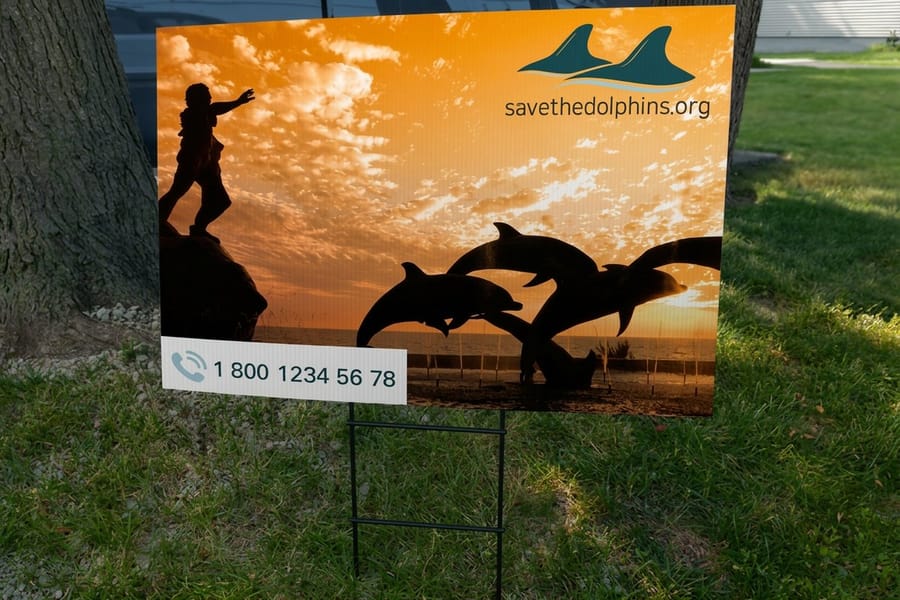
- Decide how it is held up. Ground stakes point to coroplast, and the flutes must run vertically for the stake legs to bite. Wall mounting or a frame points to PVC or aluminum. An easel indoors is foam board territory.
- Check the span. Anything past roughly 36 inches unsupported needs real rigidity. Coroplast flexes across the flute direction, PVC holds better, aluminum holds best.
- Then look at price. Foam core from $49.99, coroplast from $25, PVC rigid plastic from $25, aluminum signs from $36. Money is the last filter, not the first, because the cheap board that fails in week one is the expensive one.
| Board | Waterproof | Outdoor life | Where it wins | Starts at |
|---|---|---|---|---|
| Foam core | No, paper faced | Indoor use only | Light, cheap to ship, crisp on an easel or a wall for presentations and events. | $49.99 |
| Coroplast | Yes | A season or two | Yard and stake signs, temporary campaigns, high quantities. | $25 |
| PVC rigid plastic | Yes | Several years | Wall mounted signage that has to stay flat and wipe clean. | $25 |
| Aluminum | Yes | Longest | Permanent signs, parking and traffic rules, long unsupported spans. | $36 |
For a stake sign specifically, the quantity break usually decides the order size before the material does. The guide to coroplast yard sign costs and stakes has the arithmetic, and aluminum versus coroplast versus PVC compares the three weatherproof options head to head.
If You Already Have Foam Board and It Has To Go Outside
Sometimes the boards are printed and the event is Saturday. You cannot make them waterproof, but you can get through a day.
Seal the edges first, because that is the entry point. Clear silicone run along the perimeter with a fingertip, or a wrap of gloss vinyl tape, closes the raw paper. Then cover the faces: a laminate applied at print time is far better than anything you can add later, and it has to reach past the trim line to be worth doing. Keep the board off the ground. A board leaning on wet grass wicks upward from the bottom edge faster than rain gets in from above.
Set expectations from there. Sealed and laminated foam board handles a few hours of drizzle and an outdoor booth on a dry day. It does not handle overnight rain, sprinklers, or a week of humidity, and once a sealed board does take on water it dries slowly and stays bowed. Plan on it being a single-use sign. For anything past that day, reprint the artwork on 4mm coroplast from 11 x 17 to 30 x 40 inches in 3 business days, or on PVC rigid plastic in 4.
If the same artwork will be needed again, reprint it on a weatherproof board and keep the foam version indoors. A vinyl banner is often the cheaper answer for a temporary outdoor message anyway, since outdoor banners roll up and store flat. Our guide to advertising with large format outdoor signs covers when to reach for a banner instead of a rigid panel, and the full range sits in signs and banners.
Wally explains the puddle test
The core is plastic, the skin is paper, and the skin loses
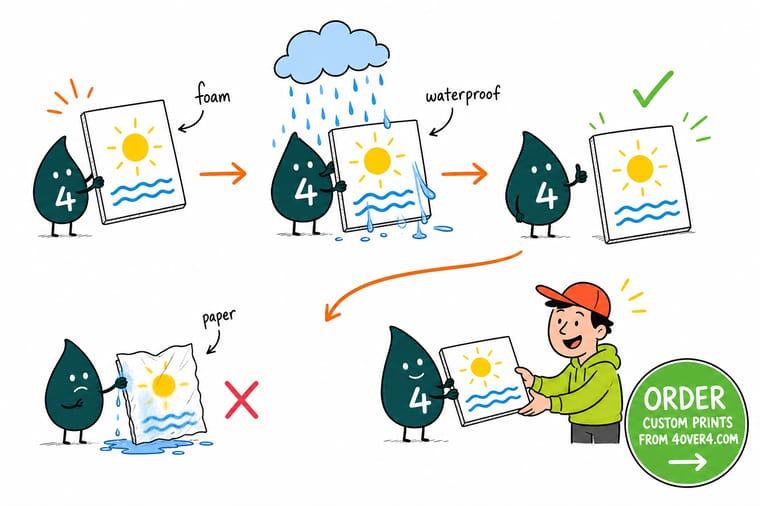
Wally leaves two signs out in a shower. The foam board drinks water through its cut edges, the paper liner swells against a core that will not move, and by morning the board is bowed with the print rippling. The PVC panel next to it is a single closed-cell sheet with nothing to absorb, so he wipes it down and hangs it back up. Keep foam board for the easel indoors. Send PVC, coroplast or aluminum out into the weather.
Order PVC rigid plastic signs →
Specs and pricing
Foam core, PVC and coroplast, sizes and starting prices
Compare the indoor board against the two weatherproof ones, with live size and quantity options and starting prices straight from the 4OVER4.COM configurator. Foam core runs 16 x 20 to 40 x 60 inches, PVC rigid plastic 11 x 17 to 36 x 36 inches and coroplast 11 x 17 to 30 x 40 inches, each from a single sign.



Print it
Order a board that matches where the sign lives
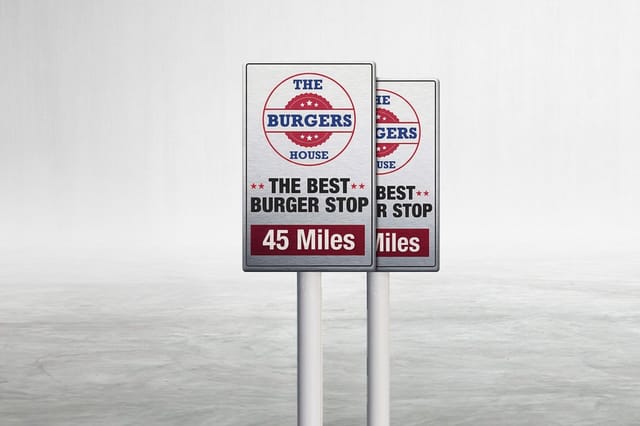
Indoors and dry, foam core from $49.99. On a wall that gets wet, PVC rigid plastic from $25. Outside for years, .040 inch aluminum signs from $36 at 12 x 18, 18 x 24 or 24 x 36 inches.


Explore more
Where to go next
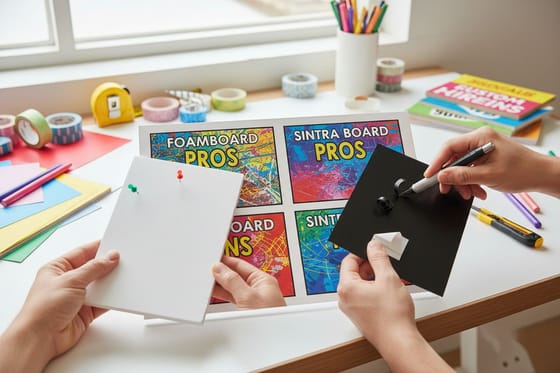
Weigh foam core against Sintra PVC, compare aluminum, coroplast and PVC for outdoor jobs, and check standard foam board sizes before you order.


By the numbers
Foam board in a 25+ year sign catalog
Common Questions
Foam board and water, answered
Is foam board waterproof?
No. Standard foam board, also sold as foam core, is a sheet of extruded polystyrene sandwiched between two clay-coated paper liners. The foam itself is closed-cell and does not absorb water, but the paper on both faces does. Once that liner takes on moisture it expands while the foam underneath stays the same size, and the board curls. Nothing about the printed surface changes that, because the liner is doing the absorbing from behind and from the edges.
What actually happens to a foam board sign left in the rain?
It happens in a predictable order. Water soaks the exposed paper at the trimmed edges first, so the perimeter softens and swells within an hour or two. The board then bows, usually toward the wetter face. If the sign was direct printed the ink layer stays intact but the liner beneath it lifts, which shows up as bubbles and ripples. Left overnight, the glue bond between liner and foam gives up and the paper peels away in sheets. A board that goes through one heavy shower is rarely presentable the next morning.
Is PVC foam board the same thing as foam board?
No, and this is where most of the confusion starts. Expanded PVC, sold under names like Sintra and often called PVC foam board, is a closed-cell plastic sheet with no paper on it at all. It is waterproof through its whole thickness, it can be hosed down, and it lasts years outdoors. Paper-faced foam board is an indoor presentation material. Both get called foam board in listings, so read the material line rather than the product name. Our side by side breakdown in the guide to foam core versus PVC signs walks through both.
Can I seal or laminate foam board to make it waterproof?
You can slow it down, not stop it. A gloss or matte laminate over the print face keeps splashes off the front, and a bead of clear silicone or edge tape around the perimeter closes the obvious entry point. That combination buys you an afternoon of light drizzle at an outdoor event. It does not survive a night of rain, sprinklers, or a humid week, because the back face is still paper and any pinhole in the edge seal lets moisture travel along the liner. If the sign has to live outside for more than a day, change the board rather than sealing it.
What is the cheapest waterproof sign board?
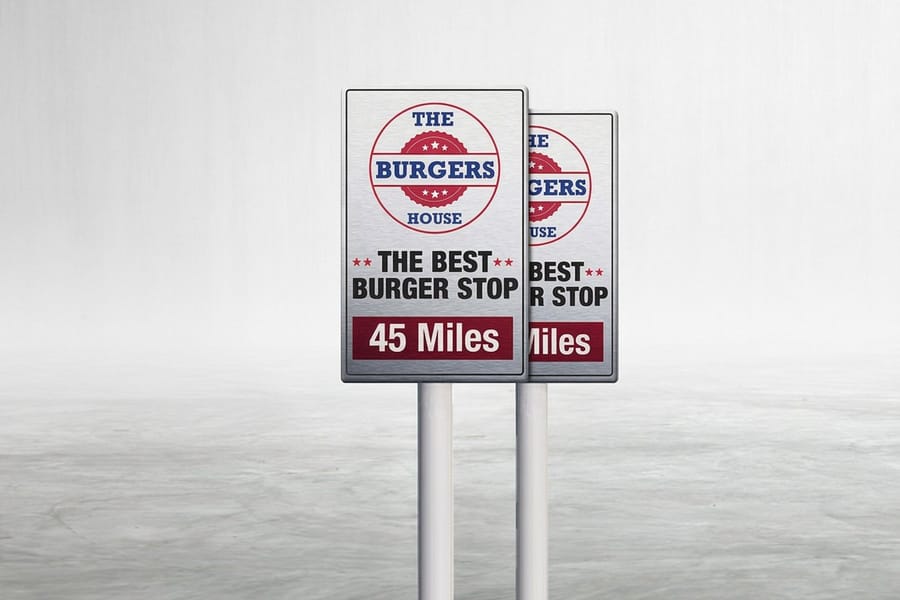
Coroplast, at $25 to start. It is corrugated polypropylene, the same fluted plastic used for yard signs, and water simply runs through the flutes and out the open ends. PVC rigid plastic also starts at $25 and is the better pick when the sign is mounted flat on a wall or needs to stay rigid at larger sizes, because coroplast flexes across the flute direction. Aluminum signs start at $36 and are the choice when the sign is permanent.
Will foam board warp indoors?
It can, if the room swings in humidity. Foam board is stable in a conditioned office or a gallery. It is not stable in a garage, a basement, an unheated storage room, or anywhere it leans against a cold exterior wall. Larger boards fail sooner because there is more span to bow across, so a 24 by 36 shows it long before an 11 by 17 does. Store boards flat and off concrete floors, not on edge against masonry.
Does printing directly on foam board make it more water resistant?
Marginally, and only on the printed face. Direct UV printing lays a cured ink film over the top liner, which repels a spilled drink better than bare paper. The back liner and all four edges remain untreated, and those are the surfaces that let water into the sandwich. Treat direct printing as a durability upgrade for handling and scuffs, not as weatherproofing.
How long will styrofoam last outside?
Not long in foam board form: a trimmed 24 by 36 foam board sign curls visibly within a couple of hours of rain, and even sealed and laminated it handles a few hours of drizzle and is a single-use sign. The polystyrene core is not the weak point, the paper liners are. For weeks outside, print on 4mm coroplast or PVC rigid plastic, both from $25.
Get Started
Printing a sign that has to face the weather?
Pick coroplast for stakes, PVC for flat mounted panels, aluminum when it is permanent, and keep foam core for the indoor easel. We print all four from the same file.
Legal Disclaimer
Gold Standard guarantees apply to all standard orders placed through 4over4.com. Price match requires verifiable proof of a competitor's published price for an equivalent product with matching specifications and turnaround time. Satisfaction guarantee covers manufacturing defects and print quality issues. Contact support with order number and documentation.
