
How to Size, Choose and Apply Envelope Sticker Seals


Sizes that match real envelope flaps, what clear film and metallic stock each do to your ink, and the application order that keeps 150 envelopes straight.
A 2 inch round seal is the default for A7 invitation envelopes, and a 1.5 inch seal suits A2, A6 and #10 business envelopes. Centre it on the flap point so half lands on the flap and half on the envelope body. Clear film lets the envelope colour show through the ink, which reads beautifully on pale stock and disappears on navy or kraft. Metallic stock blocks the envelope and turns every ink laid over it into a tint of silver or gold.
Quick answer
Size to the envelope, centre on the flap point
An envelope seal only works when half of it sits on the envelope body. Two inches for an A7 outer envelope, 1.5 inch for A2, A6 and #10, 2.5 inch when two names and a date have to fit. Clear film prints without white behind the ink, so the envelope colour shows through and dark stock kills the contrast. Metallic stock is opaque and reflective, and it converts every ink over it into a metal tint. Seal the gum line first either way, because sticker adhesive alone will not hold a weighted suite through mail sorting.
Seal Sizes and Shapes That Fit Real Envelopes
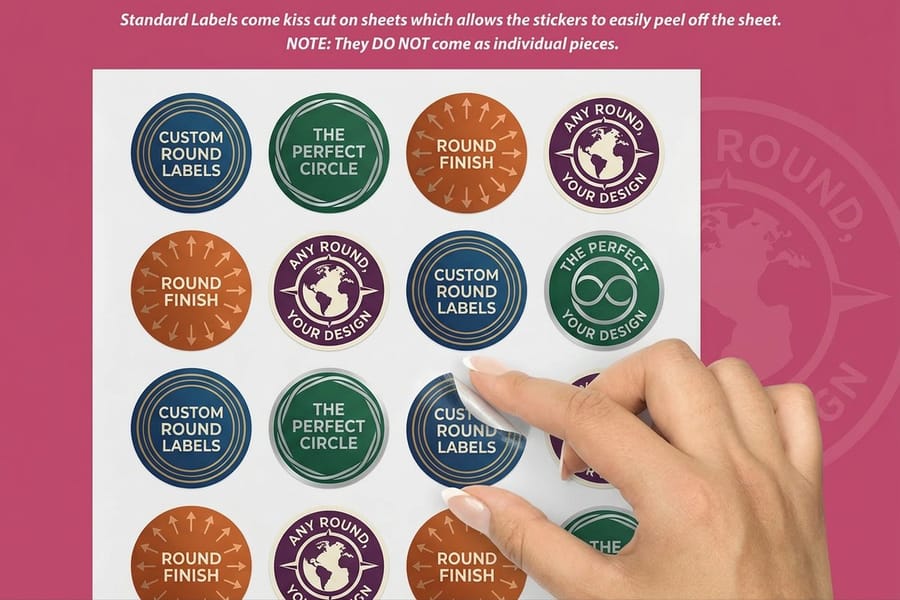
Seal size is decided by the envelope, not by the artwork. Measure the height of the envelope back and keep the seal under roughly a third of it. Past that the sticker stops reading as a seal and starts reading as a label somebody stuck on.
| Seal size | Envelopes it suits | What fits on it | Watch out for |
|---|---|---|---|
| 1.5 in | A2 and A6 reply envelopes, #10 business envelopes. | A monogram, initials, or a small mark. | Type under 6 point on a 1.5 inch circle is unreadable at arm’s length. |
| 2 in | A7 outer envelopes, A9, most 5 by 7 suites. | A monogram plus a date, or a logo plus a short line. | The default. Centre it on the flap point or the crookedness shows. |
| 2.5 in | Square 6.5 inch envelopes, presentation and folder envelopes. | Two names, a date, and one short line of text. | Large circles trap air. Press from the centre outward, not from an edge. |
| Custom shape | Any of the above, when the mark is not round. | Whatever the outline is, crest, leaf, scalloped wax look. | Thin points lift first. Keep the cut path an eighth of an inch clear of artwork. |
Round is the default for a reason that has nothing to do with taste. A circle has no corner to catch on a sorting roller or a finger, and it centres on the flap point by eye without a jig. If you want the exact diameters we cut and what each one is used for elsewhere, the round sticker sizes guide lists the full ladder, and the A7 envelope dimensions explain why 2 inches keeps coming up.
Order the seals a size apart from your reply envelopes if you are sealing both. The same 2 inch circle that looks measured on an A7 looks oversized on an A2, and guests notice the mismatch before they notice the monogram. Our round stickers start at $23.88, so running two diameters costs less than most people assume.
Clear Versus Foil Seals, and Where Each One Fails
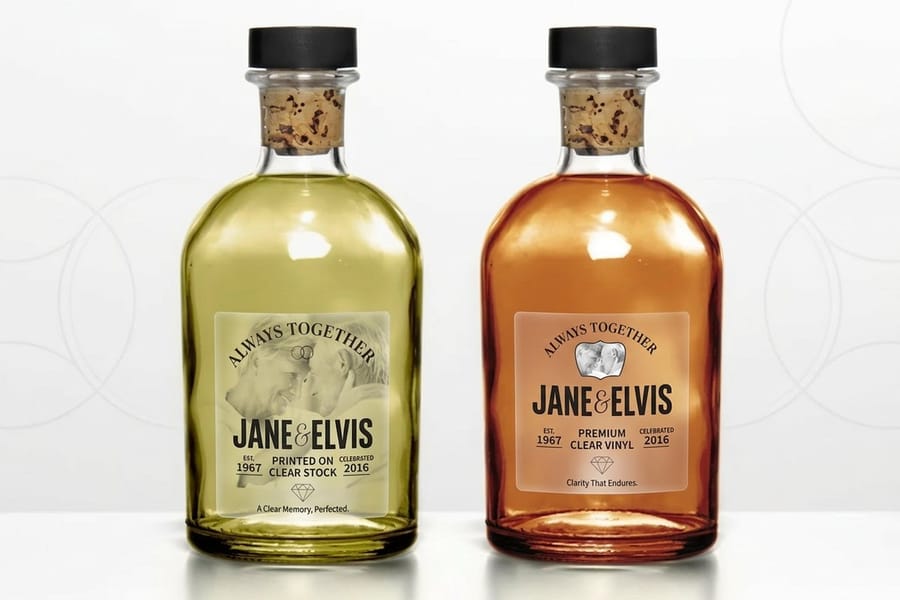
The two finishes solve opposite problems. A clear seal is meant to disappear so the envelope colour and the ink read as one surface. A foil or metallic seal is meant to interrupt the envelope and catch light. Choosing wrong is the most common reason a seal arrives looking nothing like the proof on screen.
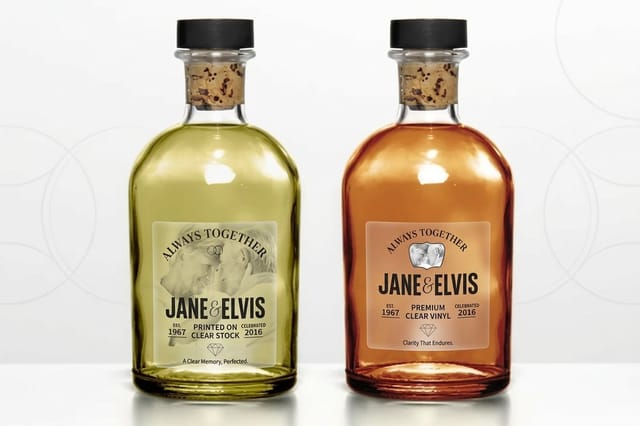
Clear film has no white behind the ink. This is the part that surprises people. The press lays ink onto transparent stock, and whatever is under the sticker mixes with it. On an ivory or white envelope a clear seal with charcoal type looks printed directly onto the paper, which is the whole point. On a navy or kraft envelope that same seal loses most of its contrast and the type goes muddy. If you need colour to hold on a dark envelope, either specify a white underprint or move to an opaque stock. Our clear stickers start at $25 and are the right call on pale envelopes.
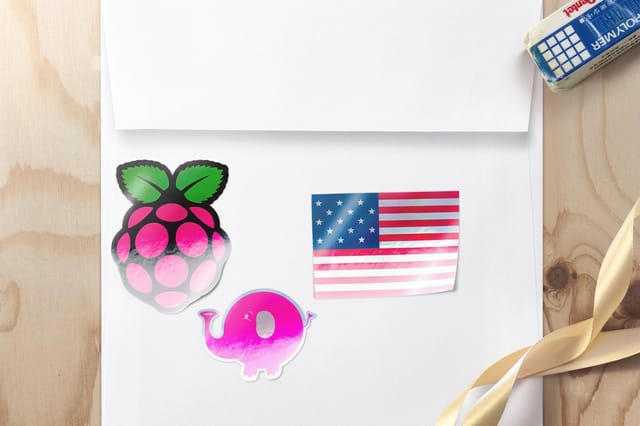
Metallic stock changes every colour printed on it. Metallic seals are printed on a silver substrate, so unprinted areas show as bright metal and inks over the top become tints of that metal. Yellow over silver reads gold. Light blue reads steel. Anything pale reads metallic rather than pastel, and true white cannot be printed at all unless white ink is added. Metallic stickers start at $108.75 and are the closest flat equivalent to a wax seal, without the thickness. The foil sticker paper guide covers how ink behaves on that stock in more detail.
The failure modes are different too. Clear seals show every trapped air bubble because there is nothing opaque to hide it, so they are less forgiving to apply by hand. Metallic seals show fingerprints, and the reflective surface creases visibly if the seal is bent over the flap edge rather than laid flat. On a textured or heavily laid envelope stock, both struggle: the adhesive only touches the high points of the texture and the edges lift within a day. If your envelopes are cotton or felt-finish, test one seal before you buy 200. Printing on transparent stock has its own file setup rules worth reading first.
Applying Seals So They Hold and Sit Straight
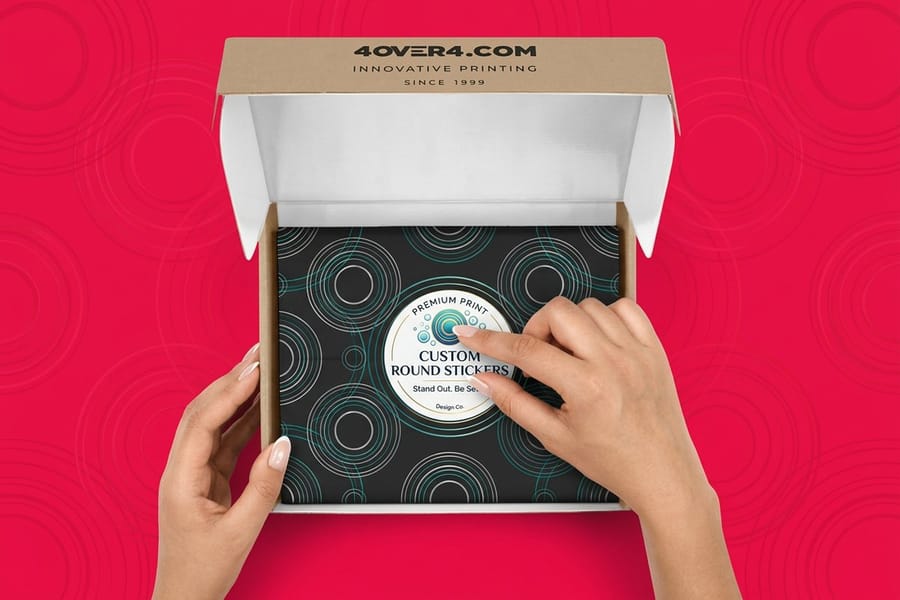
Sealing 150 envelopes is an assembly line, and the order of operations matters more than the technique. Address and stuff every envelope first. Seal the gum line. Only then place the stickers, so a jammed printer or a misspelled name never wastes a sealed envelope.
Line the seal up on the flap point, not on the flap. Half the circle sits on the flap and half sits on the envelope body, which is what makes it hold anything. Bring the sticker down centre first, touch it to the paper at the middle, then press outward with a thumb in two strokes. Coming in from one edge is how you get a crescent of trapped air on gloss stock. A shift of an eighth of an inch off centre is visible on a 2 inch seal, so if you are doing a large run, cut a scrap of card as a spacing gauge instead of trusting your eye at envelope 90.
Adhesive tack drops when it is cold. If the box came off a truck in winter and sat in a garage, let the stickers and the envelopes reach room temperature before you start, or the edges lift overnight. Handle metallic seals by the edge, since the reflective surface holds a fingerprint. And do not run a sealed envelope back through a laser printer for addressing, because the fuser heat softens the adhesive and can shift the seal.
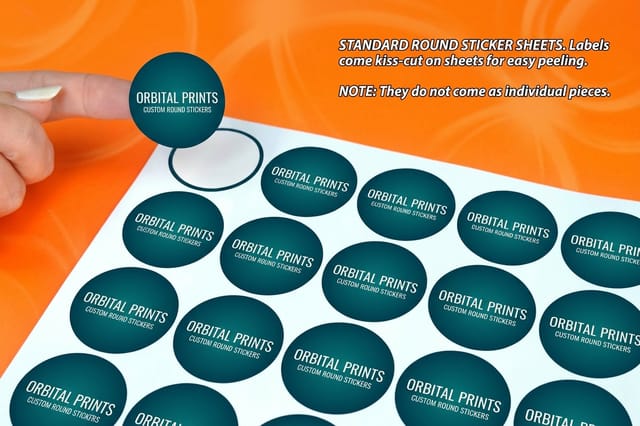
Format matters at volume. Sheets are fine for 50 envelopes and slow at 300, where a roll peels faster because you are pulling one continuous strip rather than picking circles off a grid. If you are laying out your own artwork rather than ordering a set design, the sticker sheet layout guide covers gutters and bleed, and there are correctly sized starting files in the blank template library.
Where a Printed Seal Earns Its Place
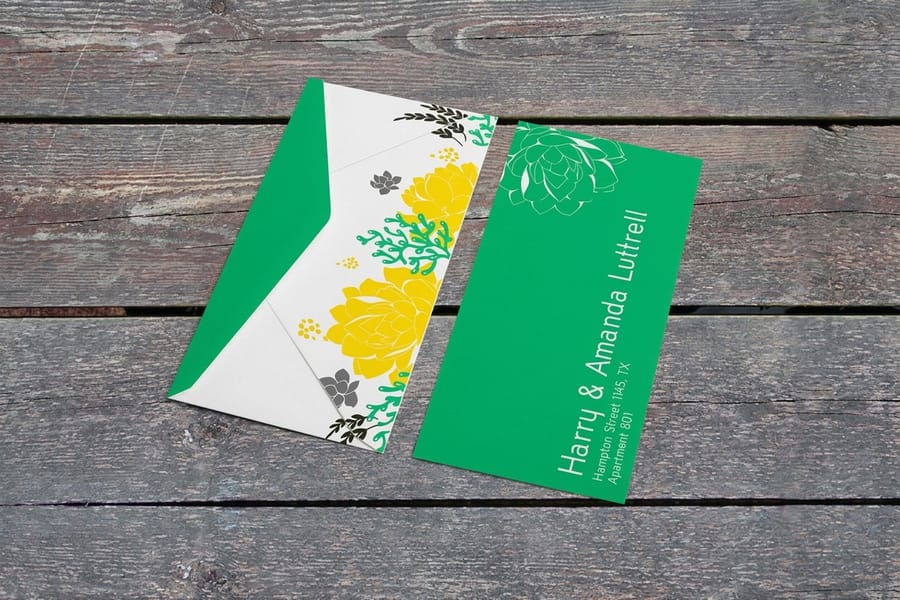
The seal is the last thing the recipient touches before they open the piece, which is the only reason it is worth money. It pays off on wedding suites, event invitations, welcome kits and small-batch product packaging, and it pays off nowhere else. On bulk mail that gets sorted by hand into a bin, nobody looks at the flap.
For a wedding or event, order the pieces together so colours match across the suite. Invitation envelopes start at $170.42 for the outer envelope, flat wedding invitations start at $19.77, and a 2 inch seal on top ties them. Addressing rules for the outer envelope are their own subject, covered in how to address wedding invitation envelopes, and the rest of the suite decisions sit in our invitation printing range.
For brand and packaging use, the seal doubles as a closure on a mailer box, a tissue wrap or a garment bag, which is where a shape other than a circle starts to make sense. Die-cut stickers start at $93.37 and cut to the outline of the mark itself, so a crest or a scalloped wax silhouette comes out as the shape rather than as a circle with the shape printed inside it.
Where a printed seal is the wrong answer: anything that genuinely needs to prove it was not opened, which calls for a tamper-evident material rather than a decorative one, and any piece where the recipient is expected to keep the envelope intact, since standard adhesive lifts the paper fibres on removal. Ask for removable adhesive in that case. Everything we print in this family, with live pricing by quantity, sits in sticker printing.
Wally explains envelope seals
Half on the flap, half on the envelope
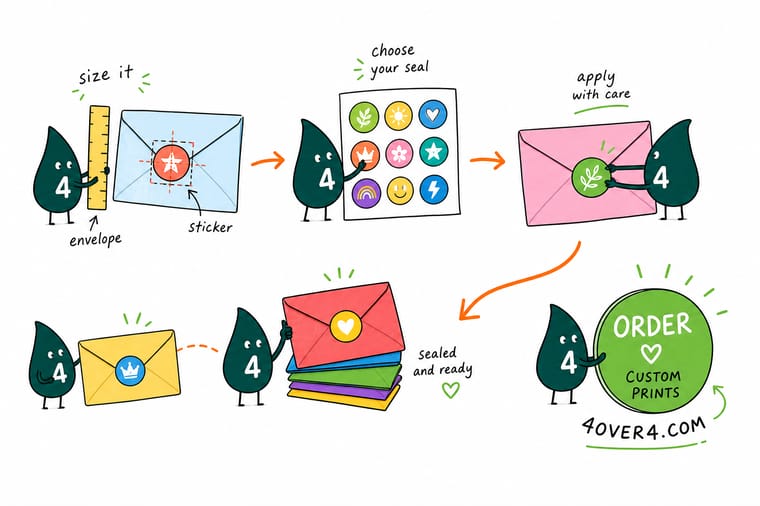
Wally lines the circle up on the point of the flap so half of it lands on the envelope body underneath. That overlap is the whole job. He touches the sticker down in the middle first and presses outward with a thumb, which pushes the air out instead of trapping it. He seals the gum line before the sticker goes on, because a decorated flap that pops open in the mail helps nobody. On a pale envelope he reaches for clear film. On a dark one he reaches for metallic, because clear ink would vanish into the paper.
Order round envelope seals →Specs and pricing
Seal materials, sizes, and starting prices
Compare the three materials people use for envelope seals side by side, with live configuration choices and starting prices straight from the 4OVER4.COM configurator.

Print it
Order the seals for your envelopes
Explore more
Where to go next

By the numbers
Sticker printing you can count on at 4OVER4
Common Questions
Your envelope seal questions, answered
What size envelope seal should I use on a wedding invitation?
Two inches for an A7 envelope, which is the standard 5.25 by 7.25 inch outer envelope for a 5 by 7 invitation. A 2 inch circle centres on the flap point with enough room for a monogram and a date, and it still reads as a seal rather than a label. Step down to 1.5 inch on A2 and A6 reply envelopes so the seal stays proportional, and reserve 2.5 inch for square 6.5 inch envelopes or a presentation piece where both names and a line of text have to fit.
Do clear envelope seals actually show up on coloured envelopes?
Only partly, and this is the mistake people make most often. Printing on clear film has no white layer under the ink by default, so whatever colour the envelope is comes through and shifts the ink on top of it. Black and dark ink still reads on a pale envelope. On navy, charcoal or kraft, a clear seal with dark type disappears. If you want colour to hold on a dark envelope you need either a white underprint specified on the order or a foil and metallic stock that blocks the envelope entirely.
Will a sticker seal alone hold the envelope closed in the mail?
Not reliably on anything with weight. A sticker seal grips two paper surfaces across roughly a one inch band, and a full invitation suite with a reply card and a details card flexes enough during sorting to peel that band open at the edges. Seal the flap with its gum line first, then place the sticker on top as the finish. Using the seal alone is fine for pieces that are hand delivered, placed on a table, or tucked into a welcome bag.
Does an envelope seal add postage cost?
A printed sticker seal does not. It adds a fraction of a gram and no thickness that a sorting machine can feel, so the envelope stays a machinable letter at standard rates. Weight and rigidity are what drive a surcharge, which is why wax seals, ribbon and anything with a bead or a charm push a piece into non-machinable handling. If your suite is already close to a weight break, weigh one finished envelope with everything inside before you buy postage for the whole run.
How do I stop the seal from tearing the envelope when a guest opens it?
You mostly cannot, and that is worth knowing before you order. Standard sticker adhesive is permanent, and paper envelope stock is weaker than the sticker face, so the flap fibres lift when the seal is pulled. Guests who care about keeping the envelope will slide a knife under the flap instead of pulling the seal, which works. If the envelope itself is meant to be kept, ask for a removable adhesive when you order, and place the seal so it bridges the flap point rather than sitting across a fold.
Can I print a monogram or a custom shape instead of a plain circle?
Yes. A circle is the default because it centres easily and has no corners to lift, but any shape cuts. Die-cut stickers follow the outline of the artwork itself, so a monogram, a crest, a wax-seal silhouette with scalloped edges or a leaf shape all work. Keep the cut path at least an eighth of an inch outside the artwork so a small drift on the cutter does not clip the design, and avoid long thin points, which catch on fingers and lift first.
Get Started
Ready to seal the envelope properly?
Pick your diameter, choose clear film or metallic stock to suit your envelope colour, and we print seals that sit flat, hold their line and match the suite.
Legal Disclaimer
Gold Standard guarantees apply to all standard orders placed through 4over4.com. Price match requires verifiable proof of a competitor's published price for an equivalent product with matching specifications and turnaround time. Satisfaction guarantee covers manufacturing defects and print quality issues. Contact support with order number and documentation. On-time delivery rate based on tracked orders 1999 to 2026. Individual results may vary based on shipping carrier performance.
