
How Die Cut Handle Bags Work and What They Can Carry


The handle is a hole punched through the bag wall. Here is how the folded hem behind it works, what that construction can and cannot carry, and where a printed tote or tissue wrap serves a retail brand better.
A die cut handle bag carries its handle as a shape punched straight through the bag wall, cut after the top edge has been folded down and glued into a hem. Nothing is attached, so the bags nest flat and cost less to ship, but the load hangs entirely on the strip of material between the punch and the top edge. Hem depth and glue coverage decide capacity more than the paper does, and the punch cuts through anything printed in that top band.
Quick answer
The handle is a hole, and the hem is what holds it
Fold the top of the bag down twice, glue it, then punch the handle shape through every layer at once. That is the whole process, and it explains the rest. There is no knot and no reinforcing patch, so the weight rides on the narrow strip of material above the punch, which makes hem depth and glue coverage the two specs worth asking a bag supplier about. It also makes the top band unprintable in practice, because it gets creased, folded and then cut.
What a Die Cut Handle Actually Is
Pick up a die cut handle bag and look at the top inch. You will find a band that is thicker than the rest of the bag, and the handle hole sits inside that band. That band is the hem, and understanding it explains everything else about how these bags behave.
The order of operations on the converting line is fixed. The bag is formed and glued, the top edge is folded down on itself once or twice, that fold is glued, and only then does the die punch the handle shape through the stack. Every layer is cut in the same stroke, which is why the hole edges line up perfectly and why the handle never peels apart the way a badly glued patch handle can.
What you are left with is a handle with no anchor. On a rope handle bag the cord passes through the wall and knots against a glued cardboard patch, so the weight spreads out across that patch. On a die cut bag there is no patch and no knot. The weight travels straight into the strip of material between the top of the punch and the top edge of the bag, and that strip is the entire load bearing structure.
Two practical results follow. The bags nest flat, so a carton holds more of them and freight costs less, which is a real part of why they dominate low cost retail. And the failure mode is predictable: when a die cut bag goes, it tears from the punch upward to the top edge, not through the middle of the panel.
Material, Hem Depth and What the Bag Will Carry
Bag suppliers quote capacity, and the number is only as good as the construction behind it. Three variables move it, and only one of them is the material.
Stock thickness. Paper bags are specified by basis weight or gsm, plastic film by mil. Heavier stock resists the tear, but doubling the weight of the paper does not double the capacity, because the punch is still a stress riser cut through it.
Hem depth and glue coverage. This is the variable most buyers never ask about, and it matters more than the paper. A deep hem with full glue coverage turns two or three layers into one thick composite that shares the load. A shallow hem, or one glued only in spots, leaves the outer layer working alone.
The bearing strip. The distance from the top of the punch to the top edge of the bag is the last defence. Punch too close to the edge and the bag rips out under a load it would otherwise have carried.
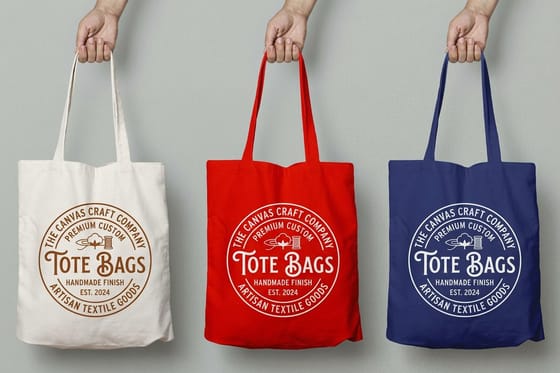
The honest summary for a retailer is this: die cut handle bags are built for light single trip loads, and comfort gives out before strength does. A narrow punched slot has a thin bearing edge that presses into the fingers, so a load that the bag survives can still be unpleasant to carry two blocks. Anything with weight in it belongs in a rope handle bag or a fabric tote, and if a customer is going to carry it for more than a few minutes, canvas tote bags at $22.73 solve the problem permanently instead of once.
Die Cut Handle Bag vs Rope Handle Bag vs Tote

These three get compared on price alone, which hides the difference that actually matters: how many times the bag gets carried after it leaves your counter.
| Carrier | How the handle anchors | Realistic use | Brand exposure |
|---|---|---|---|
| Die cut handle | None. A punched slot in the folded hem, load on one narrow strip. | Light single trip, counter handover, high volume. | One journey, then most people bin or store it. |
| Rope or twisted handle | Cord knotted or glued to a reinforcing patch that spreads the load. | Heavier retail loads, boutique and gift bags. | Several trips. Often kept for reuse as a gift bag. |
| Fabric tote | Webbing or fabric straps stitched into the seam along their whole width. | Repeated use, groceries, events, everyday carry. | Months or years of trips, in public, unprompted. |
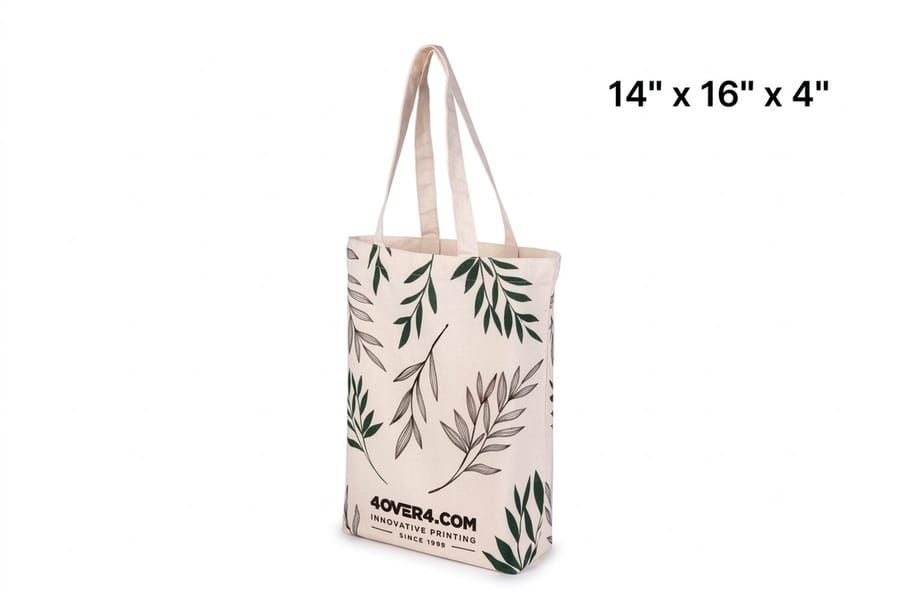
Read the last column before the first. A die cut bag is a cost line: you buy it, it does one job, it goes. A tote is a media buy that happens to hold things, which is why an event organiser hands one out and a supermarket sells one. Cotton totes start at $5.00 and tote bags at $22.73, and the comparison that matters is not tote against carrier bag on unit price, it is tote against the number of carrier bags the same customer would have taken over a year.
There is also a case where the die cut bag simply wins. A pharmacy, a bakery, a takeaway counter, anywhere the bag is opened within the hour, does not need an anchored handle and should not pay for one. If that is your counter, buy the die cut bag and put the branding budget into what goes inside it. The fabric side of the decision is worked through properly in our guide on cotton, canvas and recycled totes, and the tote ordering details sit in tote bag minimums, materials and turnaround.
What to Print When the Bag Itself Is Plain
4OVER4.COM does not run die cut handle bags, and saying so is more useful than pretending otherwise. Bag converting is a different machine and a different minimum order. What we do print is everything that turns a plain bag into a branded one, usually at a lower total cost than fully printing the bag.
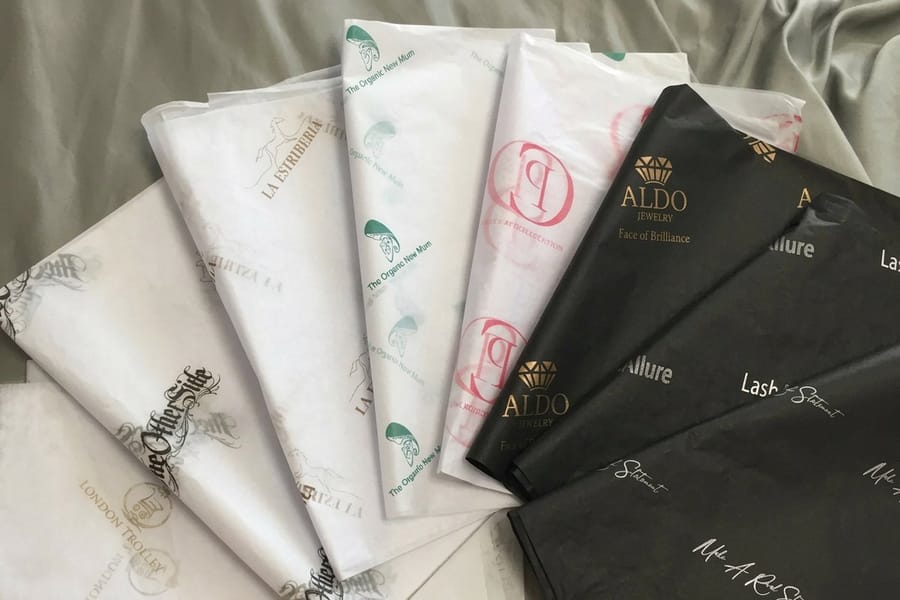
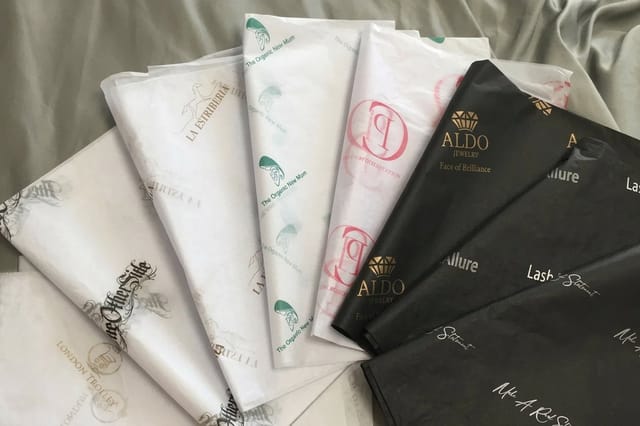
Start with the inside. Custom tissue paper from $126.32 is the cheapest way to make an unbranded carrier look considered, because it is the first thing the customer sees when the bag opens. Add a hang tag from $25.27 on the product, or one strung to the bag handle, which works particularly well on a die cut bag since the punched hole gives you somewhere to tie it. Sizes and string choices for tags are covered in the clothing tag size guide.
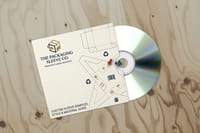
Then seal it. Premium packaging labels from $29.16 close the bag fold and put your mark on the outside without a print run on the bag. Packaging sleeves from $438.25 wrap a plain box or a bundle of product in your artwork, which is the standard trick for brands that buy stock boxes and cannot justify a custom die.
If you are moving from bags to real packaging, the packaging printing collection holds the boxes, sleeves and label options together, and the nine types of packaging guide explains which layer does what. Before you send any of it to press, read how to prepare files for packaging products, then start from a correctly sized layout in the blank template library.
Wally explains the die cut handle
Fold it, glue it, then punch it
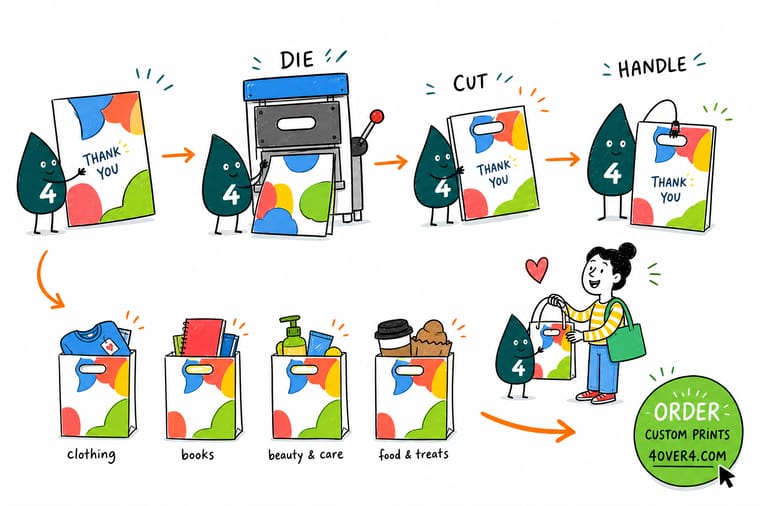
Wally folds the top of the bag down on itself, runs glue along the fold, and only then punches the handle through the whole stack. That folded band is why the bag holds anything at all. Skip the second fold and the punch splits straight up to the top edge on the walk to the car. He also keeps the logo well below the fold, because whatever sits in that band gets creased and then cut in half by the die.
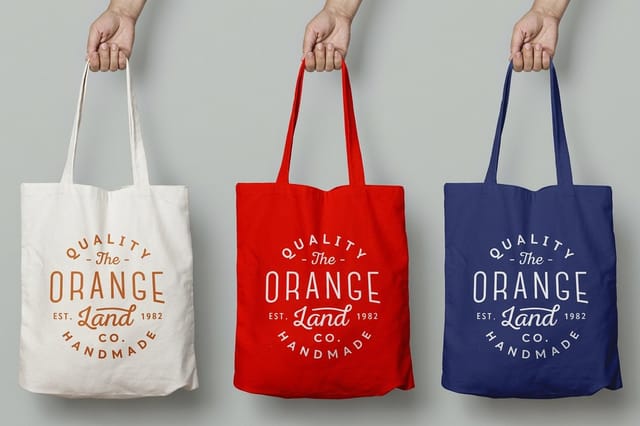
Shop printed tote bags →Specs and pricing
Bags, tags and sleeves with live starting prices
The branded pieces that do the work a plain carrier bag cannot, with configuration choices and starting prices straight from the 4OVER4.COM configurator.


Print it
Brand the bag from the inside out

Explore more
Where to go next




By the numbers
Retail packaging printing you can count on at 4OVER4
Common Questions
Your die cut handle bag questions, answered
What is a die cut handle bag?
It is a bag whose handle is a shape punched out of the bag wall itself, usually an oval or a rounded slot sitting just below the top edge. There is no separate handle. The top of the bag is folded down and glued into a hem first, and the punch cuts through every layer of that hem at once. You will also see the same handle called a punch out handle, a patch handle when a reinforcing patch is welded behind it on plastic bags, or simply a die cut carrier bag in retail supply catalogs.
How much weight can a die cut handle bag hold?
Less than a bag with an attached handle of the same material, and the number depends on three things rather than one: the thickness of the stock, how deep the folded hem runs, and how completely that hem is glued. The load never sits on the whole bag. It sits on the strip of material between the punch and the top edge, so a bag with a shallow hem fails at the punch long before the paper itself gives up. If you are packing anything with real weight, ask your bag supplier for the rated capacity in writing and test one loaded bag by carrying it, not by hanging it.
Die cut handle or rope handle, which should a retail store buy?
Buy die cut for light, high volume, single trip use where the bag is handed over at a counter and cost per unit matters. Buy rope or twisted paper handles when the load is heavy, when the walk home is long, or when the bag is meant to be seen and reused. The mechanical difference is the anchor. A rope handle transfers the load into a glued patch that spreads it across a wide area of the bag wall, while a die cut handle has no anchor at all and concentrates everything on one narrow strip.
Where should the artwork stop on a die cut handle bag?
Below the fold line. The top band of the bag becomes the hem, so it gets creased, folded back on itself, glued, and then punched. Anything in that band is either hidden inside the fold or cut in half by the punch. Set your safe area under the fold, keep barcodes and small legal type well clear of it, and centre the logo on the panel rather than pushing it high. The same discipline applies to any folded or die cut print job, which is why our guide to preparing files for packaging products is worth reading before you send artwork.
Are die cut handle bags recyclable?
Paper ones usually are, and they have an advantage over rope handle bags because there is no cotton cord or plastic rivet to separate out. The bag is one material. Plastic die cut bags follow whatever rules apply to the film they are made from in your area, and film is accepted far less widely than paper. Heavy ink coverage, lamination and foil all complicate paper recycling, so a lightly printed kraft bag recycles more cleanly than a fully flooded gloss laminated one.
Does 4OVER4.COM print die cut handle bags?
No. We print the branded pieces that go with the bag rather than the bag itself. Tote bags start at $22.73 and cotton totes at $5.00, custom tissue paper starts at $126.32, standard hang tags at $25.27, packaging sleeves at $438.25 and premium packaging labels at $29.16. A common setup for a small retail brand is a plain or lightly printed carrier bag bought from a bag supplier, then tissue paper, a hang tag and a label from us doing the branding work inside it.
Get Started
Plain bag, printed everything else?
Line it with custom tissue paper, string a hang tag through the punched handle, and seal the fold with a packaging label. We print all three.
Legal Disclaimer
Gold Standard guarantees apply to all standard orders placed through 4over4.com. Price match requires verifiable proof of a competitor's published price for an equivalent product with matching specifications and turnaround time. Satisfaction guarantee covers manufacturing defects and print quality issues. Contact support with order number and documentation. On-time delivery rate based on tracked orders 1999 to 2026. Individual results may vary based on shipping carrier performance.
