
Custom Work Jackets With Logo, Without Ruining the Shell


The two decoration methods, the five placements and their real widths, the hi-vis limits nobody mentions until the jackets arrive, and how to size a crew run in one order.
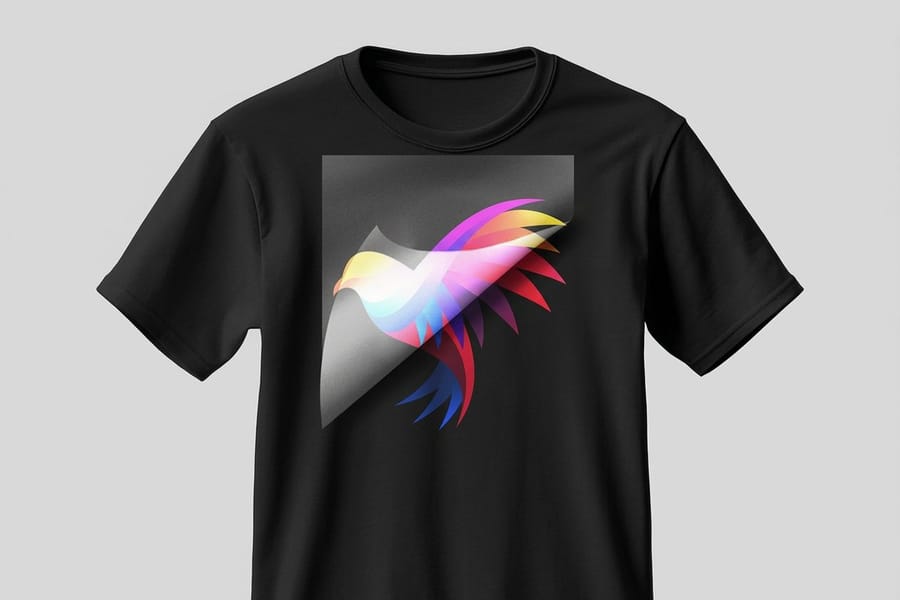
Branded work jackets get their logo one of two ways: embroidery stitched through the fabric, or heat-applied transfer film pressed onto the surface. Cotton duck, canvas and twill take embroidery well. Waterproof shells, insulated jackets and hi-vis polyester should get film, because a needle punches holes through the membrane, the seam tape and the fill. Standard widths are 3.5 to 4 inches on the left chest and 10 to 12 inches on the back yoke, about 3 inches below the collar seam.
Quick answer
Stitch it or press it, then get the two widths right
Decoration follows the fabric. Embroidery belongs on woven cotton work coats, canvas and twill, where thread through the face fabric is the most durable branding there is. Heat-applied film belongs on anything technical, because a needle through a waterproof membrane, a taped seam or loose fill is damage you cannot undo. After that it is two numbers: a left chest mark 3.5 to 4 inches wide, and a back yoke 10 to 12 inches wide sitting about 3 inches below the collar seam. Hi-vis adds one more rule, which is that nothing goes over the reflective tape.
Embroidery or Heat Transfer, Decided by the Shell
Ask what the jacket is made of before you ask what the decoration costs. A needle does not care that a shell is waterproof, and that is the whole problem.
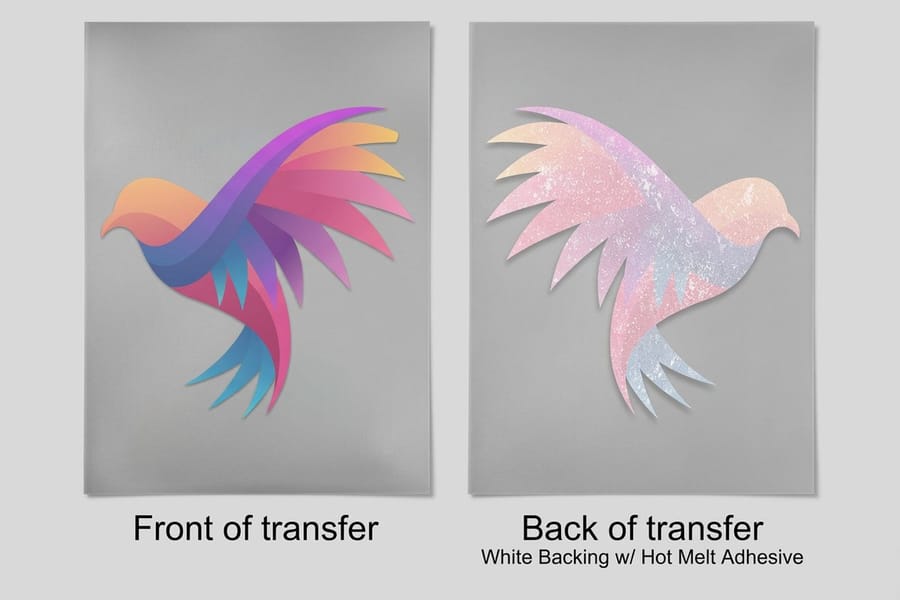
Embroidery stitches thread through the face fabric. On cotton duck, canvas, denim and the woven face of a work coat, that is exactly right, and the result is the most durable branding you can put on a garment. On a laminated rain shell, a taped-seam softshell or a jacket with loose fill insulation, every stitch is a puncture through the layer you paid for. Heat-applied film sits on the surface instead, bonds under heat and pressure, and pierces nothing.
| Method | How it attaches | Where it fails | Best on |
|---|---|---|---|
| Embroidery | Thread stitched through the face fabric on a multi-head machine. | Punctures membranes and insulation, sinks into high-pile fleece, cannot hold text under about 0.25 in. | Cotton duck, canvas, twill, denim work coats, the woven face of a softshell. |
| Heat transfer film | Printed film pressed onto the garment at heat and pressure. | Lifts if applied across a seam, zip or pocket edge, and some nylon shells scorch below the film activation temperature. | Hi-vis polyester, rain shells, insulated jackets, anything you cannot perforate. |
| Screen print | Ink pushed through a mesh screen onto a flat panel. | Will not lay flat on quilted, ribbed or heavily textured shells, and carries a minimum quantity. | The tees and hoodies worn under the jacket, in the same brand mark. |
| Woven patch | Made separately, then sewn or heat sealed onto the garment. | Adds bulk and a hard edge, and a sewn patch still perforates the shell around its border. | Heavy work coats, fleece where stitches would sink, branding you may want to swap later. |
Two costs behave differently. Embroidery carries a one-time digitizing charge to turn your logo into a stitch file, then a running cost per thousand stitches, so a dense logo on 40 jackets costs more than a light one. Film is printed art, so detail and gradients are free, and one sheet of heat activated transfer film at $19 can decorate several garment types with the same mark. Thread has one more catch worth knowing: colors are matched off a thread chart, not a Pantone book, so an exact brand color is an approximation in stitches and a match in film.
Where the Logo Goes, and How Wide
Five positions cover almost every branded work jacket. Only one of them does anything at distance.
| Position | Typical width | What it does | Watch for |
|---|---|---|---|
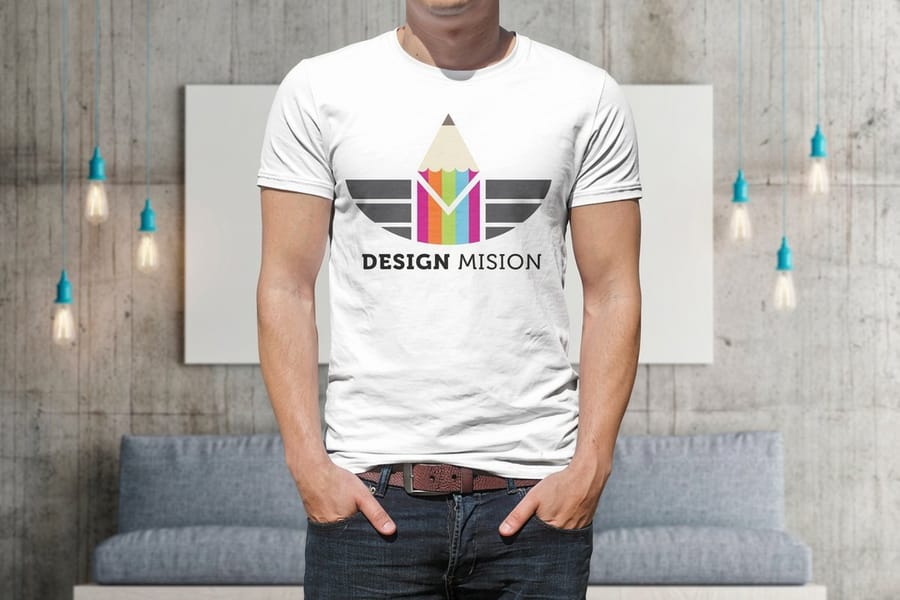
| Left chest | 3.5 to 4 in | The primary company mark, at eye level in conversation. | Keep it clear of the zip placket and any chest pocket seam, or the press cannot make full contact. |
| Right chest | 2.5 to 3 in | A first name, a job title or a certification. | Match its vertical centre to the left chest mark. An inch of drift reads as sloppy. |
| Back yoke | 10 to 12 in | The mark that identifies the crew across a parking lot or a site. | Sits about 3 in below the collar seam, above any vent, hood seam or reflective band. |
| Sleeve | 2 to 3 in | A secondary mark, a union badge or a licence number. | Above the elbow. On the elbow it distorts every time the arm bends. |
| Collar or nape | Around 2 in | Quiet branding that still shows when the jacket hangs open. | Pressed film rubs here against a hood or a seatbelt, so stitching survives better. |
Size the back panel by the distance you need. The sign trade works on roughly an inch of letter height per 10 feet of viewing distance, and the same rule holds on a garment: a company name 1 inch tall reads at about 10 feet and turns to mush beyond it. If the point is to be recognised from the far side of a job site, the name goes 2 inches tall or larger and the tagline goes away.
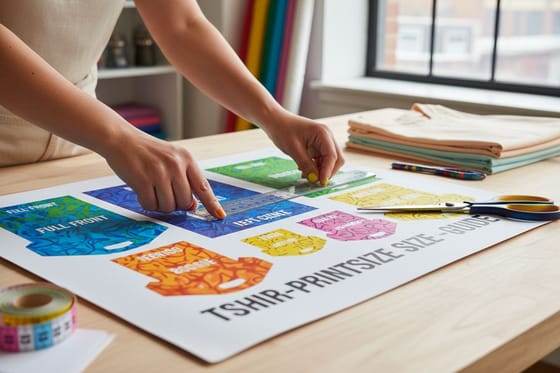
Specify the position numerically, not by eye. "Left chest, top of artwork 8 inches down from the shoulder seam, 4 inches in from the centre placket" produces 40 identical jackets. "Left chest" produces 40 slightly different ones. The same discipline applies to the garments underneath, and our guide to apparel print sizes lays out the equivalent numbers for shirts.
Hi-Vis, Insulated and Waterproof Jackets Have Rules
A hi-vis jacket is safety equipment with a rating, and decoration can take that rating away. The ANSI/ISEA 107 class of a garment depends on how many square inches of fluorescent background material and retroreflective tape stay visible. Cover enough of either and the jacket no longer meets the class printed on its label.
Two rules keep you out of trouble. Never place artwork over the retroreflective tape, because tape under a print or under thread stops reflecting. And keep the total decorated area modest, working in the gaps between the tape bands rather than across them. A left chest mark is almost never an issue. A full-width back panel on a Class 2 vest is where jobs go wrong, and the person who signs off on site safety is the one who finds out.
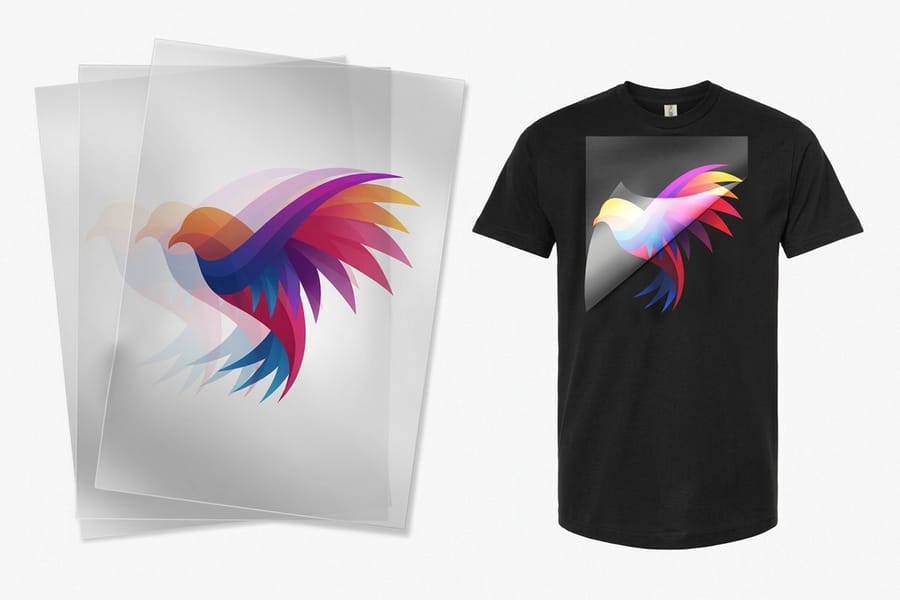
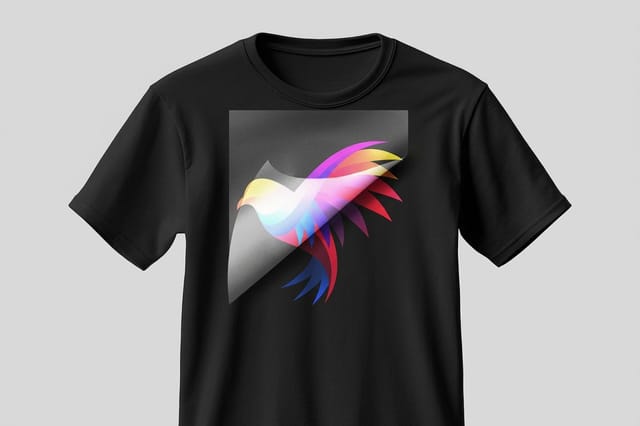
Technical shells fail differently. On a waterproof jacket the seams are taped on the inside and the fabric carries a membrane, so embroidery punches through both and the repair is seam sealer rather than a warranty claim. On an insulated jacket the needle drags fill toward the holes and the shell wets out at the logo first. High-pile fleece swallows stitches unless the decorator runs a water-soluble topping over the surface, which is why a lot of fleece gets a patch instead. In all four cases, film is the answer, which is why heat activated transfer film ends up on more work outerwear than embroidery does.
One more thing that catches people out: simplify the mark before you commit. A logo with a thin outline, a drop shadow and 6-point legal text will not stitch and will barely press at 3.5 inches. Our notes on the principles of logo design and logo design best practices both cover the same lesson from the design side.
Sizing a Crew Run So You Order Once
Most reorders are not caused by the logo. They are caused by sizes.
Work jackets are cut to layer over a shirt or a hoodie, so a person who wears a large tee does not automatically wear a large jacket, and the difference is bigger on a slim softshell than on a work coat. Get a size run sample from your garment supplier and let people try them on. One sample set is cheaper than nine jackets nobody wears.
Collect sizes by name in a sheet rather than guessing a distribution. Then add two spares in the two most common sizes, because a new hire will start and somebody will guess wrong. Watch sleeve length separately from chest: tall and women's cuts change the sleeve, so a straight unisex run leaves half the crew with cuffs past the knuckles.
Keep the production file after the first run. That means the digitized stitch file and its thread numbers for embroidery, or the press artwork and its exact placement measurements for film. A repeat order six months later matches the first one only if those are on record, and matching matters more than it sounds when half the crew is wearing last year's jacket next to this year's. The neckline and fit guide is worth a read when you spec the shirts that go under all of this.
Matching the Jacket to the Rest of the Uniform Kit
Here is the part we should be straight about: 4OVER4.COM does not sell jacket blanks. We print the transfer film that puts your logo on them, and we print everything the crew wears and carries around that jacket.
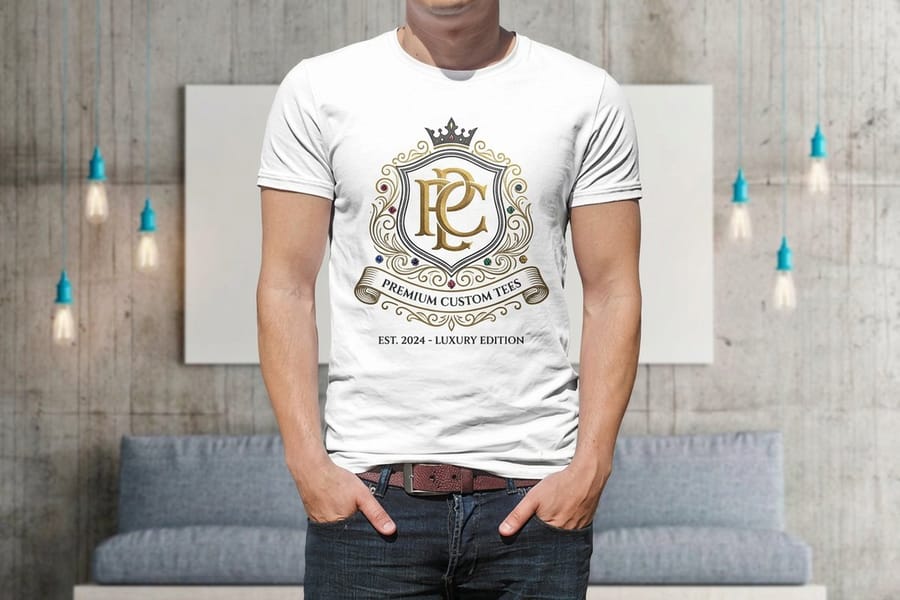
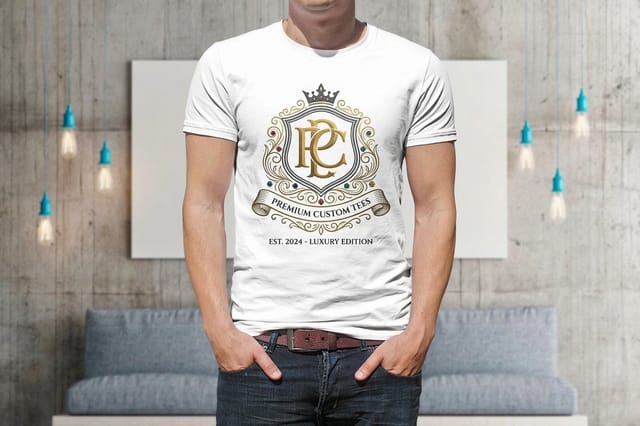
The mid-layer comes first, because a jacket spends half the day unzipped. Premium t-shirts start at $21.96 and take the same mark you pressed on the jacket, so the branding reads whether the jacket is on or off. The full range sits on the t-shirt printing category if you want to compare fabrics and cuts.
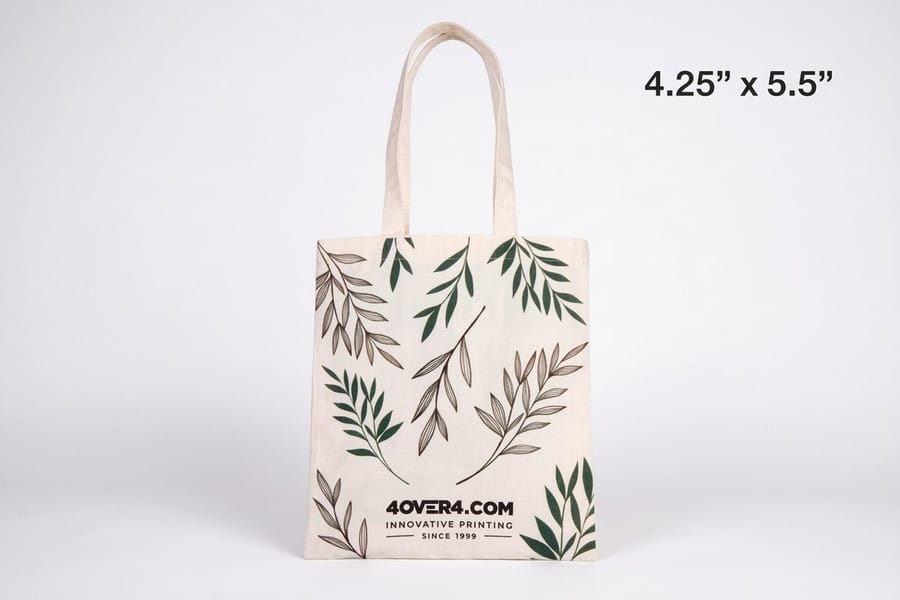
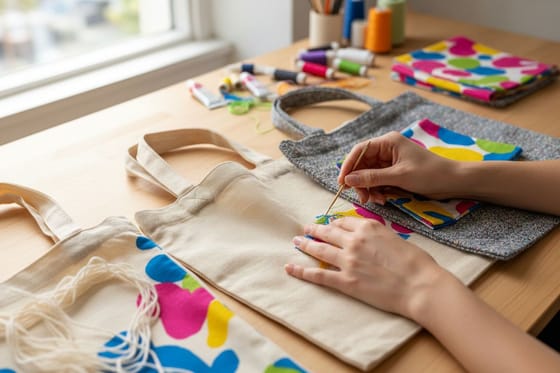
Then the pieces that make a set feel deliberate. Cotton totes start at $5.00 and are the cheapest way to hand a new hire their kit in something branded rather than a plastic bag, with the heavier canvas tote bags at $22.73 for anything with weight in it. The tote bag category covers the fabric choices, and cotton against canvas against recycled explains what the weight difference actually buys you.
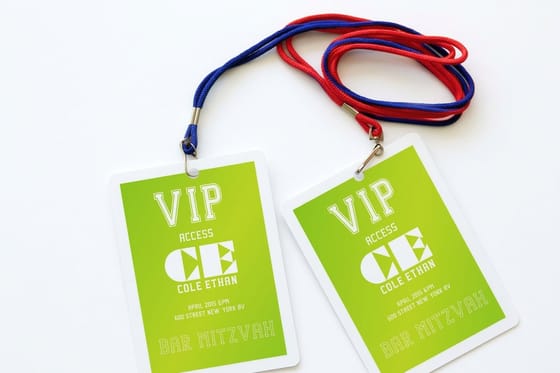
Two extras are worth knowing about. If you are reselling branded jackets rather than issuing them, hang tags for clothing start at $25.27 and are what makes a jacket look like stock rather than merch, and the branding tags guide covers what belongs on one. If the crew works trade shows, event badges start at $49.88 and finish the look at the booth. For everything else the team could carry, the branded merchandise guide is the wider list.
Wally explains work-jacket branding
Measure from the seam, press instead of stitch
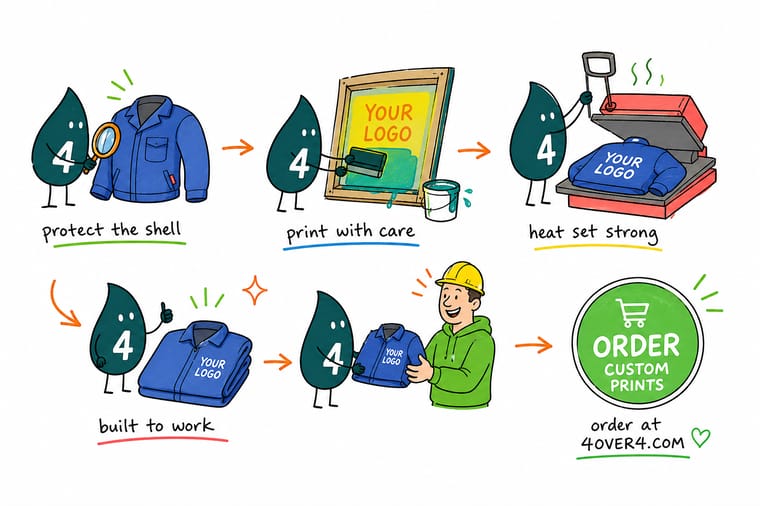
Wally checks the label first. Cotton duck or canvas, he reaches for thread. Waterproof shell, insulated coat or hi-vis polyester, he puts the needle down and presses transfer film on instead, because a stitch through a membrane is a hole through the thing that keeps the rain out. Then he measures: 3.5 to 4 inches across the left chest, 10 to 12 inches on the back, 3 inches down from the collar seam. And he never presses anything over the reflective tape.
Order heat activated transfer film →Specs and pricing
Decoration and uniform pieces, with starting prices
Configure the film that carries your logo onto the jacket, plus the shirts and totes that finish the kit, with live options straight from the 4OVER4.COM configurator.



Print it
Put the crew in one mark, top to bottom
Explore more
Where to go next


By the numbers
Branded apparel you can count on at 4OVER4
Common Questions
Your work jacket branding questions, answered
Can you embroider a logo on a waterproof work jacket?
You can, and on a rain shell you usually should not. A waterproof jacket relies on a laminated membrane plus taped seams, and an embroidery needle makes a few thousand holes through that membrane. Some decorators reduce the damage with a sealed backing patch, but the honest answer is that a stitched logo compromises the thing you paid for. On membranes, insulated shells and hi-vis polyester, a heat-applied transfer is the safe route because nothing pierces the fabric.
How much does it cost to put a logo on work jackets?
Budget for two separate numbers: the blank jacket from your garment supplier, and the decoration. Heat-applied decoration is the one you can price today. Heat Activated Transfer Film starts at $19 at 4OVER4.COM, and one order of film can decorate jackets, tees and bags with the same mark. Embroidery is quoted differently, per thousand stitches, plus a one-time digitizing charge to convert your logo into a stitch file. That digitizing fee is charged once per logo, so the second jacket order is always cheaper than the first.
What size should a logo be on a work jacket?
A left chest mark runs 3.5 to 4 inches wide, a right chest name 2.5 to 3 inches, a sleeve mark 2 to 3 inches, and a back yoke 10 to 12 inches wide sitting roughly 3 inches below the collar seam. The back is the only placement that does any work at distance. The sign trade rule of thumb is about an inch of letter height per 10 feet of viewing distance, so a company name 1 inch tall on the back reads at around 10 feet and no further.
Will a heat transfer peel off in the wash?
A correctly applied transfer outlasts most work jackets. Peeling almost always traces to one of three things: the press ran short on temperature, time or pressure; the film was applied over a seam, zip or pocket edge so part of it never made contact; or the garment went through a hot dryer with fabric softener. Wash cool, inside out, skip the softener, and keep the decoration off seams and the film stays put.
Can I put a logo on a hi-vis jacket without breaking the rating?
Yes, if you respect two limits. Never place anything over the retroreflective tape, because covered tape stops being retroreflective. And keep an eye on the total area, since the ANSI/ISEA class of a garment depends on how many square inches of fluorescent background and reflective material remain visible. A left chest mark is almost always safe. A full-width back panel on a Class 2 vest is where jobs get into trouble, so decorate in the gaps between the tape bands and keep the artwork compact.
What file do you need for a jacket logo?
Send vector artwork, meaning an AI, EPS or vector PDF with fonts converted to outlines. A screenshot or a small JPG pulled off a website will not hold up at 12 inches wide on a back panel. For embroidery, that vector then gets digitized into a stitch file such as DST, which is a manual conversion rather than an export, and it is where a decorator decides stitch direction, underlay and how to simplify detail your logo cannot hold in thread. Our guide on choosing the right file type for printing covers what to send and what to avoid.
Get Started
Ready to put your mark on the whole crew?
Print the transfer film that goes on the jackets, then match it across the shirts, totes and tags your team carries every day.
Legal Disclaimer
Gold Standard guarantees apply to all standard orders placed through 4over4.com. Price match requires verifiable proof of a competitor's published price for an equivalent product with matching specifications and turnaround time. Satisfaction guarantee covers manufacturing defects and print quality issues. Contact support with order number and documentation. On-time delivery rate based on tracked orders 1999 to 2026. Individual results may vary based on shipping carrier performance.
