
Custom Corrugated and Bubble Mailers for Ecommerce Brands


Which mailer protects your product, what board grade and size cost you in postage, and how to brand either one without paying for a box run before you need it.
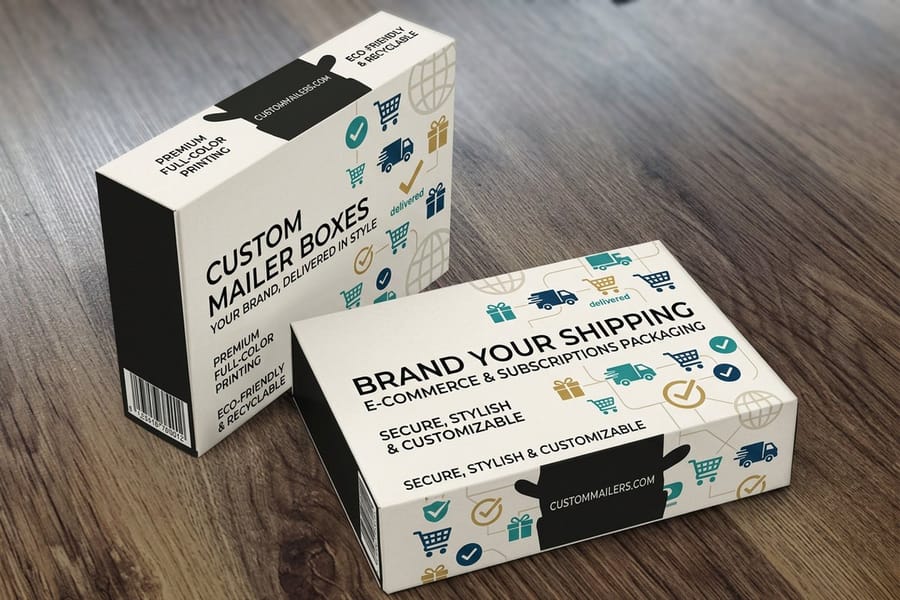
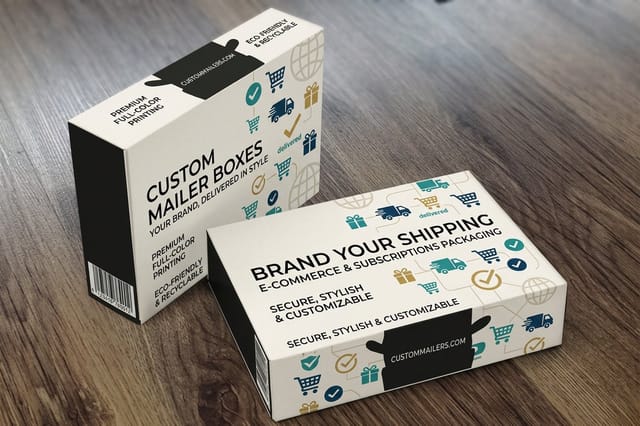
Ship anything rigid, breakable or stackable in a corrugated mailer box, and keep bubble mailers for soft, flat goods that only need a cushion. Corrugated carries a crush load on its flutes and gives you the whole outer surface to print. A padded mailer absorbs one knock, folds flat under weight, and can only carry your brand on printed tape or a label. Custom mailer boxes start at $711.78, printed packaging tape at $347.11.
Quick answer
One wall carries weight, the other only cushions
The choice is about crush, not about fragility. A corrugated mailer is two liners with flutes glued between them, and those flutes stand on edge to carry whatever is stacked on the parcel. A padded mailer is film with trapped air, which handles a single impact and then flattens under a load. Rigid, breakable and stackable goods belong in the box. Soft and flat goods belong in the padded mailer, where you save real postage. Branding follows the same split: the box prints on press, the padded mailer wears printed tape or a label.
Corrugated Mailer or Bubble Mailer, and How to Stop Guessing
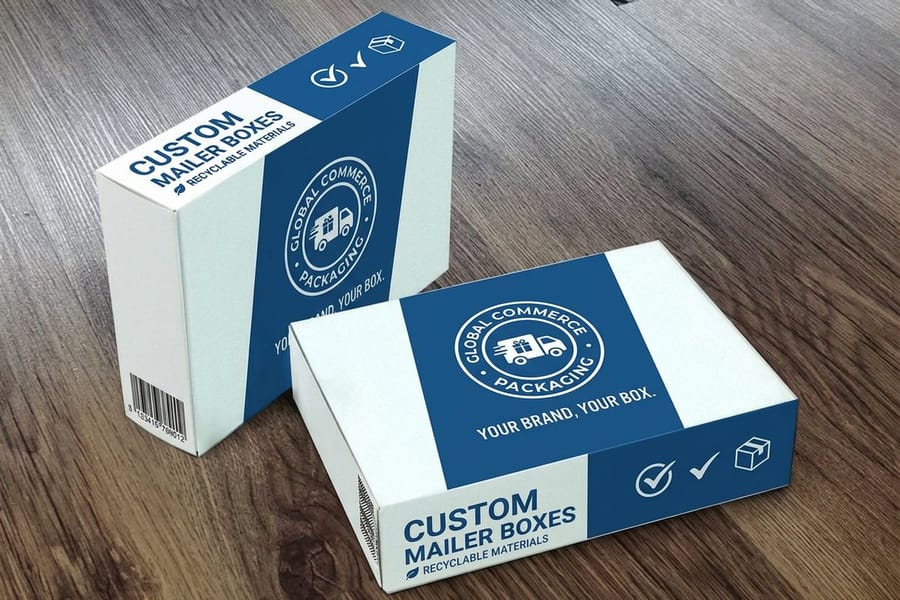
The two mailers fail in different ways, and once you know which failure your product cannot survive the choice makes itself. A padded mailer protects against a knock. A corrugated mailer protects against a load. Almost every ruined shipment we hear about is a product that needed the second and got the first.
Picture the parcel halfway through its trip, lying in a tote under thirty other parcels. The corrugated wall is a sandwich: two flat liners with a fluted layer glued between them, and those flutes stand on edge like tiny arches carrying the weight. A padded mailer has no arch. It is two sheets of film with trapped air between them, which absorbs one impact beautifully and then folds flat under sustained weight.
| Mailer | What it resists | Where it fails | Branding surface |
|---|---|---|---|
| Corrugated mailer box | Crush, corner impact, stacking in a tote. | Adds bulk and dimensional weight on flat goods. | The whole outer surface, printed on press. |
| Bubble mailer | A single knock or a drop, and moisture from the film. | Any crush load, any rigid or breakable item. | Printed tape or a printed label only. |
| Flat poly mailer | Rain and abrasion, nothing else. | Impact of any kind, and it creases printed matter. | A printed label, and not much of one. |
| Regular shipping box | Weight, volume, multiple items packed together. | Overkill on a single small item, and slow to pack. | Printed outer, or plain kraft with printed tape. |
Read the failure column before the resist column. It is the honest one. If your product is a candle, a ceramic mug, a bottle or anything with a jaw that can snap, the answer is custom mailer boxes and there is no argument to have. If it is a folded garment, the padded mailer wins on postage and you should take the win.
Board Grades, Sizes, and the Postage They Quietly Cost You
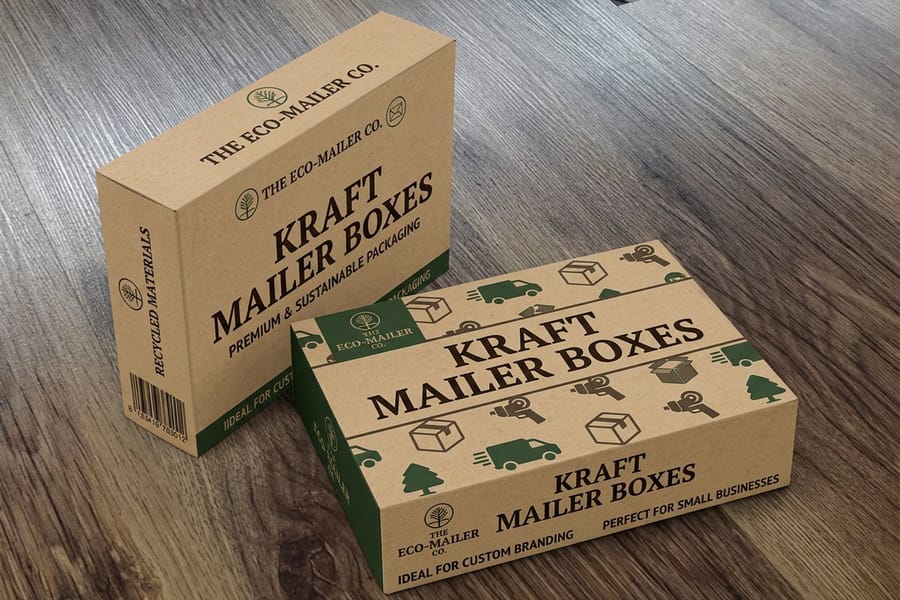
Mailer boxes are almost always run in E flute, which is roughly 1.6 mm of wall. That thickness is a compromise everyone in packaging has already made for you: thick enough to hold a shape and survive a tote, thin enough to fold into a crisp edge and to print without the washboard texture that heavier flutes push through the liner. Move up to B flute, around 3 mm, when the product is heavy enough that a thumb press dents the E flute wall.
Then there is the board colour, and it is a real decision rather than a taste one. Kraft hides abrasion. Every parcel is rubbed by belts, chutes and other parcels, and on a white or dark flood coat that rubbing shows as pale scratches by the time it reaches the door. On kraft mailer boxes the same scuffing is invisible, which is why so many brands print one or two colours on kraft rather than full colour on white.
Size the box to the product, not to your shelf. Measure all three dimensions at the widest point, add a quarter inch each way so the product drops in, then add for void fill. Carriers charge on dimensional weight as well as actual weight, so an inch of wasted air in every direction can move a parcel up a rate band while your product sits still. Our box size chart by product type lists the footprints most sellers land on, and the cardstock versus corrugated comparison covers the point where a folding carton stops being enough.
One more thing that gets missed on a first order. A mailer box ships flat and folds up by hand at your bench in a single motion, with no tape on the bottom seam. A regular shipping box needs that seam taped before anything goes in it. On a day of a hundred orders you feel the difference in your wrists, not just in the clock.
Putting Your Brand on a Mailer You Did Not Print
We print corrugated mailers. We do not print padded bubble mailers, because they come off film converting lines rather than a press, and a short branded run of them costs more than it returns. That limit is worth saying out loud, because the workaround is better than the thing people usually ask for.
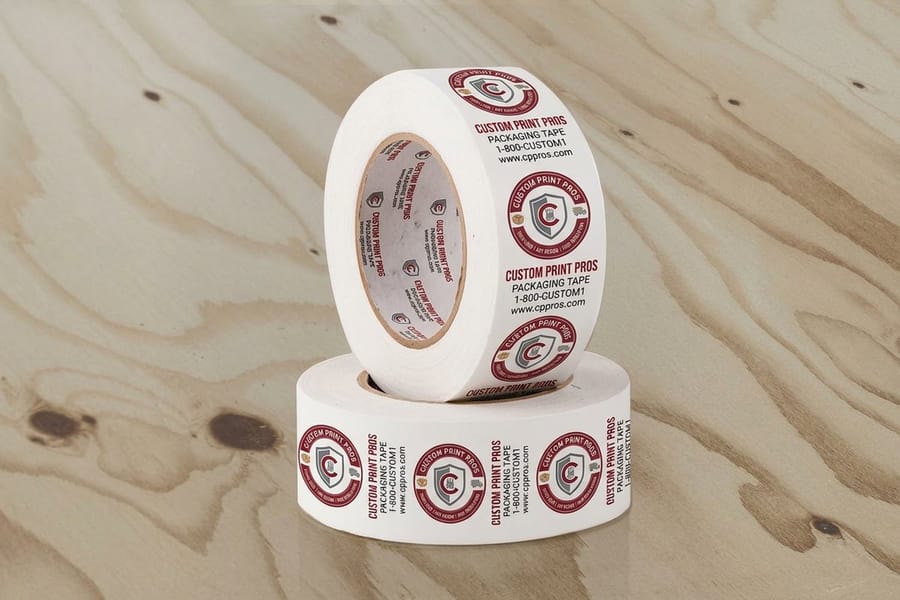
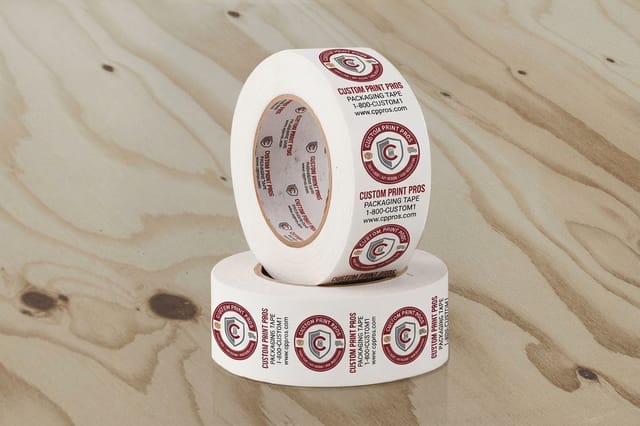
Brand the outside of the mailer you already buy. Custom printed packaging tape starts at $347.11 and runs down the seam of a plain kraft box or across the flap of a bubble mailer, which puts your name on the single strip a customer looks at while opening the parcel. It works on every mailer size you stock, so one artwork covers your whole range. Set the artwork up from the packaging tape blank template and keep the logo repeating rather than centred, because nobody can predict where the cut lands.
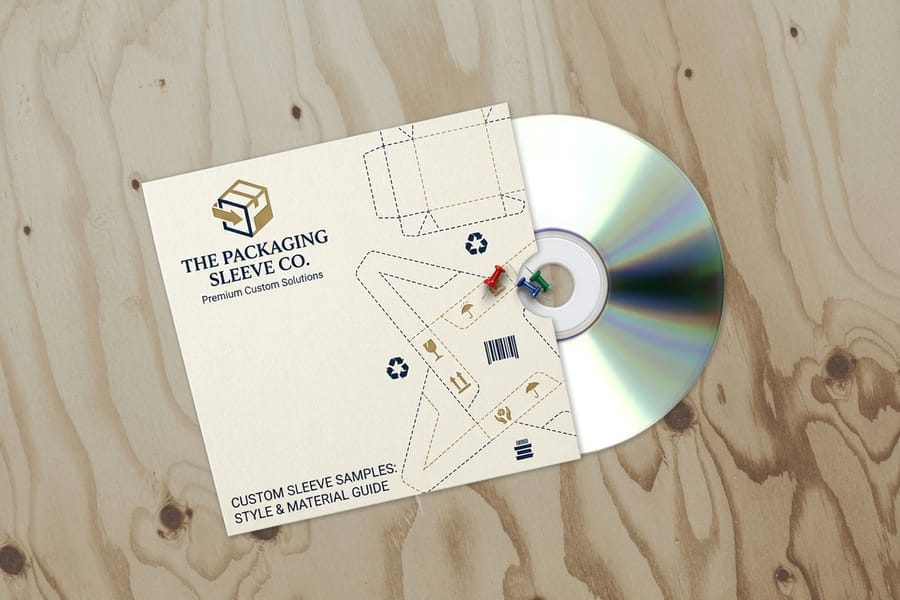
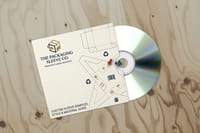
The second move is inside the parcel. A printed packaging sleeve at $438.25 wraps the product itself, which turns a plain shipper into a two stage unboxing: neutral outside, branded the moment the lid comes up. Pair it with custom shipping labels from $25 and a plain box reads as considered packaging rather than a compromise.
When volume finally justifies it, the printed box replaces the tape rather than joining it. Full colour on the outer, one colour on the inner if you want the lid reveal, and the tape budget moves into stock clear tape. Everything in the packaging printing collection is built to layer this way on purpose.
Minimums, Real Prices, and When to Move Up
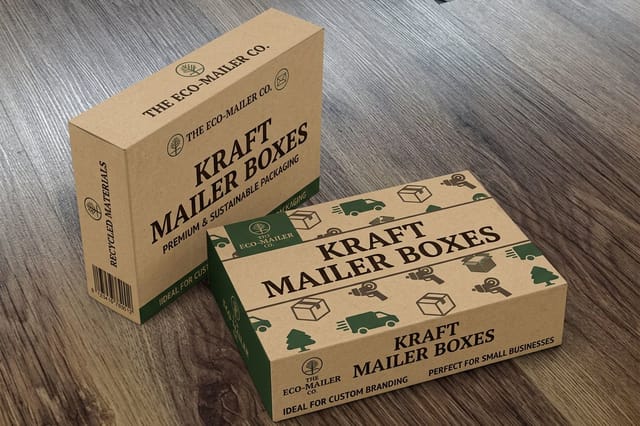
Printed mailer boxes need a cutting die and a press make ready, so the quantity tiers start higher than they do for labels or cards. Custom mailer boxes start at $711.78 on the configurator, and kraft mailer boxes sit at the same starting point. That is the real number, not a teaser, and the live tiers on the product page show what each step up in quantity does to the unit cost.
Compare that with the alternative before you commit. Printed tape starts at $347.11, sleeves at $438.25, shipping labels at $25. If you ship forty orders a month, a tape and sleeve pairing brands roughly a year of shipments for half the cost of one box run, and it works across every box size you use. If you ship several hundred a month, the box run wins on unit cost and on the unboxing, because the branding is the parcel rather than a strip on it.
The threshold most sellers cross is around a hundred shipments a month on a stable product size. Stable is the operative word. Brands that redesign packaging every quarter, or that keep changing product dimensions, should stay on tape and sleeves until the range settles, because a die cut box locks you to one footprint and a pallet of the wrong size box is a genuinely expensive mistake. Browse the full range at custom box printing when you are ready to price a run.
Wally explains mailers
Stand on one, squash the other
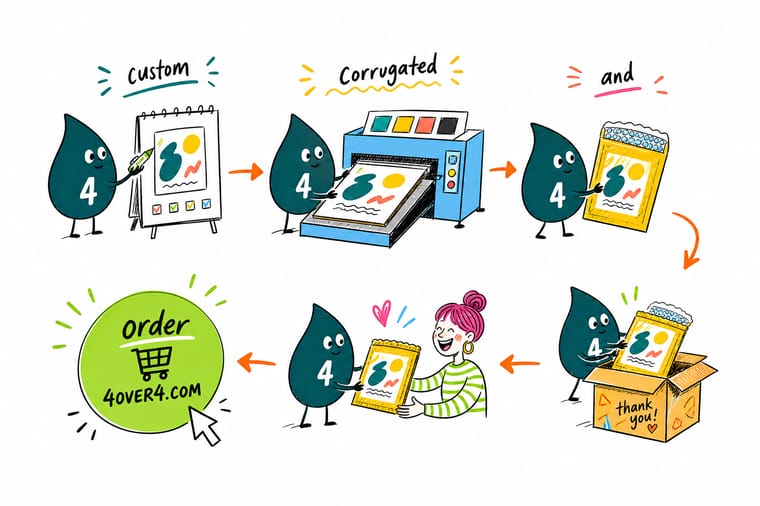
Wally stands on the corrugated mailer and nothing happens, because the flutes inside the wall are little arches carrying his weight. He stands on the bubble mailer and it folds flat, because trapped air has nothing to stand on. That is the whole decision. Mugs, candles and bottles go in the box. T-shirts and socks go in the padded mailer. Then Wally runs printed tape across the seam so the parcel says who sent it before anyone opens it.
Price custom mailer boxes →Specs and pricing
Mailer sizes, materials and starting prices
Configure the box, the tape and the sleeve side by side, with live options and starting prices straight from the 4OVER4.COM configurator.
Print it
Order mailers your customers photograph
Explore more
Where to go next
By the numbers
Packaging you can count on at 4OVER4
Common Questions
Your mailer questions, answered
Should I use a corrugated mailer or a bubble mailer?
Press the product between your hands. If it survives that, and it stays flat, a bubble mailer is the cheaper and lighter choice. If it is rigid, breakable, oddly shaped, or if it would be ruined by a crease, use a corrugated mailer box. The deciding factor is not fragility on its own, it is crush. A padded mailer cushions a single impact but has no structure, so a heavier parcel stacked on top of it in a tote passes its full weight through to your product.
Can you print my logo directly on bubble mailers?
No, and no honest print house should promise it on a small run. Padded poly mailers are made on film converting lines, not on our presses, and a short branded run of them carries a setup that swallows the saving. What we do instead is brand the outside of whatever mailer you already buy. Printed packaging tape runs across the seam, a printed label sits on the face, and both read as deliberate packaging rather than an afterthought.
What size mailer box do I need?
Measure the product at its widest point in all three dimensions, then add a quarter inch to each so it drops in without being forced, plus whatever void fill you plan to use. Give the height particular attention. A mailer box that is a half inch too tall bulges at the lid and looks cheap on arrival, and it also fails to hold the product still. If you are sizing a range of products at once, the box size chart guide lists common footprints by product type.
What is the minimum order on custom printed mailer boxes?
Box printing is a die cut and a print run, so the quantity tiers start higher than they do on cards or labels. The configurator on the custom mailer boxes page shows the live tiers and prices, starting at $711.78. That is the honest floor. If your monthly volume does not reach it yet, order plain kraft mailers and brand them with printed tape and a sleeve until it does.
Does a bigger mailer cost more to ship even when it weighs the same?
Yes, and this is where money leaks. Carriers bill on dimensional weight as well as actual weight, dividing length by width by height in inches by a divisor of 139 on standard retail rates, then charging whichever number is higher. A box two inches bigger than it needs to be in every direction can push a parcel into the next rate band with no extra product in it. Size the mailer to the product, not to your shelf.
Will heavy printed color survive the carrier network?
It survives, but it shows wear differently. A solid dark flood coat across a mailer picks up scuffs from the belts and the tote walls, and every one of them shows as a light scratch. Kraft board hides that abrasion almost completely, which is why so many ecommerce brands print one or two colors on kraft instead of a full color flood on white. If you want the white box, keep the artwork off the corners and edges where the rubbing happens.
Get Started
Ready to ship in packaging that says your name?
Pick a mailer size, choose kraft or full colour, and add printed tape or a sleeve so the parcel is branded before anyone opens it.
Legal Disclaimer
Gold Standard guarantees apply to all standard orders placed through 4over4.com. Price match requires verifiable proof of a competitor's published price for an equivalent product with matching specifications and turnaround time. Satisfaction guarantee covers manufacturing defects and print quality issues. Contact support with order number and documentation. On-time delivery rate based on tracked orders 1999 to 2026. Individual results may vary based on shipping carrier performance.
